2A577DL-DF01Electronic Peak Flow Meter
Taian Dalu Medical Instrument Co., Ltd.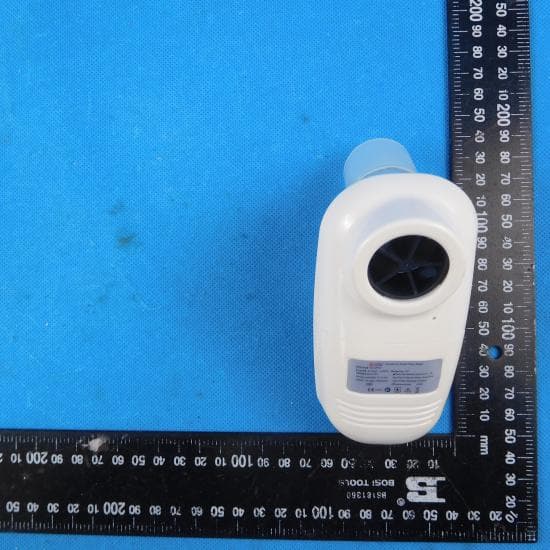
Click to zoom
Application Details
- Equipment Class
- DTS - Digital Transmission System
- Date of Grant
- Apr 13, 2022
- Application Purpose
- Original Equipment
- Date of Application
- Apr 13, 2022
- Equipment Note
- Electronic Peak Flow Meter
- Frequency Range
- 2402.00000000 - 2480.00000000
- Country
- China
Documents & Files
Document Text
Text extracted from the exhibit documents filed with the FCC. Open a document above to read the original.
Users Manual
Electronic Peak Flow Meter (Product Model: DL-DF01) Instruction For Use Effective Date:2022-03-20 Doc. No.:FDA-003 Version:A/0 Content Package Contents ................................................................................................... 1 1 Overview ............................................................................................................... 2 2 Product composition ............................................................................................ 4 3 How to use ............................................................................................................ 7 4 Cleaning and disinfection .................................................................................. 14 5 Maintenance ....................................................................................................... 15 6 Common troubleshooting .................................................................................. 16 7 Product features ................................................................................................. 17 8 Technical Specifications ................................................................................... 17 9 Symbol used in labeling .................................................................................... 18 10 Guidance and manufacturer ́s declaration................................................... 19 11 Information of Manufacturer ........................................................................... 26 1 Package Contents No. Item Quantity 1 Main unit 1 2 Turbine 1 3 Blowing Mouthpiece 1 4 AAA Battery(optional) 2 5 Instruction for use 1 6 Certificate of conformity 1 2 Instruction For Use ◆Please read this manual carefully and follow the instructions before you use. ◆Please keep this manual properly so that you can refer to it when you need it in the future. ◆◆We recommend user to use the product exclusively and avoid sharing with others. This device complies with Part 15 of the FCC Rules. Operation is subject to the following two conditions: (1) this device may not cause harmful interference, and (2) this device must accept any interference received, including interference that may cause undesired operation. This device complies with Industry Canada license-exempt RSS standard(s). Operation is subject to the following two conditions: (1) this device may not cause interference, and (2) this device must accept any interference, including interference that may cause undesired operation of the device. CONVENTIONS USED IN THIS MANUAL Indicates a potentially hazardous situation which, if not avoided, could result in death or serious injury. Indicates a hazardous situation which, if not avoided, may result in minor or moderate injury. NOTICE Indicates an operating tip, a maintenance suggestion, or a hazard that may result in device damage 1 Overview 1.1 Working principle: The device is an impeller type flowmeter. When the gas flows through the pipe of the flowmeter, a spiral airflow is generated, which pushes the blades to rotate. During this period, the light beam emitted by the infrared generator will be interrupted by the rotating blade. The pulse signal formed by each interruption will be converted into an electrical signal, and be output and transmitted to the microprocessor. The number of revolutions can therefore be calculated, and the gas flow and volume can also be calculated based on it. 3 1.2 Function introduction: The electronic peak flow meter is a portable device that can perform lung function tests. It can be used to measure the maximum expiratory flow rate (PEF). The maximum expiratory flow rate (PEF) refers to the highest flow rate during forced exhalation, also known as the highest expiratory flow rate, the maximum expiratory flow rate, and the best expiratory flow rate. PEF can better reflect the patency of the airway, help diagnose and evaluate asthma, and diagnose and classify the degree of airway obstruction. 1.3 Intended use: This device is intended for monitoring PEF (Peak Expiratory Flow Rate) for patient home use. The device is designed for adults and children over 5 years of age with caregiver supervision. 1.4 Contraindications: There are no known Contraindications. 1.5 Safety Precautions : Please stop using this meter immediately if it is damaged. Do Not touch any internal parts to avoid electric shock. In order to avoid electric shock or detector failure, do not allow any liquid to permeate into the meter. Do Not use the meter in the presence of flammable materials, solutions or gases, or in an oxygen enriched environment. Any unauthorized personnel should not tamper with the device. Only original accessories as specified by the manufacturer can be used with the device. In the event of an accident of any kind arising from use of the device, you are strongly recommended to inform the manufacturer or your doctor so that he/she can notify the authorities as required by local legislation. Any Changes or modifications not expressly approved by the party responsible for compliance could void the user's authority to operate the 4 equipment. This equipment should be installed and operated with a minimum distance of 0mm between the radiator and your extremity,60mm for your head. : The patient is an intended operator. The patient can use and maintain the meter and its accessories according to this manual. Put the meter into the specified storage case during transportation. Keep the device out of the reach of children/pets to avoid inhalation or swallowing of small parts. The supervision of an adult is required for monitoring elderly subjects, children over the age of five and disabled persons. Periodically check that no impurities or foreign bodies, such as skin, hairs have deposited inside the turbine. This may cause errors in measurement or compromise the correct functioning of the device. The device is not designed to be used in direct air currents (e.…
Text truncated - open the document above for the full version.
External Photos
Report No.: CHTEW22040041 Page: 27 of 30 Date of issue: 2022-04-06 Shenzhen Huatongwei International Inspection Co., Ltd. Report Template Version: V04 (2022-01) 7. EXTERANAL AND INTERNAL PHOTOS EXTERANAL PHOTOS Report No.: CHTEW22040041 Page: 28 of 30 Date of issue: 2022-04-06 Shenzhen Huatongwei International Inspection Co., Ltd. Report Template Version: V04 (2022-01)
Internal Photos
Report No.: CHTEW22040041 Page: 29 of 30 Date of issue: 2022-04-06 Shenzhen Huatongwei International Inspection Co., Ltd. Report Template Version: V04 (2022-01) INTERNAL PHOTOS Report No.: CHTEW22040041 Page: 30 of 30 Date of issue: 2022-04-06 Shenzhen Huatongwei International Inspection Co., Ltd. Report Template Version: V04 (2022-01)
RF Exposure Info
FCC ID: 2A577DL-DF01 RF Exposure Evaluation REQUIREMENT For extremity KDB447498 D01 General RF Exposure Guidance v06, Clause 4.3.1(a) [(max. power of channel, including tune-up tolerance, mW) / (min. test separation distance, mm)] · [√f(GHz)] ≤ 7.5 Where -f(GHz) is the RF channel transmit frequency in GHz -Power and distance are rounded to the nearest mW and mm before calculation -The test exclusions are applicable only when the minimum test separation distance is ≤ 50 mm, and for transmission frequencies between 100 MHz and 6 GHz. When the minimum test separation distance is < 5 mm, a distance of 5 mm according to 4.1 f) is applied to determine SAR test exclusion. For head KDB447498 D01 General RF Exposure Guidance v06, Clause 4.3.1(b) {[Power allowed at numeric threshold for 50 mm in step a)] + [(test separation distance – 50 mm)·10]} mW, for > 1500 MHz and ≤ 6 GHz TEST RESULT Passed Not Applicable Type Maximum Tune-up (dBm) Conducted Average Power BLE -4.00~-5.00 For extremity Type Conducted Average Power (dBm) Maximum Tune-up (dBm) safety distance (mm) Calculating data Limit Result BLE -4.78 -4.00 0 0.123 7.5 Pass For head Type Conducted Average Power (dBm) Maximum Tune-up (dBm) safety distance (mm) Calculating data (mW) Limit (mW) Result BLE -4.78 -4.00 60 0.398 196 Pass Note: 1) The maximum antenna gain is 0dBi
Test Report
Page: 1 of 30 TEST REPORT For Bluetooth-LE Report No. ...................................... : CHTEW22040041 Report Verification: Project No.................................: SHT2201032101EW FCC ID ............................................. : 2A577DL-DF01 Applicant’s name ........................... : Taian Dalu Medical Instrument Co., Ltd. Address ............................................. : West Part of Yitianmen Street, Hi-tech Zone, Taian 271000, Shandong, P.R.China Product Name ................................ : Electronic Peak Flow Meter Trade Mark ....................................... : - Model No. ......................................... : DL-DF01 Listed Model(s) ................................. : - Standard ......................................... : FCC CFR Title 47 Part 15 Subpart C Section 15.247 Date of receipt of test sample..........: Jan.01, 2022 Date of testing.............................: Jan.02, 2022-Apr.02, 2022 Date of issue...............................: Apr.06, 2022 Result .................. ........................: PASS Compiled by ( Position+Printed name+Signature): File administrator Fanghui Zhu Supervised by (Position+Printed name+Signature): Project Engineer Cheng Xiao Approved by (Position+Printed name+Signature): RF Manager Hans Hu Testing Laboratory Name ............. : Shenzhen Huatongwei International Inspection Co., Ltd. Address ............................................. : 1/F, Bldg 3, Hongfa Hi-tech Industrial Park, Genyu Road, Tianliao, Gongming, Shenzhen, China Shenzhen Huatongwei International Inspection Co., Ltd. All rights reserved. This publication may be reproduced in whole or in part for non-commercial purposes as long as the Shenzhen Huatongwei International Inspection Co., Ltd. is acknowledged as copyright owner and source of the material. Shenzhen Huatongwei International Inspection Co., Ltd. takes no responsibility for and will not assume liability for damages resulting from the reader's interpretation of the reproduced material due to its placement and context. The test report merely correspond to the test sample. Report No.: CHTEW22040041 Page: 2 of 30 Date of issue: 2022-04-06 Shenzhen Huatongwei International Inspection Co., Ltd. Report Template Version: V04 (2022-01) Contents 1. TEST S T AN D AR D S A N D R E P O R T V E R S I O N 3 1.1. Test Standards 3 1.2. Report version 3 2. TEST DESCRIPTION 4 3. SUMMARY 5 3.1. Client Information 5 3.2. Product Description 5 3.3. Radio Specification Description 5 3.4. Testing Laboratory Information 6 4. TEST CONFIGURATION 7 4.1. Test frequency list 7 4.2. Descriptions of Test mode 7 4.3. Test sample information 7 4.4. Support unit used in test configuration and system 8 4.5. Testing environmental condition 8 4.6. Statement of the measurement uncertainty 8 4.7. Equipment Used during the Test 9 5. TEST CONDITIONS AND RESULTS 11 5.1. Antenna Requirement 11 5.2. AC Conducted Emission 12 5.3. Peak Output Power 13 5.4. Power Spectral Density 14 5.5. 6dB bandwidth 15 5.6. 99% Occupied Bandwidth 16 5.7. Duty Cycle 17 5.8. Conducted Band edge and Spurious Emission 18 5.9. Radiated Band edge Emission 19 5.10. Radiated Spurious Emission 21 6. TEST SETUP PHOTOS 26 7. EXTERANAL AND INTERNAL PHOTOS 27 8. APPENDIX REPORT 30 Report No.: CHTEW22040041 Page: 3 of 30 Date of issue: 2022-04-06 Shenzhen Huatongwei International Inspection Co., Ltd. Report Template Version: V04 (2022-01) 1. TEST STAND ARDS AND REPORT VERSION 1.1. Test Standards The tests were performed according to following standards: ‒ FCC Rules Part 15.247: Frequency Hopping, Direct Spread Spectrum and Hybrid Systems that are in operation within the bands of 902-928 MHz, 2400-2483.5 MHz, and 5725-5850 MHz ‒ ANSI C63.10:2013: American National Standard for Testing Unlicensed Wireless Devices ‒ KDB 558074 D01 15.247 Meas Guidance v05r02: Guidance for Compliance Measurements on Digital Transmission System, Frequency Hopping Spread Spectrum System, and Hybrid System Devices Operating under Section 15.247 of The FCC Rules 1.2. Report version Revision No. Date of issue Description N/A 2022-04-06 Original Report No.: CHTEW22040041 Page: 4 of 30 Date of issue: 2022-04-06 Shenzhen Huatongwei International Inspection Co., Ltd. Report Template Version: V04 (2022-01) 2. TEST DESCRIPTION Report clause Test Items Standard Requirement Result Test Engineer 5.1 Antenna Requirement 15.203/15.247(c) PASS Caspar Chen 5.2 AC Conducted Emission 15.207 N/A N/A 5.3 Peak Output Power 15.247(b)(3) PASS Caspar Chen 5.4 Power Spectral Density 15.247(e) PASS Caspar Chen 5.5 6dB Bandwidth 15.247(a)(2) PASS Caspar Chen 5.6 99% Occupied Bandwidth - PASS *1 Caspar Chen 5.7 Duty cycle - PASS *1 Caspar Chen 5.8 Conducted Band Edge and Spurious Emission 15.247(d)/15.205 PASS Caspar Chen 5.9 Radiated Band Edge Emission 15.205/15.209 PASS Jianquan Wu 5.10 Radiated Spurious Emission 15.247(d)/15.205/15.209 PASS Jianquan Wu Note: ‒ The measurement uncertainty is not included in the test result. ‒ *1: No requirement on standard, only report these test data. Report No.: CHTEW22040041 Page: 5 of 30 Date of issue: 2022-04-06 Shenzhen Huatongwei International Inspection Co., Ltd. Report Template Version: V04 (2022-01) 3. SUMMARY 3.1. Client Information Applicant: Taian Dalu Medical Instrument Co., Ltd. Address: West Part of Yitianmen Street, Hi-tech Zone, Taian 271000, Shandong, P.R.China Manufacturer: Taian Dalu Medical Instrument Co., Ltd. Address: West Part of Yitianmen Street, Hi-tech Zone, Taian 271000, Shandong, P.R.China 3.2. Product Description Main unit information: Product Name: Electronic Peak Flow Meter Trade Mark: - Model No.: DL-DF01 Listed Model(s): - Power supply: DC 3V from Battery Hardware version: V-1.2 Software version: V-1.0 3.3. Radio Specification Description Bluetooth version: V4.0 Support function *2 : BLE Modulation: GFSK Operation frequency: 2402MHz~2480MHz Channel number: 40 Channel separation: 2MHz Antenna type: PCB Antenna Antenna gain: -3dBi Note: *…
Text truncated - open the document above for the full version.
Contact Information
Applicant
Yu'e Wu(Management representative)
Test Firm
Shenzhen Huatongwei International Inspection Co.,Tony Jiang
[email protected]+86-755-26748078
Technical Specifications
| # | Rule Parts | Frequency Range | Power Output |
|---|---|---|---|
| 1 | 15C | 2.40 GHz - 2.48 GHz | 347.00 µW |
Other Applications from Taian Dalu Medical Instrument Co., Ltd.
2A577-EPEFM
Mar 06, 2026Electronic Peak Flow Meter
Equipment Class
DTS - Digital Transmission System