2A8THP-028184NFC Module
Shanghai E-link technology co.,Ltd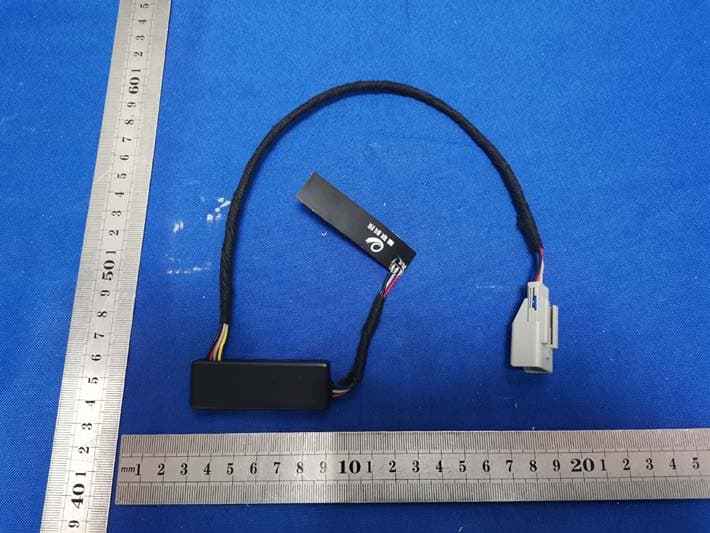
Click to zoom
Application Details
- Equipment Class
- DXX - Part 15 Low Power Communication Device Transmitter
- Date of Grant
- Oct 05, 2022
- Application Purpose
- Original Equipment
- Date of Application
- Oct 05, 2022
- Equipment Note
- NFC Module
- Frequency Range
- 13.56000000 - 13.56000000
- Country
- China
Documents & Files
Document Text
Text extracted from the exhibit documents filed with the FCC. Open a document above to read the original.
Users Manual
NFC user manual NFC introduction: 1.Theory Description: Near field communication (NFC) is an emerging technology. Devices using NFC Technology (such as mobile phones) can exchange data when they are close to each other. It is evolved from the integration of contactless radio frequency identification (RFID) and interconnection and interworking technologies. By integrating inductive card readers, inductive cards and point- to-point communication functions on a single chip, Mobile terminals are used to realize mobile payment, electronic ticketing, access control, mobile identity recognition, anti-counterfeiting and other applications. The full Chinese name of NFC is near field communication technology. NFC is developed on the basis of non-contact radio frequency identification (RFID) technology and wireless interconnection technology. It provides a very safe and fast communication method for various electronic products that are becoming more and more popular in our daily life. "Near field" in the Chinese name of NFC refers to radio waves adjacent to electromagnetic fields. Because radio waves are actually electromagnetic waves, they follow Maxwell's equation. Electric and magnetic fields will always alternate in energy conversion during the process of propagation from the transmitting antenna to the receiving antenna, and enhance each other during conversion. For example, the radio signals used by our mobile phones are propagated by using this principle, which is called far-field communication. Within 10 wavelengths of electromagnetic wave, the electric field and magnetic field are independent of each other. At this time, the electric field has little significance, but the magnetic field can be used for short-distance communication, which is called near-field communication. The near-field communication service combines the near-field communication technology and mobile communication technology, and realizes various functions such as electronic payment, identity authentication, ticketing, data exchange, anti-counterfeiting, advertising and so on. It is a new service in the field of mobile communication. The near-field communication service enhances the function of mobile phones, makes users' consumption behavior gradually become electronic, and establishes a new user consumption and business model. The application of NFC technology has been widely concerned all over the world. Different roles such as telecom operators and mobile phone manufacturers at home and abroad have carried out application pilot projects one after another. Some international associations and organizations have also actively carried out standardization work. According to the prediction of relevant institutions in the industry, mobile applications based on near-field communication technology will become the next killer application of mobile value-added services. 2. Comparison between NFC and RFID First, the working modes are different. NFC integrates point-to-point communication function, reader function and contactless card function into one chip, while RFID consists of reader and tag. NFC technology can read or write, while RFID can only read and determine information. Second, the transmission distance is different. The transmission distance of NFC is much smaller than that of RFID. The transmission distance of NFC is only 10 cm, and the transmission distance of RFID can reach several meters or even tens of meters. NFC is a close and private communication mode. Compared with RFID, NFC has the characteristics of close distance, high bandwidth, low energy consumption and high security. Third, the application fields are different. NFC is more used in the field of consumer electronic devices, and plays a huge role in the fields of access control, public transport, mobile payment, etc; RFID is better at long-distance identification and is more widely used in production, logistics, tracking and asset management. Comparison between NFC and Bluetooth NFC and Bluetooth are both short-range communication technologies. Compared with Bluetooth, which has been integrated into mobile phones for a long time and has been popularized, NFC has only been integrated into mobile phones in recent years, and so far it has only been integrated into a few mobile phones. First, the establishment time is different. The NFC communication setup procedure is simple, and the communication establishment time is very short, only about 0.1s; However, the Bluetooth communication setup procedure is relatively complex, and the communication establishment time is long, which takes about 6S. Second, the transmission distance is different. The NFC transmission distance is only 10cm, while the Bluetooth transmission distance can reach 10m. However, NFC is slightly better than Bluetooth in terms of transmission power consumption and security. Third, the transmission speed and operating frequency are different. The NFC operating frequency is 13.56MHz, and the maximum transmission speed is 424 kbit/s, while the Bluetooth operating frequency is 2.4GHz, and the transmission speed can reach 2.1 mbit/s. Comparison between NFC and infrared Compared with infrared transmission, NFC has the same transmission distance, but faster than infrared transmission. The maximum transmission speed of NFC can reach 424 kbit/s, while the infrared transmission speed is about 100kbit/s. The establishment time of NFC is slightly faster than that of infrared. The establishment time of NFC is 0.1s, and the establishment time of infrared transmission is 0.5s. Infrared transmission must be strictly aligned to transmit data, and there must be no obstacles in the middle, while NFC has no such restrictions; In addition, NFC is safer and more reliable than infrared. NFC apply into Car NFC is the abbreviation of near field communication, which means the short-range wireless communication technology of automobile. RFID is the abbreviation of radio frequency identification, which means radio f…
Text truncated - open the document above for the full version.
Attestation Statements
Shanghai E-link technology co.,Ltd Model Difference Data:2022.09.26 Product description: NFC Module Model name: P-02818409, P-02818409C Trade Name: N/A FCC ID: 2A8THP-028184 All the model are the same circuit and RF module, except model names . Regards Sincerely Client’s signature : Client’s name / title : kang jun Yong(Hardware Engineer) Contact information / address:389 Baiyin Road, Jiading District, Shanghai, China
Cover Letter(s)
Shanghai E-link technology co.,Ltd (2022.09.28) Eurofins Electrical and Electronic Testing NA, Inc. 914 West Patapsco Avenue Baltimore, MD 21230 RE: CONFIDENTIALITY REQUEST FOR (NFC Module / P -02818409, P- 02818409C / FCC ID: 2A8THP-028184) To Whom It May Concern: This letter serves as an official request for confidentiality under sections 0.457 and 0.459 of CFR 47. We have requested that the Exhibits Long-Term Confidentiality Short-Term Confidentiality NOTE 2 ID Label/Location No No Attestation Statement No No External Photos No ☐ Block Diagram ☒ ☐ Schematics ☒ ☐ Test Report No No Test Setup Photos No ☐ User’s Manual ☐ NOTE 1 ☐ Internal Photos ☐ NOTE 1 ☐ Parts List / Tune Up ☐ ☐ RF Exposure Info No No Operational Description ☒ ☐ Cover Letter(s) No No SDR Software / Security Info ☐ No required to be submitted with this application be permanently withheld from public review. Above mentioned document contains detailed system and equipment description are considered as proprietary information in operation of the equipment. The public disclosure of above documents might be harmful to our company and would give competitor an unfair advantage in the market. Please contact me if there is any information you may need. Sincerely, Signature: Name: kang jun Yong Title: Hardware Engineer
Cover Letter(s)
Shanghai E-link technology co.,Ltd (2022.09.28) Eurofins Electrical and Electronic Testing NA, Inc. 914 West Patapsco Avenue Baltimore, MD 21230 RE: LETTER OF AGENT AUTHORIZATION To Whom It May Concern: We, the undersigned, hereby authorize (Shenzhen CTB Testing Technology Co., Ltd.) to act on our behalf in all matters relating to application for equipment authorization, including the signing of all documents relating to these matters. We also hereby certify that no party to the application authorized hereunder is subject to the denial of benefits, including FCC benefits, pursuant to Section 5301 of the Anti-Drug Abuse Act of 1988, 21 U.S.C.853(a). This agreement expires one year from the current date. Sincerely, Signature: Name: kang jun Yong Title: Hardware Engineer
External Photos
External Photos
ID Label/Location Info
Model: P-02818409 FCC ID: 2A8THP-028184 Label Location
Internal Photos
Internal Photos ANT
Parts List/Tune Up Info
ANT PHTOT L W H 49mm±0.2 15mm±0.2 0.1mm±0.1
Test Report
Shenzhen CTB Testing Technology Co., Ltd. Report No.: CTB220915001RFX Report Tel: 4008-707-283 Web: http://www.ctb-lab.com Page 1 of 26 TEST REPORT Product Name: NFC Module FCC ID: 2A8THP- 028184 Trademark: N/A Model Number: P-02818409, P-02818409C Prepared For: Shanghai E-link technology co.,Ltd Address: 389 Baiyin Road, Jiading District, Shanghai Manufacturer: Shanghai E-link technology co.,Ltd Address: 389 Baiyin Road, Jiading District, Shanghai Prepared By: Shenzhen CTB Testing Technology Co., Ltd. Address: Floor 1&2, Building A, No. 26 of Xinhe Road, Xinqiao Community, Xinqiao Street, Baoan District, Shenzhen, Guangdong, China. Sample Received Date: Jul. 01, 2022 Sample tested Date: Jul. 01, 2022 to Sep. 15, 2022 Issue Date: Sep. 15, 2022 Report No.: CTB220915001RFX Test Standards FCC Part15.225 ANSI C63.10:2013 Test Results PASS Remark: This is 13.56MHz radio test report. Compiled by: Reviewed by: Approved by: Chen Zheng Arron Liu Bin Mei / Director Note: If there is any objection to the inspection results in this report, please submit a written report to the company within 15 days from the date of receiving the report. The test report is effective only with both signature and specialized stamp. This result(s) shown in this report refer only to the sample(s) tested. Without written approval of Shenzhen CTB Testing Technology Co., Ltd. this report can’t be reproduced except in full. The tested sample(s) and the sample information are provided by the client. “*” indicates the testing items were fulfilled by subcontracted lab. “#” indicates the items are not in CNAS accreditation scope. Shenzhen CTB Testing Technology Co., Ltd. Report No.: CTB220915001RFX Report Tel: 4008-707-283 Web: http://www.ctb-lab.com Page 2 of 26 TABLE OF CONTENT TestReportDeclaration Page 1. VERSION ................................................................................................................................................. 4 2. TESTSUMMARY ..................................................................................................................................... 5 3. MEASUREMENTUNCERTAINTY ........................................................................................................... 6 4. PRODUCT INFORMATION AND TESTSETUP ...................................................................................... 7 4.1 ProductInformation ................................................................................................................................... 7 4.2 Test SetupConfiguration .......................................................................................................................... 7 4.3 SupportEquipment ................................................................................................................................... 7 4.4 TestMode ................................................................................................................................................. 8 4.5 TestEnvironment ...................................................................................................................................... 8 5. TEST FACILITY AND TEST INSTRUMENTUSED ................................................................................. 9 5.1 TestFacility ............................................................................................................................................... 9 5.2 Test InstrumentUsed ................................................................................................................................ 9 6. AC POWER LINE CONDUCTEDEMISSION ........................................................................................ 10 6.1 Block Diagram Of TestSetup ................................................................................................................. 11 6.2 Limit........................................................................................................................................................ 11 6.3 Testprocedure ........................................................................................................................................ 11 6.4 TestResult .............................................................................................................................................. 13 7. RADIATEDEMISSION ........................................................................................................................... 14 7.1 Block Diagram Of TestSetup ................................................................................................................. 14 7.2 Limit........................................................................................................................................................ 14 7.3 Testprocedure ........................................................................................................................................ 15 7.4 TestResult .............................................................................................................................................. 16 8. FREQUENCYTOLERANCE .................................................................................................................. 20 8.1 Block Diagram Of TestSetup ................................................................................................................. 20 8.2 Limit........................................................................................................................................................ 20 8. 3 Testprocedure ........................................................................................................................................ 20 8.4 TestResult .............................................................................................................................................. 21 9. OCCUPIEDBANDWIDTH .........................................................................…
Text truncated - open the document above for the full version.
Test Setup Photos
Radiated Emission Below 1G 9KHz-30MHz
Contact Information
Applicant
Yong kang jun
Technical Contact
Shanghai E-link technology co.,Ltdkang jun Yong
[email protected]18118267390
389 Baiyin Road, Jiading District, · Shanghai, · China
Test Firm
Shenzhen CTB Testing Technology Co., Ltd.Rita Xiao
[email protected]86-13538218145
Technical Specifications
| # | Rule Parts | Frequency Range | Power Output |
|---|---|---|---|
| 1 | 15C | 13.56 MHz - 13.56 MHz | - |