2A98QBTCOMBluetooth Headset and Intercom
PROTOS GmbH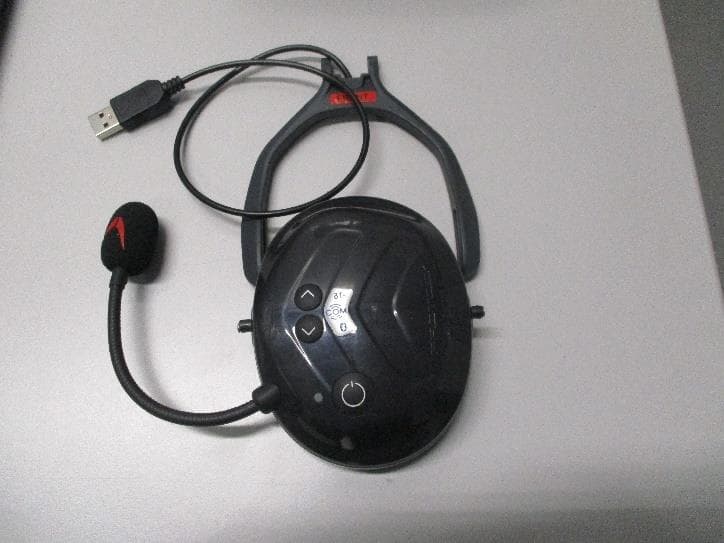
Click to zoom
Application Details
- Equipment Class
- DSS - Part 15 Spread Spectrum Transmitter
- Date of Grant
- Apr 01, 2024
- Application Purpose
- Original Equipment
- Date of Application
- Mar 24, 2024
- Equipment Note
- Bluetooth Headset and Intercom
- Frequency Range
- 2402.00000000 - 2480.00000000
- Company
- PROTOS GmbH
- Country
- Austria
Documents & Files
Document Text
Text extracted from the exhibit documents filed with the FCC. Open a document above to read the original.
Users Manual
BA_BT-COM/Rev. 2/20231005 PROTOS.AT BEDIENUNGSANLEITUNG USER MANUAL DE EN Weitere Sprachen unter / further languages at: www.protos.at/download/ba_bt-com DE EN INHALTSVERZEICHNISTABLE OF CONTENT EINLEITUNG 4 LIEFERUMFANG 6 BEDIENELEMENTE 8 GRUNDLAGEN 10 Optimale Umgebungsgeräuschunterdrückung 12 Einflüsse auf die Reichweite 12 Funktionsweise des BT-COM® Intercom-Netzwerks 14 VERBINDEN 16 Einmalige Inbetriebnahme eines PROTOS® Intercom-Netzwerks 16 Täglicher Gebrauch eines PROTOS® Intercom-Netzwerks 18 Koppeln mit einem Bluetooth-fähigen Gerät 20 Telefonate im verbundenen PROTOS® Intercom-Netzwerk 22 Verbindung mit einem zusätzlichen Gerät, z. B. Funkgerät 24 Verbindung mit einem zusätzlichen Gerät, z. B. zweites Smartphone 26 MONTAGE 28 Montage der BT-COM Kapsel in den PROTOS® 28 LADEN 30 REINIGUNG 32 APP 34 PROTOS® Control-App 34 PROTOS® Control für Android (Samsung, Sony usw.) 34 PROTOS® Control für iOS (iPhone) 34 PROTOS® Control-App – Einstellungen 36 HÄUFIG GESTELLTE FRAGEN 38 NORMEN UND ZULASSUNGEN 40 + 42 Hinweise und Testergebnisse zum Schallschutz – EN 352 40 + 42 WARNHINWEISE 44 CE-KENNZEICHNUNG 46 INTRODUCTION 5 PACKAGE CONTENT 7 CONTROL ELEMENTS 9 BASICS 11 Ideal surrounding noise suppression 13 Impacts on the range 13 Operating principle of the BT-COM® Intercom Network 15 CONNECT 17 Setting up a new PROTOS® Intercom Network 17 Day-to-day use of an existing PROTOS® Intercom Network 19 Pairing with a Bluetooth device 21 Phone calls within an active PROTOS® Intercom Network 23 Connection with an additional Bluetooth device, e. g. radio device 25 Connection with an additional device, e. g. second Smartphone 27 MOUNTING 29 Mounting of the BT-COM muff into the PROTOS® 29 CHARGING 31 CLEANING 33 APP 35 PROTOS® Control-App 35 PROTOS® Control for Android (Samsung, Sony, etc.) 35 PROTOS® Control for iOS (iPhone) 35 PROTOS® Control-App – Settings 37 FAQ 39 STANDARDS AND APPROVALS 41 + 43 Notes and test results for sound insulation – EN 352 41 + 43 WARNINGS 45 CE MARKING 47 USA FCC COMPLIANCE 48 23 DE EN EINLEITUNGINTRODUCTION 45 * abhängig vom Gelände * dependent on open field conditions BT-COM Bedienung Herzlichen Glückwunsch, dass du dich für das PROTOS® BT-COM Kommunikationssystem für bis zu vier Teilnehmer entschieden hast. Das BT-COM wurde nach den neuesten elektronischen Erkenntnissen für dich entwickelt. Du kannst es in Verbindung mit dem PROTOS® oder dem PROTOS® Headset als Freisprech- anlage für Bluetooth-Mobiltelefone und zum Empfang von Musik über Bluetooth-Audiogeräte nutzen. Außerdem kannst du Unterhaltungen mit bis zu drei anderen BT-COM Nutzern führen. Um die technischen Möglichkeiten deines Gerätes voll auszuschöpfen, lies bitte diese Anleitung sorgfältig durch. Du kannst dir die Bedienung auch per Video erklären lassen, indem du die jeweiligen QR-Codes scannst. Das BT-COM bietet dir folgende Funktionen: • Vier-Wege-Konferenz-Gegensprechanlage • Bluetooth Headset für Bluetooth-fähige Geräte wie z. B.: – Mobiltelefone – Audiogeräte – GPS-Navigationsgeräte – Funkgeräte • Bluetooth-Gegensprechanlage, Reichweite bis max. 600 m* • klarer, natürlicher Klang in HD-Qualität • Gehörschutz gemäß EN 352 (bei Geräten mit Dämmeinlage) • selbst-organisierendes, selbstheilendes Intercom-Netzwerk: Verlassen Teilnehmer die Konferenz, baut sich diese mit den verbleibenden Teilnehmern automatisch wieder auf. • Smartphone-App für iOS (iPhone) und Android Congratulations on your decision on the PROTOS® BT-COM communication device for up to four participants. This product has been developed by implementing the most current electronic know-how. You can use the BT-COM in combination with a PROTOS® or with the PROTOS® Headset as a hands-free kit for Bluetooth mobile phones and to receive music from Bluetooth-enabled audio devices. You can also have conversations with up to three other BT-COM users over the Intercom Network. To benefit from all the technical options of your device, please read these instructions carefully. The BT-COM offers you the following functions: • Four way intercom conference • Bluetooth headset for Bluetooth capable devices as e. g.: – mobile phones – audio devices – GPS navigation devices – radio devices • Bluetooth intercom with a range up to max. 600 m* • Clear and natural sound in HD quality • Hearing protection according to EN 352 (for devices with sound insulation inserts) • Self-organising, self-healing Intercom Network: in case a participant leaves, the network will be build up again automatically. • Smarphone app for iOS (iPhone) and Android DE EN LIEFERUMFANGPACKAGE CONTENT 2 4 3 1 67 TransporttascheCarrying case USB-Ladebügel USB charging bracket Bluetooth-Funkkapsel Bluetooth communication earmuff Schwanenhalsmikrofon Goose-neck microphone 1 2 3 4 DE EN BEDIENELEMENTECONTROL ELEMENTS MultifunktionstasteMulti-function button LED-Anzeige LED Indicator Aufwärtstaste Up button Abwärtstaste Down button 89 2 1 4 3 1 2 3 4 DE EN GRUNDLAGENBASICS Einschalten Drücke die Multifunktionstaste (4). Es ertönt ein aufsteigendes Signal und die LED (3) blinkt 2× rot alle 2 Sekunden. Lautstärke-Regelung Betätige kurz die Aufwärtstaste (1), um die Lautstärke zu erhöhen oder die Abwärts- taste (2), um die Lautstärke zu reduzieren. Es ertönt jeweils ein kurzes Bestätigungssignal. Bei jeder Betätigung wird die Lautstärke um eine Stufe lauter bzw. leiser. Bei maximaler oder minimaler Lautstärke ertönt ein langes Tonsignal. Stummschaltung Um das Mikrofon stumm zu schalten, drücke kurz die Multifunktionstaste (4). Dies wird durch eine Tonfolge bestätigt. Erneutes Antippen reaktiviert das Mikrofon. Diese Funktion ist nur während eines Anrufs oder im PROTOS® Intercom-Netzwerk verfügbar. Verlassen des Netzwerkes Um ein BT-COM aus dem Netzwerk zu trennen, betätige die Aufwärtstaste (1) ca. 3 Sekunden lang. Ein absteigendes Signal ertönt. Zum erneuten Verbinden drücke wiederum die Aufwärtstaste (1). Ein aufsteigendes Signal ertönt. Ausschalten Drücke lange die Multifunktionstaste (4). Es …
Text truncated - open the document above for the full version.
External Photos
Project Number: 047/23 2.2 Customer Customer: PROTOS GmbH Street: Herrschaftswiesen 11 City: 6842 Koblach - Austria Phone: +43 59 50 50-200 Refer to : Anton Armin Pfanner 3 EQUIPMENT UNDER TEST (EUT) 3.1 EUT identification (declared under responsibility of the customer) EUT Description: Bluetooth Headset Model: BTCOM Code: -- Serial N°: P2P4Z, P2P41 Software release: 2.1 Size: 220 x 110 x 40 [mm] Supply voltage: 4.1 V c.c. Rated Electrical Power: 0.41 W Rated input current: 400 mA FCC ID: 2A98QBTCOM EXTERNAL PHOTOGRAPHS
ID Label/Location Info
Author Philipp Auerbach Project BTCOM created 30.11.2023 updated 30.11.2023 luun electronic systems GmbH -- confidential document - BTCOM label Version 1 Page 1 of 1 2023_11_30 btcom label Content 1. History ............................................................................................................................................. 1 2. FCC ID location................................................................................................................................. 1 1. History Version Author Change 1 PA Initial 2. FCC ID location
Internal Photos
Project Number: 047/23 2.2 Customer Customer: PROTOS GmbH Street: Herrschaftswiesen 11 City: 6842 Koblach - Austria Phone: +43 59 50 50-200 Refer to : Anton Armin Pfanner 3 EQUIPMENT UNDER TEST (EUT) 3.1 EUT identification (declared under responsibility of the customer) EUT Description: Bluetooth Headset Model: BTCOM Code: -- Serial N°: P2P4Z, P2P41 Software release: 2.1 Size: 220 x 110 x 40 [mm] Supply voltage: 4.1 V c.c. Rated Electrical Power: 0.41 W Rated input current: 400 mA FCC ID: 2A98QBTCOM INTERNAL PHOTOGRAPHS
RF Exposure Info
© 2023 RF Exposure Lab, LLC This report shall not be reproduced except in full without the written approval of RF Exposure Lab, LLC. 802 N. Twin Oaks Valley Road, Suite 105 • San Marcos, CA 92069 • U.S.A. TEL (760) 471-2100 • FAX (760) 471-2121 http://www.rfexposurelab.com CERTIFICATE OF COMPLIANCE SAR EVALUATION Protos GmbH Dates of Test: July 17, 2023 Herrschaftswiesen Test Report Number: SAR.20230708 Koblach 6864 Austria Lab Designation Number: US1195 This wireless mobile and/or portable device has been shown to be compliant for localized specific absorption rate (SAR) for uncontrolled environment/general exposure limits specified in ANSI/IEEE Std. C95.1-1992 and had been tested in accordance with the measurement procedures specified in IEEE 1528-2013 and IEC 62209-2:2010 (See test report). I attest to the accuracy of the data. All measurements were performed by myself or were made under my supervision and are correct to the best of my knowledge and belief. I assume full responsibility for the completeness of these measurements and vouch for the qualifications of all persons taking them. RF Exposure Lab, LLC certifies that no party to this application is subject to a denial of Federal benefits that includes FCC benefits pursuant to Section 5301 of the Anti-Drug Abuse Act of 1988, 21 U.S.C. 853(a). Jay M. Moulton Vice President Testing Cert. # 2387.01 FCC ID: 2A98QBTCOM Model(s): Protos 01 Test Sample: Engineering Unit Same as Production Serial Number: Eng 1 Equipment Type: Wireless Headset Classification: Portable Transmitter Next to Head TX Frequency Range: 2402 – 2480 MHz Fr equency Tolerance: ± 2.5 ppm Maximum RF Output: 2450 MHz – 15.5 dBm Conducted Signal Modulation: GFSK Antenna Type: Internal Antenna Application Type: Certification FCC Rule Parts: Part 2, 15C KDB Test Methodology: KDB 447498 D01 v06 Maximum SAR Value: 0.14 W/kg Reported Separation Distance: 0 mm Report Number: SAR.20230708 © 2023 RF Exposure Lab, LLC Page 2 of 58 This report shall not be reproduced except in full without the written approval of RF Exposure Lab, LLC. Table of Contents 1. Introduction ........................................................................................................................ 4 SAR Definition [5] ................................................................................................................... 5 2. SAR Measurement Setup ................................................................................................... 6 Robotic System ...................................................................................................................... 6 System Hardware ................................................................................................................... 6 System Electronics ................................................................................................................. 7 Probe Measurement System .................................................................................................. 7 3. Probe and Dipole Calibration .............................................................................................15 4. Phantom & Simulating Tissue Specifications .....................................................................16 Head & Body Simulating Mixture Characterization ................................................................16 5. ANSI/IEEE C95.1 – 1992 RF Exposure Limits [2] ..............................................................17 Uncontrolled Environment .....................................................................................................17 Controlled Environment .........................................................................................................17 6. Measurement Uncertainty .................................................................................................18 7. System Validation..............................................................................................................19 Tissue Verification .................................................................................................................19 Test System Verification ........................................................................................................19 8. SAR Test Data Summary ..................................................................................................20 Procedures Used To Establish Test Signal ...........................................................................20 Device Test Condition ...........................................................................................................20 SAR Data Summary – 2450 MHz 802.15.4 ...........................................................................22 9. Test Equipment List ...........................................................................................................23 10. Conclusion ....................................................................................................................24 11. References ....................................................................................................................25 Appendix A – System Validation Plots and Data .......................................................................26 Appendix B – SAR Test Data Plots ...........................................................................................28 Appendix C – SAR Test Setup Photos ......................................................................................30 Appendix D – Probe Calibration Data Sheets ............................................................................33 Appendix E – D ipole Calibration Data Sheets ...........................................................................43 Appendix F – DAE Calibration Data Sheets ..............................................................................50 Appendix G – Phantom Calibration Data Sheets ..............................…
Text truncated - open the document above for the full version.
Test Report
LAB N° 0259 L The test results in this Test Report are exclusively referred to the tested samples Without the written authorization of Kiwa Creiven, this document can be reproduced only integrally. I risultati del rapporto di prova si riferiscono esclusivamente ai campioni sotto test Senza l’autorizzazione scritta di Kiwa Creiven, questo documento può essere riprodotto solo integralmente. FORM Report – SR/RAP/168 R00 del 17/06/2021 Pag. 1/51 FCC Part 15C TEST REPORT Report Number 047/23/02961/FCC Rev. 01 Date of document 2024-03-07 Total number of pages Pag. 56 OBJECT FCC Part15C CUSTOMER PROTOS GmbH EQUIPMENT UNDER TEST - DESCRIPTION Bluetooth Headset MODEL BTCOM SUMMARY 1 OBJECT OF THE TESTS 3 2 IDENTIFICATION 3 3 EQUIPMENT UNDER TEST (EUT) 3 4 STANDARDS AND TEST METHODS 4 5 EUT OPERATING CONDITIONS DURING TESTS 6 6 TEST RESULTS 7 7 EUT MODIFICATIONS 51 Annex B Test Instrumentations 02 pag Annex D Auxiliary Instrumentations 01 pag Annex F Judgment of compliance and measurements uncertainty 02 pag Tested by (Name + Signature) MARCO NICOLE’ Test engineer Verified by (Name + Signature) ANDREA CUPIDO Lab Manager Approved and issued by (Name + Signature) ALESSANDRO ZUCCATO Lab Director Code 047/23/02961/FCC LAB N° 0259 L FORM Report – SR/RAP/168 R00 del 17/06/2021 Pag. 2/51 History sheet of test Report Report Number Rev. Date Description of modification 047/23/02961/RED R00 2023-04-13 Initial Test report 047/23/02961/RED R01 2024-03-07 Removed BLE part (for changes see the black sidebars in the document) Code 047/23/02961/FCC LAB N° 0259 L FORM Report – SR/RAP/168 R00 del 17/06/2021 Pag. 3/51 1 OBJECT OF THE TESTS The objective of the tests is the evaluation of the conformity of the EUT to the requirements of the standards and test methods specified on par. 4 of present Test Report. 2 IDENTIFICATION 2.1 Laboratory Name : Kiwa Creiven S.r.l. Street: Corso Spagna, 12 City : 35127 Padova - ITALY Phone : +39.049.8704036 Fax: +39.049.8707037 E-mail : [email protected] FCC Designation number: IT0016 ISED CAB Identifier: IT0007 2.2 Customer Customer: PROTOS GmbH Street: Herrschaftswiesen 11 City: 6842 Koblach - Austria Phone: +43 59 50 50-200 Refer to : Anton Armin Pfanner 3 EQUIPMENT UNDER TEST (EUT) 3.1 EUT identification (declared under responsibility of the customer) EUT Description: Bluetooth Headset Model: BTCOM Code: -- Serial N°: P2P4Z, P2P41 Software release: 2.1 Size: 220 x 110 x 40 [mm] Supply voltage: 4.1 V c.c. Rated Electrical Power: 0.41 W Rated input current: 400 mA FCC ID: 2A98QBTCOM 3.2 EUT classifications The manufacture declared the following classification: Object Descriptions Operating Frequency 2,4 – 2,4835 GHz Equipment type Bluetooth classic Channel spacing 1 MHz (BT classic) Number of Channels 80 for Bluetooth classic Antenna Type Integrated antenna PIFA Antenna Peak Gain 1.3 dBi Frequency Hopping Spread Spectrum YES Extreme Temperature Range 0°C ÷ +50°C Manufacturer declaration 03005LP In case of FHSS modulation In case of Adaptive Frequency Hopping Equipment: The maximum number of Hopping Frequencies: 80 (BT) The minimum number of Hopping Frequencies: 20 The (average) Dwell Time: 6.25 ms Adaptive / non-adaptive equipment non-adaptive Equipment adaptive Equipment without the possibility to switch to a non-adaptive mode adaptive Equipment which can also operate in a non-adaptive mode Code 047/23/02961/FCC LAB N° 0259 L FORM Report – SR/RAP/168 R00 del 17/06/2021 Pag. 4/51 3.3 EUT additional information Object Descriptions Classification of installation and use Stand-alone Combined Equipment (Equipment where the radio part is fully integrated within another type of equipment) Plug-in radio device (Equipment intended for a variety of host systems) Other Means for connection to the supply: Supply cord fitted with a plug Supply cord without plug (for permanently connection to fixed wiring) Appliance inlet Appliance provided with a set of terminals allowing the connection of cables or fixed wiring Date of receipt of test item 2023-02-06 Date(s) of performance of tests See the data specified in test results details 3.4 EUT cables The EUT has been configured by the manufacturer with the following input / output cables: Classification Description Cable note Shielded Specified max. length DC power port (used only for the recharge) d.c. input cable none ≤ 1m ≤ 3m ≤ 10m ≤ 30m type of power source: Internal Power Supply External Power Supply or AC/DC adapter Battery Other 3.5 EUT Auxiliary Equipments (AEs) To ensure the correct functioning of the EUT, it has been necessary to make use of the following auxiliary equipment (AE): Auxiliary Equipment AE N°01 Description : DC power supply Model: LABPS3003 Manufacturer: VELLEMAN Auxiliary Equipment AE N°02 Description : Laptop + debugger Model: -- Manufacturer: ASUS 3.6 Sampling and adopted criteria Equipment used for testing was selected by the customer. Sampling criteria adopted by the customer is unknown to Kiwa Creiven laboratory. 3.7 EUT documents The following documentations have been provided by the customer Kiwa Creiven document reference Descriptions 03005LP Manufacturer declaration 4 STANDARDS AND TEST METHODS 4.1 Reference standards DOCUMENT DATE OBJECT ANSI C63.10 2013 American National Standard of Procedures for Compliance Testing of Unlicensed Wireless Devices Note: KDB 558074 D01 v05r02 taken into consideration. Code 047/23/02961/FCC LAB N° 0259 L FORM Report – SR/RAP/168 R00 del 17/06/2021 Pag. 5/51 4.1.1 Test summary The following table specifies the tests required by the reference standard and test performed on EUT. TEST FCC Rule Note Results 20 dB Bandwidth §15.215 (c) --- Complies Channel Separation §15.247 (a)(1) --- Complies Minimum Hopping Channel §15.247 (a)(1)(iii) --- Complies Dwell Time §15.247 (a)(1)(iii) --- Complies Peak Output Power (Conduction) §15.247 (b)(3) --- Complies Spurious Emissions (Radiation) §15.209 --- Complies Band edge measurement §15.247 (d) --- Complies Power-line conducted emissions §15.…
Text truncated - open the document above for the full version.
Test Report
Author Philipp Auerbach Project BTCOM created5.16.2023 updated 5.16.2023 luunelectronicsystems GmbH -- confidential document - Antenna specification Page1of12023_05_16 antenna datasheet.docx 1.Antenna Specification The Antenna is an integrated PCB PIFA Antenna with following EIRP and radiation pattern.
Test Setup Photos
Project Number: 047/23 2.2 Customer Customer: PROTOS GmbH Street: Herrschaftswiesen 11 City: 6842 Koblach - Austria Phone: +43 59 50 50-200 Refer to : Anton Armin Pfanner 3 EQUIPMENT UNDER TEST (EUT) 3.1 EUT identification (declared under responsibility of the customer) EUT Description: Bluetooth Headset Model: BTCOM Code: -- Serial N°: P2P4Z, P2P41 Software release: 2.1 Size: 220 x 110 x 40 [mm] Supply voltage: 4.1 V c.c. Rated Electrical Power: 0.41 W Rated input current: 400 mA FCC ID: 2A98QBTCOM TEST SETUP PHOTOGRAPHS Test Setup – Radiated emission from 30 MHz to 1 GHz Test Setup – Radiated emission from 30 MHz to 1 GHz Test Setup – Radiated emission from 1 GHz to 18 GHz Test Setup – Radiated emission from 1 GHz to 18 GHz Test Setup – Radiated emission from 18 GHz to 25 GHz Test Setup – Radiated emission from 18 GHz to 25 GHz Measurement of disturbance voltage Measurement of disturbance voltage: cable's layout
Contact Information
Applicant
Anton Pfanner
Technical Contact
Non-Technical Contact
Protos GmbHKatharina Maria Bale
[email protected]43 59 50 50-420
Test Firm
Kiwa Nederland B.V.Willem Jong
[email protected]+31 889983621
Technical Specifications
| # | Rule Parts | Frequency Range | Power Output |
|---|---|---|---|
| 1 | 15C | 2.40 GHz - 2.48 GHz | 100.00 mW |