2AAI2PH2RPGRPHRThe Phoenix 2 Portable Bluetooth Stereo Device
Beacon Audio Inc.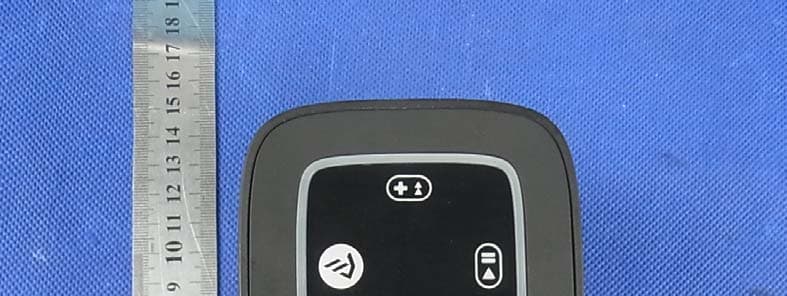
Click to zoom
Application Details
- Equipment Class
- DSS - Part 15 Spread Spectrum Transmitter
- Date of Grant
- Jul 18, 2013
- Application Purpose
- Original Equipment
- Date of Application
- Jul 18, 2013
- Equipment Note
- The Phoenix 2 Portable Bluetooth Stereo Device
- Frequency Range
- 2402.00000000 - 2480.00000000
- Company
- Beacon Audio Inc.
- Country
- United States
Documents & Files
Document Text
Text extracted from the exhibit documents filed with the FCC. Open a document above to read the original.
Users Manual
HELPFUL TERMSYOUR PHOENIX 2YOUR PHOENIX 2PAIRING WITH A NEW DEVICERE-CONNECTING TO A DEVICEVOLUME AND TRACK CONTROLSUSING THE PHOENIX 2 AS A SPEAKERPHONE CHARGING AUXILIARY PLAYBACK NOTE The Phoenix 2 comes with a partially charged battery. We recommend charging the device completely when you first remove it from the box. You can charge the Phoenix 2 by plugging in the Micro USB to any charging USB port including a computer, wall charger, etc. Bluetooth: This is a technology used for WIRELESS CONNECTIONS. Most smart phones and media players are equipped with this technology and this is what allows the Phoenix 2 to play music wirelessly. Bluetooth PAIRING: Pairing is used when you are setting up a Bluetooth device that has never been connected to the Phoenix 2. Bluetooth CONNECT: Connect is used to establish a signal AFTER 2 devices have already been paired. If the device is PAIRED but not CONNECTED, it will show up in your settings under the Bluetooth Devices and say "Not Connected". Pairing Mode: When the Phoenix 2 is in Pairing Mode, it is trying to connect with a NEW device. This is also called being "discoverable." When the device is in pairing mode, the Light Status Ring will blink rapidly. Search Mode: When the Phoenix 2 is in search mode, it is trying to RECONNECT with a device you have already paired. On-board Microphone: The Phoenix 2 is equipped with a built-in, noise-canceling mic that will TAKEOVER the mic on your phone. This means that you can use the Phoenix 2 as a conference phone when connected to your Bluetooth enabled smart phone. When you are playing the Phoenix 2 through the auxiliary input, all controls on the top panel will not be functional. Volume and Track will need to be adjusted on your secondary device. The Bluetooth range, audio quality and connection quality will vary based on the battery level of the Phoenix 2 and your secondary device. If you are having any of the above issues, charge both devices fully and try connecting again. - Turn the Phoenix 2 ON by switching the toggle switch - Press and hold the Beacon Button for 6 seconds until the Status Ring starts continually flashing blue - Turn on Bluetooth in your system settings and make sure your device is "discoverable" - Select the Phoenix 2 under your "Devices" menu and wait for the connection to establish On Your Pheonix 2On Your Device ADJUSTING TRACKADJUSTING VOLUME On Your Pheonix 2On Your Device - Turn the Phoenix 2 ON by switching the toggle switch - Press and hold the Beacon Button for 3 seconds until the Status Ring starts slowly blinking blue - Press the LEFT or RIGHT adjustment once. Each click will skip one track. - Press and HOLD the LEFT or RIGHT adjustment. The Phoenix 2 will chirp when it has reached maximum volume. - Select Phoenix 2 in the list of nearby devices - Select the Phoenix 2 as the playback source The Phoenix 2 is equipped with an on-board MIC. To enable the MIC, press the Beacon button ONCE when a call is incoming. While you are on a connected call, you can hang up by pressing the Beacon Button once again. Mic NOTE: The light Status Ring will flash slowly when the Phoenix 2 is in SEARCH MODE - Use SEARCH MODE when you are trying to connect a Bluetooth device that has already been set up The light Status Ring will flash continuously when the device is in PAIRING MODE - Use PAIRING MODE when setting up a new Bluetooth device or pairing for the first time Microphone Decrease Volume or Track Back Increase Volume or Track Forward Bluetooth Pairing, Connect & Call Features Play/Pause Portable Bluetooth Speaker with Microphone ® Micro USB Charging Speaker 2 Speaker 1 Subwoofer Auxiliary Port IN System Reset Power Switch Press for Track Hold for Volume Hold 6 Seconds TM THE PHOENIX 2 TM This equipment has been tested and found to comply with the limits for a Class B digital device, pursuant to part 15 of the FCC Rules. These limits are designed to provide reasonable protection against harmful interference in a residential installation. This equipment generates, uses and can radiate radio frequency energy and, if not installed and used in accordance with the instructions, may cause harmful interference to radio communications. However, there is no guarantee that interference will not occur in a particular installation. If this equipment does cause harmful interference to radio or television reception, which can be determined by turning the equipment off and on, the user is encouraged to try to correct the interference by one or more of the following measures: --Reorient or relocate the receiving antenna. --Increase the separation between the equipment and receiver. --Connect the equipment into an outlet on a circuit different from that to which the receiver is connected. --Consult the dealer or an experienced radio/TV technician for help. This device complies with Part 15 of the FCC rules and Industry Canada licence-exempt RSS standard(s). Operation is subject to the following two conditions: (1) this device may not cause interference, and (2) this device must accept any interference received, including interference that may cause undesired operation. This Class B digital apparatus complies with Canadian ICES-003. Cet appareil numérique de la classe B est conforme à la norme NMB-003 du Canada. Le présent appareil est conforme aux CNR d'Industrie Canada applicables aux appareils radio exempts de licence. L'exploitation est autorisée aux deux conditions suivantes : (1) l'appareil ne doit pas produire de brouillage, et (2) l'utilisateur de l'appareil doit accepter tout brouillage radioélectrique subi, même si le brouillage est susceptible d'en compromettre le fonctionnement. changes or modifications not expressly approved by the party responsible for compliance could void the user's authority to operate the equipment. The device complies with RF specifications when the device used at 5mm form your body The Phoenix 2 Portable Bluetooth Stereo Device Termes serviablesVotre PHOENIX 2Votre P…
Text truncated - open the document above for the full version.
Attestation Statements
Test Lab Attestation Letter This attestation is to confirm that the below listed device was tested and report at our Test Facilities located at: Test Lab Name: NTEK Testing Technology Co., Ltd. Test Lab Address: 1/F, Building E, Fenda Science Park, Sanwei Community, Xixiang Street, Bao’ an District, Shenzhen P.R. China Test Lab Registration Number: 238937, 9270A‐1 Date of Test: 09 Jul. 2013 ~16 Jul. 2013 Test Report Number: GTI‐2013DG0716147F Applicant Name: Beacon Audio Inc. Product name: The Phoenix 2 Portable Bluetooth Stereo Device Name of Engineer(s) Performing Test: Eric Wang TEST LABORATORY: Signature of Authorized Representative of the Test Laboratory: Full Contact Name:Bovey yang E‐[email protected] Position/Title:Manger
Cover Letter(s)
Beacon Audio Inc. Date:2013-07-03 To SIEMIC Inc 775 Montague Expressway Milpitas, CA 95035 RE: New Family Listing Declaration Please review the attached exhibits supporting our request for applying New Family Listing to the FCC ID: 2AAI2PH2RPGRPHR/IC ID: 11191A-PH2RPGRPHR for Company Name: Beacon Audio Inc. Product Description: The Phoenix 2 Portable Bluetooth Stereo Device Base model: BCN_ph2-rp/grphr Additional model(s): BCN_ph2-rp/swht, BCN_ph2-rp/fred, BCN_ph2-rp/bblu, BCN_ph2-rp/orng, BCN_ph2-rp/teal, BCN_ph2-rp/ccrl The only difference between the base model BCN_ph2-rp/grphr and the additional model(s) BCN_ph2-rp/swht, BCN_ph2-rp/fred, BCN_ph2-rp/bblu, BCN_ph2-rp/orng, BCN_ph2-rp/teal, BCN_ph2-rp/ccrl is as follows: All the model are the same circuit and RF module,except the model names and colours. Should you have any questions, please contact us. Sincerely, Name: shane kofoed Title: product mangaer Signature:
Cover Letter(s)
SCS-F18: Project and Product Certification Representative Authorization Letter Page 1 of 2 Rev 3.0 775 Montague Expressway Milpitas, CA 95035 Tel: 408-526-1188 Fax: 408-526-1088 Email: [email protected] Project and Product Certification Representative Authorization Letter Revision History Reason for Amendment (current / obsolete) From To Approved Date Initial Release (obsolete) 1.0 1.0 Nov-14-2006 Revised wording (obsolete) 1.0 2.0 Sept–25-2007 Updated company template (current) 2.0 3.0 Jan-31-2012 SCS-F18: Project and Product Certification Representative Authorization Letter Page 2 of 2 Rev 3.0 Beacon Audio Inc. 2013-7-1 To: SIEMIC, INC. 775 Montague Expressway, Milpitas, CA 95035 USA Dear Sir/Madam, Re: Project and Product Certification Representative Authorization Letter We, _____ Beacon Audio Inc.__ ___hereby authorize SIEMIC, INC. to act as a Certification Body for certifying for the following project(s): Product description: The Phoenix 2 Portable Bluetooth Stereo Device model name: BCN_ph2-rp/grphr, BCN_ph2-rp/swht, BCN_ph2-rp/fred, BCN_ph2- rp/bblu, BCN_ph2-rp/orng, BCN_ph2-rp/teal, BCN_ph2-rp/ccrl We affirm that between SIEMIC and ___ Beacon Audio Inc._ __, any difference in understanding, including test plan, measurement methods, applicable standards and relevant procedures and processes have been resolved prior to commencement of testing activities. Sincerely, Client’s signature Client’s name / title : shane kofoed / product mangaer Contact information / address : 623 S State Street #A, Salt Lake City, UT 84111
Cover Letter(s)
SCS-F19: Confidentiality Request Letter Page 1 of 2 Rev 3.0 775 Montague Expressway Milpitas, CA 95035 Tel: 408-526-1188 Fax: 408-526-1088 Email: [email protected] Confidentiality Request Letter Revision History Reason for Amendment (current / obsolete) From To Approved Date Initial Release (obsolete) 1.0 1.0 Nov-14-2006 Adding CFR 2.459 (obsolete) 1.0 2.0 August – 11 - 2008 Updated company template & Added text box (current) 2.0 3.0 Jan-31-2012 SCS-F19: Confidentiality Request Letter Page 2 of 2 Rev 3.0 Beacon Audio Inc. 2013-7-1 To: Federal Communications Commission Authorization and Evaluation Division 7435 Oakland Mills Road Columbia, MD Subject: Permanent Confidentiality Request for FCC ID: 2AAI2PH2RPGRPHR We hereby request confidential treatment of information accompanying this application as outlined below: - Block Diagram - Schematics - Operational Description The above materials contain trade secrets and proprietary information not customarily released to the public. The public disclosure of these materials may be harmful to the applicant and provide unjustified benefits to its competitors. The applicant understands that pursuant to Section 0.457 & 0.459 of the Rules, disclosure of this application and all accompanying documentation will not be made before the date of the Grant for this application. Sincerely, Client’s signature Client’s name / title : shane kofoed / product mangaer Contact information / address : 623 S State Street #A, Salt Lake City, UT 84111
External Photos
APPENDIX-PHOTOGRAPHS OF EUT CONSTRUCTIONAL DETAILS Photo 1 Photo 2 Photo 3 Photo 4 Photo 5 Photo 6
ID Label/Location Info
The Phoenix 2 Portable Bluetooth Stereo Device FCC ID: 2AAI2PH2RPGRPHR IC:11191A-PH2RPGRPHR M/N: BCN_ph2-rp/grphr
Internal Photos
Photo 7 Photo 8 Photo 9 Photo 10 Photo 11 Photo 12 Photo 13 Photo 14 Photo 15 Photo 16 Photo 17 Photo 18
RF Exposure Info
FCC ID: 2AAI2PH2RPGRPHR IC ID: 11191A-PH2RPGRPHR RF EXPOSURE EVALUATION METHOD SAR Test Exclusion Thresholds for 100 MHz – 6 GHz and ≤ 50 mm Approximate SAR Test Exclusion Power Thresholds at Selected Frequencies and Test Separation Distances are illustrated in the following Table. The 1-g and 10-g SAR test exclusion thresholds for 100 MHz to 6 GHz at test separation distances ≤ 50 mm are determined by: [(max. power of channel, including tune-up tolerance, mW)/(min. test separation distance, mm)] · [√f(GHz)] ≤ 3.0 for 1-g SAR and ≤ 7.5 for 10-g extremity SAR,where f(GHz) is the RF channel transmit frequency in GHz Power and distance are rounded to the nearest mW and mm before calculation The result is rounded to one decimal place for comparison The test exclusions are applicable only when the minimum test separation distance is ≤ 50 mm and for transmission frequencies between 100 MHz and 6 GHz. When the minimum test separation distance is < 5 mm, a distance of 5 mm is applied to determine SAR test exclusion. Maximum measured transmitter power. frequency Maximum Peak Conducted Output Power Max Antenna Gain GHz dBm dBi 2.441 -0.186 0 Remark: The best case gain of the antenna is 0dBi. 0dBi logarithmic terms convert to numeric result is nearly 1 -0.186dbm=0.96mW [(max. power of channel, including tune-up tolerance, mW)/(min. test separation distance,mm)] · [√f(GHz)]= 0.96/5*√2.441=0.00389≤3.0 Threshold at which no SAR required is 10mw and ≤ 3.0 for 1-g SAR, Separation distance is 5mm. Conclusion: No SAR is required.
Test Report
FCC RADIO TEST REPORT FCC ID: 2AAI2PH2RPGRPHR IC: 11191A-PH2RPGRPHR Product: The Phoenix 2 Portable Bluetooth Stereo Device Trade Name: N/A Model Name: BCN_ph2-rp/grphr Serial Model: BCN_ph2-rp/swht, BCN_ph2-rp/fred, BCN_ph2-rp/bblu, BCN_ph2-rp/orng, BCN_ph2-rp/teal, BCN_ph2-rp/ccrl Report No.: GTI-2013DG0716147F Prepared for Beacon Audio Inc. 623 S State Street #A, Salt Lake City, UT 84111 Prepared by Shenzhen GTI Testing Technology Co., Ltd. 1/F, Building F, Fenda Science Park, Sanwei Community,Xixiang Street Bao’an District, Shenzhen P.R. China Page 2 of 88 Report No.: GTI-2013DG0716147F TEST RESULT CERTIFICATION Applicant’s name................. : Beacon Audio Inc. Address ................................. : 623 S State Street #A, Salt Lake City, UT 84111 Manufacture's Name............ : Fine Acoustic Electric Factory Address ................................. : No.139, SanJiang Industrial Park,HengLi Town,DongGuang City, GuangDong Province, China Product description Product name ........................... : The Phoenix 2 Portable Bluetooth Stereo Device Model and/or type reference : BCN_ph2-rp/grphr Serial Model: BCN_ph2-rp/swht, BCN_ph2-rp/fred, BCN_ph2-rp/bblu, BCN_ph2-rp/orng, BCN_ph2-rp/teal, BCN_ph2-rp/ccrl Standards............................. : FCC Part15.247, RSS-210 Annex 8 Test procedure .............................. ANSI C63.4-2003, RSS-Gen Issue 3 This device described above has been tested by GTI, and the test results show that the equipment under test (EUT) is in compliance with the FCC requirements. And it is applicable only to the tested sample identified in the report. This report shall not be reproduced except in full, without the written approval of GTI, this document may be altered or revised by GTI, personal only, and shall be noted in the revision of the document. Date of Test............................................: Date (s) of performance of tests .............: 09 Jul. 2013 ~16 Jul. 2013 Date of Issue...........................................: 16 Jul. 2013 Test Result...............................................: Pass Testing Engineer : (Eric Wang) Technical Manager : (Jerry You) Authorized Signatory : (Jack yu) Page 3 of 88 Report No.: GTI-2013DG0716147F Table of Contents Page 1 . SUMMARY OF TEST RESULTS 5 1.1 TEST FACILITY 6 1.2 MEASUREMENT UNCERTAINTY 6 2 . GENERAL INFORMATION 7 2.1 GENERAL DESCRIPTION OF EUT 7 2.2 DESCRIPTION OF TEST MODES 9 2.3 TABLE OF PARAMETERS OF TEXT SOFTWARE SETTING 9 2.4 BLOCK DIGRAM SHOWING THE CONFIGURATION OF SYSTEM TESTED 10 2.5 DESCRIPTION OF SUPPORT UNITS(CONDUCTED MODE) 11 2.6 EQUIPMENTS LIST FOR ALL TEST ITEMS 12 3 . EMC EMISSION TEST 13 3.1 CONDUCTED EMISSION MEASUREMENT 13 3.1.1 POWER LINE CONDUCTED EMISSION LIMITS 13 3.1.2 TEST PROCEDURE 14 3.1.3 DEVIATION FROM TEST STANDARD 14 3.1.4 TEST SETUP 14 3.1.5 EUT OPERATING CONDITIONS 14 3.1.6 TEST RESULTS 15 3.2 RADIATED EMISSION MEASUREMENT 17 3.2.1 RADIATED EMISSION LIMITS 17 3.2.2 TEST PROCEDURE 18 3.2.3 DEVIATION FROM TEST STANDARD 18 3.2.4 TEST SETUP 19 3.2.5 EUT OPERATING CONDITIONS 20 3.2.6 TEST RESULTS (BELOW 30 MHZ) 21 3.2.7 TEST RESULTS (BETWEEN 30M – 1000 MHZ) 22 3.2.8 TEST RESULTS (ABOVE 1000 MHZ) 26 3.2.9 TEST RESULTS (RESTRICTED BANDS REQUIREMENTS) 46 4 . NUMBER OF HOPPING CHANNEL 58 4.1 APPLIED PROCEDURES / LIMIT 58 4.1.1 TEST PROCEDURE 58 4.1.2 DEVIATION FROM STANDARD 58 4.1.3 TEST SETUP 58 4.1.4 EUT OPERATION CONDITIONS 58 4.1.5 TEST RESULTS 59 5 . AVERAGE TIME OF OCCUPANCY 61 Page 4 of 88 Report No.: GTI-2013DG0716147F Table of Contents Page 5.1 APPLIED PROCEDURES / LIMIT 61 5.1.1 TEST PROCEDURE 61 5.1.2 DEVIATION FROM STANDARD 61 5.1.3 TEST SETUP 62 5.1.4 EUT OPERATION CONDITIONS 62 5.1.5 TEST RESULTS 63 6 . HOPPING CHANNEL SEPARATION MEASUREMENT 65 6.1 APPLIED PROCEDURES / LIMIT 65 6.1.1 TEST PROCEDURE 65 6.1.2 DEVIATION FROM STANDARD 65 6.1.3 TEST SETUP 65 6.1.4 EUT OPERATION CONDITIONS 65 6.1.5 TEST RESULTS 66 7 . BANDWIDTH TEST 72 7.1 APPLIED PROCEDURES / LIMIT 72 7.1.1 TEST PROCEDURE 72 7.1.2 DEVIATION FROM STANDARD 72 7.1.3 TEST SETUP 72 7.1.4 EUT OPERATION CONDITIONS 72 7.1.5 TEST RESULTS 73 8 . PEAK OUTPUT POWER TEST 79 8.1 APPLIED PROCEDURES / LIMIT 79 8.1.1 TEST PROCEDURE 79 8.1.2 DEVIATION FROM STANDARD 79 8.1.3 TEST SETUP 79 8.1.4 EUT OPERATION CONDITIONS 79 8.1.5 TEST RESULTS 80 9 . ANTENNA REQUIREMENT 86 9.1 STANDARD REQUIREMENT 86 9.2 EUT ANTENNA 86 10 . EUT TEST PHOTO 87 APPENDIX-PHOTOGRAPHS OF EUT CONSTRUCTIONAL DETAILS Page 5 of 88 Report No.: GTI-2013DG0716147F 1. SUMMARY OF TEST RESULTS Test procedures according to the technical standards: FCC Part15 (15.247) , Subpart C RSS-210 Annex 8 Standard Section Test Item Judgment Remark 15.207&7.2.4 Conducted Emission PASS 15.247(a)(1)&A8.2 Hopping Channel Separation PASS 15.247(b)(1) & A8.4 Peak Output Power PASS 15.247(c) &A8.5 Radiated Spurious Emission PASS 15.247(a)(iii) &A8.1 Number of Hopping Frequency PASS 15.247(a)(iii) &A8.1 Dwell Time PASS 15.247(a)(1) &A8.1 Bandwidth PASS 15.205&A8.5 Band Edge Emission PASS 15.203 Antenna Requirement PASS NOTE: (1)” N/A” denotes test is not applicable in this Test Report Page 6 of 88 Report No.: GTI-2013DG0716147F 1.1 TEST FACILITY NTEK Testing Technology Co., Ltd Add. : 1/F, Building E, Fenda Science Park, Sanwei Community, Xixiang Street, Bao’an District, Shenzhen P.R. China. FCC Registration No.:238937; IC Registration No.:9270A-1 CNAS Registration No.:L5516 1.2 MEASUREMENT UNCERTAINTY The reported uncertainty of measurement y ± U,where expended uncertainty U is based on a standard uncertainty multiplied by a coverage factor of k=2,providing a level of confidence of approximately 95 %。 No. Item Uncertainty 1 Conducted Emission Test ±1.38dB 2 RF power,conducted ±0.16dB 3 Spurious emissions,conducted ±0.21dB 4 All emissions,radiated(<1G) ±4.68dB 5 All emissions,radiated(>1G) ±4.89dB 6 Temperature ±0.5°C 7 Humidity ±2% Page 7 of 88 Report No.: GTI-2013DG0716147F 2. GENERAL INFORMATION 2.1 GENERAL DESCRIPTION OF EUT Equipment The Phoenix 2 P…
Text truncated - open the document above for the full version.
Test Setup Photos
Page 87 of 88 Report No.: GTI-2013DG0716147F 10. EUT TEST PHOTO Radiated Measurement Photos Page 88 of 88 Report No.: GTI-2013DG0716147F CONDUCTED EMISSION Photos
Contact Information
Applicant
shane kofoed(product mangaer)
Test Firm
NTEK Testing Technology Co., Ltd.Wetow Huang
Technical Specifications
| # | Rule Parts | Frequency Range | Power Output |
|---|---|---|---|
| 1 | 15C | 2.40 GHz - 2.48 GHz | 960.00 µW |
Other Applications from Beacon Audio Inc.

2AAI2BCNBLZ-RPSLVR
Jul 04, 2013The Blazar Portable Bluetooth Stereo Device
Equipment Class
DSS - Part 15 Spread Spectrum Transmitter