2ABGH-RC178LWOrbic Smartwrist (LTE/WCDMA/BT/WiFi)
Reliance Communications LLC
Click to zoom
Application Details
- Equipment Class
- PCT - PCS Licensed Transmitter worn on body
- Date of Grant
- Mar 22, 2021
- Application Purpose
- Original Equipment
- Date of Application
- Mar 21, 2021
- Equipment Note
- Orbic Smartwrist (LTE/WCDMA/BT/WiFi)
- Frequency Range
- 665.50000000 - 695.50000000
- Company
- Reliance Communications LLC
- Country
- United States
Documents & Files
Document Text
Text extracted from the exhibit documents filed with the FCC. Open a document above to read the original.
Users Manual
Cover FCC ID: 2ABGH-RC178LW Important Safety Information Keep the device (“Product”) away from dust, water, damp areas, precipitation and humidity. Dust, water, liquids, precipitation and humidity may cause overheating, electrical leakage, and/or Product failure. The Product, battery, charger and AC adapter are not waterproof. Keep them away from liquid, fuels and chemicals. If the Product gets wet, do not place the Product in an oven, microwave or dryer, as this will damage the Product and could cause a fire or explosion. Only use the battery and charger approved by the manufacturer. Using other brands may cause battery leakage, overheating, explosion or even fire. Do not use the Product where it might cause danger. Do NOT text and drive. Battery Use Handle and store batteries properly to avoid injury or damage. Most battery issues arise from improper handling and, particularly, from the continued use of damaged batteries. • Do not disassemble or open crush, bend or deform, puncture or shred • Do not modify or remanufacture, attempt to insert foreign objects into the battery, immerse or expose to water or other liquids, expose to fire, explosion or other hazard. • Only use the battery for the system for which it is specified • Only use the battery with a charging system that has been qualified with the system per CTIA Certification Requirements for Battery System Compliance to IEEE 1725. Use of an unqualified battery or charger may present a risk of fire, explosion, leakage, or other hazard. • Do not short circuit a battery or allow metallic conductive objects to contact battery terminals. • Replace the battery only with another battery that has been qualified with the system per this standard, IEEE-Std-1725. Use of an unqualified battery may present a risk of fire, explosion, leakage or other hazard. • Only authorized service providers shall replace battery. (If the battery is non-user replaceable). • Promptly dispose of used batteries in accordance with local regulations • Battery usage by children should be supervised. • Avoid dropping the device or battery. If the device or battery is dropped, especially on a hard surface, and the user suspects damage, take it to a service center for inspection. • Improper battery use may result in a fire, explosion, or other hazard. • The maximum operating temperature is 40°C while the watch is in charging status and it’s 50°C while the watch is Non-charging status. Note: The battery shall only be serviced by the manufacturer. CAUTION: Risk of explosion if battery is replaced by an incorrect type. Dispose of used batteries in accordance with local regulations. Cleaning and Maintenance The Product, the battery and the charger are not waterproof. Do not use them in places with high humidity like a bathroom and also avoid spilling any liquids on the Product, battery or charger. Use a soft cloth to clean the Product, the battery and the charger. Do not use alcohol, diluted liquid or benzene to clean the Product. Disposal of Product and Batteries Follow local regulations regarding disposal of mobile devices and batteries. In some areas, the disposal of these items in household or business trash may be prohibited. Please follow your local regulations and recycle Product if required Batteries must be recycled or disposed of properly. Certification Information (RoHS) We at Orbic take our social responsibility seriously and are committed to the cause of serving our environment. It is in keeping with these commitments that we are proud to state that Orbic devices are RoHS compliant. FCC SAR Warning This model device meets the government’s requirements for exposure to radio waves. This device is designed and manufactured not to exceed the emission limits for exposure to radio frequency (RF) energy set by the Federal Communications Commission of the U.S. Government: The exposure standard for wireless mobile devices employs a unit of measurement known as the Specific Absorption Rate, or SAR. The SAR limit set by the FCC is 1.6W/kg (at a distance of 10mm and 4.0W/kg (at a distance of 0mm). Tests for SAR are conducted using standard operating positions accepted by the FCC with the device transmitting at its highest certified power level in all tested frequency bands. The SAR guideline includes a considerable safety margin designed to assure the safety of all persons regardless of age and health. The FCC has granted an Equipment Authorization for this model device with all reported SAR levels evaluated as in compliance with the FCC RF exposure guidelines. SAR information on this model device is on file with the FCC and can be found under the Display Grant section of http:// www.fcc.gov/oet/fccid after searching on: FCC ID: 2ABGH-RC178LW or at http://www.orbic.us/ FCC Statement This Product complies with Part 15 of the FCC Rules. Operation is subject to the following three conditions: (1) This Product may not cause harmful interference, and (2) This Product must accept any interference received, including interference that may cause undesired operation. (3) Changes or modifications not expressly approved by the party responsible for compliance could void the user’s authority to operate the equipment. NOTE 1: This Product has been tested and found to comply with the limits for a Class B digital device, pursuant to part 15 of the FCC Rules. These limits are designed to provide reasonable protection against harmful interference in a residential installation. This Product generates uses and can radiate radio frequency energy and, if not installed and used in accordance with the instructions, may cause harmful interference to radio communications. However, there is no guarantee that interference will not occur in a particular installation. If this Product does cause harmful interference to radio or television reception, which can be determined by turning the Product off and on, the user is encouraged to try to correct the interference by one or more of the following mea…
Text truncated - open the document above for the full version.
External Photos
FCC ID:2ABGH-RC178LW External Photos 1. EUT front view 2. EUT rear view 3. EUT left side view 4. EUT right side view 5. EUT top view 6. EUT bottom view 7. Accessories
ID Label/Location Info
1. Label 2. Label location To view device FCC ID on a device look at the label in the battery compartment, for devices without a battery door there is a E-label information available by selecting: Settings > About phone
Internal Photos
FCC ID:2ABGH-RC178LW Internal Photos 1. EUT uncover view 2. Antenna view WCDMA/LTE Antenna Bluetooth/Wi-Fi Antenna
RF Exposure Info
MORLAB SHENZHEN MORLAB COMMUNICATIONS TECHNOLOGY Co., Ltd. FL1-3, Building A, FeiYang Science Park, No.8 LongChang Road, Block67, BaoAn District, ShenZhen , GuangDong Province, P. R. China Tel: 86-755-36698555 Fax: 86-755-36698525 Http://www.morlab.cn E-mail: [email protected] REPORT No.:SZ20110391S01 Annex C Plots of System Performance Check Test Laboratory: Shenzhen Morlab Communications Technology Co., Ltd. Date: 2021.02.15 System Check_750MHz_Head Communication System: UID 0, CW (0); Frequency: 750 MHz;Duty Cycle: 1:1 Medium: HSL_750 Medium parameters used: f = 750 MHz; σ = 0.904 S/m; ε r = 42.081; ρ = 1000 kg/m 3 Ambient Temperature:23.2 °C; Liquid Temperature:22.3 °C DASY5 Configuration: - Probe: EX3DV4 - SN7515; ConvF(10.09, 10.09, 10.09); Calibrated: 2020.11.30; - Sensor-Surface: 2mm (Mechanical Surface Detection) - Electronics: DAE4 Sn480; Calibrated: 2020.06.02 - Phantom: SAM 2; Type: QD000P40CC; Serial: TP:1464 - Measurement SW: DASY52, Version 52.8 (8); SEMCAD X Version 14.6.10 (7331) CW750/Area Scan (81x81x1): Interpolated grid: dx=1.500 mm, dy=1.500 mm Maximum value of SAR (interpolated) = 3.60 W/kg CW750/Zoom Scan (5x5x7)/Cube 0: Measurement grid: dx=8mm, dy=8mm, dz=5mm Reference Value = 62.32 V/m; Power Drift = 0.07 dB Peak SAR (extrapolated) = 5.15 W/kg SAR(1 g) = 2.01 W/kg; SAR(10 g) = 1.34 W/kg Maximum value of SAR (measured) = 3.61 W/kg 0 dB = 3.61 W/kg Test Laboratory: Shenzhen Morlab Communications Technology Co., Ltd. Date: 2021.02.16 System Check_835MHz_Head Communication System: UID 0, CW (0); Frequency: 835 MHz;Duty Cycle: 1:1 Medium: HSL_835 Medium parameters used: f = 835 MHz; σ = 0.918 S/m; ε r = 41.962; ρ = 1000 kg/m 3 Ambient Temperature:23.2 °C; Liquid Temperature:22.1 °C DASY5 Configuration: - Probe: EX3DV4 - SN7515; ConvF(9.74, 9.74, 9.74); Calibrated: 2020.11.30; - Sensor-Surface: 2mm (Mechanical Surface Detection) - Electronics: DAE4 Sn480; Calibrated: 2020.06.02 - Phantom: SAM 2; Type: QD000P40CC; Serial: TP:1464 - Measurement SW: DASY52, Version 52.8 (8); SEMCAD X Version 14.6.10 (7331) CW835/Area Scan (81x81x1): Interpolated grid: dx=1.500 mm, dy=1.500 mm Maximum value of SAR (interpolated) = 4.66 W/kg CW835/Zoom Scan (5x5x7)/Cube 0: Measurement grid: dx=8mm, dy=8mm, dz=5mm Reference Value = 71.45 V/m; Power Drift = -0.04 dB Peak SAR (extrapolated) = 6.53 W/kg SAR(1 g) = 2.36 W/kg; SAR(10 g) = 1.51 W/kg Maximum value of SAR (measured) = 4.66 W/kg 0 dB = 4.66 W/kg Test Laboratory: Shenzhen Morlab Communications Technology Co., Ltd. Date: 2021.02.17 System Check_1750MHz_Head Communication System: UID 0, CW (0); Frequency: 1750 MHz;Duty Cycle: 1:1 Medium: HSL_1750 Medium parameters used: f = 1750 MHz; σ = 1.389 S/m; ε r = 41.233; ρ = 1000 kg/m 3 Ambient Temperature:23.2 °C; Liquid Temperature:22.3 °C DASY5 Configuration: - Probe: EX3DV4 - SN7515; ConvF(8.53, 8.53, 8.53); Calibrated: 2020.11.30; - Sensor-Surface: 2mm (Mechanical Surface Detection) - Electronics: DAE4 Sn480; Calibrated: 2020.06.02 - Phantom: SAM 2; Type: QD000P40CC; Serial: TP:1464 - Measurement SW: DASY52, Version 52.8 (8); SEMCAD X Version 14.6.10 (7331) CW1750/Area Scan (81x81x1): Interpolated grid: dx=1.500 mm, dy=1.500 mm Maximum value of SAR (interpolated) = 17.7 W/kg CW1750/Zoom Scan (5x5x7)/Cube 0: Measurement grid: dx=8mm, dy=8mm, dz=5mm Reference Value = 109.4 V/m; Power Drift = 0.01 dB Peak SAR (extrapolated) = 30.1 W/kg SAR(1 g) = 9.19 W/kg; SAR(10 g) = 5.08 W/kg Maximum value of SAR (measured) = 17.5 W/kg 0 dB = 17.5 W/kg Test Laboratory: Shenzhen Morlab Communications Technology Co., Ltd. Date: 2021.02.18 System Check_1900MHz_Head Communication System: UID 0, CW (0); Frequency: 1900 MHz;Duty Cycle: 1:1 Medium: HSL_1900 Medium parameters used: f = 1900 MHz; σ = 1.431 S/m; ε r = 41.164; ρ = 1000 kg/m 3 Ambient Temperature:23.2 °C; Liquid Temperature:22.7 °C DASY5 Configuration: - Probe: EX3DV4 - SN7515; ConvF(8.13, 8.13, 8.13); Calibrated: 2020.11.30; - Sensor-Surface: 2mm (Mechanical Surface Detection) - Electronics: DAE4 Sn480; Calibrated: 2020.06.02 - Phantom: SAM 2; Type: QD000P40CC; Serial: TP:1464 - Measurement SW: DASY52, Version 52.8 (8); SEMCAD X Version 14.6.10 (7331) CW1900/Area Scan (81x81x1): Interpolated grid: dx=1.500 mm, dy=1.500 mm Maximum value of SAR (interpolated) = 18.2 W/kg CW1900/Zoom Scan (5x5x7)/Cube 0: Measurement grid: dx=8mm, dy=8mm, dz=5mm Reference Value = 116.1 V/m; Power Drift = 0.01 dB Peak SAR (extrapolated) = 30.4 W/kg SAR(1 g) = 10.01 W/kg; SAR(10 g) = 5.11 W/kg Maximum value of SAR (measured) = 18.0 W/kg 0 dB = 18.0 W/kg Test Laboratory: Shenzhen Morlab Communications Technology Co., Ltd. Date: 2021.02.19 System Check_2450MHz_Head Communication System: UID 0, CW (0); Frequency: 2450 MHz;Duty Cycle: 1:1 Medium: HSL_2450 Medium parameters used: f = 2450 MHz; σ = 1.851 S/m; ε r = 40.321; ρ = 1000 kg/m 3 Ambient Temperature:23.2 °C; Liquid Temperature:22.4 °C DASY5 Configuration: - Probe: EX3DV4 - SN7515; ConvF(7.34, 7.34, 7.34); Calibrated: 2020.11.30; - Sensor-Surface: 2mm (Mechanical Surface Detection) - Electronics: DAE4 Sn480; Calibrated: 2020.06.02 - Phantom: SAM 2; Type: QD000P40CC; Serial: TP:1464 - Measurement SW: DASY52, Version 52.8 (8); SEMCAD X Version 14.6.10 (7331) CW2450/Area Scan (71x81x1): Interpolated grid: dx=1.200 mm, dy=1.200 mm Maximum value of SAR (interpolated) = 14.6 W/kg CW2450/Zoom Scan (5x5x7)/Cube 0: Measurement grid: dx=5mm, dy=5mm, dz=5mm Reference Value = 85.49 V/m; Power Drift = -0.01 dB Peak SAR (extrapolated) = 26.2 W/kg SAR(1 g) = 13.33 W/kg; SAR(10 g) = 6.12 W/kg Maximum value of SAR (measured) = 13.1 W/kg 0 dB = 13.1 W/kg
RF Exposure Info
MORLAB SHENZHEN MORLAB COMMUNICATIONS TECHNOLOGY Co., Ltd. FL1-3, Building A, FeiYang Science Park, No.8 LongChang Road, Block67, BaoAn District, ShenZhen , GuangDong Province, P. R. China Tel: 86-755-36698555 Fax: 86-755-36698525 Http://www.morlab.cn E-mail: [email protected] REPORT No.:SZ20110391S01 Annex D Plots of Maximum SAR Test Results Test Laboratory: Shenzhen Morlab Communications Technology Co., Ltd. Date: 2021.02.18 WCDMA Band II_RMC 12.2Kbps_Front Side_10mm_Ch9400 Communication System: UID 0, UMTS-FDD (0); Frequency: 1880 MHz;Duty Cycle: 1:1 Medium: HSL_1900 Medium parameters used: f = 1880 MHz; σ = 1.321 S/m; ε r = 39.882; ρ = 1000 kg/m 3 Ambient Temperature:23.2 °C; Liquid Temperature:22.7 °C DASY5 Configuration: - Probe: EX3DV4 - SN7515; ConvF(8.13, 8.13, 8.13); Calibrated: 2020.11.30; - Sensor-Surface: 2mm (Mechanical Surface Detection) - Electronics: DAE4 Sn480; Calibrated: 2020.06.02 - Phantom: SAM 2; Type: QD000P40CC; Serial: TP:1464 - Measurement SW: DASY52, Version 52.8 (8); SEMCAD X Version 14.6.10 (7331) Ch9400/Area Scan (51x61x1): Interpolated grid: dx=1.500 mm, dy=1.500 mm Maximum value of SAR (interpolated) = 0.505 W/kg Ch9400/Zoom Scan (5x5x7)/Cube 0: Measurement grid: dx=8mm, dy=8mm, dz=5mm Reference Value = 16.67 V/m; Power Drift = 0.03 dB Peak SAR (extrapolated) = 0.596 W/kg SAR(1 g) = 0.352 W/kg; SAR(10 g) = 0.201 W/kg Maximum value of SAR (measured) = 0.374 W/kg 0 dB = 0.374 W/kg Test Laboratory: Shenzhen Morlab Communications Technology Co., Ltd. Date: 2021.02.17 WCDMA Band IV_RMC 12.2Kbps_Front Side_10mm_Ch1413 Communication System: UID 0, UMTS-FDD (0); Frequency: 1732.6 MHz;Duty Cycle: 1:1 Medium: HSL_1750 Medium parameters used: f = 1733 MHz; σ = 1.412 S/m; ε r = 39.814; ρ = 1000 kg/m 3 Ambient Temperature:23.2 °C; Liquid Temperature:22.3 °C DASY5 Configuration: - Probe: EX3DV4 - SN7515; ConvF(8.53, 8.53, 8.53); Calibrated: 2020.11.30; - Sensor-Surface: 2mm (Mechanical Surface Detection) - Electronics: DAE4 Sn480; Calibrated: 2020.06.02 - Phantom: SAM 2; Type: QD000P40CC; Serial: TP:1464 - Measurement SW: DASY52, Version 52.8 (8); SEMCAD X Version 14.6.10 (7331) Ch1413/Area Scan (51x61x1): Interpolated grid: dx=1.500 mm, dy=1.500 mm Maximum value of SAR (interpolated) = 0.361 W/kg Ch1413/Zoom Scan (5x5x7)/Cube 0: Measurement grid: dx=8mm, dy=8mm, dz=5mm Reference Value = 12.88 V/m; Power Drift = -0.02 dB Peak SAR (extrapolated) = 0.406 W/kg SAR(1 g) = 0.242 W/kg; SAR(10 g) = 0.140 W/kg Maximum value of SAR (measured) = 0.261 W/kg 0 dB = 0.261 W/kg Test Laboratory: Shenzhen Morlab Communications Technology Co., Ltd. Date: 2021.02.16 WCDMA Band V_RMC 12.2Kbps_Front Side_10mm_Ch4182 Communication System: UID 0, UMTS-FDD (0); Frequency: 836.4 MHz;Duty Cycle: 1:1 Medium: HSL_835 Medium parameters used: f = 836.4 MHz; σ = 0.943 S/m; ε r = 42.978; ρ = 1000 kg/m 3 Ambient Temperature:23.2 °C; Liquid Temperature:22.1 °C DASY5 Configuration: - Probe: EX3DV4 - SN7515; ConvF(9.74, 9.74, 9.74); Calibrated: 2020.11.30; - Sensor-Surface: 2mm (Mechanical Surface Detection) - Electronics: DAE4 Sn480; Calibrated: 2020.06.02 - Phantom: SAM 2; Type: QD000P40CC; Serial: TP:1464 - Measurement SW: DASY52, Version 52.8 (8); SEMCAD X Version 14.6.10 (7331) Ch4182/Area Scan (51x61x1): Interpolated grid: dx=1.500 mm, dy=1.500 mm Maximum value of SAR (interpolated) = 0.0134 W/kg Ch4182/Zoom Scan (5x5x7)/Cube 0: Measurement grid: dx=8mm, dy=8mm, dz=5mm Reference Value = 2.461 V/m; Power Drift = 0.03 dB Peak SAR (extrapolated) = 0.0190 W/kg SAR(1 g) = 0.011 W/kg; SAR(10 g) = 0.00704 W/kg Maximum value of SAR (measured) = 0.0117 W/kg 0 dB = 0.0117 W/kg Test Laboratory: Shenzhen Morlab Communications Technology Co., Ltd. Date: 2021.02.18 LTE Band 2_20MHz_QPSK_1RB_0Offset_Front Side_10mm_Ch18900 Communication System: UID 0, LTE (0); Frequency: 1880 MHz;Duty Cycle: 1:1 Medium: HSL_1900 Medium parameters used: f = 1880 MHz; σ = 1.321 S/m; ε r = 39.882; ρ = 1000 kg/m 3 Ambient Temperature:23.2 °C; Liquid Temperature:22.7 °C DASY5 Configuration: - Probe: EX3DV4 - SN7515; ConvF(8.13, 8.13, 8.13); Calibrated: 2020.11.30; - Sensor-Surface: 2mm (Mechanical Surface Detection) - Electronics: DAE4 Sn480; Calibrated: 2020.06.02 - Phantom: SAM 2; Type: QD000P40CC; Serial: TP:1464 - Measurement SW: DASY52, Version 52.8 (8); SEMCAD X Version 14.6.10 (7331) Ch18900/Area Scan (51x61x1): Interpolated grid: dx=1.500 mm, dy=1.500 mm Maximum value of SAR (interpolated) = 0.369 W/kg Ch18900/Zoom Scan (5x5x7)/Cube 0: Measurement grid: dx=8mm, dy=8mm, dz=5mm Reference Value = 13.59 V/m; Power Drift = -0.01 dB Peak SAR (extrapolated) = 0.415 W/kg SAR(1 g) = 0.240 W/kg; SAR(10 g) = 0.133 W/kg Maximum value of SAR (measured) = 0.265 W/kg 0 dB = 0.265 W/kg Test Laboratory: Shenzhen Morlab Communications Technology Co., Ltd. Date: 2021.02.17 LTE Band 4_20MHz_QPSK_1RB_0Offset_Front Side_10mm_Ch20175 Communication System: UID 0, LTE (0); Frequency: 1732.5 MHz;Duty Cycle: 1:1 Medium: HSL_1750 Medium parameters used: f = 1732.5 MHz; σ = 1.412 S/m; ε r = 39.834; ρ = 1000 kg/m 3 Ambient Temperature:23.2 °C; Liquid Temperature:22.3 °C DASY5 Configuration: - Probe: EX3DV4 - SN7515; ConvF(8.53, 8.53, 8.53); Calibrated: 2020.11.30; - Sensor-Surface: 2mm (Mechanical Surface Detection) - Electronics: DAE4 Sn480; Calibrated: 2020.06.02 - Phantom: SAM 2; Type: QD000P40CC; Serial: TP:1464 - Measurement SW: DASY52, Version 52.8 (8); SEMCAD X Version 14.6.10 (7331) Ch20175/Area Scan (51x61x1): Interpolated grid: dx=1.500 mm, dy=1.500 mm Maximum value of SAR (interpolated) = 0.280 W/kg Ch20175/Zoom Scan (5x5x7)/Cube 0: Measurement grid: dx=8mm, dy=8mm, dz=5mm Reference Value = 11.39 V/m; Power Drift = -0.07 dB Peak SAR (extrapolated) = 0.298 W/kg SAR(1 g) = 0.179 W/kg; SAR(10 g) = 0.103 W/kg Maximum value of SAR (measured) = 0.193 W/kg 0 dB = 0.193 W/kg Test Laboratory: Shenzhen Morlab Communications Technology Co., Ltd. Date: 2021.02.16 LTE Band 5_10MHz_QPSK_1RB_0Offset_Front Side_10mm_Ch20525 Communication System: UID 0, LTE (0)…
Text truncated - open the document above for the full version.
RF Exposure Info
MORLAB SHENZHEN MORLAB COMMUNICATIONS TECHNOLOGY Co., Ltd. FL1-3, Building A, FeiYang Science Park, No.8 LongChang Road, Block67, BaoAn District, ShenZhen , GuangDong Province, P. R. China Tel: 86-755-36698555 Fax: 86-755-36698525 Http://www.morlab.cn E-mail: [email protected] REPORT No.:SZ20110391S01 Annex E DASY Calibration Certificate
RF Exposure Info
Add: No.5 1 Xueyuan Road, HaTel: +86-10-62304633-2079 dichna N CALIBRATION1In1` N411114 11191V CNAS L0570d' Fax '+86110-b23046002 04 China E-mail: cttlachinattl com http://www.chinattl.en C lient KEHU Certificate No: Z1860194 CAL-1Li1N CERTIFICATE Object D750V3-SN: 1173 Calibration Procedure(s) FF-Z11-003-01 Calibration Procedures for dipole validation kits Calibration date: June 21, 2018 This calibration Certificate documents the traceab ility to national standards, which real ize the physical un its of measurements(S I). The measurements and the uncertainties with confidence probabi-ity are g iven on the fo llowing pages and are part of the certificate. A ll cal ibrations have been conducted in the c losed laboratory facility: environment temperature(223)C and hum idity<70%. Cal ibration Equipment used (M&TE critica-for calibration) Primary Standards ID # Cal Date(Calibrated by, Certificate No.) Schedu ed Calibration Power Meter NRVD Power sensor NRV-Z5 Reference Probe EX3DV4 DAE4 Secondary Standards 102083 01-Nov-17 (CTTL, No.J17X08756) Oct-18 100542 01-Nov-17 (CTTL, No.J17X08756) Oct-18 SN 7464 12-Sep1 7(S PEAG, No. EX3-7464-Sep17) Sep-18 SN 1525 02ct-17(SPEAG,No.DAE4-1525ctl7) Oct-18 ID # Ca Date(Ca librated by, Certificate No.) Schedu ed Ca libration S igna l Generator E4438C NetworkAnalyzer E5071 C MY49071430 23-Jan-18 (CTTL, No.JI8X00560) Jan-19 MY46110673 24-Jan-18 (CTTL, No.J18X00561) Jan-19 Name Function . Signature Calibrated by Reviewed by Approved by Issued: June 26, 2018 Th is calibration certificate sha l l not be reproduced except in full without written approval of the laboratory. Certificate No: Z 18-60194 Page 1 of8 In Collaboration with CAUBRA71ON LABORATORY Add: N 51 Xueyuan Road, Haidian District, Beijing, 100191, China Tel86-10-62304633-2079 Fax86-10-62304633-2504 E-mail: [email protected] http://www.chinatti.cn Gssary: TSL tissue s-mu lating quid ConvF sensitivity in TSL I NORMx,y,z N/A not app licable or not measured Calibration is Performed According to the Following Standards: a) IEEE Std 1528-2013, "IEEE Recommended Practice for Determining the Peak SpatiaAveraged Specific Absorption Rate (SAR) in the Human Head from Wireless Communications Devices: Measurement Techn ques", June 2013 b) IEC 62209-1, "Measurement procedure for assessment of specific absorption rate of human exposure to rad io frequency fields from hand-held and body-mounted wireless communication devices- Part 1: Device used next to the ear (Frequency range of 300MHz to 6GHz)", July 2016 c) IEC 62209-2, "Procedure to measure the Specific Absorption Rate (SAR) For wireless communication devices used in close proxim ity to the human body (frequency range of 30MHz to 6GHz)", March 2010 d) KDB865664, SAR Measurement Requirements for 100 MHz to 6 GHz Additional Documentation: e) DASY4/5 System Handbook Methods Applied and Interpretation of Parameters: . Measurement Conditions: Further deta i ls are avai lable from the Validation Report at the end of the certificate. Al l figures stated in the certificate are val id at the frequency ind cated. . Antenna Parameters with TSL: The dipole is mounted with the spacer to position its feed point exactly below the center marking of the flat phantom section, with the arms oriented para l lel to the body axis. . Feed Point Impedance and Return Loss: These parameters are measured with the d ipole positioned under the liquid fi l led phantom The impedance stated s transformed from the measurement at the SMA connector to the feed point. The Return Loss ensures low reflected power. No uncertainty requ ired . Electrical Delay: One-way delay between the SMA connector and the antenna feed point. No uncertainty required. SAmeasured: SAR measured at the stated antenna input power. SAnormalized: SAR as measured, normal ized to an input power of 1 W at the antenna connector. SAR for nominal TSL parameters: The measured TSL parameters are used to calculate the nom inal SAR resu lt. The reported uncertainty of measurement is stated as the standard uncerta inty of Measurement mu ltip lied by the coverage factor k=2, wh ich for a normal distribution Corresponds to a coverage probability of approximately 95% Certificate No: Z18-60194 Page 2 of 8 -n Collaboration win ;m1l Add: No.51 Xueyuan Road, Haidian District, Beijing, 100191, China Tel86-10-62304633-2079 Fax86-1062304633-2504 E-mail: [email protected] http://www.chinattl.cn Measurement Conditions 99 D f1P 99 D9 DASY Version DASY52 52.10.1.1476 4 E x t r a p o l a t i o n A d v a n c e d E x t r a p o l a t i o n P h a n t o m T r i p l e F l a t P h a n t o m 5 . 1 C 4 Distance Dipole Center - TSL 15 mm with Spacer 4 Z o o m S c a n R e s o l u t i o n d x , d y , d z = 5 m m F r e q u e n c y 7 5 0 M H z 1 M H z I I 1 Head TSL parameters SAR result with Head TSL SAR averaged over 1 cm3 (1 g) of Head TSL Cond ition SAR measured 250 mW input power 2.02mW/g SAR for nom ina l Head TSL parameters norma l ized to 1W 8.26mW/g18.8 % (k=2) SAR averaged over 10 cm3 (10 g) of Head TSL Condition SAR measured 250 mW input power 1.34mW/g SAR for nom inal Head TSL parameters normalized to 1W 5.45 mW /g18.7 % (k=2 Body TSL parameters SAR result with Body TSL SAR averaged over 1 Cm3 (1 g) of Body TSL Condition SARmeasured 25mW Inputpwer 2 13mWg SAR for nomina Body TSL parameters normalized to 1W 1 8.65 mW /g18.8 % (k=2) I SAR averaged over 10 cm3 (10 g) of Body TSL SAR measured 250 mW input power 1.41 mW / g SAR for nom ina l Body TSL parameters Certificate No: Z18-60194 Page 3 of 8 In Collaboration with cAu IA Add: No.5 1 Xueyuan Road, Haidian District, Beijing, 100191, China Tel86 10-62304633-2079 Fax86-10-62304633-2504 E-mail: [email protected] http://www.chinattl.cn Appendix (Additional assessments outside the scope of CNAS L0570) Antenna Parameters with Head TSL Impedance, transformed to feed point55.20-3.01j0 Return Loss -24.9dB Antenna Parameters with Body TSL Impedance, transformed to feed point52.30-4.51j0 Return Loss -26.1 dB G…
Text truncated - open the document above for the full version.
RF Exposure Info
3 Add: No.5 I Xueyuan Road, HaTel: +86-10-62304633-2079 dan District, Beijing, 100191, China vnuorvt i ivnFax: +86-10-62304633-2504 11111h, CNAS L0570 E-mail: [email protected] http://www.chinattl.cn Cl ient KEHU Certificate No: Z18-60195 CALIBRATN CERTIFICATE Object D835V2 SN: 4d227 Ca l ibration Procedure(s) Calibration Procedures for d ipole validation kits Calibration date: June 22, 2018 This ca-ibration Certificate documents the traceabi lity to national standards, which realize the physical units of measurements(S I). The measurements and the uncertainties with confidence probability are given on the following pages and are part of the certificate. All calibrations have been conducted in the closed laboratory facility: environment temperature(223)C and humidity<70%. Cal ibration Equipment used (M&TE critical for ca ibration) Primary Standards D # Ca l Date(Calibrated by, Certificate No.) Scheduled Calibration Power Meter NRVD Power sensor NRV-Z5 Reference Probe EX3DV4 DAE4 Secondary Standards 102083 01-Nov-17 (CTTL, No.J17X08756) Oct-18 100542 01-Nov-17 (CTTL, N J 17X08756) Oct-18 SN 7464 12-Sep-17(SPEAG,N EX3-7464-Sep17) Sep-18 SN 1525 02-Oct-17(SPEAG,No.DAE4-1525_Oct17) Oct-18 ID # Ca l Date(Cal ibrated by, Certificate No.) Scheduled Calibration S ignal Generator E4438C NetworkAna lyzer E5071 C MY49071430 23-Jan-18 (CTTL, No.J18X00560) Jan-19 MY46110673 24-Jan18 (CTTL, No.J18X00561) Jan-19 Name Function Signature Ca l ibrated by Reviewed by Approved by Issued: June 26, 2018 This ca libration certificate shall not be reproduced except in full without written approval of the laboratory. Certificate No: Z 18-60195 Page I of 8 In Collaboration with z71 Add: No.51 Xueyuan Road, Haidian District, Beijing, 100191, China Tel86-10-62304633-2079 Fax86-10-62304633-2504 E-mail: [email protected] http://wwwchinattl.cn Glossary: TSL tissue simu lating l iqu id ConvF sensitivity in TSL / NORMx,y,z N/A not applicable or not measured Ca-ibration is Performed According to the Following Standards: a EEE Std 1528-2013, " IEEE Recommended Practice for Determ in ing the Peak SpatiaAveraged Specific Absorption Rate (SAR) in the Human Head from Wireless Communications Devices: Measurement Techniques", June 2013 b) IEC 62209-1, "Measurement procedure for assessment of specific absorption rate of human exposure to rad frequency fields from hand-held and body-mounted wireless commun ication devices- Part 1: Device used next to the ear (Frequency range of 300MHz to 6GHz)", July 2016 c) IEC 62209-2, "Procedure to measure the Specific Absorption Rate (SAR) For wireless commun ication devices used in close proximity to the human body (frequency range of 30MHz to 6GHz)", March 2010 d) KDB865664, SAR Measurement Requirements for 100 MHz to 6 GHz Additional Documentation: e) DASY4/5 System Handbook Methods Applied and nterpretation of Parameters: Measurement Conditions: Further deta ils are ava i lable from the Va l idation Report at the end of the certificate. Al l figures stated in the certificate are va lid at the frequency indicated . Antenna Parameters with TSL: The dipole is mounted with the spacer to position its feed point exact-y below the center marking of the flat phantom section, with the arms oriented paral lel to the body axis. . Feed Point Impedance and Return Loss: These parameters are measured with the d ipole positioned under the liquid fil led phantom. The impedance stated is transformed from the measurement at the SMA connector to the feed pointThe Return Loss ensures low reflected power. No uncertainty required . Electrical Delay: One-way delay between the SMA connector and the antenna feed point No uncertainty required. SAR measured: SAR measured at the stated antenna input power. SAR normalized: SAR as measured, norma l ized to an input power of 1 W at the antenna connector. . SAR for nominal TSL parameters: The measured TSL parameters are used to ca cu late the nominal SAR resu lt. The reported uncertainty of measurement is stated as the standard uncerta inty of Measurement mu ltipl ied by the coverage factor k=2, wh ich for a normal d istribution Corresponds to a coverage probabi l ity of approx-mately 95%. Certificate No: Z18-60195 Page 2 of 8 9 In Collaboration with s CAUBRA71ON LABORATORY Add: No.5 1 Xueyuan Road, Haidian District, Beijing, 100191, China Tel86-10-62304633-2079 Fax86-10-62304633-2504 E-mail: [email protected] http://www.chinattl.cn Measurement Conditions Xy9 D9Dp 99 D91 DASY Version DASY52 1 52.10.1.1476 4 E x t r a p o l a t i o n A d v a n c e d E x t r a p o l a t i o n P h a n t o m T r i p l e F l a t P h a n t o m 5 . 1 C I Distance Dipole Center - TSL i Z o o m S c a n R e s o l u t i o n d x , d y , d z = 5 m m I L I Frequency l Head TSL parameters SAR resu-t with Head TSL SAR averaged over 1 Cm3 (1 g) of Head TSL Condition SAR measured 250 mW input power 2.38mW/g SAR for nomina l Head TSL parameters norma lized to 1W 9.34mW/g18.8 % (k=2) SAR averaged over 10 cm3 (10 g) of Head TSL Condition SAR measured 250 mW input power 1.54mW/g SAR for nom ina l Head TSL parameters normalized to 1W 6.07 mW /g18.7 % (k=2) Body TSL parameters SAR result with Bodv TSL SAR averaged over 1 cm3 (1 g) of Body TSL SAR measured SAR for nom ina l Body TSL parameters norma l ized to 1W 1 9.61 mW /g18.8 % (k=2) I SAR averaged over 10 cm3 (10 g) of Body TSL SAR measured 250 mW input power I 1.61 mW / g SAR for nomina l Body TSL parameters normal ized to 1W 1 6.31 mW /g18.7 % (k=2) Certificate No: Z 18-60195 Page 3 of 8 In Collaboration with ,7_111: …
Text truncated - open the document above for the full version.
Contact Information
Applicant
Chandler Chen
Test Firm
Shenzhen Morlab Communications Technology Co. Ltd.Mr. Su Feng
[email protected]+86 755 36698566
Technical Specifications
| # | Rule Parts | Frequency Range | Power Output | Emission | Tolerance |
|---|---|---|---|---|---|
| 17 | 27 | 665.5 MHz - 695.5 MHz | 138.00 mW | 17M9W7D | 0.084 ppm |
Other Applications from Reliance Communications LLC
2ABGH-R667L5U
Jun 24, 2024Orbic Trophy 5G UW (Mobile Phone)
Equipment Class
DTS - Digital Transmission System2ABGH-R5SH14
Jun 20, 2024Orbic SPEED X 5G
Equipment Class
PCT - PCS Licensed Transmitter worn on body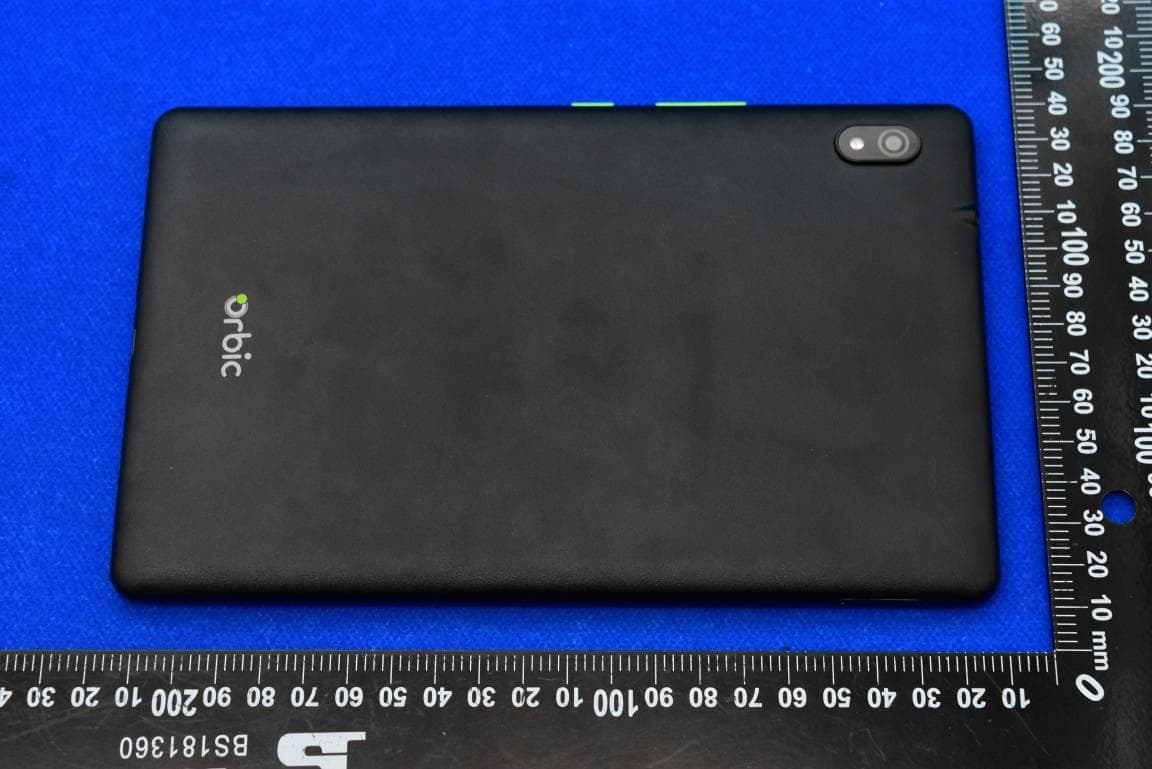
2ABGHRC8L1T
Aug 24, 2023Orbic TAB8 4G with WCDMA, LTE, Bluetooth and WIFI
Equipment Class
PCT - PCS Licensed Transmitter worn on body
2ABGH-RC10RLT
Aug 20, 2023Orbic TAB10R 4G with WCDMA, LTE, Bluetooth and WIFI
Equipment Class
DTS - Digital Transmission System
2ABGH-R500L5S6
Aug 30, 2022Orbic Speed 5G with WCDMA, LTE, WiFi, Bluetooth and 5G NR Sub 6GHz
Equipment Class
NII - Unlicensed National Information Infrastructure TX