2ABL8BT-1525Bluetooth headphone
SHENZHEN YES-HOPE CO., LTD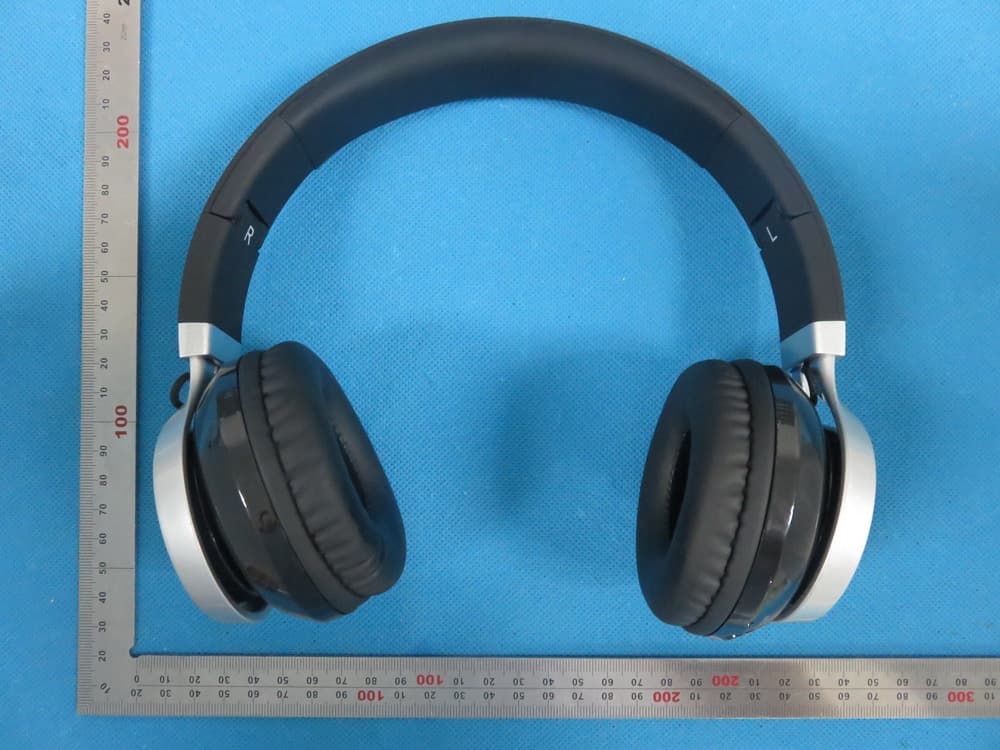
Click to zoom
Application Details
- Equipment Class
- DXX - Part 15 Low Power Communication Device Transmitter
- Date of Grant
- Jun 14, 2015
- Application Purpose
- Original Equipment
- Date of Application
- Jun 14, 2015
- Equipment Note
- Bluetooth headphone
- Frequency Range
- 2402.00000000 - 2480.00000000
- Company
- SHENZHEN YES-HOPE CO., LTD
- Country
- China
Documents & Files
Document Text
Text extracted from the exhibit documents filed with the FCC. Open a document above to read the original.
Users Manual
1. Play/pause and Volume +/- and Next/previous 2. Power on/off 3. Micro USB charging jack 4. 3.5mm earphone jack 5. Microphone Instruction manual Please read this manual carefully to ensure correct operation of the headset. Specification: Dimensions: 170x200x75mm Unit weight: 190g Working voltage: 3.7V Music playing time: up to 8 hours Charging voltage: DC 5V Charging time: about 3 hours Charging: Plug the charging cable into the headset charging jack (3) and the USB port of your computer. The red light will turn on when charging. Once the battery is full, the light will turn off. Pairing: 1.During pairing ensure the headset and Bluetooth device are no more than 1m apart. 1 2 3 4 5 2.Ensure the headset is turned off. If the headset is on, switch it off by holding down power button (2) until all lights are off. 3.Press and hold button (2) for 6 seconds until the red LED and blue LED flash alternately. 4.Activate your device’s Bluetooth function (refer to your device’s Bluetooth user guide for details). 5.Use the device to search for the headphones and select “Enyo” from the list of devices shown. 6.When the pairing is complete, the blue LED will flash regularly and the headset will be in standby mode. 7.Now you can make and answer calls using the headset. Operation: Turn the headset on by pressing and holding button (2) for 3 seconds. When power is on the blue light will flash. Turn the headset off by pressing button (2) until all lights are off. *Note: It is strongly recommended to turn off the headphones and Bluetooth on the mobile phone when not using it. Answering/Rejecting a call When a call comes in you will hear the ringtone of your mobile phone through the Bluetooth headset. Press button (2) to answer the call. To reject the call, press and hold button (2) for 2 seconds. Ending a call Press button (2) to end the call. Redialling the last dialled number Press button (2) twice to redial the last dialled number. Play/Pause Press button (1) to play and pause music. Adjusting the volume Use button (1) to adjust the volume during phone calls or while playing music. Roll button (1) upwards to increase the volume and roll button (1) downwards to lower the volume. Selecting music: While playing music: roll button (1) upwards to go to the next song and roll button (1) downwards go to the previous song. Art. No.7199-35 FCC ID: 2ABL8BT-1525 NOTE: This equipment has been tested and found to comply with the limits for a Class B digital device, pursuant to part 15 of the FCC Rules. These limits are designed to provide reasonable protection against harmful interference in a residential installation. This equipment generates uses and can radiate radio frequency energy and, if not installed and used in accordance with the instructions, may cause harmful interference to radio communications. However, there is no guarantee that interference will not occur in a particular installation. If this equipment does cause harmful interference to radio or television reception, which can be determined by turning the equipment off and on, the user is encouraged to try to correct the interference by one or more of the following measures: - Reorient or relocate the receiving antenna. - Increase the separation between the equipment and receiver. -Connect the equipment into an outlet on a circuit different from that to which the receiver is connected. -Consult the dealer or an experienced radio/TV technician for help Changes or modifications not expressly approved by the party responsible for compliance could void the user's authority to operate the equipment. This device complies with Part 15 of the FCC Rules. Operation is subject to the following two conditions: (1) this device may not cause harmful interference, and (2) this device must accept any interference received, including interference that may cause undesired operation.
Attestation Statements
Rm. 401, Bldg. 13, Shenzhen Software Park, Keji Central 2nd Road, Nanshan District, Shenzhen, China June 10, 2015 Federal Communications Commission Equipment Authorization Branch 7435 Oakland Mills Road Columbia, MD 21046 Subject: Explanation of differences between product types FCC ID : 2ABL8BT-1525 Model Number: BT-1525, BR-2000, BT-1300 To Whom It May Concern: We, The Shenzhen Yes-Hope Co.,Ltd. hereby declare that the model : BR-2000, BT-1300 is identical with the model : BT-1525, except the model name and colour. Except for the different above, no other modification is performed. Sincerely, Signature: Company Officer: Lydia Gong Telephone Number: 0755-82957048 Email: [email protected]
Cover Letter(s)
Rm. 401, Bldg. 13, Shenzhen Software Park, Keji Central 2nd Road, Nanshan District, Shenzhen, China Date (10/06/2015) Federal Communications Commission Equipment Authorization Branch 7435 Oakland Mills Road Columbia, MD 21046 Confidentiality Request FCC ID: 2ABL8BT-1525 Pursuant to Sections 0.457(d)(1)(ii) and 0.459 of the Commission’s Rules, Shenzhen Yes-Hope Co.,Ltd. hereby requests permanent confidential treatment of information accompanying this application as outlined below: Schematics Bill of Materials/Parts List Block Diagrams Theory of Operation The above materials contain trade secrets and proprietary information not customarily released to the public. The public disclosure of these matters might be harmful to the Applicant and provide unjustified benefits to its competitors. The Applicant understands that pursuant to Rule 0.457(d)(1)(ii), disclosure of this Application and all accompanying materials will not be made before the date of the Grant for this Application. Yours sincerely, Company Officer: Lydia Gong Telephone Number: 0755-82957048 Email: [email protected]
External Photos
External Photos TOP VIEW OF EUT BOTTOM VIEW OF EUT FRONT VIEW OF EUT BACK VIEW OF EUT LEFT VIEW OF EUT RIGHT VIEW OF EUT VIEW OF EUT (PORT)
ID Label/Location Info
FCC ID Label Location Model: BT-1525 FCC I D: 2ABL8BT‐1525 size: 1cm*1cm
Internal Photos
Internal Photos OPEN VIEW OF EUT INTERNAL VIEW OF EUT-1 INTERNAL VIEW OF EUT-2 INTERNAL VIEW OF EUT-3 INTERNAL VIEW OF EUT-4 INTERNAL VIEW OF EUT-5 Antenna
RF Exposure Info
RF Exposure evaluation Product Description:Bluetooth headphone Model Number: BT-1525 FCC ID: 2ABL8BT-1525 According to 447498 D01 General RF Exposure Guidance v05 The 1-g and 10-g SAR test exclusion thresholds for 100 MHz to 6 GHz at test separation distances ≤ 50 mm are determined by: [(max. power of channel, including tune-up tolerance, mW)/(min. test separation distance, mm)] ·[√f(GHz)] ≤ 3.0 for 1-g SAR and ≤ 7.5 for 10-g extremity SAR, where f(GHz) is the RF channel transmit frequency in GHz Power and distance are rounded to the nearest mW and mm before calculation According to the follow transmitter output power(P t )formula: P t =(E x d) 2 /(30 x g t ) P t =transmitter output power in watts g t =numeric gain of the transmitting antenna (unitess) E=electric field strength in V/m d=measurement distance in meters (m) According to the above test data, Emax=104.24dBuv/m=0.163V/m,d=3m,g t =1.58 P t =(E x d) 2 /(30 x g t )=(0.163x3) 2 /(30x1.58)=0.005045W=5.05mW The result is rounded to one decimal place for comparison Worse case is as below: [2480MHz -5.05mW output power] (5.05mW /5mm) .[√2.480(GHz)]= 1.591<3.0 for 1-g SAR Then SAR evaluation is not required NOTE: For the maximum power, you can refer FCC test report.
Test Report
Page 1 of 73 FCC Test Report Report No.: AGC02152150501FE03 FCC ID : 2ABL8BT-1525 APPLICATION PURPOSE : Original Equipment PRODUCT DESIGNATION : Bluetooth headphone BRAND NAME : Yes-Hope MODEL NAME : BT-1525, BR-2000, BT-1300 CLIENT : Shenzhen Yes-Hope Co.,Ltd. DATE OF ISSUE : June 02,2015 STANDARD(S) TEST PROCEDURE(S) : FCC Part 15 Rules REPORT VERSION : V1.0 Attestation of Global Compliance (Shenzhen) Co., Ltd CAUTION: This report shall not be reproduced except in full without the written permission of the test laboratory and shall not be quoted out of context. Report No.: AGC02152150501FE03 Page 2 of 73 Report Revise Record Report Version Revise Time Issued Date Valid Version Notes V1.0 / June 02,2015 Valid Original Report Report No.: AGC02152150501FE03 Page 3 of 73 TABLE OF CONTENTS 1. VERIFICATION OF CONFORMITY ...................................................................................... 4 2. GENERAL INFORMATION .................................................................................................. 5 2.1. PRODUCT DESCRIPTION ........................................................................................................ 5 2.2. TABLE OF CARRIER FREQUENCYS ....................................................................................... 5 3. MEASUREMENT UNCERTAINTY........................................................................................ 7 4. DESCRIPTION OF TEST MODES........................................................................................ 7 5. SYSTEM TEST CONFIGURATION ...................................................................................... 8 5.1. CONFIGURATION OF EUT SYSTEM ........................................................................................ 8 5.2. EQUIPMENT USED IN EUT SYSTEM ....................................................................................... 8 5.3. SUMMARY OF TEST RESULTS ................................................................................................ 8 6. TEST FACILITY .................................................................................................................... 9 7 ALL TEST EQUIPMENT LIST ............................................................................................... 9 8. RADIATED EMISSION ....................................................................................................... 10 8.1TEST LIMIT................................................................................................................................ 10 8.2. MEASUREMENT PROCEDURE ............................................................................................... 11 8.3. TEST SETUP ........................................................................................................................... 13 8.4. TEST RESULT(Worst modulation:GFSK) ................................................................................. 15 9. BAND EDGE EMISSION .................................................................................................... 41 9.1. MEASUREMENT PROCEDURE .............................................................................................. 41 9.2 TEST SETUP ............................................................................................................................ 41 9.3 RADIATED TEST RESULT(Worst modulation:GFSK) ............................................................... 42 10. 20DB BANDWIDTH .......................................................................................................... 50 10.1. MEASUREMENT PROCEDURE ............................................................................................ 50 10.2. TEST SET-UP (BLOCK DIAGRAM OF CONFIGURATION) ................................................... 50 10.3. LIMITS AND MEASUREMENT RESULTS .............................................................................. 50 11. FCC LINE CONDUCTED EMISSION TEST ..................................................................... 59 11.1. LIMITS OF LINE CONDUCTED EMISSION TEST ................................................................. 59 11.2. BLOCK DIAGRAM OF LINE CONDUCTED EMISSION TEST ............................................... 59 11.3. PRELIMINARY PROCEDURE OF LINE CONDUCTED EMISSION TEST ............................. 60 11.4. FINAL PROCEDURE OF LINE CONDUCTED EMISSION TEST ........................................... 60 11.5. TEST RESULT OF LINE CONDUCTED EMISSION TEST ..................................................... 61 APPENDIX A: PHOTOGRAPHS OF TEST SETUP ............................................................... 65 APPENDIX B: PHOTOGRAPHS OF EUT .............................................................................. 67 Report No.: AGC02152150501FE03 Page 4 of 73 1. VERIFICATION OF CONFORMITY Applicant Shenzhen Yes-Hope Co.,Ltd. Address Rm. 401, Bldg. 13, Shenzhen Software Park, Keji Central 2nd Road, Nanshan District, Shenzhen, China Manufacturer Shenzhen Kingda Co.,Ltd. Address 2F., 1st Bldg., Wanxia Industry Park, Tongfuyu Industrial Estate, Gonghe, Shajing Town, Baoan District, Shenzhen, P.R. China Product Designation Bluetooth headphone Brand Name Yes-Hope Test Model BT-1525 Series Model BR-2000, BT-1300 Different Description All the same except for color Date of test May 28,2015 to June 01,2015 Deviation None Condition of Test Sample Normal Report Template AGCRT-US-BR/RF We hereby certify that: The above equipment was tested by Compliance Certification Service(Shenzhen) Inc. The test data, data evaluation, test procedures, and equipment configurations shown in this report were made in accordance with the procedures given in ANSI C63.4 (2009) and the energy emitted by the sample EUT tested as described in this report is in compliance with radiated emission limits of FCC Rules Part 15.249. Prepared By Time Huang June 02,2015 Checked By Forrest Lei June 02,2015 Authorized By Solger Zhang June 02,2015 Report …
Text truncated - open the document above for the full version.
Test Setup Photos
Test Setup Photos FCC LINE CONDUCTED EMISSION TEST SETUP FCC RADIATED EMISSION TEST SETUP
Contact Information
Applicant
LYDIA GONG(SALES MANAGER)
Test Firm
Compliance Certification Services (Shenzhen) Inc.Harry Li
Technical Specifications
| # | Rule Parts | Frequency Range | Power Output |
|---|---|---|---|
| 1 | 15C | 2.40 GHz - 2.48 GHz | - |
Other Applications from SHENZHEN YES-HOPE CO., LTD
2ABL8BT-1600
Jan 01, 2014BLUETOOTH HEADPHONE
Equipment Class
DSS - Part 15 Spread Spectrum Transmitter