2ACBR-PD67PD67-UNI-NA-RSWBG and PD67-UNI-NA-RWBG
Turck Inc.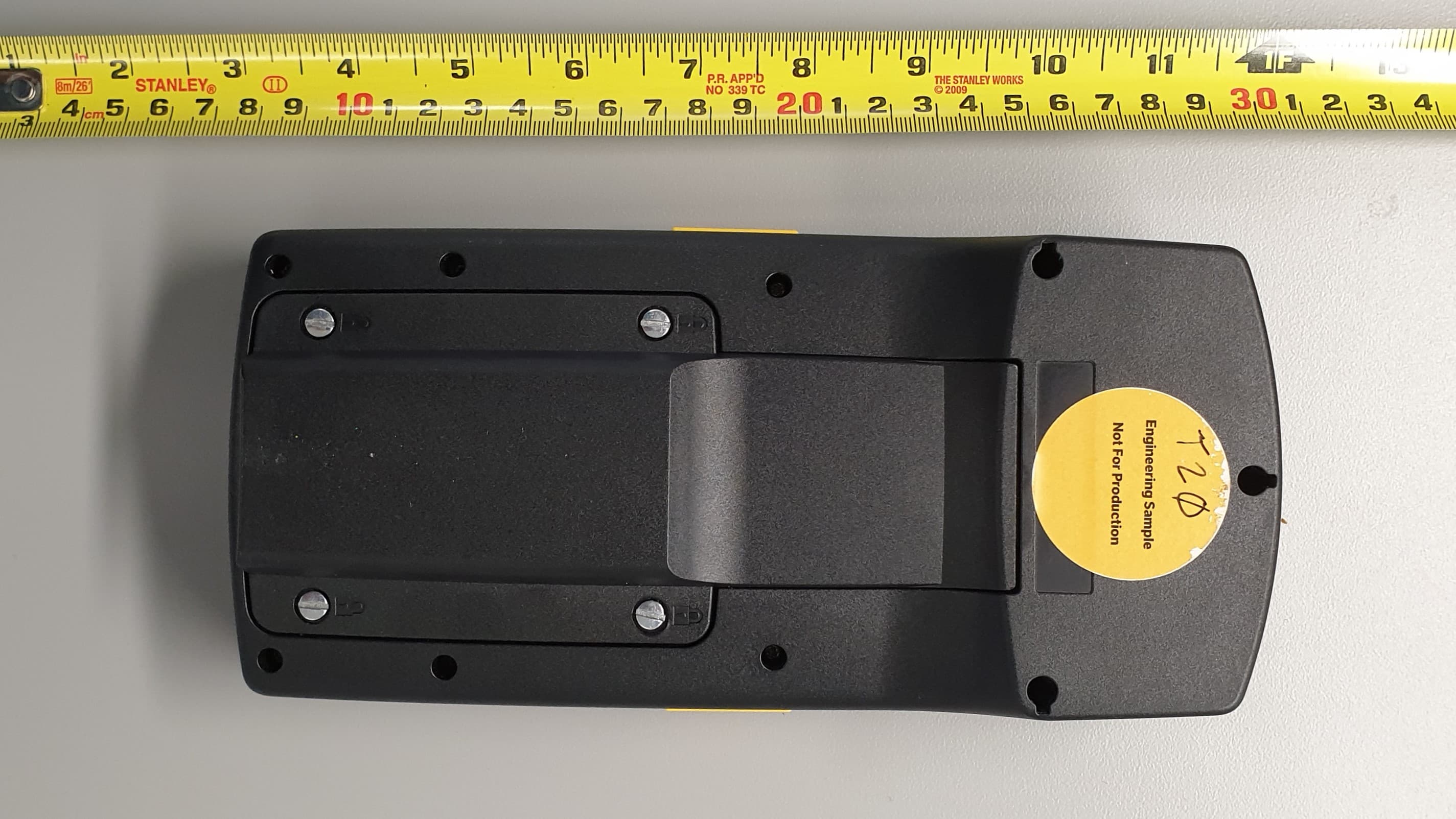
Click to zoom
Application Details
- Equipment Class
- DXX - Part 15 Low Power Communication Device Transmitter
- Date of Grant
- Sep 07, 2020
- Application Purpose
- Original Equipment
- Date of Application
- Sep 07, 2020
- Equipment Note
- PD67-UNI-NA-RSWBG and PD67-UNI-NA-RWBG
- Frequency Range
- 13.56000000 - 13.56000000
- Company
- Turck Inc.
- Country
- United States
Documents & Files
Document Text
Text extracted from the exhibit documents filed with the FCC. Open a document above to read the original.
Users Manual
© Hans Turck GmbH & Co. KG | 100004004 2020-02 FR ES EN PD67-UNI-NA-... RFID Handheld Quick Start Guide 100004004 1901 Additional information see FCC Class A Notice: This device complies with Part 15 of the FCC Rules. Operation is subject to the following two conditions: 1) This device may not cause harmful interference. 2) This device must accept any interference received, includ- ing interference that may cause undesired operation. Note: This equipment has been tested and found to comply with the limits for a Class A digital device, pursuant to part 15 of the FCC Rules. These limits are designed to provide rea- sonable protection against harmful interference when the equipment is operated in a commercial environment. This equipment generates, uses and can radiate radio frequency energy and, if not installed and used in accordance with the instruction manual, may cause harmful interference to radio communications. Operation of this equipment in a residen- tial area is likely to cause harmful interference in which case the user will be required to correct the interference at his own expense. Industry Canada Statement: Per RSS-Gen, Section 8.4 This device complies with Industry Canada license-exempt RSS standard(s). Operation is subject to the following two conditions: (1) this device may not cause interference, and (2) this device must accept any interference, including inter- ference that may cause undesired operation of the device. Par RSS - Gen, Section 8.4 Cet appareil est conforme à Indus- trie Canada exempts de licence standards RSS. L’exploitation est autorisée aux deux conditions suivantes : (1) l’appareil ne doit pas produire de brouillage, et (2) l’utilisateur de l’appareil doit accepter tout brouillage radioélectrique subi, même si le brouillage est susceptible d’en compromettre le fonctionnement. This digital apparatus complies with Canadian ICES-001 (A). Cet appareil numérique est conforme à la norme NMB-001 (A) du Canada. turck.com PD67-UNI-NA... Documents complémentaires Vous trouverez les documents suivants contenant des informations complémentaires à la présente notice sur notre site Web www.turck.com : ■ Fiche technique ■ Notice d’utilisation Pour votre sécurité Utilisation correcte L’appareil est conçu exclusivement pour une utilisation dans le domaine industriel. Cette console de paramétrage permet la lecture et l’écriture sur des étiquettes électroniques RFID passives. L’appareil peut être réglé en mode HF ou UHF. En mode HF, l’appareil fonctionne à une fréquence de 13,56 MHz. En mode UHF, la fréquence de fonctionnement est comprise entre 902.75 et 927.25MHz. Les appareils doivent être employés unique- ment dans les pays dans lesquels une plage de fréquence de 865-868 MHz est autorisée pour l’utilisation de RFID-UHD. Les consoles de paramétrage PD67-...RSWBG peuvent également lire les code-barres. Les appareils doivent exclusivement être utilisés conformé- ment aux indications figurant dans la présente notice. Toute autre utilisation est considérée comme non conforme. La société Turck décline toute responsabilité en cas de dom- mages causés par une utilisation non conforme. Consignes de sécurité générales ■ Seul un personnel qualifié est habilité à monter, installer, utiliser et entretenir l’appareil. ■ Les appareils répondent exclusivement aux exigences de la directive CEM pour le secteur industriel et ne sont pas destinés à être utilisés dans les zones d’habitation. ■ Une exposition prolongée dans la zone de rayonnement des appareils peut avoir des conséquences néfastes sur la santé. Respectez les distances minimales requises par rapport à la surface de rayonnement de l’appareil. Région Puissance de rayonnement admissible max. Distance de sécurité USA, Canada, Mexique 30 dBm ERP> 0,22 m ■ Le rayonnement de la console de paramétrage avec antenne UHF peut avoir un impact sur certains dispositifs médicaux. Maintenez une distance supérieure par rapport aux sources de rayonnement actives jusqu’à la portée d’émission maximale. ■ Changes or modifications not expressly approved by the party responsible for compliance could void the user’s authority to operate the equipment. FR Guide d'utilisation rapide Console de paramétrage avec antenne RFID EN Quick-Start Guide RFID Handheld Other documents Besides this document the following material can be found on the Internet at www.turck.com: ■ Data sheet ■ Operating Instructions For Your Safety Intended use The device is designed exclusively for use in industrial areas. Passive RFID tags can be written and read with the handheld. The device can be set to HF or UHF operation. In HF opera- tion, the device operates at a frequency of 13.56 MHz. In the UHF range the operating frequency is 902.75...927.25 MHz. The devices must only be operated in countries in which the 902.75...927.25 MHz frequency range is permissible for the use of UHF RFID. Barcodes can also be read with the PD67-... RSWBG handhelds. The device must only be used as described in these instruc- tions. Any other use is not in accordance with the intended use. Turck accepts no liability for any resulting damage. General safety notes ■ The device must only be fitted, installed, operated and maintained by trained and qualified personnel. ■ The devices only meet the EMC requirements for indus- trial areas and are not suitable for use in residential areas. ■ Any extended stay within the area of radiation of the devices may be harmful to health. Observe minimum distances from the actively radiating surface of the device. Region Max. perm. total radiant output power Safety distance USA, Canada, Mexico 30 dBm ERP> 0.22 m ■ The radiation of the UHF handheld may impair the opera- tion of medical equipment. Maintain an additional dis- tance from active radiation sources up to the maximum transmission distance. ■ Changes or modifications not expressly approved by the party responsible for compliance could void the user’s authority to operate the equipment. ES Guía de inicio rápi…
Text truncated - open the document above for the full version.
Users Manual
Your Global Automation Partner Instructions for Use PD67-UNI-... RFID Handheld 2 Hans Turck GmbH & Co. KG | T +49 208 4952-0 | F +49 208 4952-264 | [email protected] | www.turck.com V01.00 | 2020/03 3 Table of Contents 1About these Instructions................................................................................................................... 5 1.1Target groups................................................................................................................... 5 1.2Explanation of symbols used........................................................................................ 5 1.3Other documents............................................................................................................ 5 1.4Naming convention........................................................................................................ 5 1.5Feedback about these instructions.............................................................................. 5 2Notes on the Product......................................................................................................................... 6 2.1Product identification..................................................................................................... 6 2.2Scope of delivery............................................................................................................. 6 2.3Legal requirements......................................................................................................... 6 2.4Manufacturer and service.............................................................................................. 7 3For Your Safety.................................................................................................................................... 8 3.1Intended use..................................................................................................................... 8 3.2General safety instructions............................................................................................ 9 4Product Description......................................................................................................................... 10 4.1Device overview............................................................................................................ 10 4.1.1Operating elements...................................................................................................................... 10 4.1.2Display elements............................................................................................................................ 10 4.2Properties and features................................................................................................ 11 4.3Functional principle...................................................................................................... 11 4.4Functions and operating modes................................................................................ 11 4.4.1HF operation.................................................................................................................................... 11 4.4.2UHF operation................................................................................................................................. 11 4.4.3Barcode scanner............................................................................................................................. 12 5Connecting........................................................................................................................................ 13 5.1Battery charging............................................................................................................ 13 6Commissioning................................................................................................................................. 14 7Operation........................................................................................................................................... 15 7.1Aligning the handheld................................................................................................. 15 7.2Switching the display on and off................................................................................ 15 7.3Start screen – Overview................................................................................................ 15 7.4Performing a scan operation....................................................................................... 16 7.4.1Performing a scan operation with the Turck RFID app.................................................... 16 7.4.2Performing a scan operation via buttons on the device................................................. 16 7.5Reading and writing tags............................................................................................. 18 7.5.1Reading and writing tags - Extended functions................................................................. 19 7.5.2Example: Read data....................................................................................................................... 20 7.5.3Example: Write data...................................................................................................................... 25 7.6Reading a barcode........................................................................................................ 30 7.7Exchanging data with a PC.......................................................................................... 30 8Setting................................................................................................................................................ 31 8.1Operating mode setting............................................................................................... 32 8.2Assign password............................................................................................................ 32 8.3Setting the scan screen.................................…
Text truncated - open the document above for the full version.
Block Diagram
ST25R3911B HF Radio 27.12MHZ Oscillator XRCGB27M120F3M00R0 Antenna Matching Circuitry Differential RF @ 13.56 MHz Differential RF @ 13.56 MHz Antenna Connector ST25RU3992-BQFT UHF Radio 20.0 MHZ Oscillator O 20.0-JT33-B-K-3.3-LF Balun/Filter Differential RF @ 902.75 MHz – 927.25 MHz Power Amplifier RF @902.75 MHz – 927.25 MHz Directional Coupler Antenna Connector RF @902.75 MHz – 927.25 MHz RF @902.75 MHz – 927.25 MHz CAM-M8C-0 GPS Radio No Oscillator No External Transmit Path TIWI BLE WiFi Radio No Oscillator Antenna Connector WiFi range 2412MHz – 2472MHz Bluetooth Range 2402MHZ – 2480MHz
External Photos
PD67 External Photos
Internal Photos
Internal Board Photos of PD67 for Radio ID Change Wi-Fi Radio (TIWIBLE) is installed on SOM board (yellow circle shows radio module): SOM is installed on Baseboard: Baseboard communicates with RFID board (yellow circle shows HF radio, triangle is HF antenna, diamond is UHF antenna, and square is Wi-Fi antenna): Bottom View of RFID board (yellow circle shows UHF Radio): Close-Up UHF Close-Up HF
Operational Description
PD67 Handheld RFID Device Contains 3 antennas. 1.) UHF (Turck Design Controlled) a. Gain is 3dBi 2.) HF (Turck Design Controlled) a. Operates at 13.56 MHz 3.) Wi-Fi/Bluetooth (off-the-shelf, manufactured by Taoglas) a. Manufacturer part number if FXP831.07.0100C b. See data sheet for details
Operational Description
PD67 Operational Description The PD67 is a battery operated, handheld device used primarily for reading and writing HF and UHF RFID tags, and reading barcodes. UHF frequency ranges include FCC (902.75MHz – 927.25MHz) as well as EU (865MHz – 868MHz), depending on the region of operation. HF operates at 13.56MHz for all regions. Region is selected and locked during manufacturing to prevent end user from operating in non-compatible regions (different regions require different settings for compliance). The device is provisioned for a specific region, and the typical end user cannot change the region. When transmitting for RFID reading, the UHF Transmitter has a max output power of 30dB. Its duty cycle while transmitting is not constant. It is calculated and adjusted every read based on factors such as tag response and reflected power. The duty cycle is limited in firmware to 50%. In practice, the demonstrated maximum duty cycle is 30%. When operating in regions governed by the FCC, the UHF RFID function utilizes frequency hopping and digital modulation in compliance with applicable sections of FCC Part 15.247. It utilizes 50 frequencies at 500 kHz intervals. Maximum dwell time on any one channel is less than 0.4 second. The Pseudo Random Hopping Sequence is controlled entirely by firmware, and ensures that all channels are used once and only once per hopping sequence. RFID tags response through backscatter linking, and the transmitter and receiver both reside in the same component in the PD67, therefore synchronization of the frequencies is guaranteed. The firmware does indeed incorporate intelligence to detect interference introduced by other users within the spread spectrum band, but it incorporates no method of coordination with other users. The user interfaces with the device via 3 buttons, as well as a capacitive touch LCD. The device runs Android as its operating system. The PD67 is also capable of WiFi and Bluetooth communication. This is implemented through a pre-certified radio module and antenna combination. Battery Charging is accomplished by a USB C connector. The device includes a GPS Radio (receive only) that utilizes an on-chip antenna. It does not use an external antenna. 1.) UHF Radio Information a. ST25RU3992-BQFT (STMicro) b. Modulation Type: PR-ASK c. Amplitude Control via internal attenuator (-13dBm – 7dBm) d. Additional external power amplifier (hardware limited to 30dB) e. End User output power controlled by application (SDK provided by Turck) f. Feedback and control provided via directional coupler and Balun feeding back to radio 2.) HF Radio Information a. ST25R3911B (STMicro) b. Modulation Type: OOK c. Hardware limited to 1.4W d. Direct drive to antenna (no external power amp) e. No end user power control 3.) Barcode Scanner Information a. Manufacturer: CodeCorp b. Model Number: CR8222 4.) Wi-Fi/Bluetooth Radio Information a. FCC ID: TFB-TIWI1-01 b. Manufacturer: Laird Connectivity c. Manufacturer Model Number: TIWIBLE d. Antenna Manufacturer: Taoglas e. Antenna Model Number: FXP831.07.0100C 5.) Battery Information a. Lithium Ion b. Manufacturer: Molicel c. Model Number MCR-1821J d. 2.4Ah, 7.4VDC, 17.76Wh 6.) GPS Radio Info a. Manufacturer: u-blox b. Model Number: CAM-M8C-0
RF Exposure Info
This report must not be used to claim product certification, approval, or endorsement by NVLAP, NIST, or any agency of the U.S. Government. This Report shall not be reproduced, except in full without written approval of the laboratory. TURCK Inc. PD67 Handheld RFID Reader SAR Evaluation Report: TURC0061.19, Issue Date: July 22, 2020 Evaluated to the following SAR specification: FCC 2.1093:2020 NVLAP Lab Code: 200881-0 CERTIFICATE OF TEST 2018-07-17 Last Date of Test: July 1, 2020 TURCK Inc. EUT: PD67 Handheld RFID Reader Applicable Standard Test Description Specification Test Method Pass/Fail SAR Evaluation FCC 2.1093:2020 FCC KDB 865664 D01 v01r04 FCC KDB 865664 D02 v01r02 FCC KDB 447498 D01 v06 IEEE Std 1528:2013 Pass Highest Simultaneous SAR Values Variant Frequency Bands (GHz) Extremity (W/kg) Limit (W/kg) Exposure Environment 10 g 10 g UHF RFID 0.902 – 0.928 0.72 4 General Population 802.11 radio 2.4 – 2.4835 Deviations From Test Standards None Approved By: Don Facteau, Systems Architect Report No. TURC0061.19EAR-Controlled Data2/11 REVISION HISTORY 2018.07.17 Revision Number Description Date (yyyy-mm-dd) Page Number 00 None Report No. TURC0061.19EAR-Controlled Data3/11 ACCREDITATIONS AND AUTHORIZATIONS 2019.03.08 United States FCC - Designated by the FCC as a Telecommunications Certification Body (TCB). Certification chambers, Open Area Test Sites, and conducted measurement facilities are listed with the FCC. A2LA - Accredited by A2LA to ISO / IEC 17065 as a product certifier. This allows Element to certify transmitters to FCC and IC specifications. NVLAP - Each laboratory is accredited by NVLAP to ISO 17025 Canada ISED - Recognized by Innovation, Science and Economic Development Canada as a Certification Body (CB) and as a CAB for the acceptance of test data. European Union European Commission – Within Element, we have a EU Notified Body validated for the EMCD and RED Directives. Australia/New Zealand ACMA - Recognized by ACMA as a CAB for the acceptance of test data. Korea MSIT / RRA - Recognized by KCC’s RRA as a CAB for the acceptance of test data. Japan VCCI - Associate Member of the VCCI. Conducted and radiated measurement facilities are registered. Taiwan BSMI – Recognized by BSMI as a CAB for the acceptance of test data. NCC - Recognized by NCC as a CAB for the acceptance of test data. Singapore IDA – Recognized by IDA as a CAB for the acceptance of test data. Israel MOC – Recognized by MOC as a CAB for the acceptance of test data. Hong Kong OFCA – Recognized by OFCA as a CAB for the acceptance of test data. Vietnam MIC – Recognized by MIC as a CAB for the acceptance of test data. SCOPE For details on the Scopes of our Accreditations, please visit: https://www.nwemc.com/emc-testing-accreditations Report No. TURC0061.19EAR-Controlled Data4/11 FACILITIES 2019.03.08 California Labs OC01-17 41 Tesla Irvine, CA 92618 (949) 861-8918 Minnesota Labs MN01-10 9349 W Broadway Ave. Brooklyn Park, MN 55445 (612)-638-5136 Oregon Labs EV01-12 6775 NE Evergreen Pkwy #400 Hillsboro, OR 97124 (503) 844-4066 Texas Labs TX01-09 3801 E Plano Pkwy Plano, TX 75074 (469) 304-5255 Washington Labs NC01-05 19201 120 th Ave NE Bothell, WA 98011 (425)984-6600 NVLAP NVLAP Lab Code: 200676-0 NVLAP Lab Code: 200881-0 NVLAP Lab Code: 200630-0 NVLAP Lab Code:201049-0 NVLAP Lab Code: 200629-0 Innovation, Science and Economic Development Canada 2834B-1, 2834B-3 2834E-1, 2834E-3 2834D-1 2834G-1 2834F-1 BSMI SL2-IN-E-1154R SL2-IN-E-1152R SL2-IN-E-1017 SL2-IN-E-1158R SL2-IN-E-1153R VCCI A-0029 A-0109 A-0108 A-0201 A-0110 Recognized Phase I CAB for ISED, ACMA, BSMI, IDA, KCC/RRA, MIC, MOC, NCC, OFCA US0158 US0175 US0017 US0191 US0157 Report No. TURC0061.19EAR-Controlled Data5/11 PRODUCT DESCRIPTION 2018-07-17 Client and Equipment Under Evaluation Information Company Name: TURCK Inc. Address: 3000 Campus Dr City, State, Zip: PLYMOUTH, MN 55441 Evaluation Requested By: Gabe Selinger EUT: PD67 Handheld RFID Reader Information Provided by the Party Requesting the Evaluation Functional Description of the Equipment: PD67 is a battery operated, handheld device for reading HF and UHF RFID tags. There are two model variants, one has a barcode scanner and one does not. It is capable of WiFi communication, and has a USB C interface for battery charging and communication. When transmitting for RFID reading, it has a max output power of about 30dBm. Its duty cycle while transmitting is NOT constant (it is calculated and adjusted every time based on factors such as tag response and reflected power). The user interfaces with the device via 3 buttons, as well as a capacitive touch LCD. The device runs Android as its operating system. The barcode scanner contains a linear LED for aiming purposes, but there is NOT a laser. The battery is Lithium Ion. The device also has GPS capability, via an internal on-board antenna. The device contains the following radios: HF RFID UHF RFID Wi-Fi 802.11bgn Bluetooth BDR/EDR Bluetooth Low Energy GPS (Receive Only) The device transmits Wi-Fi 802.11bgn and Bluetooth from the same combination radio module (FCC ID: TFB- TIWI1-01) Transmit Frequency Ranges: a) HF RFID: 13.56 MHz b) UHF RFID: 902-928 MHz c) 802.11bgn: 2412-2462 MHz (SISO, 20 MHz channel bandwidth) d) Bluetooth BDR/EDR: 2402-2480 MHz e) Bluetooth Low Energy: 2402-2480 MHz Objective: To demonstrate compliance with FCC RF exposure requirements for 2.1093 portable devices for simultaneous transmission. SAR test reports associated with this report: The SAR Evaluation reports from which the data was taken to support the calculations in this report are: Element report TURC0061.14 contains the SAR data for the 802.11/BT radio module. Element report TURC0064 contains the SAR data for the UHF RFID radio. Report No. TURC0061.19EAR-Controlled Data6/11 RF Exposure Condition 2018-07-17 The following RF Exposure conditions were used for the assessment documented in this report: Intended Use Portable Location on Body (if applicable) Extremity (See Ph…
Text truncated - open the document above for the full version.
Test Report
This report must not be used to claim product certification, approval, or endorsement by NVLAP, NIST, or any agency of the U.S. Government. This Report shall not be reproduced, except in full without written approval of the laboratory. TURCK Inc. PD67 Handheld RFID Reader FCC 15.247:2020 RFID Transceiver Report # TURC0061.1 Rev. 1 NVLAP LAB CODE: 200881-0 CERTIFICATE OF TEST 2018-09-14 Product compliance is the responsibility of the client; therefore, the tests and equipment modes of operation represented in this report were agreed upon by the client, prior to testing. The results of this test pertain only to the sample(s) tested. The specific description is noted in each of the individual sections of the test report supporting this certificate of test. This report reflects only those tests from the referenced standards shown in the certificate of test. It does not include inspection or verification of labels, identification, marking or user information. As indicated in the Statement of Work sent with the quotation, Element’s standard process is to always use the latest published version of the test methods even when earlier versions are cited in the test specification. Issuance of a purchase order was de facto acceptance of this approach. Otherwise, the client would have advised Element in writing of the specific version of the test methods they wanted applied to the subject testing. Last Date of Test: January 23, 2020 TURCK Inc. EUT: PD67 Handheld RFID Reader Radio Equipment Testing Standards Specification Method FCC 15.247:2019 FCC 15.247:2020 ANSI C63.10:2013 Results Method Clause Test Description Applied Results Comments 6.2 Powerline Conducted Emissions (Transmitter) Yes Pass 6.5, 6.6 Spurious Radiated Emissions Yes Pass 7.5 Duty Cycle Yes N/A Characterization of radio operation. 7.8.2 Carrier Frequency Separation Yes Pass 7.8.3 Number of Hopping Frequencies Yes Pass 7.8.4 Dwell Time Yes Pass 7.8.5 Output Power Yes Pass 7.8.5 Equivalent Isotropic Radiated Power Yes Pass 7.8.6 Band Edge Compliance Yes Pass 7.8.6 Band Edge Compliance - Hopping Mode Yes Pass 7.8.7 Occupied Bandwidth Yes Pass 7.8.8 Spurious Conducted Emissions Yes Pass 11.10.2 Power Spectral Density No N/A Not required for FHSS devices. Deviations From Test Standards None Approved By: Eric Brandon, Department Manager Report No. TURC0061.1 Rev. 12/55 REVISION HISTORY 2018.07.17 Revision Number Description Date (yyyy-mm-dd) Page Number 01 Corrected typo on Output Power units 2020-08-19 8 Updated configurations to PD67-UNI-NA-RSWBG model (indicates barcode included) for clarity 2020-08-19 9 Added Power Settings table 2020-08-19 12 Report No. TURC0061.1 Rev. 13/55 ACCREDITATIONS AND AUTHORIZATIONS 2019.03.08 United States FCC - Designated by the FCC as a Telecommunications Certification Body (TCB). Certification chambers, Open Area Test Sites, and conducted measurement facilities are listed with the FCC. A2LA - Accredited by A2LA to ISO / IEC 17065 as a product certifier. This allows Element to certify transmitters to FCC and IC specifications. NVLAP - Each laboratory is accredited by NVLAP to ISO 17025 Canada ISED - Recognized by Innovation, Science and Economic Development Canada as a Certification Body (CB) and as a CAB for the acceptance of test data. European Union European Commission – Within Element, we have a EU Notified Body validated for the EMCD and RED Directives. Australia/New Zealand ACMA - Recognized by ACMA as a CAB for the acceptance of test data. Korea MSIT / RRA - Recognized by KCC’s RRA as a CAB for the acceptance of test data. Japan VCCI - Associate Member of the VCCI. Conducted and radiated measurement facilities are registered. Taiwan BSMI – Recognized by BSMI as a CAB for the acceptance of test data. NCC - Recognized by NCC as a CAB for the acceptance of test data. Singapore IDA – Recognized by IDA as a CAB for the acceptance of test data. Israel MOC – Recognized by MOC as a CAB for the acceptance of test data. Hong Kong OFCA – Recognized by OFCA as a CAB for the acceptance of test data. Vietnam MIC – Recognized by MIC as a CAB for the acceptance of test data. SCOPE For details on the Scopes of our Accreditations, please visit: https://www.nwemc.com/emc-testing-accreditations Report No. TURC0061.1 Rev. 14/55 FACILITIES 2019.03.08 California Labs OC01-17 41 Tesla Irvine, CA 92618 (949) 861-8918 Minnesota Labs MN01-10 9349 W Broadway Ave. Brooklyn Park, MN 55445 (612)-638-5136 Oregon Labs EV01-12 6775 NE Evergreen Pkwy #400 Hillsboro, OR 97124 (503) 844-4066 Texas Labs TX01-09 3801 E Plano Pkwy Plano, TX 75074 (469) 304-5255 Washington Labs NC01-05 19201 120 th Ave NE Bothell, WA 98011 (425)984-6600 NVLAP NVLAP Lab Code: 200676-0 NVLAP Lab Code: 200881-0 NVLAP Lab Code: 200630-0 NVLAP Lab Code:201049-0 NVLAP Lab Code: 200629-0 Innovation, Science and Economic Development Canada 2834B-1, 2834B-3 2834E-1, 2834E-3 2834D-1 2834G-1 2834F-1 BSMI SL2-IN-E-1154R SL2-IN-E-1152R SL2-IN-E-1017 SL2-IN-E-1158R SL2-IN-E-1153R VCCI A-0029 A-0109 A-0108 A-0201 A-0110 Recognized Phase I CAB for ISED, ACMA, BSMI, IDA, KCC/RRA, MIC, MOC, NCC, OFCA US0158 US0175 US0017 US0191 US0157 Report No. TURC0061.1 Rev. 15/55 MEASUREMENT UNCERTAINTY TMU.2015.07.10 Measurement Uncertainty When a measurement is made, the result will be different from the true or theoretically correct value. The difference is the result of tolerances in the measurement system that cannot be completely eliminated. To the extent that technology allows us, it has been our aim to minimize this error. Measurement uncertainty is a statistical expression of measurement error qualified by a probability distribution. A measurement uncertainty estimation has been performed for each test per our internal quality document QM205.4.6. The estimation is used to compare the measured result with its "true" or theoretically correct value. The expanded measurement uncertainty (K=2) can be found included as part of the applicable test description page. Our measurement da…
Text truncated - open the document above for the full version.
Test Report
This report must not be used to claim product certification, approval, or endorsement by NVLAP, NIST, or any agency of the U.S. Government. This Report shall not be reproduced, except in full without written approval of the laboratory. TURCK Inc. PD67 Handheld RFID Reader FCC 15.225:2020 13.56 MHz Radio Report # TURC0061.3 Rev. 1 NVLAP LAB CODE: 200881-0 CERTIFICATE OF TEST 2018-09-14 Product compliance is the responsibility of the client; therefore, the tests and equipment modes of operation represented in this report were agreed upon by the client, prior to testing. The results of this test pertain only to the sample(s) tested. The specific description is noted in each of the individual sections of the test report supporting this certificate of test. This report reflects only those tests from the referenced standards shown in the certificate of test. It does not include inspection or verification of labels, identification, marking or user information. As indicated in the Statement of Work sent with the quotation, Element’s standard process is to always use the latest published version of the test methods even when earlier versions are cited in the test specification. Issuance of a purchase order was de facto acceptance of this approach. Otherwise, the client would have advised Element in writing of the specific version of the test methods they wanted applied to the subject testing. Last Date of Test: November 22, 201…
Text truncated - open the document above for the full version.
Contact Information
Applicant
Thomas Miller(Sr. Compliance Engineer)
Test Firm
Element Materials Technology MinneapolisRenee Walker
Technical Specifications
| # | Rule Parts | Frequency Range | Power Output |
|---|---|---|---|
| 1 | 15C | 13.56 MHz - 13.56 MHz | - |
Other Applications from Turck Inc.
2ACBR-GR1
Aug 25, 2014Handheld UHF RFID reader
Equipment Class
DSS - Part 15 Spread Spectrum Transmitter