2ACCJB179Tablet PC
TCL Communication Ltd.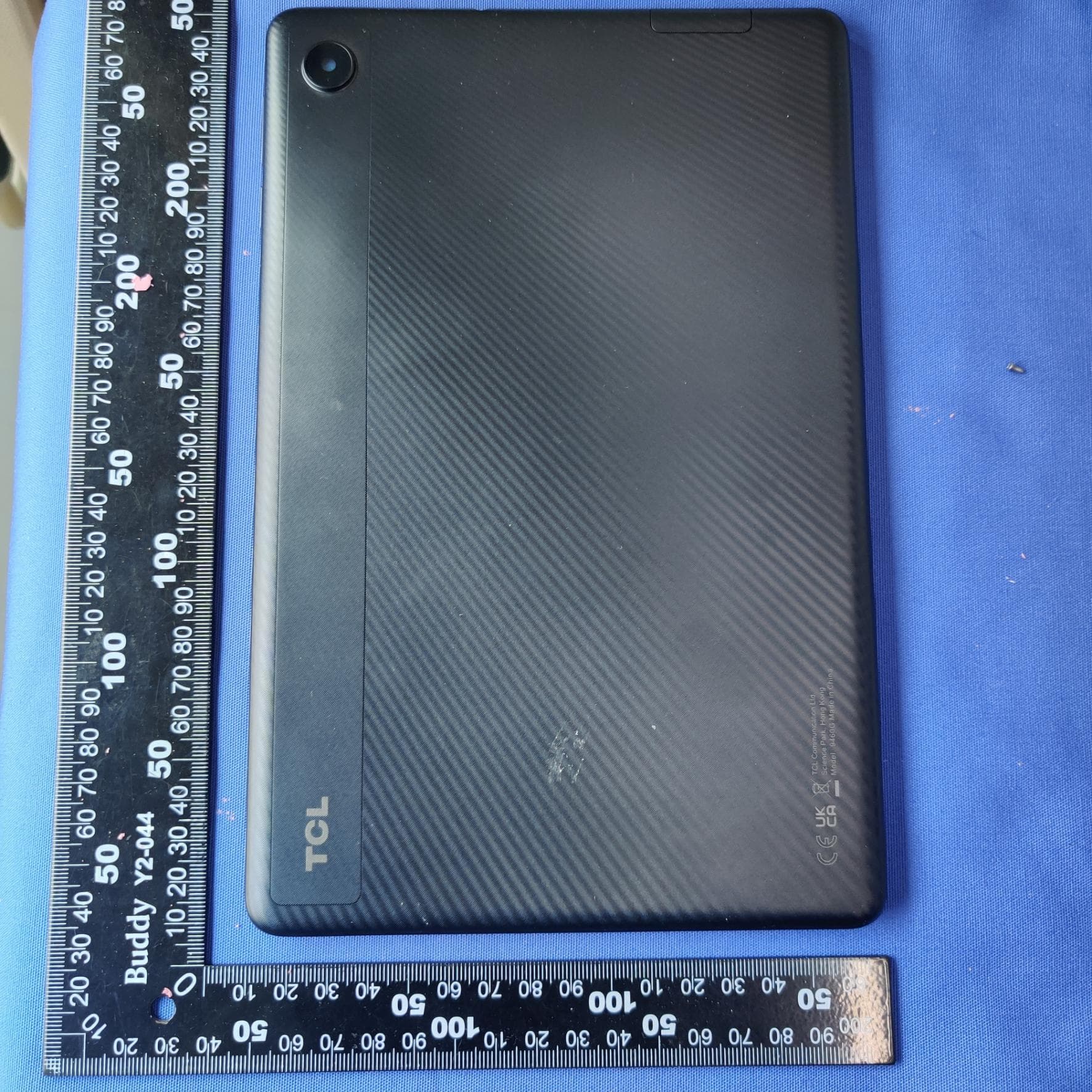
Click to zoom
Application Details
- Equipment Class
- NII - Unlicensed National Information Infrastructure TX
- Date of Grant
- Apr 13, 2022
- Application Purpose
- Original Equipment
- Date of Application
- Apr 11, 2022
- Equipment Note
- Tablet PC
- Frequency Range
- 5745.00000000 - 5825.00000000
- Company
- TCL Communication Ltd.
- Country
- China
Documents & Files
Document Text
Text extracted from the exhibit documents filed with the FCC. Open a document above to read the original.
Users Manual
Safety and Precautions EN-1 This product meets applicable national SAR limits of 1.6 W/kg. The specific maximum SAR values can be found on Radio waves section. PROTECT YOUR HEARING To prevent possible hearing damage, do not listen at high volume levels for long periods. Exercise caution when holding your device near your ear while the loudspeaker is in use. SAR EN-2 Safety and use ������������������������� We recommend that you read this chapter carefully before using your device. The manufacturer disclaims any liability for damage, which may result as a consequence of improper use or use contrary to the instructions contained herein. TRAFFIC SAFETY: Given that studies show that using a device while driving a vehicle constitutes a real risk, even when the hands-free kit is used (car kit, headset...), drivers are requested to refrain from using their device when the vehicle is not parked. Check the laws and regulations on the use of wireless devices and their accessories in the areas where you drive. Always obey them. The use of these devices may be prohibited or restricted in certain areas. CONDITIONS OF USE: • You are advised to switch off the device from time to time to optimize its performance; • Remember to abide by local authority rules of device use on aircrafts; • If your device is a unibody device, where the back cover and battery are not removable, dissembling the device will void your warranty. Disassembling the device can cause bodily injury if the battery is punctured; • Always handle your device with care and keep it in a clean and dust-free place; • Do not allow your device to be exposed to adverse weather or environmental conditions, such as moisture, humidity, rain, infiltration of liquids, dust, sea air, etc. The manufacturer’s recommended operating temperature range is 0°C (32°F) to +40°C (104°F). At over 40°C (104°F), the legibility of the device’s display may be impaired, though this is temporary and not serious; • Do not open, dismantle, or attempt to repair your device yourself; • Do not drop, throw, or bend your device; • Use only batteries, battery chargers, and accessories which are recommended by TCL Communication Ltd. and its affiliates and are compatible with your device model. TCL Communication Ltd. and its affiliates disclaim any liability for damage caused by the use of other chargers or batteries; • Your device should not be disposed of in a municipal waste. Please check local regulations for disposal of electronic products; • Remember to make backup copies or keep a written record of all important information stored on your device; EN-3 • Some people may suffer epileptic seizures or blackouts when exposed to flashing lights, or when playing video games. These seizures or blackouts may occur even if a person never had a previous seizure or blackout. If you have experienced seizures or blackouts, or if you have a family history of such occurrences, please consult your doctor before playing video games on your device or enabling a flashing-lights feature on your device; • Parents should monitor their children’s use of video games or other features that incorporate flashing lights on the devices. All persons should discontinue use and consult a doctor if any of the following symptoms occur: convulsion, eye or muscle twitching, loss of awareness, orientation, or movements. PRIVACY: Please note that you must respect the laws and regulations in force in your jurisdiction or other jurisdiction(s) where you will use your device regarding taking photographs and recording sounds with your device. Pursuant to such laws and regulations, it may be strictly forbidden to take photographs and/or to record the voices of other people or any of their personal attributes, and reproduce or distribute them, as this may be considered to be an invasion of privacy. It is the user's sole responsibility to ensure that prior authorization has been obtained, if necessary, in order to record private or confidential conversations or take a photograph of another person; the manufacturer, the seller or vendor of your device (including the carrier) disclaim any liability which may result from improper use of the device. BATTERY: For a non-unibody device: Observe the following precautions: • Do not attempt to open the battery (due to the risk of toxic fumes and burns); • Do not puncture, disassemble, or cause a short circuit in a battery; • Do not burn or dispose of a used battery in household rubbish or store it at temperatures above 60°C (140°F). Batteries must be disposed of in accordance with locally applicable environmental regulations. Only use the battery for the purpose for which it was designed. Never use damaged batteries or those not recommended by TCL Communication Ltd. and/or its affiliates. For a unibody device: Observe the following precautions: • Do not attempt to open the back cover; • Do not attempt to eject, replace, or open battery; • Do not puncture the back cover of your device; EN-4 • Do not burn or dispose of your device in household rubbish or store it at temperature above 60°C (140°F); Device and battery as a unibody device must be disposed of in accordance with locally applicable environmental regulations. This symbol on your device, the battery, and the accessories means that these products must be taken to collection points at the end of their life: • Municipal waste disposal centers with specific bins for these items of equipment; • Collection bins at points of sale. They will then be recycled, preventing substances being disposed of in the environment, so that their components can be reused. In European Union countries: These collection points are accessible free of charge. All products with this sign must be brought to these collection points. In non-European Union jurisdictions: Items of equipment with this symbol are not to be thrown into ordinary bins if your jurisdiction or your region has suitable recycling and collection facilities; instead they are to …
Text truncated - open the document above for the full version.
Cover Letter(s)
TCL Communication Ltd. DFS Client Declaration Letter Frequency Band (MHz) Scanning PlanAd Hoc Mode Capability Access point Capability WiFi Direct Group Owner WiFi Direct Group Client 2412 - 2462ActiveYesYesYesYes 5180 – 5240ActiveYesYesYesYes 5260 – 5320PassiveNoNoNoYes 5500 – 5580PassiveNoNoNoYes 5660 – 5700PassiveNoNoNoYes 5745 - 5825ActiveYesYesYesYes (3) Country code selection capability to end user-Yes,No If yes, please explain how it was implemented: (please also help to provide detail of options for each country selection) (4) Transmission in 5600 MHz to 5650 MHz is notched - Yes,No (5) Meet Part 15.202 requirement - Yes,No A master device is defined as a device operating in a mode in which it has the capability to transmit without receiving an enabling signal. In this mode it is able to select a channel and initiate a network by sending enabling signals to other devices. A client device is defined as a device operating in a mode in which the transmissions of the device are under control of the master. A device in client mode is not able to initiate a network. (6) For client devices that have software configuration control to operate in different modes (active scanning in some and passive scanning in others) in different bands (devices with multiple equipment classes or those that operate on non-DFS frequencies) Date: April 5,2022 We have declared below featured for device, FCC ID: 2ACCJB179 (1) DFS Device Master Client with Radar detection capability Client without radar detection capability (2) Active / Passive Scanning, ad hoc mode access point capability ormodulardeviceswhichconfigurethemodesofoperationsthroughsoftware,the applicationmustprovidesoftwareandoperationsdescriptiononhowthesoftwareand/or hardwareisimplementedtoensurethatproperoperationsmodescannotbemodifiedby enduseroraninstaller. Apply,NotApply,(Ifapply,pleasehelptoprovideexplanationonitwas implement,andhowsoftwarewascontrolled). Signature Printed Name:_Peter Position:Product Certification Manager Company:TCL Communication Ltd.
Cover Letter(s)
TCLCommunicationLtd. 022818–11 AuthoritytoActasAgent Date:_2022/03/30_ AmericanCertificationBody,Inc. 6731WhittierAvenue SuiteC110 McLean,VA22101 ToWhomItMayConcern: ______ShenzhenAcademyofInformationandCommunicationTechnology______isauthorizedtoact onourbehalf,untilotherwisenotified,forapplicationstoAmericanCertificationBody,Inc.(ACB). Wecertifythatwearenotsubjecttodenialoffederalbenefits,thatincludesFCCbenefits,pursuantto Section5301oftheAnti-DrugAbuseActof1988,21U.S.C.862.Further,noparty,asdefinedin47 CFR1.2002(b),totheapplicationissubjecttodenialoffederalbenefits,thatincludesFCCbenefits. Thankyou, AgencyAgreementExpirationDate:_____(Typically8–12months)_____ By:______Peteryang_____ (Signature 1 )(Printname) Title:____ProjectManager___ Onbehalfof:___TCLCommunicationLtd.___ (CompanyName) Telephone:__+8675536645759__ 1 -MustbesignedbyapplicantcontactgivenforapplicantontheFCCsite,orbytheauthorizedagentifanappropriate authorizedagentletterhasbeenprovided.Lettersshouldbeplacedonappropriateletterhead. TCLCommunicationLtd. 022818–11 RequestforConfidentiality Date:_2022/03/28_ Subject:ConfidentialityRequestfor:_____2ACCJB179_____ PursuanttoFCC47CFR0.457(d)and0.459theapplicantrequeststhatapartofthesubjectFCCapplicationbeheld confidential. TypeofConfidentialityRequestedExhibit ☐ShortTerm☒PermanentBlockDiagrams ☒ShortTermExternalPhotos ☒ShortTerm☐Permanent* 2 InternalPhotos ☐ShortTerm☒PermanentOperationDescription/TheoryofOperation ☐ShortTerm☒PermanentTune-UpProcedure ☐ShortTerm☒PermanentSchematics ☒ShortTermTestSetupPhotos ☒ShortTerm☐Permanent* 3 User’sManual ___TCLCommunicationLtd.__hasspentsubstantialeffortindevelopingthisproductanditisoneofthefirstofits kindinindustry.Havingthesubjectinformationeasilyavailableto"competition"wouldnegatetheadvantagethey haveachievedbydevelopingthisproduct.Notprotectingthedetailsofthedesignwillresultinfinancialhardship. PermanentConfidentiality: Theapplicantrequeststheexhibitslistedaboveaspermanentlyconfidentialbepermanentlywithheldfrompublic reviewduetomaterialsthatcontaintradesecretsandproprietaryinformationnotcustomarilyreleasedtothepublic. Short-TermConfidentiality: Theapplicantrequeststheexhibitsselectedaboveasshorttermconfidentialbewithheldfrompublicviewfora periodof180daysfromthedateoftheGrantofEquipmentAuthorizationandpriortomarketing.Thisistoavoid prematurereleaseofsensitiveinformationpriortomarketingorreleaseoftheproducttothepublic.Applicantisalso awarethattheyareresponsibletonotifyACBintheeventinformationregardingtheproductortheproductismade availabletothepublicbeforetherequestedperiodhasexpired.ACBwillthenreleasethedocumentslistedabovefor publicdisclosurepursuanttoFCCPublicNoticeDA04-1705. NOTEforIndustryCanadaApplications: ICcurrentlyonlydistinguishesPermanentConfidentialityexhibitsasshownabove.ShortTermconfidentialityisnot consideredapplicabletoICapplications. Sincerely, By:_______Peteryang_______ (Signature/Title 3 )(Printname) 2 -Theasteriskeditems(*)requirefurtherinformationtobeprovidedtoACBbeforepermanentconfidentialitywillbe extendedtotheseexhibits.PleaserefertoFCCKDB726920andthespecificDocumentlinkforD01foundat: https://apps.fcc.gov/oetcf/kdb/forms/FTSSearchResultPage.cfm?switch=P&id=41731andreviewsectionII,3)regarding specificinformationthatmustaccompanytheserequests. 3 -MustbesignedbyapplicantcontactgivenforapplicantontheFCCsite,orbytheauthorizedagentifanappropriate authorizedagentletterhasbeenprovided.Lettersshouldbeplacedonappropriateletterhead.
Cover Letter(s)
Date:March22,2022 To:FederalCommunicationsCommission AuthorizationandEvaluationDivision 7435OaklandMillsRoad Columbia,MD21046 Subject:RequestpermissiontouseWi-Fi/BTtestresultsfrom Model9160Ginourapplicationsformodel9460G FCCID:2ACCJB179 Towhomitmayconcern: We,SAICT,accordingtothe“9460G-DeclarationofchangesfromInitialtoVariant” suppliedbyTCLCommunicationLtdrequestpermissiontopartiallyuseWi-Fi/BT testresultsfrommodel9160G(FCCID:2ACCJB174)inourapplicationsformodel 9460G(FCCID:2ACCJB179). Youcanfinddetailsnextpage: Fortheabove,weperformedfulltestforSARpartiallyre-usedthetestresultsof 9160Gforotherparts,shownasbelow.Fordetails,pleaserefertotherelevanttest reports. I tem Testdoneonthenewmodel BTPart BTLEwithEDRFCCcertificationpart15Ctesting SpotCheckofOutputPower, SpotCheckofRadiated Emission WiFiPart WiFi802.11b/g/n2.4GFCCcertificationpart15C testing SpotCheckofOutputPower, SpotCheckofRadiated Emission WiFi802.11a/n/ac5GUNII-1&UNII-2A&UNII-3FCC certificationpart15Etesting SpotCheckofOutputPower, SpotCheckofRadiated Emission 15BPartsharebasicmodelresults SARpartAllretest SAICT BuildingG,ShenzhenInternationalInnovationCenter, No.1006ShennanRoad,FutianDistrict,Shenzhen, Guangdong,ChinaTel:0755-33322000-8383 Email:[email protected]
External Photos
Front Back Bottom Top Side Side Charger1 Charger1-1 Cable1 Cable2 battery
RF Exposure Info
TEST REPORT No.I22N00681-SAR For TCL Communication Ltd. Tablet PC Model Name: 9460G With Hardware Version: PIO Software Version: vDT8J FCC ID: 2ACCJB179 Issued Date: 2022-03-29 Designation Number: CN1210 Note: The test results in this test report relate only to the devices specified in this report. This report shall not be reproduced except in full without the written approval of SAICT. Test Laboratory: SAICT, Shenzhen Academy of Information and Communications Technology Building G, Shenzhen International Innovation Center, No.1006 Shennan Road, Futian District, Shenzhen, Guangdong, P. R. China 518000. Tel:+86(0)755-33322000, Fax:+86(0)755-33322001 Email: [email protected]. www.saict.ac.cn No.I22N00681-SAR ©Copyright. All rights reserved by SAICT Page 2 of 82 REPORT HISTORY Report Number Revision Description Issue Date I22N00681-SAR Rev.0 1st edition 2022-03-29 No.I22N00681-SAR ©Copyright. All rights reserved by SAICT Page 3 of 82 TCONTENTS 1. SUMMARY OF TEST REPORT ................................................................................................... 5 1.1. TEST ITEMS .................................................................................................................................... 5 1.2. TEST STANDARDS ........................................................................................................................... 5 1.3. TEST RESULT .................................................................................................................................. 5 1.4. TESTING LOCATION ......................................................................................................................... 5 1.5. PROJECT DATA ............................................................................................................................... 5 1.6. SIGNATURE ..................................................................................................................................... 5 2. STATEMENT OF COMPLIANCE ................................................................................................. 6 3. CLIENT INFORMATION ............................................................................................................... 7 3.1. APPLICANT INFORMATION ................................................................................................................. 7 3.2. MANUFACTURER INFORMATION ........................................................................................................ 7 4. EQUIPMENT UNDER TEST (EUT) AND ANCILLARY EQUIPMENT (AE) ................................ 8 4.1. ABOUT EUT .................................................................................................................................... 8 4.2. INTERNAL IDENTIFICATION OF EUT USED DURING THE TEST ............................................................... 8 4.3. INTERNAL IDENTIFICATION OF AE USED DURING THE TEST .................................................................. 8 5. TEST METHODOLOGY ............................................................................................................... 9 5.1. APPLICABLE LIMIT REGULATIONS...................................................................................................... 9 5.2. APPLICABLE MEASUREMENT STANDARDS ......................................................................................... 9 6. SPECIFIC ABSORPTION RATE (SAR) ..................................................................................... 10 6.1. INTRODUCTION .............................................................................................................................. 10 6.2. SAR DEFINITION ........................................................................................................................... 10 7. TISSUE SIMULATING LIQUIDS ................................................................................................ 11 7.1. TARGETS FOR TISSUE SIMULATING LIQUID ........................................................................................ 11 7.2. DIELECTRIC PERFORMANCE ........................................................................................................... 11 8. SYSTEM VERIFICATION ........................................................................................................... 13 8.1. SYSTEM SETUP ............................................................................................................................. 13 8.2. SYSTEM VERIFICATION .................................................................................................................. 14 9. MEASUREMENT PROCEDURES ............................................................................................. 15 9.1. TESTS TO BE PERFORMED .............................................................................................................. 15 9.2. GENERAL MEASUREMENT PROCEDURE .......................................................................................... 17 9.3. BLUETOOTH & WLAN MEASUREMENT PROCEDURES FOR SAR ....................................................... 18 9.4. POWER DRIFT ............................................................................................................................... 18 9.5. PROXIMITY SENSOR CONSIDERATIONS ........................................................................................... 18 10. CONDUCTED OUTPUT POWER ............................................................................................ 19 11. TRANSMIT ANTENNA ............................................................................................................. 22 No.I22N00681-SAR ©Copyright. All rights reserved by SAICT Page 4 of 82 11.1. ANTENNA LOCATIONS................................................................................................................... 22 11.2. SAR MEASUREMENT POSITIONS ..........................................................…
Text truncated - open the document above for the full version.
RF Exposure Info
No.I22N00681-SAR ©Copyright. All rights reserved by SAICT Page 74 of 82 No.I22N00681-SAR ©Copyright. All rights reserved by SAICT Page 75 of 82 No.I22N00681-SAR ©Copyright. All rights reserved by SAICT Page 76 of 82 No.I22N00681-SAR ©Copyright. All rights reserved by SAICT Page 77 of 82 No.I22N00681-SAR ©Copyright. All rights reserved by SAICT Page 78 of 82 No.I22N00681-SAR ©Copyright. All rights reserved by SAICT Page 79 of 82 No.I22N00681-SAR ©Copyright. All rights reserved by SAICT Page 80 of 82 ANNEX J: Extended Calibration SAR Dipole Referring to KDB865664 D01, if dipoles are verified in return loss (<-20dBm, within 20% of prior calibration), and in impedance (within 5 ohm of prior calibration), the annual calibration is not necessary and the calibration interval can be extended. Justification of Extended Calibration SAR Dipole D5GHzV2– serial no.1238 Head Date of Measurement Return-Loss (dB) Delta (%) Real Impedance (ohm) Delta (ohm) Imaginary Impedance (johm) Delta (johm) 5250MHz 2019-08-29 -26.2 / 48.8 / -4.65 / 2020-08-28 -25.1 4.2 49.7 0.9 -4.26 0.39 2021-08-26 -24.7 5.7 50.2 1.4 -4.01 0.64 5600MHz 2019-08-29 -40.0 / 49.2 / 0.58 / 2020-08-28 -38.1 4.8 50.3 1.1 0.85 0.27 2021-08-26 -37.7 5.7 50.8 1.6 0.92 0.34 5750MHz 2019-08-29 -39.0 / 50.3 / 1.08 / 2020-08-28 -37.7 3.3 51.1 0.8 1.44 0.36 2021-08-26 -37.2 4.6 51.6 1.3 1.53 0.45 The Return-Loss is <-20dB, and within 20% of prior calibration; the impedance is within 5 ohm of prior calibration. Therefore the value result should support extended cabration. No.I22N00681-SAR ©Copyright. All rights reserved by SAICT Page 81 of 82 ANNEX K: Sensor Triggering Data Summary Per FCC KDB Publication 616217 D04, this device was tested by the manufacturer to determine the proximity sensor triggering distances for all applicable sides and edges of the device. The measured output power at distances within ± 5 mm of the triggering points (or until touching the phantom) is included for back side and each applicable edge per Step i) in Section 6.2 of the KDB. The technical descriptions in the filing contain the complete set of triggering data required by Section 6 of FCC KDB Publication 616217 D04. To ensure all production units are compliant, it is necessary to test SAR at a distance 1 mm less than the smallest distance between the device and SAR phantom with the device at the maximum output power (without power reduction). These SAR tests are included in addition to the SAR tests for the device touching the SAR phantom (at the reduced output power level). The operational description contains information explaining how this device remains compliant in the event of a sensor malfunction. WLAN Antenna Rear Side Moving device toward the phantom: Sensor triggered (YES or NO) Distance(mm) 19 18 17 16 15 14 13 12 11 10 9 WLAN Antenna NO NO NO NO NO YES YES YES YES YES YES Moving device away from the phantom: Sensor triggered (YES or NO) Distance(mm) 9 10 11 12 13 14 15 16 17 18 19 WLAN Antenna YES YES YES YES YES YES NO NO NO NO NO Based on the most conservative measured triggering distance of 14mm, additional SAR measurements were required at 13mm from the rear side for the above modes. Top Side Moving device toward the phantom: Sensor triggered (YES or NO) Distance(mm) 19 18 17 16 15 14 13 12 11 10 9 WLAN Antenna NO NO NO NO NO YES YES YES YES YES YES Moving device away from the phantom: Sensor triggered (YES or NO) Distance(mm) 9 10 11 12 13 14 15 16 17 18 19 WLAN Antenna YES YES YES YES YES YES NO NO NO NO NO Based on the most conservative measured triggering distance of 14mm, additional SAR measurements were required at 13mm from the top side for the above modes. No.I22N00681-SAR ©Copyright. All rights reserved by SAICT Page 82 of 82 The influence of table tilt angles to proximity sensor triggering is determined by positioning each edge that contains a transmitting antenna, perpendicular to the flat phantom, at the smallest sensor triggering test distance by rotating the device around the edge next to the phantom in ≤ 10° increments until the tablet is ±45°or more from the vertical position at 0°. Based on the above evaluation, we come to the conclusion that the sensor triggering is not released and normal maximum output power is not restored within the ±45° range at the smallest sensor triggering test distance declared by manufacturer. ***END OF REPORT*** Top side Top side The Top side evaluation The Rear side evaluation Rear Rear 14mm 14mm
Test Report
©Copyright.AllrightsreservedbySAICT. TESTREPORT No.I22N00681-DFS TCLCommunicationLtd. TabletPC ModelName:9460G with HardwareVersion:PIO SoftwareVersion:vDT8J FCCID:2ACCJB179 IssuedDate:2022-03-28 DesignationNumber:CN1210 Note: Thetestresultsinthistestreportrelateonlytothedevicesspecifiedinthisreport.Thisreportshallnotbe reproducedexceptinfullwithoutthewrittenapprovalofSAICT. TestLaboratory: ShenzhenAcademyofInformationandCommunicationsTechnology BuildingG,ShenzhenInternationalInnovationCenter,No.1006ShennanRoad,FutianDistrict,Shenzhen, Guangdong,P.R.China518000. Tel:+86(0)755-33322000,Fax:+86(0)755-33322001 Email:[email protected],website:www.cszit.com No.I22N00681-DFS Page 2 of 14 ©Copyright.AllrightsreservedbySAICT. CONTENTS 1.SUMMARYOFTESTREPORT...................................................................................................3 1.1.TESTITEMS........................................................................................................................................3 1.2.TESTSTANDARDS...............................................................................................................................3 1.3.TESTRESULT......................................................................................................................................3 1.4.TESTINGLOCATION............................................................................................................................3 1.5.PROJECTDATA....................................................................................................................................3 1.6.SIGNATURE.........................................................................................................................................3 2.CLIENTINFORMATION.............................................................................................................4 2.1.APPLICANTINFORMATION..................................................................................................................4 2.2.MANUFACTURERINFORMATION.........................................................................................................4 3.EQUIPMENTUNDERTEST(EUT)ANDANCILLARYEQUIPMENT(AE).......................5 3.1.ABOUTEUT.......................................................................................................................................5 3.2.INTERNALIDENTIFICATIONOFEUT...................................................................................................5 3.3.INTERNALIDENTIFICATIONOFAE.....................................................................................................5 3.4.GENERALDESCRIPTION.....................................................................................................................5 4.REFERENCEDOCUMENTS.......................................................................................................6 4.1.DOCUMENTSSUPPLIEDBYAPPLICANT...............................................................................................6 4.2.REFERENCEDOCUMENTSFORTESTING.............................................................................................6 5.TESTRESULTS..............................................................................................................................7 5.1.TESTINGENVIRONMENT....................................................................................................................7 5.2.TESTRESULTS....................................................................................................................................7 5.3.STATEMENTS.......................................................................................................................................7 6.TESTEQUIPMENTSUTILIZED................................................................................................8 7.LABORATORYENVIRONMENT...............................................................................................9 ANNEXA:MEASUREMENTRESULTS..................................................................................................10 A.1.PARAMETERSOFDFSTESTSIGNAL.....................................................................................................10 A.2.CHANNELMOVETIMEANDCHANNELCLOSINGTRANSMISSIONTIME.................................................12 A.3.NON-OCCUPANCYPERIOD....................................................................................................................13 ANNEXB:DFSTESTSET-UP...................................................................................................................14 B.1.MEASUREMENTMETHOD.....................................................................................................................14 B.2.LAYOUTOFDFSTEST..........................................................................................................................14 No.I22N00681-DFS Page 3 of 14 ©Copyright.AllrightsreservedbySAICT. 1.SummaryofTestReport 1.1.TestItems DescriptionTabletPC ModelName9460G Applicant’snameTCLCommunicationLtd. Manufacturer'sNameTCLCommunicationLtd. 1.2.TestStandards FCCPart15-2019;FCC06-96-2006;KDB905462-D02 1.3.TestResult Pass Pleasereferto5.2TestResults. 1.4.TestingLocation Address:BuildingG,ShenzhenInternationalInnovationCenter,No.1006ShennanRoad, FutianDistrict,Shenzhen,Guangdong,P.R.China 1.5.Projectdata TestingStartDate:2022-02-04 TestingEndDate:2022-02-24 1.6.Signature MaRui (Preparedthistestreport) AnRan (Reviewedthistestreport) ZhangBojun (Approvedthistestreport) No.I22N00681-DFS Page 4 of 14 ©Copyright.AllrightsreservedbySAICT. 2.ClientInformation 2.1.ApplicantInformation CompanyName:TCLCommunicationLtd. Address: 5/F,Building22E,22ScienceParkEastAvenue,HongKongScience Park,Shatin,NT,HongKong ContactPerson:Peteryang E-Mail:[email protected] Telephone:+8675536645759 FAX:0086-755-36612000-81722 2.2.ManufacturerInformation CompanyName:TCLCommunicationLtd. Address: 5/F,Building22E,22ScienceParkEa…
Text truncated - open the document above for the full version.
Test Report
©Copyright.AllrightsreservedbySAICT. TESTREPORT No.I21N00681-RLAN TCLCommunicationLtd. TabletPC ModelName:9460G with HardwareVersion:PIO SoftwareVersion:vDT8J FCCID:2ACCJB179 IssuedDate:2022-03-28 DesignationNumber:CN1210 Note: Thetestresultsinthistestreportrelateonlytothedevicesspecifiedinthisreport.Thisreportshallnotbe reproducedexceptinfullwithoutthewrittenapprovalofSAICT. TestLaboratory: ShenzhenAcademyofInformationandCommunicationsTechnology BuildingG,ShenzhenInternationalInnovationCenter,No.1006ShennanRoad,FutianDistrict,Shenzhen, Guangdong,P.R.China518000. Tel:+86(0)755-33322000,Fax:+86(0)755-33322001 Email:[email protected],website:www.cszit.com No.I21N00681-RLAN Page 2 of 68 ©Copyright.AllrightsreservedbySAIC…
Text truncated - open the document above for the full version.
Contact Information
Applicant
Ting Wang
Technical Contact
TCL Communication Ltd.Peter Yang
[email protected]8675536645759
5/F, Building 22E, 22 Science Park East Avenue, · Hong Kong · China
Non-Technical Contact
TCL Communication Ltd.Peter Yang
[email protected]+8675536645759
Test Firm
Shenzhen Academy of Information and CommunicationsXiao Li
Technical Specifications
| # | Rule Parts | Frequency Range | Power Output |
|---|---|---|---|
| 3 | 15E | 5.75 GHz - 5.83 GHz | 45.20 mW |
Other Applications from TCL Communication Ltd.
2ACCJSCD002
Sep 10, 2024USB Connect 5G (NA)
Equipment Class
CXX - Communications Rcvr for use w/ licensed Tx and CBs2ACCJB227
Aug 21, 2024Smart phone
Equipment Class
DTS - Digital Transmission System2ACCJSCD005
Aug 07, 2024TCL LINKPORT IK511
Equipment Class
CXX - Communications Rcvr for use w/ licensed Tx and CBs2ACCJB224
Jul 31, 2024Tablet PC
Equipment Class
DSS - Part 15 Spread Spectrum Transmitter2ACCJB223
Jun 27, 2024Tablet PC
Equipment Class
NII - Unlicensed National Information Infrastructure TX