2ACCJH125LTE/UMTS/GSM mobile phone
TCL Communication Ltd.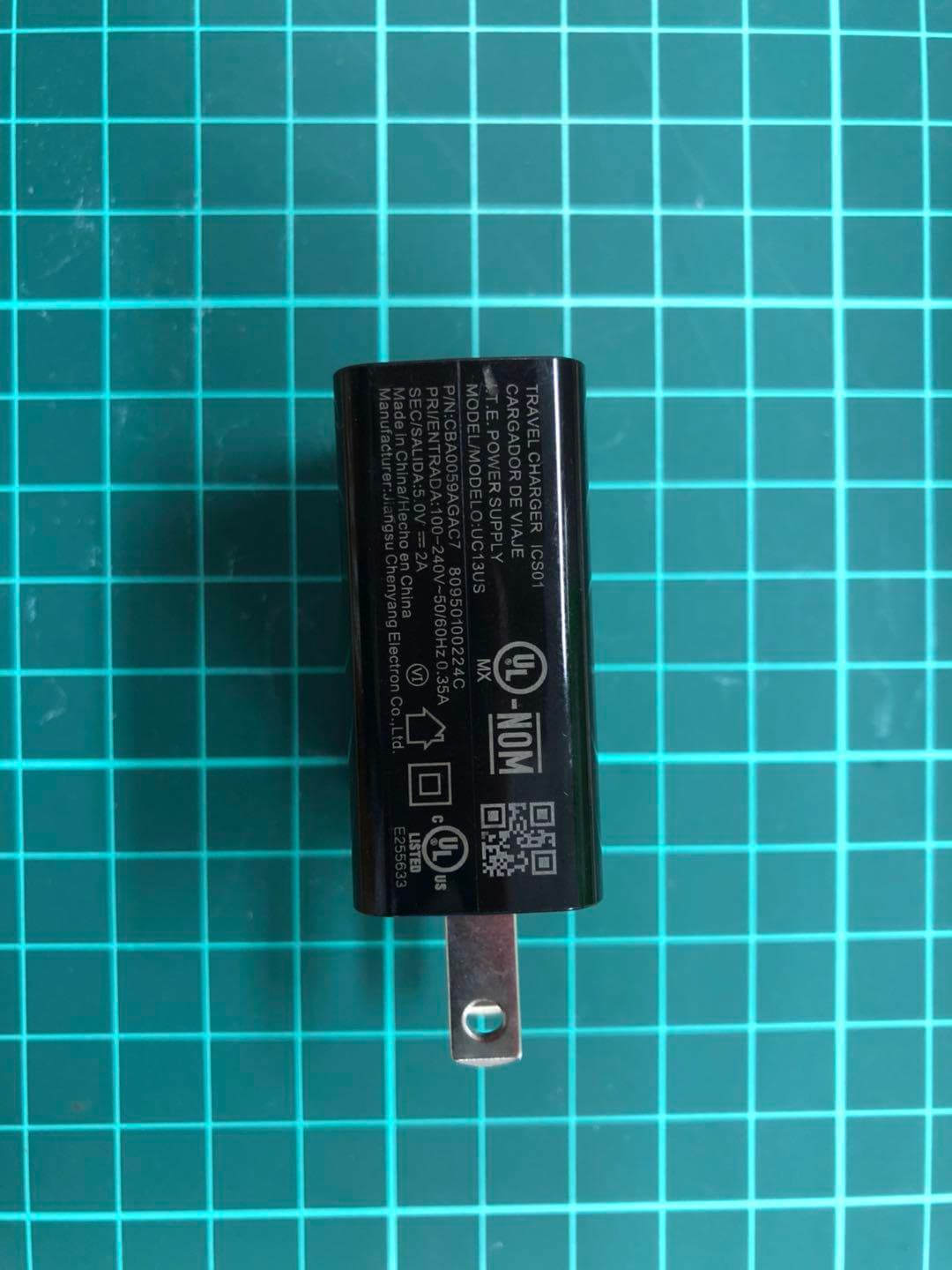
Click to zoom
Application Details
- Equipment Class
- PCE - PCS Licensed Transmitter held to ear
- Date of Grant
- May 21, 2020
- Application Purpose
- Original Equipment
- Date of Application
- May 21, 2020
- Equipment Note
- LTE/UMTS/GSM mobile phone
- Frequency Range
- 1720.00000000 - 1770.00000000
- Company
- TCL Communication Ltd.
- Country
- China
Documents & Files
Document Text
Text extracted from the exhibit documents filed with the FCC. Open a document above to read the original.
Users Manual
Safety and Precautions This product meets applicable national SAR limits of 1.6 W/kg. The specific maximum SAR values can be found in the Radio waves section. When carrying the product or using it while worn on your body, either use an approved accessory such as a holster or otherwise maintain a distance of 10 mm from the body to ensure compliance with RF exposure requirements. Note that the product may be transmitting even if you are not making a phone call. PROTECT YOUR HEARING To prevent possible hearing damage, do not listen at high volume levels for long periods. Exercise caution when holding your phone near your ear while the loudspeaker is in use. www.sar-tick.com Printed in China 1 Safety and use ������������������������������������������������������������������������������������������������ We recommend that you read this chapter carefully before using your phone. The manufacturer disclaims any liability for damage, which may result as a consequence of improper use or use contrary to the instructions contained herein. TRAFFIC SAFETY: Given that studies show that using a phone while driving a vehicle constitutes a real risk, even when the hands-free kit is used (car kit, headset...), drivers are requested to refrain from using their phone when the vehicle is not parked. Check the laws and regulations on the use of wireless phones and their accessories in the areas where you drive. Always obey them. The use of these devices may be prohibited or restricted in certain areas. CONDITIONS OF USE: • You are advised to switch off the phone from time to time to optimize its performance; • Remember to abide by local authority rules of mobile phone use on aircrafts; • If your phone is a unibody device, where the back cover and battery are not removable, disassembling the phone will void your warranty. Disassembling the phone can cause bodily injury if the battery is punctured; • Always handle your phone with care and keep it in a clean and dust-free place; • Do not allow your phone to be exposed to adverse weather or environmental conditions, such as moisture, humidity, rain, infiltration of liquids, dust, sea air, etc. The manufacturer’s recommended operating temperature range is -10°C (14°F) to +45°C (113°F). At over 45°C (113°F), the legibility of the phone’s display may be temporarily impaired; • Do not open, dismantle, or attempt to repair your phone yourself; • Do not drop, throw, or bend your phone; 2 • Use only batteries, battery chargers, and accessories which are recommended by TCL Communication Ltd. and its affiliates and are compatible with your phone model. TCL Communication Ltd. and its affiliates disclaim any liability for damage caused by the use of other chargers or batteries; • Your phone should not be disposed of in a municipal waste. Please check local regulations for disposal of electronic products; • Remember to make backup copies or keep a written record of all important information stored on your phone; • Some people may suffer epileptic seizures or blackouts when exposed to flashing lights, or when playing video games. These seizures or blackouts may occur even if a person never had a previous seizure or blackout. If you have experienced seizures or blackouts, or if you have a family history of such occurrences, please consult your doctor before playing video games on your phone or enabling a flashing-lights feature on your phone; • Parents should monitor their children’s use of video games or other features that incorporate flashing lights on the phones. All persons should discontinue use and consult a doctor if any of the following symptoms occur: convulsion, eye or muscle twitching, loss of awareness, orientation, or movements. PRIVACY: Please note that you must respect the laws and regulations in force in your jurisdiction or other jurisdiction(s) where you will use your phone regarding taking photographs and recording sounds with your phone. Pursuant to such laws and regulations, it may be strictly forbidden to take photographs and/or to record the voices of other people or any of their personal attributes, and reproduce or distribute them, as this may be considered to be an invasion of privacy. It is the user's sole responsibility to ensure that prior authorization has been obtained, if necessary, in order to record private or confidential conversations or take a photograph of another person; the manufacturer, the seller or vendor of your phone (including the carrier) disclaim any liability which may result from improper use of the phone. BATTERY: For a non-unibody device: Observe the following precautions: • Do not attempt to open the battery (due to the risk of toxic fumes and burns); 3 • Do not puncture, disassemble, or cause a short circuit in the battery; • Do not burn or dispose of a used battery in household garbage or store it at temperatures above 60°C (140°F). Batteries must be disposed of in accordance with locally applicable environmental regulations. Only use the battery for the purpose for which it was designed. Never use damaged batteries or those not recommended by TCL Communication Ltd. and/or its affiliates. For a non-unibody device with a non-removable battery: Observe the following precautions: • Do not attempt to eject, replace, or open the battery; • Do not puncture, disassemble, or cause a short circuit in the battery; • Do not burn or dispose of your phone in household garbage or store it at temperature above 60°C (140°F). Phone and battery must be disposed of in accordance with locally applicable environmental regulations. For a unibody device: Observe the following precautions: • Do not attempt to open the back cover; • Do not attempt to eject, replace, or open the battery; • Do not puncture the back cover of your phone; • Do not burn or dispose of your phone in household rubbish or store it at temperature above 60°C (140°F); Phone and battery as a unibody device must be disposed of in accordance with locally applicable environmental …
Text truncated - open the document above for the full version.
Users Manual
1 QUICK START GUIDE Your Mobile Keys and connectors Front camera Power key Volume up/down Headset connector The Google Assistant Button Back button Recent button Home button Micro-USB connector English - CJB2FE1ALAAA Printed in China PLEASE CONSIDER THE ENVIRONMENT BEFORE PRINTING www.alcatelmobile.com SAVE PAPER SAVE TREES 23 Back camera Finger print Back flash Getting started 1 Insert or remove the microSD card. 2 Insert or remove the SIM card. 3 Charge the battery. 3 Home screen You can bring all of the items (applications, shortcuts, folders) that you use most frequently to your Home screen for quick access. Touching the Home button always takes you back to the main Home screen. 2 1 1 : Tap to access the complete Settings menu. 2 : With the notification panel open, touch again or drag down to see the Quick Settings menu. 45 Phone call Making a call Enter the desired number from the keyboard and touch to make a call. Answering a call When you receive a call, swipe up to answer or swipe down to reject: 1 1 : Reject by SMS Contacts You can view and create contacts on your phone and synchronize these with your Gmail contacts or other applications on the web or on your phone. 1 2 3 1 : Search in Contacts 2 : Open the Quick contact panel Long press to select contact to delete 3 : Add new contact 67 Messaging You can create, edit, and receive SMS and MMS. An SMS will be converted to MMS automatically when media files (image, video, audio, etc.) are attached or add content to the subject bar or email addresses are added in contact bar. 1 2 1 : Send the text message 2 : Insert emoticons Gmail The first time you set up your phone, you can select to use an existing Email account or to add a new one. 1 2 3 4 1 : Account information 2 : See options and settings 3 : Swipe right or left to archive the email 4 : Create an email 89 Help To get help: • View user manual and FAQ www.alcatelmobile.com • Update your phone's software Go to Settings > System > System Update to check software updates. • Back up your personal data Go to Settings > System > Backup > Back up to Google Drive and turn it on. • Reset your phone Go to Settings > System > Reset > Factory data reset, and then touch to reset you Phone. Support 1. Enter from your Smartphone / Tablet to the application: Support Center 2. Check our frequently asked questions or chat with us through https://www. alcatelmobile.com in the Support section. 3. Call the Call Center Locate your number, below: Argentina: 8004447361 Australia: 1800218730 Canada: 8558446058 Chile: 12300209025 Colombia: 18005183882 Ecuador: 800000635 Mexico: 8001124682 New Zealand: 0800451708 Peru: 80055639 The Dominican Republic: 18002039552 Uruguay: 40190752 USA: 18553680829 Venezuela: 8001362017
Cover Letter(s)
TCL Communication Ltd. 5/F, Building 22E, 22 Science Park East Avenue, Hong Kong Science Park, Shatin, NT, Hong Kong Date 2020-05-15 To: Federal Communications Commission, Authorization & Evaluation Division, 7345 Oakland Mills Road Columbia, MD 21046 And American Certification Body, Inc. 6731 Whittier Avenue Suite C110 McLean, VA 22101 To Whom It May Concern: CTTL (Telecommunication Technology Labs,Academy of Telecommunication Research,MIIT) is authorized to act on our behalf, until otherwise notified, for applications to American Certification Body, Inc. (ACB). We certify that we are not subject to denial of federal benefits, which includes FCC benefits, pursuant to Section 5301 of the Anti-Drug Abuse Act of 1988, U.S.C. 862. Further, no party, as defined in 47 CFR1.2002 (b) to the application is subject to denial of federal benefits, that includes FCC benefits. Thank you. Regards, Zhizhou GONG Product Certification Manager TCL Communication Ltd.
Cover Letter(s)
TCL Communication Ltd. 5/F, Building 22E, 22 Science Park East Avenue, Hong Kong Science Park, Shatin, NT, Hong Kong 2020-05-15 Federal Communications Commission Office of Engineering and Technology Equipment Authorization Division 7345 Oakland Mills Road Columbia, Maryland 21046 Subject: Permanent Confidentiality request for FCC ID: 2ACCJH125 To Whom It May Concern, Pursuant to sections 0.457 and 0.459 of CFR 47, the applicant requests permanent confidential treatment of the following information accompanying this application: - Block Diagram - Schematics - Operational Description - BOM list/Tune-Up-Procedure The above materials contain trade secrets and proprietary information not customarily released to the public. The public disclosure of these matters might be harmful to the applicant and provide unjustified benefits to its competitors. Yours Sincerely, Zhizhou GONG Product Certification Manager TCL Communication Ltd.
External Photos
5061A 5061A 5061A 5061A 5061A 5061A CAC4850000C1 CAC4850002C7 CBA0059AGAC7_1 CBA0059AGAC7_2 CBA0059AGAC5_1 CBA0059AGAC5_2 CCB0049A12C1 CCB0049A10C1 CCB0049A10C4 CCB0049A12C4 CDA0000123C1 CDA0000123C2
RF Exposure Info
©Copyright. All rights reserved by CTTL. SAR TEST REPORT No. I20Z60463-SEM02 For TCL Communication Ltd. LTE/UMTS/GSM mobile phone Model name: 5061A With Hardware Version: PIO Software Version: v6H1H FCC ID: 2ACCJH125 Issued Date: 2020-5-20 Note: The test results in this test report relate only to the devices specified in this report. This report shall not be reproduced except in full without the written approval of CTTL. The report must not be used by the client to claim product certification, approval, or endorsement by NVLAP, NIST, or any agency of the U.S.Government. Test Laboratory: CTTL, Telecommunication Technology Labs, CAICT No. 51, Xueyuan Road, Haidian District, Beijing, P. R. China 100191. Tel:+86(0)10-62304633-2512, Fax:+86(0)10-62304633-2504 Email: [email protected], website: www.caict.ac.cn No.I20Z60463-SEM02 ©Copyright. All rights reserved by CTTL. Page 2 of 214 REPORT HISTORY Report Number Revision Issue Date Description I20Z60463-SEM02 Rev.0 2020-5-14 Initial creation of test report I20Z60463-SEM02 Rev.1 2020-5-20 1. Update headset information in section4.3. 2. Update tune-up power for EGPRS(8PSK) 850MHz 1 TXslot on page 26. 3. Update the table of SAR measurement positions on section 12.3. 4. Update conductive power of table14.1-4 on page64. 5. Update DAE information on section 17. 6. Adjust some mistake in SAR Test setup photo. No.I20Z60463-SEM02 ©Copyright. All rights reserved by CTTL. Page 3 of 214 TABLE OF CONTENT 1 TEST LABORATORY .................................................................................................................... 5 1.1 TESTING LOCATION ........................................................................................................................................ 5 1.2 TESTING ENVIRONMENT................................................................................................................................. 5 1.3 PROJECT DATA ............................................................................................................................................... 5 1.4 SIGNATURE ..................................................................................................................................................... 5 2 STATEMENT OF COMPLIANCE .................................................................................................. 6 3 CLIENT INFORMATION ................................................................................................................ 8 3.1 APPLICANT INFORMATION .............................................................................................................................. 8 3.2 MANUFACTURER INFORMATION ..................................................................................................................... 8 4 EQUIPMENT UNDER TEST (EUT) AND ANCILLARY EQUIPMENT (AE) ................................. 9 4.1 ABOUT EUT ................................................................................................................................................... 9 4.2 INTERNAL IDENTIFICATION OF EUT USED DURING THE TEST .......................................................................... 9 4.3 INTERNAL IDENTIFICATION OF AE USED DURING THE TEST ............................................................................ 9 5 TEST METHODOLOGY .............................................................................................................. 10 5.1 APPLICABLE LIMIT REGULATIONS ................................................................................................................ 10 5.2 APPLICABLE MEASUREMENT STANDARDS ................................................................................................... 10 6 SPECIFIC ABSORPTION RATE (SAR) ...................................................................................... 11 6.1 INTRODUCTION ............................................................................................................................................. 11 6.2 SAR DEFINITION .......................................................................................................................................... 11 7 TISSUE SIMULATING LIQUIDS ................................................................................................. 12 7.1 TARGETS FOR TISSUE SIMULATING LIQUID .................................................................................................... 12 7.2 DIELECTRIC PERFORMANCE ......................................................................................................................... 12 8 SYSTEM VERIFICATION ............................................................................................................ 16 8.1 SYSTEM SETUP ............................................................................................................................................. 16 8.2 SYSTEM VERIFICATION ................................................................................................................................. 17 9 MEASUREMENT PROCEDURES .............................................................................................. 18 9.1 TESTS TO BE PERFORMED ............................................................................................................................. 18 9.2 GENERAL MEASUREMENT PROCEDURE ........................................................................................................ 20 9.3 WCDMA MEASUREMENT PROCEDURES FOR SAR ...................................................................................... 21 9.4 SAR MEASUREMENT FOR LTE ..................................................................................................................... 22 9.5 BLUETOOTH & WI-FI MEASUREMENT PROCEDURES FOR SAR .................................................................... 24 9.6 POWER DRIFT .......................................................................…
Text truncated - open the document above for the full version.
RF Exposure Info
No.I20Z60463-SEM02 ©Copyright. All rights reserved by CTTL. Page 80 of 214 Table 14.2-23: SAR Values (LTE Band28 - Head) Ambient Temperature: 22.9 o C Liquid Temperature: 22.5 o C Frequency Mode Side Test Positio n Figure No. Conducte d Power (dBm) tune-up Power (dBm) Measur ed SAR(10 g) (W/kg) Reported SAR(10g )(W/kg) Measur ed SAR(1g ) (W/kg) Reporte d SAR(1g) (W/kg) Powe r Drift (dB) Ch. MHz 27560 738 1RB_Mid Left Touch Fig.23 22.95 24 0.05 0.06 0.065 0.08 0.09 Note1: The LTE mode is QPSK_20MHz. Table 14.2-24: SAR Values (LTE Band28 - Body) Ambient Temperature: 22.9 o C Liquid Temperature: 22.5 o C Frequency Mode Test Position Figure No. Conducted Power (dBm) Max. tune-up Power (dBm) Measured SAR(10g) (W/kg) Reported SAR(10g) (W/kg) Measured SAR(1g) (W/kg) Reported SAR(1g) (W/kg) Power Drift (dB) Ch. MHz 27310 713 50RB_High Right Fig.24 21.89 23 0.112 0.14 0.154 0.20 0.05 Note1: The distance between the EUT and the phantom bottom is 10mm. Note2: The LTE mode is QPSK_20MHz. Table 14.2-25: SAR Values (LTE Band66 - Head) Ambient Temperature: 22.9 o C Liquid Temperature: 22.5 o C Frequency Mode Side Test Positio n Figure No. Conducte d Power (dBm) tune-up Power (dBm) Measur ed SAR(10 g) (W/kg) Reported SAR(10g )(W/kg) Measur ed SAR(1g ) (W/kg) Reporte d SAR(1g) (W/kg) Powe r Drift (dB) Ch. MHz 27560 1720 1RB_Mid Left Touch Fig.25 22.89 24 0.139 0.18 0.222 0.29 0.05 Note1: The LTE mode is QPSK_20MHz. Table 14.2-26: SAR Values (LTE Band66 - Body) Ambient Temperature: 22.9 o C Liquid Temperature: 22.5 o C Frequency Mode Test Position Figure No. Conducted Power (dBm) Max. tune-up Power (dBm) Measured SAR(10g) (W/kg) Reported SAR(10g) (W/kg) Measured SAR(1g) (W/kg) Reported SAR(1g) (W/kg) Power Drift (dB) Ch. MHz 27560 1720 1RB_Mid Bottom Fig.26 20.69 22 0.3 0.41 0.529 0.72 -0.02 Note1: The distance between the EUT and the phantom bottom is 10mm. Note2: The LTE mode is QPSK_20MHz. No.I20Z60463-SEM02 ©Copyright. All rights reserved by CTTL. Page 81 of 214 14.3 WLAN Evaluation for 2.4G According to the KDB248227 D01, SAR is measured for 2.4GHz 802.11b DSSS using the initial test position procedure. Head Evaluation Table 14.3-1: SAR Values (WLAN - Head)– 802.11b (Fast SAR) Ambient Temperature: 22.9 o C Liquid Temperature: 22.5 o C Frequency Side Test Position Figure No. Conducte d Power (dBm) Max. tune- up Power (dBm) Measured SAR(10g) (W/kg) Reported SAR(10g) (W/kg) Measured SAR(1g) (W/kg) Reported SAR(1g)( W/kg) Power Drift (dB) MHz Ch. 2437 6 Left Touch / 17.11 17.5 0.102 0.11 0.204 0.22 -0.04 2437 6 Left Tilt / 17.11 17.5 0.125 0.14 0.266 0.29 0.07 2437 6 Right Touch / 17.11 17.5 0.138 0.15 0.287 0.31 0.18 2437 6 Right Tilt / 17.11 17.5 0.112 0.12 0.237 0.26 -0.03 As shown above table, the initial test position for head is “Right Touch”. So the head SAR of WLAN is presented as below: Table 14.3-2: SAR Values (WLAN - Head)– 802.11b (Full SAR) Ambient Temperature: 22.9 o C Liquid Temperature: 22.5 o C Frequency Side Test Position Figure No. Conducte d Power (dBm) Max. tune- up Power (dBm) Measured SAR(10g) (W/kg) Reported SAR(10g) (W/kg) Measured SAR(1g) (W/kg) Reported SAR(1g)( W/kg) Power Drift (dB) MHz Ch. 2437 6 Right Touch Fig.27 17.11 17.5 0.14 0.15 0.287 0.31 0.18 Note1: When the reported SAR of the initial test position is > 0.4 W/kg, SAR is repeated for the 802.11 transmission mode configuration tested in the initial test position using subsequent highest estimated 1-g SAR conditions determined by area scans, on the highest maximum output power channel, until the reported SAR is ≤ 0.8 W/kg. Note2: For all positions/configurations tested using the initial test position and subsequent test positions, when the reported SAR is > 0.8 W/kg, SAR is measured for these test positions/configurations on the subsequent next highest measured output power channel until the reported SAR is ≤ 1.2 W/kg or all required channels are tested. According to the KDB248227 D01, The reported SAR must be scaled to 100% transmission duty factor to determine compliance at the maximum tune-up tolerance limit. The scaled reported SAR is presented as below. Table 14.3-3: SAR Values (WLAN - Head) – 802.11b (Scaled Reported SAR) Ambient Temperature: 22.9 o C Liquid Temperature: 22.5 o C Frequency Side Test Position Actual duty factor maximum duty factor Reported SAR (1g)(W/kg) Scaled reported SAR (1g)(W/kg) MHz Ch. 2437 6 Right Touch 100% 100% 0.31 0.31 SAR is not required for OFDM because the 802.11b adjusted SAR ≤ 1.2 W/kg. No.I20Z60463-SEM02 ©Copyright. All rights reserved by CTTL. Page 82 of 214 Body Evaluation Table 14.3-4: SAR Values (WLAN - Body)– 802.11b (Fast SAR) Ambient Temperature: 22.9 o C Liquid Temperature: 22.5 o C Frequency Test Position Figure No. Conducted Power (dBm) Max. tune-up Power (dBm) Measured SAR(10g) (W/kg) Reported SAR(10g) (W/kg) Measured SAR(1g) (W/kg) Reported SAR(1g)( W/kg) Power Drift (dB) MHz Ch. 2437 6 Front / 19.04 19.5 0.1 0.11 0.193 0.21 -0.12 2437 6 Rear / 19.04 19.5 0.198 0.22 0.423 0.47 0.05 2437 6 Right / 19.04 19.5 0.096 0.11 0.207 0.23 -0.03 2437 6 Top / 19.04 19.5 0.164 0.18 0.337 0.38 0.08 2437 6 Rear / 19.04 19.5 0.186 0.21 0.401 0.45 -0.07 As shown above table, the initial test position for body is “Rear”. So the body SAR of WLAN is presented as below: Table 14.3-5: SAR Values (WLAN - Body)– 802.11b (Full SAR) Ambient Temperature: 22.9 o C Liquid Temperature: 22.5 o C Frequency Test Positio n Figure No. Conducted Power (dBm) Max. tune-up Power (dBm) Measured SAR(10g) (W/kg) Reported SAR(10g) (W/kg) Measured SAR(1g) (W/kg) Reported SAR(1g)( W/kg) Power Drift (dB) MHz Ch. 2437 6 Rear Fig.28 19.04 19.5 0.196 0.22 0.426 0.47 0.05 2437 6 Top / 19.04 19.5 0.165 0.18 0.34 0.38 0.08 Note1: When the reported SAR of the initial test position is > 0.4 W/kg, SAR is repeated for the 802.11 transmission mode configuration tested in the initial test position using subsequent highest estimated 1-g SAR conditions determined by area scans, on the highest maximum output power channel, unt…
Text truncated - open the document above for the full version.
RF Exposure Info
No.I20Z60463-SEM02 ©Copyright. All rights reserved by CTTL. Page 147 of 214 No.I20Z60463-SEM02 ©Copyright. All rights reserved by CTTL. Page 148 of 214 No.I20Z60463-SEM02 ©Copyright. All rights reserved by CTTL. Page 149 of 214 No.I20Z60463-SEM02 ©Copyright. All rights reserved by CTTL. Page 150 of 214 No.I20Z60463-SEM02 ©Copyright. All rights reserved by CTTL. Page 151 of 214 No.I20Z60463-SEM02 ©Copyright. All rights reserved by CTTL. Page 152 of 214 No.I20Z60463-SEM02 ©Copyright. All rights reserved by CTTL. Page 153 of 214 No.I20Z60463-SEM02 ©Copyright. All rights reserved by CTTL. Page 154 of 214 No.I20Z60463-SEM02 ©Copyright. All rights reserved by CTTL. Page 155 of 214 No.I20Z60463-SEM02 ©Copyright. All rights reserved by CTTL. Page 156 of 214 No.I20Z60463-SEM02 ©Copyright. All rights reserved by CTTL. Page 157 of 214 No.I20Z60463-SEM02 ©Copyright. All rights reserved by CTTL. Page 158 of 214
RF Exposure Info
No.I20Z60463-SEM02 ©Copyright. All rights reserved by CTTL. Page 159 of 214 No.I20Z60463-SEM02 ©Copyright. All rights reserved by CTTL. Page 160 of 214 No.I20Z60463-SEM02 ©Copyright. All rights reserved by CTTL. Page 161 of 214 No.I20Z60463-SEM02 ©Copyright. All rights reserved by CTTL. Page 162 of 214 No.I20Z60463-SEM02 ©Copyright. All rights reserved by CTTL. Page 163 of 214 No.I20Z60463-SEM02 ©Copyright. All rights reserved by CTTL. Page 164 of 214 No.I20Z60463-SEM02 ©Copyright. All rights reserved by CTTL. Page 165 of 214 No.I20Z60463-SEM02 ©Copyright. All rights reserved by CTTL. Page 166 of 214 ANNEX H Dipole Calibration Certificate 750 MHz Dipole Calibration Certificate No.I20Z60463-SEM02 ©Copyright. All rights reserved by CTTL. Page 167 of 214
RF Exposure Info
No.I20Z60463-SEM02 ©Copyright. All rights reserved by CTTL. Page 168 of 214 No.I20Z60463-SEM02 ©Copyright. All rights reserved by CTTL. Page 169 of 214 No.I20Z60463-SEM02 ©Copyright. All rights reserved by CTTL. Page 170 of 214 No.I20Z60463-SEM02 ©Copyright. All rights reserved by CTTL. Page 171 of 214 No.I20Z60463-SEM02 ©Copyright. All rights reserved by CTTL. Page 172 of 214 No.I20Z60463-SEM02 ©Copyright. All rights reserved by CTTL. Page 173 of 214 No.I20Z60463-SEM02 ©Copyright. All rights reserved by CTTL. Page 174 of 214 835 MHz Dipole Calibration Certificate No.I20Z60463-SEM02 ©Copyright. All rights reserved by CTTL. Page 175 of 214 No.I20Z60463-SEM02 ©Copyright. All rights reserved by CTTL. Page 176 of 214 No.I20Z60463-SEM02 ©Copyright. All rights reserved by CTTL. Page 177 of 214 No.I20Z60463-SEM02 ©Copyright. All rights reserved by CTTL. Page 178 of 214 No.I20Z60463-SEM02 ©Copyright. All rights reserved by CTTL. Page 179 of 214 No.I20Z60463-SEM02 ©Copyright. All rights reserved by CTTL. Page 180 of 214 No.I20Z60463-SEM02 ©Copyright. All rights reserved by CTTL. Page 181 of 214 No.I20Z60463-SEM02 ©Copyright. All rights reserved by CTTL. Page 182 of 214 1750 MHz Dipole Calibration Certificate No.I20Z60463-SEM02 ©Copyright. All rights reserved by CTTL. Page 183 of 214
RF Exposure Info
No.I20Z60463-SEM02 ©Copyright. All rights reserved by CTTL. Page 184 of 214 No.I20Z60463-SEM02 ©Copyright. All rights reserved by CTTL. Page 185 of 214 No.I20Z60463-SEM02 ©Copyright. All rights reserved by CTTL. Page 186 of 214 No.I20Z60463-SEM02 ©Copyright. All rights reserved by CTTL. Page 187 of 214 No.I20Z60463-SEM02 ©Copyright. All rights reserved by CTTL. Page 188 of 214 No.I20Z60463-SEM02 ©Copyright. All rights reserved by CTTL. Page 189 of 214 No.I20Z60463-SEM02 ©Copyright. All rights reserved by CTTL. Page 190 of 214 1900 MHz Dipole Calibration Certificate No.I20Z60463-SEM02 ©Copyright. All rights reserved by CTTL. Page 191 of 214 No.I20Z60463-SEM02 ©Copyright. All rights reserved by CTTL. Page 192 of 214 No.I20Z60463-SEM02 ©Copyright. All rights reserved by CTTL. Page 193 of 214 No.I20Z60463-SEM02 ©Copyright. All rights reserved by CTTL. Page 194 of 214 No.I20Z60463-SEM02 ©Copyright. All rights reserved by CTTL. Page 195 of 214 No.I20Z60463-SEM02 ©Copyright. All rights reserved by CTTL. Page 196 of 214 No.I20Z60463-SEM02 ©Copyright. All rights reserved by CTTL. Page 197 of 214 No.I20Z60463-SEM02 ©Copyright. All rights reserved by CTTL. Page 198 of 214 2450 MHz Dipole Calibration Certificate No.I20Z60463-SEM02 ©Copyright. All rights reserved by CTTL. Page 199 of 214
RF Exposure Info
No.I20Z60463-SEM02 ©Copyright. All rights reserved by CTTL. Page 200 of 214 No.I20Z60463-SEM02 ©Copyright. All rights reserved by CTTL. Page 201 of 214 No.I20Z60463-SEM02 ©Copyright. All rights reserved by CTTL. Page 202 of 214 No.I20Z60463-SEM02 ©Copyright. All rights reserved by CTTL. Page 203 of 214 No.I20Z60463-SEM02 ©Copyright. All rights reserved by CTTL. Page 204 of 214 No.I20Z60463-SEM02 ©Copyright. All rights reserved by CTTL. Page 205 of 214 No.I20Z60463-SEM02 ©Copyright. All rights reserved by CTTL. Page 206 of 214 2600 MHz Dipole Calibration Certificate No.I20Z60463-SEM02 ©Copyright. All rights reserved by CTTL. Page 207 of 214 No.I20Z60463-SEM02 ©Copyright. All rights reserved by CTTL. Page 208 of 214 No.I20Z60463-SEM02 ©Copyright. All rights reserved by CTTL. Page 209 of 214 No.I20Z60463-SEM02 ©Copyright. All rights reserved by CTTL. Page 210 of 214 No.I20Z60463-SEM02 ©Copyright. All rights reserved by CTTL. Page 211 of 214 No.I20Z60463-SEM02 ©Copyright. All rights reserved by CTTL. Page 212 of 214 No.I20Z60463-SEM02 ©Copyright. All rights reserved by CTTL. Page 213 of 214 No.I20Z60463-SEM02 ©Copyright. All rights reserved by CTTL. Page 214 of 214 ANNEX J Accreditation Certificate
Test Report
©Copyright. All rights reserved by CTTL TEST REPORT No. I20Z60463-WMD03 for TCL Communication Ltd. LTE/UMTS/GSM mobile phone Model Name: 5061A FCC ID: 2ACCJH125 with Hardware Version: PIO Software Version: v6H1H Issued Date: 2020-05-19 Note: The test results in this test report relate only to the devices specified in this report. This report shall not be reproduced except in full without the written approval of CTTL. The report must not be used by the client to claim product certification, approval, or endorsement by NVLAP, NIST, or any agency of the U.S.Government. Test Laboratory: CTTL, Telecommunication Technology Labs, CAICT No. 52, Huayuan North Road, Haidian District, Beijing, P. R. China 100191. Tel: +86(0)10-62304633-2512, Fax: +86(0)10-62304633-2504 Email: [email protected], website: www.caict.ac.cn I20Z60463-WMD03 ©Copyright. All rights reserved by CTTL. Page 2 of 139 REPORT HISTORY Report Number Revision Description Issue Date I20Z60463-WMD03 Rev.0 1 st edition 2020-05-12 I20Z60463-WMD03 Rev.1 2 nd edition Updated the results of Emission Limit for LTE Band 7 2020-05-19 Note: the latest revision of the test report supersedes all previous version. I20Z60463-WMD03 ©Copyright. All rights reserved by CTTL. Page 3 of 139 CONTENTS 1. TEST LABORATORY ............................................................................................................... 4 1.1. INTRODUCTION & ACCREDITATION ................................................................................. 4 1.2. TESTING LOCATION ........................................................................................................... 4 1.3. TESTING ENVIRONMENT ....…
Text truncated - open the document above for the full version.
Contact Information
Applicant
Annie Jiang
Technical Contact
CTTLXue Zhen
[email protected]86-62304633
No. 52, Huayuan Bei Road, Haidian District, · Beijing · China
Test Firm
Telecommunication Technology Labs, CAICTYaqin Shen
Technical Specifications
| # | Rule Parts | Frequency Range | Power Output | Emission | Tolerance |
|---|---|---|---|---|---|
| 27 | 27 | 1.72 GHz - 1.77 GHz | 113.00 mW | 18M0W7D | 0.1 ppm |
Other Applications from TCL Communication Ltd.
2ACCJSCD002
Sep 10, 2024USB Connect 5G (NA)
Equipment Class
CXX - Communications Rcvr for use w/ licensed Tx and CBs2ACCJB227
Aug 21, 2024Smart phone
Equipment Class
DTS - Digital Transmission System2ACCJSCD005
Aug 07, 2024TCL LINKPORT IK511
Equipment Class
CXX - Communications Rcvr for use w/ licensed Tx and CBs2ACCJB224
Jul 31, 2024Tablet PC
Equipment Class
DSS - Part 15 Spread Spectrum Transmitter2ACCJB223
Jun 27, 2024Tablet PC
Equipment Class
NII - Unlicensed National Information Infrastructure TX