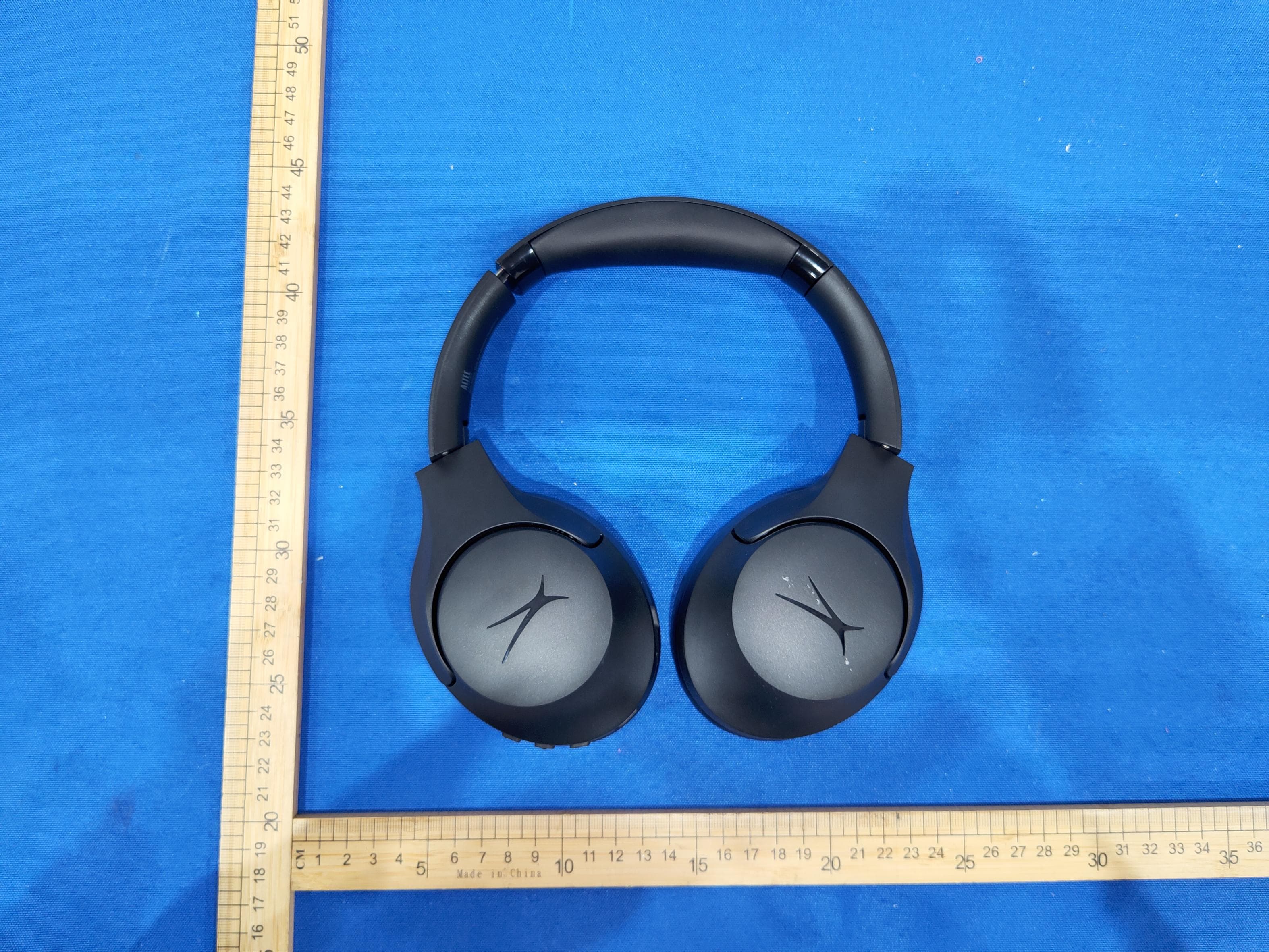
2AD5NANCB7Over Ear Wireless Headphone
KANEN ELECTRONICS CO., LTD
Click to zoom
Application Details
- Equipment Class
- DSS - Part 15 Spread Spectrum Transmitter
- Date of Grant
- Jun 14, 2022
- Application Purpose
- Original Equipment
- Date of Application
- Jun 14, 2022
- Equipment Note
- Over Ear Wireless Headphone
- Frequency Range
- 2402.00000000 - 2480.00000000
- Company
- KANEN ELECTRONICS CO., LTD
- Country
- China
Documents & Files
Document Text
Text extracted from the exhibit documents filed with the FCC. Open a document above to read the original.
Users Manual
● ● ● ● ● Press once to increase volume Press and hold to skip forward Press once to decrease volume Press and hold to Noise control Button skip back Press once to play, pause, or answer, end a phone call Press and hold to power ON or OFF Press twice to activate Siri or other voice control software Noise Cancel QUICK START GUIDE IN THE BOX POWER ON CONNECT Control Power on and automatically enter pairing mode > 3S ON Settings Bluetooth Bluetooth DEVICES Now Discoverable Connected Aiwa ARC-2 ANC Choose "Aiwa ARC-2 ANC " to connect ANC ON blocks out external sounds ANC OFF turn off noise cancellation Push the button to cycle between 2 noise control modes VOICE PROMPTS Power ON Pairing Connected Pairing Connected ANC ON Charging RESET Charge Charging Fully Charged light off Connect to computer or USB 5V 1A (or less) output device. * Keep holding +/- buttons simultaneously for 10seconds until you see the red light flashing 3times. Headphone power OFF automatically Please make sure you forget "Aiwa ARC-2 ANC " from your Bluetooth device settings before resetting Low battery * To enter pairing mode again, power off and then hold PowerButton for 5 seconds Please read this manual carefully before use. Warning To prevent possible hearing damage, do not listen at high volume levels for long periods. For your own safety, please be aware of your surroundings when using these headphones. Safety warnings Do not place any naked flame sources, such as lighted candles Dispose of batteries responsibly and be aware of the environmental effects of battery disposal Do not expose the batteries (batteries installed) to excessive heat, such as fire or the like 10S LOW LATENCY ON real-time audio feedback while gaming or watching video Press three times to enter low latency mode. WIRED LISTENING MODE R FCC Statement This equipment has been tested and found to comply with the limits for a Class B digital device, pursuant to part 15 of the FCC rules. These limits are designed to provide reasonable protection against harmful interference in a residential installation. This equipment generates, uses and can radiate radio frequency energy and, if not installed and used in accordance with the instructions, may cause harmful interference to radio communications. However, there is no guarantee that interference will not occur in a particular installation. If this equipment does cause harmful interference to radio or television reception, which can be determined by turning the equipment off and on, the user is encouraged to try to correct the interference by one or more of the following measures: -Reorient or relocate the receiving antenna. -Increase the separation between the equipment and receiver. -Connect the equipment into an outlet on a circuit different from that to which the receiver is connected. -Consult the dealer or an experienced radio/TV technician for help. To assure continued compliance, any changes or modifications not expressly approved by the party.Responsible for compliance could void the user’s authority to operate this equipment. This equipment complies with Part 15 of the FCC Rules. Operation is subject to the following two conditions: (1) This device may not cause harmful interference, and (2) This device must accept any interference received, including interference that may cause undesired operation. FCC Radiation Exposure Statement: The device has been evaluated to meet general RF exposure requirement. The device can ben used inthe portable exposure condition with restiction
Cover Letter(s)
Rev11/20/07 KanenElectronicsCo.,Ltd FederalCommunicationsCommission AuthorizationandEvaluationDivision ConfidentialityRequestregardingapplicationforcertificationofFCCID:2AD5NANCB7 PursuanttoSections0.457and0.459oftheCommission’sRules,weherebyrequestconfidential treatmentofinformationaccompanyingthisapplicationasoutlinedbelow: ExhibitTypeFileName BlockDiagram Schematics OperationalDescription BlockDiagram Schematics OperationalDescription Theabovematerialscontaintradesecretsandproprietaryinformationnotcustomarilyreleasedto thepublic.Thepublicdisclosureofthesematerialsmaybeharmfultotheapplicantandprovide unjustifiedbenefitstoitscompetitors. TheapplicantunderstandsthatpursuanttoSection0.457oftheRules,disclosureofthis applicationandallaccompanyingdocumentationwillnotbemadebeforethedateoftheGrant forthisapplication. PursuanttoDA04-1705June15,2004oftheCommission’spublicnotice,Wealsorequestingthe commissiontograntshort-termconfidentialityrequestonthefollowingattachmentsuntil180 daysaftertheGrantDateofEquipmentAuthorizations. ExhibitTypeFileName ManualUsermanual InternalphotosInternalphotos Sincerely, SophiaCheung 2022-05-31
Cover Letter(s)
Declarationonmodeldifference Wetheundersignedherebyconfirmthatthesemodelsareidentical,andallmodelshavethesameRFmoduleand antenna,PCBlayout,schematicsandcomponent.Onlydifferentonmodelnumberandcolorofappearance. ProductionnameFCCIDModelno. OverEarWireless Headphone 2AD5NANCB7 ANCB7,AI5102 Confirmedby: SophiaCheung 2022-05-31
Cover Letter(s)
KanenElectronicsCo.,Ltd FederalCommunicationsCommission AuthorizationandEvaluationDivision 1435OaklandMillsRoad Columbia,MD21046 Date:2022-05-31 SUBJECT:FCCApplicationfor(FCCID:2AD5NANCB7) ToWhomItMayConcern: We,theundersigned,herebyauthorizeSamLvatEMTEK(DONGGUAN)CO.,LTD.on ourbehalf,toapplytotheFederalCommunicationsCommissiononourequipment.Any andallactscarriedoutbyEMTEK(DONGGUAN)CO.,LTD.onourbehalfshallhave thesameeffectasactsofourown. ThisistoadvisethatweareinfullcompliancewiththeAnti-DrugAbuseAct.We,the applicant,arenotsubjecttoadenialoffederalbenefitspursuanttoSection5301ofthe Anti-DrugActof1988,21USC853a,andnopartytotheapplicationissubjecttoadenial offederalbenefitspursuanttothatsection. Regards, Sincerely, SophiaCheung 2022-05-31
External Photos
FCC ID: 2AD5NANCB7
Internal Photos
FCC ID: 2AD5NANCB7 ANT
RF Exposure Info
RFEXPOSUREEVALUATION EUTSpecification EUTOverEarWirelessHeadphone ModelNumberANCB7,AI5102 HereweselectedANCB7forallthetest FCCID2AD5NANCB7 Antennagain(Max)0dBi OperationFrequency2402-2480MHz InputRatingDC5VfromUSB,DC3.7Vfrombattery ClassificationPer StipulatedTestStandard §15.247(i),§2.1093 KindofDevice:BluetoothVer.5.0 ModulationDSS:GFSK,π/4-DQPSK,8DPSK Max.outputpowerDSS:-3.35dBm(0.000232W) TestRequirement: Accordingto§15.247(i)and§1.1307(b)(1),systemsoperatingunderthe provisionsofthissectionshallbeoperatedinamannerthatensuresthatthe publicisnotexposedtoradiofrequencyenergylevelinexcessofthe Commission’sguidelines. RoutineSARevaluationreferstothatspecificallyrequiredby§2.1093,using measurementsorcomputersimulation.WhenroutineSARevaluationisnot required,portabletransmitterswithoutputpowergreaterthantheapplicable lowthresholdrequireSARevaluationtoqualityforTCBapproval. OneantennaisavailablefortheEUT.Theminimumseparationdistanceis 5mm. DSS: Transmit Frequency (MHz) Mode Measure dPower (dBm) Tune upPower (dBm) Maxtuneup power(dBm) Calculation Result 1-g SAR 2.402 GFSK -9.23-10±1-9 0.0390226 3 2.441 GFSK -8.46-9±1-8 0.0495238 3 2.480GFSK-7.32-8±1-70.06284283 2.402 Π/4-DQ PSK -8.54-9±1-8 0.04912663 2.441 Π/4-DQ PSK -7.76-8±1-7 0.06234683 2.480 Π/4-DQ PSK -6.54-7±1-6 0.0791145 3 2.402 8DPSK -8.26-9±1-8 0.0491266 3 2.441 8DPSK -7.46-8±1-7 0.0623468 3 2.4808DPSK-6.35-7±1-60.07911453 AccordingtoKDB447498,nostand-alonerequiredforBTantenna,andno simultaneousSARmeasurementisrequired. Signature: SamLv Date:2022-05-31
Test Report
ReportNo. EDG2205120177E00101RPage 1 of 61 Ver.1.0 TEST REPORT ProductName :Over Ear WirelessHeadphone ModelNumber :ANC B7,AI5102 FCC ID : 2AD5NANCB7 Preparedfor:KanenElectronicsCo., Ltd Address:No.78,EASTLIUHUARD, XIAKOUIND. ZONE,DONGCHENGDISTRICT,DONGGUAN Preparedby:EMTEK(DONGGUAN)CO., LTD . Address:-1&2/F.,Building2, ZoneA, ZhongdaMarineBiotechnology Researchand DevelopmentBase,No.9,XinchengAvenue, SongshanhuHigh-technologyIndustrialDevelopmentZone, Dongguan,Guangdong,China TEL:+86- 0769-22807078 FAX:+86- 0769-22807079 ReportNumber:EDG2205120177E00101R Date(s)of Tests:May 21, 2022to May 31, 2022 Dateof issue:May 31, 2022 $二维码$ ReportNo. EDG2205120177E00101RPage 2 of 61 Ver.1.0 Tableof Contents TESTREPORT...............................................................................................................................................................................1 1 TEST RESULTCERTIFICATION...............................................................................................................................................3 2 EUT TECHNICALDESCRIPTION..............................................................................................................................................4 3 SUMMARYOF TEST RESULT...................................................................................................................................................5 4 TEST METHODOLOGY...............................................................................................................................................................6 4.1 GENERALDESCRIPTIONOF APPLIEDSTANDARDS...................................................................................................6 4.2 MEASUREMENTEQUIPMENTUSED ...............................................................................................................................6 4.3 DESCRIPTIONOF TEST MODES.......................................................................................................................................7 5 FACILITIESAND ACCREDITATIONS......................................................................................................................................8 5.1 FACILITIES............................................................................................................................................................................8 5.2 LABORATORYACCREDITATIONSAND LISTINGS......................................................................................................8 6 TEST SYSTEMUNCERTAINTY.................................................................................................................................................9 7 SETUPOF EQUIPMENTUNDERTEST ...................................................................................................................................10 7.1 RADIOFREQUENCYTEST SETUP1...............................................................................................................................10 7.2 RADIOFREQUENCYTEST SETUP2...............................................................................................................................10 7.3 CONDUCTEDEMISSIONTEST SETUP...........................................................................................................................12 7.4 BLOCKDIAGRAMCONFIGURATIONOF TEST SYSTEM..........................................................................................13 7.5 SUPPORTEQUIPMENT.....................................................................................................................................................13 8 FREQUENCYHOPPINGSYSTEMREQUIREMENTS...........................................................................................................14 8.1 StandardApplicable..............................................................................................................................................................14 8.2 EUT PseudorandomFrequencyHoppingSequence.............................................................................................................14 8.3 Equal HoppingFrequencyUse ..............................................................................................................................................15 8.4 FrequencyHoppingSystem..................................................................................................................................................15 9 TEST REQUIREMENTS.............................................................................................................................................................16 9.1 20D B BANDWIDTH............................................................................................................................................................16 9.2 CARRIERFREQUENCYSEPARATION...........................................................................................................................23 9.3 NUMBEROF HOPPINGFREQUENCIES.........................................................................................................................29 9.4 AVERAGETIME OF OCCUPANCY(DWELLTIME).....................................................................................................31 9.5 MAXIMUMPEAK CONDUCTEDOUTPUTPOWER......................................................................................................34 9.6 CONDUCTEDSUPRIOUSEMISSION..............................................................................................................................40 9.7 RADIATEDSPURIOUSEMISSION..................................................................................................................................47 9.8 CONDUCTEDEMISSIONTEST ........................................................................................................................................56 9.9 ANTENNAAPPLICATION..........................................…
Text truncated - open the document above for the full version.
Test Setup Photos
FCC ID: 2AD5NANCB7
Contact Information
Applicant
Sophia Chuang(Sales Manager)
Test Firm
EMTEK (Dongguan) Co., Ltd.Sam Lv
[email protected]886-0769-22807078
Technical Specifications
| # | Rule Parts | Frequency Range | Power Output |
|---|---|---|---|
| 1 | 15C | 2.40 GHz - 2.48 GHz | 232.00 µW |
Other Applications from KANEN ELECTRONICS CO., LTD
2AD5N-C11
Jan 10, 2024ANC Wireless Headphone
Equipment Class
DSS - Part 15 Spread Spectrum Transmitter
2AD5N-0130398301
Mar 24, 2015Bluetooth Headphone
Equipment Class
DXX - Part 15 Low Power Communication Device Transmitter