2AFM7WI-BT255XBluetooth headset
WICKED AUDIO, INC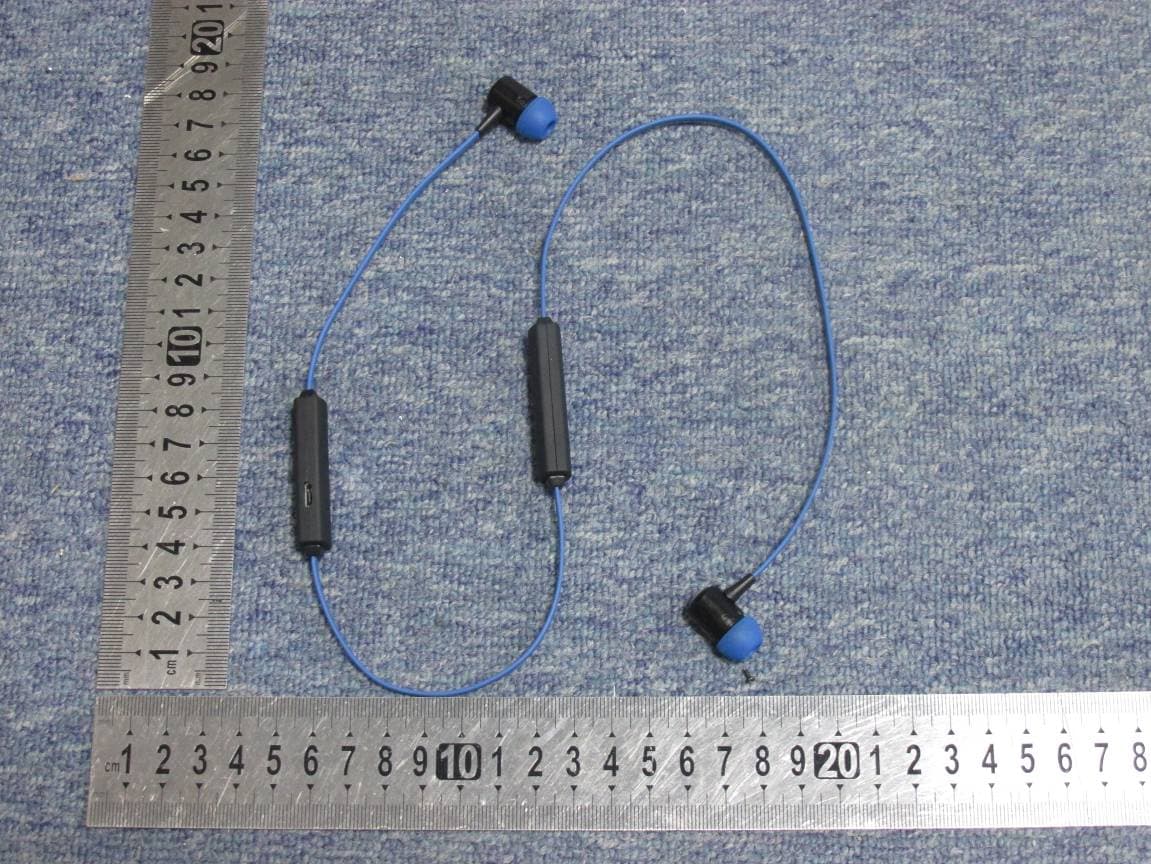
Click to zoom
Application Details
- Equipment Class
- DSS - Part 15 Spread Spectrum Transmitter
- Date of Grant
- Nov 09, 2015
- Application Purpose
- Original Equipment
- Date of Application
- Nov 09, 2015
- Equipment Note
- Bluetooth headset
- Frequency Range
- 2402.00000000 - 2480.00000000
- Company
- WICKED AUDIO, INC
- Country
- United States
Documents & Files
Document Text
Text extracted from the exhibit documents filed with the FCC. Open a document above to read the original.
Cover Letter(s)
Rev 11/20/07 Wicked Audio, Inc Federal Communications Commission Authorization and Evaluation Division Confidentiality Request regarding application for certification of FCC ID: 2AFM7WI-BT255X. Pursuant to Sections 0.457 and 0.459 of the Commission’s Rules, we hereby request confidential treatment of information accompanying this application as outlined below: Exhibit Type File Name Block Diagram 2AFM7WI-BT255X_Block Diagram.pdf Circuit Diagram 2AFM7WI-BT255X_Schematics.pdf Operational Description 2AFM7WI-BT255X _Operational description.pdf The above materials contain trade secrets and proprietary information not customarily released to the public. The public disclosure of these materials may be harmful to the applicant and provide unjustified benefits to its competitors. The applicant understands that pursuant to Section 0.457 of the Rules, disclosure of this application and all accompanying documentation will not be made before the date of the Grant for this application. Sincerely, Signature: Name/Tile: Steve Jaynes/Manager Address: 875 WEST 325 NORTH, LINDON, UT 84042, USA E-mail: [email protected] Date: 2015-11-6
Cover Letter(s)
Wicked Audio, Inc Declaration Letter Dear Sir, For our business issue and marketing requirement, we would like to list below model numbers on the certificates and reports, as following: Model No.:WI-BT551/WI-BT2552/15LY16+15E27 We declare that the difference of these is listed as below: Main Model No Serial Model No Difference WI-BT551 WI-BT2552 15LY16+15E27 Exactly the same, only the different model name Thank you! Signature: Signature: Name/Tile: Steve Jaynes/Manager Address: 875 WEST 325 NORTH, LINDON, UT 84042, USA E-mail: [email protected] Date: 2015-11-6
Cover Letter(s)
Wicked Audio, Inc Federal Communications Commission Authorization and Evaluation Division 1435 Oakland Mills Road Columbia, MD 21046 Date: 2015-11-06 SUBJECT: FCC Application for (FCC ID: 2AFM7WI-BT255X) To Whom It May Concern: We, the undersigned, hereby authorize Mr. Zhang Shangwen from CCIC-SET on our behalf, to apply to the Federal Communications Commission on our equipment. Any and all acts carried out by CCIC-SET on our behalf shall have the same effect as acts of our own. This is to advise that we are in full compliance with the Anti- Drug Abuse Act. We, the applicant, are not subject to a denial of federal benefits pursuant to Section 5301 of the Anti-Drug Act of 1988, 21 USC853a, and no party to the application is subject to a denial of federal benefits pursuant to that section. Regards, Signature: Name/Tile: Steve Jaynes/Manager Address: 875 WEST 325 NORTH, LINDON, UT 84042, USA E-mail: [email protected] Date: 2015-11-6
External Photos
External Photo
ID Label/Location Info
32mm 8.4mm
Internal Photos
Internal Photo BT ANT
RF Exposure Info
FCC RF Exposure FCC ID: 2AFM7WI-BT255X Applicant: Wicked Audio, Inc Exposure category: General population/uncontrolled environment EUT Type: Production Unit Device Type: Portable Device Refer Standard: KDB 447498 D01 General RF Exposure Guidance v05r02 FCC Part 2 §2.1093 Evaluation method According to KDB447498 D01 General RF Exposure Guidance v05r01Section 4.3.1 Standalone SAR test exclusion considerations:“ Unless specifically required by the published RF exposure KDB procedures, standalone 1-g head or body and 10-g extremity SAR evaluation for general population exposure conditions, by measurement or numerical simulation, is not required when the corresponding SAR Test Exclusion Threshold condition, listed below, is satisfied. These test exclusion conditions are based on source-based time-averaged maximum conducted output power of the RF channel requiring evaluation, adjusted for tune-up tolerance, and the minimum test separation distance required for the exposure conditions.22 The minimum test separation distance is determined by the smallest distance from the antenna and radiating structures or outer surface of the device, according to the host form factor, exposure conditions and platform requirements, to any part of the body or extremity of a user or bystander (see 5) of section 4.1). To qualify for SAR test exclusion, the test separation distances applied must be fully explained and justified by the operating configurations and exposure conditions of the transmitter and applicable host platform requirements, typically in the SAR measurement or SAR analysis report, according to the required published RF exposure KDB procedures. When no other RF exposure testing or reporting is required, a statement of justification and compliance must be included in the equipment approval, in lieu of the SAR report, to qualify for the SAR test exclusion. When required, the device specific conditions described in the other published RF exposure KDB procedures must be satisfied before applying these SAR test exclusion provisions; for example, handheld PTT two-way radios, handsets, laptops & tablets etc.23 “[(max. power of channel, including tune-up tolerance, mW)/ (min. test separation distance, mm)] · [√f (GHz)]≤ 3.0 for 1-g SAR and ≤ 7.5 for 10-g extremity SAR, where: • f (GHz) is the RF channel transmit frequency in GHz • Power and distance are rounded to the nearest mW and mm before calculation • The result is rounded to one decimal place for comparison • 3.0 and 7.5 are referred to as the numeric thresholds in the step 2 below The test exclusions are applicable only when the minimum test separation distance is ≤ 50 mm and for transmission frequencies between 100 MHz and 6 GHz. When the minimum test separation distance is <5 mm, a distance of 5 mm according to 5) in section 4.1 is applied to determine SAR test exclusion. Conducted Power Results Bluetooth GFSK Channel Channel 0 Channel 39 Channel 78 Output Power (dBm) 0.91 0.80 0.79 Bluetooth π/4-DQPSK Channel Channel 0 Channel 39 Channel 78 Output Power (dBm) 0.47 0.43 0.31 Bluetooth 8- DPSK Channel Channel 0 Channel 39 Channel 78 Output Power (dBm) -0.07 -0.03 0.06 Manufacturing tolerance Bluetooth GFSK Channel Channel 0 Channel 20 Channel 39 Target (dBm) 1.0 1.0 1.0 Tolerance ±(dB) 1.0 1.0 1.0 Bluetooth π/4-DQPSK Channel Channel 0 Channel 20 Channel 39 Target (dBm) 0 0 0 Tolerance ±(dB) 1.0 1.0 1.0 Bluetooth 8- DPSK Channel Channel 0 Channel 20 Channel 39 Target (dBm) 0 0 0 Tolerance ±(dB) 1.0 1.0 1.0 Evaluation Results Bluetooth Mode Antenna Distance (mm) RF output power (including tune-up tolerance) SAR Test Exclusion Threshold SAR Test Exclusion dBm mW GFSK 5 2 1.59 0.5<3.0 Yes π/4-DQPSK 5 1 1.26 0.4<3.0 Yes 8- DPSK 5 1 1.26 0.4<3.0 Yes Conclusion The measurement results comply with the FCC Limit per 47 CFR 2.1093 for the uncontrolled RF Exposure and SAR Exclusion Threshold per KDB 447498 v05r02.
Test Report
Report No.: SET2015-15643 P Page 1 of 65 RF TEST REPORT Report No.: SET2015-15643 Product Name: Bluetooth headset FCC ID: 2AFM7WI-BT255X Model No. : WI-BT551/WI-BT2552/15LY16+15E27 Applicant: Wicked Audio, Inc Address: 875 WEST 325 NORTH, LINDON, UT 84042, USA Dates of Testing: 10/20/2015 — 10/30/2015 Issued by: CCIC-SET Lab Location: Electronic Testing Building, Shahe Road, Xili, Nanshan District, Shenzhen, 518055, P. R. China Tel: 86 755 26627338 Fax: 86 755 26627238 This test report consists of 65 pages in total. It may be duplicated completely for legal use with the approval of the applicant. It should not be reproduced except in full, without the written approval of our laboratory. The client should not use it to claim product endorsement by CCIC-SET. The test results in the report only apply to the tested sample. The test report shall be invalid without all the signatures of testing engineers, reviewer and approver. Any objections must be raised to CCIC-SET within 20 days since the date when the report is received. It will not be taken into consideration beyond this limit. Report No.: SET2015-15643 Page 2 of 65 Test Report Product Name ....................... : Bluetooth headset Model No. .........................: WI-BT551/WI-BT2552/15LY16+15E27 Trade Name.......................: Wicked Audio Brand Name .......................... : Wicked Audio Applicant ............................... : Wicked Audio, Inc Applicant Address ................ : 875 WEST 325 NORTH, LINDON, UT 84042, USA Manufacturer......................... : Jia Hua Li Dian Zi You Xian Gong Si Manufacturer Address ......... : NO 101,201, BUILDING E, NEW INDUSTRIAL ZONE, SHENZHU ROAD, LIUYUE SHENKENG VILLAGE, HENGGANG, DISTRICT, SHENZHEN CHINA. Test Standards ...................... : 47 CFR Part 15 Subpart C 2013:Radio Frequency Devices ANSI C63.10:2009:American National Standard for Testing Unlicensed Wireless Devices DA 00-705: Filing and Measurement Guidelines for Frequency Hopping Spread Spectrum Systems Test Result ............................ : PASS Tested by ............................. : 2015.11.02 Lu Lei,Test Engineer Reviewed by......................: 2015.11.02 Zhu Qi, Senior Egineer Approved by ......................... : 2015.11.02 Wu Li’an,Manager Report No.: SET2015-15643 Page 3 of 65 TABLE OF CONTENTS 1. GENERAL INFORMATION .................................................................................................... 4 1.1. EUT Description ....................................................................................................................... 4 1.2. Test Standards and Results ........................................................................................................ 5 1.3. Frequency Hopping System Requirements ............................................................................... 6 1.4. Facilities and Accreditations ..................................................................................................... 7 2. 47 CFR PART 15C REQUIREMENTS .................................................................................... 8 2.1. Antenna requirement ................................................................................................................. 8 2.2. Number of Hopping Frequency ................................................................................................ 9 2.3. Peak Output Power.................................................................................................................. 12 2.4. 20dB Bandwidth ..................................................................................................................... 14 2.5. Carried Frequency Separation ................................................................................................. 20 2.6. Dwell time ............................................................................................................................... 23 2.7. Conducted Spurious Emissions ............................................................................................... 30 2.8. Conducted Band Edge ............................................................................................................. 40 2.9. Conducted Emission ............................................................................................................... 47 2.10. Radiated Band Edges and Spurious Emission ........................................................................ 51 3. LIST OF MEASURING EQUIPMENT ................................................................................. 65 Change History Issue Date Reason for change 1.0 2015.11.02 First edition Report No.: SET2015-15643 Page 4 of 65 1. General Information 1.1. EUT Description EUT Type Bluetooth headset Hardware Version 1.0 Software Version 4.0 EUT supports Radios application Bluetooth V3.0+EDR Frequency Range Bluetooth EDR 2402MHz~2480MHz Channel Number Bluetooth EDR 79 Bit Rate of Transmitter Bluetooth EDR 1/2/3Mbps Modulation Type Bluetooth EDR GFSK,π/4-DQPSK,8DPSK Antenna Type PCB Antenna Antenna Gain 2.3dBi Note 1: The EUT is a Bluetooth headset, it contains Bluetooth Module operating at 2.4GHz ISM band; the frequencies allocated for the Bluetooth Module is F(MHz)=2402+1*n (0<=n<=78). The lowest, middle, highest channel numbers of the Bluetooth Module used and tested in this report are separately 0 (2402MHz), 39 (2441MHz) and 78 (2480MHz). Note 2: For a more detailed description, please refer to Specification or User’s Manual supplied by the applicant and/or manufacturer. Note 3: a. When power on, the EUT will scan the whole frequency until a Connection command from the other BT devices. b. When receiving the signal from the other BT devices, The EUT transmit are sponse signal. c. The other devices receive the response signal and recognize it, then send a connection command to establish the connection. d. After the connection establish successfully, the data transmission is beginning. A…
Text truncated - open the document above for the full version.
Test Setup Photos
15C Setup Photo
Contact Information
Applicant
Steve Jaynes(Manager)
Test Firm
CCIC-SETQi Zhu
Technical Specifications
| # | Rule Parts | Frequency Range | Power Output |
|---|---|---|---|
| 1 | 15C | 2.40 GHz - 2.48 GHz | 1.20 mW |
Other Applications from WICKED AUDIO, INC
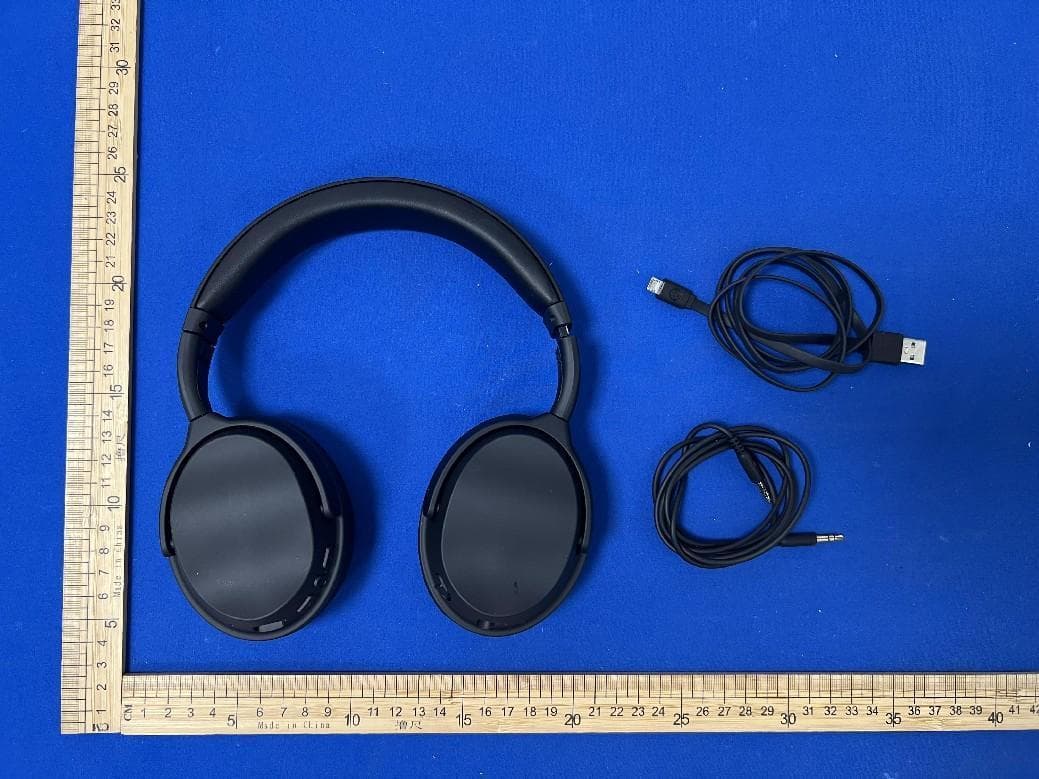
2AFM7WI-BTAPP100X
Mar 24, 2024Wicked Hum 1000x
Equipment Class
DSS - Part 15 Spread Spectrum Transmitter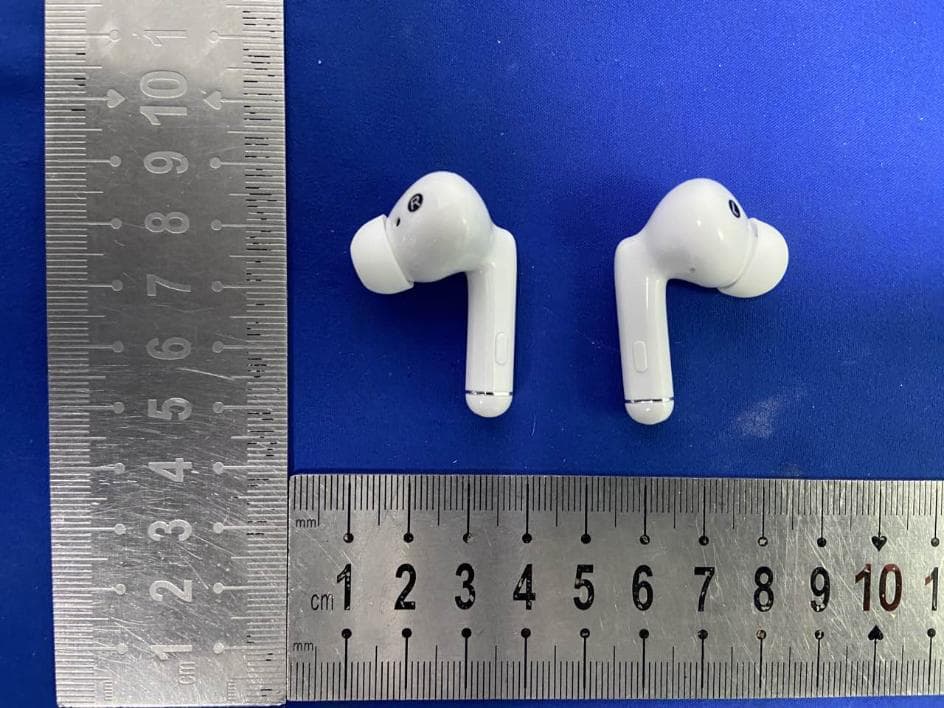
2AFM7WI-TW355X
May 09, 2021True wireless earbuds
Equipment Class
DSS - Part 15 Spread Spectrum Transmitter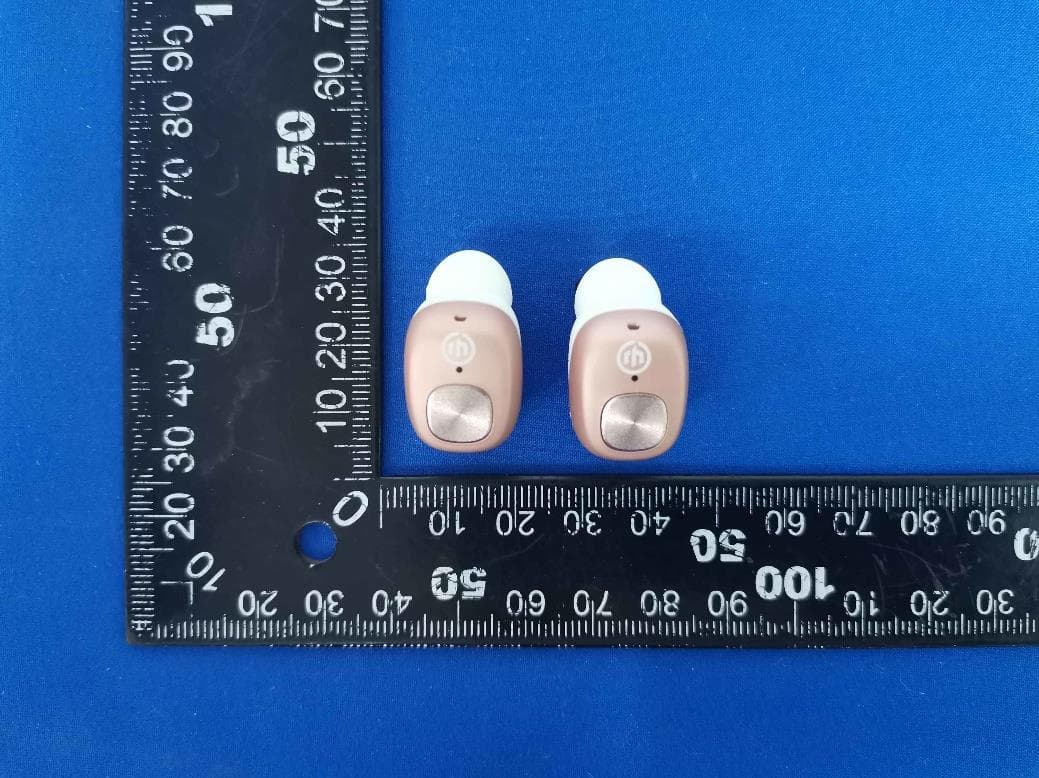
2AFM7WI-TW305X
Dec 03, 2020True wireless earphones
Equipment Class
DSS - Part 15 Spread Spectrum Transmitter
2AFM7WI-TW215X
May 27, 2020True wireless earbuds
Equipment Class
DSS - Part 15 Spread Spectrum Transmitter
2AFM7WI-BT4XXX
Mar 09, 2020Elektrix
Equipment Class
DSS - Part 15 Spread Spectrum Transmitter