2AFOMT0102Tango Aviation Headset
Lightspeed Aviation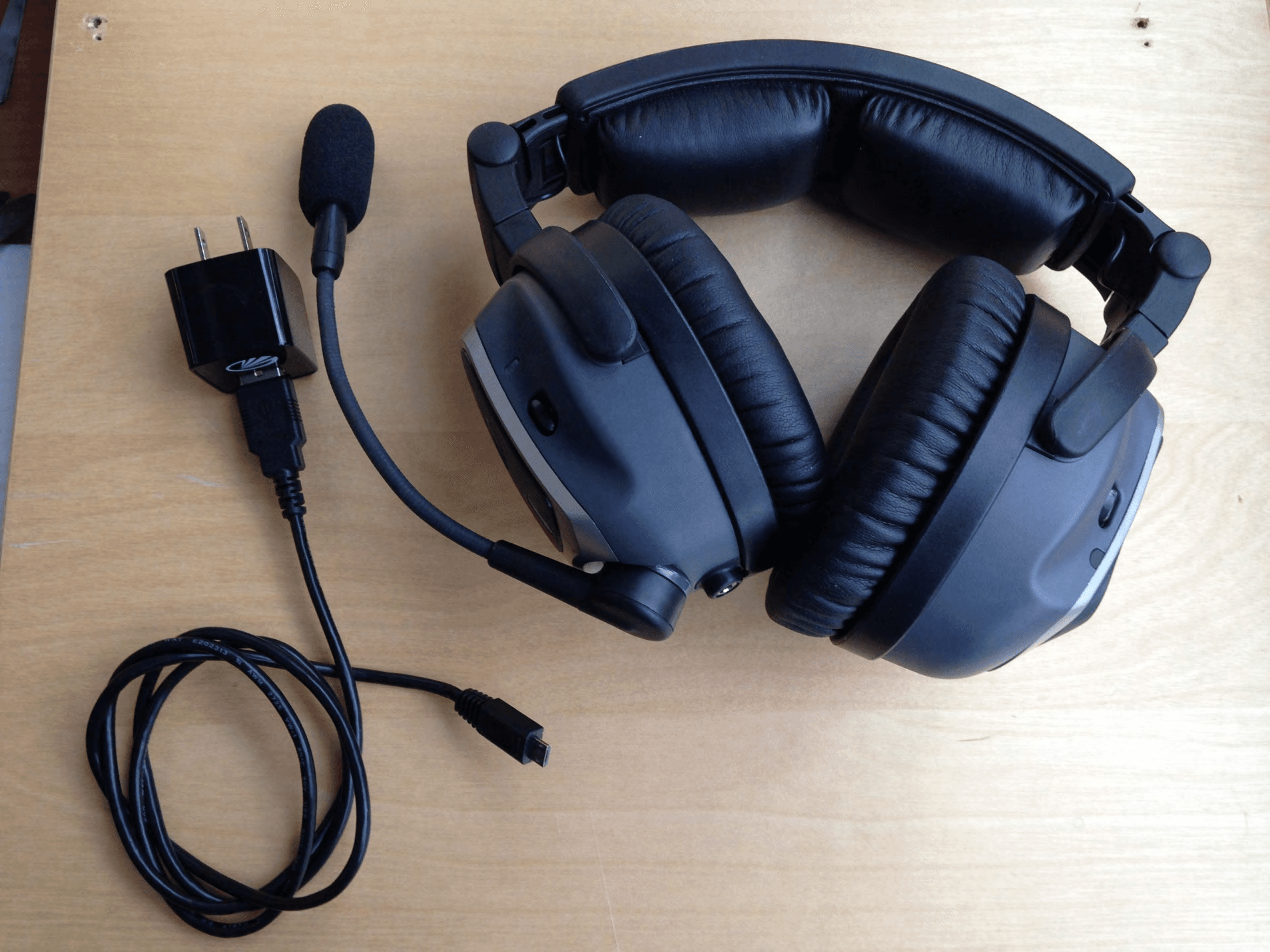
Click to zoom
Application Details
- Equipment Class
- DXX - Part 15 Low Power Communication Device Transmitter
- Date of Grant
- Nov 15, 2015
- Application Purpose
- Original Equipment
- Date of Application
- Nov 15, 2015
- Equipment Note
- Tango Aviation Headset
- Frequency Range
- 922.25000000 - 927.50000000
- Company
- Lightspeed Aviation
- Country
- United States
Documents & Files
Document Text
Text extracted from the exhibit documents filed with the FCC. Open a document above to read the original.
Users Manual
Tango User Guide Congratulations on purchasing a Lightspeed Aviation Tango wireless headset. Your headset is a premium product that will provide many years of comfortable high performance for your flying endeavors. If this is your first Lightspeed Aviation headset—welcome to the Lightspeed family! We look forward to building a lasting community with our customers founded on products and service that are best in class. To support your passion for flying we invite you to visit LightspeedAviation.com where you’ll find useful insights about our other products and aviation. Thank you for choosing a Lightspeed Aviation headset. Welcome Contents Introduction .....................................................................................2 Getting Started ..............................................................................4 Fitting your headset ..................................................................4 Battery installation .....................................................................4 The panel interface (front and side) ...............................6 The panel interface (back) ....................................................8 The headset ................................................................................10 Using Your Tango Headset .................................................12 Turning the system ON and OFF ...................................12 Matching stereo/mono setting to an audio panel ....................................................................12 ComPriority ™ ...............................................................................13 Wired auxiliary devices ........................................................13 Multiple Headsets .....................................................................14 Bluetooth Devices ....................................................................16 Connecting Bluetooth devices for the first time ........................................................................16 Bluetooth mode — ON and OFF ..................................17 Bluetooth cell phone features .........................................17 FlightLink .........................................................................................18 Features ........................................................................................18 How to activate .......................................................................18 Toggling between apps ......................................................18 FAQ s .....................................................................................................19 Peak Performance Tips..........................................................21 Batteries and Compliance ..................................................22 Specifications ..............................................................................23 Warranty Information ............................................................24 Registration ...................................................................................25 2 Introduction Your Tango headset package includes (clockwise, from top left on the following page): • Carrying case • User Guide and Quick Start Guide with warranty information • Tango ANR headset • Tango panel interface • Two Micro-USB charging cables • Two Lightspeed rechargeable batteries (one with panel power version) • Color chips for multiple headsets • Dual USB wall charger • Audio device cable with 3.5mm connector • Steel clip 3 Introduction 4 Fitting your headset Fitting your headset properly is the key to comfortable use and superior Active Noise Reduction (ANR) capabilities. To gain peak performance from the ANR feature it’s necessary to have a solid seal around your entire ear combined with a symmetrical fit on your head. The following tips will assist in achieving the proper fit. A. Fit your ears entirely within the ear cups providing a solid seal. B. Rest the headband lightly on top of your head with the right and left sliders extended to equal lengths. C. Position the microphone 1∕8 inch from your mouth, with the gain adjustment cap facing away from you (visible when you remove the mic muff ). Note: The microphone will not transmit unless the panel interface is plugged into an intercom and the system is turned on. Battery installation The Tango headset requires two rechargeable lithium ion batteries, except the panel powered version, which requires only one (batteries included). A. Open the headset battery compartment door by pressing down on the release button. Align the contacts on the battery with the contacts Getting Started This side of the microphone should face away from you. 5 in the compartment and close the battery compartment door. B. To access the panel interface battery compartment door, open the jacket, then open the battery compartment on the back of the panel interface. Align the contacts on the battery with the contacts in the compartment, and close the battery compartment door. C. The LED flashes GREEN when charged batteries are in use and the power is on. D. The batteries will last approximately 12 hours when fully charged. The power LED will flash RED and an audible tone will play when there are 4 hours of battery life remaining. If this happens during flight, the headset will continue to operate. Recharge batteries as soon as possible at any indication of low batteries. Heavy Bluetooth usage can significantly reduce battery life. Under quiet conditions Tango will automatically shut off approximately five minutes after the headset is removed from your head. The panel interface will shut off five minutes after it has been unplugged from the intercom or intercom power is turned off. Auto Shutoff™ can be disabled on either device by holding the power switch for that device for 3 seconds when turning the system on. The power LED will double blink to indicate that Auto Shutoff has been disabled. Note: The panel-powered version (LEMO) of the pa…
Text truncated - open the document above for the full version.
ID Label/Location Info
FCC LABEL FOR TANGO HEADSET The label will be located under the batteries in the battery compartment .
Operational Description
Tango headset antenna info The Tango headset unit employs two separate antennas. All antennas located inside the enclosure and are not accessible by a user. The 2.4Ghz audio link module antenna is printed on a module pcb. The module is made by Raytac, pn MD8530P1. Antenna has gain <= 2 dbi. The US version 925 Mhz receiving antenna is made by Linx, pn ANT‐916‐uSP. Antenna is a SMD component, mounted on the pcb. The manufacturer specifies peak gain as = 0.3 dBi. The EU version 864 Mhz receiving antenna is made by Linx, pn ANT‐869‐uSP. Antenna is a SMD component, mounted on the pcb. The manufacturer specifies peak gain as = 0.2 dBi.
Test Report
This report must not be used to claim product certification, approval, or endorsement by NVLAP, NIST, or any agency of the federal government of the United States of America. This Report may only be duplicated in its entirety LightSpeed Aviation Tango Aviation Headset FCC 15.249:2015 Report # LISA0030.1 NVLAP Lab Code: 200630-0 CERTIFICATE OF TEST 2014-12-10 Product compliance is the responsibility of the client; therefore, the tests and equipment modes of operation represented in this report were agreed upon by the client, prior to testing. The results of this test pertain only to the sample(s) tested. The specific description is noted in each of the individual sections of the test report supporting this certificate of test. This report reflects only those tests from the referenced standards shown in the certificate of test. It does not include inspection or verification of labels, identification, marking or user information. Last Date of Test: August 19, 2015 LightSpeed Aviation Model: Tango Aviation Headset Radio Equipment Testing Standards Specification Method FCC 15.249:2015 ANSI C63.10:2013 Results Method Clause Test Description Applied Results Comments 6.2 Powerline Conducted Emissions No N/A No power line. 6.5 Field Strength of Fundamental Yes Pass 6.5, 6.6 Field Strength of Harmonics and Spurious Radiated Emissions Yes Pass Deviations From Test Standards None Approved By: Kyle Holgate, Operations Manager Report No. LISA0030.12/15 REVISION HISTORY REV 2014.10.14 Revision Number Description Date Page Number 00 None Report No. LISA0030.13/15 ACCREDITATIONS AND AUTHORIZATIONS REV 2015.2.19 United States FCC - Designated by the FCC as a Telecommunications Certification Body (TCB). Certification chambers, Open Area Test Sites, and conducted measurement facilities are listed with the FCC. A2LA - Accredited by A2LA to ISO / IEC 17065 as a product certifier. This allows Northwest EMC to certify transmitters to FCC and IC specifications. NVLAP - Each laboratory is accredited by NVLAP to ISO 17025 Canada IC - Recognized by Industry Canada as a Certification Body (CB). Certification chambers and Open Area Test Sites are filed with IC. European Union European Commission – Validated by the European Commission as a Conformity Assessment Body (CAB) under the EMC directive and as a Notified Body under the R&TTE Directive. Australia/New Zealand ACMA - Recognized by ACMA as a CAB for the acceptance of test data. Korea MSIP / RRA - Recognized by KCC’s RRA as a CAB for the acceptance of test data. Japan VCCI - Associate Member of the VCCI. Conducted and radiated measurement facilities are registered. Taiwan BSMI – Recognized by BSMI as a CAB for the acceptance of test data. NCC - Recognized by NCC as a CAB for the acceptance of test data. Singapore IDA – Recognized by IDA as a CAB for the acceptance of test data. Israel MOC – Recognized by MOC as a CAB for the acceptance of test data. Hong Kong OFCA – Recognized by OFCA as a CAB for the acceptance of test data. Vietnam MIC – Recognized by MIC as a CAB for the acceptance of test data. SCOPE For details on the Scopes of our Accreditations, please visit: http://www.nwemc.com/accreditations/ http://gsi.nist.gov/global/docs/cabs/designations.html Report No. LISA0030.14/15 MEASUREMENT UNCERTAINTY TMU.2015.07.10 Measurement Uncertainty When a measurement is made, the result will be different from the true or theoretically correct value. The difference is the result of tolerances in the measurement system that cannot be completely eliminated. To the extent that technology allows us, it has been our aim to minimize this error. Measurement uncertainty is a statistical expression of measurement error qualified by a probability distribution. A measurement uncertainty estimation has been performed for each test per our internal quality document WP 342. The estimation is used to compare the measured result with its "true" or theoretically correct value. The expanded measurement uncertainty (K=2) for each test is on each data sheet. Our measurement data meets or exceeds the measurement uncertainty requirements of the applicable specification; therefore, the test data can be compared directly to the specification limit to determine compliance. The calculations for estimating measurement uncertainty are based upon ETSI TR 100 028 (or CISPR 16-4-2 as applicable), and are available upon request. The following table represents the Measurement Uncertainty (MU) budgets for each of the tests that may be contained in this report. Test + MU - MU Frequency Accuracy (Hz) 0.0007% -0.0007% Amplitude Accuracy (dB) 1.2 dB -1.2 dB Conducted Power (dB) 0.3 dB -0.3 dB Radiated Power via Substitution (dB) 0.7 dB -0.7 dB Temperature (degrees C) 0.7°C -0.7°C Humidity (% RH) 2.5% RH -2.5% RH Voltage (AC) 1.0% -1.0% Voltage (DC) 0.7% -0.7% Field Strength (dB) 5.2 dB -5.2 dB AC Powerline Conducted Emissions (dB) 2.4 dB -2.4 dB Report No. LISA0030.15/15 FACILITIES REV 2015.2.19 California Labs OC01-13 41 Tesla Irvine, CA 92618 (949) 861-8918 Minnesota Labs MN01-08, MN10 9349 W Broadway Ave. Brooklyn Park, MN 55445 (612)-638-5136 New York Labs NY01-04 4939 Jordan Rd. Elbridge, NY 13060 (315) 554-8214 Oregon Labs EV01-12 22975 NW Evergreen Pkwy Hillsboro, OR 97124 (503) 844-4066 Texas Labs TX01-09 3801 E Plano Pkwy Plano, TX 75074 (469) 304-5255 Washington Labs NC01-05 19201 120 th Ave NE Bothell, WA 9801 (425)984-6600 NVLAP NVLAP Lab Code: 200676-0 NVLAP Lab Code: 200881-0 NVLAP Lab Code: 200761-0 NVLAP Lab Code: 200630-0 NVLAP Lab Code:201049-0 NVLAP Lab Code: 200629-0 Industry Canada 2834B-1, 2834B-3 2834E-1 N/A 2834D-1, 2834D-2 2834G-1 2834F-1 BSMI SL2-IN-E-1154R SL2-IN-E-1152R N/A SL2-IN-E-1017 SL2-IN-E-1158R SL2-IN-E-1153R VCCI A-0029 A-0109 N/A A-0108 A-0201 A-0110 Recognized Phase I CAB for ACMA, BSMI, IDA, KCC/RRA, MIC, MOC, NCC, OFCA US0158 US0175 N/A US0017 US0191 US0157 Report No. LISA0030.16/15 PRODUCT DESCRIPTION 2014-12-10 Client and Equipment Under Test (EUT) Information Comp…
Text truncated - open the document above for the full version.
Test Setup Photos
photo EV01 Field Strenght Of Fund. (2).JPG EV01 Field Strenght Of Fund. (3).JPG FIELD STRENGTH OF FUNDAMENTAL PSA-ESCI 2015.03.03 photo EV01 Field Strenght Of Fund. AXIS (5).JPG EV01 Field Strenght Of Fund. AXIS (6) - Copy.JPG FIELD STRENGTH OF FUNDAMENTAL PSA-ESCI 2015.03.03 photo EV01 Field Strenght Of Fund. AXIS (7) - Copy.JPG FIELD STRENGTH OF FUNDAMENTAL PSA-ESCI 2015.03.03 photo EV01 Field Strenght Of Fund. AXIS (5).JPG EV01 Field Strenght Of Fund. AXIS (6).JPG FIELD STRENGTH OF HARMONICS AND SPURIOUS RADIATED EMISSIONS PSA-ESCI 2015.03.03 Report No. LISA0030.1 Photos Only2/6 photo EV01 Field Strenght Of Fund. AXIS (7).JPG EV01 Spurious Set Up (1).JPG FIELD STRENGTH OF HARMONICS AND SPURIOUS RADIATED EMISSIONS PSA-ESCI 2015.03.03 Report No. LISA0030.1 Photos Only3/6 photo EV01 Spurious Set Up (2).JPG FIELD STRENGTH OF HARMONICS AND SPURIOUS RADIATED EMISSIONS PSA-ESCI 2015.03.03 Report No. LISA0030.1 Photos Only4/6
Contact Information
Applicant
Louis Hindman(Director, Product Quality and Sustaining)
Test Firm
Northwest EMC, Inc.Greg Kiemel
Technical Specifications
| # | Rule Parts | Frequency Range | Power Output |
|---|---|---|---|
| 1 | 15C | 922.25 MHz - 927.5 MHz | - |
Other Applications from Lightspeed Aviation
2AFOMDZ01
Jul 25, 2022Delta Zulu
Equipment Class
DSS - Part 15 Spread Spectrum Transmitter
2AFOMT0101
Nov 15, 2015Tango Transceiver
Equipment Class
DSS - Part 15 Spread Spectrum Transmitter