2AFXQ-W3DSmart Phone
Hangzhou iReadyGo Intelligence Technology Co., Ltd.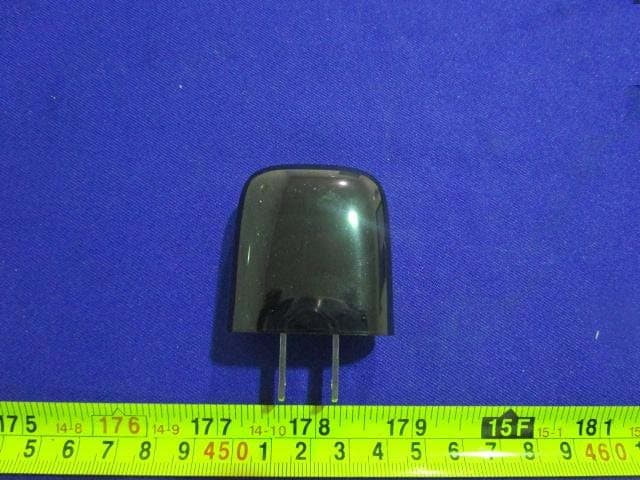
Click to zoom
Application Details
- Equipment Class
- NII - Unlicensed National Information Infrastructure TX
- Date of Grant
- Oct 21, 2015
- Application Purpose
- Original Equipment
- Date of Application
- Oct 21, 2015
- Equipment Note
- Smart Phone
- Frequency Range
- 5190.00000000 - 5230.00000000
- Country
- China
Documents & Files
Document Text
Text extracted from the exhibit documents filed with the FCC. Open a document above to read the original.
Users Manual
1 Contents Safety .................................................................................................................... 3 Environment ........................................................................................................ 4 FCC warning ....................................................................................................... 5 1 Getting Started ................................................................................................. 6 1.1 Getting to know your touch phone .................................................... 6 1.2 Installing the SIM card, battery, and storage card ............................. 6 1.3 Charging the Battery .......................................................................... 7 1.4 Starting up the device......................................................................... 8 1.5 Status Icons ...................................................................................... 10 2 Using phone features ..................................................................................... 12 2.1 Turning the phone function on and off ............................................ 12 2.2 Making a call ................................................................................... 12 2.3 Answering and Ending a call ........................................................... 13 2.4 In-call options .................................................................................. 13 2.5 Using call history ............................................................................. 14 2.6 Call settings ...................................................................................... 14 3 Setting on your device .................................................................................... 14 4 ActiveSync ....................................................................................................... 17 5 Contacts .......................................................................................................... 20 6 Exchanging Messages .................................................................................... 22 7 Internet ........................................................................................................... 27 7.1 Ways of Connecting to the Internet ................................................. 27 7.2 Browser ............................................................................................ 27 8 Experiencing Multimedia .............................................................................. 29 8.1 Camera & Picture ............................................................................. 29 8.2 Music................................................................................................ 32 8.3 FM Radio ......................................................................................... 34 8.4 Sound record .................................................................................... 34 2 9 Other applications .......................................................................................... 34 9.1 Calendar ........................................................................................... 34 9.2 Alarm Clock ..................................................................................... 35 9.3 Calculator ......................................................................................... 37 10 Play Store* .................................................................................................... 37 3 Safety Never attempt to disassemble your phone. You alone are responsible for how you use your phone and any consequences of its use. As a general rule, always switch off your phone wherever the use of a phone is prohibited. Use of your phone is subject to safety measures designed to protect users and their environment. Do not use your phone in damp areas (bathroom, swimming pool...). Protect it from liquids and other moisture. Do not expose your phone to extreme temperatures lower than - 10°C and higher than + 55°C. The physicochemical processes created by chargers impose temperature limits when charging the battery. Your phone automatically protects the batteries in extreme temperatures. Do not leave your phone within the reach of small children (certain removable parts may be accidentally ingested). Electrical safety: Only use the chargers listed in the manufacturer’s catalogue. Using any other charger may be dangerous; it would also invalidate your warranty. Line voltage must be exactly the one indicated on the charger’s serial plate. Aircraft safety: When traveling by plane, you will need to switch your phone off when so instructed by the cabin crew or the warning signs. Using a mobile phone may be dangerous to the operation of the aircraft and may disrupt the phone network. Its use is illegal and you could be prosecuted or banned from using cellular networks in the future if you do not abide by these regulations. Explosive materials: Please comply with warning signs at petrol station asking you to switch your phone off. You will need to comply with radio equipment usage restrictions in places such as chemical plants, fuel depots and at any location where blasting operations are under way. Electronic equipment: To avoid the risk of demagnetization, do not let electronic devices close to your phone for a long time. Electronic medical equipment: Your phone is a radio transmitter which may interfere with electronic medical equipment or implants, such as hearing aids, 4 pacemakers, insulin pumps, etc. It is recommended that a minimum separation of 15 cm be maintained between the phone and an implant. Your doctor or the manufacturers of such equipment will be able to give you any advice you may need in this area. Hospitals: Always make sure that your phone is switched off in hospitals when so instructed by warning signs or by medical staff. Road safety: Do not use your phone when …
Text truncated - open the document above for the full version.
Cover Letter(s)
QA-FR-170-B
External Photos
EXHIBIT B - EUT EXTERNAL PHOTOGRAPHS EUT – All View EUT – Top View EUT – Bottom View EUT – Side View EUT – Side View EUT – Side View EUT – Side View EUT – Adapter Top View EUT – Adapter Bottom View
ID Label/Location Info
EXHIBIT A - FCC ID LABELING AND LOCATION FCC ID Label Proposed FCC ID Label Location The label shown shall be permanently affixed at a conspicuous location on the device and be readily visible to the user at the time purchase (Labeling requirements per 2.925) Label Here
Internal Photos
EXHIBIT C - EUT INTERNAL PHOTOGRAPHS EUT – Uncover View EUT – Uncover View EUT –Battery Top View EUT –Battery Bottom View EUT –BT&Wifi &GPS Antenna View EUT –LTE Diversity Antenna View EUT –GSM&WCDMA<E Antenna View EUT –Uncover View EUT –Uncover View EUT –Sub Board Top View EUT –Sub Board Bottom View EUT –Main Board Top View EUT –Main Board Top Uncover View EUT –Main Board Bottom View EUT –Main Board Bottom Uncover View EUT –Main Chip View EUT –GSM/WCDMA/LTE Transceiver Chip View EUT –WiFi&BT&GPS Chip View
RF Exposure Info
Bay Area Compliance Laboratories Corp. (Dongguan) Report No.: RDG150828003-00D FCC Part 15.407 Page 8 of 56 FCC §15.407 (f) & §1.1310 & §2.1093- RF EXPOSURE Applicable Standard According to§15.247(i) and §1.1310, systems operating under the provisions of this section shall be operated in a manner that ensure that the public is not exposed to radio frequency energy level in excess of the Commission’s guideline. According to KDB447498 D01 General RF Exposure Guidance v05r02: The 1-g and 10-g SAR test exclusion thresholds for 100 MHz to 6 GHz at test separation distances ≤ 50 mm are determined by: [(max. power of channel, including tune-up tolerance, mW)/(min. test separation distance, mm)] ‧ [√ f(GHz)] ≤ 3.0 for 1-g SAR and ≤ 7.5 for 10-g extremity SAR, where • f(GHz) is the RF channel transmit frequency in GHz • Power and distance are rounded to the nearest mW and mm before calculation • The result is rounded to one decimal place for comparison • 3.0 and 7.5 are referred to as the numeric thresholds in the step 2 below The test exclusions are applicable only when the minimum test separation distance is ≤ 50 mm and for transmission frequencies between 100 MHz and 6 GHz. When the minimum test separation distance is < 5 mm, a distance of 5 mm according to 5) in section 4.1 is applied to determine SAR test exclusion. Measurement Result The maximum target output power= 8.1 dBm (6.46mW) at 5240 MHz [(max. power of channel, mW)/(min. test separation distance, mm)][√f(GHz)] = 6.46/5*(√5.24) = 2.96< 3.0 So the stand-alone SAR evaluation is not necessary.
Test Report
Note: This test report is prepared for the customer shown above and for the device described herein. It may not be duplicated or used in part without prior written consent from Bay Area Compliance Laboratories Corp. (Dongguan). This report is valid only with a valid digital signature. The digital signature may be available only under the Adobe software above version 7.0. FCC PART 15.407 TEST REPORT For Hangzhou iReadyGo Intelligence Technology Co., Ltd. RM 1503, Tianheng Builing, No.1509 Binsheng RD, Xixing Street, Binjiang District, Hangzhou, China Report Type: Original Report Product Type: Smart phone Test En gineer: Dean Liu Re port Number: RDG150828003-00D Re port Date: 2015-10-09 Reviewed By: Sula Huang RF Leader Test Laboratory: Bay Area Compliance Laboratories Corp. (Dongguan) No.69 Pulongcun, Puxinhu Industrial Zone, Tangxia, Dongguan, Guangdong, China Tel: +86-769-86858888 Fax: +86-769-86858891 www.baclcorp.com.cn FCC ID: 2AFXQ-W3D Bay Area Compliance Laboratories Corp. (Dongguan) Report No.: RDG150828003-00D FCC Part 15.407 Page 2 of 56 TABLE OF CONTENTS GENERAL INFORMATION ....................................................................................................................................... 4 PRODUCT DESCRIPTION FOR EQUIPMENT UNDER TEST (EUT) ..................................................................................... 4 OBJECTIVE ................................................................................................................................................................... 4 RELATED SUBMITTAL(S)/GRANT(S) ............................................................................................................................. 4 TEST METHODOLOGY .................................................................................................................................................. 4 TEST FACILITY ............................................................................................................................................................. 4 SYSTEM TEST CONFIGURATION .......................................................................................................................... 5 DESCRIPTION OF TEST CONFIGURATION ...................................................................................................................... 5 EUT EXERCISE SOFTWARE .......................................................................................................................................... 5 EQUIPMENT MODIFICATIONS ....................................................................................................................................... 5 SUPPORT EQUIPMENT LIST AND DETAILS .................................................................................................................... 6 EXTERNAL CABLE ........................................................................................................................................................ 6 BLOCK DIAGRAM OF TEST SETUP ................................................................................................................................ 6 SUMMARY OF TEST RESULTS ............................................................................................................................... 7 FCC §15.407 (f) & §1.1310 & §2.1093- RF EXPOSURE ............................................................................................... 8 APPLICABLE STANDARD .............................................................................................................................................. 8 FCC §15.203 – ANTENNA REQUIREMENT ............................................................................................................ 9 APPLICABLE STANDARD .............................................................................................................................................. 9 ANTENNA CONNECTOR CONSTRUCTION ...................................................................................................................... 9 FCC §15.209, §15.205 & §15.407(b) (1) (6) (7) –UNWANTED EMISSION ........................................................... 15 APPLICABLE STANDARD ............................................................................................................................................ 15 MEASUREMENT UNCERTAINTY .................................................................................................................................. 15 EUT SETUP ................................................................................................................................................................ 16 EMI TEST RECEIVER & SPECTRUM ANALYZER SETUP .............................................................................................. 17 TEST PROCEDURE ...................................................................................................................................................... 17 CORRECTED AMPLITUDE & MARGIN CALCULATION ................................................................................................. 17 TEST EQUIPMENT LIST AND DETAILS ......................................................................................................................... 18 TEST RESULTS SUMMARY .......................................................................................................................................... 18 TEST DATA ................................................................................................................................................................ 18 FCC§15.407(b) –CONDUCTED SPURIOUS EMISSION AT ANTENNA PORT ............................................... 22 APPLICABLE STANDARD ............................................................................................................................................ 22 TEST EQUIPMENT LIST AND DETAILS .............................…
Text truncated - open the document above for the full version.
Test Setup Photos
EXHIBIT D - TEST SETUP PHOTOGRAPHS Conducted Emissions – Front View Conducted Emissions - Side View Radiated Emission View (Below 1GHz) Radiated Emission View (Above 1GHz)
Contact Information
Applicant
Yile Zhang
Test Firm
Bay Area Compliance Laboratories Corp. (Dongguan)John Chan
[email protected]86-769-86858888
Technical Specifications
| # | Rule Parts | Frequency Range | Power Output |
|---|---|---|---|
| 2 | 15E | 5.19 GHz - 5.23 GHz | 5.70 mW |