2AOV6-HP077ANC Bluetooth Headphone
Shenzhen Minsuo Industrial Co.,Ltd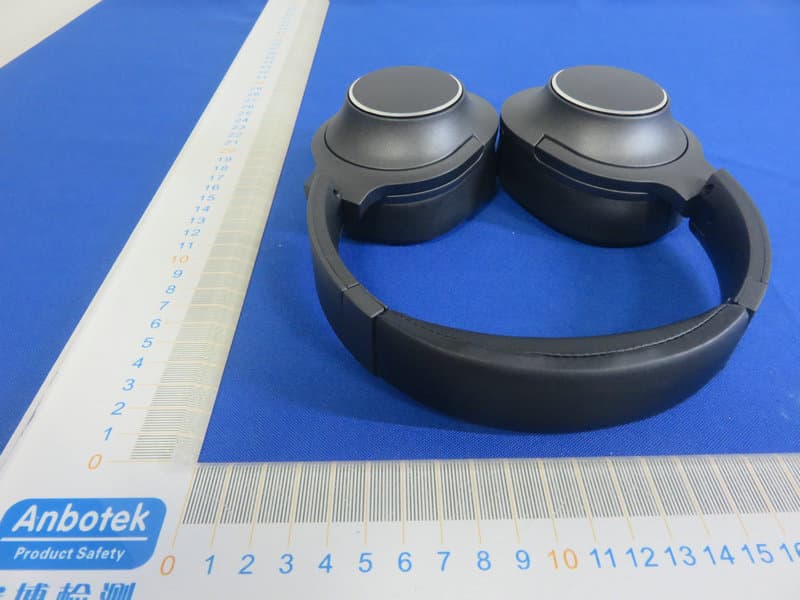
Click to zoom
Application Details
- Equipment Class
- DSS - Part 15 Spread Spectrum Transmitter
- Date of Grant
- Mar 30, 2020
- Application Purpose
- Original Equipment
- Date of Application
- Mar 30, 2020
- Equipment Note
- ANC Bluetooth Headphone
- Frequency Range
- 2402.00000000 - 2480.00000000
- Country
- China
Documents & Files
Document Text
Text extracted from the exhibit documents filed with the FCC. Open a document above to read the original.
Users Manual
Mic Indicator ACTIVE NOISE CANCELLING HEADPHONE Features Safety Instruction Please read before use. Read the manual to help you to correctly use and enjoy all funtions. Please keep the instruction for future reference Warning Long time listening with loud volume will damage hearing, please adjust to proper volume. Do not use the headphone in dangerous condition, to avoid surrounding dangerous. Please mind up do not drop, press or wet out the headphone. Do not plug the jack to city power socket. Children to use the headphone should be under the adult supervision. Product Introduction Thanks for you to purchase active noise cancelling music headphone. Built-in active noise cancelling technology combined with foldable structure, reduce the noise effectively. You can enjoy perfectly your music during travel, office work, rest with your headphone with your hearing under more protection from being damaged by annoying ambient noises. Accessories: charging cord/ storage bag/ plane adaptor/ user manual Note: Design or specifications update please refer to our website User Manual 1. ANC mode (special for only reducing ambient noise, without music on) Please wear the headphone, push the power switch to “ON” position on the inline controller. Working indicator will light on in blue. 2.Common mode(listening to music, without reducing noise) Wear the headphone; push the power switch to “OFF” position on the inline controller, connect the 3.5mm plug to your audio device/mobile phone for enjoying music 3. Use as Bluetooth wireless headphone Plug the 5pin jack into the side charging port of the inline controller, and connect the USB jack to PC, Power bank, 5V power adaptor. Red light shows up when charging, Blue light shows up when the battery is fully charged 4.Recharging battery Storage Please rotate the headphone to fold it flat then storage in the bag Cleaning No need for periodic cleaning If necessary, please use damp cloth to wipe the headphone surface; please make sure 3.5mm plug always clean. Beware of the headphone kept away from being affected with damp Remarks This professional ANC music headphone is designed for reducing 50-1000Hz low frequency noise, so will have limited effect to reduce shrilled high frequency noise. Initial use effect will be a bit different to the sample headphone from our exclusive shop, because samples are already pass warm up process. The new headphone will give play to proper sound effect after 2-3 Months warm up. Note: the tone quality style for warm up is irreversibility, more specific please refer to www.insermore.com About INSERMORE Hearing is a major perception of human body toward the outside world. INSERMORE team, focusing on the development and manufacture of acoustic products, constantly pursue to bring you headphone product with superior sound quality and perfect hearing protection. Superior sound quality and excellent noise reduction effect of INSERMORE headphone enable you to comfortably enjoy the happiness of music and other audio contents anywhere especially for during the journey, in the aircraft and airplane cabin, the high-speed train, metro and buses. It's valuable for any place where the ambient noise is high, and can significantly reduced the environment noise for obtaining quality hearing effect. The strong feature of ANC ( active noise cancelling) of the headphone can also let you to use normal level of comfortable and suitable sound volume in listening in order to avoid using loud volume for long time listening to better prevent from developing irreversible hearing damage to your health. superior sound quality perfect hearing protection ® www.insermore.com ® Welcome to use Insermore products Please read this manual before operation, it will help you better in getting started with our product. Failure to use device properly and follow instructions can lead to incomplete or misunderstanding usage of the product and so forth the relevant benefit losses of the product users. Please keep the product and manual properly, follow the operation procedure when needed. Fault Diagnosis Cannot reduce noise Make sure the controller switch is powered on. Working indicator keeps lighting. If power run out, should recharge Covere the whole ear by headphone earmuffs, make sure the band right on top of head Do not work Run out power, should recharge on time. Bad connect caused by oxidized or pollution on 3.5mm jack or 3.5mm jack haven’t totally inserted into the audio port, make sure its proper connection Fault Cause/Solution Noise cancelling effect not good ANC ON/OFF Aux in 1. Advanced reverse noise cancelling technology, reducing 90% unwanted background noise 2. Support wireless transmission function,adopted CSR8635 chip for realizing more stable connection, farther distance of transmission as well as excellent sound quality. 3. Noise cancelling specially use 40mm drivers, whole piece forming corona diaphragm guarantee top level of unanimity for crystal clear high quality sound 4. Adopt lithium battery for power supply, supporting 90 hours battery duration for noise reduction mode, 25 hours battery duration for Bluetooth mode, and 20 hours battery duration for Bluetooth and noise reduction mode 5. Specially designed Bluetooth noise reduction and anti-interference circuit to solve the problem of high frequency wave interference that brought in by most of the Bluetooth type the active noise reduction headphones during working hour. 6. Dual working mode, with or without noise cancelling, can be easily switched between each other 7. Inline microphone supports calling, answer/hang up, volume up/down, last/next song, play/pause 8. The surface of the whole machine is treated with metal paint, improved greatly the quality sense of the surface, also is it more effective to prevent scraping. 9. Over ear design of the earmuff, with high grade memory-inert-sponge filled inside the quality protein cortex, soft and comfortable without oppression to ears, absorbing sweat with…
Text truncated - open the document above for the full version.
External Photos
FCC ID: 2AOV6-HP077
ID Label/Location Info
Label Location On EUT Label Product Name: ANC Bluetooth Headphone Model No.: HP-077 FCC ID: 2AOV6-HP077 This device complies with Part 15 of the FCC Rules. Operation is subject to the following two conditions: (1) This device may not cause harmful interference, and (2) This device must accept any interference received, including interference that may cause undesired operation.
Internal Photos
FCC ID: 2AOV6-HP077 ANT
RF Exposure Info
RF EXPOSURE EVALUATION FCC ID: 2AOV6-HP077 According to FCC 1.1310: The criteria listed in the following table shall be used to evaluate the environment impact of human exposure to radio frequency(RF) Radiation as specified in §1.1307(b): Routine SAR evaluation refers to that specifically required by §2.1093, using measurements or computer simulation. When routine SAR evaluation is not required, portable transmitters withoutput power greater than the applicable low threshold require SAR evaluation to qualify for TCB approval. Channel (MHz) Maximum output power (dBm) Tune up tolerance (dBm) Max Tune Up Power (dBm) Distance (mm) Calculation results Limit Operating Mode 2402-0.639 -0.639±1 0.36150.3373 BDR+EDR 24411.322 1.322±1 2.32250.5333 24801.358 1.358±1 2.35850.5423 2402-2.679 -2.679±1 -1.67950.2113 2441-0.376 -0.376±1 0.62450.3613 2480-0.475 -0.475±1 0.52550.3553 Test Results:PASS.
Test Report
Report No.: 18220WC00018501FCC ID: 2AOV6-HP077Page 1 of 57 Code:AB-RF-05-a FCC TEST REPORT Client Name: Shenzhen Minsuo Industrial Co.,Ltd. Address: 12th floor, Block B, Tengyao Building, No. 268 Gushu 2nd road,Xixiang Town, Bao'an, Shenzhen, Guangdong, China Product Name: ANC Bluetooth Headphone Date: Mar. 28, 2020 Shenzhen Anbotek Compliance Laboratory Limited Report No.: 18220WC00018501FCC ID: 2AOV6-HP077Page 2 of 57 Code:AB-RF-05-a Contents 1. General Information ............................................................................................................................................... 5 1.1. Client Information ....................................................................................................................................... 5 1.2. Description of Device (EUT) ..................................................................................................................... 5 1.3. Auxiliary Equipment Used During Test ................................................................................................... 6 1.4. Description of Test Modes ........................................................................................................................ 6 1.5. List of channels ........................................................................................................................................... 7 1.6. Description Of Test Setup ......................................................................................................................... 8 1.7. Test Equipment List .................................................................................................................................... 9 1.8. Measurement Uncertainty ....................................................................................................................... 10 1.9. Description of Test Facility ...................................................................................................................... 10 2. Summary of Test Results ................................................................................................................................... 11 3. Conducted Emission Test ................................................................................................................................... 12 3.1. Test Standard and Limit .......................................................................................................................... 12 3.2. Test Setup .................................................................................................................................................. 12 3.3. Test Procedure .......................................................................................................................................... 12 3.4. Test Data .................................................................................................................................................... 12 4. Radiation Spurious Emission and Band Edge ................................................................................................ 15 4.1. Test Standard and Limit .......................................................................................................................... 15 4.2. Test Setup .................................................................................................................................................. 15 4.3. Test Procedure .......................................................................................................................................... 16 4.4. Test Data .................................................................................................................................................... 17 5. Maximum Peak Output Power Test .................................................................................................................. 25 5.1. Test Standard and Limit .......................................................................................................................... 25 5.2. Test Setup .................................................................................................................................................. 25 5.3. Test Procedure .......................................................................................................................................... 25 5.4. Test Data .................................................................................................................................................... 25 6. 20DB Occupy Bandwidth Test ........................................................................................................................... 29 6.1. Test Standard ............................................................................................................................................ 29 6.2. Test Setup .................................................................................................................................................. 29 6.3. Test Procedure .......................................................................................................................................... 29 6.4. Test Data .................................................................................................................................................... 29 7. Carrier Frequency Separation Test ................................................................................................................... 33 7.1. Test Standard and Limit .......................................................................................................................... 33 7.2. Test Setup .................................................................................................................................................. 33 7.3. Test Procedure ...................................................................................................…
Text truncated - open the document above for the full version.
Test Setup Photos
FCC ID: 2AOV6-HP077 Photo of Conducted Emission Measurement Photo of Radiation Emission Test
Contact Information
Applicant
Henry Xu(manager)
Test Firm
Shenzhen Anbotek Compliance Laboratory LimitedJeff Zhu
Technical Specifications
| # | Rule Parts | Frequency Range | Power Output |
|---|---|---|---|
| 1 | 15C | 2.40 GHz - 2.48 GHz | 1.40 mW |
Other Applications from Shenzhen Minsuo Industrial Co.,Ltd
2AOV6-SP-198
Jan 20, 2026Sound-bar Speaker
Equipment Class
DSS - Part 15 Spread Spectrum Transmitter2AOV6-BLS-6-2388
Sep 04, 202415 INCHES LIGHT UP BLUETOOTH SOUNDBAR
Equipment Class
DSS - Part 15 Spread Spectrum Transmitter2AOV6-FMWC-12-2393
Aug 27, 20243-IN-1 FOLDABLE MAGNETIC WIRELESS CHARGER
Equipment Class
DCD - Part 15 Low Power Transmitter Below 1705 kHz2AOV6-CRGB-6-2392
Aug 27, 2024CHARGER WITH RGB LIGHTS
Equipment Class
DCD - Part 15 Low Power Transmitter Below 1705 kHz2AOV6-HP-555
Aug 17, 2024BT EARBUDS W TOUCH SCREEN CASE
Equipment Class
DSS - Part 15 Spread Spectrum Transmitter