2AQ9RBH5282Bluetooth Headphone
Shenzhen Elenose Technology Co. LTD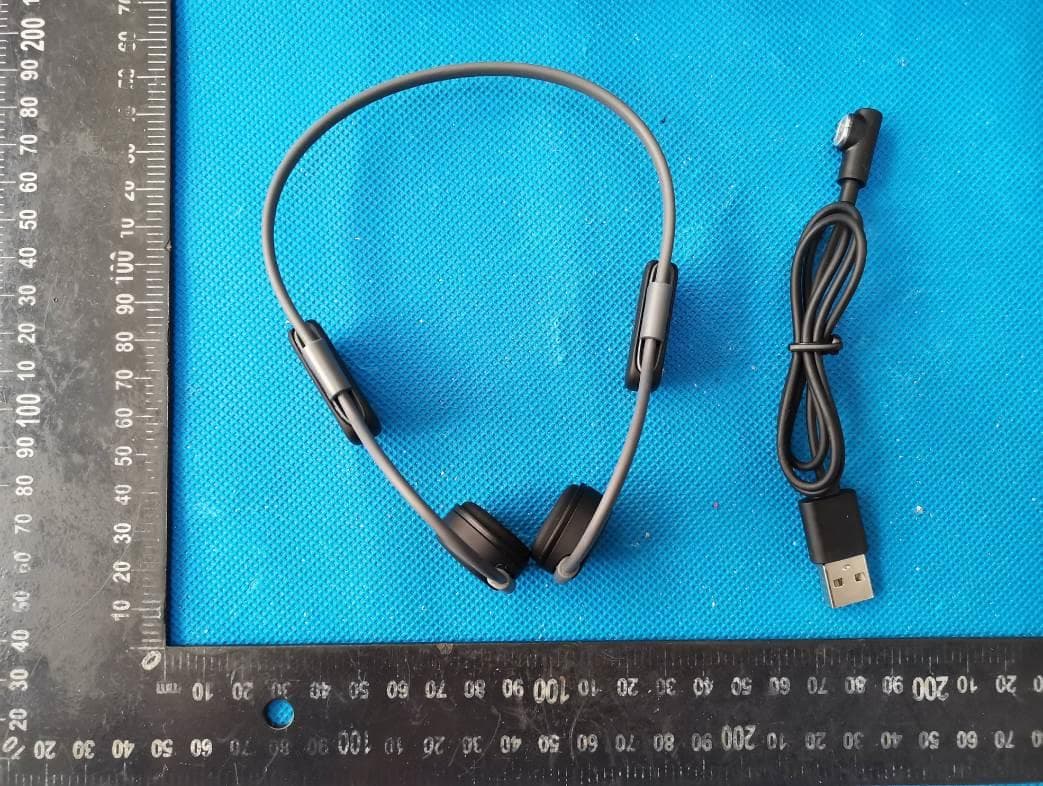
Click to zoom
Application Details
- Equipment Class
- DSS - Part 15 Spread Spectrum Transmitter
- Date of Grant
- Apr 23, 2021
- Application Purpose
- Original Equipment
- Date of Application
- Apr 22, 2021
- Equipment Note
- Bluetooth Headphone
- Frequency Range
- 2402.00000000 - 2480.00000000
- Country
- China
Documents & Files
Document Text
Text extracted from the exhibit documents filed with the FCC. Open a document above to read the original.
Users Manual
This equipment has been tested and found to comply with the limits for a Class B digital device, pursuant to part 15 of the FCC Rules. These limits are designed to provide reasonable protection against harmful interference in a residential installation. This equipment generates, uses and can radiate radio frequency energy and, if not installed and used in accordance with the instructions, may cause harmful interference to radio communications. However, there is no guarantee that interference will not occur in a particular installation. If this equipment does cause harmful interference to radio or television reception, which can be determined by turning the equipment off and on, the user is encouraged to try to correct the interference by one or more of the following measures: • Reorient or relocate the receiving antenna. • Increase the separation between the equipment and receiver. • Connect the equipment into an outlet on a circuit different from that to which the receiver is connected. • Consult the dealer or an experienced radio/TV technician for help. Caution: Any changes or modifications to this device not explicitly approved by manufacturer could void your authority to operate this equipment. This device complies with part 15 of the FCC Rules. Operation is subject to the following two conditions: (1) This device may not cause harmful interference, and (2) this device must accept any interference received, including interference that may cause undesired operation. RF Exposure warning The device has been evaluated to meet general RF exposure requirement. The device can be used in portable exposure condition without restriction. FCC Statement Bluetooth Headphone
Cover Letter(s)
CONFIDENTIALITY REQUEST for Certification Service in USA Federal Communication Commission Equipment Authorization Division, Application Processing Branch 7435 Oakland Mills Road Columbia, MD 21046 Date: April 20, 2021 TO WHOM IT MAY CONCERN Pursuant to Paragraphs §0.457 and 0.459 of the Commission’s Rules (47 C.F.R.) and Section §552(b)(4) of the Freedom of Information Act, we requests confidentiality for the following products: FCC ID Model name 2AQ9RBH5282 BH528 For the product stated above, we request that the following information be held confidential; Exhibits Long-Term Confidentiality Short-Term Confidentiality Short-Term Confidentiality Days External Photos Internal Photos Block Diagram Schematics Test Setup Photos User’s Manual Parts List Tune Up Operational Descriptions The long-term confidentiality exhibits contain our trade secrets and proprietary information that could be of benefit to our competitors. The short-term confidentiality on the basis of ensuring that business sensitive information remains confidential until the actual marketing of our new device. If you have any questions, please feel free to contact me at the address shown below. Sincerely, Name/Title: Zhedong He/CEO Company: Shenzhen Elenose Technology Co. LTD Address: Room 423, Building 8, Zijing No.1, Huahui Road, Tongsheng Community, Dalang Street, Longhua District, Shenzhen, Guangdong,China Phone: 13632605005 Fax: 0755-28119997 E-Mail: [email protected]
Cover Letter(s)
Shenzhen Elenose Technology Co. LTD Room 423, Building 8, Zijing No.1, Huahui Road, Tongsheng Community, Dalang Street, Longhua District, Shenzhen, Guangdong,China Tel: 13632605005 Fax: 0755-28119997 Federal Communications Commission Authorization and Evaluation Division Equipment Authorization Branch 7435 Oakland Mills Road Columbia, MD 21046 4/20/2021 To whom it may concern: We, Shenzhen Elenose Technology Co. LTD the undersigned, hereby authorize Eurofins Product Service GmbH to act on our behalf in all matters relating to applications for equipment authorization FCC ID: 2AQ9RBH5282 including the signing of all documents related to these matters. Any and all acts carried out by Eurofins Product Service GmbH on our behalf shall have the same effect as acts of our own. We also hereby certify that no party to this application is subject to a denial of benefits, including FCC benefits, pursuant to Section 5301 of the Anti-Drug Abuse Act of 1988, 21 U.S.C. 862. Sincerely, Name/Title: Zhedong He/CEO Company: Shenzhen Elenose Technology Co. LTD Address: Room 423, Building 8, Zijing No.1, Huahui Road, Tongsheng Community, Dalang Street, Longhua District, Shenzhen, Guangdong,China Phone: 13632605005 Fax: 0755-28119997 E-Mail: [email protected]
External Photos
FCC ID: 2AQ9RBH5282 External Photos of the EUT Fig.1 Fig.2 FCC ID: 2AQ9RBH5282 Fig.3 Fig.4 FCC ID: 2AQ9RBH5282 Fig.5 Fig.6 FCC ID: 2AQ9RBH5282 Fig.7 Fig.8
ID Label/Location Info
FCC ID: 2AQ9RBH5282 Label and Location Size: L: 2.0cm*W: 1.5cm Label and Location Bluetooth Headphone Model No.: BH528 FCC ID: 2AQ9RBH5282
Internal Photos
FCC ID: 2AQ9RBH5282 Internal Photos of the EUT Fig.1 Fig.2 BT ANT FCC ID: 2AQ9RBH5282 Fig.3 Fig.4 FCC ID: 2AQ9RBH5282 Fig.5 Fig.6 FCC ID: 2AQ9RBH5282 Fig.7 Fig.8 FCC ID: 2AQ9RBH5282 Fig.9
RF Exposure Info
RF Exposure evaluation FCC ID: 2AQ9RBH5282 1.1. Applicable Standard According to §1.1307(b)(1), systems operating under the provisions of this section shall be operated in a manner that ensures that the public is not exposed to radio frequency energy level in excess of the Commission’s guidelines. According to §1.1310 and §2.1093 RF exposure requirement KDB447498 v06: Mobile and Portable Devices RF Exposure Procedures and Equipment Authorization Policies 1.2. Requirement According to KDB447498 D01 General RF Exposure Guidance v06 Section 4.3.1 Standalone SAR test exclusion considerations: “Unless specifically required by the published RF exposure KDB procedures, standalone 1-g head or body and 10-g extremity SAR evaluation for general population exposure conditions, by measurement or numerical simulation, is not required when the corresponding SAR Test Exclusion Threshold condition, listed below, is satisfied. These test exclusion conditions are based on source-based time-averaged maximum conducted output power of the RF channel requiring evaluation, adjusted for tune-up tolerance, and the minimum test separation distance required for the exposure conditions.22 The minimum test separation distance is determined by the smallest distance from the antenna and radiating structures or outer surface of the device, according to the host form factor, exposure conditions and platform requirements, to any part of the body or extremity of a user or bystander (see 5) of section 4.1). To qualify for SAR test exclusion, the test separation distances applied must be fully explained and justified by the operating configurations and exposure conditions of the transmitter and applicable host platform requirements, typically in the SAR measurement or SAR analysis report, according to the required published RF exposure KDB procedures. When no other RF exposure testing or reporting is required, a statement of justification and compliance must be included in the equipment approval, in lieu of the SAR report, to qualify for the SAR test exclusion. When required, the device specific conditions described in the other published RF exposure KDB procedures must be satisfied before applying these SAR test exclusion provisions; for example, handheld PTT two-way radios, handsets, laptops & tablets etc.23 “ [(max. power of channel, including tune-up tolerance, mW)/ (min. test separation distance, mm)] · [√f (GHz)] ≤ 3.0 for 1-g SAR and ≤ 7.5 for 10-g extremity SAR, where: • f (GHz) is the RF channel transmit frequency in GHz • Power and distance are rounded to the nearest mW and mm before calculation • The result is rounded to one decimal place for comparison • 3.0 and 7.5 are referred to as the numeric thresholds in the step 2 below The test exclusions are applicable only when the minimum test separation distance is ≤ 50 mm and for transmission frequencies between 100 MHz and 6 GHz. When the minimum test separation distance is < 5 mm, a distance of 5 mm according to 5) in section 4.1 is applied to determine SAR test exclusion. 1.3. Manufacturing tolerance GFSK(Peak) Channel Channel 00 Channel 39 Channel 78 Target (dBm) 3.0 3.0 3.0 Tolerance ±(dB) 1.0 1.0 1.0 π/4DQPSK (Peak) Channel Channel 00 Channel 39 Channel 78 Target (dBm) 3.0 3.0 3.0 Tolerance ±(dB) 1.0 1.0 1.0 8-DPSK (Peak) Channel Channel 00 Channel 39 Channel 78 Target (dBm) 3.0 3.0 3.0 Tolerance ±(dB) 1.0 1.0 1.0 Page 2 of 2 2. E v a l u a t i o n R e s u l t Evaluation Results Band/Mode f (GHz) Antenna Distance (mm) RF output power (including tune-up tolerance) SAR Test Exclusion Threshold SAR Test Exclusion dBm mW BT 2.480 5 4.0 2.5119 0.79<3.0 Yes 3. C o n c l u s i o n The measurement results comply with the FCC Limit per 47 CFR 2.1093 for the uncontrolled RF Exposure and SAR Exclusion Threshold per KDB 447498 v06 .....................End of Report.........................
Test Report
Shenzhen Global Test Service Co.,Ltd. No.7-101 and 8A-104, Building 7 and 8, DCC Cultural and Creative Garden, No.98, Pingxin North Road, Shangmugu Community, Pinghu Street, Longgang District, Shenzhen, Guangdong FCC PART 15 SUBPART C TEST REPORT FCC PART 15.247 Report Reference No. ..................... : FCC ID. ........................................... : GTS20210421019-1-1 2AQ9RBH5282 Compiled by ( position+printed name+signature) .. : File administrators Jimmy Wang Supervised by ( position+printed name+signature) .. : Test Engineer Aaron Tan Approved by ( position+printed name+signature) .. : Manager Jason Hu Date of issue ..................................... : Apr. 22, 2021 Representative Laboratory Name .: Shenzhen Global Test Service Co., Ltd. Address ............................................ : No.7-101 and 8A-104, Building 7 and 8, DCC Cultural and Creative Garden, No.98, Pingxin North Road, Shangmugu Community, Pinghu Street, Longgang District, Shenzhen, Guangdong Applicant’s name ............................ : Shenzhen Elenose Technology Co. LTD Address ............................................ : Room 423, Building 8, Zijing No.1, Huahui Road, Tongsheng Community, Dalang Street, Longhua District, Shenzhen, Guangdong,China Test specification ...........................: Standard ........................................... : FCC Part 15.247 Shenzhen Global Test Service Co.,Ltd. All rights reserved. This publication may be reproduced in whole or in part for non-commercial purposes as long as the Shenzhen Global Test Service Co.,Ltd. is acknowledged as copyright owner and source of the material. Shenzhen Global Test Service Co.,Ltd. takes no responsibility for and will not assume liability for damages resulting from the reader's interpretation of the reproduced material due to its placement and context. Test item description ..................... : Bluetooth Headphone Trade Mark ....................................... : N/A Manufacturer .................................... : Shenzhen Elenose Technology Co. LTD Model/Type reference....................... : BH528 Listed Models .................................. : N/A Modulation ....................................... : GFSK, Π/4DQPSK, 8DPSK Frequency .......................................... From 2402MHz to 2480MHz Rating ............................................... : DC 3.70V from battery and DC 5V From External circuit Result................................................ : PASS Report No.: GTS20210421019-1-1 Page 2 of 48 T E S T R E P O R T Test Report No. : GTS20210421019-1-1 Apr. 22, 2021 ____________________________________________________________________________________ Date of issue Equipment under Test : Bluetooth Headphone Model /Type : BH528 Listed Models : N/A Applicant : Shenzhen Elenose Technology Co. LTD Address : Room 423, Building 8, Zijing No.1, Huahui Road, Tongsheng Community, Dalang Street, Longhua District, Shenzhen, Guangdong,China Manufacturer : Shenzhen Elenose Technology Co. LTD Address : Room 423, Building 8, Zijing No.1, Huahui Road, Tongsheng Community, Dalang Street, Longhua District, Shenzhen, Guangdong,China Test Result: PASS The test report merely corresponds to the test sample. It is not permitted to copy extracts of these test result without the written permission of the test laboratory. Report No.: GTS20210421019-1-1 Page 3 of 48 Contents 1 TEST STANDARDS .................................................................. 4 2 SUMMARY ............................................................................. 5 2.1 General Remarks 5 2.2 Product Description 5 2.3 Equipment Under Test 5 2.4 Short description of the Equipment under Test (EUT) 5 2.5 EUT operation mode 5 2.6 Block Diagram of Test Setup 6 2.7 Related Submittal(s) / Grant (s) 6 2.8 Modifications 6 3 TEST ENVIRONMENT ............................................................... 7 3.1 Address of the test laboratory 7 3.2 Test Facility 7 3.3 Environmental conditions 7 3.4 Summary of measurement results 8 3.5 Statement of the measurement uncertainty 8 3.6 Equipments Used during the Test 9 4 TEST CONDITIONS AND RESULTS ............................................ 10 4.1 AC Power Conducted Emission 10 4.2 Radiated Emission 13 4.3 Maximum Peak Output Power 19 4.4 20dB Bandwidth 20 4.5 Frequency Separation 24 4.6 Number of hopping frequency 26 4.7 Time of Occupancy (Dwell Time) 28 4.8 Out-of-band Emissions 32 4.9 Pseudorandom Frequency Hopping Sequence 40 4.10 Antenna Requirement 41 5 TEST SETUP PHOTOS OF THE EUT .......................................... 42 6 PHOTOS OF THE EUT ............................................................. 43 Report No.: GTS20210421019-1-1 Page 4 of 48 1 TEST STANDARDS The tests were performed according to following standards: FCC Rules Part 15.247: Frequency Hopping, Direct Spread Spectrum and Hybrid Systems that are in operation within the bands of 902-928 MHz, 2400-2483.5 MHz, and 5725-5850 MHz. ANSI C63.10-2013: American National Standard for Testing Unlicensed Wireless Devices Report No.: GTS20210421019-1-1 Page 5 of 48 2 SUMMARY 2.1 General Remarks Date of receipt of test sample : Mar. 22, 2021 Testing commenced on : Mar. 22, 2021 Testing concluded on : Apr. 22, 2021 2.2 Product Description Product Name: Bluetooth Headphone Model/Type reference: BH528 Power supply: DC 3.70V from battery and DC 5V From External circuit Adapter information (Auxiliary test suppied by test Lab) : Mode:EP-TA20CBC Input:AC100-240V-50/60Hz,0.5A Output:DC 5V,2A Testing sample ID: GTS20210421019-1-1-1# (Engineer sample), GTS20210421019-1-1-2# (Normal sample) Bluetooth : Supported Type: Bluetooth BR/EDR Modulation: GFSK, π/4DQPSK, 8DPSK Operation frequency: 2402MHz~2480MHz Channel number: 79 Channel separation: 1MHz Antenna type: Chip Antenna Antenna gain: 1.50dBi 2.3 Equipment Under Test Power supply system utilised Power supply voltage : ○ 230V / 50 Hz ○ 120V / 60Hz ○ 12 V DC ○ 24 V DC ● Other (specified in blank bel…
Text truncated - open the document above for the full version.
Test Setup Photos
FCC ID: 2AQ9RBH5282 Test Setup Photos of the EUT Test Setup Photo(s) of Radiated Emissions Measurement Fig. 1 Fig. 2 FCC ID: 2AQ9RBH5282 Test Setup Photo of Line Conducted Emissions Measurement
Contact Information
Applicant
Zhedong He(CEO)
Test Firm
Shenzhen Global Test Service Co., Ltd.Simon Hu
[email protected]86-137-286-828-40
Technical Specifications
| # | Rule Parts | Frequency Range | Power Output |
|---|---|---|---|
| 1 | 15C | 2.40 GHz - 2.48 GHz | 2.50 mW |
Other Applications from Shenzhen Elenose Technology Co. LTD
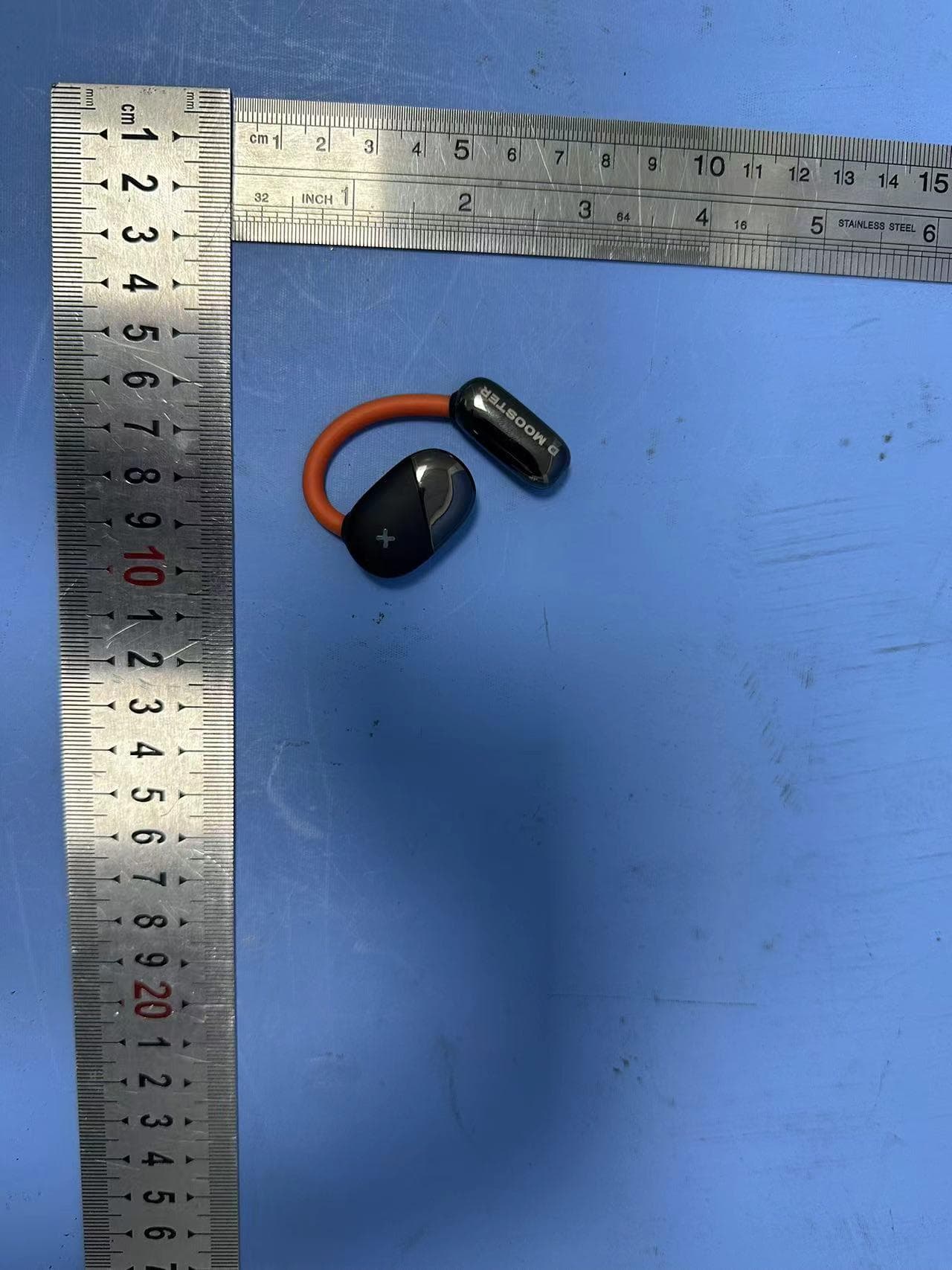
2AQ9R-D72
Sep 04, 2024Bluetooth headset
Equipment Class
DSS - Part 15 Spread Spectrum Transmitter2AQ9R-A7
Jan 16, 2024Air conduction wireless earphone
Equipment Class
DSS - Part 15 Spread Spectrum Transmitter2AQ9R-A7DONGLE
Jan 16, 2024Air conduction wireless earphone
Equipment Class
DSS - Part 15 Spread Spectrum Transmitter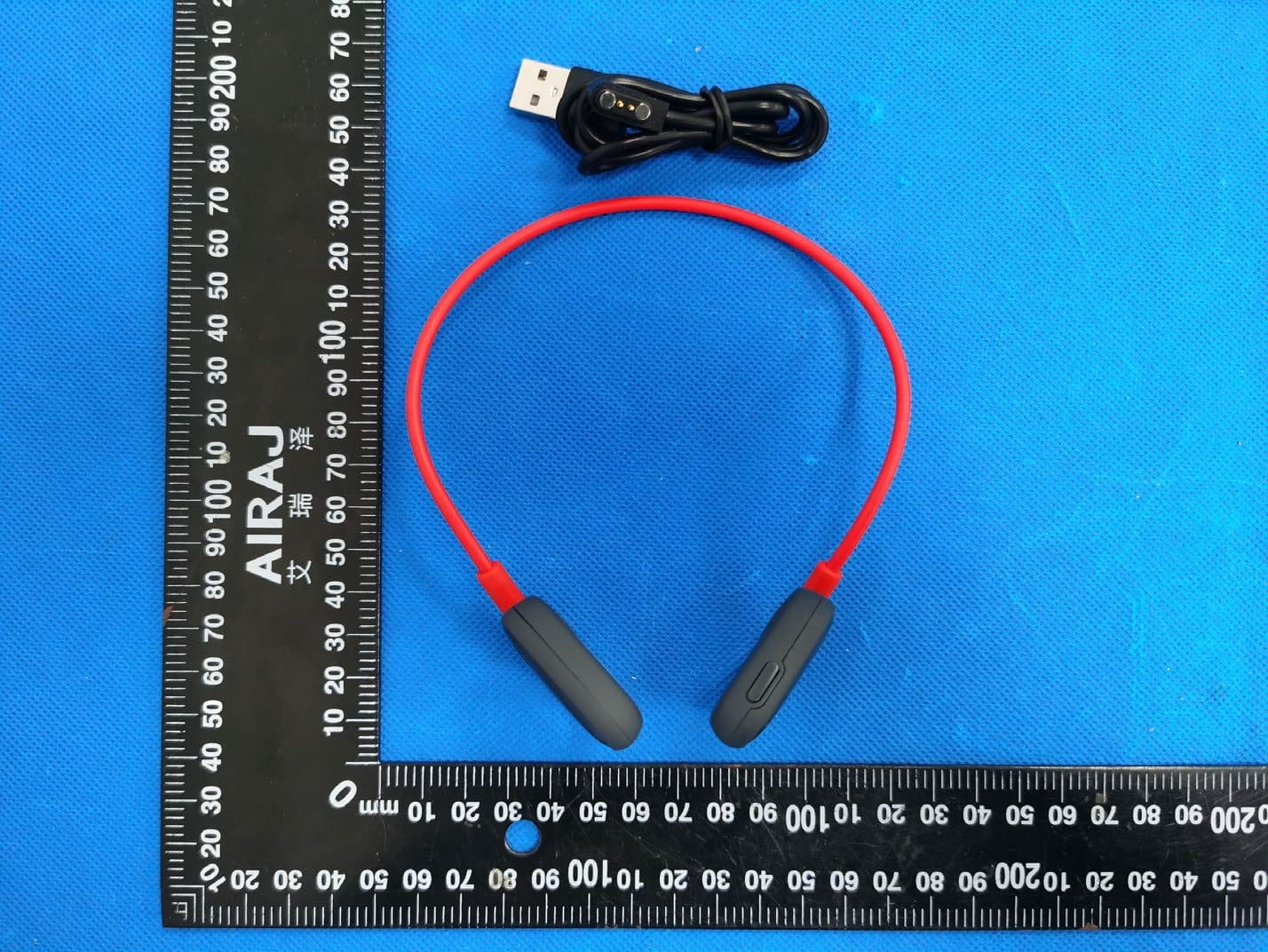
2AQ9R-BH831
Apr 12, 2023Air conduction wireless earphone
Equipment Class
DTS - Digital Transmission System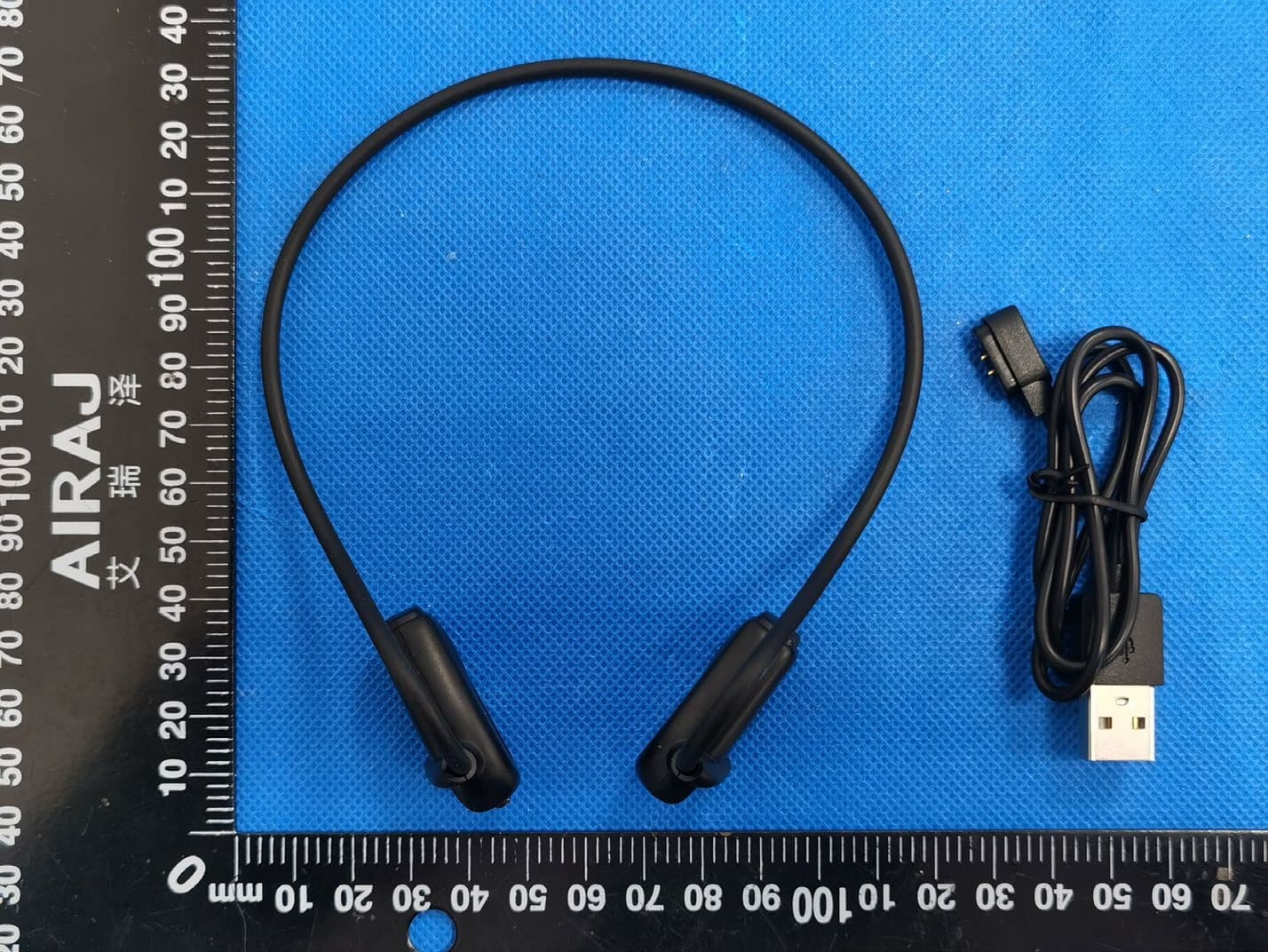
2AQ9R-BH830
Jan 05, 2023Air conduction wireless headphone
Equipment Class
DSS - Part 15 Spread Spectrum Transmitter