2AQV6DRAGONBluetooth 5 BLE module
Suzhou Pairlink Network Technology Ltd.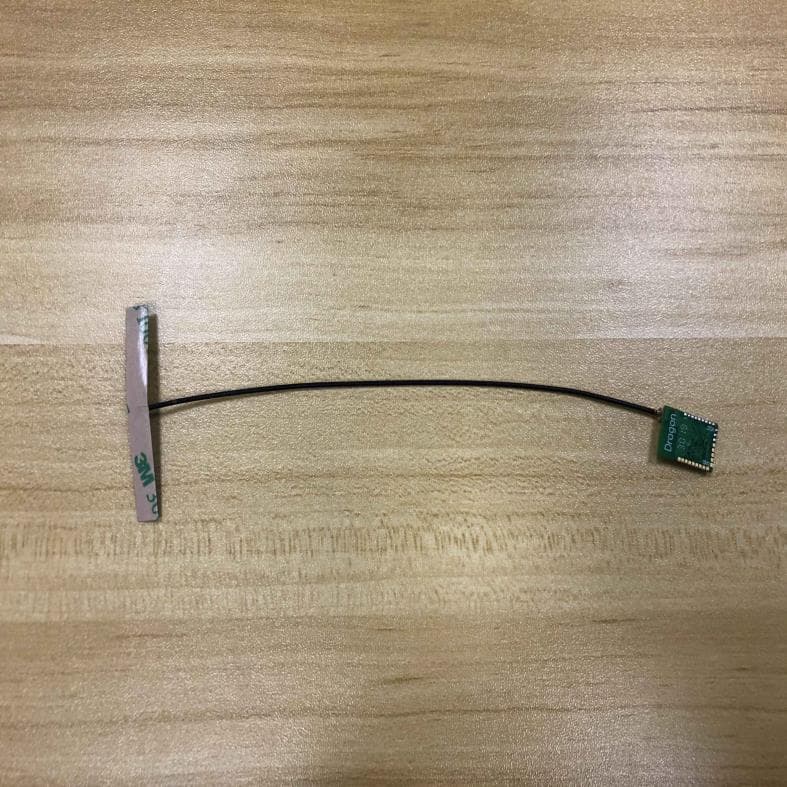
Click to zoom
Application Details
- Equipment Class
- DSS - Part 15 Spread Spectrum Transmitter
- Date of Grant
- Apr 02, 2020
- Application Purpose
- Original Equipment
- Date of Application
- Mar 30, 2020
- Equipment Note
- Bluetooth 5 BLE module
- Frequency Range
- 2402.00000000 - 2480.00000000
- Country
- China
Documents & Files
Document Text
Text extracted from the exhibit documents filed with the FCC. Open a document above to read the original.
Users Manual
Dragon-BManual AllrightsreservedSuzhouPairlinkNetworkTechnologyLtd. -1- Dragon-BManual Project:Dragon-BBluetooth5BLEmodule Modulename:Dragon-B Designed:SuzhouPairlinkNetworkTechnologyLtd. VersionNoteDate V1.0Create2020/02/21 ThisdocumentcontainsinformationthatisproprietarytoPairlink.Thisdocumentiscommercially confidentialandmustNOTbedisclosedtothirdpartieswithoutpriorconsent.Theinformation providedhereinisbelievedtobereliable.Butproductiontestingmaynotincludetestingofall parameters.Pairlinkreservestherighttochangeinformationatanytimewithoutnotification. Dragon-BManual AllrightsreservedSuzhouPairlinkNetworkTechnologyLtd. -2- Contents 1.FunctionalCharacteristics.........................................................................................................-3- 1.1.ProductFeature.............................................................................................................-4- 1.2.MainApplicationDomain.............................................................................................-4- 2.ElectricalSpecifications .............................................................................................................-5- 2.1.AbsoluteRatings ............................................................................................................-5- 2.2.RecommendedOperatingConditions...........................................................................-5- 2.3.PowerConsumption......................................................................................................-6- 3.PhysicalParameters..................................................................................................................-7- 3.1.PeripheralInterface .......................................................................................................-7- 4.Hardwaredesignandusemanual............................................................................................-8- 4.1.PinassignmentandPindescription ab ............................................................................-8- 4.2.ReferenceDesign...........................................................................................................-9- 4.3.InterfaceSignalFunctionSelection .............................................................................-10- 4.4.AppearanceandDimensions.......................................................................................-11- 5.RegulatoryModuleIntegrationInstructions ..........................................................................-12- 5.1.ListofapplicableFCCrules..........................................................................................-12- 5.2.Summarizethespecificoperationaluseconditions...................................................-12- 5.3.Limitedmoduleprocedure..........................................................................................-12- 5.4.Traceantennadesigns ..................................................................................................-12- 5.5.RFexposureconsiderations .........................................................................................-12- 5.6.Antenna........................................................................................................................-12- 5.7.Labelandcomplianceinformation..............................................................................-13- 5.8.Informationontestmodesandadditionaltestingrequirements..............................-13- 6.FCCStatement .........................................................................................................................-13- 7.ISEDComplianceInformation.................................................................................................-13- 8:OEM/IntegratorsInstallationManual ....................................................................................-13- Dragon-BManual AllrightsreservedSuzhouPairlinkNetworkTechnologyLtd. -3- 1.FunctionalCharacteristics Dragon-BisSOCmoduledevelopedbasedontheBluetooth5standards.theinternal integrationarchitectureARM®Cortex®-M3processor.Ithastheadvantageofsmall volume,lowpowerconsumption,longdistancetransmission,stronganti-jamming capability,lowcost.SpecificallyappliedtoBluetoothlowpowercontrolarea,and suitableforvariousoccasionsshortdistancewirelesscommunication. TheDragon-Bistheoptimalsolutionforvoice,data,homeautomation,accessoriesand otherapplicationsthatrequireaBluetoothSIGstandards-compliantinterface.The Dragon-Bsupportsahostcommandinterface(HCI)throughUSBorUARTandalso supportsPCMaudio.TheDragon-Btransceiver’senhancedradioperformancemeets themoststringentindustrialtemperatureapplicationrequirementsforcompact integrationintomobilehandsetandportabledevices. Themoduleincludes20MhzCrystaland8MbSPIflash.Themoduleisalsointegrated withceramicantenna.CircuitblockdiagramofthemoduleisshowninFigure1. Figure1:Dragon-BCircuitBlockDiagram Dragon-BManual AllrightsreservedSuzhouPairlinkNetworkTechnologyLtd. -4- 1.1.ProductFeature 1.Dragon-BunderBluetooth5specification.includingBR/EDR/BLE. 2.SupportsA2DP,AVRCP,HSP,HFP,GATT,SPP,HIDD,HIDH,ANCS,AMS, IAP2,PBAP,OBEX,WeChat,HomeKit,Widebandspeech(WBS) 3.SupportBeaconfunction. 4.SupportOTAUpgrade,UARTUpgrade. 5.I2S/PCMforBTaudio 1.2.MainApplicationDomain 1:BluetoothPrinter/Scanningdevice 2:Homeautomation/Intelligentlighting/Intelligentaccesscontrolsystem. 3:Industrialtelemetry/Industrialdatacollection. 4:BluetoothandRS232(RS485)serialdatatransfer. Dragon-BManual AllrightsreservedSuzhouPairlinkNetworkTechnologyLtd. -5- 2.ElectricalSpecifications IntegrationarchitectureARM®Cortex®-M3processor 352KBRAM,848KBROM,8MbitFlash Include8MbitSPIFLASH,Memorysizeisoptional SupportsCypressproprietarydatarateupto2Mbps 2.1.AbsoluteRatings Parameter Specification Unit Min.TypicalMax. PowerSupply-0.33.3+3.8V CurrentConsumption--40mA Storagetemperature-40-+150 °C Workingtemperature-30-+105 °C ESDHBM-2K-+2KV ESDCDM-500-+500V Latch-upTBDTBDTBDmA 2.2.RecommendedOperatingConditions Paramete…
Text truncated - open the document above for the full version.
Users Manual
Dragon-CManual AllrightsreservedSuzhouPairlinkNetworkTechnologyLtd. -1- Dragon-CManual Project:Dragon-CBluetooth5BLEmodule Modulename:Dragon-C Designed:SuzhouPairlinkNetworkTechnologyLtd. VersionNoteDate V1.0Create2020/02/21 ThisdocumentcontainsinformationthatisproprietarytoPairlink.Thisdocumentiscommercially confidentialandmustNOTbedisclosedtothirdpartieswithoutpriorconsent.Theinformation providedhereinisbelievedtobereliable.Butproductiontestingmaynotincludetestingofall parameters.Pairlinkreservestherighttochangeinformationatanytimewithoutnotification. Dragon-CManual AllrightsreservedSuzhouPairlinkNetworkTechnologyLtd. -2- Contents 1.FunctionalCharacteristics .........................................................................................................-4- 1.1.ProductFeature.............................................................................................................-5- 1.2.MainApplicationDomain.............................................................................................-5- 2.ElectricalSpecifications.............................................................................................................-6- 2.1.AbsoluteRatings ............................................................................................................-6- 2.2.RecommendedOperatingConditions ...........................................................................-6- 2.3.PowerConsumption......................................................................................................-7- 3.PhysicalParameters..................................................................................................................-8- 3.1.PeripheralInterface.......................................................................................................-8- 4.Hardwaredesignandusemanual ............................................................................................-9- 4.1.PinassignmentandPindescription ab ............................................................................-9- 4.2.ReferenceDesign .........................................................................................................-10- 4.3.InterfaceSignalFunctionSelection.............................................................................-11- 4.4.AppearanceandDimensions .......................................................................................-12- 5.RegulatoryModuleIntegrationInstructions..........................................................................-13- 5.1.ListofapplicableFCCrules ..........................................................................................-13- 5.2.Summarizethespecificoperationaluseconditions...................................................-13- 5.3.Limitedmoduleprocedure..........................................................................................-13- 5.4.Traceantennadesigns..................................................................................................-13- 5.5.RFexposureconsiderations .........................................................................................-13- 5.6.Antenna ........................................................................................................................-14- 5.7.Labelandcomplianceinformation..............................................................................-15- 5.8.Informationontestmodesandadditionaltestingrequirements..............................-15- 6.FCCStatement.........................................................................................................................-15- 7.ISEDComplianceInformation .................................................................................................-15- 8:OEM/IntegratorsInstallationManual....................................................................................-15- Dragon-CManual AllrightsreservedSuzhouPairlinkNetworkTechnologyLtd. -3- Dragon-CManual AllrightsreservedSuzhouPairlinkNetworkTechnologyLtd. -4- 1.FunctionalCharacteristics Dragon-CisSOCmoduledevelopedbasedontheBluetooth5standards.theinternal integrationarchitectureARM®Cortex®-M3processor.Ithastheadvantageofsmall volume,lowpowerconsumption,longdistancetransmission,stronganti-jamming capability,lowcost.SpecificallyappliedtoBluetoothlowpowercontrolarea,and suitableforvariousoccasionsshortdistancewirelesscommunication. TheDragon-Cistheoptimalsolutionforvoice,data,homeautomation,accessoriesand otherapplicationsthatrequireaBluetoothSIGstandards-compliantinterface.The Dragon-Csupportsahostcommandinterface(HCI)throughUSBorUARTandalso supportsPCMaudio.TheDragon-Ctransceiver’senhancedradioperformancemeets themoststringentindustrialtemperatureapplicationrequirementsforcompact integrationintomobilehandsetandportabledevices. Themoduleincludes20MhzCrystaland8MbSPIflash.Themoduleisalsointegrated withIpexConnector.whichcanbeusedwiththeFPCantennaprovidedbyPairlink. CircuitblockdiagramofthemoduleisshowninFigure1. . Figure1:Dragon-CCircuitBlockDiagram Dragon-CManual AllrightsreservedSuzhouPairlinkNetworkTechnologyLtd. -5- 1.1.ProductFeature 1.Dragon-CunderBluetooth5specification.includingBR/EDR/BLE. 2.SupportsA2DP,AVRCP,HSP,HFP,GATT,SPP,HIDD,HIDH,ANCS,AMS, IAP2,PBAP,OBEX,WeChat,HomeKit,Widebandspeech(WBS) 3.SupportBeaconfunction. 4.SupportOTAUpgrade,UARTUpgrade. 5.I2S/PCMforBTaudio 1.2.MainApplicationDomain 1:BluetoothPrinter/Scanningdevice 2:Homeautomation/Intelligentlighting/Intelligentaccesscontrolsystem. 3:Industrialtelemetry/Industrialdatacollection. 4:BluetoothandRS232(RS485)serialdatatransfer. Dragon-CManual AllrightsreservedSuzhouPairlinkNetworkTechnologyLtd. -6- 2.ElectricalSpecifications IntegrationarchitectureARM®Cortex®-M3processor 352KBRAM,848KBROM,8MbitFlash Include8MbitSPIFLASH,Memorysizeisoptional SupportsCypressproprietarydatarateupto2Mbps 2.1.AbsoluteRatings Parameter Specification Unit Min.TypicalMax. PowerSupply-0.33.3+3.8V CurrentConsumption--40mA Storagetemperature-40-+150 °C W…
Text truncated - open the document above for the full version.
Cover Letter(s)
Suzhou Pairlink Network Technology Ltd. Date: 31-Mar-20 To: Federal Communications Commission, Authorization & Evaluation Division, 7435 Oakland Mills Road, Columbia, MD 21046 Re: Suzhou Pairlink Network Technology Ltd. FCC ID: 2AQV6DRAGON FCC Part 15C Certification Confidentiality Request Gentlemen: This letter is to comply with 47 CFR 0.457 and 0.459 pertaining to confidentiality material. Suzhou Pairlink Network Technology Ltd. requests that the following documents regarding this submission for FCC ID: 2AQV6DRAGON be kept confidential: Exhibit Type Block Diagram Schematics Operation description Those documents contain detailed system and equipment description and related information about the product which Suzhou Pairlink Network Technology Ltd. considers to be confidential proprietary, a custom design and, otherwise, not releasable to the general public. Since this design is a basis form which future technological products will evolve, Suzhou Pairlink Network Technology Ltd. considers this information would be of benefit to its competitors, and that the disclosure of the information in these documents would give competitors an unfair advantage in the market. Yours Sincerely, Name :Cai Yi Title:General Manager Company:Suzhou Pairlink Network Technology Ltd.
External Photos
Report No.: 2002RSU008-UE 1 of 2 EUT Photograph (1) EUT Photo (Dragon-B) (2) EUT Photo (Dragon-B) Report No.: 2002RSU008-UE 2 of 2 (3) EUT Photo (Dragon-C) (4) EUT Photo (Dragon-C)
Internal Photos
Report No.: 2002RSU008-UE 1 of 2 EUT Photograph (1) EUT Photo (Dragon-B) Report No.: 2002RSU008-UE 2 of 2 (2) EUT Photo (Dragon-C)
RF Exposure Info
MRT Technology (Suzhou) Co., Ltd Report No.:2002RSU008-U3 Phone: +86-512-66308358 Report Version: V01 Web: www.mrt-cert.com Issue Date: 03-26-2020 Page Number: 1 of 7 RF Exposure Evaluation Declaration FCC ID: 2AQV6DRAGON IC: 24210-DRAGON Application: Suzhou Pairlink Network Technology Ltd. Application Type: Certification Product: Bluetooth 5 BLE module Model No.: Dragon-B, Dragon-C Brand Name: Pairlink FCC Rule Part(s): ISED Rule Part(s): KDB 447498 D01 General RF Exposure Guidance v06 IEEE C95.1-1992 RSS-102 Issue 5 Test Date: March 04 ~ 24, 2020 Reviewed By: ( Oscar Shi) Approved By: ( Robin Wu ) The test results relate only to the samples tested. The test results shown in the test report are traceable to the national/international standards through the calibration of the equipment and evaluated measurement uncertainty herein. The test report shall not be reproduced except in full without the written approval of MRT Technology (Suzhou) Co., Ltd. Report No.: 2002RSU008-U3 Page Number: 2 of 7 Revision History Report No. Version Description Issue Date Note 2002RSU008-U3 Rev. 01 Initial Report 03-26-2020 Valid Report No.: 2002RSU008-U3 Page Number: 3 of 7 1. PRODUCT INFORMATION 1.1. Equipment Description Note : Different models are only to different antennas, Dragon-B is multilayter ceramic antenna and Deagon-C is antenna connector which connect to external antenna. Schematics of other parts are identical, the antenna gain of Dragon-B is larger than Dragon-C, so choose Dragon-B to conducted test.Dragon-B and Drgon-C both test Radiated Emission. 1.2. Product Specification Subjective Note: For other features of this EUT, test report will be issued separately. 1.3. Description of Available Antennas Model No. Antenna Type Manufacturer Frequency Band (GHz) Max Peak Gain (dBi) Dragon-B Ceramic Antenna Walsin 2.4 ~ 2.5 2.0 Dragon-C FPC Antenna Zhaodong 2.4 ~ 2.5 0.0 Note: The antenna for Dragon-C is supplied by customer for Radiated Emission testing. Product Name: Bluetooth 5 BLE module Model No.: Dragon-B, Dragon-C Brand Name: Pairlink Bluetooth Specification: V5.0(BR/EDR+BLE 1M) Operating Temperature: -30 ~ 105°C Power Type: DC input(3.0~3.6V) Operating Environment: Indoor Use Frequency Range: 2402~2480MHz Number of Channels: For Bluetooth: 79 For BT-LE: 40 Channel Spacing: For Bluetooth: 1MHz For BT-LE: 2MHz Type of Modulation: For Bluetooth:1Mbps (GFSK), 2Mbps (Pi/4 DQPSK), 3Mbps (8DPSK) For BT-LE: GFSK Data Rate: Up to 2Mbps Report No.: 2002RSU008-U3 Page Number: 4 of 7 2. RF Exposure Evaluation 2.1. Limits for FCC: According to FCC 1.1310: The criteria listed in the following table shall be used to evaluate the environment impact of human exposure to radio frequency (RF) radiation as specified in 1.1307(b) LIMITS FOR MAXIMUM PERMISSIBLE EXPOSURE (MPE) Frequency Range (MHz) Electric Field Strength (V/m) Magnetic Field Strength (A/m) Power Density (mW/cm 2 ) Average Time (Minutes) (A) Limits for Occupational/ Control Exposures 300-1500 -- -- f/300 6 1500-100,000 -- -- 5 6 (B) Limits for General Population/ Uncontrolled Exposures 300-1500 -- -- f/1500 6 1500-100,000 -- -- 1 30 f= Frequency in MHz Calculation Formula: Pd = (Pout*G)/(4*pi*r 2 ) Where Pd = power density in mW/cm 2 Pout = output power to antenna in mW G = gain of antenna in linear scale Pi = 3.1416 r = distance between observation point and center of the radiator in cm Pd is the limit of MPE, 1mW/cm². If we know the maximum gain of the antenna and the total power input to the antenna, through the calculation, we will know the distance r where the MPE limit is reached. 2.2. Limits for IC: According to RSS-102: Exemption Limits for Routine Evaluation – RF exposure evaluation is required if the separation distance between the user and/or bystander and the device’s radiating element is greater than 20 cm, except when the device operates as follows: • below 20 MHz and the source-based, time-averaged maximum e.i.r.p. of the device is equal to or less than 1 W (adjusted for tune-up tolerance); • at or above 20 MHz and below 48 MHz and the source-based, time-averaged maximum e.i.r.p. of Report No.: 2002RSU008-U3 Page Number: 5 of 7 the device is equal to or less than 22.48/ƒ0.5 W (adjusted for tune-up tolerance), where ƒ is in MHz; • at or above 48 MHz and below 300 MHz and the source-based, time-averaged maximum e.i.r.p. of the device is equal to or less than 0.6 W (adjusted for tune-up tolerance); • at or above 300 MHz and below 6 GHz and the source-based, time-averaged maximum e.i.r.p. of the device is equal to or less than 1.31 x 10⁻² ƒ0.6834 W (adjusted for tune-up tolerance), where ƒ is in MHz; • at or above 6 GHz and the source-based, time-averaged maximum e.i.r.p. of the device is equal to or less than 5 W (adjusted for tune-up tolerance). In these cases, the information contained in the RF exposure technical brief may be limited to information that demonstrates how the e.i.r.p. was derived. Report No.: 2002RSU008-U3 Page Number: 6 of 7 2.3. Test Result of RF Exposure Evaluation for FCC and IC Product Robotic Vacuum Cleaner Test Item RF Exposure Evaluation FCC: Test Mode Frequency Band (MHz) Maximum Average Output Power (dBm) E.I.R.P (dBm) Power Density at R = 20 cm (mW/cm2) Limit (mW/cm2) Bluetooth 2402 ~ 2480 8.38 10.38 0.0022 1 Bluetooth-LE 2402 ~ 2480 8.47 10.47 0.0022 1 IC: Test Mode Frequency Band (MHz) Maximum EIRP (dBm) Tune-up (dBm) Maximum EIRP (W) Limit (W) Bluetooth 2402 ~ 2480 10.38 11.38 0.01374 2.6764 Bluetooth-LE 2402 ~ 2480 10.47 11.47 0.01403 2.6764 CONCLUSION: The Max Power Density at R (20 cm) =0.0022 < 1mW/cm 2 . The device is excluded for SAR test and complies with the IC exposure requirements since the maximum conducted peak output power is lower than the SAR test exclusion thresholds. So the EUT complies with RF Exposure requirement. The End Report No.: 2002RSU008-U3 Page Number: 7 of 7 Appendix - EUT Photograph Refer to “2002RSU008-UE” file.
Test Report
MRT Technology (Suzhou) Co., Ltd Report No.: 2002RSU008-U1 Phone: +86-512-66308358 Report Version: V01 Web: www.mrt-cert.com Issue Date: 03-26-2020 Page Number: 1 of 143 FCC ID: 2AQV6DRAGON IC: 24210-DRAGON Application: Suzhou Pairlink Network Technology Ltd. Application Type: Certification Product: Bluetooth 5 BLE module Model No.: Dragon-B, Dragon-C Brand Name: Pairlink FCC Classification: FCC Part 15 Spread Spectrum Transmitter (DSS) FCC Rule Part(s): Part 15 Subpart C (Section 15.247) ISED Rule(s): RSS-247 Issue 2, RSS-GEN Issue 5 Test Procedure(s): ANSI C63.10-2013 Test Date: March 04 ~24, 2020 MEASUREMENT REPORT FCC PART 15.247 / RSS-247 Bluetooth BR/EDR Reviewed By: ( Oscar Shi ) Approved By: ( Robin Wu ) The test results relate only to the samples tested. This equipment has been shown to be capable of compliance with the applicable technical standards as indicated in the measurement report and was tested in accordance with the measurement procedures specified in ANSI C63.10-2013. Test results reported herein relate only to the item(s) tested. The test report shall not be reproduced except in full without the written approval of MRT Technology (Suzhou) Co., Ltd. Report No.: 2002RSU008-U1 Page Number: 2 of 143 Revision History Report No. Version Description Issue Date Note 2002RSU008-U1 Rev. 01 Initial Report 03-26-2020 Valid Report No.: 2002RSU008-U1 Page Number: 3 of 143 CONTENTS Description Page CONTENTS ..................................................................................................................................... 3 1. INTRODUCTION ..................................................................................................................... 7 1.1. Scope ........................................................................................................................... 7 1.2. MRT Test Location ....................................................................................................... 7 2. PRODUCT INFORMATION ..................................................................................................... 8 2.1. Equipment Description .................................................................................................. 8 2.2. Product Specification Subjective to this Report ............................................................. 8 2.3. Description of Available Antennas ................................................................................ 9 2.4. Operation Frequency / Channel List ........................................................................... 10 2.5. Pseudorandom Frequency Hopping Sequence ............................................................ 11 2.6. Duty Cycle .................................................................................................................. 12 2.7. Test Configuration ...................................................................................................... 13 2.8. Test Software ............................................................................................................. 13 2.9. EMI Suppression Device(s) / Modifications ................................................................. 13 2.10. Labeling Requirements ............................................................................................... 13 3. DESCRIPTION of TEST ........................................................................................................ 14 3.1. Evaluation Procedure ................................................................................................. 14 3.2. AC Line Conducted Emissions ................................................................................... 14 3.3. Radiated Emissions .................................................................................................... 15 4. ANTENNA REQUIREMENTS ................................................................................................ 16 5. TEST EQUIPMENT CALIBRATION DATE ............................................................................ 17 6. MEASUREMENT UNCERTAINTY ......................................................................................... 19 7. TEST RESULT ...................................................................................................................... 20 7.1. Summary .................................................................................................................... 20 7.2. 20dB and 99% Bandwidth Measurement .................................................................... 21 7.2.1. Test Limit ................................................................................................................ 21 7.2.2. Test Procedure Used .............................................................................................. 21 7.2.3. Test Setting ............................................................................................................. 21 7.2.4. Test Setup ............................................................................................................... 22 7.2.5. Test Result .............................................................................................................. 23 7.3. Output Power Measurement ....................................................................................... 27 7.3.1. Test Limit ................................................................................................................ 27 7.3.2. Test Procedure Used .............................................................................................. 27 Report No.: 2002RSU008-U1 Page Number: 4 of 143 7.3.3. Test Setting ............................................................................................................. 27 7.3.4. Test Setup ............................................................................................................... 28 7.3.5. Test Result ..............................................…
Text truncated - open the document above for the full version.
Test Setup Photos
Report No.: 2002RSU008-UT 1 of 4 RF Test Setup Photograph For Dragon-B Description: Front View of Conducted Emission Test Setup Description: Back View of Conducted Emission Test Setup Report No.: 2002RSU008-UT 2 of 4 Description: Radiated Emission Test Setup for Below 1GHz Description: Radiated Emission Test Setup for above 1GHz Report No.: 2002RSU008-UT 3 of 4 For Dragon-C Description: Front View of Conducted Emission Test Setup Description: Back View of Conducted Emission Test Setup Report No.: 2002RSU008-UT 4 of 4 Description: Radiated Emission Test Setup for below 1GHz Description: Radiated Emission Test Setup for above 1GHz
Contact Information
Applicant
Yi Cai
Technical Contact
MRT Technology (Suzhou) Co., LtdRobin Wu
[email protected]86-512-66308358
D8 Building, Youxin Industrial Park, · Suzhou · China
Non-Technical Contact
MRT Technology (Suzhou) Co., LtdRobin Wu
[email protected]86-512-66308358
Test Firm
MRT Technology (Suzhou) Co., Ltd.Mr. Marlin Chen
[email protected]+86-512-66308358
Technical Specifications
| # | Rule Parts | Frequency Range | Power Output |
|---|---|---|---|
| 1 | 15C | 2.40 GHz - 2.48 GHz | 6.90 mW |
Other Applications from Suzhou Pairlink Network Technology Ltd.
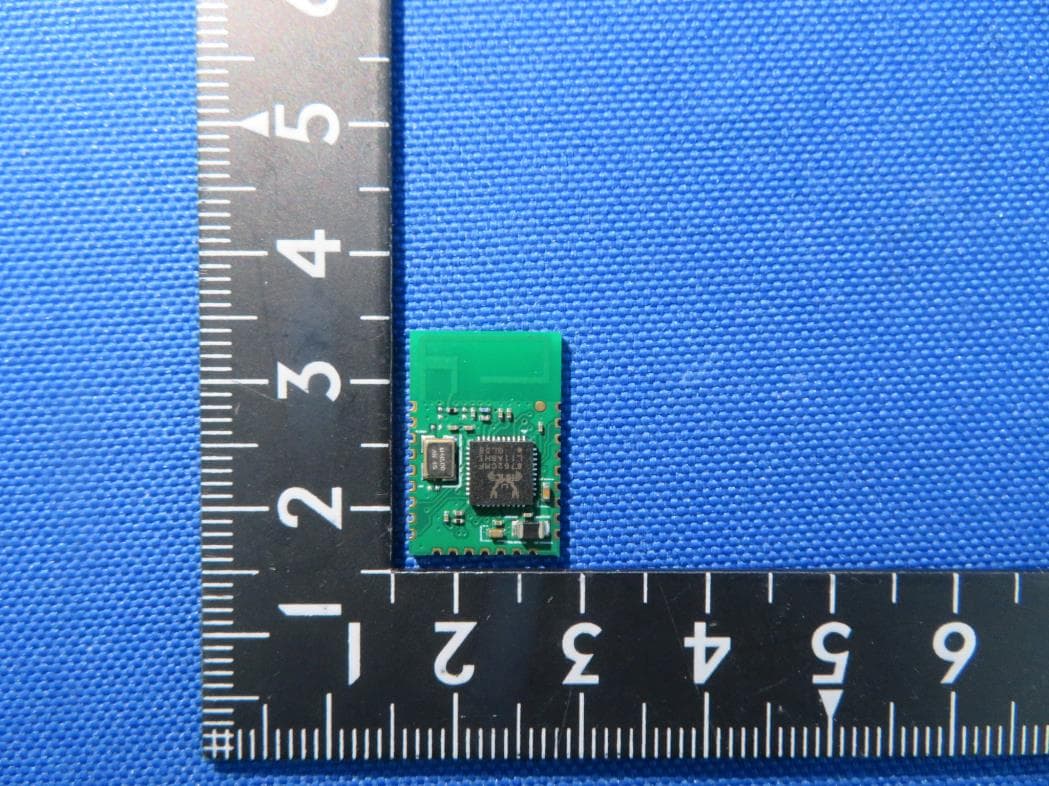
2AQV6RABBIT-S
Sep 07, 2021Rabbit Bluetooth 5 BLE module
Equipment Class
DTS - Digital Transmission System
2AQV6MOUSELET-B
Mar 11, 2020Mouselet/Bluetooth 4.0 BLE Module
Equipment Class
DTS - Digital Transmission System