2AS8N-TT4TickTalk 4 Kids Smartwatch
TickTalk Tech LLC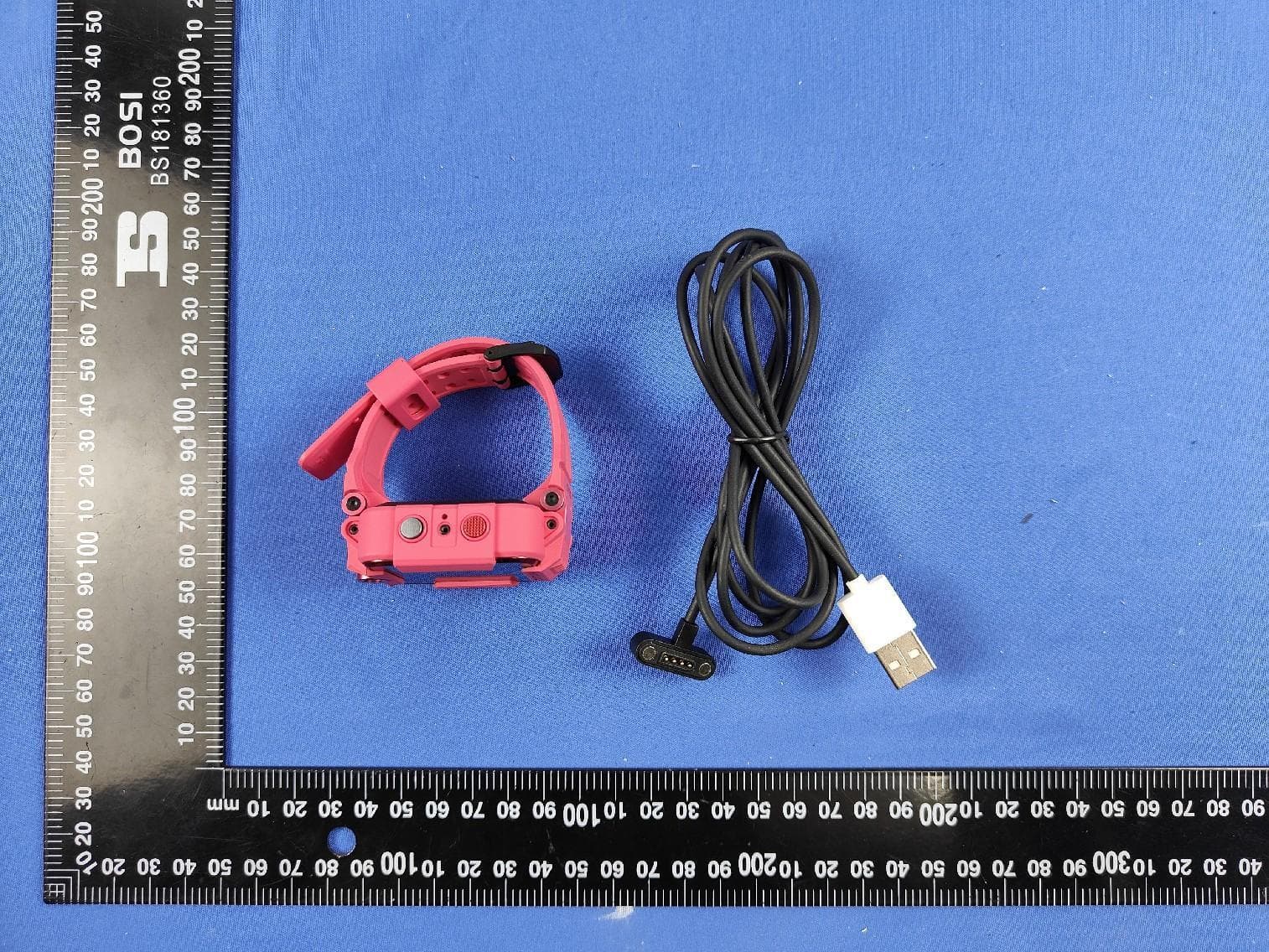
Click to zoom
Application Details
- Equipment Class
- PCT - PCS Licensed Transmitter worn on body
- Date of Grant
- Apr 24, 2022
- Application Purpose
- Original Equipment
- Date of Application
- Apr 14, 2022
- Equipment Note
- TickTalk 4 Kids Smartwatch
- Frequency Range
- 709.00000000 - 711.00000000
- Company
- TickTalk Tech LLC
- Country
- United States
Documents & Files
Document Text
Text extracted from the exhibit documents filed with the FCC. Open a document above to read the original.
Users Manual
Quick Start - Components - Recharge - Activate the SIM - Insert SIM - Connectivity - Download the APP - Sign Up - Pair TickTalk - Setup User Info - Pre-set Contacts - Trouble Shootings - Warning - Return for Refund -Return for A Replacement - Contact We’re grateful that you have chosen our TickTalk 4. We’re hoping it will bring happiness and safety to your entire family. For a better user experience, please read this user manual carefully. Do not hesitate to contact us if you have any question. [email protected] 1-(844) 260-4051 COMPONENTS Hold down the POWER BUTTON for 5 seconds to turn the TickTalk 4 on or reboot the TickTalk 4. Hold down the SOS BUTTON for 5 seconds to call the preset SOS number. Quick tap the POWER BUTTON once then SOS BUTTON twice to call 911 instantly. COMPONENTS MICROPHONE SPEAKER Both the speaker and the microphone are protected by WATERPROOF IP67. Do not pierce with sharp objects. CHARGING Please use the 5V USB charger that connects to the charging cord in order to charge your TickTalk 4. If the cord is broken stop using it immediately. For safety reasons, we recommend that an adult supervise their child while charging the TickTalk 4. Put the charging head onto the metal pins on the back of the TickTalk 4. Make sure the metal charging port is connected to the metal charging connector of the charging cord. You’ll hear a sound when the TickTalk 4 gets started to charge. It will take 3 hours to fully charge the TickTalk 4. ACTIVATE THE SIM TickTalk is not affiliated with any wireless carriers. A free Red Pocket SIM kit is provided with your purchase. Other carriers were considered but Red Pocket was able to provide a more affordable monthly plan for TickTalk users. Be aware that this is subject to change. Red Pocket is a US based pre-paid carrier. They work with AT&T and T-mobile's network. For customers outside of the US or customers who use their own carrier, please get the SIM kit from your own carrier. Make sure to add a regular phone line with talk, text and data for your TickTalk 4. The TickTalk 4 is not compatible with any wearable, digits or tablet plans. TickTalk 4 Frequency Bands 4G B2/ 1900 B4/ 1700 B5/ 850 B7/ 2600 B12/700 B17/740 ACTIVATE THE SIM Step 1 Go www.redpocket.com/activate or www.myticktalk.com and click Activate in the menu bar. Step 2 Input your SIM ICCID # and follow Red Pocket’s Activation Steps to activate your SIM and create your account. Step 3 Before you choose your monthly plan, it will ask you “Do you have an Activation PIN#?”, please choose NO. Step 4 Choose your monthly plan. We recommend the two plans below for the TickTalk 4, the monthly plan has no contract, you can switch to a different plan based on your usage anytime. Activate Red Pocket’s SIM card $10/30 days with 500 minutes, 500 texts and 500MB of data $15/30 days with 1000 minutes, unlimited texts and 1G of data INSERT THE SIM Slide from the side to insert the SIM card into the slot of the CARD COVER. Make sure the back cover is COMPLETELY snapped back on to secure the waterproof protection. Turn the TickTalk 4 on after the SIM is installed. If the SIM CAN’T BE READ, please RE-INSTALL the SIM again. 1. Bad cellular reception. 2. Slow network connection. 3. Invalid or inactive SIM or wrong plan. 4. TickTalk server connection issue. NETWORK CONNECTIVITY Make sure your TickTalk 4 has successfully connected to the network. It’ll show the CONNECTED ICON on the top middle of the watch screen. Otherwise, the watch won’t work. Why don’t I see the CONNECTED ICON? 1. Check the carrier’s coverage map in your location. If you have bad coverage indoors, please connect to Wi-Fi. 2. Check if your SIM card is activated and you must have credit in your account. Check if you have the regular phone plan with talk, text and data instead of WEARABLE or DIGITS PLANS. 3. Contact the TickTalk Technical Support Team. How do I SOLVE this issue? DOWNLOAD THE APP TickTalk 1TickTalk 2 TickTalk 3 Download on the App Store Get the APP for Android Please search TICKTALK 4 in APP STORE or GOOGLE PLAY if you’re not able to locate the APP simply scan the QR codes above. SIGN UP Sign up in the App with your name, email and phone number. For SAFETY REASONS, the first person who pairs the watch to the App will be the PRIMARY USER. Only the PRIMARY USER will have the capability to manage and approve any SECONDARY USERS to use the App to connect to their TickTalk 4. PAIR TO TICKTALK 4 Go to watch settings, click PAIR ME, it’ll show the QR code. From the App, click pair your TickTalk 4. Use your cell phone to scan the QR code on the watch screen. Make sure the WATCH IS ON and CONNECTED to the mobile NETWORK before your pair it. EDIT WATCH USER’S INFO Click the ARROW ICON on the top right corner to edit your child’s personal info. You cannot call your TickTalk 4 until the watch’s phone number and child’s personal info has been all set up in the App. Click the ARROW ICON on top right of the screen to add another TickTalk 4 to the App. Once you add multiple watches in the App, you can SWITCH TO DIFFERENT WATCHES by clicking the watch’s name. PRESET CONTACTS Click the CONTACTS ICON on the bottom left in the App. You can add up to 53 contacts. These contacts should be trusted and pre-authorized persons who can CALL YOUR CHILD and YOUR CHILD CAN CALL. TROUBLE SHOOTINGS Watch Overheating The TickTalk 4 works basically the same as our personal smart phone, however, with the smaller size of the watch, our engineering team could not avoid the watch from overheating after extended use.We have taken extreme precautions by using heat insulation parts in the watch. Under normal circumstances, the maximum temperature will be 104 degrees Fahrenheit. Once you stop using the watch the temperature will drop very quickly. 1. The 4G version will consume much more power than the 2G version, If you enter a spot where the reception is not good, the CPU will keep searching for the signal which will generate heat. 2. Video calls re…
Text truncated - open the document above for the full version.
Cover Letter(s)
C5266091_X8_Ed.1 1/1 LetterofAuthorization Company:TickTalkTechLLC Address:565WLambertRd,UnitB,Brea,CA92821,UnitedStates ProductName:TickTalk4KidsSmartwatch ModelNumber:TickTalk4 FCCIdentifier:2AS8N-TT4 WeauthorizeLGAITechnologicalCenterS.A.,RondadelaFontdelCarme,s/n, 08193Bellaterra,Spain,toactonourbehalfonallmattersconcerningthe abovenamedequipment. AnyindividualwithinLGAITechnologicalCenterS.A.isauthorizedtoactonour behalfandtakeactionontheapplication. WedeclarethatauthorizeLGAITechnologicalCenterS.A.,RondadelaFontdel Carme,s/n,08193Bellaterra,Spain,isallowedtoforwardallinformation relatedtotheapprovalprojecttotheFederalCommunicationCommissionand todiscussanyissuesconcerningtheapprovalapplication.Anyandallacts carriedoutbyLGAITechnologicalCenterS.A.onourbehalfshallhavethe sameeffectasactsofourown. Name:YingGongDate:Mar.28,2022 Title:CEO Signatureofapplicant:
Cover Letter(s)
C5266091_X10_Ed.1 1/1 TickTalkTech LLC Officeof EngineeringTechnology FederalCommunicationsCommission 7435 OaklandMills Road Columbia,MD 21046 Date:Mar. 28 , 20 22 Subject:Requestfor Confidentiality FCC ID: 2AS8N-TT4 To WhomIt May Concern, Pursuantto the provisionsof Sections0.457and 0.459of Commission'srules (47CFR0.457,0.459),we are requestingthe Commissionto withholdthe following attachment(s)as confidentialdocumentfrom publicdisclosure. ExhibitsLong-Term Confidentiality Short-Term Confidentiality ID Label/LocationNoNo AttestationStatementNoNo ExternalPhotosNo Block Diagram Schematics Test ReportNoNo Test SetupPhotosNo User’ s Manual InternalPhotos Parts List / Tune Up RF ExposureInfo OperationalDescription CoverLetter(s)NoNo SDR Software/ SecurityInfoNo Abovementioneddocumentcontainsdetailedsystemand equipmentdescriptionare consideredas proprietaryinformationin operationof the equipment.The public disclosureof abovedocumentsmightbe harmfulto our companyand wouldgive competitoran unfairadvantagein the market. It is our understandingthat all measurementtest reports,FCC ID label formatand correspondentduringcertificationreviewprocesscannotbe grantedas confidential documentsand thoseinformationwill be availablefor publicreviewonce the grantof equipmentauthorizationis issued. C5266091_X10_Ed.1 1/1 Sincerely, ignature: Name:YingGong Title:CEO
External Photos
V1.0Page 1 of 2 ReportNo.:CTL2202111011-WF01 ExternalPhotosofEUT FCCID:2AS8N-TT4 V1.0Page 2 of 2 ReportNo.:CTL2202111011-WF01
ID Label/Location Info
V1.0Page 1 of1ReportNo.:CTL2202111011-WF01 FCCIDLabelInformation 1.Labellocation: 2.FCCIDLabel: FCCID:2AS8N-TT4 ProductName:TickTalk4KidsSmartwatch Model:TickTalk4 FCCIDLabelLocation
Internal Photos
V1.0Page 1 of 2 ReportNo.:CTL2202111011-WF01 InternalPhotosofEUT FCCID:2AS8N-TT4 V1.0Page 2 of 2 ReportNo.:CTL2202111011-WF01 2/3/4GMain Antenna Bluetooth/WiFi Antenna
RF Exposure Info
Any reproduction of this document must be done in full. No single part of this document may be reproduced without permission from STS, All Test Data Presented in this report is only applicable to presented Test sample. ShenZhen STS Test Services Co.,Ltd. A 1/F, Building B, Zhuoke Science Park, No.190 Chongqing Road, HepingShequ, Fuyong Sub-District, Bao’an District, Shenzhen, Guang Dong, China TEL: +86-755 3688 6288 FAX: +86-755 3688 6277 E-mail:[email protected] S T L A B S Testing Engineer : ((Shifan. Long) Technical Manager : (Sean she) Authorized Signatory : (Vita Li) SAR Dipole Performance Measurement Report EUT Type: SAR Validation Dipole and Waveguide Model Name: DIP0G750, DIP0G835, DIP1G800, DIP1G900, DIP2G450, DIP2G600, WGA32 Brand Name: SATIMO Test Conclusion: Pass Test Date: 11 July 2021 Date of Issue: 12 July 2021 ISSUED BY Shenzhen STS Test Services Co., Ltd. 1. Equipment List Kind of Equipment Manufacturer Type No. Serial No. Last Calibration Calibrated Until PC Acer N/A N/A N/A N/A E-Field Probe MVG SSE2 SN 07/21 EPGO352 2021.03.01 2022.02.28 Dielectric Probe Kit MVG SCLMP SN 32/14 OCPG67 2020.11.24 2021.11.23 Phantom1 MVG SAM SN 32/14 SAM115 N/A N/A Phantom2 MVG SAM SN 32/14 SAM116 N/A N/A Attenuator Agilent 99899 DC-18GHz N/A N/A Directional coupler Narda 4226-20 3305 N/A N/A Network Analyzer Agilent 8753ES US38432810 2020.10.12 2021.10.11 Multi Meter Keithley Multi Meter 2000 4050073 2020.10.10 2021.10.09 Signal Generator Agilent N5182A MY50140530 2020.10.10 2021.10.09 Power Amplifier DESAY ZHL-42W 9638 2020.10.12 2021.10.11 Power Meter R&S NRP 100510 2020.10.10 2021.10.09 Power Sensor R&S NRP-Z11 101919 2020.10.10 2021.10.09 Power Sensor Agilent E9301A MY41497725 2020.10.10 2021.10.09 Temperature hygrometer SuWei SW-108 N/A 2020.10.12 2021.10.11 Thermograph Elitech RC-4 S/N EF7176501537 2020.10.12 2021.10.11 ISSUED BY Shenzhen STS Test Services Co., Ltd. 2. <Justification of the extended calibration> Referring to KDB 865664 D01, if dipoles are verified in return loss<-20dB, (within 20% of prior calibration), and in impedance (within 5 ohm of prior calibration), the annual calibration is not necessary and the calibration interval can be extended. Head 750 MHz Date of Measurement Return Loss (dB) Delta (%) Impedance Delta(ohm) 2020.07.14 -25.47 - 55.2 - 2021.07.11 -25.98 2.00 54.86 -0.24 The return loss is <-20dB, within 20% of prior calibration; the impedance is within 5 ohm of prior calibration. Therefore the verification result should support extended calibration. <Dipole Verification Data> Head 750 MHz ISSUED BY Shenzhen STS Test Services Co., Ltd. Body 750 MHz Date of Measurement Return Loss (dB) Delta (%) Impedance Delta(ohm) 2020.07.14 -27.25 - 51.4 - 2021.07.11 -26.17 -3.96 51.56 0.1 The return loss is <-20dB, within 20% of prior calibration; the impedance is within 5 ohm of prior calibration. Therefore the verification result should support extended calibration. <Dipole Verification Data> Body 750 MHz ISSUED BY Shenzhen STS Test Services Co., Ltd. Head 835 MHz Date of Measurement Return Loss (dB) Delta (%) Impedance Delta(ohm) 2020.07.14 -28.13 - 51.4 - 2021.07.11 -28.43 1.07 52.62 1.22 The return loss is <-20dB, within 20% of prior calibration; the impedance is within 5 ohm of prior calibration. Therefore the verification result should support extended calibration. <Dipole Verification Data> Head 835MHz ISSUED BY Shenzhen STS Test Services Co., Ltd. Body 835 MHz Date of Measurement Return Loss (dB) Delta (%) Impedance Delta(ohm) 2020.07.14 -23.88 - 49.2 - 2021.07.11 -24.25 1.55 50.26 1.06 The return loss is <-20dB, within 20% of prior calibration; the impedance is within 5 ohm of prior calibration. Therefore the verification result should support extended calibration. <Dipole Verification Data> Body 835MHz ISSUED BY Shenzhen STS Test Services Co., Ltd. Head 1800 MHz Date of Measurement Return Loss (dB) Delta (%) Impedance Delta(ohm) 2020.07.14 -29.49 - 46.9 - 2021.07.11 -29.08 -1.39 46.36 -0.54 The return loss is <-20dB, within 20% of prior calibration; the impedance is within 5 ohm of prior calibration. Therefore the verification result should support extended calibration. <Dipole Verification Data> Head 1800 MHz ISSUED BY Shenzhen STS Test Services Co., Ltd. Body 1800 MHz Date of Measurement Return Loss (dB) Delta (%) Impedance Delta(ohm) 2020.07.14 -24.55 - 44.7 - 2021.07.11 -25.54 4.03 45.55 0.85 The return loss is <-20dB, within 20% of prior calibration; the impedance is within 5 ohm of prior calibration. Therefore the verification result should support extended calibration. <Dipole Verification Data> Body 1800 MHz ISSUED BY Shenzhen STS Test Services Co., Ltd. Head 1900 MHz Date of Measurement Return Loss (dB) Delta (%) Impedance Delta(ohm) 2020.07.14 -23.66 - 51.4 - 2021.07.11 -23.62 -0.17 50.73 -0.67 The return loss is <-20dB, within 20% of prior calibration; the impedance is within 5 ohm of prior calibration. Therefore the verification result should support extended calibration. <Dipole Verification Data> Head 1900 MHz ISSUED BY Shenzhen STS Test Services Co., Ltd. Body 1900 MHz Date of Measurement Return Loss (dB) Delta (%) Impedance Delta(ohm) 2020.07.14 -20.20 - 48.7 - 2021.07.11 -21.12 4.55 47.02 -1.68 The return loss is <-20dB, within 20% of prior calibration; the impedance is within 5 ohm of prior calibration. Therefore the verification result should support extended calibration. <Dipole Verification Data> Body 1900 MHz ISSUED BY Shenzhen STS Test Services Co., Ltd. Head 2450 MHz Date of Measurement Return Loss (dB) Delta (%) Impedance Delta(ohm) 2020.07.14 -26.03 - 46.3 - 2021.07.11 -26.42 1.50 47.25 0.95 The return loss is <-20dB, within 20% of prior calibration; the impedance is within 5 ohm of prior calibration. Therefore the verification result should support extended calibration. <Dipole Verification Data> Head 2450 MHz ISSUED BY Shenzhen STS Test Services Co., Ltd. Body 2450 MHz Date of Measurement Return Loss (dB) Delta (%) Impedance Delta(o…
Text truncated - open the document above for the full version.
RF Exposure Info
Ref : ACR.262.4.20.MVGB.A SHENZHEN STS TEST SERVICES CO., LTD. 1/F., BUILDING 2, ZHUOKE SCIENCE PARK,No.190, CHONGQING ROAD,FUYONG STREET, BAO’ AN DISTRICT, SHENZHEN,GUANGDONG,CHINA MVG COMOSAR REFERENCE DIPOLE FREQUENCY: 750 MHZ SERIAL NO.: SN 30/14 DIP0G750-331 SAR Reference Dipole Calibration Report Calibrated at MVG Z.I. de la pointe du diable Technopôle Brest Iroise - 295 avenue Alexis de Rochon 29280 PLOUZANE - FRANCE Calibration date: 07/14/2020 Summary: This document presents the method and results from an accredited SAR reference dipole calibration performed in MVG. using the CALIPROBE test bench. for use with a MVG COMOSAR system only. The test results covered by accreditation are traceable to the International System of Units(SI). Page: 1/11 SAR REFERENCE DIPOLE CALIBRATION REPORT Ref: ACR.262.4.20.MVGB.A Customer Name Distribution : Shenzhen STS Test Services Co., Ltd. Name Function Date Signature Prepared by : Jérôme LUC Technical Manager 7/28/2020 Checked by : Jérôme LUC Technical Manager 7/28/2020 Approved by : Yann Toutain Laboratory Director 7/28/2020 Issue Date Modifications A 7/28/2020Initial release Name Jérôme LUC Page: 2/11 Template_ACR.DDD.N.YY.MVGB.ISSUE_COMOSAR Dipole vH This document shall not be reproduced, except in full or in part, without the written approval of MVG. The information contained herein is to be used only for the purpose for which it is submitted and is not to be released in whole or part without written approval of MVG. SAR REFERENCE DIPOLE CALIBRATION REPORT Ref: ACR.262.4. TABLE OF CONTENTS 1 Introduction ................................................................................................................ 4 2 Device Under Test ..................................................................................................... 4 3 Product Description ................................................................................................... 4 3.1 General Information _______________________________________________________ 4 4 Measurement Method ................................................................................................ 5 4.1 Return Loss Requirements __________________________________________________ 5 4.2 Mechanical Requirements ___________________________________________________ 5 5 Measurement Uncertainty .......................................................................................... 5 5.1 Return Loss ______________________________________________________________ 5 5.2 Dimension Measurement ___________________________________________________ 5 5.3 Validation Measurement ____________________________________________________ 5 6 Calibration Measurement Results .............................................................................. 6 6.1 Return Loss and Impedance In Head Liquid ____________________________________ 6 6.2 Return Loss and Impedance In Body Liquid ____________________________________ 6 6.3 Mechanical Dimensions ____________________________________________________ 6 7 Validation measurement ............................................................................................ 7 7.1 Head Liquid Measurement __________________________________________________ 7 7.2 SAR Measurement Result With Head Liquid ____________________________________ 8 7.3 Body Liquid Measurement __________________________________________________ 9 7.4 SAR Measurement Result With Body Liquid __________________________________ 10 8 List of Equipment .................................................................................................... 11 Page: 3/11 This document shall not be reproduced, except in full or in part, without the written approval of MVG. The information contained herein is to be used only for the purpose for which it is submitted and is not to be released in whole or part without written approval of MVG. MVGB.A 20. Template_ACR.DDD.N.YY.MVGB.ISSUE_COMOSAR Dipole vH SAR REFERENCE DIPOLE CALIBRATION REPORT Ref: ACR.262.4.20.MVGB.A 1 INTRODUCTION This document contains a summary of the requirements set forth by the IEEE 1528, OET 65 Bulletin C and CEI/IEC 62209 standards for reference dipoles used for SAR measurement system validations and the measurements that were performed to verify that the product complies with the fore mentioned standards. 2 DEVICE UNDER TEST Device Under Test Device Type COMOSAR 750 MHz REFERENCE DIPOLE Manufacturer MVG Model SID750 Serial Number SN 30/14 DIP0G750-331 Product Condition (new / used) Used A yearly calibration interval is recommended. 3 PRODUCT DESCRIPTION 3.1 GENERAL INFORMATION MVG’s COMOSAR Validation Dipoles are built in accordance to the IEEE 1528, OET 65 Bulletin C and CEI/IEC 62209 standards. The product is designed for use with the COMOSAR test bench only. Figure 1 – MVG COMOSAR Validation Dipole Page: 4/11 This document shall not be reproduced, except in full or in part, without the written approval of MVG. The information contained herein is to be used only for the purpose for which it is submitted and is not to be released in whole or part without written approval of MVG. Template_ACR.DDD.N.YY.MVGB.ISSUE_COMOSAR Dipole vH SAR REFERENCE DIPOLE CALIBRATION REPORT Ref: ACR.262.4.20.MVGB.A 4 MEASUREMENT METHOD The IEEE 1528, OET 65 Bulletin C and CEI/IEC 62209 standards provide requirements for reference dipoles used for system validation measurements. The following measurements were performed to verify that the product complies with the fore mentioned standards. 4.1 RETURN LOSS REQUIREMENTS The dipole used for SAR system validation measurements and checks must have a return loss of -20 dB or better. The return loss measurement shall be performed against a liquid filled flat phantom, with the phantom constucted as outlined in the fore mentioned standards. 4.2 MECHANICAL REQUIREMENTS The IEEE Std. 1528 and CEI/IEC 62209 standards specify the mechanical components and dimensions of the validation dipoles, with the dimensions frequency an…
Text truncated - open the document above for the full version.
RF Exposure Info
SAR REFERENCE DIPOLE CALIBRATION REPORT Ref: ACR.262.8.20.MVGB.A TABLE OF CONTENTS 1 Introduction ................................................................................................................ 4 2 Device Under Test ..................................................................................................... 4 3 Product Description ................................................................................................... 4 3.1 General Information _______________________________________________________ 4 4 Measurement Method ................................................................................................ 5 4.1 Return Loss Requirements __________________________________________________ 5 4.2 Mechanical Requirements ___________________________________________________ 5 5 Measurement Uncertainty .......................................................................................... 5 5.1 Return Loss ______________________________________________________________ 5 5.2 Dimension Measurement ___________________________________________________ 5 5.3 Validation Measurement ____________________________________________________ 5 6 Calibration Measurement Results .............................................................................. 6 6.1 Return Loss and Impedance In Head Liquid ____________________________________ 6 6.2 Return Loss and Impedance In Body Liquid ____________________________________ 6 6.3 Mechanical Dimensions ____________________________________________________ 6 7 Validation measurement ............................................................................................ 7 7.1 Head Liquid Measurement __________________________________________________ 7 7.2 SAR Measurement Result With Head Liquid ____________________________________ 8 7.3 Body Liquid Measurement __________________________________________________ 9 7.4 SAR Measurement Result With Body Liquid __________________________________ 10 8 List of Equipment .................................................................................................... 11 Page: 3/11 This document shall not be reproduced, except in full or in part, without the written approval of MVG. The information contained herein is to be used only for the purpose for which it is submitted and is not to be released in whole or part without written approval of MVG. Template_ACR.DDD.N.YY.MVGB.ISSUE_COMOSAR Dipole vH SAR REFERENCE DIPOLE CALIBRATION REPORT Ref: ACR.262.8.20.MVGB.A 1 INTRODUCTION This document contains a summary of the requirements set forth by the IEEE 1528, OET 65 Bulletin C and CEI/IEC 62209 standards for reference dipoles used for SAR measurement system validations and the measurements that were performed to verify that the product complies with the fore mentioned standards. 2 DEVICE UNDER TEST Device Under Test Device Type COMOSAR 1900 MHz REFERENCE DIPOLE Manufacturer MVG Model SID1900 Serial Number SN 30/14 DIP1G900-333 Product Condition (new / used) Used A yearly calibration interval is recommended. 3 PRODUCT DESCRIPTION 3.1 GENERAL INFORMATION MVG’s COMOSAR Validation Dipoles are built in accordance to the IEEE 1528, OET 65 Bulletin C and CEI/IEC 62209 standards. The product is designed for use with the COMOSAR test bench only. Figure 1 – MVG COMOSAR Validation Dipole Page: 4/11 This document shall not be reproduced, except in full or in part, without the written approval of MVG. The information contained herein is to be used only for the purpose for which it is submitted and is not to be released in whole or part without written approval of MVG. Template_ACR.DDD.N.YY.MVGB.ISSUE_COMOSAR Dipole vH SAR REFERENCE DIPOLE CALIBRATION REPORT Ref: ACR.262.8.20.MVGB.A 4 MEASUREMENT METHOD The IEEE 1528, OET 65 Bulletin C and CEI/IEC 62209 standards provide requirements for reference dipoles used for system validation measurements. The following measurements were performed to verify that the product complies with the fore mentioned standards. 4.1 RETURN LOSS REQUIREMENTS The dipole used for SAR system validation measurements and checks must have a return loss of -20 dB or better. The return loss measurement shall be performed against a liquid filled flat phantom, with the phantom constucted as outlined in the fore mentioned standards. 4.2 MECHANICAL REQUIREMENTS The IEEE Std. 1528 and CEI/IEC 62209 standards specify the mechanical components and dimensions of the validation dipoles, with the dimensions frequency and phantom shell thickness dependent. The COMOSAR test bench employs a 2 mm phantom shell thickness therefore the dipoles sold for use with the COMOSAR test bench comply with the requirements set forth for a 2 mm phantom shell thickness. 5 MEASUREMENT UNCERTAINTY All uncertainties listed below represent an expanded uncertainty expressed at approximately the 95% confidence level using a coverage factor of k=2, traceable to the Internationally Accepted Guides to Measurement Uncertainty. 5.1 RETURN LOSS The following uncertainties apply to the return loss measurement: Frequency band Expanded Uncertainty on Return Loss 400-6000MHz 0.1 dB 5.2 DIMENSION MEASUREMENT The following uncertainties apply to the dimension measurements: Length (mm) Expanded Uncertainty on Length 3 - 300 0.05 mm 5.3 VALIDATION MEASUREMENT The guidelines outlined in the IEEE 1528, OET 65 Bulletin C, CENELEC EN50361 and CEI/IEC 62209 standards were followed to generate the measurement uncertainty for validation measurements. Scan Volume Expanded Uncertainty 1 g 20.3 % 10 g 20.1 % Page: 5/11 This document shall not be reproduced, except in full or in part, without the written approval of MVG. The information contained herein is to be used only for the purpose for which it is submitted and is not to be released in whole or part without written approval of MVG. Template_ACR.DDD.N.YY.MVGB.ISSUE_COMOSAR Dipole vH SAR REFERENCE DIPOLE CALIBRATION REPORT Ref: ACR.262.8.20.MVGB.A 6 CALIBRATION MEASUREMENT …
Text truncated - open the document above for the full version.
RF Exposure Info
Any reproduction of this document must be done in full. No single part of this document may be reproduced without permission from STS, All Test Data Presented in this report is only applicable to presented Test sample. ShenZhen STS Test Services Co.,Ltd. A 1/F, Building B, Zhuoke Science Park, No.190 Chongqing Road, HepingShequ, Fuyong Sub-District, Bao’an District, Shenzhen, Guang Dong, China TEL: +86-755 3688 6288 FAX: +86-755 3688 6277 E-mail:[email protected] FCC SAR TEST REPORT Report No.: STS2203018H01 Issued for TickTalk Tech LLC 565 W Lambert Rd, Unit B, Brea, CA 92821 Product Name: TickTalk 4 Kids Smartwatch Brand Name: TickTalk Model Name: TickTalk 4 Series Model: N/A FCC ID: 2AS8N-TT4 Test Standard: ANSI/IEEE Std. C95.1 FCC 47 CFR Part 2 ( 2.1093) IEEE 1528: 2013 Max. Report SAR: Front of face: 0.917W/kg (1g) Wrist: 1.074W/kg(10g) S T L A B S Page 2 of 75 Report No.: STS2203018H01 Test Report Certification Applicant’s name ................. : TickTalk Tech LLC Address ................................. : 565 W Lambert Rd, Unit B, Brea, CA 92821 Manufacture's Name ............ : Famous Works Electronics (Shanghai) Co., Ltd Address ................................. : Rm715, 7th Floor, NO.339 North Nu Jiang Rd, Shanghai, China. Product description Product name ........................ : TickTalk 4 Kids Smartwatch Brand name ........................... : TickTalk Model name ........................... : TickTalk 4 Series Model .......................... : N/A Standards ............................. : ANSI/IEEE Std. C95.1-1992 FCC 47 CFR Part 2 ( 2.1093) IEEE 1528: 2013 The device was tested by Shenzhen STS Test Services Co., Ltd. in accordance with the measurement methods and procedures specified in KDB 865664 The test results in this report apply only to the tested sample of the stated device/equipment. Other similar device/equipment will not necessarily produce the same results due to production tolerance and measurement uncertainties. Date of Test ............................................ : Date (s) of performance of tests ............. : 07 Mar. 2022~ 08 Mar. 2022 Date of Issue ........................................... : 11 Mar. 2022 Test Result ............................................... : Pass Testing Engineer : ((Shifan. Long) Technical Manager : (Sean she) Authorized Signatory : (Bovey Yang) Page 3 of 75 Report No.: STS2203018H01 Table of Contents 1. General Information 5 1.1 EUT Description 5 1.2 Test Environment 6 1.3 Test Factory 6 2. Test Standards And Limits 7 3. SAR Measurement System 8 3.1 Definition Of Specific Absorption Rate (SAR) 8 3.2 SAR System 8 4. Tissue Simulating Liquids 11 4.1 Simulating Liquids Parameter Check 11 5. SAR System Validation 13 5.1 Validation System 13 5.2 Validation Result 13 6. SAR Evaluation Procedures 14 7. EUT Test Position 15 8 Measurement Uncertainty 16 9. Conducted Power Measurement 17 9.1 Test Result 17 10. EUT And Test Setup Photo 32 10.1 EUT Photo 32 10.2 Setup Photo 35 11. SAR Result Summary 37 11.1 Front of face SAR 37 11.2 Wrist SAR 39 11.3 repeated SAR measurement 40 12. Equipment List 42 Appendix A. System Validation Plots 43 Appendix B. SAR Test Plots 57 Appendix C. Probe Calibration And Dipole Calibration Report 75 Page 4 of 75 Report No.: STS2203018H01 Revision …
Text truncated - open the document above for the full version.
Contact Information
Applicant
Ying Gong(CEO)
Technical Contact
Famous Works Electronics (Shanghai) Co., LtdCai Zhenyu
[email protected]+(86) 021-62307579
Shanghai · China
Test Firm
Shenzhen CTL Testing Technology Co., Ltd.Tracy Qi
[email protected]86-755-89486194
Technical Specifications
| # | Rule Parts | Frequency Range | Power Output | Emission | Tolerance |
|---|---|---|---|---|---|
| 22 | 27 | 709 MHz - 711 MHz | 165.60 mW | 9M08W7D | 0.0169 ppm |
Other Applications from TickTalk Tech LLC
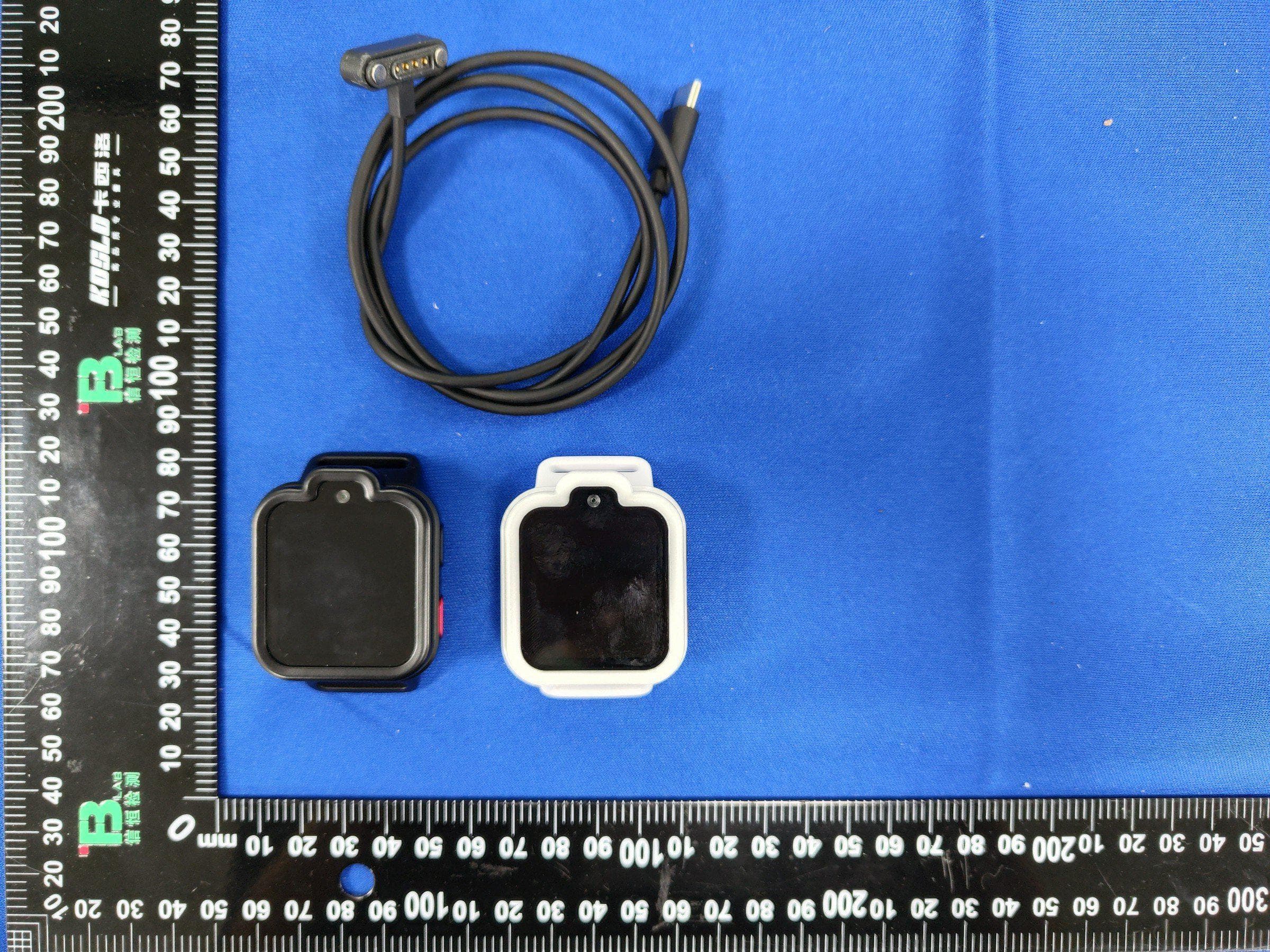
2AS8N-TT6
Apr 27, 2026TickTalk 6 Kids Smartwatch
Equipment Class
DSS - Part 15 Spread Spectrum Transmitter