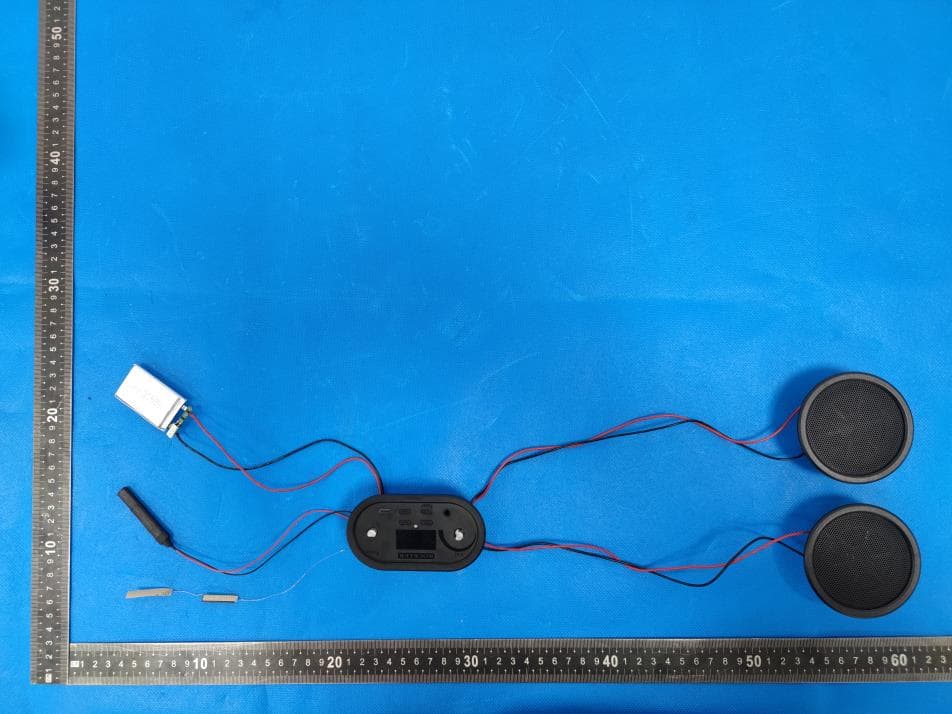
2AT7N-50995Bluetooth Speaker
Rockler Woodworking and Hardware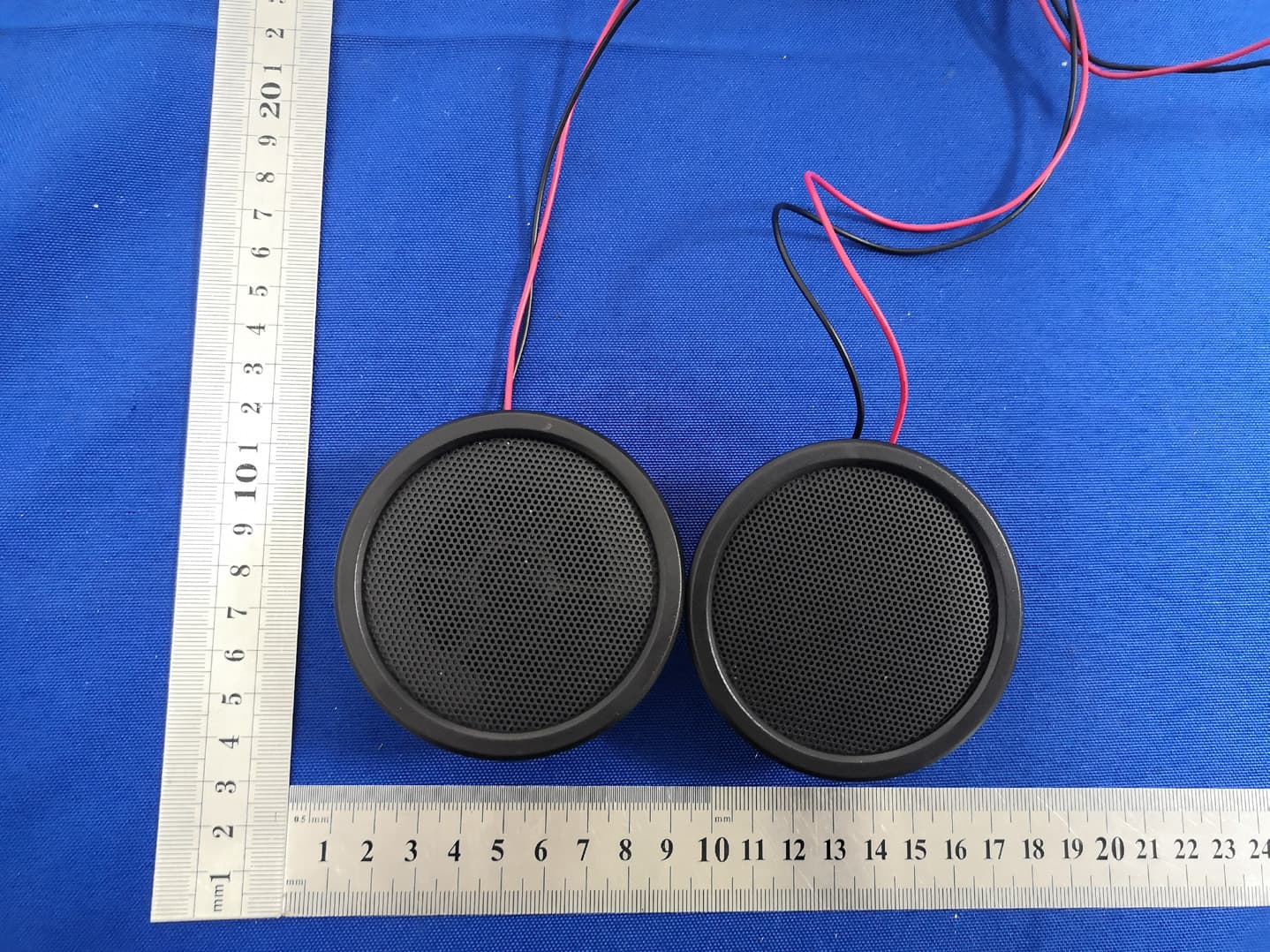
Click to zoom
Application Details
- Equipment Class
- DSS - Part 15 Spread Spectrum Transmitter
- Date of Grant
- Nov 01, 2020
- Application Purpose
- Original Equipment
- Date of Application
- Nov 01, 2020
- Equipment Note
- Bluetooth Speaker
- Frequency Range
- 2402.00000000 - 2480.00000000
- Country
- United States
Documents & Files
Document Text
Text extracted from the exhibit documents filed with the FCC. Open a document above to read the original.
Users Manual
Review full Instruction prior to use for important safety information. Always check Rockler.com to confirm that you are using the most recent version of instructions for your product. Stereo Wireless Speaker Kit Instructions Effective December 2019 Special Notes None C:72 M:15 Y:0 K:56 DO NOT PRINT DO NOT PRINT C:6 M:9 Y:23 K:0 Graphics/Designer Brandon Snyder - [email protected] Art Date 12/19 Stereo Wireless Speaker Kit Instructions50995 Brand Colors BMS12/19 2 GENERAL SAFETY WARNINGS This product is designed only for specific applications as defined in the instructions and should not be modified or used for any manner not described in these instructions. Use only recommended accessories. Before using the Stereo Wireless Speaker Kit: READ, UNDERSTAND and FOLLOW ALL INSTRUCTIONS AND SAFETY WARNINGS. KEEP THESE INSTRUCTIONS READILY AVAILABLE FOR FUTURE REFERENCE. >Always confirm that you are using the most recent version of the Instructions and safety warnings for your product (see the Instructions link on the product page at Rockler.com). >Before using another tool with this product, always read, understand and follow the instructions and safety warnings in the owner’s manual for that tool. If you do not have the owner’s manual, obtain one from the tool’s manufacturer before using it with this product. >Before using any chemical with this product, always read, understand and follow all safety warnings and guidelines in the manufacturer’s Safety Data Sheet (SDS; formerly called “MSDS”), especially regarding: •How to safely use the chemical, including potential hazards and recommended first aid measures; •Personal safety equipment required to safely use the chemical (e.g. gloves, eye protection, mask/respirator, etc.); •Proper and safe handling, storage and disposal of the chemical. > Before using this product, review and verify that all tools to be used with it have safety equipment installed and are in proper working order as defined by the tool’s owner’s manual. > Do not use this product until you have read and are confident you understand: •Product Specific Warnings (pp. 3 - 4); •Assembly (p. 5); •Connecting to Your Device (p. 6); •Operating Controls (p. 6). > The user assumes all risk and responsibility for the proper and safe use of this product and for ensuring product suitability for the intended application. >It is the sole responsibility of the purchaser of this product to ensure that any anyone you allow to use this product reads and complies with all instructions and safety precautions outlined in this manual prior to use. > Follow all standard shop safety practices, including: •Keep children and bystanders away from the tool operating area; •Do NOT use power tools in explosive environments, or in the presence of flammable liquids, fumes or dust; •TURN OFF AND UNPLUG all power tools BEFORE making any adjustments or changing accessories; •Remain alert and use good judgment. Do not use this product if you are in any way impaired by medications, alcohol, drugs or fatigue; •Keep your work area well lit and clean; •Dress appropriately. Secure loose clothing, remove all jewelry and tie up long hair before using this product; •ALWAYS wear safety glasses, hearing protection and respiratory protection that complies with NIOSH/OSHA/ANSI safety standards; •Use dust collection tools and dust face masks to reduce exposure to dust; •Use safety equipment such as featherboards, push sticks and push blocks, etc., when appropriate; •Maintain proper footing at all times and do not overreach; • Do NOT force woodworking tools. > These warnings and instructions do NOT represent the total of all information available regarding tool safety, use and technique. Always seek out opportunities to learn more and improve your skills and knowledge. Drilling, sawing, sanding or machining wood products can expose you to wood dust, a substance known ot the State of California to cause cancer. Avoid inhaling wood dust or use a dust mask or other safeguards for personal protection. For more information go to www.P65Warnings.ca.gov/wood. BP0918 3 Danger indicates a hazardous situation that, if not avoided, will result in death or serious injury. Warning indicates a hazardous situation that, if not avoided, could result in death or serious injury. Caution indicates a hazardous situation that, if not avoided, may result in minor or moderate injury or property damage. Notice indicates important or helpful information and/or user tips. SAFETY WARNING KEY >Read, understand and follow all safety warnings included in these instructions. Keep these instructions in a place where they will be readily accessible later. >To reduce the risk of fire or electric shock, do NOT expose this apparatus to rain or moisture. As with any electronic products, use care not to spill liquids into any part of the product. Exposure to liquids may create a failure and/or fire hazard. >Do NOT place open-flame sources, such as lighted candles, on or near the produc t. >Do NOT use near any heat sources such as radiators, heat registers, stoves, prolonged direct sunlight or other apparatus that produce heat. > Do NOT subject batteries to mechanical shock or bending. > This device uses an internal rechargeable lithium-ion battery that should last the lifetime of the device. Never disassemble the unit or attempt to remove the battery as that could cause leakage of an electrolytic substance. >In the event of a battery leaking, do not allow the liquid to come in contact with the skin or eyes. If contact has been made, wash the affected area with copious amounts of water and seek medical advice. >Do NOT use any charger other than that specifically provided for use with the equipment. >Do NOT leave a battery on prolonged charge when not in use. > After extended periods of storage, it may be necessary to charge and discharge the batteries several times to obtain maximum performance. >Batteries give their best performance when they are operated at norm…
Text truncated - open the document above for the full version.
Cover Letter(s)
Rev11/20/07 (RocklerWoodworkingandHardware) FederalCommunicationsCommission AuthorizationandEvaluationDivision ConfidentialityRequestregardingapplicationforcertificationofFCCID:2AT7N-50995 PursuanttoSections0.457and0.459oftheCommission’sRules,weherebyrequestconfidential treatmentofinformationaccompanyingthisapplicationasoutlinedbelow: ExhibitTypeFileName BlockDiagram, Schematics, OperationalDescription BlockDiagram Schematics OperationalDescription Theabovematerialscontaintradesecretsandproprietaryinformationnotcustomarilyreleasedto thepublic.Thepublicdisclosureofthesematerialsmaybeharmfultotheapplicantandprovide unjustifiedbenefitstoitscompetitors. TheapplicantunderstandsthatpursuanttoSection0.457oftheRules,disclosureofthis applicationandallaccompanyingdocumentationwillnotbemadebeforethedateoftheGrant forthisapplication. Sincerely, (DaveOwen)
Cover Letter(s)
(RocklerWoodworkingandHardware) FederalCommunicationsCommission AuthorizationandEvaluationDivision 1435OaklandMillsRoad Columbia,MD21046 Date: SUBJECT:FCCApplicationforFCCID:2AT7N-50995 ToWhomItMayConcern: We,theundersigned,herebyauthorizeAlanMeiatShenzhenBCTCTestingCo.,Ltd.on ourbehalf,toapplytotheFederalCommunicationsCommissiononourequipment.Any andallactscarriedoutbyAlanMeiofShenzhenBCTCTestingCo.,Ltd.onourbehalf shallhavethesameeffectasactsofourown. ThisistoadvisethatweareinfullcompliancewiththeAnti-DrugAbuseAct.We,the applicant,arenotsubjecttoadenialoffederalbenefitspursuanttoSection5301ofthe Anti-DrugActof1988,21USC853a,andnopartytotheapplicationissubjecttoadenial offederalbenefitspursuanttothatsection. Regards, (DaveOwen)
External Photos
External Photos
ID Label/Location Info
Label & label location Model:50995 FCC ID: 2AT7N-50995
Internal Photos
Internal Photos Antenna
RF Exposure Info
RF EXPOSURE EVALUATION METHOD FCC ID: 2 AT 7 N-50995 SAR Test Exclusion Thresholds for 100 MHz – 6 GHz and ≤ 50 mm Approximate SAR Test Exclusion Power Thresholds at Selected Frequencies and Test Separation Distances are illustrated in the following Table. The 1-g and 10-g SAR test exclusion thresholds for 100 MHz to 6 GHz at test separation distances ≤ 50 mm are determined by: [(max. power of channel, including tune-up tolerance, mW)/(min. test separation distance, mm)] · [√f(GHz)] ≤ 3.0 for 1-g SAR and ≤ 7.5 for 10-g extremity SAR,where f(GHz) is the RF channel transmit frequency in GHz Power and distance are rounded to the nearest mW and mm before calculation The result is rounded to one decimal place for comparison The test exclusions are applicable only when the minimum test separation distance is ≤ 50 mm and for transmission frequencies between 100 MHz and 6 GHz. When the minimum test separation distance is < 5 mm, a distance of 5 mm is applied to determine SAR test exclusion. BT-EDR max possible output power (PK,conducted):2±1dBm -0.58dBi logarithmic terms convert to numeric result is nearly 0.875 3dbm=2.00mW Modulation Frequency (MHz) Output Power (dBm) Max Antenna Gain (dBi) GFSK 2402 1.50 -0.58 GFSK 2441 1.78 -0.58 GFSK 2480 1.57 -0.58 Pi/4 DQPSK 2402 2.19 -0.58 Pi/4 DQPSK 2441 2.47 -0.58 Pi/4 DQPSK 2480 2.24 -0.58 EDR: 2402MHz [(max. power of channel, including tune-up tolerance, mW)/(min. test separation distance,mm)] · [√f(GHz)]=2/5*√2.402=0.62≤3.0 Threshold at which no SAR required is 10mw and ≤ 3.0 for 1-g SAR, Separation distance is 5mm. 2441 MHz [(max. power of channel, including tune-up tolerance, mW)/(min. test separation distance,mm)] · [√f(GHz)]= 2/5*√2.441=0.62≤3.0 Threshold at which no SAR required is 10mw and ≤ 3.0 for 1-g SAR, Separation distance is 5mm. 2480MHz [(max. power of channel, including tune-up tolerance, mW)/(min. test separation distance,mm)] · [√f(GHz)]=2/5*√2.48=0.63≤3.0 Threshold at which no SAR required is 10mw and ≤ 3.0 for 1-g SAR, Separation distance is 5mm. Conclusion: No SAR is required.
Test Report
No.:BCTC/RF-EMC-005 Page: 1 of 60 Edition:A.1 TEST REPORT Report No.: BCTC2010000377E Applicant: Rockler Woodworking and Hardware Product Name: Bluetooth Speaker Model/Type Ref.: 50995 Tested Date: Oct. 20, 2020 to Oct. 21, 2020 Issued Date: Oct. 21, 2020 Shenzhen BCTC Testing Co., Ltd. Report No.: BCTC2010000377E No.:BCTC/RF-EMC-005 Page: 2 of 60 Edition:A.1 FCC ID : 2AT7N-50995 The test report is effective only with both signature and specialized stamp.This result(s) shown in this report refer only to the sample(s) tested. Without written approval of Shenzhen BCTC Testing Co., Ltd, this report can’t be reproduced except in full.The tested sample(s) and the sample information are provided by the client. Product Name: Bluetooth Speaker Trademark: Rockler Model/Type Ref.: 50995 Prepared For: Rockler Woodworking and Hardware Address: 4365 Willow Drive, Medina Minnesota United States 55340 Manufacturer: Shenzhen E-Ran Technology Co., Ltd Address: North Section, 6th Floor, Block 9A, Xiangxiang Industrial Park, Yingrenshi community, Shiyan Sub district, Baoan District, Shenzhen, China Prepared By: Shenzhen BCTC Testing Co., Ltd. Address: 1-2F, East of B Building, Pengzhou Industrial, Fuyuan 1st Road, Qiaotou Community, Fuyong Street, Bao’an District, Shenzhen, China Sample Received Date: Oct. 20, 2020 Sample tested Date: Oct. 20, 2020 to Oct. 21, 2020 Issue Date: Oct. 21, 2020 Report No.: BCTC2010000377E Test Standards FCC Part15.247 ANSI C63.10-2013 Test Results PASS Remark: This is Bluetooth Classic radio test report. Tested by: Approved by: Cathy Zhong/ Project Handler Zero Zhou/Reviewer Report No.: BCTC2010000377E No.:BCTC/RF-EMC-005 Page: 3 of 60 Edition:A.1 TABLE OF CONTENT Test Report Declaration Page 1. VERSION ............................................................ 5 2. TEST SUMMARY ..................................................... 6 3. MEASUREMENT UNCERTAINTY ....................................... 7 4. PRODUCT INFORMATION AND TEST SETUP ........................... 8 4.1 Product Information ..................................................... 8 4.2 Test Setup Configuration ................................................ 8 4.3 Support Equipment ..................................................... 9 4.4 Channel List ........................................................... 9 4.5 Test Mode ............................................................ 10 4.6 table of parameters of text software setting ................................ 10 5. TEST FACILITY AND TEST INSTRUMENT USED ........................ 11 5.1 Test Facility ........................................................... 11 5.2 Test Instrument Used .................................................. 11 6. CONDUCTED EMISSIONS ............................................ 13 6.1 Block Diagram Of Test Setup ........................................... 13 6.2 Limit ................................................................. 13 6.3 Test procedure ........................................................ 13 6.4 EUT operating Conditions .............................................. 13 6.5 Test Result ........................................................... 14 7. RADIATED EMISSIONS .............................................. 16 7.1 Block Diagram Of Test Setup ........................................... 16 7.2 Limit ................................................................. 17 7.3 Test procedure ........................................................ 18 7.4 EUT operating Conditions .............................................. 19 7.5 Test Result ........................................................... 20 8. RADIATED BAND EMISSION MEASUREMENT AND RESTRICTED BANDS OF OPERATION .......................................................... 24 8.1 Block Diagram Of Test Setup ........................................... 24 8.2 Limit ................................................................. 24 8.3 Test procedure ........................................................ 25 8.4 EUT operating Conditions .............................................. 25 8.5 Test Result ........................................................... 26 9. CONDUCTED EMISSION ............................................. 27 9.1 Block Diagram Of Test Setup ........................................... 27 9.2 Limit ................................................................. 27 9.3 Test procedure ........................................................ 27 9.4 Test Result ........................................................... 28 10. 20 DB BANDWIDTH .................................................. 34 10.1 Block Diagram Of Test Setup .......................................... 34 10.2 Limit ................................................................ 34 10.3 Test procedure ....................................................... 34 Report No.: BCTC2010000377E No.:BCTC/RF-EMC-005 Page: 4 of 60 Edition:A.1 10.4 Test Result .......................................................... 35 11. MAXIMUM PEAK OUTPUT POWER .................................... 39 11.1 Block Diagram Of Test Setup .......................................... 39 11.2 Limit ................................................................ 39 11.3 Test procedure ....................................................... 39 11.4 Test Result .......................................................... 40 12. HOPPING CHANNEL SEPARATION ................................... 44 12.1 Block Diagram Of Test Setup .......................................... 44 12.2 Limit ................................................................ 44 12.3 Test procedure ....................................................... 44 12.4 Test Result .......................................................... 45 13. NUMBER OF HOPPING FREQUENCY .................................. 49 13.1 Block Diagram Of Test Setup .......................................... 49 13.2 Limit .............................…
Text truncated - open the document above for the full version.
Test Setup Photos
1. EUT TEST SETUP PHOTOGRAPHS Conducted emissions R adiated Measurement Photos
Contact Information
Applicant
Dave Owen
Test Firm
Shenzhen BCTC Testing Co., Ltd.Sally He
[email protected]15999690624
Technical Specifications
| # | Rule Parts | Frequency Range | Power Output |
|---|---|---|---|
| 1 | 15C | 2.40 GHz - 2.48 GHz | 2.00 mW |
Other Applications from Rockler Woodworking and Hardware
2AT7N-66992
Jul 18, 202266992 AM/FM Stereo Wireless Speaker Kit
Equipment Class
DSS - Part 15 Spread Spectrum Transmitter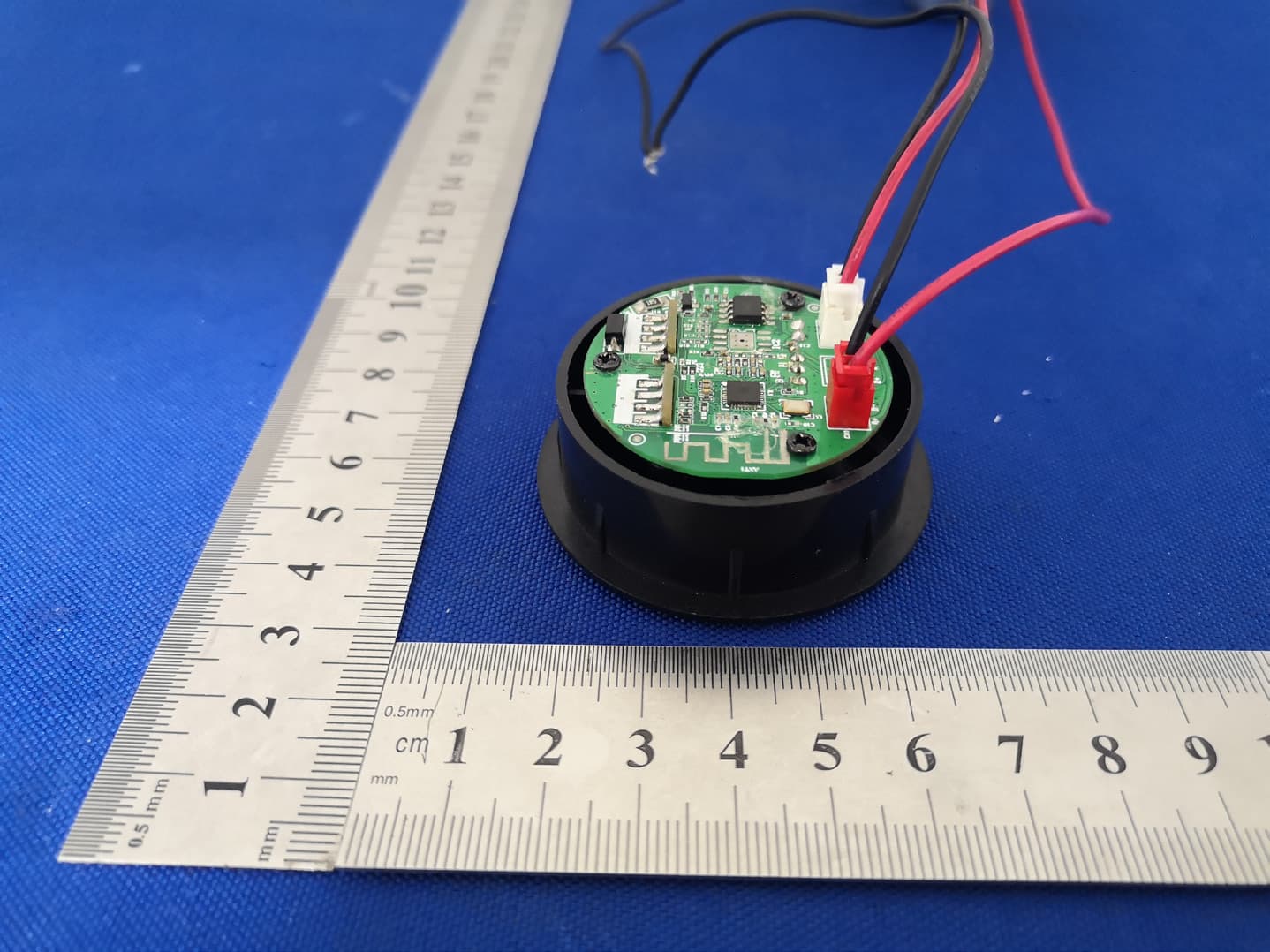
2AT7N-57033
Nov 01, 2020Bluetooth Speaker
Equipment Class
DSS - Part 15 Spread Spectrum Transmitter