2AT9H-UT208Walkie Talkies
Shenzhen Unison Technology Co., Ltd.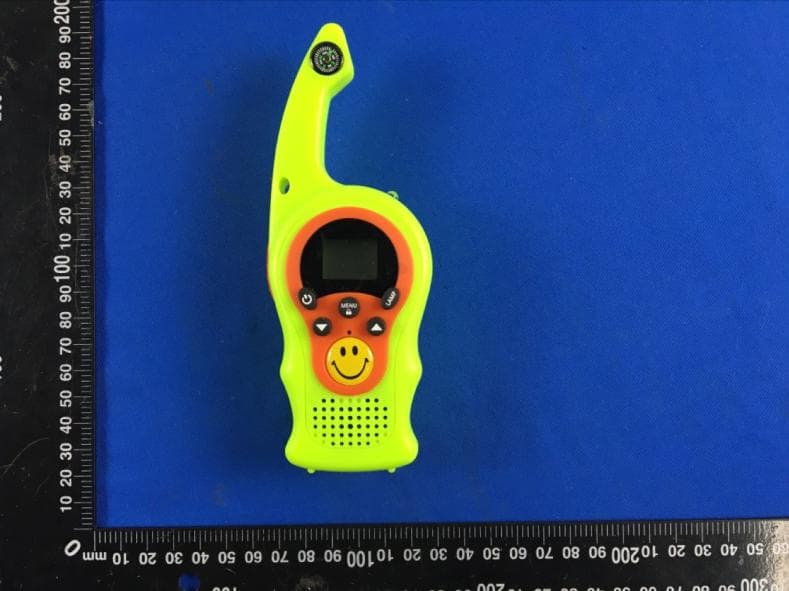
Click to zoom
Application Details
- Equipment Class
- FRF - Part 95 Family Radio Face Held Transmitter
- Date of Grant
- Jun 30, 2020
- Application Purpose
- Original Equipment
- Date of Application
- Jun 30, 2020
- Equipment Note
- Walkie Talkies
- Frequency Range
- 467.56250000 - 467.71250000
- Country
- China
Documents & Files
Document Text
Text extracted from the exhibit documents filed with the FCC. Open a document above to read the original.
Users Manual
User’s manual 0.5Watts Handheid Tw o-way Radios Mode NO.:UT208 EN- Instruction for use This set includes 2 walkie-talkie units, these are communication devices which operate on mobile radio fr equencies, They come with 8/20/22 (option) channels as well as a back-lit LCD screen, enabling you to communicate over several kilometers free-of-charge( up to 5 km in open areas) Note: Please read these user instructions carefully before using the equipment and retain for future consultation. Specific R ecommendations: If you carry any kind o f personal medical device, consult a doctor before use. To avoid the risk of burns, do not use the device if the aerial is damaged in any way. Don’t use the device in a potentially explosive setting (e.g. Around petrol pumps, on the lower deck of a boat or around a fuel-storage installation or chemical products) If travelling in a car or by bike, stop before using the device, Switch off the device if on an airplane or in a hospital. Never use the device in close proximity to a radio to avoid interference. Remove the batteries if the device is not use for an extended period of time, Never mix used with new batteries. Position the transmitter and antenna at least 5cm from your face. Direct the antenna upwards and speak normally. Clean the device with a damp cloth. Avoid the use of cleaning agents and solvents. Don’t modify the device in any way. In the event of damage occurring, ensuring that the device is checked by a qualified professional. The device cannot be used to contact the emergency services. PIC 01
Users Manual
Before Use the device Remov e the belt clip Before insert b atteries into the device, first pull the belt clip latch away from the device(See PIC02 Installing the batter ies 1.Slid down the batter y compartment cover( See pic03). 2.Insert 3*AAA batteries(Not included) 3.Position the batteries according to polarity making on the battery compartment. 4.After placing batteries into correct positions, replace the battery cover( See PIC04 PIC 04 PIC 03PIC 02 Using the device 1.Turning the device on/off: Switch on the device: press and hold on the on/off button for 3 seconds, then you will hear a beep sound. Switch of the device: press and hold on the on/off button for 3 seconds, then you will hear a beep sound. 2. Adjusting the volume: To increase the volume, press the Up button and press the Down button to decrease volume. Note: The volume level is displayed on the screen. 3. Low Battery Indication. The battery voltage level is indicated by the numbers of squares present inside the battery icon on the LCD Screen. Battery Full Battery 2/3 charged Battery 1/3 charged Battery empty When the battery voltage is low, the battery icon will flash and a beep will be heard to indicate that the batteries need to be replaced or recharged. 4. Receiving / transmitting communications: The devices are in ‘Reception’ mode when it is turned ON and no transmitting, when a signal is received on the current channel, the LCD will display in reception. When you press the PTT(push to talk) button, the devices switches to“Transmission”mode. Hold the device in a vertical position with the Mic(microphone) 5-10cm away from your mouth. While holding the PTT button, speak into the microphone in a normal tone of voice. Release the PTT button when you have finished transmitting. For others to receive your transmission, they must be on the same channel with you. Note: 1.The maximum talking range is 5km, it will depended on your surroundings and envir onment. It will be affected by obstructions such as hills or buildings. 2.Don’t try to use tw o devices which are less than 1.5mm(5 feets) apart, otherwise, you may experience interference. 5. Changing Channels: Press the MENU button one time, The channel number will flash on the display. Press the up / down button to change the channel, Press the PTT button to confirm and return to stand-by mode. Note: If no button is pressed within 15 seconds during setting, the device will return to stand-by mode. 6. CTCSS( Continues Tone Coded Squelch System) Press the MENU button twice, the current CTCSS code will flash on the display, Press the up / down button to change the 61 available codes. Press the PTT button to confirm and return to stand-by mode. License free radio ’s operating on the 400-470 MHZ frequency band, the device has 8/20/22 av ailable radio channels, If there are many device users near you, there is a chance that some of the users are operating on the same radio channel. To prevent that you receive signals from other users, sub-channels have been integrated. When using CTCSS, a low frequency tone (between 67-250 HZ) will be transmitted along with the voice signal, There are 99 available tones to choose from, You are free to choose one of the 99 available sub-channels, Due to filtering, these sub- channels will generally not be audible so they will not disturb the communication. 7. VOX (Hands fr ee function) Press the MENU button three times, the current VOX setting will flash on the display and the VOX icon will display. Press up button to set the VOX sensitivity level between 1 and 3 level( level 3 is the high sensitive level). Press down button until “OF” appears on the display to turn VOX OFF. Press the PTT button to confirm and return to stand-by mode. In VOX mode, the radio will transmit a signal when it is activated by your voice or other sound around you. VOX operation is not recommended if you plan to use your device in a noisy or windy environment. Note: VOX mode will be over ride when you press the PTT button 8. Scanning for an active radio channel Press and hold the UP button 2 seconds: the “SCAN” function indicator will appear on the display and the channel will scan continuously from 1 to 8/20/22. once an active channel is found, the scanning will stop and you can listen to the transmission. When the transmission is on the found channel stop, the scanning will resume automatically. Note: If you press PTT button while listening to a found channel, the device will go back to stand-by mode on the found channel. 9. Monitor Press and hold the DOWN button about 3 seconds to active monitor. Release the DOWN button return to stand by mode. 10. Setting the call Tone The device has 10 call tones Press the MENU-button 4 times, “CA” is displayed and on the current call tone. Press the UP / Down button to change another Call Tone. Press the PTT button to confirm and return to stand-by Mode. 11, Sending a call Tone. Press the CALL butt on one time quickly, the call tone will be transmitted on the setting channel. 12. Roger Beep On/Off After the PTT button is released, the device will send out a roger beep to confirm that have stopped talking. Press the MENU button 5 times, “Ro” will be displayed. Press the UP /Down button disable the roger beep ON/OFF. Press the PTT button to confirm your selection and return to the stand-by mode. 13. Backlit Display. Press any button except for the MENU button to activate the back light of the LCD display, The back light will light on about 5 seconds. 14. Headset connection, The device can be used with headset (If there is headset packed together with the device) The connector is located on the top of the device. Insert the earpiece plug into the connector (2.5mm jack) There is a small “PTT” button on the earpiece has the same function as the PTT button on the device. When you use the PTT button from the earpiece, you must also use the microphone from t he earpiece to talk. Note: Don’t connect other headset, it may damage your device. 1…
Text truncated - open the document above for the full version.
Cover Letter(s)
CONFIDENTIALITY REQUEST for Certification Service in USA Federal Communication Commission Equipment Authorization Division, Application Processing Branch 7435 Oakland Mills Road Columbia, MD 21046 Date: 2020/06/29 TO WHOM IT MAY CONCERN Pursuant to Paragraphs §0.457 and 0.459 of the Commission’s Rules (47 C.F.R.) and Section §552(b)(4) of the Freedom of Information Act, we requests confidentiality for the following products: FCC ID Model name 2AT9H-UT208 UT208 For the product stated above, we request that the following information be held confidential; Exhibits Long-Term Confidentiality Short-Term Confidentiality Short-Term Confidentiality Days External Photos Internal Photos Block Diagram Schematics Test Setup Photos User’s Manual Parts List Tune Up Operational Descriptions The long-term confidentiality exhibits contain our trade secrets and proprietary information that could be of benefit to our competitors. The short-term confidentiality on the basis of ensuring that business sensitive information remains confidential until the actual marketing of our new device. If you have any questions, please feel free to contact me at the address shown below. Sincerely, Name: Haiming Li Company: Shenzhen Unison Technology Co., Ltd. Address: QiaoHongSheng 219, Building A, YinTian Industrial Park, XiXiang Twon, Bao'An District, ShenZhen, 518000, China Phone: +86-13715391017 Fax: N/A E-Mail: [email protected]
Cover Letter(s)
Shenzhen Unison Technology Co., Ltd. QiaoHongSheng 219, Building A, YinTian Industrial Park, XiXiang Twon, Bao'An District, ShenZhen, 518000, China Tel: +86-13715391017 Fax: Jun. 29, 2020 FCC ID: 2AT9H-UT208 Dear Sir, I hereby have entrusted the following person to be a proxy regarding application for Type Certification. Shenzhen CTL Testing Technology Co., Ltd. Address: Floor 1-A, Baisha Technology Park, No.3011, Shahexi Road, Nanshan District, Shenzhen, China 518055 Name: Tracy Qi Job Title: General Manager Email: qihui@ctl‐lab.com I am therefore responsible for the contents of the application. Model Name of the specified radio equipment: UT208 Product Description:Walkie Talkies Should you have any questions or comments regarding this matter, please have my best attention. Sincerely, Name: Haiming Li Company: Shenzhen Unison Technology Co., Ltd. Address: QiaoHongSheng 219, Building A, YinTian Industrial Park, XiXiang Twon, Bao'An District, ShenZhen, 518000, China Phone: +86-13715391017 Fax: N/A E-Mail: [email protected]
ID Label/Location Info
FCC ID Label Information 1. Label location: 2. FCC ID Label: FCC ID:2AT9H-UT208 FCCID Label Location
Internal Photos
Main Antenna Antenna
RF Exposure Info
Any reproduction of this document must be done in full. No single part of this document may be reproduced without permission from STS, All Test Data Presented in this report is only applicable to presented Test sample. ShenZhen STS Test Services Co.,Ltd. A 1/F, Building B, Zhuoke Science Park, No.190 Chongqing Road, HepingShequ, Fuyong Sub-District, Bao’an District, Shenzhen, Guang Dong, China TEL: +86-755 3688 6288 FAX: +86-755 3688 6277 E-mail:[email protected] FCC SAR TEST REPORT Report No.: STS1912219H01 Issued for Shenzhen Unison Technology Co., Ltd. QiaoHongSheng 219, Building A, YinTian Industrial Park, XiXiang Town, Bao'An District, ShenZhen, 518000, China Product Name: WalkieTalkies Brand Name: UnisonTalkies Model Name: UT208 Series Model: N/A FCC ID: N/A Test Standard: ANSI/IEEE Std. C95.1 FCC 47 CFR Part 2 ( 2.1093) IEEE 1528: 2013 Max. Report SAR (1g): Body : 0.103 W/kg Front of face: 0.049 W/kg Limbs: 0.081 W/kg S T L A B S Page 2 of 35 Report No.: STS1912219H01 Test Report Certification Applicant’s name ................. : Shenzhen Unison Technology Co., Ltd. Address ................................. : QiaoHongSheng 219, Building A, YinTian Industrial Park, XiXiang Town, Bao'An District, ShenZhen, 518000, China Manufacture's Name ............ : Shenzhen Unison Technology Co.,Ltd. Address ................................. : QiaoHongSheng 219, Building A, YinTian Industrial Park, XiXiang Town, Bao'An District, ShenZhen, 518000, China Product description Product name ........................ : WalkieTalkies Brand Name ........................... : UnisonTalkies Model name ......................... : UT208 Series Model .......................... : N/A Standards ............................. : RSS 102 Issue 5,March 2015 IEEE 1528:2013 IEC 62209-2:2010 The device was tested by Shenzhen STS Test Services Co., Ltd. in accordance with the measurement methods and procedures specified in KDB 865664 The test results in this report apply only to the tested sample of the stated device/equipment. Other similar device/equipment will not necessarily produce the same results due to production tolerance and measurement uncertainties. Date of Test ........................................... : Date (s) of performance of tests ............. : 25 May 2020 Date of Issue .......................................... : 26 May 2020 Test Result .............................................. : Pass Testing Engineer : ( Aaron Bu) Technical Manager : (Jason Lu) Authorized Signatory : (Vita Li) Page 3 of 35 Report No.: STS1912219H01 Table of Contents 1.General Information 4 1.1 EUT Description 4 1.2 Test Environment 5 1.3 Test Factory 5 2.Test Standards And Limits 6 3. SAR Measurement System 7 3.1 Definition Of Specific Absorption Rate (SAR) 7 3.2 SAR System 7 4. Tissue Simulating Liquids 10 4.1 Simulating Liquids Parameter Check 10 5. SAR System Validation 12 5.1 Validation System 12 5.2 Validation Result 12 6. SAR Evaluation Procedures 13 7. EUT Test Position 14 8. Uncertainty 15 8.1 Measurement Uncertainty 15 8.2 System validation Uncertainty 16 9. Conducted Power Measurement 17 Test Result 17 10. EUT And Test Setup Photo 18 10.1 EUT Photo 18 10.2 Setup Photo 21 11. SAR Result Summary 24 12. Equipment List 26 Appendix A. System Validation Plots 27 Appendix B. SAR Test Plots 31 Appendix C. Probe Calibration and Dipole Calibration Report 35 Page 4 of 35 Report No.: STS1912219H01 1. General Information 1.1 EUT Description Equipment WalkieTalkies Brand Name UnisonTalkies Model name UT208 Series Model N/A Model Difference N/A Device Category Portable Product stage Production unit RF Exposure Environment General Population / Uncontrolled Hardware Version N/A Software Version N/A Frequency Range FRS 462.5625MHz~467.7125MHz Channel Spacing 12.5KHz Max. Reported SAR(1g): with 50% duty cycle Test Channel Face of face (W/kg) Limbs (W/kg) Body (W/kg) CH 4 0.049 0.081 0.103 Modulation Type: FRS FM Antenna Specification: Whip Antenna Note: 1. The EUT battery must be fully charged and checked periodically during the test to ascertain uniform power Page 5 of 35 Report No.: STS1912219H01 1.2 Test Environment Ambient conditions in the SAR laboratory: Items Required Temperature (°C) 18-25 Humidity (%RH) 30-70 1.3 Test Factory ShenZhen STS Test Services Co.,Ltd. A 1/F, Building B, Zhuoke Science Park, No.190 Chongqing Road, HepingShequ, Fuyong Sub-District, Bao’an District, Shenzhen, Guang Dong, China FCC Registration No.: 625569 A2LA Certificate No.: 4338.01 IC Registration No.: 12108A Page 6 of 35 Report No.: STS1912219H01 2. Test Standards and Limits No. Identity Document Title 1 47 CFR Part 2 Frequency Allocations and Radio Treaty Matters; General Rules and Regulations 2 ANSI/IEEE Std. C95.1-1992 IEEE Standard for Safety Levels with Respect to Human Exposure to Radio Frequency Electromagnetic Fields, 3 kHz to 300 GHz 3 IEEE Std. 1528-2013 Recommended Practice for Determining the Peak Spatial-Average Specific Absorption Rate (SAR) in the Human Head from Wireless Communications Devices: Measurement Techniques 4 FCC KDB 447498 D01 v06 Mobile and Portable Device RF Exposure Procedures and Equipment Authorization Policies 5 FCC KDB 865664 D01 v01r04 SAR Measurement 100 MHz to 6 GHz 6 FCC KDB 865664 D02 v01r02 RF Exposure Reporting 7 FCC KDB 643646 D001 SAR Test Reduction Considerations for Occupational PTT Radios (A). Limits for Occupational/Controlled Exposure (W/kg) Whole-Body Partial-Body Hands, Wrists, Feet and Ankles 0.4 8.0 20.0 (B). Limits for General Population/Uncontrolled Exposure (W/kg) Whole-Body Partial-Body Hands, Wrists, Feet and Ankles 0.08 1.6 4.0 NOTE: Whole-Body SAR is averaged over the entire body, partial-body SAR is averaged over any 1 gram of tissue defined as a tissue volume in the shape of a cube. SAR for hands, wrists, feet and ankles is averaged over any 10 grams of tissue defined as a tissue volume in the shape of a cube. Population/Uncontrolled Environments: Are defined as locations where there is th…
Text truncated - open the document above for the full version.
RF Exposure Info
Any reproduction of this document must be done in full. No single part of this document may be reproduced without permission from STS, All Test Data Presented in this report is only applicable to presented Test sample. ShenZhen STS Test Services Co.,Ltd. A 1/F, Building B, Zhuoke Science Park, No.190 Chongqing Road, HepingShequ, Fuyong Sub-District, Bao’an District, Shenzhen, Guang Dong, China TEL: +86-755 3688 6288 FAX: +86-755 3688 6277 E-mail:[email protected] S T L A B S Testing Engineer : (Aaron Bu) Technical Manager : (Jason Lu) Authorized Signatory : (Vita Li) SAR Dipole Performance Measurement Report EUT Type: SAR Validation Dipole and Waveguide Model Name: DIP0G450-330 Brand Name: SATIMO Test Conclusion: Pass Test Date: 14 Aug. 2019 Date of Issue: 17 Aug. 2019 ISSUED BY Shenzhen STS Test Services Co., Ltd. 1. Equipment List Kind of Equipment Manufacturer Type No. Serial No. Last Calibration Calibrated Until PC Acer N/A N/A N/A N/A E-Field Probe MVG SSE5 SN 14/16 EP309 2018.12.13 2019.12.12 Dielectric Probe Kit MVG SCLMP SN 32/14 OCPG67 2018.12.01 2019.11.30 Phantom1 MVG SAM SN 32/14 SAM115 N/A N/A Phantom2 MVG SAM SN 32/14 SAM116 N/A N/A Attenuator Agilent 99899 DC-18GHz N/A N/A Directional coupler Narda 4226-20 3305 N/A N/A Network Analyzer Agilent 8753ES US38432810 2019.03.02 2020.03.01 Multi Meter Keithley Multi Meter 2000 4050073 2018.10.13 2019.10.12 Signal Generator Agilent N5182A MY50140530 2018.10.16 2019.10.15 Power Amplifier DESAY ZHL-42W 9638 2018.10.13 2019.10.12 Power Meter R&S NRP 100510 2018.10.26 2019.10.25 Power Sensor R&S NRP-Z11 101919 2018.10.13 2019.10.12 Power Sensor Agilent E9301A MY41497725 2018.10.13 2019.10.12 hygrothermograph MiEO HH660 N/A 2018.10.11 2019.10.10 Thermograph Elitech RC-4 S/N EF7176501537 2018.10.15 2019.10.14 ISSUED BY Shenzhen STS Test Services Co., Ltd. 2. <Justification of the extended calibration> Referring to KDB 865664 D01, if dipoles are verified in return loss<-20dB, (within 20% of prior calibration), and in impedance (within 5 ohm of prior calibration), the annual calibration is not necessary and the calibration interval can be extended. Head 450 MHz Date of Measurement Return Loss (dB) Delta (%) Impedance Delta(ohm) 2017.08.15 -27.16 - 46.2 - 2018.08.15 -27.31 0.55 46.68 0.48 2019.8.14 -27.12 -0.15 46.12 -0.08 The return loss is <-20dB, within 20% of prior calibration; the impedance is within 5 ohm of prior calibration. Therefore the verification result should support extended calibration. <Dipole Verification Data> Head 450MHz ISSUED BY Shenzhen STS Test Services Co., Ltd. Body 450 MHz Date of Measurement Return Loss (dB) Delta (%) Impedance Delta(ohm) 2017.08.15 -26.18 - 45.2 - 2018.08.15 -26.31 0.50 45.67 0.47 2019.8.14 -26.25 0.27 45.56 0.36 The return loss is <-20dB, within 20% of prior calibration; the impedance is within 5 ohm of prior calibration. Therefore the verification result should support extended calibration. <Dipole Verification Data> Body 450MHz
RF Exposure Info
Ref : ACR.345.3.19.SATU.A SHENZHEN STS TEST SERVICES CO., LTD. 1/F, BUILDING 2, ZHUOKE SCIENCE PARK, CHONGQING ROAD FUYONG, BAO’ AN DISTRICT, SHENZHEN,CHINA MVG COMOSAR DOSIMETRIC E-FIELD PROBE SERIAL NO.: SN 41/18 EPGO334 Calibrated at MVG US 2105 Barrett Park Dr. - Kennesaw, GA 30144 Calibration Date: 06/04/2019 Summary: This document presents the method and results from an accredited COMOSAR Dosimetric E-Field Probe calibration performed in MVG USA using the CALISAR / CALIBAIR test bench, for use with a COMOSAR system only. All calibration results are traceable to national metrology institutions. COMOSAR E-Field Probe Calibration Report COMOSAR E-FIELD PROBE CALIBRATION REPORT Ref: ACR.345.3.19.SATU.A Page: 2/10 This document shall not be reproduced, except in full or in part, without the written approval of MVG. The information contained herein is to be used only for the purpose for which it is submitted and is not to be released in whole or part without written approval of MVG. Name Function Date Signature Prepared by : Jérôme LUC Product Manager 12/11/2019 Checked by : Jérôme LUC Product Manager 12/11/2019 Approved by : Kim RUTKOWSKI Quality Manager 12/11/2019 Customer Name Distribution : Shenzhen STS Test Services Co., Ltd. Issue Date Modifications A 12/11/2019 Initial release COMOSAR E-FIELD PROBE CALIBRATION REPORT Ref: ACR.345.3.19.SATU.A Page: 3/10 This document shall not be reproduced, except in full or in part, without the written approval of MVG. The information contained herein is to be used only for the purpose for which it is submitted and is not to be released in whole or part without written approval of MVG. TABLE OF CONTENTS 1 Device Under Test ..................................................................................................... 4 2 Product Description ................................................................................................... 4 2.1 General Information _______________________________________________________ 4 3 Measurement Method ................................................................................................ 4 3.1 Linearity ________________________________________________________________ 4 3.2 Sensitivity _______________________________________________________________ 5 3.3 Lower Detection Limit _____________________________________________________ 5 3.4 Isotropy _________________________________________________________________ 5 3.5 Boundary Effect __________________________________________________________ 5 4 Measurement Uncertainty .......................................................................................... 5 5 Calibration Measurement Results .............................................................................. 6 5.1 Sensitivity in air __________________________________________________________ 6 5.2 Linearity ________________________________________________________________ 7 5.3 Sensitivity in liquid ________________________________________________________ 7 5.4 Isotropy _________________________________________________________________ 8 6 List of Equipment .................................................................................................... 10 COMOSAR E-FIELD PROBE CALIBRATION REPORT Ref: ACR.345.3.19.SATU.A Page: 4/10 This document shall not be reproduced, except in full or in part, without the written approval of MVG. The information contained herein is to be used only for the purpose for which it is submitted and is not to be released in whole or part without written approval of MVG. 1 DEVICE UNDER TEST Device Under Test Device Type COMOSAR DOSIMETRIC E FIELD PROBE Manufacturer MVG Model SSE2 Serial Number SN 41/18 EPGO334 Product Condition (new / used) New Frequency Range of Probe 0.45 GHz-6GHz Resistance of Three Dipoles at Connector Dipole 1: R1=0.191 M Dipole 2: R2=0.216 M Dipole 3: R3=0.197 M A yearly calibration interval is recommended. 2 PRODUCT DESCRIPTION 2.1 GENERAL INFORMATION MVG’s COMOSAR E field Probes are built in accordance to the IEEE 1528 and CEI/IEC 62209 standards. Figure 1 – MVG COMOSAR Dosimetric E field Dipole Probe Length 330 mm Length of Individual Dipoles 2 mm Maximum external diameter 8 mm Probe Tip External Diameter 2.5 mm Distance between dipoles / probe extremity 1 mm 3 MEASUREMENT METHOD The IEEE 1528 and CEI/IEC 62209 standards provide recommended practices for the probe calibrations, including the performance characteristics of interest and methods by which to assess their affect. All calibrations / measurements performed meet the fore mentioned standards. 3.1 LINEARITY The evaluation of the linearity was done in free space using the waveguide, performing a power sweep to cover the SAR range 0.01W/kg to 100W/kg. COMOSAR E-FIELD PROBE CALIBRATION REPORT Ref: ACR.345.3.19.SATU.A Page: 5/10 This document shall not be reproduced, except in full or in part, without the written approval of MVG. The information contained herein is to be used only for the purpose for which it is submitted and is not to be released in whole or part without written approval of MVG. 3.2 SENSITIVITY The sensitivity factors of the three dipoles were determined using a two step calibration method (air and tissue simulating liquid) using waveguides as outlined in the standards. 3.3 LOWER DETECTION LIMIT The lower detection limit was assessed using the same measurement set up as used for the linearity measurement. The required lower detection limit is 10 mW/kg. 3.4 ISOTROPY The axial isotropy was evaluated by exposing the probe to a reference wave from a standard dipole with the dipole mounted under the flat phantom in the test configuration suggested for system validations and checks. The probe was rotated along its main axis from 0 - 360 degrees in 15 degree steps. The hemispherical isotropy is determined by inserting the probe in a thin plastic box filled with tissue-equivalent liquid, with the plastic box illuminated with the fields from a half wave dipole. The…
Text truncated - open the document above for the full version.
RF Exposure Info
UT208_SAR Setup photo Body Front side(separation distance is 10mm) Body Back side (separation distance is 10mm) Front of face(separation distance is 25mm) Limbs(separation distance is 0mm)
Test Report
Shenzhen CTL Testing Technology Co., Ltd. Tel: +86-755-89486194 E-mail: [email protected] TEST REPORT FCC Part 95 Report Reference No. ................ : CTL1909041011-WF Compiled by: ( position+printed name+signature) Happy Guo (File administrators) Tested by: ( position+printed name+signature) Nice Nong (Test Engineer) Approved by: ( position+printed name+signature) Ivan Xie (Manager) Product Name ............................ : Walkie Talkies Model/Type reference ................ : UT208 List Model(s) ............................... : N/A FCC ID ......................................... : 2AT9H-UT208 Trade Mark .................................. : UnisonTalkies Applicant’s name ....................... : Shenzhen Unison Technology Co., Ltd. Address of applicant ................. : QiaoHongSheng 219, Building A, YinTian Industrial Park, XiXiang Twon, Bao'An District, ShenZhen, 518000, China Test Firm ..................................... : Shenzhen CTL Testing Technology Co., Ltd. Address of Test Firm ................. : Floor 1-A, Baisha Technology Park, No.3011, Shahexi Road, Nanshan District, Shenzhen, China 518055 Test specification ....................... : Standard ...................................... : FCC Part 95 TRF Originator ............................. : Shenzhen CTL Testing Technology Co., Ltd. Master TRF .................................. : Dated 2011-01 Date of receipt of test item ........ : Nov. 15, 2019 Date of sampling ........................ : Nov. 15, 2019 Date of Test Date ........................ : Nov. 15, 2019–Jan. 16, 2020 Data of Issue............................... : Jun. 20, 2020 Result .......................................... : Pass Shenzhen CTL Testing Technology Co., Ltd. All rights reserved. This publication may be reproduced in whole or in part for non-commercial purposes as long as the Shenzhen CTL Testing Technology Co., Ltd. is acknowledged as copyright owner and source of the material. Shenzhen CTL Testing Technology Co., Ltd. takes no responsibility for and will not assume liability for damages resulting from the reader's interpretation of the reproduced material due to its placement and context. V1.0 Page 2 of 31 Report No.: CTL1909041011-WF TEST REPORT Test Report No. : CTL1909041011-WF Jun. 20, 2020 Date of issue Equipment under Test : Walkie Talkies Model /Type : UT208 Listed Models : N/A Applicant : Shenzhen Unison Technology Co., Ltd. Address : QiaoHongSheng 219, Building A, YinTian Industrial Park, XiXiang Twon, Bao'An District, ShenZhen, 518000, China Manufacturer : Shenzhen Unison Technology Co., Ltd. Address : QiaoHongSheng 219, Building A, YinTian Industrial Park, XiXiang Twon, Bao'An District, ShenZhen, 518000, China Test result Pass * * In the configuration tested, the EUT complied with the standards specified page 5. The test results presented in this report relate only to the object tested. This report shall not be reproduced, except in full, without the written approval of the issuing testing laboratory. V1.0 Page 3 of 31 Report No.: CTL1909041011-WF ** Modified History ** Revision Description Issued Data Report No. Remark Version 1.0 Initial Test Report Release 2020-06-20 CTL1909041011-WF Tracy Qi V1.0 Page 4 of 31 Report No.: CTL1909041011-WF Table of Contents Page 1. SUMMARY .................................................................................................................................................................... 5 1.1. TEST STANDARDS ......................................................................................................................................................... 5 1.2. TEST DESCRIPTION ............................................................................................................................................................ 5 1.3. TEST FACILITY ................................................................................................................................................................... 6 1.4. STATEMENT OF THE MEASUREMENT UNCERTAINTY ................................................................................................................... 6 2. GENERAL INFORMATION ............................................................................................................................................... 8 2.1. ENVIRONMENTAL CONDITIONS ............................................................................................................................................. 8 2.2. GENERAL DESCRIPTION OF EUT ........................................................................................................................................... 8 2.3. DESCR…
Text truncated - open the document above for the full version.
Contact Information
Applicant
Haiming Li
Test Firm
Shenzhen CTL Testing Technology Co., Ltd.Tracy Qi
[email protected]86-755-89486194
Technical Specifications
| # | Rule Parts | Frequency Range | Power Output | Emission | Tolerance |
|---|---|---|---|---|---|
| 2 | 95B | 467.5625 MHz - 467.7125 MHz | 60.00 mW | 11K0F3E | 0.3 ppm |
Other Applications from Shenzhen Unison Technology Co., Ltd.
2AT9H-UUT51818
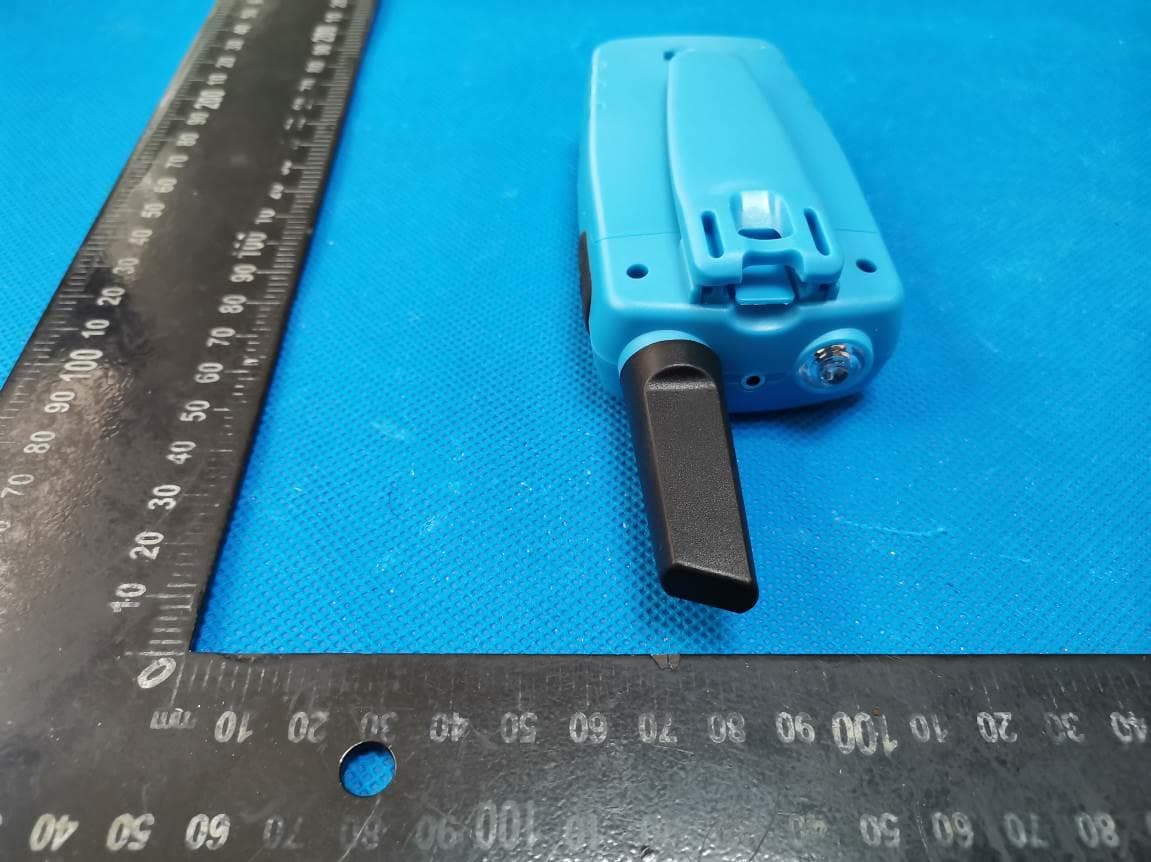
May 15, 2021Walkie talkie
Equipment Class
CSR - Scanning Receiver