2AWGK-PC020BDPLEN Cube with Bluetooth and WiFi
PLEN Robotics Inc.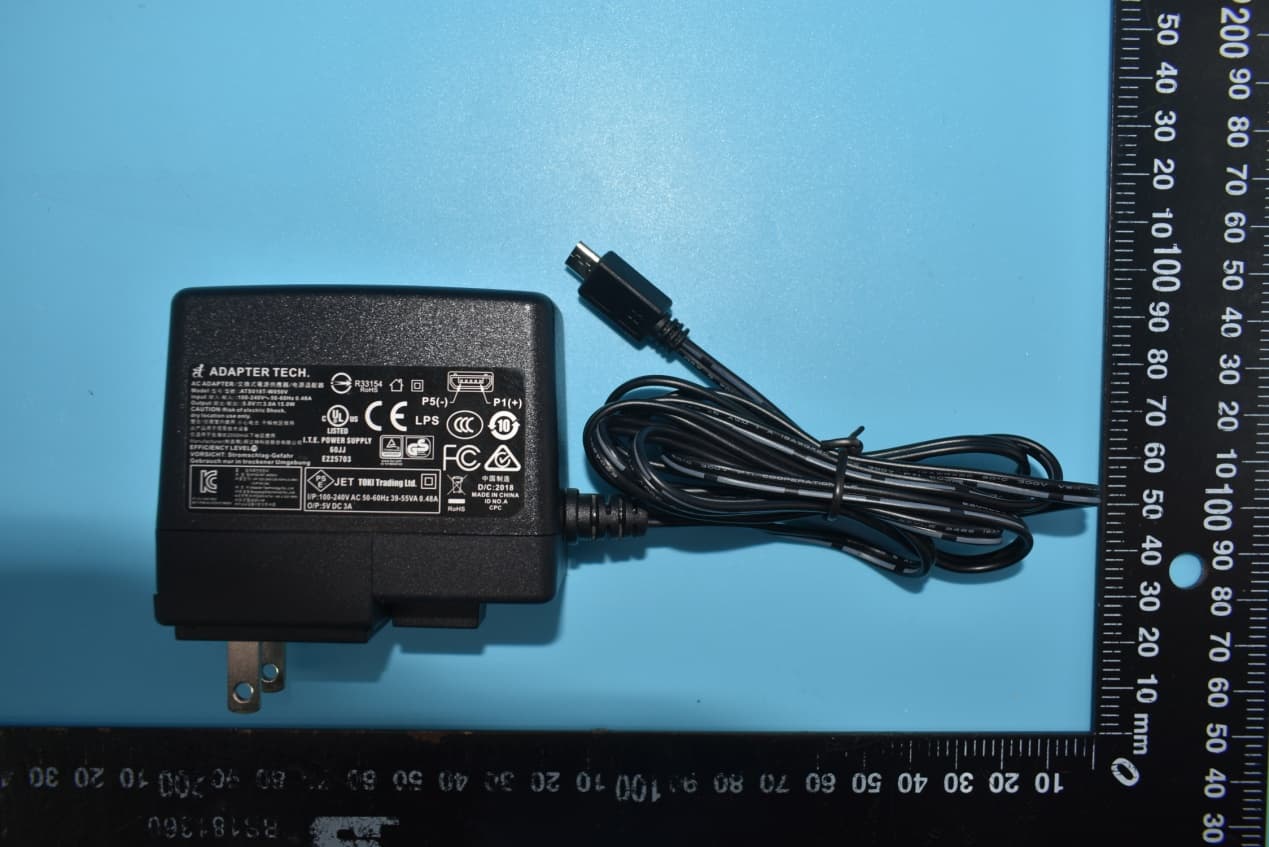
Click to zoom
Application Details
- Equipment Class
- NII - Unlicensed National Information Infrastructure TX
- Date of Grant
- Oct 29, 2020
- Application Purpose
- Original Equipment
- Date of Application
- Oct 28, 2020
- Equipment Note
- PLEN Cube with Bluetooth and WiFi
- Frequency Range
- 5180.00000000 - 5240.00000000
- Company
- PLEN Robotics Inc.
- Country
- Japan
Documents & Files
Document Text
Text extracted from the exhibit documents filed with the FCC. Open a document above to read the original.
Users Manual
PLEN Cube PC020B Instruction Manual ( Crowd-funding model : equipped with an onboard battery and display screen) (191105-1) Thank you for purchasing PLEN Cube. Please read this manual in its entirety for the correct use of this product before operation. ● PLEN Robotics Inc is not liable for any damages or accidents caused by failing to observe the items and precautions described. ● The diagrams and illustrations provided in this manual are representations. Actual images and form may differ in the received product. ● Specifications are subject to change without notice for product improvements. ● Unauthorized copying or reproduction of any of the contents of the product or this document is prohibited. 1 【 Precautions for Safe Operation 】 PLEN Cube is a precision machine and there are many moving parts. If used incorrectly, it may lead to the failure of a mechanism / electronic component, or result in a serious accident. Please begin operation only after fully reading and acknowledging the full contents and precautions of this manual: ● Do not let any water or dirt into any cracks, holes, or components of the product ● Do not store, charge, or use the product in excessively hot or humid environments, near fire, or near water sources (ie: baths, lakes, etc...) ● Do not use or leave the product on an unstable or unbalanced surface ● Never open, disassemble, or modify any components of the PLEN Cube or its accessories ● Use and store out of reach of small children. ● Use and store out of reach of pets. ● Do not forcefully impede, manually move, apply a strong force, or torque to any actuating or moving parts. Forcefully moving components beyond their intended range may damage the mechanisms. ● Do not operate with wet hands. ● Always operate within easy reach and turn off the power when not operating or leaving the product unattended for extended periods of time. ● Do not attempt to charge the device with any charger other than the one provided. ● Do not insert any wires, tools, or other invasive objects into the openings ● Do not operate when there is an abnormality or malfunctioning component due to failure or damage, including water damage. ● Be careful to keep fingers away from the moving parts. ● If there are any unusual smells, smoke, or sounds, immediately turn off the power and stop using the product. ● Follow the instructions of your local municipality when disposing of the PLEN Cube as would be done for other electronic devices and batteries. 【 Battery Charging 】 The PLEN Cube is equipped with a lithium-ion battery. Improper operation may significantly shorten the battery life, damage the battery, or cause fire. Please read the following carefully and follow the instructions provided for use and charging: ● Use the charger provided with the PLEN Cube to charge the device. The charger is for domestic use only. ● Follow the precautions and directions of use of the charger as listed on the adapter. ● Please charge the device at least once every six months to prevent any shortening of the battery life. ● Do not hit, drop, or apply any impact shock to the device while charging ● When unplugging the charging cable, hold and pull from the head of the connector and not the cable 2 【 Components 】 ● x1 PLEN Cube main unit ● x1 USB charging adapter <Component naming and location> 3 ① LED light (white) ② Camera For photos, videos, and face recognition functionalities ③ Motion sensor Not used in this model ④ Speaker ⑤ IR (infrared) remote control For recording and sending IR signals to control home appliances ⑥ Power switch ⑦ USB micro-B terminal For charging the battery ⑧ Status LED ( red ) Illuminated while the battery is charging ⑨ Status LED ( green ) Indicates the current status of the PLEN Cube such as startup (solid illumination) and errors (flashing) ⑩ Microphone x4 Mounted on the upper surface of the PLEN Cube head. Used for sound direction recognition, voice recognition, and general sound recording ⑪ LCD display (Only for models with LCD) Displays symbols, images, and information. ⑫ Built-in antenna Located on the inside wall of the PLEN Cube head. Covering with hands or objects may affect connectivity. 4 【 Charging the PLEN Cube 】 Before turning the PLEN Cube on please completely charge the battery. Insert the USB micro-B connector side of the charging adapter in the proper orientation into the charging terminal located on the back of the bottom half of the PLEN Cube. ※ Please charge the PLEN Cube using only the provided charging adapter ※ If the adjacent status LED light is flashing red , immediately remove the USB connector from the terminal and stop using it. 【 First-time Operation 】 A smartphone, tablet, or computer is required for initial setup. < Network setup > This section will describe how to connect the PLEN Cube to a local WIFI network. The PLEN Cube will automatically try to connect to the most recently setup network proceeding the initial operation and setup. The PLEN Cube will voice its IP address of the current connected network during start-up. If the PLEN Cube cannot recognize or connect to any available networks, the network setup procedure must be conducted again. Please follow the described steps whenever connecting to a new network. 1. Turn on the PLEN Cube by pressing and holding the power switch button, located on the back of the bottom half of the PLEN Cube, for 3 full seconds. When the start-up procedure begins, the front white LED light will turn on for a short time. Please wait approximately 1 minute for the start-up process to fully complete. For the first time start-up, the PLEN Cube will be in hotspot mode and the fixed IP address will be 【 10.42.0.1 】 When the PLEN Cube is connected to a network, it will voice its IP address within that connected network, which may differ between different networks. 5 2. For the first time use or when the PLEN Cube is not connected to any network, the PLEN Cube will start-up in “Hotspot Mode.” From Hotspot Mode, please fol…
Text truncated - open the document above for the full version.
Cover Letter(s)
PLEN Robotics Inc. Date: 2020-08-25 To: Federal Communications Commission, Authorization & Evaluation Division, 7435 Oakland Mills Road, Columbia, MD 21046 To Whom It May Concern: The PLEN Robotics Inc., the undersigned, hereby authorizes Miss. Wendy Zhan from Shenzhen Morlab Communications Technology Co., Ltd., to act on the behalf of the company name solely in matters relating to the application for an FCC equipment authorization for FCC ID:2AWGK-PC020BD including the signing of documents in connection with this Application. Necessary acts carried out Shenzhen Morlab Communications Technology Co., Ltd. on our behalf of the PLEN Robotics Inc. in connection with the Application shall have the same effect as acts of the PLEN Robotics Inc.. PLEN Robotics Inc. also hereby certify that no party to this application is subject to a denial of benefits, including FCC benefits, pursuant to Section 5301 of the Anti-Drug Abuse Act of 1988, 21 U.S.C. 862. Thank you for your attention to this matter. Yours Sincerely, Signatory: Contact name:Natsuo Akazawa Title: General Manager Tel:+81-6-4256-6630 Email:[email protected] Company name: PLEN Robotics Inc.
Cover Letter(s)
PLEN Robotics Inc. UNII Declaration Letter We have declared below featured for FCC equipment authorization, device FCC ID: 2AWGK- PC020BD (1) DFS Device -- Master, Client with Radar detection capability , Client without radar detection capability, N/A (2) Active / Passive Scanning , adhoc mode access point capability Frequency Band (MHz) Active Scanning (the device can transmit a probe (beacon)) passive scanning (where the device is can listen only with no probes) Ad Hoc Mode capability Access point capability 2412 – 2472 MHz Yes, No Yes, No Yes, No Yes, No 2422 – 2462 MHz Yes, No Yes, No Yes, No Yes, No 5745 – 5825 MHz Yes, No Yes, No Yes, No Yes, No 5755 – 5795 MHz Yes, No Yes, No Yes, No Yes, No 5180 – 5240 MHz Yes, No Yes, No Yes, No Yes, No 5190 – 5230 MHz Yes, No Yes, No Yes, No Yes, No 5260 – 5320 MHz Yes, No Yes, No Yes, No Yes, No 5270 – 5310 MHz Yes, No Yes, No Yes, No Yes, No 5500 – 5700 MHz Yes, No Yes, No Yes, No Yes, No 5510 – 5670 MHz Yes, No Yes, No Yes, No Yes, No (3) Country code selection ability - Yes , No If no, pls explain how was implemented : Country is selected as US by default and user can not change the country code. (4) Meet 15.202 requirement - Yes , No , pls check below : A master device is defined as a device operating in a mode in which it has the capability to transmit without receiving an enabling signal. In this mode it is able to select a channel and initiate a network by sending enabling signals to other devices A client device is defined as a device operating in a mode in which the transmissions of the device are under control of the master. A device in client mode is not able to initiate a network. (5) For client devices that have software configuration control to operate in different modes (active scanning in some and passive scanning in others) in different bands (devices with multiple equipment classes or those that operate on non-DFS frequencies) or modular devices which configure the modes of operations through software, the application must provide software and operations description on how the software and / or hardware is implemented to ensure that proper operations modes can not be modified by end user or an installer. Apply , No Apply , (If apply , pls help to provide explanation on how it was implement (By hardware or software , and how software was controlled) The device configuration can not be modified by user as program is not exposed to user by any means. Hardware does not allow USB connection for user which is must to change the configuration. If you have any questions, please feel free to contact me at the address shown below. Yours sincerely, Signatory Printed Name : Natsuo Akazawa Position : General Manager
External Photos
FCC ID:2AWGK-PC020BD External Photos 1. EUT front view 2. EUT rear view 3. EUT left side view 4. EUT right side view 5. EUT top view 6. EUT bottom view 7. Accessories
ID Label/Location Info
FCC ID: 2AWGK‐PC020BD Label: Location: Bottom Face
Internal Photos
FCC ID:2AWGK-PC020BD Internal Photos 1. EUT uncover view 2. Antenna view Bluetooth/Wi-Fi Antenna
RF Exposure Info
REPORT No.:SZ20050005S01 TEST REPORT APPLICANT : PLEN Robotics Inc. PRODUCT NAME : PLEN Cube MODEL NAME : PC020B BRAND NAME : PLEN Cube FCC ID : 2AWGK-PC020BD STANDARD(S) : FCC 47 CFR Part 2(2.1093) RECEIPT DATE : 2020-07-23 TEST DATE : 2020-08-18 to 2020-08-19 ISSUE DATE : 2020-09-15 Edited by: Gan Yueming (Rapporteur) Approved by: Peng Huarui (Supervisor) NOTE: This document is issued by MORLAB, the test report shall not be reproduced except in full without prior written permission of the company. The test results apply only to the particular sample(s) tested and to the specific tests carried out which is available on request for validation and information confirmed at our website. MORLAB SHENZHEN MORLAB COMMUNICATIONS TECHNOLOGY Co., Ltd. FL1-3, Building A, FeiYang Science Park, No.8 LongChang Road, Block67, BaoAn District, ShenZhen , GuangDong Province, P. R. China Tel: 86-755-36698555 Fax: 86-755-36698525 Http://www.morlab.cn E-mail: [email protected] Page 1 o f 40 REPORT No.:SZ20050005S01 DIRECTORY 1. SAR Results Summary .............................................................................................. 4 2. Technical Information................................................................................................. 5 2.1. Applicant and Manufacturer Information ............................................................... 5 2.2. Equipment Under Test (EUT) Description .............................................................. 5 2.3. Environment of Test Site ......................................................................................... 6 3. Introduction .................................................................................................................. 7 3.1. Introduction .............................................................................................................. 7 3.2. SAR Definition .......................................................................................................... 7 4. RF Exposure Limits ................................................................................................... 8 4.1. Uncontrolled Environment ...................................................................................... 8 4.2. Controlled Environment ........................................................................................... 8 4.3. RF Exposure Limits .................................................................................................. 8 5. Applied Reference Documents ................................................................................. 9 6. SAR Measurement System ...................................................................................... 10 6.1. E-Field Probe .......................................................................................................... 11 6.2. Data Acquisition Electronics (DAE) ...................................................................... 12 6.3. Robot ....................................................................................................................... 12 6.4. Measurement Server .............................................................................................. 12 6.5. Light Beam Unit ...................................................................................................... 13 6.6. Phantom .................................................................................................................. 13 6.7. Device Holder ......................................................................................................... 13 6.8. Data Storage and Evaluation ................................................................................. 14 6.9. Test Equipment List ............................................................................................... 17 7. Tissue Simulating Liquids ....................................................................................... 18 8. SAR System Verification ......................................................................................... 20 9. EUT Testing Position ............................................................................................... 22 9.1. SAR Evaluations near the Mouth/Jaw Regions of the SAM Phantom ............... 22 9.2. Limbs-worn Accessory Configurations ................................................................ 22 9.3. Hotspot Mode Exposure Position Conditions ..................................................... 23 10. Measurement Procedures ..................................................................................... 24 10.1. Spatial Peak SAR Evaluation .............................................................................. 25 10.2. Power Reference Measurement ......................................................................... 25 MORLAB SHENZHEN MORLAB COMMUNICATIONS TECHNOLOGY Co., Ltd. FL1-3, Building A, FeiYang Science Park, No.8 LongChang Road, Block67, BaoAn District, ShenZhen , GuangDong Province, P. R. China Tel: 86-755-36698555 Fax: 86-755-36698525 Http://www.morlab.cn E-mail: [email protected] Page 2 o f 40 REPORT No.:SZ20050005S01 10.3. Area & Zoom Scan Procedures .......................................................................... 25 10.4. Volume Scan Procedures ................................................................................... 26 10.5. SAR Averaged Methods ...................................................................................... 27 10.6. Power Drift Monitoring ........................................................................................ 27 11. Conducted RF Output Power .............................................................................. 28 12. Exposure Positions Consideration ..................................................................... 31 13. SAR Test Results Summary ................................................................................ 32 14. SAR Simultaneous Transmissi…
Text truncated - open the document above for the full version.
RF Exposure Info
REPORT No.:SZ20050005S01 Annex D Plots of Maximum SAR Test Results MORLAB SHENZHEN MORLAB COMMUNICATIONS TECHNOLOGY Co., Ltd. FL1-3, Building A, FeiYang Science Park, No.8 LongChang Road, Block67, BaoAn District, ShenZhen , GuangDong Province, P. R. China Te l : 86-755-36698555 Fax: 86-755-36698525 Http://www.morlab.cn E-mail: [email protected] Test Laboratory: Shenzhen Morlab Communications Technology Co., Ltd. Date: 2020.08.17 WLAN 2.4GHz_802.11b 1Mbps_Front Side_5mm_Ch13 Communication System: UID 0, WiFi (0); Frequency: 2472 MHz;Duty Cycle: 1:1 Medium: HSL_2450 Medium parameters used: f = 2472 MHz; σ = 1.82 S/m; ε r = 38.773; ρ = 1000 kg/m 3 Ambient Temperature:23.2 °C; Liquid Temperature:21.6 °C DASY5 Configuration: - Probe: EX3DV4 - SN3975; ConvF(7.56, 7.56, 7.56); Calibrated: 2020.05.20 - Sensor-Surface: 2mm (Mechanical Surface Detection) - Electronics: DAE4 Sn480; Calibrated: 2020.06.02 - Phantom: SAM V8.0 ; Type: QD 000 P41 AA; Serial: 1922 - Measurement SW: DASY52, Version 52.10 (1); SEMCAD X Version 14.6.11 (7439) Ch13/Area Scan (71x101x1): Interpolated grid: dx=1.200 mm, dy=1.200 mm Maximum value of SAR (interpolated) = 0.137 W/kg Ch13/Zoom Scan (7x7x7)/Cube 0: Measurement grid: dx=5mm, dy=5mm, dz=5mm Reference Value = 5.545 V/m; Power Drift = 0.37 dB Peak SAR (extrapolated) = 0.195 W/kg SAR(1 g) = 0.080 W/kg; SAR(10 g) = 0.033 W/kg Maximum value of SAR (measured) = 0.134 W/kg 0 dB = 0.137 W/kg = -8.63 dBW/kg Test Laboratory: Shenzhen Morlab Communications Technology Co., Ltd. Date: 2020.08.19 WLAN 5.2GHz_802.11n20 MCS0_Front Side_5mm_Ch36 Communication System: UID 0, 5G WIFI (0); Frequency: 5180 MHz;Duty Cycle: 1:1 Medium: HSL_5250 Medium parameters used: f = 5180 MHz; σ = 4.581 S/m; ε r = 35.075; ρ = 1000 kg/m 3 Ambient Temperature:23.2 °C; Liquid Temperature:21.7 °C DASY5 Configuration: - Probe: EX3DV4 - SN3975; ConvF(5.34, 5.34, 5.34); Calibrated: 2020.05.20 - Sensor-Surface: 2mm (Mechanical Surface Detection) - Electronics: DAE4 Sn480; Calibrated: 2020.06.02 - Phantom: SAM V8.0 ; Type: QD 000 P41 AA; Serial: 1922 - Measurement SW: DASY52, Version 52.10 (1); SEMCAD X Version 14.6.11 (7439) Ch36/Area Scan (101x101x1): Interpolated grid: dx=1.000 mm, dy=1.000 mm Maximum value of SAR (interpolated) = 1.01 W/kg Ch36/Zoom Scan (7x7x13)/Cube 0: Measurement grid: dx=4mm, dy=4mm, dz=2mm Reference Value = 14.86 V/m; Power Drift = -0.05 dB Peak SAR (extrapolated) = 2.10 W/kg SAR(1 g) = 0.435 W/kg; SAR(10 g) = 0.098 W/kg Maximum value of SAR (measured) = 0.995 W/kg 0 dB = 1.01 W/kg = 0.04 dBW/kg Test Laboratory: Shenzhen Morlab Communications Technology Co., Ltd. Date: 2020.08.17 WLAN 2.4GHz_802.11b 1Mbps_Front Side_0mm_Ch13 Communication System: UID 0, WiFi (0); Frequency: 2472 MHz;Duty Cycle: 1:1 Medium: HSL_2450 Medium parameters used: f = 2472 MHz; σ = 1.82 S/m; ε r = 38.773; ρ = 1000 kg/m 3 Ambient Temperature:23.2 °C; Liquid Temperature:21.6 °C DASY5 Configuration: - Probe: EX3DV4 - SN3975; ConvF(7.56, 7.56, 7.56); Calibrated: 2020.05.20 - Sensor-Surface: 2mm (Mechanical Surface Detection) - Electronics: DAE4 Sn480; Calibrated: 2020.06.02 - Phantom: SAM V8.0 ; Type: QD 000 P41 AA; Serial: 1922 - Measurement SW: DASY52, Version 52.10 (1); SEMCAD X Version 14.6.11 (7439) Ch13/Area Scan (71x101x1): Interpolated grid: dx=1.200 mm, dy=1.200 mm Maximum value of SAR (interpolated) = 0.506 W/kg Ch13/Zoom Scan (7x7x7)/Cube 0: Measurement grid: dx=5mm, dy=5mm, dz=5mm Reference Value = 13.10 V/m; Power Drift = -0.05 dB Peak SAR (extrapolated) = 0.888 W/kg SAR(1 g) = 0.312 W/kg; SAR(10 g) = 0.117 W/kg Maximum value of SAR (measured) = 0.568 W/kg 0 dB = 0.506 W/kg = -2.96 dBW/kg Test Laboratory: Shenzhen Morlab Communications Technology Co., Ltd. Date: 2020.08.19 WLAN 5.2GHz_802.11n20 MCS0_Front Side_0mm_Ch36 Communication System: UID 0, 5G WIFI (0); Frequency: 5180 MHz;Duty Cycle: 1:1 Medium: HSL_5250 Medium parameters used: f = 5180 MHz; σ = 4.581 S/m; ε r = 35.075; ρ = 1000 kg/m 3 Ambient Temperature:23.2 °C; Liquid Temperature:21.7 °C DASY5 Configuration: - Probe: EX3DV4 - SN3975; ConvF(5.34, 5.34, 5.34); Calibrated: 2020.05.20 - Sensor-Surface: 2mm (Mechanical Surface Detection) - Electronics: DAE4 Sn480; Calibrated: 2020.06.02 - Phantom: SAM V8.0 ; Type: QD 000 P41 AA; Serial: 1922 - Measurement SW: DASY52, Version 52.10 (1); SEMCAD X Version 14.6.11 (7439) Ch36/Area Scan (101x101x1): Interpolated grid: dx=1.000 mm, dy=1.000 mm Maximum value of SAR (interpolated) = 7.13 W/kg Ch36/Zoom Scan (7x7x13)/Cube 0: Measurement grid: dx=4mm, dy=4mm, dz=2mm Reference Value = 46.68 V/m; Power Drift = -0.05 dB Peak SAR (extrapolated) = 18.9 W/kg SAR(1 g) = 2.75 W/kg; SAR(10 g) = 0.444 W/kg Maximum value of SAR (measured) = 7.61 W/kg 0 dB = 7.13 W/kg = 8.53 dBW/kg
RF Exposure Info
REPORT No.:SZ20050005S01 Annex D Plots of Maximum SAR Test Results MORLAB SHENZHEN MORLAB COMMUNICATIONS TECHNOLOGY Co., Ltd. FL1-3, Building A, FeiYang Science Park, No.8 LongChang Road, Block67, BaoAn District, ShenZhen , GuangDong Province, P. R. China Te l : 86-755-36698555 Fax: 86-755-36698525 Http://www.morlab.cn E-mail: [email protected] Test Laboratory: Shenzhen Morlab Communications Technology Co., Ltd. Date: 2020.08.17 WLAN 2.4GHz_802.11b 1Mbps_Front Side_5mm_Ch13 Communication System: UID 0, WiFi (0); Frequency: 2472 MHz;Duty Cycle: 1:1 Medium: HSL_2450 Medium parameters used: f = 2472 MHz; σ = 1.82 S/m; ε r = 38.773; ρ = 1000 kg/m 3 Ambient Temperature:23.2 °C; Liquid Temperature:21.6 °C DASY5 Configuration: - Probe: EX3DV4 - SN3975; ConvF(7.56, 7.56, 7.56); Calibrated: 2020.05.20 - Sensor-Surface: 2mm (Mechanical Surface Detection) - Electronics: DAE4 Sn480; Calibrated: 2020.06.02 - Phantom: SAM V8.0 ; Type: QD 000 P41 AA; Serial: 1922 - Measurement SW: DASY52, Version 52.10 (1); SEMCAD X Version 14.6.11 (7439) Ch13/Area Scan (71x101x1): Interpolated grid: dx=1.200 mm, dy=1.200 mm Maximum value of SAR (interpolated) = 0.137 W/kg Ch13/Zoom Scan (7x7x7)/Cube 0: Measurement grid: dx=5mm, dy=5mm, dz=5mm Reference Value = 5.545 V/m; Power Drift = 0.37 dB Peak SAR (extrapolated) = 0.195 W/kg SAR(1 g) = 0.080 W/kg; SAR(10 g) = 0.033 W/kg Maximum value of SAR (measured) = 0.134 W/kg 0 dB = 0.137 W/kg = -8.63 dBW/kg Test Laboratory: Shenzhen Morlab Communications Technology Co., Ltd. Date: 2020.08.19 WLAN 5.2GHz_802.11n20 MCS0_Front Side_5mm_Ch36 Communication System: UID 0, 5G WIFI (0); Frequency: 5180 MHz;Duty Cycle: 1:1 Medium: HSL_5250 Medium parameters used: f = 5180 MHz; σ = 4.581 S/m; ε r = 35.075; ρ = 1000 kg/m 3 Ambient Temperature:23.2 °C; Liquid Temperature:21.7 °C DASY5 Configuration: - Probe: EX3DV4 - SN3975; ConvF(5.34, 5.34, 5.34); Calibrated: 2020.05.20 - Sensor-Surface: 2mm (Mechanical Surface Detection) - Electronics: DAE4 Sn480; Calibrated: 2020.06.02 - Phantom: SAM V8.0 ; Type: QD 000 P41 AA; Serial: 1922 - Measurement SW: DASY52, Version 52.10 (1); SEMCAD X Version 14.6.11 (7439) Ch36/Area Scan (101x101x1): Interpolated grid: dx=1.000 mm, dy=1.000 mm Maximum value of SAR (interpolated) = 1.01 W/kg Ch36/Zoom Scan (7x7x13)/Cube 0: Measurement grid: dx=4mm, dy=4mm, dz=2mm Reference Value = 14.86 V/m; Power Drift = -0.05 dB Peak SAR (extrapolated) = 2.10 W/kg SAR(1 g) = 0.435 W/kg; SAR(10 g) = 0.098 W/kg Maximum value of SAR (measured) = 0.995 W/kg 0 dB = 1.01 W/kg = 0.04 dBW/kg Test Laboratory: Shenzhen Morlab Communications Technology Co., Ltd. Date: 2020.08.17 WLAN 2.4GHz_802.11b 1Mbps_Front Side_0mm_Ch13 Communication System: UID 0, WiFi (0); Frequency: 2472 MHz;Duty Cycle: 1:1 Medium: HSL_2450 Medium parameters used: f = 2472 MHz; σ = 1.82 S/m; ε r = 38.773; ρ = 1000 kg/m 3 Ambient Temperature:23.2 °C; Liquid Temperature:21.6 °C DASY5 Configuration: - Probe: EX3DV4 - SN3975; ConvF(7.56, 7.56, 7.56); Calibrated: 2020.05.20 - Sensor-Surface: 2mm (Mechanical Surface Detection) - Electronics: DAE4 Sn480; Calibrated: 2020.06.02 - Phantom: SAM V8.0 ; Type: QD 000 P41 AA; Serial: 1922 - Measurement SW: DASY52, Version 52.10 (1); SEMCAD X Version 14.6.11 (7439) Ch13/Area Scan (71x101x1): Interpolated grid: dx=1.200 mm, dy=1.200 mm Maximum value of SAR (interpolated) = 0.506 W/kg Ch13/Zoom Scan (7x7x7)/Cube 0: Measurement grid: dx=5mm, dy=5mm, dz=5mm Reference Value = 13.10 V/m; Power Drift = -0.05 dB Peak SAR (extrapolated) = 0.888 W/kg SAR(1 g) = 0.312 W/kg; SAR(10 g) = 0.117 W/kg Maximum value of SAR (measured) = 0.568 W/kg 0 dB = 0.506 W/kg = -2.96 dBW/kg Test Laboratory: Shenzhen Morlab Communications Technology Co., Ltd. Date: 2020.08.19 WLAN 5.2GHz_802.11n20 MCS0_Front Side_0mm_Ch36 Communication System: UID 0, 5G WIFI (0); Frequency: 5180 MHz;Duty Cycle: 1:1 Medium: HSL_5250 Medium parameters used: f = 5180 MHz; σ = 4.581 S/m; ε r = 35.075; ρ = 1000 kg/m 3 Ambient Temperature:23.2 °C; Liquid Temperature:21.7 °C DASY5 Configuration: - Probe: EX3DV4 - SN3975; ConvF(5.34, 5.34, 5.34); Calibrated: 2020.05.20 - Sensor-Surface: 2mm (Mechanical Surface Detection) - Electronics: DAE4 Sn480; Calibrated: 2020.06.02 - Phantom: SAM V8.0 ; Type: QD 000 P41 AA; Serial: 1922 - Measurement SW: DASY52, Version 52.10 (1); SEMCAD X Version 14.6.11 (7439) Ch36/Area Scan (101x101x1): Interpolated grid: dx=1.000 mm, dy=1.000 mm Maximum value of SAR (interpolated) = 7.13 W/kg Ch36/Zoom Scan (7x7x13)/Cube 0: Measurement grid: dx=4mm, dy=4mm, dz=2mm Reference Value = 46.68 V/m; Power Drift = -0.05 dB Peak SAR (extrapolated) = 18.9 W/kg SAR(1 g) = 2.75 W/kg; SAR(10 g) = 0.444 W/kg Maximum value of SAR (measured) = 7.61 W/kg 0 dB = 7.13 W/kg = 8.53 dBW/kg
RF Exposure Info
REPORT No.:SZ20050005S01 Annex E DASY Calibration Certificate MORLAB SHENZHEN MORLAB COMMUNICATIONS TECHNOLOGY Co., Ltd. FL1-3, Building A, FeiYang Science Park, No.8 LongChang Road, Block67, BaoAn District, ShenZhen , GuangDong Province, P. R. China Te l : 86-755-36698555 Fax: 86-755-36698525 Http://www.morlab.cn E-mail: [email protected]
RF Exposure Info
Annual validation for test lab. Appendix Annual validation for Test Lab. General calibration information Date 2019.10.22 Test Laboratory ShenZhen Morlab Communications Technology Co., Ltd. Antenna serial No. D2450V2-SN:997 Antenna Parameters with Head TSL Impedance, transformed to feed point 47.04Ω-2.73jΩ Return Loss -34.36dB General Antenna Parameters and Design Electrical Delay (one direction) 1.276 ns After long term use with 100W radiated power,only a slight warming of the dipole near the feed point can be measured The dipole is made of standard semirigid coaxial cable. The center conductor of the feeding line is directly connected to the second arm of the dipole. The antenna is therefore short-circuited for DC-signals. On some of the dipoles, small end caps are added to the dipole arms in order to improve matching when loaded according to the position as explained in the "Measurement Conditions" paragraph. The SAR data are not affected by this change. The overall dipole length is still according to the Standard No excessive force must be applied to the dipole arm, because they might bend or the soldered connections near the feed point may be damaged . Annual validation for test lab. Annual validation for test lab. Appendix Impedance Measurement Plot for Head TSL
RF Exposure Info
Annual validation for test lab. Appendix Annual validation for Test Lab. General calibration information Date 2019.10.09 Test Laboratory ShenZhen Morlab Communications Technology Co., Ltd. Antenna serial No. D1750V2-SN:1160 Antenna Parameters with Head TSL at 5250 MHz Impedance, transformed to feed point 51.35Ω+3.85jΩ Return Loss -27.9dB Antenna Parameters Head TSL at 5600 MHz Impedance, transformed to feed point 44.7Ω+2.96jΩ Return Loss -23.87dB Antenna Parameters Head TSL at 5750 MHz Impedance, transformed to feed point 46.84Ω+0.95jΩ Return Loss -29.36dB General Antenna Parameters and Design Electrical Delay (one direction) 1.276 ns After long term use with 100W radiated power,only a slight warming of the dipole near the feed point can be measured The dipole is made of standard semirigid coaxial cable. The center conductor of the feeding line is directly connected to the second arm of the dipole. The antenna is therefore short-circuited for DC-signals. On some of the dipoles, small end caps are added to the dipole arms in order to improve matching when loaded according to the position as explained in the "Measurement Conditions" paragraph. The SAR data are not affected by this change. The overall dipole length is still according to the Standard No excessive force must be applied to the dipole arm, because they might bend or the soldered connections near the feed point may be damaged . Annual validation for test lab. Annual validation for test lab. Annual validation for test lab. Annual validation for test lab. Appendix Impedance Measurement Plot for Head TSL
Test Report
NOTE: This document is issued by MORLAB, the test report shall not be reproduced except in full without prior written permission of the company. The test results apply only to the particular sample(s) tested and to the specific tests carried out which is available on request for validation and information confirmed at our website. MORLAB SHENZHEN MORLAB COMMUNICATIONS TECHNOLOGY Co., Ltd. FL1-3, Building A, FeiYang Science Park, No.8 LongChang Road, Block67, BaoAn District, ShenZhen ,GuangDong Province, P. R. China Tel: 86-755-36698555 Fax: 86-755-36698525 Http://www.morlab.cn E-mail: [email protected] Page 1 of 54 REPORT No.:SZ20050005W03 TEST REPORT APPLICANT : PLEN Robotics Inc. PRODUCT NAME : PLEN Cube MODEL NAME :PC020B BRAND NAME : PLEN Cube FCC ID : 2AWGK-PC020BD STANDARD(S) : 47 CFR Part 15 Subpart E RECEIPT DATE : 2020-08-07 TEST DATE :2020-08-20 to 2020-09-14 ISSUE DATE :2020-10-27 Edited by: Chen Bilian (Rapporteur) Approved by: Peng Huarui(Supervisor) MORLAB SHENZHEN MORLAB COMMUNICATIONS TECHNOLOGY Co., Ltd. FL1-3, Building A, FeiYang Science Park, No.8 LongChang Road, Block67,…
Text truncated - open the document above for the full version.
Contact Information
Applicant
Natsuo Akazawa(General Manager)
Test Firm
Shenzhen Morlab Communications Technology Co. Ltd.Mr. Su Feng
[email protected]+86 755 36698566
Technical Specifications
| # | Rule Parts | Frequency Range | Power Output |
|---|---|---|---|
| 1 | 15E | 5.18 GHz - 5.24 GHz | 7.00 mW |