2AWYJ-LAPI-C-MK1Pointer Instrument
Lunar Artefacts Ltd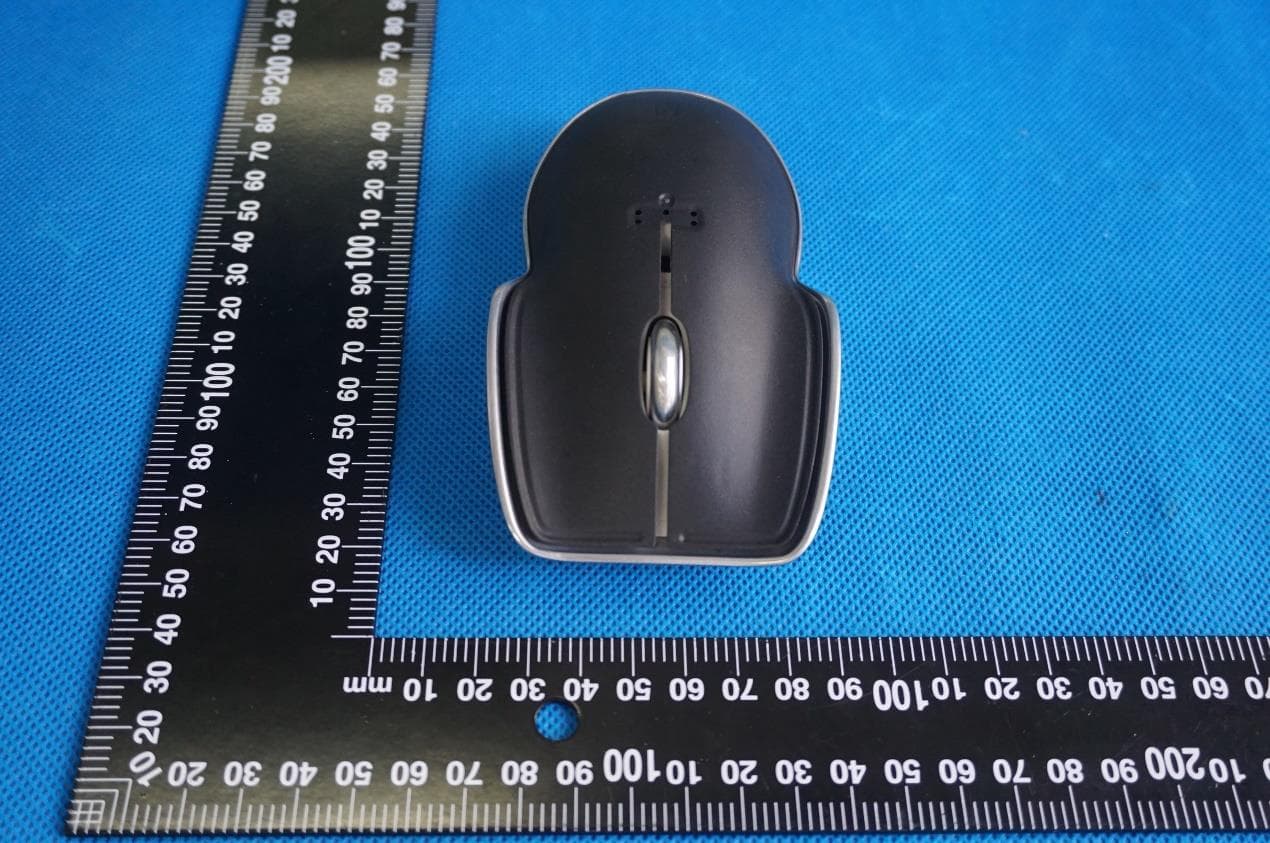
Click to zoom
Application Details
- Equipment Class
- DXX - Part 15 Low Power Communication Device Transmitter
- Date of Grant
- Aug 16, 2020
- Application Purpose
- Original Equipment
- Date of Application
- Aug 16, 2020
- Equipment Note
- Pointer Instrument
- Frequency Range
- 2452.00000000 - 2452.00000000
- Company
- Lunar Artefacts Ltd
- Country
- United Kingdom
Documents & Files
Document Text
Text extracted from the exhibit documents filed with the FCC. Open a document above to read the original.
Users Manual
01 Pointer Instrument: A precise universal tool designed to last. We took the humble computer mouse and reimagined it into a wireless Pointer Instrument. It is an exemplary: designed to a high-grade; is ergonomically comfortable; can track on almost any surface; connect via cable, dongle and Bluetooth; allows wireless charging and is even expandable for future accessories. It is a fusion of art, practicality and precise engineering. With 4 leather colour and 2 metal base combinations there is a pointer instrument to suit all. INTRODUCTION 02 Interface : Bluetooth 5.0 | wireless 2.4G dongle | USB-C Sensor : Pixart PAW 3805 Optical Sensor -Glass thickness minimum 5mm DPI: 800 | 1200 | 2000 | 3000 Hand Orientation : Ambidextrous Recharge : Wireless Qi | USB-C Dimentions : 124mm x 72mm x 40mm Weight : Aluminium 180g | Brass 210g Compatitablity : Windows | MacOS | Linux | Android Battery : 3.7V - 750 mAh Li-ion Rechargeable Battery -Molex 51006 or “Losi Connector”- 9mm x 43mm x 25mm - SPECIFICATIONS 72mm 124mm 40mm 03 BOX CONTENTS -1- The pointer instrument. -2- Reusable frame. -3- USB dongle 1 4 2 3 56 -4- USB to USB-C cable. -5- Guide booklet. -6- Canvas Pouch. 04 PRODUCT FEATURES Lightly treated calf leather maximises tactile comfort and ages well. Polished brass and aluminium allows easy maintenance and ages well. Allows for a customised material / colour combination. Multi modes maxmise the flexibility and allow easy connectios. Qi standard wireless charging offers a mess free charging option. Track on glass sensor requires minimum 5mm glass thickness. Carefully designed inside and out for easy repair and maintenance. Built-in hardware allows future software upgrades such as G-sensor gestures, airmouse and easy connection etc. We will also release plugin accessories offering size adjustment for ultimate comfort. Please look out for updates on our website: www.lunarartefacts.com - Genuine Calf Leather - - Solid Brass or Aluminium Base - - Replaceable Top Cover - - Triple Modes: Bluetooth 5.0 | 2.4G | Cable - - Dual Charging : Wireless QI | USB-C - - Tracl On Glass Sensor - - Designed For Life - - Future Upgrades - 05 - Top attachment - REPLACING TOP COVER - Top removal - Pintch middle section and pull towards the back. Hook into the two slots pointed by the arrows and drop the back for magnetic self adjustment. 06 EXTERIOR OVERVIEW -1- Left mouse button -2- Right mouse button -3- Scroll wheel -4- Charge indicator -5- Genuine calf leather top -6- USB-C Socket -7- Battery gauge -8- Power switch -9- USB Dongle -10- DPI (Sensitivity) button -11- Tracking sensor -12- Connection button -13- Wireless charging point -14- Solid metal shell 3 4 6 7 8 10 12 13 14 9 11 5 12 07 INTERNAL OVERVIEW -1- Leather top latch point -2- Left mouse button -3- Right mouse button -4- Scroll wheel 1 2 4 6 7 5 3 -5- Charge indicator -6- Battery lid -7- Magnet latch 1234 08 CONNECTIONS - Bluetooth Connection - Step 1 Step 2 Step 3 Step 4 Turn the ON/OFF button to ON position. Press the connect button to switch to Bluetooth mode with bluetooth indicator on. Press and hold the connect button (same button as step 2) for 3 seconds and release. The LED light will start to flash in a fast pace. The mouse is now in pairing mode. For windows, go to “Bluetooth Devices (Bluetooth Settings)” and select “Add a Bluetooth Devices (Add Bluetooth or other device)”, once the system finds “Pointer Instrument”, click to Pair. For Mac, go to “System Preferences” and select “Bluetooth”, once “Pointer Instrument” appears, click to Pair. Once pairing is successful, the LED indicator will stop flashing and stay lit for a few seconds. *For the exact paring process, please refer to the specific PC/MAC system for guidance. 3 sec 1 1 2 2 3 3 4 4 09 CONNECTIONS Step 1 Step 2 Step 3 Step 4 Retrieve the Dongle from the back of the mouse. Insert the Dongle into the devide. Turn the ON/OFF button to ON position. Press the connect button to Dongle (2.4G) mode with Dongle indicator on. The process should be plug and play. The Cable Connection is plug and play. The mouse will also charge while pluged in. - 2.4G Dongle Connection - - Cable Connection - 10 CHARGING | BATTERY - Charging - - Battery Indicator - Top light indicates charging/battery state: - Flash slowly when battery ≤ 25% - Light on during charging - Light off when fully charged By flipping the device, the built- in G sensor will activate the battery power indicator to light up for 5 seconds. Wireless charging point is located towards rear of the device. USB cable (approx 1.5hrs) wireless charging (approx 2.5hrs) flashonoff use: charging: <3% | 3- 25% | 25- 50% | 50 - 75% | ≥75% <25% | 25- 50% | 50- 75% | ≥75% | 100% 1 2 11 DPI SETTING DPI stands for “dots per inch” is the typical way of measuring sensitivity of an interface device. Usually the larger the screen size, the higher the DPI, however there is no “correct” setting. We highly recommend flicking through to feel what’s comfortable. DIP SETTING: 800 DPI 1200 DPI 2000 DPI 3000 DPI Repetitive tensing of hand and wrist muscles for prolonged periods leads to shoulder and neck pain. The Pointer Instrument is designed to “hook” to the shape of the hand delivering accurate movements without the need to grip. We are all used to holding tightly so being relaxed might need a little getting used to. However the more relaxed your hand is the less stress your arm endures. As its impossible to produce one size that fits all, we have designed sizing attachments for a better fit. So if you feel any discomfort, we recommed trying a hand grip attachment. Please visit www.lunarartefacts.com for more details. COMFORT Press to switch DPI setting 12 The leather is intended to age, getting darker and smoother once it’s been used. You can clean and condition your leather with mild leather soap and professional leather conditioner. Regular cleaning every 3-6 months will result in a pleasant tonal variation that gets better with time. The uncoated metal shell…
Text truncated - open the document above for the full version.
Cover Letter(s)
Lunar Artefacts Ltd 9th Floor, 33 Cavendish Square, London, W1G 0PW, United Kingdom Federal Communications Commission Authorization and Evaluation Division Equipment Authorization Branch 7435 Oakland Mills Road Columbia, MD 21046 08/05/2020 To whom it may concern: We, Lunar Artefacts Ltd. the undersigned, hereby authorize Eurofins Product Service GmbH to act on our behalf in all matters relating to applications for equipment authorization FCC ID: 2AWYJ-LAPI- C-MK1 including the signing of all documents related to these matters. Any and all acts carried out by Eurofins Product Service GmbH on our behalf shall have the same effect as acts of our own. We also hereby certify that no party to this application is subject to a denial of benefits, including FCC benefits, pursuant to Section 5301 of the Anti-Drug Abuse Act of 1988, 21 U.S.C. 862. Sincerely, Name/Title: Da Feng/ General Manager Company: Lunar Artefacts Ltd Address: 9th Floor, 33 Cavendish Square, London, W1G 0PW, United Kingdom Phone: +44 7725545686 Fax: +44 7725545686 E-Mail: [email protected]
Cover Letter(s)
CONFIDENTIALITY REQUEST for Certification Service in USA Federal Communication Commission Equipment Authorization Division, Application Processing Branch 7435 Oakland Mills Road Columbia, MD 21046 Date: 2020/08/05 TO WHOM IT MAY CONCERN Pursuant to Paragraphs §0.457 and 0.459 of the Commission’s Rules (47 C.F.R.) and Section §552(b)(4) of the Freedom of Information Act, we requests confidentiality for the following products: FCC ID Model name 2AWYJ-LAPI-C-MK1 LAPI-C-MK1 For the product stated above, we request that the following information be held confidential; Exhibits Long-Term Confidentiality Short-Term Confidentiality Short-Term Confidentiality Days External Photos Internal Photos Block Diagram Schematics Test Setup Photos User’s Manual Parts List Tune Up Operational Descriptions The long-term confidentiality exhibits contain our trade secrets and proprietary information that could be of benefit to our competitors. The short-term confidentiality on the basis of ensuring that business sensitive information remains confidential until the actual marketing of our new device. If you have any questions, please feel free to contact me at the address shown below. Sincerely, Name/Title: Da Feng/ General Manager Company: Lunar Artefacts Ltd Address: 9th Floor, 33 Cavendish Square, London, W1G 0PW, United Kingdom Phone: +44 7725545686 Fax: +44 7725545686 E-Mail: [email protected]
External Photos
GTS202007000015 Product Name: Pointer Instrument Test Model No.: LAPI-C-MK1 EUT Constructional Details External Photo Fig.1 Fig.2 GTS202007000015 Fig.3 Fig.4 GTS202007000015 Fig.5 Fig.6 GTS202007000015 Fig.7
ID Label/Location Info
FCC ID: 2AWYJ-LAPI-C-MK1 FCC ID: 2AWYJ-LAPI-C-MK1
Internal Photos
GTS202007000015 Product Name: Pointer Instrument Test Model No.: LAPI-C-MK1 EUT Constructional Details Internal Photo Fig.1 Fig.2 GTS202007000015 Fig.3 Fig.4 GTS202007000015
RF Exposure Info
RF Exposure evaluation FCC ID: 2AWYJ-LAPI-C-MK1 1.1. Applicable Standard According to §1.1307(b)(1), systems operating under the provisions of this section shall be operated in a manner that ensures that the public is not exposed to radio frequency energy level in excess of the Commission’s guidelines. According to §1.1310 and §2.1093 RF exposure requirement KDB447498 v06: Mobile and Portable Devices RF Exposure Procedures and Equipment Authorization Policies 1.2. Requirement According to KDB447498 D01 General RF Exposure Guidance v06 Section 4.3.1 Standalone SAR test exclusion considerations: “Unless specifically required by the published RF exposure KDB procedures, standalone 1-g head or body and 10-g extremity SAR evaluation for general population exposure conditions, by measurement or numerical simulation, is not required when the corresponding SAR Test Exclusion Threshold condition, listed below, is satisfied. These test exclusion conditions are based on source-based time-averaged maximum conducted output power of the RF channel requiring evaluation, adjusted for tune-up tolerance, and the minimum test separation distance required for the exposure conditions.22 The minimum test separation distance is determined by the smallest distance from the antenna and radiating structures or outer surface of the device, according to the host form factor, exposure conditions and platform requirements, to any part of the body or extremity of a user or bystander (see 5) of section 4.1). To qualify for SAR test exclusion, the test separation distances applied must be fully explained and justified by the operating configurations and exposure conditions of the transmitter and applicable host platform requirements, typically in the SAR measurement or SAR analysis report, according to the required published RF exposure KDB procedures. When no other RF exposure testing or reporting is required, a statement of justification and compliance must be included in the equipment approval, in lieu of the SAR report, to qualify for the SAR test exclusion. When required, the device specific conditions described in the other published RF exposure KDB procedures must be satisfied before applying these SAR test exclusion provisions; for example, handheld PTT two-way radios, handsets, laptops & tablets etc.23 “ [(max. power of channel, including tune-up tolerance, mW)/ (min. test separation distance, mm)] · [√f (GHz)] ≤ 3.0 for 1-g SAR and ≤ 7.5 for 10-g extremity SAR, where: • f (GHz) is the RF channel transmit frequency in GHz • Power and distance are rounded to the nearest mW and mm before calculation • The result is rounded to one decimal place for comparison • 3.0 and 7.5 are referred to as the numeric thresholds in the step 2 below The test exclusions are applicable only when the minimum test separation distance is ≤ 50 mm and for transmission frequencies between 100 MHz and 6 GHz. When the minimum test separation distance is < 5 mm, a distance of 5 mm according to 5) in section 4.1 is applied to determine SAR test exclusion. 1.3. Manufacturing tolerance GFSK(Peak) Channel Channel 00 Channel 19 Channel 39 Target (dBm) 0.0 2.0 2.0 Tolerance ±(dB) 1.0 1.0 1.0 Page 2 of 2 2. E v a l u a t i o n R e s u l t Evaluation Results Band/Mode f (GHz) Antenna Distance (mm) RF output power (including tune-up tolerance) SAR Test Exclusion Threshold SAR Test Exclusion dBm mW BT 2.480 5 3.0 1.58 0.63<3.0 Yes 3. C o n c l u s i o n The measurement results comply with the FCC Limit per 47 CFR 2.1093 for the uncontrolled RF Exposure and SAR Exclusion Threshold per KDB 447498 v06 .....................End of Report.........................
Test Report
Global United Technology Services Co., Ltd. Report No.: GTS202007000015F02 Authorized Signature: Robinson Lo Laboratory Manager This results shown in this test report refer only to the sample(s) tested, this test report cannot be reproduced, except in full, without prior written permission of the company. The report would be invalid without specific stamp of test institute and the signatures of compiler and approver. Page 1 of 23 TEST REPORT Applicant: Lunar Artefacts Ltd Address of Applicant: 9th Floor, 33 Cavendish Square, London, W1G 0PW, United Kingdom Manufacturer: Lunar Artefacts Ltd Address of Manufacturer: 9th Floor, 33 Cavendish Square, London, W1G 0PW, United Kingdom Equipment Under Test (EUT) Product Name: Pointer Instrument Model No.: LAPI-C-MK1 Trade Mark: Lunar Artefacts Ltd FCC ID: 2AWYJ-LAPI-C-MK1 Applicable standards: FCC CFR Title 47 Part 15 Subpart C Section 15.249 Date of sample receipt: June.25,2020 Date of Test: June.25,2020- July.17,2020 Date of report issued: July.17,2020 Test Result : PASS * * In the configuration tested, the EUT complied with the standards specified above. Report No.: GTS202007000015F02 Global United Technology Services Co., Ltd. No. 123-128, Tower A, Jinyuan Business Building, No.2, Laodong Industrial Zone, Xixiang Road, Baoan District, Shenzhen, Guangdong, China 518102 Telephone: +86 (0) 755 2779 8480 Fax: +86 (0) 755 2779 8960 Page 2 of 23 2 Version Version No. Date Description 00 July.17,2020 Original Tesed/Prepared By: Date: July.17,2020 Project Engineer Check By: Date: July.17,2020 Reviewer Report No.: GTS202007000015F02 Global United Technology Services Co., Ltd. No. 123-128, Tower A, Jinyuan Business Building, No.2, Laodong Industrial Zone, Xixiang Road, Baoan District, Shenzhen, Guangdong, China 518102 Telephone: +86 (0) 755 2779 8480 Fax: +86 (0) 755 2779 8960 Page 3 of 23 3 Contents Page 1 COVER PAGE ............................................................................................................................................ 1 2 VERSION .................................................................................................................................................. 2 3 CONTENTS .............................................................................................................................................. 3 4 TEST SUMMARY ..................................................................................................................................... 4 4.1 MEASUREMENT UNCERTAINTY ............................................................................................................ 4 5 GENERAL INFORMATION ...................................................................................................................... 5 5.1 GENERAL DESCRIPTION OF EUT ......................................................................................................... 5 5.2 TEST MODE ........................................................................................................................................ 7 5.3 DESCRIPTION OF SUPPORT UNITS ....................................................................................................... 7 5.4 DEVIATION FROM STANDARDS ............................................................................................................. 7 5.5 ABNORMALITIES FROM STANDARD CONDITIONS ................................................................................... 7 5.6 TEST FACILITY .................................................................................................................................... 7 5.7 TEST LOCATION ................................................................................................................................. 7 5.8 ADDITIONAL INSTRUCTIONS ................................................................................................................. 7 6 TEST INSTRUMENTS LIST ..................................................................................................................... 8 7 TEST RESULTS AND MEASUREMENT DATA .................................................................................... 10 7.1 ANTENNA REQUIREMENT ................................................................................................................... 10 7.2 CONDUCTED EMISSIONS ................................................................................................................... 11 7.3 RADIATED EMISSION METHOD ........................................................................................................... 14 7.3.1 Bandedge emissions.................................................................................................................. 19 7.4 20DB OCCUPY BANDWIDTH .............................................................................................................. 21 8 TEST SETUP PHOTO ............................................................................................................................ 23 9 EUT CONSTRUCTIONAL DETAILS ..................................................................................................... 23 Report No.: GTS202007000015F02 Global United Technology Services Co., Ltd. No. 123-128, Tower A, Jinyuan Business Building, No.2, Laodong Industrial Zone, Xixiang Road, Baoan District, Shenzhen, Guangdong, China 518102 Telephone: +86 (0) 755 2779 8480 Fax: +86 (0) 755 2779 8960 Page 4 of 23 4 Test Summary Test Item Section in CFR 47 Result Antenna requirement 15.203 Pass AC Power Line Conducted Emission 15.207 Pass Field strength of the fundamental signal 15.249 (a) Pass Spurious emissions 15.249 (a) (d)/15.209 Pass Band edge 15.249 (d)/15.205 Pass 20dB Occupied Bandwidth 15.215 (c) Pass Remarks: 1. Test according to ANSI C63.10: 2013. 2. Pass: The EUT complies with the essential requirements in the standard. 4.1 Measurement Uncertainty Test Item Frequency Range Measurement Uncertainty Notes Radiated Emissi…
Text truncated - open the document above for the full version.
Test Setup Photos
GTS202007000015 Global United Technology Services Co., Ltd. No. 123-128, Tower A, Jinyuan Business Building, No.2, Laodong Industrial Zone, Xixiang Road, Baoan District, Shenzhen, Guangdong, China 518102 Telephone: +86 (0) 755 2779 8480 Fax: +86 (0) 755 2779 8960 Page 1 of 2 Product Name: Pointer Instrument Test Model No.: LAPI-C-MK1 Test Setup Photo Radiated Emission GTS202007000015 Global United Technology Services Co., Ltd. No. 123-128, Tower A, Jinyuan Business Building, No.2, Laodong Industrial Zone, Xixiang Road, Baoan District, Shenzhen, Guangdong, China 518102 Telephone: +86 (0) 755 2779 8480 Fax: +86 (0) 755 2779 8960 Page 2 of 2 Conducted Emission ------End------
Contact Information
Applicant
Da Feng
Test Firm
Global United Technology Services Co. Ltd.Robinson Lo
Technical Specifications
| # | Rule Parts | Frequency Range | Power Output |
|---|---|---|---|
| 1 | 15C | 2.45 GHz - 2.45 GHz | - |