2BA77-BH15Bluetooth headset
Shenzhen Byhoo Electronics Co., Ltd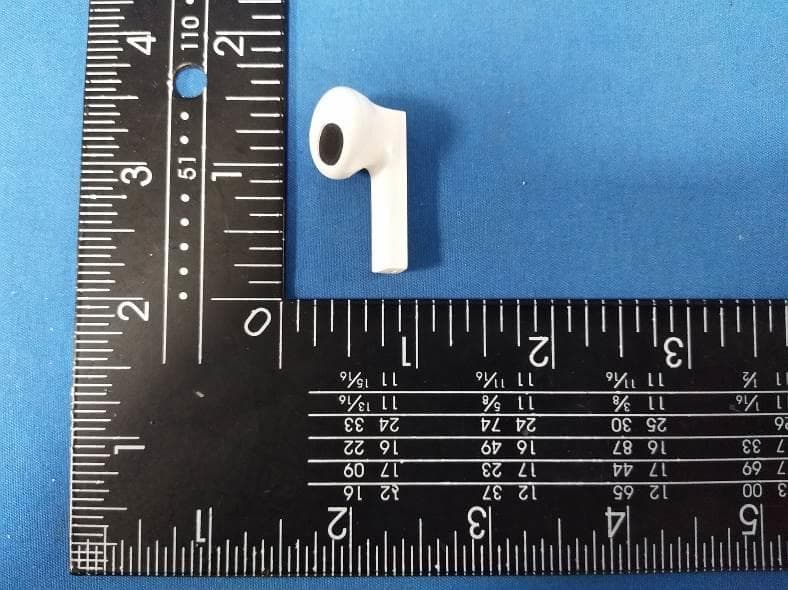
Click to zoom
Application Details
- Equipment Class
- DSS - Part 15 Spread Spectrum Transmitter
- Date of Grant
- May 17, 2023
- Application Purpose
- Original Equipment
- Date of Application
- May 16, 2023
- Equipment Note
- Bluetooth headset
- Frequency Range
- 2402.00000000 - 2480.00000000
- Country
- China
Documents & Files
Document Text
Text extracted from the exhibit documents filed with the FCC. Open a document above to read the original.
Users Manual
蓝牙耳机参数: 1. 蓝牙协议: HSP1.2、HFP1.6、A2DP1.3、AVRCP1.5 2. 额定电压:3.7V 3. 频率:2.4G 4. 电量显示:支持 5. 传输距离:10米 6. 听歌/通话时间:约3-8小时 7. 待机时间:约200小时 8. 耳机充电时间:约1小时 9. 充电仓时间:约2小时 注:产品参数因机型,使用方式,环境等等会有所不同。 一:按键说明 按键功能 1. 开机:打开充电盒,取出耳机会自动开机并进行配对、或 者长按触摸按键3秒开机。 2. 关机:放进充电仓自动关机或者长按触摸按键5秒关机。 3. 播放/暂停:在播放过程中单击其中一个耳机触换按键暂 停播放,暂停过程中单击重新播放。 4. 接听/挂断电话:来电时单击其中一个耳机触摸按键接听、 要结束通话单击其中一个耳机触摸按键挂断。 蓝牙耳机使用说明书 5. 拒绝通话:来电时长按耳机触摸按键1秒拒接电话。 6. 上一曲:三击主耳触摸按键 7. 下一曲:三击副耳触摸按键 8 音量调节+: 双击主耳触摸按键 9. 音量调节-: 双击副耳触摸按键 10. 唤醒Siri: 连接手机状态下长按触摸按钮1.5秒 11. 耳机开机后,五击按键切换中英文语音 二:配对连接 耳机如何开机和配对? 1. 打开充电盒。取出耳机会自动开机并进行配对。当两耳机指示 灯红蓝交替闪烁,表明耳机已配对成功。打开手机蓝牙功能, 搜索并点击连接。 2. 没有充电盒的情况下,长按两个耳机的多功能按键3秒,听到 “开机”的提示音,表示耳机已开启。两个耳机都开机后会自 动配对,当两耳机指示灯红蓝交替闪烁,表明耳机已配对成功。 打开手机蓝牙功能,搜索并点击连接。 3. 当耳机第一次配对后,以后打开耳机会自动配对,也会自动回 连到已经连接过的设备 三:耳机指示灯说明 1. 开机:指示灯闪烁1秒。 Specs: 1. Protocols: HSP1.2; HFP1.6; A2DP1.3; AVRCP1.5 2. Nominal voltage: 3.7V 3. Frequency: 2.4G 4. Display of remaining battery: Enabled 5. Transmission range: 10m 6. Battery run time: around 3-8H 7. Stand-by time: around 200H 8. 0-100% charging time: around 1H 9. Charging case time: around 2H Note: Specifications might be different for different product models, usages, environments, etc. I. Buttons Button functions 1. Power on: Take out the headset will automatically turn on and pair, or hold Touch Button for 3 seconds. 2. Power off: Put the earbuds into the charging case, or hold Touch Button for 5 seconds. 3. Play/Pause: Tap Switch Button on an earbud to pause/continue to play the current music being played. 4. Answer a call/Hang up: Tap Touch Button on an earbud to answer the call when the phone is ringing, or to hang up the phone. 5. Reject a call: Hold Touch Button for 1 second to reject a phone call. Wireless Earbud User Manual 6. Previous: Quick-tap Touch Button A 3 times 7. Next: Quick-tap Touch Button B 3 times 8. Volume +: Quick-tap Touch Button A 2 times 9. Volume –: Quick-tap Touch Button B 2 times 10. Use Siri: Press and hold Touch Button for 1.5 seconds when the earbuds are connected to the phone. II. Pairing How to turn on the earbuds and start pairing? 1. Open the charging case. Take out the headset will automatically turn on and pair. When the earbuds’ indicator lights flash in red and blue alternately, it means that they have been paired successfully. Turn on the phone’s Wireless function, search for the device, and then click Connect. 2. When there is no charging case, hold Multi-function Button on an earbud for 3 seconds, until you hear the "power on" prompt. After the earbuds are turned on, they will automatically start pairing. When the earbuds’ indicator lights flash in red and blue alternately, it means that they have been paired successfully. Turn on the phone’ s Wireless function, search for the device, and then click Connect. 3. After the earbuds are paired to a device, they will be paired to that device automatically every time they are turned on. They will also automatically connect to the devices that they have ever connected to. III. Earbud indicator light 1.Power on: The light flashes for 1 second. 2.Power off: The light flashes for 2 seconds and then goes out. 3.Once the earbuds are successfully paired to a device, the light flashes in red and blue slowly. and the other earphone light is off 4.Once the earbuds are successfully connected to a phone, the light goes out. 5.The light is on when the earbud is being charged, and goes out when it is fully charged; IV. Charging case 1. When the earbuds are put into the case, the case will start 5V charging in 10 seconds and enter the charging state. 2. When the case is being charged: The charging indicator light flashes, or a number flashes on the screen. 3. When the case is fully charged: The charging indicator light is off, or the number 100 appears on the screen. Note: Please use a 1A charger. Do not use any fast charger or the case might be damaged. 2. 关机:指示灯闪烁2秒灭灯。 3. 左右耳机配对成功,其中一个耳机红蓝灯慢闪,另一个耳机灯灭 4. 耳机与手机连接成功,指示灯灭 5. 充电时耳机指示灯常亮,充满电后指示灯灭灯; 四.充电仓功能说明 1.耳机入仓智能检测2秒启动5V,进入充电状态。 2. 对充电盒充电时:充电指示灯闪烁或者显示屏数字闪烁。 3. 充电盒充满电后:充电指示灯灭或者显示屏数字显示100。 注意事项请使用1A输出的充电头,请勿使用快充充电头, 以免造成充坏充电仓。 FCC Warnning: This equipment has been tested and found to comply with the limits for a Class B digital device, pursuant to part 15 of the FCC Rules. These limits are designed to provide reasonable protection againstharmful interference in a residential installation. This equipment generates, uses and can radiateradio frequency energy and, if not installed and used in accordance with the instructions, maycause harmful interference to radio communications. However, there is no guarantee thatinterference will not occur in a particular installation. If this equipment does cause harmfulinterference to radio or television reception, which can be determined by turning the equipmentoff and on, the user is encouraged to try to correct the interference by one or more of thefollowing measures: • Reorient or relocate the receiving antenna. • Increase the separation between the equipment and receiver. • Connect the equipment into an outlet on a circuit different from that to which the receiver is connected. • Consult the dealer or an experienced radio/TV technician for help. Caution: Any changes or modifications to this device not explicitly approved by manufacturer could void your authority to operate this equipment. This device complies with part 15 of the FCC Rules. Operation is subject to the following two conditions: (1)This device may not cause harmful interference, and (2) this device must accept any interference received, including interference that may cause undesired operation. This equipment complies with FCC radiation exposure limits set forth for an uncontrolled environment. This equipment should be installed and operated with minimum distance 0cm between the radiator and your body.
Attestation Statements
Shenzhen Byhoo Electronics Co., Ltd 401, West of Building 5, Hengtong Industrial City, Jihua Street, Longgang District, Shenzhen The information provided in this letter is based on the referenced rule parts of Title 47 of the CFR as well as KDB 986446 D01. An expiration date for this letter does not exist. In case the U.S. agent changes, the grantee is obligated to notify the FCC within 30 days via the granting TCB. Federal Communications Commission Authorization and Evaluation Division Equipment Authorization Branch 7435 Oakland Mills Road Columbia, MD 21046 05/17/2023 U.S. Agent Designation Shenzhen Byhoo Electronics Co., Ltd acknowledges their consent for the following contact located in the United States to act as their agent for service of process for the equipment for which authorization is sought (FCC ID: 2BA77-BH15): Name and company of U.S. agent: GSS SERVICE INC Physical U.S. address of agent: 6547 N Academy Blvd #226 Colorado Springs Co 80918 USA FRN of U.S. agent: 0033402082 Email address of U.S. agent: [email protected] GSS SERVICE INC acknowledges their obligation to accept service of process on behalf of Shenzhen Byhoo Electronics Co., Ltd Shenzhen Byhoo Electronics Co., Ltd with the FRN 0033781485 accepts its obligation to maintain an agent for service of process in the United States for no less than one year after either the grantee has permanently terminated all marketing and importation of the applicable equipment within the U.S., or the conclusion of any Commission-related administrative or judicial proceeding involving the equipment, whichever is later. By signing this form, we confirm the above and that we are aware of the application requirements listed under § 2.911(d)(7). Sincerely, Signature Signature [Name]: Lin Yiqing [Name of U.S. agent]:Michoux Logan [Title]: Manager [Title of U.S. agent]:PM [Company]: Shenzhen Byhoo Electronics Co., Ltd [Company of U.S. agent]: GSS SERVICE INC 48_[mo del] US_Agent_2.911(d)(7) - U, V04
Cover Letter(s)
Sincerely, Name/Title: Lin Yiqing /Manager Company: Shenzhen Byhoo Electronics Co., Ltd Address: 401, West of Building 5, Hengtong Industrial City, Jihua Street, Longgang District Shenzhen China Phone: 15919605378 Fax: N/A E-Mail: [email protected]
External Photos
FCC ID: 2BA77-BH15 External Photos of the EUT Photo 1 Photo 2 Right side Photo 3 FCC ID: 2BA77-BH15 Photo 4 Photo 5 Photo 6 FCC ID: 2BA77-BH15 Photo 7 Photo 8 Left side Photo 9 FCC ID: 2BA77-BH15 Photo 10 Photo 11 Photo 12 FCC ID: 2BA77-BH15 Photo 13 Photo 14
ID Label/Location Info
Label and Location Size: L: 2.0cm*W: 1.0cm Label and Location FCC ID : 2BA77-BH15
Internal Photos
FCC ID: 2BA77-BH15 Internal Photos of the EUT Right side Photo 1 Photo 2 Photo 3 BT Ceramic antenna FCC ID: 2BA77-BH15 Photo 4 Left side Photo 5 Photo 6 BT Ceramic antenna FCC ID: 2BA77-BH15 Photo 7 Photo 8
RF Exposure Info
RF Exposure evaluation FCC ID: 2BA77-BH15 1.1. Applicable Standard According to §1.1307(b)(1), systems operating under the provisions of this section shall be operated in a manner that ensures that the public is not exposed to radio frequency energy level in excess of the Commission’s guidelines. According to §1.1310 and §2.1093 RF exposure requirement KDB447498 v06: Mobile and Portable Devices RF Exposure Procedures and Equipment Authorization Policies 1.2. Requirement According to KDB447498 D01 General RF Exposure Guidance v06 Section 4.3.1 Standalone SAR test exclusion considerations: “Unless specifically required by the published RF exposure KDB procedures, standalone 1-g head or body and 10-g extremity SAR evaluation for general population exposure conditions, by measurement or numerical simulation, is not required when the corresponding SAR Test Exclusion Threshold condition, listed below, is satisfied. These test exclusion conditions are based on source-based time-averaged maximum conducted output power of the RF channel requiring evaluation, adjusted for tune-up tolerance, and the minimum test separation distance required for the exposure conditions.22 The minimum test separation distance is determined by the smallest distance from the antenna and radiating structures or outer surface of the device, according to the host form factor, exposure conditions and platform requirements, to any part of the body or extremity of a user or bystander (see 5) of section 4.1). To qualify for SAR test exclusion, the test separation distances applied must be fully explained and justified by the operating configurations and exposure conditions of the transmitter and applicable host platform requirements, typically in the SAR measurement or SAR analysis report, according to the required published RF exposure KDB procedures. When no other RF exposure testing or reporting is required, a statement of justification and compliance must be included in the equipment approval, in lieu of the SAR report, to qualify for the SAR test exclusion. When required, the device specific conditions described in the other published RF exposure KDB procedures must be satisfied before applying these SAR test exclusion provisions; for example, handheld PTT two-way radios, handsets, laptops & tablets etc.23 “ [(max. power of channel, including tune-up tolerance, mW)/ (min. test separation distance, mm)] · [√f (GHz)] ≤ 3.0 for 1-g SAR and ≤ 7.5 for 10-g extremity SAR, where: • f (GHz) is the RF channel transmit frequency in GHz • Power and distance are rounded to the nearest mW and mm before calculation • The result is rounded to one decimal place for comparison • 3.0 and 7.5 are referred to as the numeric thresholds in the step 2 below The test exclusions are applicable only when the minimum test separation distance is ≤ 50 mm and for transmission frequencies between 100 MHz and 6 GHz. When the minimum test separation distance is < 5 mm, a distance of 5 mm according to 5) in section 4.1 is applied to determine SAR test exclusion. 1.3. Manufacturing tolerance GFSK (Peak) Channel Channel 0 Channel 39 Channel 78 Target (dBm) 0.0 0.0 1.0 Tolerance ±(dB) 1.0 1.0 1.0 π/4DQPSK (Peak) Channel Channel 0 Channel 39 Channel 78 Target (dBm) 0.0 1.0 1.0 Tolerance ±(dB) 1.0 1.0 1.0 Page 2 of 2 2. E v a l u a t i o n R e s u l t Evaluation Results Band/Mode f (GHz) Antenna Distance (mm) RF output power (including tune-up tolerance) SAR Test Exclusion Threshold SAR Test Exclusion dBm mW BT 2.450 5 2.0 1.5849 0.4962<3.0 Yes 3. C o n c l u s i o n The measurement results comply with the FCC Limit per 47 CFR 2.1093 for the uncontrolled RF Exposure and SAR Exclusion Threshold per KDB 447498 v06 .....................End of Report.........................
Test Report
1. Antenna Description: Antenna type Ceramic antenna Model BH15 Frequency range 2400-2500MHz Manufacturer Shenzhen Byhoo Electronics Co., Ltd ANT Peak Gain 1.45 dBi 2. Antenna Photo: Length :3.27mm Width:1.75mm 3. Test Equipment & Conditions 3.1 Test instrument VSWR is tested using Agilent E5071B connected to a hand mechanism, and the status is free space. 3.2 Test environment and methods 4.Antenna Radiation Pattern 2400MHz 2450MHz 2500MHz
Test Report
Shenzhen CTA Testing Technology Co., Ltd. Room 106, Building 1, Yibaolai Industrial Park, Qiaotou Community, Fuhai Street, Bao’an District, Shenzhen, China Shenzhen CTA Testing Technology Co., Ltd. Room 106, Building 1, Yibaolai Industrial Park, Qiaotou Community, Fuhai Street, Bao’an District, Shenzhen, China Tel:+86-755 2322 5875 E-mail:[email protected] Web:http://www.cta-test.cn FCC PART 15 SUBPART C TEST REPORT FCC PART 15.247 Report Reference No. ..................... : FCC ID. ............................................ : CTA23050800201 2BA77-BH15 Compiled by ( position+printed name+signature) .. : File administrators Zoey Cao Supervised by ( position+printed name+signature) .. : Project Engineer Amy Wen Approved by ( position+printed name+signature) .. : RF Manager Eric Wang Date of issue ..................................... : May 11, 2023 Testing Laboratory Name .............. : Shenzhen CTA Testing Technology Co., Ltd. Address ............................................ : Room 106, Building 1, Yibaolai Industrial Park, Qiaotou Community, Fuhai Street, Bao‘an District, Shenzhen, China Applicant’s name ............................ : Shenzhen Byhoo Electronics Co., Ltd Address ............................................ : 401, West of Building 5, Hengtong Industrial City, Jihua Street, Longgang District, Shenzhen Test specification ...........................: Standard ........................................... : FCC Part 15.247 Shenzhen CTA Testing Technology Co., Ltd. All rights reserved. This publication may be reproduced in whole or in part for non-commercial purposes as long as the Shenzhen CTA Testing Technology Co., Ltd. is acknowledged as copyright owner and source of the material. Shenzhen CTA Testing Technology Co., Ltd. takes no responsibility for and will not assume liability for damages resulting from the reader's interpretation of the reproduced material due to its placement and context. Test item description .....................: Bluetooth headset Trade Mark ....................................... : N/A Manufacturer .................................... : Shenzhen Byhoo Electronics Co., Ltd Model/Type reference....................... : BH15 Listed Models .................................. : BH11, BH12, BH13, BH17, BH18, BH19, BH21, BH22, BH23, BH25, BH26, BH27, BH28, BH29, BH101, KS25, KS35, KS55, KS56, KS59 Modulation ....................................... : GFSK, Π/4DQPSK Frequency .......................................... From 2402MHz to 2480MHz Rating ............................................... : DC 3.7V From Battery and DC 5.0V From external circuit Result................................................ : PASS Report No.: CTA23050800201 Page 2 of 46 Shenzhen CTA Testing Technology Co., Ltd. Room 106, Building 1, Yibaolai Industrial Park, Qiaotou Community, Fuhai Street, Bao’an District, Shenzhen, China Tel:+86-755 2322 5875 E-mail:[email protected] Web:http://www.cta-test.cn T E S T R E P O R T Equipment under Test : Bluetooth headset Model /Type : BH15 Listed Models : BH11, BH12, BH13, BH17, BH18, BH19, BH21, BH22, BH23, BH25, BH26, BH27, BH28, BH29, BH101, KS25, KS35, KS55, KS56, KS59 Applicant : Shenzhen Byhoo Electronics Co., Ltd Address : 401, West of Building 5, Hengtong Industrial City, Jihua Street, Longgang District, Shenzhen Manufacturer : Shenzhen Byhoo Electronics Co., Ltd Address : 401, West of Building 5, Hengtong Industrial City, Jihua Street, Longgang District, Shenzhen Test Result: PASS The test report merely corresponds to the test sample. It is not permitted to copy extracts of these test result without the written permission of the test laboratory. Report No.: CTA23050800201 Page 3 of 46 Shenzhen CTA Testing Technology Co., Ltd. Room 106, Building 1, Yibaolai Industrial Park, Qiaotou Community, Fuhai Street, Bao’an District, Shenzhen, China Tel:+86-755 2322 5875 E-mail:[email protected] Web:http://www.cta-test.cn Contents 1 T E S T S TA N D A R D S ................................................................. 4 2 S U M M A R Y ............................................................................ 5 2.1 General Remarks 5 2.2 Product Description 5 2.3 Equipment Under Test 5 2.4 Short description of the Equipment under Test (EUT) 5 2.5 EUT operation mode 6 2.6 Block Diagram of Test Setup 6 2.7 Related Submittal(s) / Grant (s) 6 2.8 Modifications 6 3 T E S T E N V I R O N M E N T .............................................................. 7 3.1 Address of the test laboratory 7 3.2 Test Facility 7 3.3 Environmental conditions 7 3.4 Summary of measurement results 8 3.5 Statement of the measurement uncertainty 8 3.6 Equipments Used during the Test 9 4 T E S T C O N D I T I O N S A N D R E S U L T S ........................................... 10 4.1 AC Power Conducted Emission 10 4.2 Radiated Emission 13 4.3 Maximum Peak Output Power 19 4.4 20dB Bandwidth 20 4.5 Frequency Separation 23 4.6 Number of hopping frequency 25 4.7 Time of Occupancy (Dwell Time) 27 4.8 Out-of-band Emissions 30 4.9 Pseudorandom Frequency Hopping Sequence 36 4.10 Antenna Requirement 37 5 T E S T S E T U P P H O T O S O F T H E E U T ......................................... 38 6 P H O T O S O F T H E E U T ........................................................... 39 Report No.: CTA23050800201 Page 4 of 46 Shenzhen CTA Testing Technology Co., Ltd. Room 106, Building 1, Yibaolai Industrial Park, Qiaotou Community, Fuhai Street, Bao’an District, Shenzhen, China Tel:+86-755 2322 5875 E-mail:[email protected] Web:http://www.cta-test.cn 1 T E S T S T A N D A R D S The tests were performed according to following standards: FCC Rules Part 15.247: Frequency Hopping, Direct Spread Spectrum and Hybrid Systems that are in operation within the bands of 902-928 MHz, 2400-2483.5 MHz, and 5725-5850 MHz. ANSI C63.10-2013: American National Standard for Testing Unlicensed Wireless Devices Report No.: CTA23050800201 Page 5 of 46 Shenzhen CTA Testing Technology Co., Ltd. Room 1…
Text truncated - open the document above for the full version.
Test Setup Photos
FCC ID: 2BA77-BH15 Test Setup Photos of the EUT
Contact Information
Applicant
Lin Yiqing
Test Firm
SHENZHEN CTA TESTING TECHNOLOGY CO., LTD.Eric Wang
[email protected]+86 755 2322 5875
Technical Specifications
| # | Rule Parts | Frequency Range | Power Output |
|---|---|---|---|
| 1 | 15C | 2.40 GHz - 2.48 GHz | 1.50 mW |