Text extracted from the exhibit documents filed with the FCC. Open a document above to read the original.
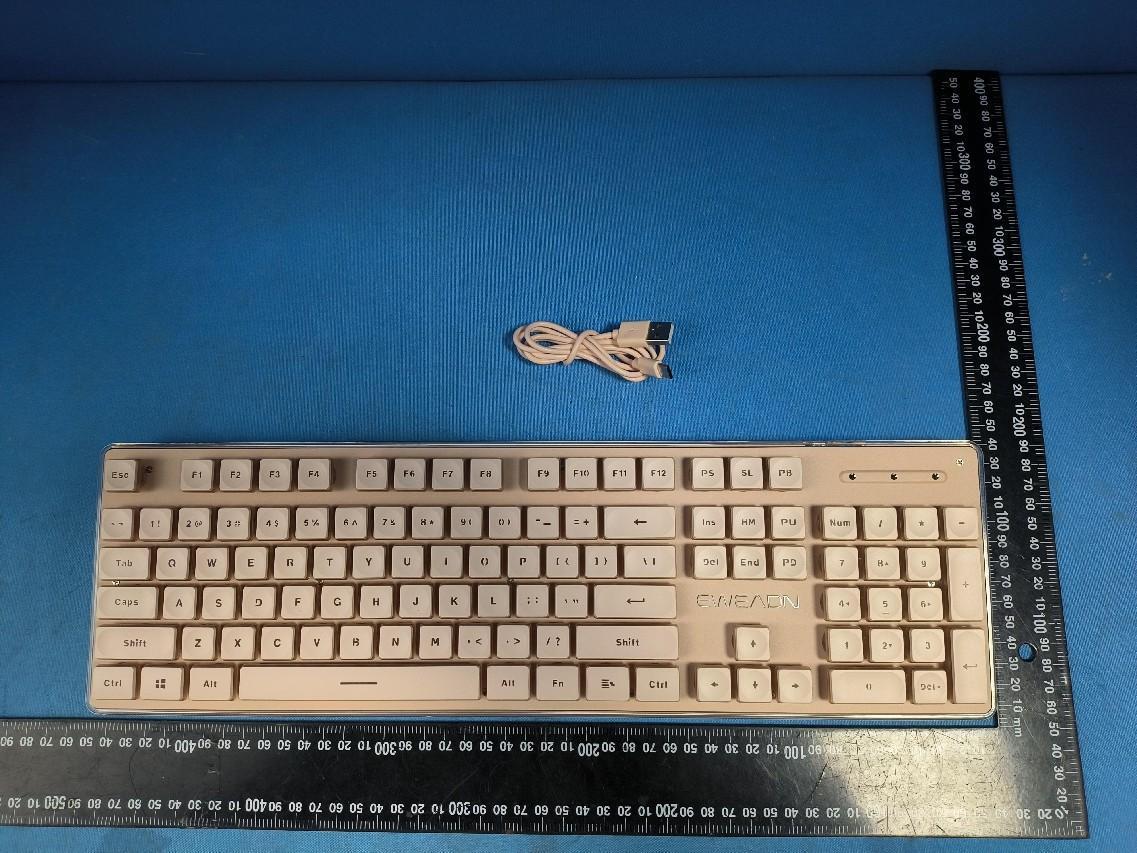
105g铜版纸 覆亚膜 84mm 尺寸:84x120mm 正反双面黑白 折页 Authorized by: Yuandao Industrial (Shenzhen) Co., Ltd Room 1610, 16th Floor, Jinhao Building, No.109 Fuyong Section, Guangshen Road, Bao'an District, Shenzhen Manufacturer: Jiangxi Jichi Technology Co., Ltd Building 3, Godfrey Industrial Park, Lvbao Avenue, Qingyuan District, Ji'an City, Jiangxi Province Contact number: 0755-23089616 Website: www.eweadn.cn Product execution standard number: Keyboard GB/T 14081-2010 Mouse GB/T 26245-2010 Attention: The product pictures are for reference only and may differ from the actual product. Please refer to the actual product. We apologize for any inconvenience caused! instruction 4、 Indicator light 7 indicator lights: NUMLOCK (green), CAPSLOCK (green), 2.4G indicatorLight (green), BT1 indicator light (blue), BT2 indicator light (blue), lowPressure lamp (red), charging lamp (red). 1) When the CAPS light NUM light is on and the button is released for 2MIN, the CAPS lightThe NUM light will automatically turn off. 2) When the battery is at a low voltage of around 3.3V, the low voltage indicator light (red) will slowly flash. 3) When charging, the charging indicator light is always on and off when fully charged. 5、 Sleep and Wake After releasing the button for 30 minutes, the keyboard enters sleep mode and then wakes up by pressing any key. 6、 Game mode lighting settings Color backlight constant brightness mode, with five levels of backlight brightness (first level off ->second level ->third level -) Fourth gear - fifth gear).Default third gear, FN+PGUP backlight brightness increase, FN+PGDN backlight brightness reduction, FN+SCRLK switch The backlight on the keyboard is always on by default when powered on, and the backlight is turned off after 2 minutes of inactivity,When the battery is low voltage, the backlight actively turns off. function Next song mail homepage Combination FN+F1 FN+F2 FN+F3 FN+F4 FN+F5 FN+F6 FN+F7 function multi-media Vol Volume increase mute cease FN+F11 FN+F12 keypad lock calculator Previous song play/pause Combination FN+F8 FN+F9 FN+F10 7、 Button composite function 1、 Product Scope of Application The keyboard is connected to related devices in two working modes using the Bluetooth 2.4G standard Control, product wired and 2.4G mode can run on computers Win7, Win8, Win10,Win11, MAC and other systems. 2、 Hardware requirements Having a Bluetooth system or computer, with a USB port available for connecting devices. 3、 Switch indication POWER SWITCH ON OFFTYPE-C INTERFACE Bluetooth Name (EWEADN-V3 3.0) Bluetooth Name (EWEADN-V3 5.0) Bluetooth Name (EWEADN-V3) Bluetooth connectivity Short press the FN+2 combination key on the keyboard to switch to Bluetooth 1 mode, and short press the FN+3 combination key to switch to Bluetooth 1 modeBluetooth 2 mode, with two power switches turned to "ON" and three mouse switches turnedAt ' ', the Bluetooth device is paired and the mouse button can be used normally after successful pairing. 连接示意图 8、 Connection method: Short press the FN+1 combination key on the keyboard to switch to 2.4G mode, and turn the two speed power switch to "ON"In the state, turn the three segment switch of the mouse to "2.4G", and at this time, insert the receiver at close range Using a receiver, the keyboard can be used normally. 2.4G connection ON OFF 9、 List of items 1. Keyboard 2. 2.4G receiver 3. TYPE-C charging cable 4. Manual warranty card TYPE-C charging cable V3 keyboard 2.4G receiver ON OFF FCC Caution: This device complies with part 15 of the FCC Rules. Operation is subject to the following two conditions: (1) This device may not cause harmful interference, and (2) this device must accept any interference received, including interference that may cause undesired operation. Any changes or modifications not expressly approved by the party responsible for compliance could void the user's authority to operate the equipment. NOTE: This equipment has been tested and found to comply with the limits for a Class B digital device, pursuant to Part 15 of the FCC Rules. These limits are designed to provide reasonable protection against harmful interference in a residential installation. This equipment generates, uses and can radiate radio frequency energy and, if not installed and used in accordance with the instructions, may cause harmful interference to radio communications. However, there is no guarantee that interference will not occur in a particular installation. If this equipment does cause harmful interference to radio or television reception, which can be determined by turning the equipment off and on, the user is encouraged to try to correct the interference by one or more of the following measures: -- Reorient or relocate the receiving antenna. -- Increase the separation between the equipment and receiver. -- Connect the equipment into an outlet on a circuit different from that to which the receiver is connected. -- Consult the dealer or an experienced radio/TV technician for help. The device has been evaluated to meet general RF exposure requirement. The device can be used in portable exposure condition without restriction.
FCCID:2BDOY-V3-01 FCCID:2BDOY-V3-01 FCCID:2BDOY-V3-01
FCCID:2BDOY-V3-01 Label Size:30mm*20mm Bluetoothkeyboard Model:V3 FCCID:2BDOY-V3-01 LabelLocation
FCCID:2BDOY-V3-01 FCCID:2BDOY-V3-01 FCCID:2BDOY-V3-01 ANT
RFExposureevaluation FCCID2BDOY-V3-01 ProductNameBluetoothkeyboard Model/TypereferenceV3 ExposurecategoryGeneralpopulation/uncontrolledenvironment EUTTypeProductionUnit DeviceType Portable 1.Reference ANSIC95.1–1999:IEEEStandardforSafetyLevelswithRespecttoHumanExposureto RadioFrequencyElectromagneticFields,3kHzto300GHz. FCCKDBpublication447498D01GeneralRFExposureGuidancev06:MobileandPortable DevicesRFExposureProceduresandEquipmentAuthorizationPolicies. FCCCFR47part11.1310:Radiofrequencyradiationexposurelimits. FCCCFR47part22.1093:Radiofrequencyradiationexposureevaluation:portabledevices 2.Requirement AccordingtoKDB447498D01GeneralRFExposureGuidancev06Section4.3.1Standalone SARtestexclusionconsiderations:“UnlessspecificallyrequiredbythepublishedRFexposure KDBprocedures,standalone1-gheadorbodyand10-gextremitySARevaluationforgeneral populationexposureconditions,bymeasurementornumericalsimulation,isnotrequired whenthecorrespondingSARTestExclusionThresholdcondition,listedbelow,issatisfied. Thesetestexclusionconditionsarebasedonsource-basedtime-averagedmaximum conductedoutputpoweroftheRFchannelrequiringevaluation,adjustedfortune-uptolerance, andtheminimumtestseparationdistancerequiredfortheexposureconditions.22The minimumtestseparationdistanceisdeterminedbythesmallestdistancefromtheantenna andradiatingstructuresoroutersurfaceofthedevice,accordingtothehostformfactor, exposureconditionsandplatformrequirements,toanypartofthebodyorextremityofauser orbystander(see5)ofsection4.1).ToqualifyforSARtestexclusion,thetestseparation distancesappliedmustbefullyexplainedandjustifiedbytheoperatingconfigurationsand exposureconditionsofthetransmitterandapplicablehostplatformrequirements,typicallyin theSARmeasurementorSARanalysisreport,accordingtotherequiredpublishedRF exposureKDBprocedures.WhennootherRFexposuretestingorreportingisrequired,a statementofjustificationandcompliancemustbeincludedintheequipmentapproval,inlieuof theSARreport,toqualifyfortheSARtestexclusion.Whenrequired,thedevicespecific conditionsdescribedintheotherpublishedRFexposureKDBproceduresmustbesatisfied beforeapplyingtheseSARtestexclusionprovisions;forexample,handheldPTTtwo-way radios,handsets,laptops&tabletsetc.23” [(max.powerofchannel,includingtune-uptolerance,mW)/(min.testseparationdistance, mm)]·[√f(GHz)]≤3.0for1-gSARand≤7.5for10-gextremitySAR,where: •f(GHz)istheRFchanneltransmitfrequencyinGHz •PoweranddistanceareroundedtothenearestmWandmmbeforecalculation •Theresultisroundedtoonedecimalplaceforcomparison •3.0and7.5arereferredtoasthenumericthresholdsinthestep2below Thetestexclusionsareapplicableonlywhentheminimumtestseparationdistanceis≤50 mmandfortransmissionfrequenciesbetween100MHzand6GHz.Whentheminimumtest separationdistanceis<5mm,adistanceof5mmaccordingto5)insection4.1isappliedto determineSARtestexclusion. Whenoneofthefollowingtestexclusionconditionsissatisfiedforallcombinationsof simultaneoustransmissionconfigurations,furtherequipmentapprovalisnotrequiredto incorporatetransmittermodulesinhostdevicesthatoperateinthemixedmobileandportable hostplatformexposureconditions.Thegranteeisresponsiblefordocumentingthisaccording toClassIpermissivechangerequirements.AntennasthatqualifyforstandaloneSARtest exclusionmustapplytheestimatedstandaloneSARtodeterminesimultaneoustransmission testexclusion. a)The[∑of(thehighestmeasuredorestimatedSARforeachstandaloneantenna configuration,adjustedformaximumtune-uptolerance)/1.6W/kg]+[∑ofMPEratios]is≤ 1.0. b)TheSARtopeaklocationseparationratiosofallsimultaneouslytransmittingantennapairs operatinginportabledeviceexposureconditionsareall≤0.04,andthe[∑ofMPEratios]is ≤1.0. 3.ManufacturingTolerance BR/EDR DH5 ChannelChannel0Channel19Channel39 Target(dBm)000 Tolerance±(dB)1.01.01.0 2DH5 ChannelChannel0Channel19Channel39 Target(dBm)-1.0-1.0-1.0 Tolerance±(dB)1.01.01.0 3DH5 ChannelChannel0Channel19Channel39 Target(dBm)-1.0-1.0-1.0 Tolerance±(dB)1.01.01.0 BLE ChannelChannel0Channel19Channel39 Target(dBm)-3.0-4.0-6.0 Tolerance±(dB)1.01.01.0 2.4G: TXfrequencyrange:2403MHz(Worstresult) Devicecategory:Portabledevice(Distance:5mm)Max.FieldStrength:89.26dBuV/m@3m EIRP=E-104.7+20logD=89.26-104.7+20log3=-5.9dBm MaximumConductedOutputPower:-5.9dBm Tune-up:-5±1 4.EvaluationResult Band/Modef(GHz) Antenna Distance (mm) RFoutputpower SARTest Exclusion Threshold SARTest Exclusion dBmmW BR/EDR2.480511.260.3965<3.0Yes BLE2.4025-20.630.1956<3.0Yes 2.4G2.4035-40.400.1234<3.0Yes Remark: 1.Outputpowerincludingtuneuptolerance; 2.Whentheminimumtestseparationdistanceis<5mm,adistanceof5mmaccordingtof)in section4.1isappliedtodetermineSARtestexclusion. 3.EUThasonlyone2.4GANT. 5.Conclusion ThemeasurementresultscomplywiththeFCCLimitper47CFR2.1093fortheuncontrolled RFExposureandSARExclusionThresholdperKDB447498v06. ------Endofthereport------
PCB Antenna Simulation Manufacturer:Jiangxi Jichi Technology Co., Ltd M ode l : V 3 Address: Jiangxi Province Donghu District, Nanchang City, Jiangxi, China PCB Antenna pattern X Y Z ITEMSPE. MAX.GAIN1.5dBi PolarizationHorizontal Azimuth Beam Pattern Omni- directional Impedance50Ω Antenna Length 3.35CM PCB Antenna Simulation (S11) BW(RL<10dB):90 MHz PCB Antenna Simulation (Radiation) XYXZ YZ Efficiency:76% MAX.Gain:1.5dBi Avg. Gain:-1.2 dBi Min. Gain:-30.7 dBi
ShenzhenCTATestingTechnologyCo.,Ltd. Room106,Building1,YibaolaiIndustrialPark,QiaotouCommunity,FuhaiStreet, Bao‘anDistrict,Shenzhen,China ShenzhenCTATestingTechnologyCo.,Ltd. Room106,Building1,YibaolaiIndustrialPark,QiaotouCommunity,FuhaiStreet,Bao’anDistrict,Shenzhen,China Tel:+86-75523225875E-mail:[email protected]:http://www.cta-test.cn FCCPART15SUBPARTCTESTREPORT FCCPART15.247 ReportReferenceNo........................: FCCID.................................................: CTA23121202002 2BDOY-V3-01 Compiledby (position+printedname+signature) .. : FileadministratorsZoeyCao Supervisedby (position+printedname+signature) .. : ProjectEngineerAmyWen Approvedby (position+printedname+signature) .. : RFManagerEricWang Dateofissue.........................................:Dec.21,2023 TestingLaboratoryName................: ShenzhenCTATestingTechnologyCo.,Ltd. Address.................................................: Room106,Building1,YibaolaiIndustrialPark,QiaotouCommunity, FuhaiStreet,Bao‘anDistrict,Shenzhen,China Applicant’sname ............................... :JiangxiXuanfengTechnologyCo.,Ltd Address ................................................. :JiangxiProvinceDonghuDistrict,NanchangCity,Jiangxi,China Testspecification .............................. : Standard ................................................ : FCCPart15.247 ShenzhenCTATestingTechnologyCo.,Ltd.Allrightsreserved. Thispublicationmaybereproducedinwholeorinpartfornon-commercialpurposesaslongasthe ShenzhenCTATestingTechnologyCo.,Ltd.isacknowledgedascopyrightownerandsourceofthe material.ShenzhenCTATestingTechnologyCo.,Ltd.takesnoresponsibilityforandwillnotassume liabilityfordamagesresultingfromthereader'sinterpretationofthereproducedmaterialduetoits placementandcontext. Equipmentdescription ..................... : Bluetoothkeyboard TradeMark............................................: / Manufacturer ......................................... : JiangxiJichiTechnologyCo.,Ltd Model/Typereference ......................... :V3 ListedModels......................................:-- Modulation...........................................:GFSK Frequency..............................................From2402MHzto2480MHz Ratings ................................................... : DC3.7VFrombatteryandDC5.0VFromexternalcircuit Result.....................................................:PASS ReportNo.:CTA23121202002Page 2 of 33 ShenzhenCTATestingTechnologyCo.,Ltd. Room106,Building1,YibaolaiIndustrialPark,QiaotouCommunity,FuhaiStreet,Bao’anDistrict,Shenzhen,China Tel:+86-75523225875E-mail:[email protected]:http://www.cta-test.cn TESTREPORT EquipmentunderTest:Bluetoothkeyboard Model/Type:V3 ListedModels: / Applicant : JiangxiXuanfengTechnologyCo.,Ltd Address: JiangxiProvinceDonghuDistrict,NanchangCity,Jiangxi,China Manufacturer : JiangxiJichiTechnologyCo.,Ltd Address: Building3,BlockB13-1-2andB14-1,NewIndustrialParkControlPlan, JinggangshanEconomicandTechnologicalDevelopmentZone,Ji'anCity, JiangxiProvince TestResult:PASS Thetestreportmerelycorrespondstothetestsample. Itisnotpermittedtocopyextractsofthesetestresultwithoutthewrittenpermissionofthetest laboratory. ReportNo.:CTA23121202002Page 3 of 33 ShenzhenCTATestingTechnologyCo.,Ltd. Room106,Building1,YibaolaiIndustrialPark,QiaotouCommunity,FuhaiStreet,Bao’anDistrict,Shenzhen,China Tel:+86-75523225875E-mail:[email protected]:http://www.cta-test.cn Contents 1TESTSTANDARDS..............................................................................................................................4 2SUMMARY.................................................................................................................................................5 2.1GeneralRemarks..........................................................................................................................................5 2.2ProductDescription*....................................................................................................................................5 2.3EquipmentUnderTest.................................................................................................................................5 2.4ShortdescriptionoftheEquipmentunderTest(EUT).............................................................................5 2.5EUToperationmode.....................................................................................................................................6 2.6BlockDiagramofTestSetup.......................................................................................................................6 2.7RelatedSubmittal(s)/Grant(s)...................................................................................................................6 2.8Modifications.................................................................................................................................................6 3TESTENVIRONMENT........................................................................................................................7 3.1Addressofthetestlaboratory....................................................................................................................7 3.2TestFacility...................................................................................................................................................7 3.3Environmentalconditions............................................................................................................................7 3.4Summaryofmeasurementresults..............................................................................................................8 3.5Statementofthemeasurementuncertainty..............................................................................................8 3.6EquipmentsUsedduringtheTest..............................................................................................................9 4TESTCONDITIONSANDRESULTS......................................…
Text truncated - open the document above for the full version.
FCCID:2BDOY-V3-01
| # | Rule Parts | Frequency Range | Power Output |
|---|---|---|---|
| 1 | 15C | 2.40 GHz - 2.48 GHz | 400.00 µW |