2BDYL-S9Wireless headset
Shenzhen Yajia Sheng Technology Co., Ltd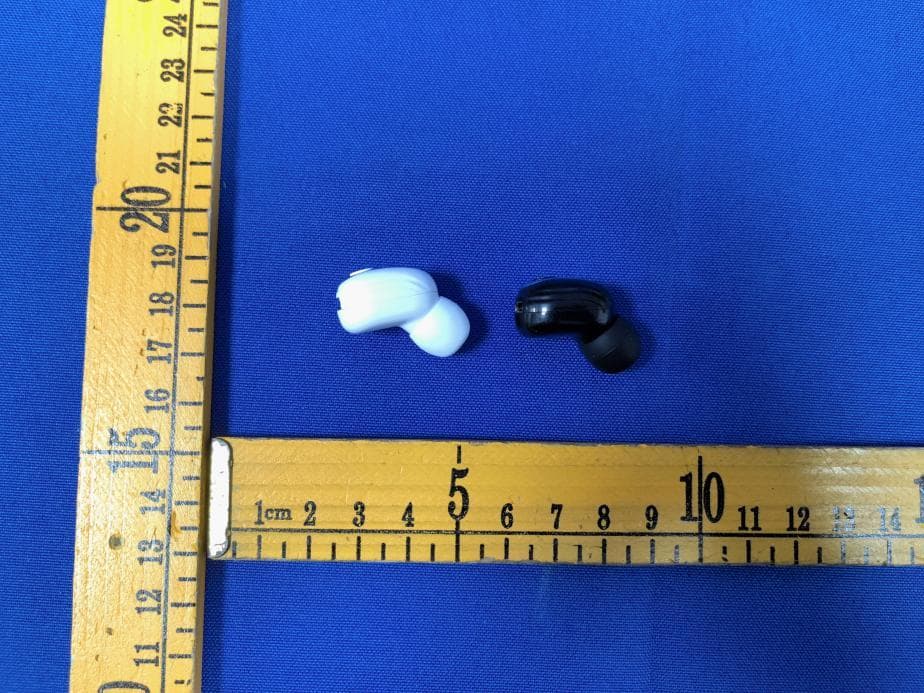
Click to zoom
Application Details
- Equipment Class
- DSS - Part 15 Spread Spectrum Transmitter
- Date of Grant
- Apr 06, 2024
- Application Purpose
- Original Equipment
- Date of Application
- Apr 06, 2024
- Equipment Note
- Wireless headset
- Frequency Range
- 2402.00000000 - 2480.00000000
- Country
- China
Documents & Files
Document Text
Text extracted from the exhibit documents filed with the FCC. Open a document above to read the original.
Users Manual
【Connect to mobile phone】 �. Press and hold the function button on the headset to turn it on until the indicator light starts flashing, indicating that the headset has entered pairing mode. �. Turn on Bluetooth on your phone or other devices: Settings-Bluetooth-search for the corresponding model device name and click Connect. �. After the connection is successful, the headset indicator light will stop flashing and remain off. 【Function operation instructions】 �. Power on: In the off state, press and hold the function button for � seconds (blue and red lights flash alternately) �. Shut down: When the power is on, press and hold the function button for � seconds (the red light flashes three times) �. Answer the call: Click the function key once to answer the call. �. End the call: When the call is in progress, click the function key once to end the call. �. Reject the call: Press the function key for � seconds to reject the call. �. Play/pause: click the function key once during music playback �. Next song: Press the function key twice in music mode to switch to the previous song. �. Previous song: Press the function key � times in music mode to switch to the next song. �.Siri/Voice Assistant: Press the function key for � seconds in standby mode to wake up Siri/Voice Assistant ��. Switch between Chinese and English: When the phone is on, double-click the function key to switch between Chinese and English voices. (Operation when the mobile phone is not connected, the connected mobile phone needs to disconnect Bluetooth to switch) 【Precautions】 �. Since the headset uses a small-capacity polymer lithium battery, it is prohibited to use fast charging/power bank or high-current equipment for charging, otherwise it may cause the headset to malfunction or burn out; DC �V- certified by a regulated manufacturer must be used when charging. �A adapter. Note: Repeatedly charging and discharging the headphones will cause battery performance to degrade over time, which is normal for all rechargeable electronics. �. Do not disassemble or modify the device for any reason, otherwise it may cause the headset to malfunction or burn. �. Do not let the device come into contact with liquid, otherwise it will cause serious damage to the device. �. Do not place the device in an environment where the temperature is too low or too high (below �°C or above ��°C). �. Please do not use the device during thunderstorms. Thunderstorms can cause abnormal operation of the device and signal interruption. 【The above � points of damage are not covered by the warranty, please know】 ENEN 【Mit Mobiltelefon verbinden】 �. Halten Sie die Funktionstaste am Headset gedrückt, um es einzuschalten, bis die Kontrollleuchte zu blinken beginnt und damit anzeigt, dass das Headset in den Kopplungsmodus gewechselt ist. �. Schalten Sie Bluetooth auf Ihrem Telefon oder anderen Geräten ein: Einstellungen ‒ Bluetooth ‒ suchen Sie nach dem Namen des entsprechenden Modellgeräts und klicken Sie auf Verbinden. �. Nachdem die Verbindung erfolgreich hergestellt wurde, hört die Headset-Kontrollleuchte auf zu blinken und bleibt aus. 【Anweisungen zur Funktionsbedienung】 �. Einschalten: Halten Sie im ausgeschalteten Zustand die Funktionstaste � Sekunden lang gedrückt (blaue und rote Lichter blinken abwechselnd). �. Herunterfahren: Wenn das Gerät eingeschaltet ist, halten Sie die Funktionstaste � Sekunden lang gedrückt (das rote Licht blinkt dreimal). �. Anruf annehmen: Klicken Sie einmal auf die Funktionstaste, um den Anruf anzunehmen. �. Anruf beenden: Klicken Sie während des Anrufs einmal auf die Funktionstaste, um den Anruf zu beenden. �. Anruf abweisen: Drücken Sie die Funktionstaste � Sekunden lang, um den Anruf abzulehnen. �. Wiedergabe/Pause: Klicken Sie während der Musikwiedergabe einmal auf die Funktionstaste �. Nächstes Lied: Drücken Sie im Musikmodus zweimal die Funktionstaste, um zum vorherigen Lied zu wechseln. �. Vorheriges Lied: Drücken Sie im Musikmodus dreimal die Funktionstaste, um zum nächsten Lied zu wechseln. �.Siri/Sprachassistent: Drücken Sie im Standby-Modus � Sekunden lang die Funktionstaste, um Siri/Sprachassistent zu aktivieren ��. Zwischen Chinesisch und Englisch wechseln: Wenn das Telefon eingeschaltet ist, doppelklicken Sie auf die Funktionstaste, um zwischen chinesischen und englischen Stimmen zu wechseln. (Wenn das Mobiltelefon nicht verbunden ist, muss das verbundene GE Mobiltelefon zum Umschalten die Bluetooth-Verbindung trennen.) 【Vorsichtsmaßnahmen】 �. Da das Headset einen Polymer-Lithium-Akku mit geringer Kapazität verwendet, ist es verboten, Schnelllade-/Powerbank- oder Hochstromgeräte zum Laden zu verwenden, da es sonst zu Fehlfunktionen oder einem Durchbrennen des Headsets kommen kann; DC � V ‒ zertifiziert von a Beim Laden muss ein regulierter Hersteller verwendet werden. �A-Adapter. Hinweis: Durch wiederholtes Laden und Entladen der Kopfhörer lässt die Akkuleistung mit der Zeit nach, was bei allen wiederaufladbaren elektronischen Geräten normal ist. �. Zerlegen oder modifizieren Sie das Gerät auf keinen Fall, da es sonst zu Fehlfunktionen oder Verbrennungen des Headsets kommen kann. �. Lassen Sie das Gerät nicht mit Flüssigkeit in Kontakt kommen, da es sonst zu schweren Schäden am Gerät kommen kann. �. Stellen Sie das Gerät nicht in einer Umgebung auf, in der die Temperatur zu niedrig oder zu hoch ist (unter � °C oder über �� °C). �. Bitte verwenden Sie das Gerät nicht bei Gewitter. Gewitter können zu Funktionsstörungen des Geräts und Signalunterbrechungen führen. 【Die oben genannten � Schadenspunkte fallen nicht unter die Garantie, bitte beachten Sie】 GE le téléphone mobile connecté doit déconnecter Bluetooth pour basculer) 【Précautions】 �. Étant donné que le casque utilise une batterie au lithium polymère de petite capacité, il est interdit d'utiliser une charge rapide/une banque d'alimentation ou un équipement à courant élevé pour le chargement, sinon cela pourrait provoquer un dysfonctionnement ou un grillage d…
Text truncated - open the document above for the full version.
Cover Letter(s)
Shenzhen Yajia sheng Technology Co., Ltd ProductSimilarityDeclaration Productname:Wirelessheadset Modelname:S9,X9,X10,S8,S10 FCCID:2BDYL-S9 We (Shenzhen Yajia sheng Technology Co., Ltd) hereby state that all the models are electrical identical including the same software parameter and hardware design (i.e., circuit design, PCB Layout, RF module/circuit, antenna type(s) and antenna location, components on PCB, etc.,), same mechanical structure and design (including product enclosure, materials, etc.,), only the model name, appearance and color is different. Signature: Name:SongtaoHe Shenzhen,April01,2024
External Photos
FCCID:2BDYL-S9 S9 FCCID:2BDYL-S9 FCCID:2BDYL-S9 FCCID:2BDYL-S9 S8 FCCID:2BDYL-S9 FCCID:2BDYL-S9 FCCID:2BDYL-S9
ID Label/Location Info
Model:S9 FCCID:2BDYL-S9
Internal Photos
FCCID:2BDYL-S9 S9 FCCID:2BDYL-S9 FCCID:2BDYL-S9 Antenna FCCID:2BDYL-S9 S8 FCCID:2BDYL-S9 FCCID:2BDYL-S9 Antenna FCCID:2BDYL-S9
RF Exposure Info
1 / 2 RFEXPOSUREEVALUATION FCCID:2BDYL-S9 ProductName:Wirelessheadset ModelName:S9,X9,X10,S8,S10 Specification:BTBDR+EDR Operatingfrequency:2402-2480MHz NumbersofChannel:79channelsforBDR+EDR AntennaType:PCBAntenna AntennaGain:-1.2dBi TypeofModulation:GFSK,Π/4-DQPSK,8DPSKForDSS Powersupply:Input:DC5V HardwareVersion:N/A SoftwareVersion:N/A 2 / 2 StandardRequirement Accordingto§15.247(i)and§1.1307b(1),systemsoperatingundertheprovisionsofthis sectionshallbeoperatedinamannerthatensuresthatthepublicisnotexposedtoradio frequencyenergylevelsinexcessoftheCommission’sguidelines.SeeKDB447498D01 GeneralRFExposureGuidancev06,section4.3.1. The1-gand10-gSARtestexclusionthresholdsfor100MHzto6GHzattestseparation distances≤50mmaredeterminedby: [(max.powerofchannel,includingtune-uptolerance,mW)/(min.testseparationdistance, mm)]*[√f(GHz)]≤3.0for1-gSARand≤7.5for10-gSARextremitySAR,where f(GHz)istheRFchanneltransmitfrequencyinGHz PoweranddistanceareroundedtothenearestmWandmmbeforecalculation Theresultisroundedtoonedecimalplaceforcomparison. Thetestexclusionsareapplicableonlywhentheminimumtestseparationdistanceis≤ 50mmandfortransmissionfrequenciesbetween100MHzand6GHz.Whentheminimumtest separationdistanceis<5mm,adistanceof5mmisappliedtodetermineSARtestexclusion. RoutineSARevaluationreferstothatspecificallyrequiredby§2.1093,usingmeasurements orcomputersimulation.WhenroutineSARevaluationisnotrequired,portabletransmitters withoutputpowergreaterthantheapplicablelowthresholdrequireSARevaluationtoquality forTCBapproval. Channel (MHz) Maximum output power (dBm) Tuneup tolerance (dBm) MaxTuneUp Power(dBm) Distance (mm) Calculation results Limit Operating Mode 24026.38 6.38±1 7.3851.72283BT AccordingtoKDB447498,nostand-alonerequiredforBluetoothantenna,andno simultaneousSARmeasurementisrequired. Signature SimonPu Manager Date:2024-04-01
Test Report
一 RFPCB l COMPANY Shenzhen STEP Technology Co., Ltd. DESCRIPTION PCB Antenna-ONboard OUR MODEL NO ST002 Dimension (mm)L*W*T 7.4mm*2.0mm*1.0 OZ 二 .Return Loss Central Frequency 2450 MHz Bandwidth 120 (Min.) MHz Peak Gain -1.2 dBi Impedance 50 Ohm Operating Temperature -40~+85 °C 三.2D Radiation Patterns (dBi) (dBi) (dBi) (dBi) (dBi) (dBi)
Test Report
ReportNo.:PTC24030112601E-FC01 Page 1 of 108 FCCTESTREPORT FCCID:2BDYL-S9 Product: Wirelessheadset ModelName: S9 SerialModel: X9,X10,S8,S10 Brand: N/A ReportNo.:PTC24030112601E-FC01 Preparedfor ShenzhenYajiashengTechnologyCo.,Ltd 415,BiwanBuilding,No.1EastBiwanRoad,HaibinNewVillage,Gushu,Xixiang,Bao'an, Shenzhen,China Preparedby PreciseTesting&CertificationCo.,Ltd. Building1,No.6,TongxinRoad,DongchengStreet,Dongguan,Guangdong,China TEL:+86-769-38808222 FAX:+86-769-38826111 ReportNo.:PTC24030112601E-FC01 Page 2 of 108 1TESTRESULTCERTIFICATION Applicant’sname:ShenzhenYajiashengTechnologyCo.,Ltd Address: 415,BiwanBuilding,No.1EastBiwanRoad,HaibinNewVillage, Gushu,Xixiang,Bao'an,Shenzhen,China Manufacture'sname:ShenzhenYajiashengTechnologyCo.,Ltd Address: 415,BiwanBuilding,No.1EastBiwanRoad,HaibinNewVillage, Gushu,Xixiang,Bao'an,Shenzhen,China Productname:Wirelessheadset Modelname:S9,X9,X10,S8,S10 Standards:FCCCFR47Part15Section15.247 Testprocedure:ANSIC63.10:2013 TestDate:Mar.08,2024toMar.15,2024 DateofIssue:Apr.01,2024 TestResult:Pass ThisdevicedescribedabovehasbeentestedbyPTC,andthetestresultsshowthatthe equipmentundertest(EUT)isincompliancewiththeFCCrequirements.Anditisapplicable onlytothetestedsampleidentifiedinthereport. Thisreportshallnotbereproducedexceptinfull,withoutthewrittenapprovalofPTC,this documentmaybealteredorrevisedbyPTC,personalonly,andshallbenotedintherevision ofthedocument. TestEngineer: JackZhou/Engineer TechnicalManager: SimonPu/Manager ReportNo.:PTC24030112601E-FC01 Page 3 of 108 Contents Page 1TESTRESULTCERTIFICATION...............................................................................................................................2 2TESTSUMMARY..........................................................................................................................................................5 3TESTFACILITY.............................................................................................................................................................5 4GENERALINFORMATION..........................................................................................................................................6 4.1GENERALDESCRIPTIONOFE.U.T.....................................................................................................................6 4.2TESTMODE.........................................................................................................................................................7 5EQUIPMENTDURINGTEST......................................................................................................................................9 5.1EQUIPMENTSLIST...............................................................................................................................................9 5.2MEASUREMENTUNCERTAINTY.........................................................................................................................11 5.3DESCRIPTIONOFSUPPORTUNITS...................................................................................................................12 6CONDUCTEDEMISSION..........................................................................................................................................13 6.1E.U.T.OPERATION............................................................................................................................................13 6.2EUTSETUP.......................................................................................................................................................13 6.3TESTSET-UP(BLOCKDIAGRAMOFCONFIGURATION).................................................................................14 6.4MEASUREMENTPROCEDURE:...........................................................................................................................14 6.5CONDUCTEDEMISSIONLIMIT...........................................................................................................................14 6.6MEASUREMENTDESCRIPTION..........................................................................................................................14 6.7CONDUCTEDEMISSIONTESTRESULT.............................................................................................................14 7RADIATEDSPURIOUSEMISSIONS......................................................................................................................17 7.1EUTOPERATION...............................................................................................................................................17 7.2TESTSETUP......................................................................................................................................................18 7.3SPECTRUMANALYZERSETUP..........................................................................................................................19 7.4TESTPROCEDURE.............................................................................................................................................20 7.5SUMMARYOFTESTRESULTS...........................................................................................................................21 8MAXIMUMPEAKOUTPUTPOWERTEST............................................................................................................43 8.1TESTSTANDARDANDLIMIT..............................................................................................................................43 8.2TESTSETUP......................................................................................................................................................43 8.3TESTPROCEDURE.............................................................................................................................................43 8.4TESTDATA..........................................................................................................................…
Text truncated - open the document above for the full version.
Test Report
ReportNo.:PTC24030112601E-FC01 Page 55 of 108 3DH5-Ant1-2441 3DH5-Ant1-2480 ReportNo.:PTC24030112601E-FC01 Page 56 of 108 10CarrierFrequencySeparationTest 10.1TestStandardandLimit TestStandardFCCPart15CSection15.247(a)(1) TestLimit >25KHzor>two-thirdsofthe20dBbandwidth 10.2TestSetup 10.3TestProcedure TheEUTmusthaveitshoppingfunctionenabled.Usingthefollowingspectrumanalyzersettings: 1.Span=Wideenoughtocapturethepeaksoftwoadjacentchannels 2.SettheRBW=30kHz. 3.SettheVBW=100kHz. 4.Sweeptime=autocouple. 5.Detectorfunction=peak. 6.Tracemode=maxhold. 7.Allowtracetofullystabilize. 10.4TestData TestItem:FrequencySeparationTestMode:CHLow~CHHigh TestVoltage:AC120VTemperature: 24.5 °C TestResult:PASSHumidity:55%RH ReportNo.:PTC24030112601E-FC01 Page 57 of 108 TestModeAntennaFrequency[MHz]Result[MHz]Limit[MHz]Verdict DH5Ant1Hop1.328≥0.960PASS 2DH5Ant1Hop0.99≥0.848PASS 3DH5Ant1Hop1.012≥0.890PASS DH5-Ant1-Hop-PASS ReportNo.:PTC24030112601E-FC01 Page 58 of 108 2DH5-Ant1-Hop-PASS 3DH5-Ant1-Hop-PASS ReportNo.:PTC24030112601E-FC01 Page 59 of 108 11NumberofHoppingChannelTest 11.1TestStandardandLimit TestStandard FCCPart15CSection15.247(a)(1) TestLimit >15channels 11.2TestSetup 11.3TestProcedure TheEUTmusthaveitshoppingfunctionenabled.Usingthefollowingspectrumanalyzersetting: 1.Span=thefrequencybandofoperation 2.SettheRBW=100kHz. 3.SettheVBW=300kHz. 4.Sweeptime=autocouple. 5.Detectorfunction=peak. 6.Tracemode=maxhold. 7.Allowtracetofullystabilize. ReportNo.:PTC24030112601E-FC01 Page 60 of 108 11.4TestData TestItem:NumberofHoppingFrequencyTestMode:CHLow~CHHigh TestVoltage:AC120VTemperature: 24.5 °C TestResult:PASSHumidity:55%RH TestModeAntennaFrequency[MHz]Result[Num]Limit[Num]Verdict DH5Ant1Hop79≥15PASS 2DH5Ant1Hop79≥15PASS 3DH5Ant1Hop79≥15PASS DH5-Ant1-Hop-PASS ReportNo.:PTC24030112601E-FC01 Page 61 of 108 2DH5-Ant1-Hop-PASS 3DH5-Ant1-Hop-PASS ReportNo.:PTC24030112601E-FC01 Page 62 of 108 12DwellTimeTest 12.1TestStandardandLimit TestStandardFCCPart15CSection15.247(a)(1) TestLimit 0.4sec 12.2TestSetup 12.3TestProcedure TheEUTmusthaveitshoppingfunctionenabled.Usethefollowingspectrumanalyzersettings: 1.Span=zerospan,centeredonahoppingchannel 2.SettheRBW=1MHz. 3.SettheVBW=3MHz. 4.Sweeptime=asnecessarytocapturetheentiredwelltimeperhoppingchannel. 5.Detectorfunction=peak. 6.Tracemode=maxhold. 7.Allowtracetofullystabilize. ReportNo.:PTC24030112601E-FC01 Page 63 of 108 12.4TestData TestItem:TimeofOccupancyTestMode:CHLow~CHHigh TestVoltage:AC120VTemperature: 24.5 °C TestResult:PASSHumidity:55%RH TestModeAntennaFrequency[MHz] BurstWidth [ms] TotalHops [Num] Result[s]Limit[s]Verdict DH5Ant1Hop2.899106.670.309≤0.4PASS DH1Ant1Hop0.3953200.126≤0.4PASS DH3Ant1Hop1.6521600.264≤0.4PASS 2DH5Ant1Hop2.906106.670.31≤0.4PASS 2DH1Ant1Hop0.4073200.13≤0.4PASS 2DH3Ant1Hop1.6581600.265≤0.4PASS 3DH5Ant1Hop2.910106.670.31≤0.4PASS 3DH1Ant1Hop0.4083200.131≤0.4PASS 3DH3Ant1Hop1.6581600.265≤0.4PASS Note: 1.DH1/2DH1DwellTime:Reading*(1600/2)*31.6/(channelnumber). 2.DH3/2DH3DwellTime:Reading*(1600/4)*31.6/(channelnumber). 3.DH5/2DH5DwellTime:Reading*(1600/6)*31.6/(channelnumber). ReportNo.:PTC24030112601E-FC01 Page 64 of 108 DH5-Ant1-Hop-PASS DH1-Ant1-Hop-PASS ReportNo.:PTC24030112601E-FC01 Page 65 of 108 DH3-Ant1-Hop-PASS 2DH5-Ant1-Hop-PASS ReportNo.:PTC24030112601E-FC01 Page 66 of 108 2DH1-Ant1-Hop-PASS 2DH3-Ant1-Hop-PASS ReportNo.:PTC24030112601E-FC01 Page 67 of 108 3DH5-Ant1-Hop-PASS 3DH1-Ant1-Hop-PASS ReportNo.:PTC24030112601E-FC01 Page 68 of 108 3DH3-Ant1-Hop-PASS ReportNo.:PTC24030112601E-FC01 Page 69 of 108 13100kHzBandwidthofFrequencyBandEdgeRequirement 13.1TestStandardandLimit TestStandard FCCPart15CSection15.247(d) TestLimit inany100kHzbandwidthoutsidethefrequencybandsinwhichthe spreadspectrumintentionalradiatorinoperating,theradiofrequency powerthatisproducedbytheintentionalradiatorshallbeatleast20dB belowthatinthe100kHzbandwidthwithinthebandthatcontainsthe highestlevelofthedesiredpower,Inaddition,radiatedemissionswhich fallintherestrictedbands,asdefinedin§15.205(a),mustalsocomply withtheradiatedemissionlimitsspecifiedin15.209(a). 13.2TestSetup 13.3TestProcedure TheEUTmusthaveitshopping/Non-hoppingfunctionenabled.Usingthefollowingspectrum analyzersetting: 1.SettheRBW=100kHz. 2.SettheVBW=300kHz. 3.Sweeptime=autocouple. 4.Detectorfunction=peak. 5.Tracemode=maxhold. 6.Allowtracetofullystabilize. ReportNo.:PTC24030112601E-FC01 Page 70 of 108 13.4TestData TestModeAntennaChNameFrequency[MHz] RefLevel [dBm] Result [dBm] Limit [dBm] Verdict DH5Ant1Low24024.09-46.06≤-15.91PASS DH5Ant1High24800.85-45.96≤-19.15PASS 2DH5Ant1Low24023.49-36.31≤-16.51PASS 2DH5Ant1High2480-0.89-47.02≤-20.89PASS 3DH5Ant1Low24024.48-35.34≤-15.52PASS 3DH5Ant1High2480-2.43-46.24≤-22.43PASS DH5Ant1LowHop_24023.99-45.32≤-16.02PASS DH5Ant1HighHop_24801.11-44.9≤-18.9PASS 2DH5Ant1LowHop_24021.43-38.2≤-18.57PASS 2DH5Ant1HighHop_24801.15-45.45≤-18.86PASS 3DH5Ant1LowHop_24023.12-36.02≤-16.89PASS 3DH5Ant1HighHop_2480-1.82-45.39≤-21.82PASS TestItem:BandedgeTestMode:CHLow~CHHigh TestVoltage:AC120VTemperature:24.5°C TestResult:PASSHumidity:55%RH ReportNo.:PTC24030112601E-FC01 Page 71 of 108 DH5-Ant1-2402-PASS DH5-Ant1-2480-PASS ReportNo.:PTC24030112601E-FC01 Page 72 of 108 2DH5-Ant1-2402-PASS 2DH5-Ant1-2480-PASS ReportNo.:PTC24030112601E-FC01 Page 73 of 108 3DH5-Ant1-2402-PASS 3DH5-Ant1-2480-PASS ReportNo.:PTC24030112601E-FC01 Page 74 of 108 DH5-Ant1-Hop_2402-PASS DH5-Ant1-Hop_2480-PASS ReportNo.:PTC24030112601E-FC01 Page 75 of 108 2DH5-Ant1-Hop_2402-PASS 2DH5-Ant1-Hop_2480-PASS ReportNo.:PTC24030112601E-FC01 Page 76 of 108 3DH5-Ant1-Hop_2402-PASS 3DH5-Ant1-Hop_2480-PASS ReportNo.:PTC24030112601E-FC01 Page 77 of 108 ConductedEmissionMethod TestResult TestModeAntennaFrequency[MHz] FreqRange [MHz] RefLevel [dBm] Result [dBm] Limit [dBm] Verdict DH5Ant124020~Reference3.993.99---PASS DH5Ant1240230~10003.99-48.19≤-16.01PASS DH5Ant124021000~265003.99-25.9≤-16.01PASS DH5Ant124410~Reference1.341.34---PASS DH5Ant1244130~10001.34-45.7≤-18.66PASS DH5Ant124411000~265001.34-28.1≤-18.66PASS …
Text truncated - open the document above for the full version.
Test Report
ReportNo.:PTC24030112601E-FC01 Page 84 of 108 2DH5-Ant1-2441-0~Reference-PASS 2DH5-Ant1-2441-30~1000-PASS ReportNo.:PTC24030112601E-FC01 Page 85 of 108 2DH5-Ant1-2441-1000~26500-PASS 2DH5-Ant1-2480-0~Reference-PASS ReportNo.:PTC24030112601E-FC01 Page 86 of 108 2DH5-Ant1-2480-30~1000-PASS 2DH5-Ant1-2480-1000~26500-PASS ReportNo.:PTC24030112601E-FC01 Page 87 of 108 3DH5-Ant1-2402-0~Reference-PASS 3DH5-Ant1-2402-30~1000-PASS ReportNo.:PTC24030112601E-FC01 Page 88 of 108 3DH5-Ant1-2402-1000~26500-PASS 3DH5-Ant1-2441-0~Reference-PASS ReportNo.:PTC24030112601E-FC01 Page 89 of 108 3DH5-Ant1-2441-30~1000-PASS 3DH5-Ant1-2441-1000~26500-PASS ReportNo.:PTC24030112601E-FC01 Page 90 of 108 3DH5-Ant1-2480-0~Reference-PASS 3DH5-Ant1-2480-30~1000-PASS ReportNo.:PTC24030112601E-FC01 Page 91 of 108 3DH5-Ant1-2480-1000~26500-PASS ReportNo.:PTC24030112601E-FC01 Page 92 of 108 14AntennaRequirement 14.1TestStandardandRequirement TestStandard FCCPart15Section15.203/247(c) Requirement 1)15.203requirement: Anintentionalradiatorshallbedesignedtoensurethatnoantennaotherthan thatfurnishedbytheresponsiblepartyshallbeusedwiththedevice.The useofapermanentlyattachedantennaorofanantennathatusesaunique couplingtotheintentionalradiator,themanufacturermaydesigntheunitso thatabrokenantennacanbereplacedbytheuser,buttheuseofastandard antennajackorelectricalconnectorisprohibited. 2)15.247(c)(1)(i)requirement: Systemsoperatinginthe2400-2483.5MHzbandthatisusedexclusivelyfor fixed.Point-to-pointoperationsmayemploytransmittingantennaswith directionalgaingreaterthan6dBiprovidedthemaximumconductedoutput poweroftheintentionalradiatorisreducedby1dBforevery3dBthatthe directionalgainoftheantennaexceeds6dBi. 14.2AntennaConnectedConstruction TheantennaisPCBAntennawhichpermanentlyattached,andthebestcasegainoftheantenna is-1.2dBi.Itcomplieswiththestandardrequirement. ReportNo.:PTC24030112601E-FC01 Page 93 of 108 15APPENDIXI--TESTSETUPPHOTOGRAPH ConductedEmissions RadiatedEmissions From30M-1GHz ReportNo.:PTC24030112601E-FC01 Page 94 of 108 Above1GHz ReportNo.:PTC24030112601E-FC01 Page 95 of 108 16APPENDIXII--EUTPHOTOGRAPH S9 ReportNo.:PTC24030112601E-FC01 Page 96 of 108 ReportNo.:PTC24030112601E-FC01 Page 97 of 108 ReportNo.:PTC24030112601E-FC01 Page 98 of 108 S8 ReportNo.:PTC24030112601E-FC01 Page 99 of 108 ReportNo.:PTC24030112601E-FC01 Page 100 of 108 ReportNo.:PTC24030112601E-FC01 Page 101 of 108 S9 ReportNo.:PTC24030112601E-FC01 Page 102 of 108 ReportNo.:PTC24030112601E-FC01 Page 103 of 108 Antenna ReportNo.:PTC24030112601E-FC01 Page 104 of 108 ReportNo.:PTC24030112601E-FC01 Page 105 of 108 S8 ReportNo.:PTC24030112601E-FC01 Page 106 of 108 ReportNo.:PTC24030112601E-FC01 Page 107 of 108 Antenna ReportNo.:PTC24030112601E-FC01 Page 108 of 108 ******THEENDREPORT******
Test Setup Photos
FCCID:2BDYL-S9 ConductedEmissions RadiatedSpuriousEmissions From30M-1GHz FCCID:2BDYL-S9 Above1GHz
Contact Information
Applicant
Songtao He
Test Firm
Precise Testing & Certification Co., LTD.Chris Du
[email protected]+86-769-38808222
Technical Specifications
| # | Rule Parts | Frequency Range | Power Output |
|---|---|---|---|
| 1 | 15C | 2.40 GHz - 2.48 GHz | 4.30 mW |