2BFX7-0044Continuous Glucose Monitoring System
Teljane Medical Technology (Suzhou) Co., Ltd.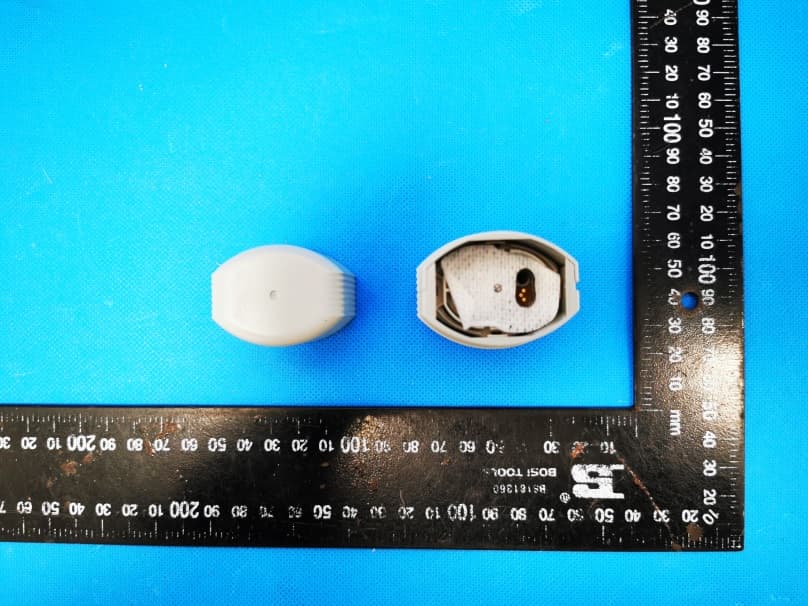
Click to zoom
Application Details
- Equipment Class
- DTS - Digital Transmission System
- Date of Grant
- May 09, 2024
- Application Purpose
- Original Equipment
- Date of Application
- May 09, 2024
- Equipment Note
- Continuous Glucose Monitoring System
- Frequency Range
- 2402.00000000 - 2480.00000000
- Country
- China
Documents & Files
Document Text
Text extracted from the exhibit documents filed with the FCC. Open a document above to read the original.
Users Manual
USER’S MANUAL Continuous Glucose Monitoring System Instructions for Use of Continuous Glucose Monitoring System 2 Contents 1. Product Introduction 1.1 Basic Information 1.2 Indications for Use 1.3 Contraindications 1.4 Precautions 2. Overview of App F unctions 2.1 App Functions 2.2 App Prompt Messages 3. Applying Your Sensor 4. Starting Your Sensor 4.1 The operating environment and compatibility for the App 4.2 App Setup 4.3 Checking Your Glucose 4.4 Removing your Sensor 5. Cleaning and maintenance 6. Disposal 7. Troubleshooting 8. Electrical safety 9. System specifications 10. Electromagnetic compatibility 11. Performance Characteristics 12. Labelling Symbols and Definitions 13. Manufacturer information Instructions for Use of Continuous Glucose Monitoring System 3 1. Product introduction 1.1 Basic information Device name: Continuous Glucose Monitoring System (CGM System) Model and Size: TX-14 Device Description: The TX-14 Continuous Glucose Monitoring System (hereinafter referred to as the 'System') is a fully-integrated continuous glucose monitoring system (iCGM) that provides glucose readings every 5 minutes, delivering real-time glucose levels, trends, and alerts.The System comprises two primary components: a sensor kit that transmits data via Bluetooth Low Energy (BLE), and an App for data sharing. The sensor kit consists of two elements: a sensor pack (incorporating a sensor electrode assembly and a needle) and a sensor applicator (comprising an applicator, a transmitter, and adhesive tape). The Sensor automatically stops working after 14 days of wear and must be replaced. Sensor kit includes: SN Component name Component model/specification Picture (the color is subject to the actual object) Quantity 1 Sensor Pack TS001 1 Instructions for Use of Continuous Glucose Monitoring System 4 2 Sensor Applicator TA001 1 3 Product insert / / 1 1.2 Indications for Use The device is intended for continuous or periodic monitoring of interstitial fluid glucose levels in adult patients with diabetes (≥18 years of age). The System can provide and store real-time continuous glucose values, enabling users to track the trend of glucose concentration changes. If the glucose readings falls below or rises above a preset value, the companion app will issue an alert. The device is intended for single use and does not require calibration. It should be noted that the glucose readings obtained by the sensor cannot replace blood glucose testing for making diabetes treatment decisions. 1.3 Contraindications The sensor must be removed prior to the Magnetic Resonance Imaging (MRI), X-ray, CT scan, other examinations that may expose the patient to strong magnetic or electromagnetic radiation fields, and diathermic therapy. The System is not intended for use in conjunction with the closed-loop insulin infusion system and the insulin infusion suspension system. Instructions for Use of Continuous Glucose Monitoring System 5 The use of this System by pregnant women, dialysis patients, or persons under the age of 18 has not been researched. Unknown risks may arise if they use this product. 1.4 Precautions Read this entire user guide before attempting to insert the sensor: (1) Failure to follow the directions may result in improper insertion, pain or injury. If there is anything you don’t understand or you have any doubts, please contact your local representative for assistance. (2) The measurement results of this product can not replace blood glucose testing for diabetes treatment decisions. (3) Do not use the sensor if the sterile package has been opened or damaged. The sensor pack is sterile, unless the package has been opened or damaged. Use of an unsterile sensor can cause site infection. (4) Any Changes or modifications not expressly approved by the party responsible for compliance could void the user's authority to operate the equipment. The Company does not assume any responsibility for any consequence caused by unauthorized modification. (5) The Sensor contains small parts that may be dangerous if swallowed. (6) Do not use if expiry date.has passed. (7)Intense exercise may cause your sensor to loosen due to sweat or movement of the sensor. If the sensor is becoming loose or if the sensor tip is coming out of your skin, you may get no readings or unreliable low readings. Remove and replace your sensor if it starts to loosen and follow the instructions to select an appropriate Instructions for Use of Continuous Glucose Monitoring System 6 application site. Do not attempt to reinsert the sensor. Contact our Customer Care Team if your sensor becomes loose or falls off before the end of the wear period. (8) The sensor shoud not be touched by pets or children to avoid loosening or falling off. (9) Please keep the terminal equipped with the CGM system software away from children, pets or insects to avoid being misoperation. (10) Do not clean, resterilize, or try to extract the needle from the applicator. An accidental needlestick or puncture may occur. (11) A fingerstick test is required to confirm the low or near-low blood glucose readings. (12) A fingerstick test is required to confirm the sensor readings when the user's symptoms do not match the glucose values displayed by the device. (13) The effect of the sensor which is used together with other active distribution medical devices such as the heart pacemaker has not been evaluated. (14) If you have a medical appointment that includes strong magnetic or electromagnetic radiation, for example an X-ray, MRI (Magnetic Resonance Imaging) or CT (Computed Tomography) scan, remove the Sensor you are wearing and apply a new one after the appointment. The effect of these types of procedures on the performance of the Sensor has not been evaluated. (15) Do not reuse Sensors. The Sensor and Sensor Applicator are designed for single use. Reuse may result in no glucose readings and infection. Not suitable for resterilisation. Further exposure to irradiation may cause inaccura…
Text truncated - open the document above for the full version.
External Photos
External photos
Internal Photos
Internal photos
RF Exposure Info
FCC ID: 2BFX7-0044 RF Exposure Evaluation REQUIREMENT KDB447498 D01 General RF Exposure Guidance v06, Clause 4.3.1(a) [(max. power of channel, including tune-up tolerance, mW) / (min. test separation distance, mm)] · [√f(GHz)] ≤ 3.0 Where -f(GHz) is the RF channel transmit frequency in GHz -Power and distance are rounded to the nearest mW and mm before calculation -The test exclusions are applicable only when the minimum test separation distance is ≤ 50 mm, and for transmission frequencies between 100 MHz and 6 GHz. When the minimum test separation distance is < 5 mm, a distance of 5 mm according to 4.1 f) is applied to determine SAR test exclusion. TEST RESULT Passed Not Applicable Radio Type Frequency range (MHz) Conducted Power (dBm) Maximum Tune-up (dBm) Calculating data Limit Result Bluetooth 2402-2480 -1.77 -1.50 0.2199 3.00 Pass Note: 1) The maximum antenna gain is 2.26dBi 2) The exposure evaluation safety distance is 5mm.
Test Report
Page: 1 of 35 TEST REPORT For Bluetooth-LE Report No. ...................................... : CHTW24040011 Report Verification: Project No.................................: SHT2310042313EW FCC ID ............................................. : 2BFX7-0044 Applicant’s name ........................... : Teljane Medical Technology (Suzhou) Co., Ltd. Address ............................................. : 5F, Building 2A, 69 Jiepu Road, Suzhou Industrial Park, Suzhou, PRC Product Name ................................ : Continuous Glucose Monitoring System Trade Mark ....................................... : - Model No. ......................................... : TX-14 Listed Model(s) ................................. : - Standard ......................................... : FCC CFR Title 47 Part 15 Subpart C § 15.247 Date of receipt of test sample..........: Mar.26, 2024 Date of testing.............................: Mar.26, 2024- Apr .16, 2024 Date of issue...............................: Apr .17, 2024 Result .................. ........................: PASS Compiled by ( Position+Printed name+Signature): File administrators Kiki Kong Supervised by (Position+Printed name+Signature): Project Engineer Kiki Kong Approved by (Position+Printed name+Signature): RF Manager Xu yang Testing Laboratory Name ............. : Shenzhen Huatongwei International Inspection Co., Ltd. Address ............................................. : Building 7, Baiwang Idea Factory, No.1051, Songbai Road, Yangguang Community, Xili Subdistrict, Nanshan District, Shenzhen, Guangdong, China Shenzhen Huatongwei International Inspection Co., Ltd. All rights reserved. This publication may be reproduced in whole or in part for non-commercial purposes as long as the Shenzhen Huatongwei International Inspection Co., Ltd. is acknowledged as copyright owner and source of the material. Shenzhen Huatongwei International Inspection Co., Ltd. takes no responsibility for and will not assume liability for damages resulting from the reader's interpretation of the reproduced material due to its placement and context. The test report merely correspond to the test sample. Report No.: CHTW24040011 Page: 2 of 35 Date of issue: 2024-04-17 Shenzhen Huatongwei International Inspection Co., Ltd. Report Template Version: V06(2023-0 9) Contents 1. TEST STANDARDS AND REPORT VERSION 3 1.1. Test Standards 3 1.2. Report version 3 2. TEST DESCRIPTION 4 3. SUMMARY 5 3.1. Client Information 5 3.2. Product Description 5 3.3. Radio Specification Description 5 3.4. Testing Laboratory Information 6 4. TEST CONFIGURATION 7 4.1. Test frequency list 7 4.2. Descriptions of Test mode 7 4.3. Test sample information 7 4.4. Support unit used in test configuration and system 8 4.5. Testing environmental condition 8 4.6. Statement of the measurement uncertainty 8 4.7. Equipment Used during the Test 9 5. TEST CONDITIONS AND RESULTS 11 5.1. Antenna Requirement 11 5.2. AC Conducted Emission 12 5.3. Peak Output Power 13 5.4. Power Spectral Density 14 5.5. 6dB bandwidth 15 5.6. 99% Occupied Bandwidth 16 5.7. Duty Cycle 17 5.8. Conducted Band edge and Spurious Emission 18 5.9. Radiated Band edge Emission 19 5.10. Radiated Spurious Emission 21 6. TEST SETUP PHOTOS 28 7. EXTERNAL AND INTERNAL PHOTOS 30 7.1 External photos 30 7.2 Internal photos 33 8. APPENDIX REPORT 35 Report No.: CHTW24040011 Page: 3 of 35 Date of issue: 2024-04-17 Shenzhen Huatongwei International Inspection Co., Ltd. Report Template Version: V06(2023-0 9) 1. TEST STANDARDS AND REPORT VERSION 1.1. Test Standards The tests were performed according to following standards: ‒ FCC CFR Title 47 Part 15 Subpart C § 15.247: Operation within the bands 902-928 MHz, 2400-2483.5 MHz, and 5725-5850 MHz ‒ ANSI C63.10:2020: American National Standard for Testing Unlicensed Wireless Devices ‒ KDB 558074 D01 15.247 Meas Guidance v05r02: Guidance for Compliance Measurements on Digital Transmission System, Frequency Hopping Spread Spectrum System, and Hybrid System Devices Operating under Section 15.247 of The FCC Rules 1.2. Report version Revision No. Date of issue Description N/A 2024-04-17 Original Report No.: CHTW24040011 Page: 4 of 35 Date of issue: 2024-04-17 Shenzhen Huatongwei International Inspection Co., Ltd. Report Template Version: V06(2023-0 9) 2. TEST DESCRIPTION Report clause Test Items Standard Requirement Result Test Engineer 5.1 Antenna Requirement 15.203/15.247(c) PASS Xiangyu Wei 5.2 AC Conducted Emission 15.207 N/A N/A 5.3 Peak Output Power 15.247(b)(3) PASS Xiangyu Wei 5.4 Power Spectral Density 15.247(e) PASS Xiangyu Wei 5.5 6dB Bandwidth 15.247(a)(2) PASS Xiangyu Wei 5.6 99% Occupied Bandwidth - PASS *1 Xiangyu Wei 5.7 Duty cycle - PASS *1 Xiangyu Wei 5.8 Conducted Band Edge and Spurious Emission 15.247(d)/15.205 PASS Xiangyu Wei 5.9 Radiated Band Edge Emission 15.205/15.209 PASS Yifan Wang 5.10 Radiated Spurious Emission 15.247(d)/15.205/15.209 PASS Yifan Wang Note: ‒ The measurement uncertainty is not included in the test result. ‒ *1: No requirement on standard, only report these test data. ‒ N/A:Not applicable (this product is battery powered) Report No.: CHTW24040011 Page: 5 of 35 Date of issue: 2024-04-17 Shenzhen Huatongwei International Inspection Co., Ltd. Report Template Version: V06(2023-0 9) 3. SUMMARY 3.1. Client Information Applicant: Teljane Medical Technology (Suzhou) Co., Ltd. Address: 5F, Building 2A, 69 Jiepu Road, Suzhou Industrial Park, Suzhou, PRC Manufacturer: Teljane Medical Technology (Suzhou) Co., Ltd. Address: 5F, Building 2A, 69 Jiepu Road, Suzhou Industrial Park, Suzhou, PRC 3.2. Product Description Main unit information: Product Name: Continuous Glucose Monitoring System Trade Mark: - Model No.: TX-14 List ed Model(s): - Power supply: DC 3.0V from Battery Hardware version: V1.0.0.0 Software version: V1.0.0.0 3.3. Radio Specification Description Bluetooth version: V5.0 Support function: BLE 1M,BLE2M Modulation: GFSK Operation frequency: 2402MHz~2480MHz Channel number: 40 Cha…
Text truncated - open the document above for the full version.
Test Report
Teljane Medical Technology (Suzhou) Co., Ltd. -1- Bluetooth antenna of PCB on-board specification V1.0 1、Index Item Content Page Remark 1 Index 1 2 Specification 2 3 VSWR 3 4 Radiation Pattern 4 Document Type: PCB Antenna Document Version: V2.0 Release Date: Jan 25,2020 Teljane Medical Technology (Suzhou) Co., Ltd. Teljane Medical Technology (Suzhou) Co., Ltd. -2- 2、Specification Product Number: PCB Antenna Sample Photo: A. Electrical Characteristics Frequency 2400 ~ 2500 MHz S.W.R. <=1.5 Gain 2.26 dBi Efficiency ~ 50% Polarization Linear Impedance 50 Ohm B. Material & Mechanical Characteristics Material of Radiator plated copper C. Environmental Operation Temperature - 40°C ~ + 85°C Storage Temperature - 40°C ~ + 105°C Teljane Medical Technology (Suzhou) Co., Ltd. -3- 3、 VSWR Teljane Medical Technology (Suzhou) Co., Ltd. -4- 4、Radiation Pattern Radiation Pattern and Gain were dependent on measurement board design. The specification of coil antenna was measur ed based on the PCB size and installation position as shown in the below figure Test Board.
Test Setup Photos
TEST SETUP PHOTOS Radiated Emission
Contact Information
Applicant
Frank Meng(Quality Manager)
Test Firm
Shenzhen Huatongwei International Inspection Co.,Tony Jiang
[email protected]+86-755-26748078
Technical Specifications
| # | Rule Parts | Frequency Range | Power Output |
|---|---|---|---|
| 1 | 15C | 2.40 GHz - 2.48 GHz | 665.00 µW |