2BVYX-E-EPA275Bluetooth headphone
CHUNG CHING TECHNICAL CO., LTD.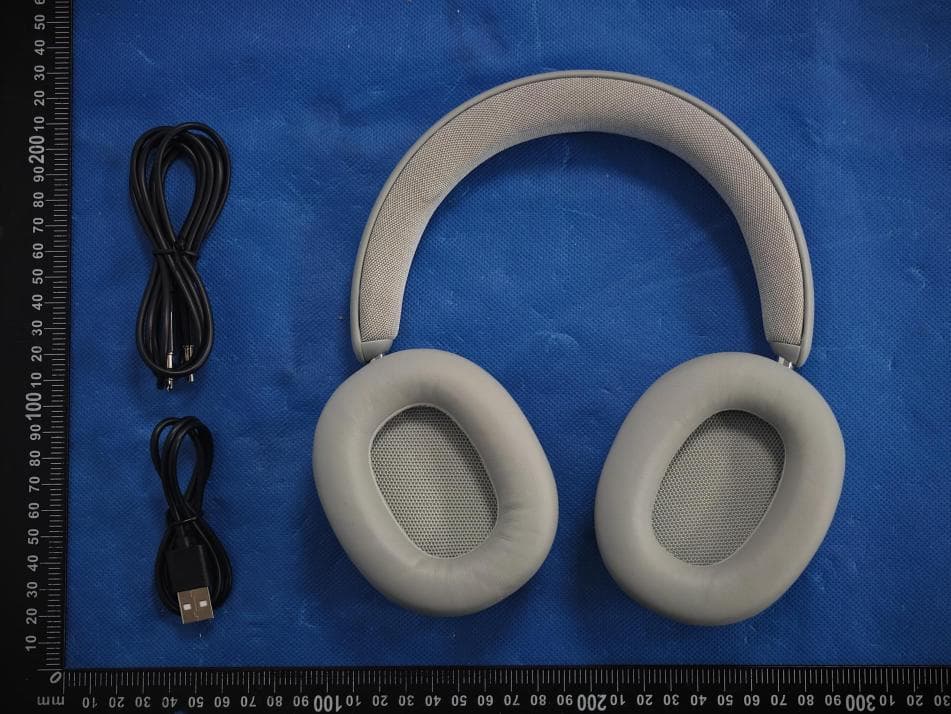
Click to zoom
Application Details
- Equipment Class
- DSS - Part 15 Spread Spectrum Transmitter
- Date of Grant
- May 27, 2026
- Application Purpose
- Original Equipment
- Equipment Note
- Bluetooth headphone
- Frequency Range
- 2402.00000000 - 2480.00000000
- Country
- Taiwan
Documents & Files
Document Text
Text extracted from the exhibit documents filed with the FCC. Open a document above to read the original.
Users Manual
Product Parameter: Bluetooth Standard:Bluetooth V6.0 Support:a2dp\avctp\avdtp\avrcp\hfp\spp\smp\att\gap\gatt\rfcomm\sdp\l2cap profile Working Distance Range: 10m Speaker Unit: 40mm Working frequency Range: 2.402GHz-2.480GHz Battery Specifications: 3.7V/500mAh Charging Voltage: 5V/1A Charging Time: About 2.5 hours Items Included: 1. One Charging Line 2. One Aux-in Line 3. One Instruction 4. On E-EPA275 Bluetooth Headphone Bluetooth Mode Operation: Bluetooth pairing: Long press the “Mode” button for three seconds to turn on the headphone, it will enter the pairing mode automatically, indicator light flashes with white and orange. Turn on the smart device's Bluetooth searching function and select the device “E-EPA275”, no password is required, after successfully pairing, the LED indicator light stays white, voice prompts “Connected”. Button Description: 1) Play/pause the music: Short press the “MFB knob” to play or pause the music 2) Answer/end of the call: Short press the “MFB knob” to answer or end of the call 3) Reject the call: Long press the “MFB knob” for 2 seconds 4) Next song: Double-click the “MFB knob” 5) Previous song: Triple-click the “MFB knob” 6) Increase volume: Turn the “MFB knob” counterclockwise 7) Decrease volume: Turn the “MFB knob” clockwise 8) Voice assistant: Triple-click the “Mode” button to activate the voice assistant 9) Clean pairing: Long press the “MFB knob” and the “Mode” button for 3 seconds at the same time to clean the paired device, voice prompts “di”, then enter the pairing mode automatically, voice prompts “Bluetooth Mode” 10) Power off: Long press the “Mode” button for 3 seconds to turn off the headphone ANC MODE: Short press the “Mode” button to switch the ANC mode, voice prompts “ANC Mode”. Short press the “Mode” button again to turn off the ANC mode, voice prompts “ANC Off”. Low Latency Mode: Press the “Mode” button for four times to turn on the low latency mode, voice prompts “Game Mode”. Press the “Mode” button for four times again to turn off the low latency mode, voice prompts “Music Mode”. “. Spatial Mode: Double press the “Mode” button to switch the Spatial Mode, voice prompts “Spatial Audio”. Double press the “Mode” button again to turn off the Spatial Mode, voice prompts “Spatial Audio Off”. LED Indicator Light Status: Charging Status LED indicator light stays orange when charging. When fully charged, LED indicator light stays white. Pairing Status LED indicator light alternating flashes white and orange. Playing Status LED indicator flashes white every 5 seconds. ANC Status LED indicator stays green. Note: If no pairing connection after the Bluetooth headset enters the pairing mode, please turn off the headset to save power. Do not perform other operations when searching Bluetooth to prevent the program error. Please select a proper volume while using to prevent damage to your ears. Please note that a good environment for using the Bluetooth headsets, that can avoid damage to the headsets. Please charge the headset after a long time none-use. FCC Statement Changes or modifications not expressly approved by the party responsible for compliance could void the user's authority to operate the equipment. This equipment has been tested and found to comply with the limits for a Class B digital device, pursuant to Part 15 of the FCC Rules. These limits are designed to provide reasonable protection against harmful interference in a residential installation. This equipment generates uses and can radiate radio frequency energy and, i f not installed and used in accordance with th e instructions, may cause harmful interference to radio communications. However, there is no guarantee that interference will not occur in a particular installation. If this equipment does cause harmful interference to radio or television reception, which can be determined by turning th e equipment off and on, the user is encouraged to try to correct the interference by one or more of the following measures: -- Reorient or relocate the receiving antenna. -- Increase the separation between the equipment a nd receiv er. -- Connect t he equipment into an outlet on a circuit different from that to whi ch the receiver is connected. -- Consult t he dealer or an experienced radio/TV technician for help This device complies with part 15 of the FCC rules. Operation is subject t o the following two conditions (1) this device may not cause harmful interference, and (2) this device must accept any interference received, including interference that may cause undesired operation. This equipment complies with FCC radiation exposure limits set forth for an uncontrolled environment. The RF exposure assessment was conducted 5 mm away from the human body.
Attestation Statements
(CHUNG CHING TECHNICAL CO., LTD.) (2026/5/20) Eurofins Electrical and Electronic Testing NA, Inc. 914 West Patapsco Avenue Baltimore, MD 21230 RE: Attestation Statements Part 2.911(d)(5)(i) request for (FCC ID: 2BVYX-E-EPA275) [CHUNG CHING TECHNICAL CO., LTD.] (“the applicant”) certifies that the equipment for which authorization is sought is not “covered” equipment prohibited from receiving an equipment authorization pursuant to section 2.903 of the FCC rules. We also certify that, as of the 2025/6/23 of the filing of the application, the equipment does not utilize cyber-security or anti-virus software from Kaspersky Lab, Inc, or any of its successors and assignees, which is also on the “covered list”. Sincerely, (Applicant signature) (Applicant printed name) Chung Kun Lin (CHUNG CHING TECHNICAL CO., LTD.) (2026/5/20) Eurofins Electrical and Electronic Testing NA, Inc. 914 West Patapsco Avenue Baltimore, MD 21230 RE: Attestation Statements Part 2.911(d)(5)(ii) request for (FCC ID: 2BVYX-E-EPA275) [CHUNG CHING TECHNICAL CO., LTD.] (“the applicant”) certifies that, as of the 2025/6/23 of the filing of the application, the applicant is not identified on the Covered List as an entity producing “covered” equipment. Sincerely, (Applicant signature) (Applicant printed name) Chung Kun Lin
Cover Letter(s)
CHUNG CHING TECHNICAL CO., LTD. 2026/5/20 Eurofins Electrical and Electronic Testing NA, Inc. 914 W. Patapsco Avenue Baltimore, MD 21230 USA RE: LETTER OF AGENT AUTHORIZATION EUT NAME: Bluetooth headphone Trademark: N/A MODEL: E-EPA275 FCC ID: 2BVYX-E-EPA275 To Whom It May Concern: We, the undersigned, hereby authorize SHENZHEN STS TEST SERVICES CO., LTD to act on our behalf in all matters relating to application for equipment authorization, including the signing of all documents relating to these matters. We also hereby certify that no party to the application authorized hereunder is subject to the denial of benefits, including FCC benefits, pursuant to Section 5301 of the Anti-Drug Abuse Act of 1988, 21 U.S.C.853(a). This agreement expires one year from the current date. Sincerely, Client’s signature: Client’s name / title: Chung Kun Lin / Purchasing Specialist Contact information / address: RM.D, 6F., NO.573, SEC.2, TAIWAN BLVD., WEST DIST., TAICHUNG CITY 403, TAIWAN
Cover Letter(s)
CHUNG CHING TECHNICAL CO., LTD. 2026/5/20 Eurofins Electrical and Electronic Testing NA, Inc. 914 W. Patapsco Avenue Baltimore, MD 21230 USA RE: CONFIDENTIALITY REQUEST FOR EUT NAME: Bluetooth headphone Trademark: N/A MODEL: E-EPA275 FCC ID: 2BVYX-E-EPA275 To Whom It May Concern: This letter serves as an official request for confidentiality under sections 0.457 and 0.459 of CFR 47. We have requested that the - Block Diagram - Schematics - Operational Description required to be submitted with this application be permanently withheld from public review. The above materials contain trade secrets and proprietary information not customarily released to the public. The public disclosure of these materials may be harmful to the applicant and provide unjustified benefits to its competitors. Please contact me if there is any information you may need. Sincerely, Client’s signature: Client’s name / title: Chung Kun Lin / Purchasing Specialist Contact information / address: RM.D, 6F., NO.573, SEC.2, TAIWAN BLVD., WEST DIST., TAICHUNG CITY 403, TAIWAN
External Photos
FCC ID: 2BVYX-E-EPA275 External Photos FCC ID: 2BVYX-E-EPA275 FCC ID: 2BVYX-E-EPA275
ID Label/Location Info
Size:20*1mm FCC ID: 2BVYX-E-EPA275 Label location
Internal Photos
FCC ID: 2BVYX-E-EPA275 Internal Photos FCC ID: 2BVYX-E-EPA275 Antenna
RF Exposure Info
The test results presented in this report relate only to the object tested. This report shall not be reproduced, except in full, without the written approval of the ShenZhen STS Test Services Co., Ltd. MPE Report Report No.: STS2605328H01 Issued for CHUNG CHING TECHNICAL CO., LTD. RM.D, 6F., NO.573, SEC.2, TAIWAN BLVD., WEST DIST., TAICHUNG CITY 403, TAIWAN Product Name: Bluetooth headphone Brand Name: N/A Model Name: E-EPA275 Series Model(s): N/A FCC ID: 2BVYX-E-EPA275 Test Standards: FCC 47CFR §2.1093 Page 2 of 8 Report No.: STS2605328H01 TEST REPORT Applicant’s Name ................. : CHUNG CHING TECHNICAL CO., LTD. Address ................................. : RM.D, 6F., NO.573, SEC.2, TAIWAN BLVD., WEST DIST., TAICHUNG CITY 403, TAIWAN Manufacturer's Name ........... : Shantou Yonglestyle Industrial Co., Ltd. Address ................................. : Gounan Industry Zone, Gurao Town, Chaoyang District, Shantou City, Guangdong, China Product Description Product Name ........................ : Bluetooth headphone Brand Name .......................... : N/A Model Name .......................... : E-EPA275 Series Model(s) ...................... : N/A Test Standards ..................... : FCC 47CFR §2.1093 447498 D01 Interim General RF Exposure Guidance v06 The test results presented in this report relate only to the object tested. This report shall not be reproduced, except in full, without the written approval of the ShenZhen STS Test Services Co., Ltd. Date of Test ........................................... : Date of receipt of test item ...................... : 16 Apr. 2026 Date (s) of performance of tests ............. : 16 Apr. 2026 to 07 May. 2026 Date of Issue .......................................... : 07 May. 2026 Test Result .............................................. : Pass Testing Engineer : (Aaron Bu) Technical Manager : (Skylar Li) Authorized Signatory : (Bovey Yang) Page 3 of 8 Report No.: STS2605328H01 TABLE OF CONTENTS 1. GENERAL INFORMATION 5 1.1 GENERAL DESCRIPTION OF THE EUT 5 1.2 TEST FACTORY 5 2. FCC 47CFR §2.1093 REQUIREMENT 6 2.1 TEST STANDARDS 6 2.2 LIMIT 6 2.3 TEST RESULT 8 Page 4 of 8 Report No.: STS2605328H01 Revision History Rev. Issue Date Report No. Effect Page Contents 00 07 May. 2026 STS2605328H01 ALL Initial Issue Page 5 of 8 Report No.: STS2605328H01 1. GENERAL INFORMATION 1.1 GENERAL DESCRIPTION OF THE EUT Product Name Bluetooth headphone Brand Name N/A Model Name E-EPA275 Series Model(s) N/A Model Difference N/A Product Description The EUT is Bluetooth headphone Operation Frequency: 2402~2480MHz Modulation Type: BR+EDR: GFSK, π/4-DQPSK, 8DPSK BLE: GFSK 1Mbps, GFSK 2Mbps Antenna gain (dBi): 1.68 Antenna Designation: Internal Power Rating Charging: DC 5V Adapter N/A Battery DC 3.7V Hardware Version N/A Software Version N/A 1.2 TEST FACTORY SHENZHEN STS TEST SERVICES CO., LTD Add. : 101, Building B, Zhuoke Science Park, No.190 Chongqing Road, ZhanChengShequ, Fuhai Sub-District, Bao’an District, Shenzhen, Guang Dong, China FCC test Firm Registration Number: 625569 IC test Firm Registration Number: 12108A A2LA Certificate No.: 4338.01 Page 6 of 8 Report No.: STS2605328H01 2. FCC 47CFR §2.1093 REQUIREMENT 2.1 TEST STANDARDS The limit for Maximum Permissible Exposure (MPE) specified in KDB 447498 D01 General RF Exposure Guidance v06 is followed. The gain of the antennas used in the product is extracted from the Antenna data sheets provided and also the maximum total power input to the antenna is measured. Through the Friis transmission formula and the maximum gain of the antenna, we can calculate the distance, away from the product, where the limit of MPE is reached. Although the Friis Transmission formula is far field assumption, the calculated result of that is an over-prediction for near field power density. It is taken as worst case to specify the safety range. 2.2 LIMIT Approximate SAR Test Exclusion Power Thresholds at Selected Frequencies and Test Separation Distances are illustrated in the following Table. Page 7 of 8 Report No.: STS2605328H01 The 1-g and 10-g SAR test exclusion thresholds for 100 MHz to 6 GHz at test separation distances ≤ 50 mm are determined by: [(max. power of channel, including tune-up tolerance, mW)/(min. test separation distance, mm)] • [√f(GHz)] ≤ 3.0 for 1-g SAR and ≤ 7.5 for 10-g extremity SAR,where f(GHz) is the RF channel transmit frequency in GHz. Power and distance are rounded to the nearest mW and mm before calculation The result is rounded to one decimal place for comparison The test exclusions are applicable only when the minimum test separation distance is ≤ 50 mm and for transmission frequencies between 100 MHz and 6 GHz. When the minimum test separation distance is < 5 mm, a distance of 5 mm is applied to determine SAR test exclusion. Page 8 of 8 Report No.: STS2605328H01 2.3 TEST RESULT Maximum measured transmitter power. Worst Case Mode Frequency Maximum Output Power Tune up tolerance Max Tune up GHz dBm dBm dBm BR+EDR 2.402 1.92 1.0±1 2.0 Evaluation Result Mode Frequency Antenna Distance RF output power including tune up SAR Test Exclusion Threshold SAR Test Exclusion Estimated SAR GHz mm dBm mw BR+EDR 2.402 5 2.0 1.585 0.491 Yes / Note: 1. Remark: The worst case gain of the antenna is 1.68dBi. 2. Threshold at which no SAR required is yyy≤ 3.0 for 1-g SAR, Separation distance ≤ 5mm. ※※※※※END OF THE REPORT※※※※※
Test Report
The test results presented in this report relate only to the object tested. This report shall not be reproduced, except in full, without the written approval of the Shenzhen STS Test Services Co., Ltd. Radio Test Report Report No.: STS2605328W01 Issued for CHUNG CHING TECHNICAL CO., LTD. RM.D, 6F., NO.573, SEC.2, TAIWAN BLVD., WEST DIST., TAICHUNG CITY 403, TAIWAN Product Name: Bluetooth headphone Brand Name: N/A Model Name: E-EPA275 Series Model(s): N/A FCC ID: 2BVYX-E-EPA275 Test Standards: FCC Part15.247 Page 2 of 101Report No.: STS2605328W01 TEST REPORT Applicant’s Name ................. : CHUNG CHING TECHNICAL CO., LTD. Address ................................. : RM.D, 6F., NO.573, SEC.2, TAIWAN BLVD., WEST DIST., TAICHUNG CITY 403, TAIWAN Manufacturer's Name .......... : Shantou Yonglestyle Industrial Co., Ltd. Address ................................. : Gounan Industry Zone, Gurao Town, Chaoyang District, Shantou City, Guangdong, China Product Description Product Name........................ : Bluetooth headphone Brand Name .......................... : N/A Model Name .......................... : E-EPA275 Series Model(s) .................... : N/A Standards ............................. : FCC Part15.247 Test Procedure ...................... : ANSI C63.10-2020+Cor 1-2023 This device described above has been tested by STS, the test results show that the equipment under test (EUT) is in compliance with the FCC requirements. And it is applicable only to the tested sample identified in the report. The test results presented in this report relate only to the object tested. This report shall not be reproduced, except in full, without the written approval of the Shenzhen STS Test Services Co., Ltd. Date of Test ............................... : Date of receipt of test item ......... : 16 Apr. 2026 Date (s) of performance of tests . :16 Apr. 2026 to 07 May. 2026 Date of Issue .............................. :07 May. 2026 Test Result.................................. :Pass Testing Engineer : (Aaron Bu) Technical Manager : (Skylar Li) Authorized Signatory : (Bovey Yang) Page 3 of 101 Report No.: STS2605328W01 Table of Contents Page 1. SUMMARY OF TEST RESULTS 6 1.1 TEST FACTORY 7 1.2 MEASUREMENT UNCERTAINTY 7 2. GENERAL INFORMATION 8 2.1 GENERAL DESCRIPTION OF THE EUT 8 2.2 DESCRIPTION OF THE TEST MODES 10 2.3 FREQUENCY HOPPING SYSTEM REQUIREMENTS 10 2.4 TABLE OF PARAMETERS OF TEST SOFTWARE SETTING 12 2.5 BLOCK DIAGRAM SHOWING THE CONFIGURATION OF SYSTEM TESTED 12 2.6 DESCRIPTION OF NECESSARY ACCESSORIES AND SUPPORT UNITS 13 2.7 EQUIPMENTS LIST 14 3. EMC EMISSION TEST 15 3.1 CONDUCTED EMISSION MEASUREMENT 15 3.2 RADIATED EMISSION MEASUREMENT 19 4. CONDUCTED SPURIOUS & BAND EDGE EMISSION 31 4.1 LIMIT 31 4.2 TEST PROCEDURE 31 4.3 TEST SETUP 32 4.4 EUT OPERATION CONDITIONS 32 4.5 TEST RESULTS 32 5. NUMBER OF HOPPING CHANNEL 33 5.1 LIMIT 33 5.2 TEST PROCEDURE 33 5.3 TEST SETUP 33 5.4 EUT OPERATION CONDITIONS 33 5.5 TEST RESULTS 33 6. AVERAGE TIME OF OCCUPANCY 34 6.1 LIMIT 34 6.2 TEST PROCEDURE 34 6.3 TEST SETUP 34 6.4 EUT OPERATION CONDITIONS 34 6.5 TEST RESULTS 34 7. HOPPING CHANNEL SEPARATION MEASUREMEN 35 7.1 LIMIT 35 Page 4 of 101 Report No.: STS2605328W01 Table of Contents Page 7.2 TEST PROCEDURE 35 7.3 TEST SETUP 35 7.4 EUT OPERATION CONDITIONS 35 7.5 TEST RESULTS 35 8. BANDWIDTH TEST 36 8.1 LIMIT 36 8.2 TEST PROCEDURE 36 8.3 TEST SETUP 36 8.4 EUT OPERATION CONDITIONS 36 8.5 TEST RESULTS 36 9. OUTPUT POWER TEST 37 9.1 LIMIT 37 9.2 TEST PROCEDURE 37 9.3 TEST SETUP 38 9.4 EUT OPERATION CONDITIONS 38 9.5 TEST RESULTS 38 10. ANTENNA REQUIREMENT 39 10.1 STANDARD REQUIREMENT 39 10.2 EUT ANTENNA 39 APPENDIX 1-TEST DATA 40 DWELL TIME 40 MAXIMUM CONDUCTED OUTPUT POWER 50 -20DB BANDWIDTH 56 OCCUPIED CHANNEL BANDWIDTH 62 CARRIER FREQUENCIES SEPARATION 68 BAND EDGE 74 BAND EDGE(HOPPING) 81 CONDUCTED RF SPURIOUS EMISSION 88 NUMBER OF HOPPING CHANNEL 98 APPENDIX 2-PHOTOS OF TEST SETUP 101 Page 5 of 101 Report No.: STS2605328W01 Revision History Rev. Issue Date Report No. Effect Page Contents 00 07 May. 2026 STS2605328W01 ALL Initial Issue Page 6 of 101 Report No.: STS2605328W01 1. SUMMARY OF TEST RESULTS Test procedures according to the technical standards: KDB 558074 D01 15.247 Meas Guidance v05r0 2. FCC Part 15.247,Subpart C Standard Section Test Item Judgment Remark 15.207 Conducted Emission PASS -- 15.247(a)(1) Hopping Channel Separation PASS -- 15.247(a)(1)&(b)(1) Output Power PASS -- 15.209 Radiated Spurious Emission PASS -- 15.247(d) Conducted Spurious & Band Edge Emission PASS -- 15.247(a)(1)(iii) Number of Hopping Frequency PASS -- 15.247(a)(1)(iii) Dwell Time PASS -- 15.247(a)(1) Bandwidth PASS -- 15.205 Restricted bands of operation PASS -- Part 15.247(d)/part 15.209(a) Band Edge Emission PASS -- 15.203 Antenna Requirement PASS -- Note: (1) ‘N/A’ denotes test is not applicable in this Test Report. (2) All tests are according to ANSI C63.10-2020+Cor 1-2023. Page 7 of 101 Report No.: STS2605328W01 1.1 TEST FACTORY SHENZHEN STS TEST SERVICES CO., LTD Add. : 101, Building B, Zhuoke Science Park, No.190 Chongqing Road, ZhanChengShequ, Fuhai Sub-District, Bao’an District, Shenzhen, Guang Dong, China FCC test Firm Registration Number: 625569 IC test Firm Registration Number: 12108A A2LA Certificate No.: 4338.01 1.2 MEASUREMENT UNCERTAINTY The reported uncertainty of measurement y ±U, where expended uncertainty U is based on a standard uncertainty mult iplied by a coverage factor of k=2, providing a level of confidence of approximately 95 %. No. Item Uncertainty 1 RF output power, conducted ±0.751dB 2 Unwanted Emissions, conducted ±2.888dB 3 All emissions, radiated 9K-30MHz ±2.48dB 4 All emissions, radiated 30M-1GHz ±2.52dB 5 All emissions, radiated 1G-18GHz ±3.48dB 6 All emissions, radiated>18GHz ±4.18dB 7 Conducted Emission (9KHz-150KHz) ±2.48dB 8 Conducted Emission (150KHz-30MHz) ±2.52dB 9 Occupied Channel Bandwidth ±3.6% 10 Duty Cycle ±3.2% Page 8 of 101 Report No.: STS2605328W01 2. GENERAL INFORMAT…
Text truncated - open the document above for the full version.
Test Report
Product specification Quick Reference Date XHL-E389-ANT Frequenc Range 2402 ~ 24888888 0MHz Ant. Port Input Pwr. (dBm) 0 (Typ. BT class 2 output power) Tot. Rad. Pwr. (dBm) -1.35 (Input pwr – loss pwr) Peak EIRP(d Bm) 1.35 Directivity (dBi) 1 (all direction antenna) Efficiency (dB) 6 0.2 % Gain (dBi) -0.52 (Avg Gain XY-plane) Maximum Gain (dBi)1.35 (XY-plane) Minimum Gain (dBi)-0.48 (XY-plane) Avg. Gain (dBi)-0.435(XY-plane) Input Impendence(ohm) 50 Polarization Type V ertical & Horizontal V . S .W . R < 1.4 All the technical data and information contained herein are subject to change without prior notice Antenna Layout & module on the system board Antenna Gain Gain Table Unit in dBi @2.44GHz XY-plane XZ-plane YZ-plane Efficiency Peak Avg. Peak Avg. Peak Avg. Module Board 1.35-0.481.68-3.831.11-2.996 0.2 % MODEL Retum Loss The Environment of Antenna Radiation Pattem 3D radiation pattern diagram XY-plane XZ-plane YZ-plane
Test Setup Photos
Page 1 of 2 FCC ID: 2BVYX-E-EPA275 Conducted emissions Radiated emissions Page 2 of 2 FCC ID: 2BVYX-E-EPA275 Spurious emissions
Contact Information
Applicant
Chung Kun Lin
[email protected]Fax: 04-23228660
Technical Contact
ANTEK SERVICE INCShirley Kwok
901 N PENNSYLVANIA ST STE 0 · DENVER, Colorado, 80203 · United States
Test Firm
SHENZHEN STS TEST SERVICES CO.,LTD.Bovey Yang
Technical Specifications
| # | Rule Parts | Frequency Range | Power Output |
|---|---|---|---|
| 1 | 15C | 2.40 GHz - 2.48 GHz | 1.56 mW |