A3LEIT5300EI-T5300
Samsung Electronics Co Ltd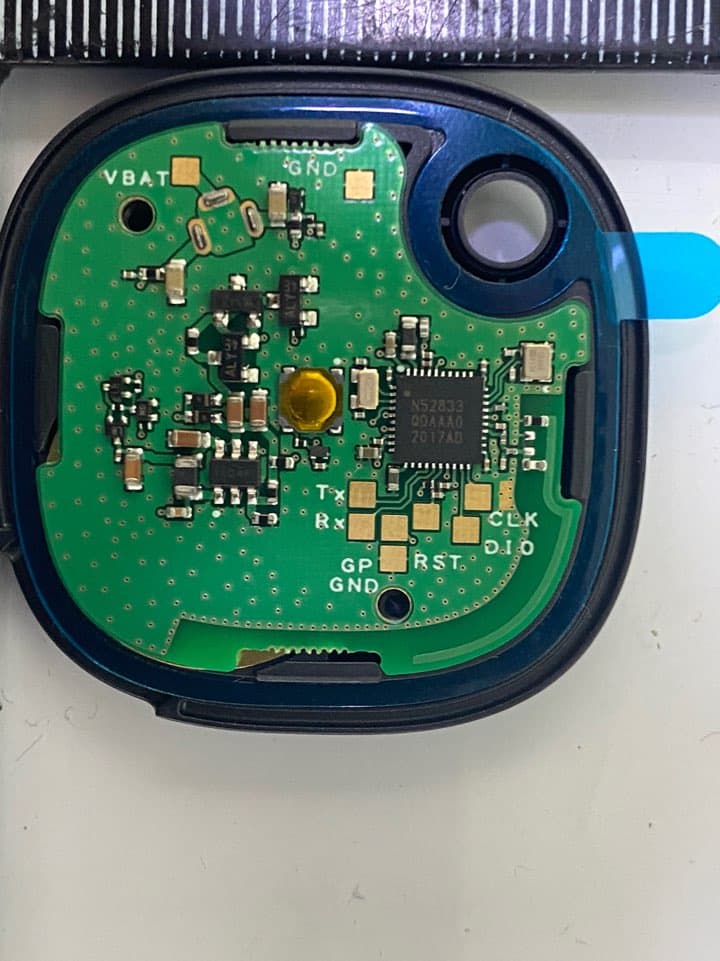
Click to zoom
Application Details
- Equipment Class
- DTS - Digital Transmission System
- Date of Grant
- Nov 24, 2020
- Application Purpose
- Original Equipment
- Date of Application
- Nov 24, 2020
- Equipment Note
- EI-T5300
- Frequency Range
- 2402.00000000 - 2480.00000000
- Company
- Samsung Electronics Co Ltd
- Country
- United States
Documents & Files
Document Text
Text extracted from the exhibit documents filed with the FCC. Open a document above to read the original.
Users Manual
English a Copyright © 2020 Samsung Electronics America,Inc. Bluetooth ® is a registered trademark of Bluetooth SIG, Inc. worldwide. Other marks are the property of their respective owners. • Be sure to visit www.samsung.com to view the device information, full user manual, and the detailed usage precautions before using the product. • Your consumer rights are governed by the law of the country in which you purchased the product. Please contact your service provider for more information. To connect a SmartTag to a mobile device, press the button ( ) to activate the SmartTag and follow the on-screen instructions to complete the connection. If the pop-up window does not appear, use a mobile device to scan the QR code on the box. • Do not use your SmartTag in a hot environment of near a fire. • Do not swallow or disassemble any battery, chemical burn hazard. • If the battery from your SmartTag is swallowed it can cause severe internal burns in just 2 hours and can lead to death. • Keep batteries away from infants and children. If the battery compartment does not close securely, stop using the product and keep it away from infants and children. If you think the batteries might have been swallowed or inserted inside any part of the body, seek immediate medical attention. • Risk of fire or explosion if the battery is replaced by an incorrect type. FCC Part 15.19 This device complies with part 15 of the FCC Rules. Operation is subject to the following two conditions: (1) This device may not cause harmful interference, and (2) this device must accept any interference received, including interference that may cause undesired operation. FCC Part 15.21 Any changes or modifications (including the antennas) to this device that are not expressly approved by the manufacturer may void the user’s authority to operate the equipment. Samsung Mobile Products and Recycling Samsung cares for the environment and encourages its customers to properly dispose of Devices and Samsung accessories in accordance with local regulations. In some areas, disposal of these items in household or business trash may be prohibited. Dispose of other unwanted electronics through an approved recycler. To find the nearest recycling location, go to our website: www.samsung.com/recycling or call, 1-800-SAMSUNG. Samsung Electronics America, Inc 85 Challenger Road, Ridgefield Park, New Jersey, 07660 Phone: 1-800-SAMSUNG (726-7864)Phone: 1-800-SAMSUNG (726-7864) FCC ID is affixed in the battery compartment. Printed in Korea A00889 Rev.1.0 USA Type 12/2020 QUICK START GUIDE EI-T5300 Galaxy SmartTag Español (castellano) a Copyright © 2020 Samsung Electronics America,Inc. Bluetooth ® es una marca comercial registrada de Bluetooth SIG, Inc. en todo el mundo. Otras marcas son propiedad de sus respectivos propietarios. • Le sugerimos visitar www.samsung.com para ver la información del dispositivo, el manual completo del usuario y las precauciones detalladas para el uso antes de utilizar el producto. • Sus derechos como consumidor se encuentran regidos por la ley del país en el cual haya adquirido el producto. Para solicitar más información, comuníquese con su proveedor de servicios. Para conectar una SmartTag a un dispositivo móvil, presione la tecla ( ) para activar SmartTag y siga las instrucciones en pantalla para completar la conexión. Utilice un dispositivo móvil para escanear el código QR del recuadro si no se muestra la ventana emergente. • No utilice su SmartTag en un entorno caluroso ni cerca de un fuego. • No ingiera ni desarme ninguna batería: Peligro de quemaduras químicas. • Se podrían provocar quemaduras internas graves en solo 2 horas tras ingerir la batería de su SmartTag, lo cual puede provocar la muerte. • Mantenga las baterías alejadas de los niños y de los niños pequeños. Si el compartimiento de la batería no cierra bien, interrumpa el uso del producto y mantengalo alejado de los niños y de los niños pequeños. Procure antención médica de inmediato si piensa que es posible que se hayan ingerido las baterías o que pudiesen haber sido insertadas en alguna parte del cuerpo. • Existe el riesgo de incendios o explosión si reemplaza la batería por una del tipo incorrecto. Sección 15.19 de la FCC Este dispositivo cumple con la sección 15 de las normas de la Comisión Federal de Comunicaciones (FCC). La operación se encuentra sujeta a las siguientes dos condiciones: (1) el dispositivo no puede provocar interferencia dañina, y (2) este dispositivo deberá aceptar cualquier tipo de interferencia que reciba, inclusive interferencia que pueda provocar un funcionamiento no deseado. Sección 15.21 de la FCC Cualquier cambio o modificación (incluyendo las antenas) que se realice a este dispositivo y que no se encuentre expresamente autorizada por el fabricante podría anular la autoridad del usuario para operar el equipo. Productos Móviles de Samsung y reciclaje Samsung se preocupa por el medio ambiente y recomienda a sus clientes que reciclen los dispositivos y accesorios originales de Samsung de acuerdo con las regulaciones locales. En algunas áreas, la eliminación de estos artículos en la basura doméstica o comercial puede estar prohibida. Deseche otros componentes electrónicos no deseados a través de un reciclador aprobado. Para encontrar el lugar de reciclaje más cercano, visite: www.samsung.com/recycling o llame al 1-800-SAMSUNG. Samsung Electronics America, Inc 85 Challenger Road, Ridgefield Park, New Jersey, 07660 Teléfono: 1-800-SAMSUNG (726-7864) La identificación de FCC se coloca en el compartimiento de la batería. GUÍA DE INICIO RÁPIDO EI-T5300 Galaxy SmartTag
Cover Letter(s)
Samsung Electronics Co., LTD. 129, Samsu ng -ro , Yeongtong-gu Suwon-City, Gyeonggi-do, 16677, Korea Date: November 17, 2020 Federal Communications Commission 7435 Oakland Mills Road Columbia MD 21046 c.c. UL Verification Services Certification Division 47173 Benicia Street Fremont, CA 94538, USA To whom it may concern: I, the undersigned, hereby authorize Ms. Chloe Lee/ Manager of KCTL Inc. and hereafter referred to as KCTL to act on our behalf in all manners relating to application for equipment authorization, including signing of all documents relating to these matters. Any and all acts carried out by Ms. Chloe Lee/ Manager of KCTL Inc. on our behalf shall have the same effect as acts of our own. I, the undersigned, hereby certify that we are not subject to a denial of federal benefits, that includes FCC benefits, pursuant to Section 5301 of the Anti-Drug Abuse Act of 1988, 21 U.S.C. 853(a). In authorizing KCTL as our agent, we still recognize that we are responsible to: a) comply with the relevant provisions of the certification program; b) make all necessary arrangements for the conduct of the evaluation, including provision for examining documentation and access to all areas, records (including internal audit reports) and personnel for the purposes of evaluation (e.g. testing, inspection, assessment, surveillance, reassessment) and resolution of complaints; c) make claims regarding certification only in respect of the scope for which certification has been granted; d) do not use our product certification in such a manner as to bring the Certification Division into disrepute and not make any statement regarding our product certification which the Certification Division may consider misleading or unauthorized; e) upon suspension or cancellation of certification, discontinue use of all advertising matter that contains any reference thereto and return any certification documents as required by the Certification Division; f) use certification only to indicate the products are certified as being in conformity with specified standards; g) endeavor to ensure that no certificate or report nor any part thereof is used in a misleading manner; h) ensure that any reference to our product certification in communication media such as documents, brochures or advertising, complies with the requirements of the Certification Division; i) keep a record of all complaints made known to the us relating to the product’s compliance with requirements of the relevant standard and to make these records available to the Certification Division when requested; j) take appropriate action with respect to such complaints and any deficiencies found in products or services that affect compliance with the requirements for certification; k) document the actions taken. This authorization is valid until further written notice from the applicant. Sincerely Yours, Jenni Chun, General Manager Regulatory & Environmental Affairs Samsung Electronics America, Inc
Cover Letter(s)
Samsung Electronics Co., LTD. 129, Samsung -ro , Yeongtong-gu Suwon-City, Gyeonggi-do, 16677, Korea CONFIDENTIALITY REQUEST Federal Communication Commission Equipment Authorization Division, Application Processing Branch 7435 Oakland Mills Road Columbia, MD 21048 November 17, 2020 TO WHOM IT MAY CONCERN Pursuant to Paragraphs §0.457 and 0.459 of the Commission’s Rules (47 C.F.R.) and Section §552(b)(4) of the Freedom of Information Act, Samsung Electronics Co., Ltd. requests confidentiality for the following products: FCC ID Number Product Title/Model A3LEIT5300 Galaxy SmartTag / EI-T5300 The following exhibits contain trade secrets and proprietary information that could be of benefit to our competitors regarding the design of our product. This material is not customarily available to the general public and we request that it be withheld from public inspection. We request that the following information submitted be held permanent confidential treatment. Permanent Confidential Request -. Schematics -. Block Diagram -. Operational Description -. Antenna specification -. Parts list We also hereby request Short-Term Confidentiality for 180 days after the grant as outlined in Public Notice DA 04-1705. This provision will give temporary confidentiality of commercially sensitive information prior to product release. Short-Term Confidential Request -. External Photos -. Internal Photos -. Test set-up photo -. User Manual If you have any questions, please feel free to contact me at the address shown below. Sincerely, Jenni Chun/ General manager
External Photos
http://www.kctl.co.kr This test report shall not be reproduced, except in full, without the written approval External photos of EUT http://www.kctl.co.kr This test report shall not be reproduced, except in full, without the written approval http://www.kctl.co.kr This test report shall not be reproduced, except in full, without the written approval http://www.kctl.co.kr This test report shall not be reproduced, except in full, without the written approval
ID Label/Location Info
SC ALE 1:1 Un der the battery
Internal Photos
http://www.kctl.co.kr This test report shall not be reproduced, except in full, without the written approval Internal photos of EUT
RF Exposure Info
http://www.kctl.co.kr This test report shall not be reproduced, except in full, without the written approval * RF Exposure 1. Regulation According to the KDB 447498 D01 V06, the following RF exposure evaluation shall to demonstrate RF exposure compliance. Unless specifically required by the published RF exposure KDB procedures, standalone 1-g head or body and 10-g extremity SAR evaluation for general population exposure conditions, by measurement or numerical simulation, is not required when the corresponding SAR Test Exclusion Threshold condition(s), listed below, is (are) satisfied. These test exclusion conditions are based on source-based time-averaged maximum conducted output power of the RF channel requiring evaluation, adjusted for tune-up tolerance, and the minimum test separation distance required for the exposure conditions. The minimum test separation distance defined in 4.1 f) is determined by the smallest distance from the antenna and radiating structures or outer surface of the device, according to the host form factor, exposure conditions and platform requirements, to any part of the body or extremity of a user or bystander. To qualify for SAR test exclusion, the test separation distances applied must be fully explained and justified, typically in the SAR measurement or SAR analysis report, by the operating configurations and exposure conditions of the transmitter and applicable host platform requirements, according to the required published RF exposure KDB procedures. When no other RF exposure testing or reporting are required, a statement of justification and compliance must be included in the equipment approval, in lieu of the SAR report, to qualify for SAR test exclusion. When required, the device specific conditions described in the other published RF exposure KDB procedures must be satisfied before applying these SAR test exclusion provisions; for example, handheld PTT two-way radios, handsets, laptops and tablets, etc. a) For 100 ㎒ to 6 ㎓ and test separation distances ≤ 50 ㎜, the 1-g and 10-g SAR test exclusion thresholds are determined by the following: [(max. power of channel, including tune-up tolerance, ㎽) / (min. test separation distance, ㎜)] · [√f(㎓)] ≤ 3.0 for 1-g SAR, and ≤ 7.5 for 10-g extremity SAR,30 where ● f(㎓) is the RF channel transmit frequency in ㎓ ● Power and distance are rounded to the nearest ㎽ and mm before calculation ● The result is rounded to one decimal place for comparison ● The values 3.0 and 7.5 are referred to as numeric thresholds in step b) below The test exclusions are applicable only when the minimum test separation distance is ≤ 50 ㎜, and for transmission frequencies between 100 ㎒ and 6 ㎓. When the minimum test separation distance is < 5 ㎜, a distance of 5 ㎜ according to 4.1 f) is applied to determine SAR test exclusion. b) For 100 ㎒ to 6 ㎓ and test separation distances > 50 ㎜, the 1-g and 10-g SAR test exclusion thresholds are determined by the following (also illustrated in Appendix B): 1) {[Power allowed at numeric threshold for 50 ㎜ in step a)] + [(test separation distance – 50 ㎜)·(f(㎒)/150)]} ㎽, for 100 ㎒ to 1500 ㎒ 2) {[Power allowed at numeric threshold for 50 ㎜ in step a)] + [(test separation distance – 50 ㎜)·10]} ㎽, for > 1500 ㎒ and ≤ 6 ㎓ c) For frequencies below 100 ㎒, the following may be considered for SAR test exclusion (also illustrated http://www.kctl.co.kr This test report shall not be reproduced, except in full, without the written approval in Appendix C): 1) For test separation distances > 50 ㎜ and < 200 ㎜, the power threshold at the corresponding test separation distance at 100 ㎒ in step b) is multiplied by [1 + log(100/f(㎒))] 2) For test separation distances ≤ 50 ㎜, the power threshold determined by the equation in c) 1) for 50 ㎜ and 100 ㎒ is multiplied by ½ 3) SAR measurement procedures are not established below 100 ㎒. When SAR test exclusion cannot be applied, a KDB inquiry is required to determine SAR evaluation requirements for any SAR test results below 100 ㎒ to be acceptable. http://www.kctl.co.kr This test report shall not be reproduced, except in full, without the written approval 2. Result 2-1. Calculation Result of RF Exposure Mode Max. tune-up Power [㏈m] Conducted output power [㎽/] Min. test separation distance [㎜] SAR test exclusion thresholds ≤ 3 for 1-g SAR BLE/2 Mbps 8.5 7.08 5 2.19 Note: 1. SAR test exclusion thresholds = [(Max. Power of Channel, Including Tune-Up Tolerance/(Min. Test Separation Distance, mm)] · [√f(GHz)] WIFI = [(7.08)/(5)] · [√2.402] =2.19 http://www.kctl.co.kr This test report shall not be reproduced, except in full, without the written approval 3. Target power and tolerance, Max tuneup power Mode Target power [㏈m] Tolerance [㏈] Max tuneup power [㏈m] Average Power [㏈m] BLE_1M_Packet 37_Lowest 8 0.5 8.5 8.11 BLE_1M_Packet 37_Middle 8 0.5 8.5 7.95 BLE_1M_Packet 37_Highest 8 0.5 8.5 7.71 BLE_1M_Packet 255_Lowest 8 0.5 8.5 8.10 BLE_1M_Packet 255_Middle 8 0.5 8.5 7.94 BLE_1M_Packet 255_Highest 8 0.5 8.5 7.70 BLE_2M_Packet 37_Lowest 8 0.5 8.5 8.12 BLE_2M_Packet 37_Middle 8 0.5 8.5 7.96 BLE_2M_Packet 37_Highest 8 0.5 8.5 7.72 BLE_2M_Packet 255_Lowest 8 0.5 8.5 8.12 BLE_2M_Packet 255_Middle 8 0.5 8.5 7.96 BLE_2M_Packet 255_Highest 8 0.5 8.5 7.72 BLE_125k_Packet 37_Lowest 8 0.5 8.5 8.08 BLE_125k_Packet 37_Middle 8 0.5 8.5 7.91 BLE_125k_Packet 37_Highest 8 0.5 8.5 7.67 BLE_125k_Packet 255_Lowest 8 0.5 8.5 8.07 BLE_125k_Packet 255_Middle 8 0.5 8.5 7.91 BLE_125k_Packet 255_Highest 8 0.5 8.5 7.67 BLE_500k_Packet 37_Lowest 8 0.5 8.5 8.09 BLE_500k_Packet 37_Middle 8 0.5 8.5 7.93 BLE_500k_Packet 37_Highest 8 0.5 8.5 7.68 BLE_500k_Packet 255_Lowest 8 0.5 8.5 7.99 BLE_500k_Packet 255_Middle 8 0.5 8.5 7.83 BLE_500k_Packet 255_Highest 8 0.5 8.5 7.59 4. RF Exposure Compliance Issue Therefore, EUT is not required the SAR Evaluation.
Test Report
verify No.108506626677 KCTL Inc. 65, Sinwon-ro, Yeongtong-gu, Suwon-si, Gyeonggi-do, 16677, Korea TEL: 82-31-285-0894 FAX: 82-505-299-8311 www.kctl.co.kr Report No.: KR20-SRF0297 Page (2) of (42) KCTL-TIR001-003/3 KP20-04137 REPORT REVISION HISTORY Date Revision Page No 2020-11-20 Originally issued - This report shall not be reproduced except in full, without the written approval of KCTL Inc. This document may be altered or revised by KCTL Inc. personnel only, and shall be noted in the revision section of the document. Any alteration of this document not carried out by KCTL Inc. will constitute fraud and shall nullify the document. This test report is a general report that does not use the KOLAS accreditation mark and is not related to KS Q ISO/IEC 17025 and KOLAS accreditation. General remarks for test reportss Nothing significant to report. KCTL Inc. 65, Sinwon-ro, Yeongtong-gu, Suwon-si, Gyeonggi-do, 16677, Korea TEL: 82-31-285-0894 FAX: 82-505-299-8311 www.kctl.co.kr Report No.: KR20-SRF0297 Page (3) of (42) This test report shall not be reproduced, except in full, without the written approval KCTL-TIR001-003/3 KP20-05779 CONTENTS 1. General information ......................................................................................................4 2. Device information ........................................................................................................4 2.1. Frequency/channel operations................................................................................5 2.2. Duty Cycle Factor ...................................................................................................5 3. Antenna requirement ....................................................................................................8 4. Summary of tests ..........................................................................................................9 5. Measurement uncertainty ........................................................................................... 10 6. Measurement results explanation example ................................................................ 11 7. Test results ................................................................................................................. 12 7.1. Maximum peak output power ................................................................................ 12 7.2. Peak Power Spectral Density ............................................................................... 15 7.3. 6 ㏈ Bandwidth(DTS Channel Bandwidth) .......................................................... 18 7.4. Spurious Emission, Band Edge and Restricted bands .......................................... 21 7.5. Conducted Spurious Emission .............................................................................. 39 8. Measurement equipment ............................................................................................ 42 KCTL Inc. 65, Sinwon-ro, Yeongtong-gu, Suwon-si, Gyeonggi-do, 16677, Korea TEL: 82-31-285-0894 FAX: 82-505-299-8311 www.kctl.co.kr Report No.: KR20-SRF0297 Page (4) of (42) This test report shall not be reproduced, except in full, without the written approval KCTL-TIR001-003/3 KP20-05779 1. General information Client : Samsung Electronics Co., Ltd. Address : 129, Samsung-ro, Yeongtong-gu, Suwon-si, Gyeonggi-do, 16677, Rep. of Korea Manufacturer : SOLUM VINACO., LTD Address : Plot B3,Ba Thien 2 Industrial park, Thien Ke Ward, Binh Xuyen District, Vinh Phuc Province, 281200.,Peple's Republic of Vietnam Laboratory : KCTL Inc. Address : 65, Sinwon-ro, Yeongtong-gu, Suwon-si, Gyeonggi-do, 16677, Korea Accreditations : FCC Site Designation No: KR0040, FCC Site Registration No: 687132 VCCI Registration No. : R-20080, G-20078, C-20059, T-20056 Industry Canada Registration No. : 8035A KOLAS No.: KT231 2. Device information Equipment under test : Galaxy SmartTag Model : EI-T5300 Frequency range : 2 402 ㎒ ~ 2 480 ㎒ (Bluetooth Low Energy) Modulation technique : GFSK Number of channels : 40 ch Power source : DC 3.0 V Antenna specification : PCB pattern Antenna Antenna gain : -0.11 ㏈i Software version : Product : 1.0 Radio : 1.0 Hardware version : Product : 0.2 Radio : 1.0 Test device serial No. : N/A Operation temperature : -20 °C ~ 50 °C KCTL Inc. 65, Sinwon-ro, Yeongtong-gu, Suwon-si, Gyeonggi-do, 16677, Korea TEL: 82-31-285-0894 FAX: 82-505-299-8311 www.kctl.co.kr Report No.: KR20-SRF0297 Page (5) of (42) This test report shall not be reproduced, except in full, without the written approval KCTL-TIR001-003/3 KP20-05779 2.1. Frequency/channel operations This device contains the following capabilities: Bluetooth Low Energy Ch. Frequency (㎒) 00 2 402 . . . . 19 2 440 . . . . 39 2 480 Table 2.1.1. Bluetooth Low Energy 2.2. Duty Cycle Factor Test mode Period (ms) On time (ms) Duty cycle Duty Cycle Factor (㏈) (Linear) (%) 1M Bits/s, 37 Packet 0.626 0.391 0.624 3 62.43 2.05 2M Bits/s, 37 Packet 0.626 0.205 0.327 6 32.76 4.85 1M Bits/s, 255 Packet 1.248 0.598 0.479 3 47.93 3.19 2M Bits/s, 255 Packet 0.625 0.308 0.492 8 49.28 3.07 125k, 37 Packet 3.748 3.100 0.827 3 82.73 0.82 500k, 37 Packet 1.865 1.069 0.573 1 57.31 2.42 125k, 255 Packet 5.613 4.755 0.847 2 84.72 0.72 500k, 255 Packet 1.866 1.483 0.795 0 79.50 1.00 Notes. 1. Duty cycle (Linear) = On time / Period 2. DCF(Duty cycle factor) = 10log(1/duty cycle) 3. DCF is not compensated to average result if the duty cycle is more than 98% KCTL Inc. 65, Sinwon-ro, Yeongtong-gu, Suwon-si, Gyeonggi-do, 16677, Korea TEL: 82-31-285-0894 FAX: 82-505-299-8311 www.kctl.co.kr Report No.: KR20-SRF0297 Page (6) of (42) This test report shall not be reproduced, except in full, without the written approval KCTL-TIR001-003/3 KP20-05779 1M Bits/s, 37 Packet 2M Bits/s, 37 Packet 1M Bits/s, 255 Packet 2M Bits/s, 255 Packet KCTL Inc. 65, Sinwon-ro, Yeongtong-gu, Suwon-si, Gyeonggi-do, 16677, Korea TEL: 82-31-285-0894 FAX: 82-505-299-8311 www.kctl.co.kr Report No.: KR20-SRF0297 Page (7) of (42…
Text truncated - open the document above for the full version.
Test Report
KCTL Inc. 65, Sinwon-ro, Yeongtong-gu, Suwon-si, Gyeonggi-do, 16677, Korea TEL: 82-31-285-0894 FAX: 82-505-299-8311 www.kctl.co.kr Report No.: KR20-SRF0297 Page (18) of (42) This test report shall not be reproduced, except in full, without the written approval KCTL-TIR001-003/3 KP20-05779 7.3. 6 ㏈ Bandwidth(DTS Channel Bandwidth) Test setup EUT Attenuator Spectrum analyzer Limit According to §15.247(a)(2) For Systems using digital modulation techniques may operate in the 902–928 ㎒, 2 400–2 483.5 ㎒, and 5 725–5 850 ㎒ bands. The minimum 6 ㏈ bandwidth shall be at least 500 ㎑. Test procedure ANSI C63.10 – Section 11.8.2 Test settings DTS bandwidth One of the following procedures may be used to determine the modulated DTS bandwidth. Option 1 1) Set RBW = 100 ㎑. 2) Set the video bandwidth (VBW) ≥ 3 x RBW. 3) Detector = Peak. 4) Trace mode = max hold. 5) Sweep = auto couple. 6) Allow the trace to stabilize. 7) Measure the maximum width of the emission that is constrained by the frequencies associated with the two outermost amplitude points (upper and lower frequencies) that are attenuated by 6 ㏈ relative to the maximum level measured in the fundamental emission. Option 2 The automatic bandwidth measurement capability of an instrument may be employed using the X ㏈ bandwidth mode with X set to 6 ㏈, if the functionality described in 11.8.1 (i.e., RBW = 100 kHz, VBW ≥ 3 × RBW, and peak detector with maximum hold) is implemented by the instrumentation function. When using this capability, care shall be taken so that the bandwidth measurement is not influenced by any intermediate power nulls in the fundamental emission that might be ≥6 ㏈. KCTL Inc. 65, Sinwon-ro, Yeongtong-gu, Suwon-si, Gyeonggi-do, 16677, Korea TEL: 82-31-285-0894 FAX: 82-505-299-8311 www.kctl.co.kr Report No.: KR20-SRF0297 Page (19) of (42) This test report shall not be reproduced, except in full, without the written approval KCTL-TIR001-003/3 KP20-05779 Test results BLE_1M Bits/s Blank Frequency(㎒) Data rate Packet length 6 ㏈ bandwidth(㎒) (Bits/s) (Bytes) 2 402 1M 37 0.70 2 440 0.70 2 480 0.70 2 402 2M 37 1.14 2 440 1.14 2 480 1.15 KCTL Inc. 65, Sinwon-ro, Yeongtong-gu, Suwon-si, Gyeonggi-do, 16677, Korea TEL: 82-31-285-0894 FAX: 82-505-299-8311 www.kctl.co.kr Report No.: KR20-SRF0297 Page (20) of (42) This test report shall not be reproduced, except in full, without the written approval KCTL-TIR001-003/3 KP20-05779 BLE_2M Bits/s Blank KCTL Inc. 65, Sinwon-ro, Yeongtong-gu, Suwon-si, Gyeonggi-do, 16677, Korea TEL: 82-31-285-0894 FAX: 82-505-299-8311 www.kctl.co.kr Report No.: KR20-SRF0297 Page (21) of (42) This test report shall not be reproduced, except in full, without the written approval KCTL-TIR001-003/3 KP20-05779 7.4. Spurious Emission, Band Edge and Restricted bands Test setup The diagram below shows the test setup that is utilized to make the measurements for emission from 9 ㎑ to 30 ㎒ Emissions The diagram below shows the test setup that is utilized to make the measurements for emission from 30 ㎒ to 1 ㎓ emissions. The diagram below shows the test setup that is utilized to make the measurements for emission from 1 ㎓ to the tenth harmonic of the highest fundamental frequency or to 40 ㎓ emissions, whichever is lower. KCTL Inc. 65, Sinwon-ro, Yeongtong-gu, Suwon-si, Gyeonggi-do, 16677, Korea TEL: 82-31-285-0894 FAX: 82-505-299-8311 www.kctl.co.kr Report No.: KR20-SRF0297 Page (22) of (42) This test report shall not be reproduced, except in full, without the written approval KCTL-TIR001-003/3 KP20-05779 Limit According to section 15.209(a), except as provided elsewhere in this subpart, the emissions from an intentional radiator shall not exceed the field strength levels specified in the following table: Frequency (㎒) Field strength (㎶/m) Measurement distance (m) 0.009 - 0.490 0.490 - 1.705 1.705 - 30 30 - 88 88 - 216 216 - 960 Above 960 2 400/F(㎑) 24 000/F(㎑) 30 100** 150** 200** 500 300 30 30 3 3 3 3 **Except as provided in paragraph (g), fundamental emissions from intentional radiators operating under this section shall not be located in the frequency bands 54–72 ㎒, 76–88 ㎒, 174–216 ㎒ or 470–806 ㎒. However, operation within these frequency bands is permitted under other sections of this part, e.g., Section15.231 and 15.241. According to section 15.205(a) and (b), only spurious emissions are permitted in any of the frequency bands listed below: ㎒ ㎒ ㎒ ㎓ 0.009 - 0.110 0.495 - 0.505 2.173 5 - 2.190 5 4.125 - 4.128 4.177 25 - 4.177 75 4.207 25 - 4.207 75 6.215 - 6.218 6.267 75 - 6.268 25 6.311 75 - 6.312 25 8.291 - 8.294 8.362 - 8.366 8.376 25 - 8.386 75 8.414 25 - 8.414 75 12.29 - 12.293 12.519 75 - 12.520 25 12.576 75 - 12.577 25 13.36 - 13.41 16.42 - 16.423 16.694 75 - 16.695 25 16.804 25 - 16.804 75 25.5 - 25.67 37.5 - 38.25 73 - 74.6 74.8 - 75.2 108 - 121.94 123 - 138 149.9 - 150.05 156.524 75 - 156.525 25 156.7 - 156.9 162.012 5 - 167.17 167.72 - 173.2 240 - 285 322 - 335.4 399.9 - 410 608 - 614 960 – 1 240 1 300 – 1 427 1 435 – 1 626.5 1 645.5 – 1 646.5 1 660 – 1 710 1 718.8 – 1 722.2 2 200 – 2 300 2 310 – 2 390 2 483.5 – 2 500 2 690 – 2 900 3 260 – 3 267 3 332 – 3 339 3 345.8 – 3 358 3 600 – 4 400 4.5 - 5.15 5.35 - 5.46 7.25 - 7.75 8.025 - 8.5 9.0 - 9.2 9.3 - 9.5 10.6 - 12.7 13.25 - 13.4 14.47 - 14.5 15.35 - 16.2 17.7 - 21.4 22.01 - 23.12 23.6 - 24.0 31.2 - 31.8 36.43 - 36.5 Above 38.6 The field strength of emissions appearing within these frequency bands shall not exceed the limits shown in section 15.209. At frequencies equal to or less than 1 000 ㎒, compliance with the limits in section 15.209 shall be demonstrated using measurement instrumentation employing a CISPR quasi- peak detector. Above 1 000 ㎒, compliance with the emission limits in section 15.209 shall be demonstrated based on the average value of the measured emissions. The provisions in section 15.35 apply to these measurements. KCTL Inc. 65, Sinwon-ro, Yeongtong-gu, Suwon-si, Gyeonggi-do, 16677, Korea TEL: 82-31-285-0894 FAX: 82-505-299-8311 www.kctl.co.kr …
Text truncated - open the document above for the full version.
Test Report
KCTL Inc. 65, Sinwon-ro, Yeongtong-gu, Suwon-si, Gyeonggi-do, 16677, Korea TEL: 82-31-285-0894 FAX: 82-505-299-8311 www.kctl.co.kr Report No.: KR20-SRF0297 Page (33) of (42) This test report shall not be reproduced, except in full, without the written approval KCTL-TIR001-003/3 KP20-05779 2M Bits/s(37 Bytes) Low Channel Frequency Pol. Reading Ant. Factor Amp. + Cable DCF Result Limit Margin (㎒) (V/H) (㏈(㎶)) (㏈) (㏈) (㏈) (㏈(㎶/m)) (㏈(㎶/m)) (㏈) Peak data 2 368.51 1) H 41.10 31.96 -27.79 - 45.27 74.00 28.73 4 820.41 1) H 62.37 33.79 -54.04 - 42.12 74.00 31.88 16 827.77 H 56.01 41.26 -45.70 - 51.57 74.00 22.43 Average Data No spurious emissions were detected within 20 ㏈ of the limit. Horizontal/Vertical for Band-edge KCTL Inc. 65, Sinwon-ro, Yeongtong-gu, Suwon-si, Gyeonggi-do, 16677, Korea TEL: 82-31-285-0894 FAX: 82-505-299-8311 www.kctl.co.kr Report No.: KR20-SRF0297 Page (34) of (42) This test report shall not be reproduced, except in full, without the written approval KCTL-TIR001-003/3 KP20-05779 Horizontal/Vertical for 1 ㎓ ~ 3.5 ㎓ Horizontal/Vertical for 3.5 ㎓ ~ 18 ㎓ Horizontal/Vertical for 18 ㎓ ~ 26.5 ㎓ KCTL Inc. 65, Sinwon-ro, Yeongtong-gu, Suwon-si, Gyeonggi-do, 16677, Korea TEL: 82-31-285-0894 FAX: 82-505-299-8311 www.kctl.co.kr Report No.: KR20-SRF0297 Page (35) of (42) This test report shall not be reproduced, except in full, without the written approval KCTL-TIR001-…
Text truncated - open the document above for the full version.
Contact Information
Applicant
Jenni Chun(General Manager)
Technical Contact
KCTL Inc.Chaeryeong Lim
[email protected]827050081010
65, Sinwon-ro, Yeongtong-gu · Suwon-si · South Korea
Test Firm
Eurofins KCTL Co., Ltd.Sung-su Lim
Technical Specifications
| # | Rule Parts | Frequency Range | Power Output |
|---|---|---|---|
| 1 | 15C | 2.40 GHz - 2.48 GHz | 6.70 mW |
Other Applications from Samsung Electronics Co Ltd
A3LSMU600
Sep 15, 2026Bluetooth Headset
Equipment Class
DTS - Digital Transmission SystemA3LSMA185G
Sep 08, 2026Portable Handset
Equipment Class
CXX - Communications Rcvr for use w/ licensed Tx and CBsA3LSMS741B
Aug 05, 2026Portable Handset
Equipment Class
6VL - 15E 6 GHZ Very Low Power DeviceA3LSMX940
Jul 31, 2026BT,BLE Tablet DTS,UNII a,b,g,n,ac,ax,be and digitizer
Equipment Class
DTS - Digital Transmission SystemA3LSMS741U
Jul 30, 2026Portable Handset
Equipment Class
6CD - 15E 6 GHz Low Power Dual Client