A3LGTP6200Tablet with 802.11abgn, BT3.0
Samsung Electronics Co Ltd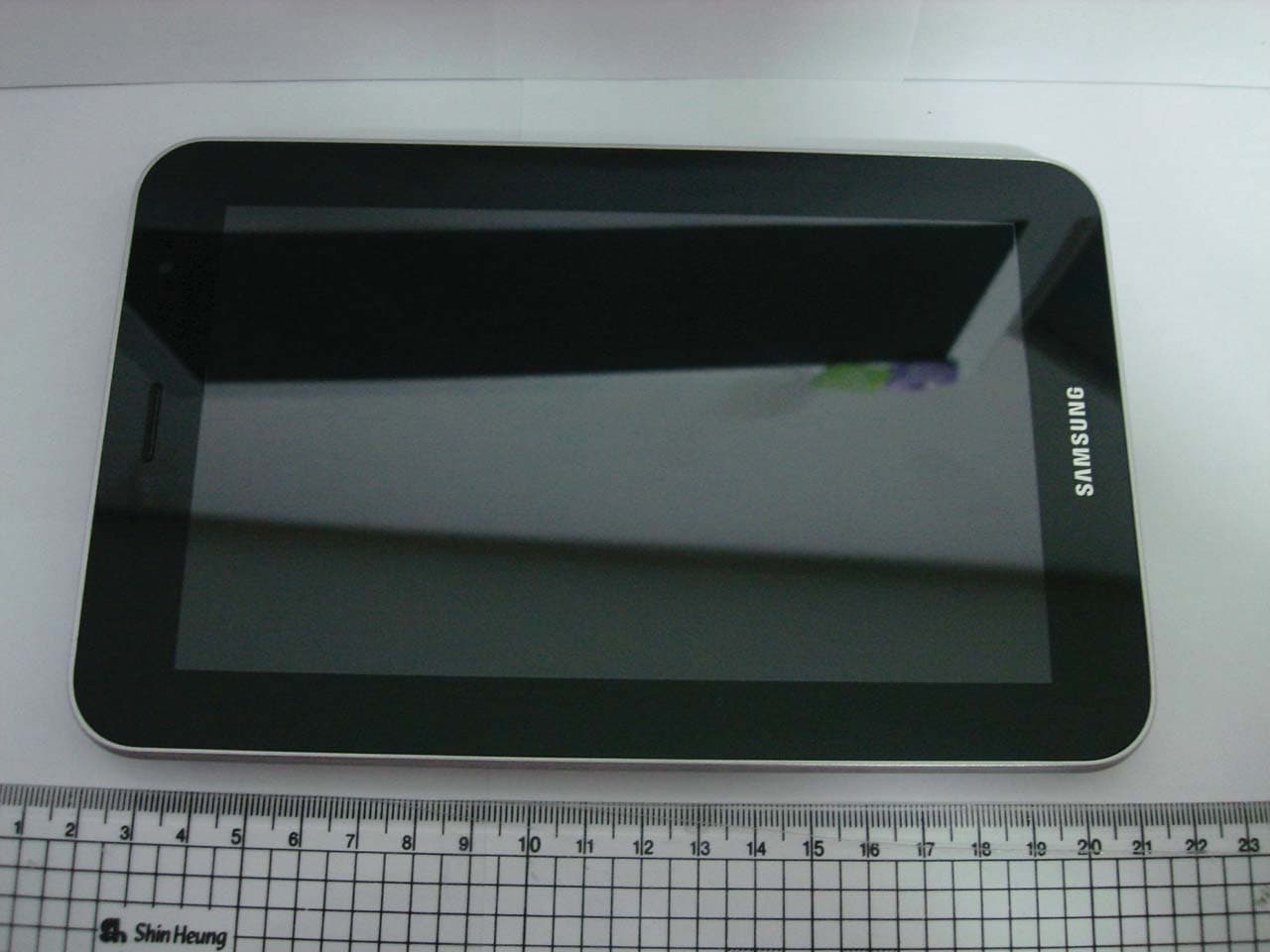
Click to zoom
Application Details
- Equipment Class
- PCE - PCS Licensed Transmitter held to ear
- Date of Grant
- Nov 15, 2011
- Application Purpose
- Original Equipment
- Date of Application
- Nov 14, 2011
- Equipment Note
- Tablet with 802.11abgn, BT3.0
- Frequency Range
- 1852.40000000 - 1907.60000000
- Company
- Samsung Electronics Co Ltd
- Country
- United States
Documents & Files
Document Text
Text extracted from the exhibit documents filed with the FCC. Open a document above to read the original.
Users Manual
1 Briggs, Mark From:DuckSu Kim <[email protected]> Sent: Tuesday, November 15, 2011 10:42 PM To: Briggs, Mark; 권기중; Kuo, Mike; Kim, KyungYong; Chu, Tina Cc: 장왈운; 장우태; 안정호; 전자메일; Shih, Sunny; 백승걸 Subject: Re: Status of P2 EU project. FCC response received - action items required (AN11T0773) Attachments: P2_07. TUNE-UP_111116.pdf; GT-P6200_UM_EU_Honeycomb_Eng_D08_111116_142_ 2phase.pdf Follow Up Flag: Follow up Flag Status: Flagged Hello Mark, Please find attached responses and revised files. Q) If not in attachments already, please revise where appropriate to explain how device operations and SAR compliance with power reduction is ensured concerning the following conditions mentioned in the user manual: "Turn on proximity sensor: Set to turn on the proximity sensor during a call." - i.e. this seems to indicate that user can de-activate IR sensor therefore cancel power reduction (for held-to- ear phone mode etc) ... ? A) The end user can not enable or disable of the proximity sensor, the is always enabled to trigger power reduction. This option decides only LCD on-off accoring the sensor triggering to prevent untintended LCD touch and does not affect the power reduction mechanism. Best regards, Ducksu Kim.
Users Manual
Some of the contents in this manual may differ from your device depending on the software of the device or your service provider. www.samsung.com English (EU). 11/2011. Rev. 1.0 To install Kies (PC Sync) Download the latest version of Kies from the 1. Samsung website ( www.samsung.com/kies) and install it on your PC. Using a USB cable, connect your device to your PC. 2. Samsung Kies will launch automatically. Refer to the Kies help for more information. GT-P6200 user manual Using this manual 2 Using this manual Congratulations on your purchase of the Samsung mobile device. This powerful, “go anywhere” device, puts the best of the web and mobile computing at your fingertips in a lightweight, highly versatile platform that fits your active lifestyle. Built on the Google Android operating system, the Samsung mobile device gives you access to thousands of useful and entertaining applications to enrich your mobile web experience. With integrated wireless access and a responsive touch screen, you can read books and newspapers on the go; stay up-to-date on the latest news, sports, and weather; manage your multimedia and business files; and browse the web for maps, business locations, and more. Read me first Please read all safety precautions and this manual carefully ● before using your device to ensure safe and proper use. The descriptions in this manual are based on the default ● settings of your device. Images and screenshots used in this user manual may differ ● in appearance from the actual product. Content in this user manual may differ from the product, ● or from software provided by service providers or carriers, and is subject to change without prior notice. Refer to www.samsung.com for the latest version of the user manual. Available features and additional services may vary by ● device, software, or service provider. Using this manual 3 Formatting and delivery of this user manual is based ● on Google Android operating systems and may vary depending on the user’s operating system. Applications and their functions may vary by country, ● region, or hardware specifications. Samsung is not liable for performance issues caused by third-party applications. Samsung is not liable for performance issues or ● incompatibilities caused by user editing of registry settings. You may upgrade your mobile device’s software by ● accessing www.samsung.com. Software, sound sources, wallpapers, images, and other ● contents provided in this device are licenced for limited use between Samsung and their respective owners. Extracting and using these materials for commercial or other purposes is an infringement of copyright laws. Samsung is not liable for such copyright infringement by the user. Please keep this manual for future reference. ● Instructional icons Before you start, familiarise yourself with the icons you will see in this manual: Warning—situations that could cause injury to yourself or others Caution—situations that could cause damage to your device or other equipment Note—notes, usage tips, or additional information Using this manual 4 ► Refer to—pages with related information; for example: ► p. 12 (represents “see page 12”) → Followed by—the order of options or menus you must select to perform a step; for example: Open the application list and select Settings → Wireless and networks (represents Settings, followed by Wireless and networks) [] Square brackets—device keys; for example: [ ] (represents the Power/Reset/Lock key) Copyright Copyright © 2011 Samsung Electronics This user manual is protected under international copyright laws. No part of this user manual may be reproduced, distributed, translated, or transmitted in any form or by any means, electronic or mechanical, including photocopying, recording, or storing in any information storage and retrieval system, without the prior written permission of Samsung Electronics. Trademarks SAMSUNG and the SAMSUNG logo are registered ● trademarks of Samsung Electronics. The Android logo, Google Search ● ™ , Google Maps ™ , Google Mail ™ , YouTube ™ , Android Market ™ , and Google Talk ™ are trademarks of Google, Inc. Using this manual 5 Bluetooth ● ® is a registered trademark of the Bluetooth SIG, Inc. worldwide. Oracle and Java are registered trademarks of Oracle and/ ● or its affiliates. Other names may be trademarks of their respective owners. Windows Media Player ● ® is a registered trademark of Microsoft Corporation. Wi-Fi ● ® , the Wi-Fi CERTIFIED logo, and the Wi-Fi logo are registered trademarks of the Wi-Fi Alliance. DivX ● ® , DivX Certified ® , and associated logos are trademarks of Rovi Corporation or its subsidiaries and are used under licence. All other trademarks and copyrights are the property of ● their respective owners. Using this manual 6 ABOUT DIVX VIDEO DivX ® is a digital video format created by DivX, LLC, a subsidiary of Rovi Corporation. This is an official DivX Certified ® device that plays DivX video. Visit www.divx.com for more information and software tools to convert your files into DivX videos. DivX Certified ® to play DivX ® video up to HD 720p, including premium content ABOUT DIVX VIDEO-ON-DEMAND This DivX Certified ® device must be registered in order to play purchased DivX Video-on-Demand (VOD) movies. To obtain your registration code, locate the DivX VOD section in your device setup menu. Go to vod.divx.com for more information on how to complete your registration. Contents 7 Assembling ............................................................. 11 Unpack .................................................................................... 11 Install the SIM or USIM card ............................................... 12 Charge the battery ............................................................... 12 Insert a memory card (optional) ....................................... 14 Getting started ....................................................... 17 Turn your device on and off ..............................…
Text truncated - open the document above for the full version.
Cover Letter(s)
Date: August 30, 2011 Federal Communications Commission 7435 Oakland Mills Road Columbia MD 21046 Subject: Request for Confidentiality FCC ID: A3L GTP6200 To Whom It May Concern: Pursuant to the provisions of Sections 0.457 and 0.459 of the Commission’s rules (47 CFR §§ 0.457, 0.459), we are requesting the Commission to withhold the following attachments as confidential document from public disclosure indefinitely. Schematics Block Diagram Operational Description Antenna Specification Parts List Tune-Up Procedure Above mentioned document contains detailed system and equipment description are considered as proprietary information in operation of the equipment. The public disclosure of above documents might be harmful to our company and would give competitor an unfair advantage in the market. In additional to above mentioned documents, pursuant to Public Notice DA 04-1705 of the Commission’s policy, in order to comply with the marketing regulations in 47 CFR §2.803 and the importation rules in 47 CFR §2.1204, while ensuring that business sensitive information remains confidential until the actual marketing of newly authorized devices. We are requesting the commission to grant short-term confidentiality request on the following attachments until 180 days External Photos Internal Photos Test Setup Photos User Manual It is our understanding that all measurement test reports, FCC ID label format and correspondence during certification review process cannot be granted as confidential documents and such information will be available for public review once the grant of equipment authorization is issued. Best Regards Sang Kyung (Peter), Ra/ General Manager Samsung Electronics CO. LTD TEL: 310-900-5250 FAX: 310-537-5500 E-mail: [email protected]
Cover Letter(s)
Date: November 14, 2011 Federal Comm unications Commission 7435 Oakland Mills Road Columbia MD 21046 c.c. Compliance Certification Services Certification Division 47173 Benicia Street Fremont, CA 94538, USA To whom it may concern: I, the undersigned, hereby authorize Ms. Aliza Zaffar/Application Examiner of UL CCS, to act on our behalf in all manners relating to application for equipment authorization, including signing of all documents relating to these matters. Any and all acts carried out by UL CCS on our behalf shall have the same effect as acts of our own. I, t h e u ndersigned, hereby cert ify that we are not subj ect to a denial of federal benefits, that includes FCC b enefits, pursuant to Section 5301 of the Anti-Drug Abuse Act o f 1988, 21 U.S.C. 853(a). In authorizing UL CCS as our agent, we still recognize that we are responsible to: a) comply with the relevant provisions of the certification program; b) make all necessary arrangements for the conduct of the evaluation, including provision for examining documentation and access to all areas, records (including internal audit reports) and personnel for the purposes of evaluation (e.g. testing, inspection, assessment, surveillance, reassessment) and resolution of complaints; c) make claims regarding certification only in respect of the scope for which certification has been granted; d) do not use our product certification in such a manner as to bring the Certification Division into disrepute and not make any statement regarding our product certification which the Certification Division may consider misleading or unauthorized; e) upon suspension or cancellation of certification, discontinue use of all advertising matter that contains any reference thereto and return any certification documents as required by the Certification Division; f) use certification only to indicate the products are certified as being in conformity with specified standards; g) endeavor to ensure that no certificate or report nor any part thereof is used in a misleading manner; h) ensure that any reference to our product certification in communication media such as documents, brochures or advertising, complies with the requirements of the Certification Division; i) keep a record of all complaints made known to the us relating to the product’s compliance with requirements of the relevant standard and to make these records available to the Certification Division when requested; j) take appropriate action with respect to such complaints and any deficiencies found in products or services that affect compliance with the requirements for certification; k) document the actions taken. This authorization is valid until further written notice from the applicant. Sincerely Yours, Sang Kyung (Peter), Ra/ General Manager Samsung Electronics CO. LTD TEL: 310-900-5250 FAX: 310-537-5500 E-mail: [email protected] REMARK: 1. This aut horization letter wi ll be sent along wi th yo ur application wh en fi ling wi th t he Certification Division. 2. Please follow the format and type it on company letterhead and send original to us. 3. Authorized signature must be in agreement with grantee code contact in FCC database.
ID Label/Location Info
The label is placed on bottom of rear cover
RF Exposure Info
Date: 9/30/2011 Test Laboratory: UL CCS SAR Lab A 20110930 SystemPerformanceCheck-D2450V2 SN 706 Communication System: CW; Frequency: 2450 MHz; Duty Cycle: 1:1 Medium parameters used: f = 2450 MHz; σ = 1.848 mho/m; ε r = 38.074; ρ = 1000 kg/m 3 Phantom section: Flat Section Room Ambient Temperature: 24.0 deg. C; Liquid Temperature: 23.0 deg. C DASY5 Configuration: - Area Scan setting - Find Secondary Maximum Within: 2.0 dB and with a peak SAR value greater than 0.0012W/kg - Probe: EX3DV4 - SN3686; ConvF(6.82, 6.82, 6.82); Calibrated: 1/24/2011 - Sensor-Surface: 2.5mm (Mechanical Surface Detection) - Electronics: DAE4 Sn1239; Calibrated: 11/17/2010 - Phantom: SAM with CRP v5.0 (B); Type: QD000P40CD; Serial: 1628 - Measurement SW: DASY52, Version 52.6 (2);SEMCAD X Version 14.4.5 (3634) Head/Pin=100 mW/Area Scan (61x61x1): Measurement grid: dx=15mm, dy=15mm Maximum value of SAR (interpolated) = 7.520 mW/g Head/Pin=100 mW/Zoom Scan (7x7x7)/Cube 0: Measurement grid: dx=5mm, dy=5mm, dz=5mm Reference Value = 64.448 V/m; Power Drift = -0.06 dB Peak SAR (extrapolated) = 11.143 W/kg SAR(1 g) = 5.28 mW/g; SAR(10 g) = 2.41 mW/g Maximum value of SAR (measured) = 7.549 mW/g 0 dB = 7.550mW/g Date: 9/30/2011 Test Laboratory: UL CCS SAR Lab A 20110930 SystemPerformanceCheck-D2450V2 SN 706 Communication System: CW; Frequency: 2450 MHz; Duty Cycle: 1:1 Head/Pin=100 mW/Z Scan (1x1x21): Measurement grid: dx=20mm, dy=20mm, dz=5mm Maximum value of SAR (measured) = 7.512 mW/g Date: 9/30/2011 Test Laboratory: UL CCS SAR Lab A 20110930 SystemPerformanceCheck-D2450V2 SN 706 Communication System: CW; Frequency: 2450 MHz; Duty Cycle: 1:1 Medium parameters used: f = 2450 MHz; σ = 1.896 mho/m; ε r = 51.257; ρ = 1000 kg/m 3 Phantom section: Flat Section Room Ambient Temperature: 24.0 deg. C; Liquid Temperature: 23.0 deg. C DASY5 Configuration: - Area Scan setting - Find Secondary Maximum Within: 2.0 dB and with a peak SAR value greater than 0.0012W/kg - Probe: EX3DV4 - SN3686; ConvF(6.86, 6.86, 6.86); Calibrated: 1/24/2011 - Sensor-Surface: 2.5mm (Mechanical Surface Detection) - Electronics: DAE4 Sn1239; Calibrated: 11/17/2010 - Phantom: ELI v4.0(A); Type: QDOVA001BB; Serial: 1119 - Measurement SW: DASY52, Version 52.6 (2);SEMCAD X Version 14.4.5 (3634) Body/Pin=100 mW/Area Scan (61x61x1): Measurement grid: dx=15mm, dy=15mm Maximum value of SAR (interpolated) = 7.018 mW/g Body/Pin=100 mW/Zoom Scan (7x7x7)/Cube 0: Measurement grid: dx=5mm, dy=5mm, dz=5mm Reference Value = 61.742 V/m; Power Drift = 0.03 dB Peak SAR (extrapolated) = 10.385 W/kg SAR(1 g) = 5.1 mW/g; SAR(10 g) = 2.39 mW/g Maximum value of SAR (measured) = 7.178 mW/g 0 dB = 7.180mW/g Date: 9/30/2011 Test Laboratory: UL CCS SAR Lab A 20110930 SystemPerformanceCheck-D2450V2 SN 706 Communication System: CW; Frequency: 2450 MHz; Duty Cycle: 1:1 Body/Pin=100 mW/Z Scan (1x1x21): Measurement grid: dx=20mm, dy=20mm, dz=5mm Maximum value of SAR (measured) = 7.107 mW/g Date: 10/4/2011 Test Laboratory: UL CCS SAR Lab C 20111004 SystemPerformanceCheck-D1900V2 SN 5d140 Communication System: CW; Frequency: 1800 MHz; Duty Cycle: 1:1 Medium parameters used: f = 1800 MHz; σ = 1.326 mho/m; ε r = 41.136; ρ = 1000 kg/m 3 Phantom section: Flat Section Room Ambient Temperature: 24.0 deg. C; Liquid Temperature: 23.0 deg. C DASY5 Configuration: - Area Scan setting - Find Secondary Maximum Within: 2.0 dB and with a peak SAR value greater than 0.0012W/kg - Probe: EX3DV4 - SN3772; ConvF(7.4, 7.4, 7.4); Calibrated: 5/3/2011 - Sensor-Surface: 2.5mm (Mechanical Surface Detection) - Electronics: DAE4 Sn1257; Calibrated: 5/3/2011 - Phantom: SAM with CRP v5.0; Type: QD000P40CD; Serial: TP1632 - Measurement SW: DASY52, Version 52.6 (2);SEMCAD X Version 14.4.5 (3634) Head/Pin=100 mW/Area Scan (61x61x1): Measurement grid: dx=15mm, dy=15mm Maximum value of SAR (interpolated) = 5.238 mW/g Head/Pin=100 mW/Zoom Scan (7x7x7)/Cube 0: Measurement grid: dx=5mm, dy=5mm, dz=5mm Reference Value = 62.819 V/m; Power Drift = -0.01 dB Peak SAR (extrapolated) = 7.286 W/kg SAR(1 g) = 3.86 mW/g; SAR(10 g) = 2 mW/g Maximum value of SAR (measured) = 5.239 mW/g 0 dB = 5.240mW/g Date: 10/4/2011 Test Laboratory: UL CCS SAR Lab C 20111004 SystemPerformanceCheck-D1900V2 SN 5d140 Communication System: CW; Frequency: 1800 MHz; Duty Cycle: 1:1 Head/Pin=100 mW/Z Scan (1x1x21): Measurement grid: dx=20mm, dy=20mm, dz=5mm Maximum value of SAR (measured) = 3.037 mW/g Date: 10/4/2011 Test Laboratory: UL CCS SAR Lab C 20111004 SystemPerformanceCheck-D1900V2 SN 5d140 - Copy Communication System: CW; Frequency: 1800 MHz; Duty Cycle: 1:1 Medium parameters used: f = 1800 MHz; σ = 1.427 mho/m; ε r = 52.357; ρ = 1000 kg/m 3 Phantom section: Flat Section Room Ambient Temperature: 24.0 deg. C; Liquid Temperature: 23.0 deg. C DASY5 Configuration: - Area Scan setting - Find Secondary Maximum Within: 2.0 dB and with a peak SAR value greater than 0.0012W/kg - Probe: EX3DV4 - SN3772; ConvF(7.15, 7.15, 7.15); Calibrated: 5/3/2011 - Sensor-Surface: 2.5mm (Mechanical Surface Detection) - Electronics: DAE4 Sn1239; Calibrated: 11/17/2010 - Phantom: ELI v4.0 (B); Type: QDOVA001BB; Serial: 1121 - Measurement SW: DASY52, Version 52.6 (2);SEMCAD X Version 14.4.5 (3634) Body/Pin=100 mW/Area Scan (61x61x1): Measurement grid: dx=15mm, dy=15mm Maximum value of SAR (interpolated) = 5.142 mW/g Body/Pin=100 mW/Zoom Scan (7x7x7)/Cube 0: Measurement grid: dx=5mm, dy=5mm, dz=5mm Reference Value = 59.486 V/m; Power Drift = -0.01 dB Peak SAR (extrapolated) = 6.893 W/kg SAR(1 g) = 3.78 mW/g; SAR(10 g) = 1.97 mW/g Maximum value of SAR (measured) = 5.092 mW/g 0 dB = 5.090mW/g Date: 10/4/2011 Test Laboratory: UL CCS SAR Lab C 20111004 SystemPerformanceCheck-D1900V2 SN 5d140 - Copy Communication System: CW; Frequency: 1800 MHz; Duty Cycle: 1:1 Body/Pin=100 mW/Z Scan (1x1x21): Measurement grid: dx=20mm, dy=20mm, dz=5mm Maximum value of SAR (measured) = 2.973 mW/g Date: 10/5/2011 Test Laboratory: UL CCS SAR Lab C 20111005 SystemPerformanceCheck-D1900V2 SN 5d140 Commun…
Text truncated - open the document above for the full version.
RF Exposure Info
Date: 10/6/2011 Test Laboratory: UL CCS SAR Lab C GSM850 Head Communication System: Generic GSM; Frequency: 836.6 MHz; Duty Cycle: 1:8.30042 Medium parameters used (interpolated): f = 836.6 MHz; σ = 0.896 mho/m; ε r = 42.838; ρ = 1000 kg/m 3 Phantom section: Left Section Room Ambient Temperature: 24.0 deg. C; Liquid Temperature: 23.0 deg. C DASY5 Configuration: - Area Scan setting - Find Secondary Maximum Within: 2.0 dB and with a peak SAR value greater than 0.0012W/kg - Probe: EX3DV4 - SN3772; ConvF(8.52, 8.52, 8.52); Calibrated: 5/3/2011 - Sensor-Surface: 2.5mm (Mechanical Surface Detection) - Electronics: DAE4 Sn1257; Calibrated: 5/3/2011 - Phantom: SAM with CRP v5.0; Type: QD000P40CD; Serial: TP1632 - Measurement SW: DASY52, Version 52.6 (2);SEMCAD X Version 14.4.5 (3634) LHS/Touch_M ch/Area Scan (91x121x1): Measurement grid: dx=15mm, dy=15mm Info: Interpolated medium parameters used for SAR evaluation. Maximum value of SAR (interpolated) = 0.142 mW/g LHS/Touch_M ch/Zoom Scan (5x5x7)/Cube 0: Measurement grid: dx=8mm, dy=8mm, dz=5mm Reference Value = 12.146 V/m; Power Drift = 0.02 dB Peak SAR (extrapolated) = 0.174 W/kg SAR(1 g) = 0.112 mW/g; SAR(10 g) = 0.076 mW/g Info: Interpolated medium parameters used for SAR evaluation. Maximum value of SAR (measured) = 0.133 mW/g 0 dB = 0.130mW/g Date: 10/6/2011 Test Laboratory: UL CCS SAR Lab C GSM850 Head Communication System: Generic GSM; Frequency: 836.6 MHz; Duty Cycle: 1:8.30042 Medium parameters used (interpolated): f = 836.6 MHz; σ = 0.896 mho/m; ε r = 42.838; ρ = 1000 kg/m 3 Phantom section: Left Section Room Ambient Temperature: 24.0 deg. C; Liquid Temperature: 23.0 deg. C DASY5 Configuration: - Area Scan setting - Find Secondary Maximum Within: 2.0 dB and with a peak SAR value greater than 0.0012W/kg - Probe: EX3DV4 - SN3772; ConvF(8.52, 8.52, 8.52); Calibrated: 5/3/2011 - Sensor-Surface: 2.5mm (Mechanical Surface Detection (Locations From Previous Scan Used)), Sensor-Surface: 2.5mm (Mechanical Surface Detection) - Electronics: DAE4 Sn1257; Calibrated: 5/3/2011 - Phantom: SAM with CRP v5.0; Type: QD000P40CD; Serial: TP1632 - Measurement SW: DASY52, Version 52.6 (2);SEMCAD X Version 14.4.5 (3634) LHS/Tilt_M ch/Area Scan (91x121x1): Measurement grid: dx=15mm, dy=15mm fo: Interpolated medium parameters used for SAR evaluation. Maximum value of SAR (interpolated) = 0.147 mW/g LHS/Tilt_M ch/Zoom Scan (5x5x7)/Cube 0: Measurement grid: dx=8mm, dy=8mm, dz=5mm Reference Value = 11.674 V/m; Power Drift = 0.0018 dB Peak SAR (extrapolated) = 0.175 W/kg SAR(1 g) = 0.111 mW/g; SAR(10 g) = 0.075 mW/g Info: Interpolated medium parameters used for SAR evaluation. Maximum value of SAR (measured) = 0.135 mW/g 0 dB = 0.130mW/g Date: 10/6/2011 Test Laboratory: UL CCS SAR Lab C GSM850 Head Communication System: Generic GSM; Frequency: 836.6 MHz; Duty Cycle: 1:8.30042 Medium parameters used (interpolated): f = 836.6 MHz; σ = 0.896 mho/m; ε r = 42.838; ρ = 1000 kg/m 3 Phantom section: Right Section Room Ambient Temperature: 24.0 deg. C; Liquid Temperature: 23.0 deg. C DASY5 Configuration: - Area Scan setting - Find Secondary Maximum Within: 2.0 dB and with a peak SAR value greater than 0.0012W/kg - Probe: EX3DV4 - SN3772; ConvF(8.52, 8.52, 8.52); Calibrated: 5/3/2011 - Sensor-Surface: 2.5mm (Mechanical Surface Detection) - Electronics: DAE4 Sn1257; Calibrated: 5/3/2011 - Phantom: SAM with CRP v5.0; Type: QD000P40CD; Serial: TP1632 - Measurement SW: DASY52, Version 52.6 (2);SEMCAD X Version 14.4.5 (3634) RHS/Touch_M ch/Area Scan (91x121x1): Measurement grid: dx=15mm, dy=15mm Info: Interpolated medium parameters used for SAR evaluation. Maximum value of SAR (interpolated) = 0.521 mW/g RHS/Touch_M ch/Zoom Scan (5x5x7)/Cube 0: Measurement grid: dx=8mm, dy=8mm, dz=5mm Reference Value = 22.622 V/m; Power Drift = 0.07 dB Peak SAR (extrapolated) = 0.657 W/kg SAR(1 g) = 0.323 mW/g; SAR(10 g) = 0.185 mW/g Info: Interpolated medium parameters used for SAR evaluation. Maximum value of SAR (measured) = 0.405 mW/g 0 dB = 0.410mW/g Date: 10/6/2011 Test Laboratory: UL CCS SAR Lab C GSM850 Head Communication System: Generic GSM; Frequency: 836.6 MHz; Duty Cycle: 1:8.30042 RHS/Touch_M ch/Z Scan (1x1x21): Measurement grid: dx=20mm, dy=20mm, dz=5mm Info: Interpolated medium parameters used for SAR evaluation. Maximum value of SAR (measured) = 0.450 mW/g Date: 10/6/2011 Test Laboratory: UL CCS SAR Lab C GSM850 Head Communication System: Generic GSM; Frequency: 836.6 MHz; Duty Cycle: 1:8.30042 Medium parameters used (interpolated): f = 836.6 MHz; σ = 0.896 mho/m; ε r = 42.838; ρ = 1000 kg/m 3 Phantom section: Right Section Room Ambient Temperature: 24.0 deg. C; Liquid Temperature: 23.0 deg. C DASY5 Configuration: - Area Scan setting - Find Secondary Maximum Within: 2.0 dB and with a peak SAR value greater than 0.0012W/kg - Probe: EX3DV4 - SN3772; ConvF(8.52, 8.52, 8.52); Calibrated: 5/3/2011 - Sensor-Surface: 2.5mm (Mechanical Surface Detection (Locations From Previous Scan Used)), Sensor-Surface: 2.5mm (Mechanical Surface Detection) - Electronics: DAE4 Sn1257; Calibrated: 5/3/2011 - Phantom: SAM with CRP v5.0; Type: QD000P40CD; Serial: TP1632 - Measurement SW: DASY52, Version 52.6 (2);SEMCAD X Version 14.4.5 (3634) RHS/Tilt_M ch/Area Scan (91x121x1): Measurement grid: dx=15mm, dy=15mm Info: Interpolated medium parameters used for SAR evaluation. Maximum value of SAR (interpolated) = 0.403 mW/g RHS/Tilt_M ch/Zoom Scan (5x5x7)/Cube 0: Measurement grid: dx=8mm, dy=8mm, dz=5mm Reference Value = 20.101 V/m; Power Drift = 0.17 dB Peak SAR (extrapolated) = 0.562 W/kg SAR(1 g) = 0.272 mW/g; SAR(10 g) = 0.155 mW/g Info: Interpolated medium parameters used for SAR evaluation. Maximum value of SAR (measured) = 0.351 mW/g 0 dB = 0.350mW/g Date: 10/12/2011 Test Laboratory: UL CCS SAR Lab C GSM850 Body Communication System: GPRS-FDD (TDMA, GMSK, 3 slot); Frequency: 836.6 MHz;Duty Cycle: 1:2.60016 Medium parameters used (interpolated): f = 836.6 MHz; σ = 0.997 mho/m; ε r = 54.764; ρ = 1000 kg…
Text truncated - open the document above for the full version.
RF Exposure Info
Date: 10/4/2011 Test Laboratory: UL CCS SAR Lab C PCS1900 Head Communication System: Generic GSM; Frequency: 1880 MHz; Duty Cycle: 1:8.30042 Medium parameters used: f = 1880 MHz; σ = 1.412 mho/m; ε r = 40.811; ρ = 1000 kg/m 3 Phantom section: Left Section Room Ambient Temperature: 24.0 deg. C; Liquid Temperature: 23.0 deg. C DASY5 Configuration: - Area Scan setting - Find Secondary Maximum Within: 2.0 dB and with a peak SAR value greater than 0.0012W/kg - Probe: EX3DV4 - SN3772; ConvF(7.17, 7.17, 7.17); Calibrated: 5/3/2011 - Sensor-Surface: 2.5mm (Mechanical Surface Detection) - Electronics: DAE4 Sn1257; Calibrated: 5/3/2011 - Phantom: SAM with CRP v5.0; Type: QD000P40CD; Serial: TP1632 - Measurement SW: DASY52, Version 52.6 (2);SEMCAD X Version 14.4.5 (3634) LHS/Touch_M ch/Area Scan (91x121x1): Measurement grid: dx=15mm, dy=15mm Maximum value of SAR (interpolated) = 0.141 mW/g LHS/Touch_M ch/Zoom Scan (5x5x7)/Cube 0: Measurement grid: dx=8mm, dy=8mm, dz=5mm Reference Value = 10.017 V/m; Power Drift = 0.03 dB Peak SAR (extrapolated) = 0.196 W/kg SAR(1 g) = 0.114 mW/g; SAR(10 g) = 0.061 mW/g Maximum value of SAR (measured) = 0.153 mW/g 0 dB = 0.150mW/g Date: 10/4/2011 Test Laboratory: UL CCS SAR Lab C PCS1900 Head Communication System: Generic GSM; Frequency: 1880 MHz; Duty Cycle: 1:8.30042 Medium parameters used: f = 1880 MHz; σ = 1.412 mho/m; ε r = 40.811; ρ = 1000 kg/m 3 Phantom section: Left Section Room Ambient Temperature: 24.0 deg. C; Liquid Temperature: 23.0 deg. C DASY5 Configuration: - Area Scan setting - Find Secondary Maximum Within: 2.0 dB and with a peak SAR value greater than 0.0012W/kg - Probe: EX3DV4 - SN3772; ConvF(7.17, 7.17, 7.17); Calibrated: 5/3/2011 - Sensor-Surface: 2.5mm (Mechanical Surface Detection (Locations From Previous Scan Used)), Sensor-Surface: 2.5mm (Mechanical Surface Detection) - Electronics: DAE4 Sn1257; Calibrated: 5/3/2011 - Phantom: SAM with CRP v5.0; Type: QD000P40CD; Serial: TP1632 - Measurement SW: DASY52, Version 52.6 (2);SEMCAD X Version 14.4.5 (3634) LHS/Tilt_M ch/Area Scan (91x121x1): Measurement grid: dx=15mm, dy=15mm Maximum value of SAR (interpolated) = 0.142 mW/g LHS/Tilt_M ch/Zoom Scan (5x5x7)/Cube 0: Measurement grid: dx=8mm, dy=8mm, dz=5mm Reference Value = 9.936 V/m; Power Drift = 0.03 dB Peak SAR (extrapolated) = 0.185 W/kg SAR(1 g) = 0.108 mW/g; SAR(10 g) = 0.058 mW/g Maximum value of SAR (measured) = 0.143 mW/g 0 dB = 0.140mW/g Date: 10/4/2011 Test Laboratory: UL CCS SAR Lab C PCS1900 Head Communication System: Generic GSM; Frequency: 1880 MHz; Duty Cycle: 1:8.30042 Medium parameters used: f = 1880 MHz; σ = 1.412 mho/m; ε r = 40.811; ρ = 1000 kg/m 3 Phantom section: Right Section Room Ambient Temperature: 24.0 deg. C; Liquid Temperature: 23.0 deg. C DASY5 Configuration: - Area Scan setting - Find Secondary Maximum Within: 2.0 dB and with a peak SAR value greater than 0.0012W/kg - Probe: EX3DV4 - SN3772; ConvF(7.17, 7.17, 7.17); Calibrated: 5/3/2011 - Sensor-Surface: 2.5mm (Mechanical Surface Detection) - Electronics: DAE4 Sn1257; Calibrated: 5/3/2011 - Phantom: SAM with CRP v5.0; Type: QD000P40CD; Serial: TP1632 - Measurement SW: DASY52, Version 52.6 (2);SEMCAD X Version 14.4.5 (3634) RHS/Touch_M ch/Area Scan (91x121x1): Measurement grid: dx=15mm, dy=15mm Maximum value of SAR (interpolated) = 0.607 mW/g RHS/Touch_M ch/Zoom Scan (5x5x7)/Cube 0: Measurement grid: dx=8mm, dy=8mm, dz=5mm Reference Value = 19.622 V/m; Power Drift = 0.17 dB Peak SAR (extrapolated) = 0.828 W/kg SAR(1 g) = 0.413 mW/g; SAR(10 g) = 0.185 mW/g Maximum value of SAR (measured) = 0.582 mW/g 0 dB = 0.580mW/g Date: 10/4/2011 Test Laboratory: UL CCS SAR Lab C PCS1900 Head Communication System: Generic GSM; Frequency: 1880 MHz; Duty Cycle: 1:8.30042 RHS/Touch_M ch/Z Scan (1x1x21): Measurement grid: dx=20mm, dy=20mm, dz=5mm Maximum value of SAR (measured) = 0.552 mW/g Date: 10/4/2011 Test Laboratory: UL CCS SAR Lab C PCS1900 Head Communication System: Generic GSM; Frequency: 1880 MHz; Duty Cycle: 1:8.30042 Medium parameters used: f = 1880 MHz; σ = 1.412 mho/m; ε r = 40.811; ρ = 1000 kg/m 3 Phantom section: Right Section Room Ambient Temperature: 24.0 deg. C; Liquid Temperature: 23.0 deg. C DASY5 Configuration: - Area Scan setting - Find Secondary Maximum Within: 2.0 dB and with a peak SAR value greater than 0.0012W/kg - Probe: EX3DV4 - SN3772; ConvF(7.17, 7.17, 7.17); Calibrated: 5/3/2011 - Sensor-Surface: 2.5mm (Mechanical Surface Detection (Locations From Previous Scan Used)), Sensor-Surface: 2.5mm (Mechanical Surface Detection) - Electronics: DAE4 Sn1257; Calibrated: 5/3/2011 - Phantom: SAM with CRP v5.0; Type: QD000P40CD; Serial: TP1632 - Measurement SW: DASY52, Version 52.6 (2);SEMCAD X Version 14.4.5 (3634) RHS/Tilt_M ch/Area Scan (91x121x1): Measurement grid: dx=15mm, dy=15mm Maximum value of SAR (interpolated) = 0.529 mW/g RHS/Tilt_M ch/Zoom Scan (5x5x7)/Cube 0: Measurement grid: dx=8mm, dy=8mm, dz=5mm Reference Value = 18.865 V/m; Power Drift = 0.03 dB Peak SAR (extrapolated) = 0.740 W/kg SAR(1 g) = 0.371 mW/g; SAR(10 g) = 0.167 mW/g Maximum value of SAR (measured) = 0.528 mW/g 0 dB = 0.530mW/g Date: 10/11/2011 Test Laboratory: UL CCS SAR Lab C PCS1900 Body Communication System: GPRS-FDD (TDMA, GMSK, 4 slot); Frequency: 1880 MHz; Duty Cycle: 1:1.99986 Medium parameters used: f = 1880 MHz; σ = 1.627 mho/m; ε r = 52.13; ρ = 1000 kg/m 3 Phantom section: Flat Section Room Ambient Temperature: 24.0 deg. C; Liquid Temperature: 23.0 deg. C DASY5 Configuration: - Area Scan setting - Find Secondary Maximum Within: 2.0 dB and with a peak SAR value greater than 0.0012W/kg - Probe: EX3DV4 - SN3772; ConvF(6.76, 6.76, 6.76); Calibrated: 5/3/2011 - Sensor-Surface: 2.5mm (Mechanical Surface Detection) - Electronics: DAE4 Sn1257; Calibrated: 5/3/2011 - Pha…
Text truncated - open the document above for the full version.
Contact Information
Applicant
Jenni Chun(General Manager)
Technical Contact
Compliance Certification ServicesAliza Zaffar
[email protected]510 771 1000
47173 Benicia Street · Fremont · United States
Test Firm
Compliance Certification ServicesThu Chan
Technical Specifications
| # | Rule Parts | Frequency Range | Power Output | Emission | Tolerance |
|---|---|---|---|---|---|
| 3 | 24E | 1.85 GHz - 1.91 GHz | 655.00 mW | 4M10F9W | 2.5 ppm |
Other Applications from Samsung Electronics Co Ltd
A3LSMS741B
Aug 05, 2026Portable Handset
Equipment Class
6VL - 15E 6 GHZ Very Low Power DeviceA3LSMX940
Jul 31, 2026BT,BLE Tablet DTS,UNII a,b,g,n,ac,ax,be and digitizer
Equipment Class
DTS - Digital Transmission SystemA3LSMS741U
Jul 30, 2026Portable Handset
Equipment Class
6CD - 15E 6 GHz Low Power Dual ClientA3LSMX840
Jul 27, 2026BT,BLE Tablet DTS,UNII a,b,g,n,ac,ax and Digitizer
Equipment Class
DSS - Part 15 Spread Spectrum TransmitterA3LSMX848U
Jul 27, 2026WCDMA, LTE, 5G NR Tablet BT,BLE, DTS,UNII a b g n ac ax and Digitizer
Equipment Class
JBP - Part 15 Class B Computing Device Peripheral