A3LMW1455microwave oven
Samsung Electronics Co Ltd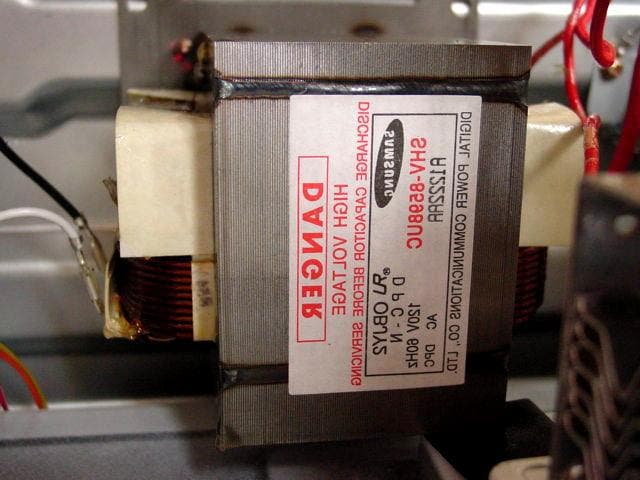
Click to zoom
Application Details
- Equipment Class
- 8CC - Part 18 Consumer Device
- Date of Grant
- Mar 29, 2001
- Application Purpose
- Original Equipment
- Date of Application
- Mar 29, 2001
- Equipment Note
- microwave oven
- Frequency Range
- 2439.00000000 - 2463.00000000
- Company
- Samsung Electronics Co Ltd
- Country
- United States
Documents & Files
Document Text
Text extracted from the exhibit documents filed with the FCC. Open a document above to read the original.
Users Manual
Code No.: DE68- 3 2 6 5 4 9 8 7 0 1 Microwave OvenOwner’s Manual MW1030WA / MW1030BAMW1060WA / MW1060BAMW1060SA / MW1230WAMW1230BA / MW1255WAMW1255BA / MW1260WAMW1260BA / MW1430WAMW1430BA / MW1455WA MW1455BA / MW1460WAMW1460BA / MW1660WAMW1660BA / MW1960WAMW1960BA XGt~XW]W~ht~XY]W~hUGGwGXGGz SGq GY^SGYWWXGG\aY]Gwt 2 S AVE T HESE I NSTRUCTIONS Safety P RECAUTIONS TO A VOID P OSSIBLE E XPOSURE TO E XCESSIVE M ICROWAVE E NERGY : (a) Do not attempt to operate this oven with the door open since open-door operation can result in harmful exposure to microwave energy. It is important not to defeat or tamper with the safety interlocks. (b) Do not place any object between the front face of the oven and the door or allow soil or cleaner residue to accumulate on sealing surfaces. (c) Do not operate the oven if it is damaged. It is particularly important that the oven door close properly and that there is no damage to the 1) Door (bent or dented), 2) Hinges and latches (broken or loosened), 3) Door seals and sealing surfaces. (d) The oven should not be adjusted or repaired by anyone except properly qualified service personnel. WARNINGAlways observe Safety Precautions when using your oven. Never try to repair the oven on your own – there is dangerous voltage inside. If the oven needs to be repaired, call of an authorized service center near you. I MPORTANT S AFETY I NSTRUCTIONS When using any electrical appliance, basic safety precautions should be followed, including the following: WARNINGTo reduce risk of burns, electric shock, fire, personal injury or exposure to excessive microwave energy: • Read all safety instructions before using the appliance.• Read and follow the specific “Precautions to Avoid Possible Exposure to Excessive Microwave Energy” on this page. • This appliance must be grounded. Connect only to properly grounded outlets. See “Important Grounding Instructions” on page 4 of this manual. • Install or place this appliance only in accordance with the installation instructions provided. • Some items, like whole eggs and food in sealed containers, may explode if heated in this oven. • Use this appliance only for its intended use as described in the manual. Do not use corrosive chemicals or vapors in this appliance. This type of oven is specifically designed to heat, cook, or dry food. It is not designed for industrial or laboratory use. • As with any appliance, close supervision is necessary when used by children. • Do not operate this appliance if it has a damaged cord or plug, if it is not working properly, or if it has been damaged. • This appliance should be serviced only by qualified service personnel. Contact the nearest authorized service facility for examination, repair, or adjustment. • Do not cover or block any of the openings on this appliance. XGt~XW]W~ht~XY]W~hUGGwGYGGz SGq GY^SGYWWXGG\aY]Gwt 3 S AVE T HESE I NSTRUCTIONS Safety Important Safety Instructions, continued• Do not store this appliance outdoors. Do not use near water – for example, near a kitchen sink, in a wet basement, or near a swimming pool, etc. • Keep the inside of the oven clean. Food particles or spattered oils stuck to the oven walls or floor can cause paint damage and reduce the efficiency of the oven. • Do not immerse cord or plug in water.• Keep cord away from heated surfaces.• Do not let cord hang over edge of table or counter.• When cleaning door and oven surfaces, use only mild, nonabrasive soaps or detergents applied with a sponge or soft cloth. • To reduce the risk of fire in the oven: a. Do not overcook food. Watch appliance care fully if paper, plastic, or other combustible materials are inside. b. Remove wire twist-ties from plastic cooking bags before placing bags in oven. c. If materials inside the oven ignite, keep the oven door closed, turn the oven off, disconnect the power cord, or shut off the power at the fuse or circuit breaker panel. d. Do not use the oven compartment for storage purposes. Do not leave paper products, cooking utensils, or food in the oven when not in use. • Do not try to preheat oven or operate while empty.• Do not cook without the glass tray in place on the oven floor. Food will not cook properly without the tray. • Do not defrost frozen beverages in narrow-necked bottles. The containers can break. • Dishes and containers can become hot. Handle with care.• Carefully remove container coverings, directing steam away from hands and face. • Remove lids from bay food before heating. After heating baby food, stir well and test temperature by tasting before serving. • A short power-supply cord is provided to reduce the risk of becoming entangled in or tripping over a longer cord. Longer cord sets or extension cords are available and may be used with caution. • Do not operate any other heating or cooking appliance beneath this appliance. • Do not mount unit over or near any portion of a heating or cooking appliance. • Do not mount over a sink.• Do not store anything directly on top of the appliance when it is in operation. XGt~XW]W~ht~XY]W~hUGGwGZGGz SGq GY^SGYWWXGG\aY]Gwt 4 S AVE T HESE I NSTRUCTIONS Safety I MPORTANT G ROUNDING I NSTRUCTIONS This appliance must be grounded. In the event of an electrical short circuit, grounding reduces the risk of electric shock by providing an escape wire for the electrical current. This appliance is equipped with a cord that includes a grounding wire and a grounding plug. The plug must be plugged into an outlet that is properly installed and grounded. Plug the three-prong power cord into a properly grounded outlet of standard 115-120 voltage, 60 Hz. Your oven should be the only appliance on this circuit. WARNINGImproper use of the grounding plug can result in a risk of electric shock. Consult a qualified electrician or servicer if you do not understand the grounding instructions or if you are not sure if the appliance is properly grounded. Use of Extension Cords A short power-supply cord …
Text truncated - open the document above for the full version.
ID Label/Location Info
CAUTION THIS DEVICE IS TO BE SERVICED ONLY BY PROPERLY QUALIFIED SERVICE PERSONNEL. CONSULT THE SERVICE MANUAL FOR PROPER SERVICE PROCEDURES TO ASSURE CONTINUED COMPLIANCE WITH THE FEDERAL PERFORMANCE STANDARD FOR MICROWAVE OVENS AND FOR PRECAUTIONS TO BE TAKEN TO AVOID POSSIBLE EXPOSURE TO EXCESSIVE MICROWAVE ENERGY. WARNING * TO ENSURE CONTINUED PROTECTION AGAINST ELECTRIC SHOCK HAZARD CONNECT TO PROPERLY GROUNDED OUTLETS ONLY. * DISCONNECT APPLIANCE BEFORE SERVICING REMOVAL OF OUTER CASE WITH PRODUCT ENERGIZED MAY EXPOSE SERVICEMAN TO HAZARDOUS HIGH VOLTAGE POTENTIALS. WARNING CERTAIN INTERNAL PARTS ARE INTENTIONALLY NOT GROUNDED AND MAY PRESENT A RISK OF ELECTRICAL SHOCK ONLY DURING SERVICING. SERVICE PERSONNEL- DO NOT CONTACT THE FOLLOWING PARTS WHILE THE APPLIANCE IS ENERGIZED : FAN MOTOR, LOW VOLTAGE TRANSFORMER (TOUCH CONTROL TYPE), TIMER & TIMER MOUNTING BRACKET (MECHANICAL TYPE). WARNING RISK OF ELECTRIC SHOCK. NON-REMOVABLE FASTENERS ARE PROVIDED BECAUSE OF INTERNAL HIGH VOLTAGES. DO NOT REMOVE FASTENERS. MODEL NO. MW1455WA 1.6 A3LMW1455 NOT FOR BUILT-IN INSTALLATION SERIAL NO.120Vac60Hz kW MICROWAVE MANUFACTURED : FEBRUARY-2001 MADE IN KOREA FCC ID : THIS PRODUCT COMPLIES WITH DHHS RULES 21 CFR SUBCHAPTER J. HOUSEHOLD MICROWAVE OVEN 416 MAETANDONG, SUWON, KOREA SEC LISTED 725F U L R EUT Photograph
Internal Photos
EUT Photograph EUT Photograph EUT Photograph
Schematics
8. P.C.B Diagrams 8-1 P.C.B Diagrams Samsung Electronics 8-1
Test Report
JOB Number : SEMC1067 Page 1 of 19 EMC TEST REPORT According to FCC CFR47 Part 18 Subpart C JOB Number : SEMC1067 1. This test reports does not constitute an endorsement by NIST/NVLAP or U.S Government. 2. This test report is to certify that the tested device properly complies with the requirements of FCC Rules and Regulations Part 18 CFR47 Subpart C Intentional Radiators. All tests necessary to show compliance to the requirements were and these results met the specifications requirement. 1. Applicant Name :SAMSUNG ELECTRONICS CO., LTD. 416 Maetan 3 Dong, Paldal-Ku, Suwon City, Kyungki Do, Korea, 442-742 2. Identification of tested device 2.1 FCC ID :A3LMW1455 2.2 Device Name :MICROWAVE OVEN 2.3 Trade Name :SAMSUNG Electronics Co.,Ltd. 2.4 Model Number :MW1455WA 2.5 RF Output Power :1200W 3. Test Procedure and Items 3.1 FCC/OST MP-5 : 1986 4. Issued Date :February 22, 2001 Tested by: No Cheon, PARK / Test Engineer Reviewed by: Seung Kyu, CHA / Manager of EMC Lab. Authorised by: Taek Jeong, SHIN / Chief of EMC Lab. This reports shall not be reproduced except in full, without the written approval of SEC EMC Testing laboratory. This laboratory is registered by the NIST/NVLAP, U.S.A. The test reported herein have been performed in accordance with its terms of registration. NVLAP LAB CODE 200447-0 JOB Number : SEMC1067 Page 2 of 19 TABLE OF CONTENTS 1. Product Description 2. Test Facility 3. Accreditation and Listing 4. Radio Noise Emission Measurement Procedures/Results 4.1 Radiation Hazard Measurement 4.2 Input Power Measurement 4.3 RF Output Power Measurement 4.4 Operation Frequency Measurement 4.4.1 Variation in Operating Frequency with Time Measurement 4.4.2 Variation in Operating Frequency with Voltage Measurement 4.4.3 Variation in Operating Frequency with Time Plot 4.4.4 Variation in Operating Frequency with Voltage Plot(96Vac) 4.4.5 Variation in Operating Frequency with Voltage Plot(120Vac) 4.4.6 Variation in Operating Frequency with Voltage Plot(150Vac) 4.5 Radiated Emission Measurement 4.5.1 Radiated Emission Measurement Procedure 4.5.2 Radiated Emission Measurement Configuration 4.5.3 Radiated Emission Measurement Data(30 - 1000MHz) 4.5.4 Radiated Emission Measurement Data(1 - 25GHz) 5. Measurement Equipment List This reports shall not be reproduced except in full, without the written approval of SEC EMC Testing laboratory. JOB Number : SEMC1067 Page 3 of 19 1. Product Description The equipment under test is a microwave oven sold for consumer use. Model :MW1455WAis a1200W microwave oven with digital controls. < Magnetron > Model : OM-75P manufactured by Samsung Electronic Co., Ltd. Installation Type: Counter-top 2. Test Facility The Semi-anechoic chamber and Conducted measurement facilities used to collect the radiated data are located at 416 Maetan 3 Dong, Paldal-Ku, Suwon City, Kyungki Do, Korea. The sites are constructed in conformance with the requirements of ANSI C63.4 and CISPR Publication 22. 3. Accreditation and Listing The test facilities used to perform radiated and conducted emissions tests are accrediated by National Voluntary Laboratory Accreditation Program for the specific of accreditation under Lab Code: 200447-0 to perform Electromagnetic Interference tests according to FCC PART 15 and CISPR 22 requirements. No part of this report may be used to claim or imply product endorsement by NVLAP or any agency of the US Government. In addition, the test facilities are listed with Federal Communications Commission(Registration Number:98856, Anechoic Chamber #1). This reports shall not be reproduced except in full, without the written approval of SEC EMC Testing laboratory. JOB Number : SEMC1067 Page 4 of 19 4. Radio Noise Emission Measurement Procedures/Results 4.1 Radiation Hazard Measurement A 700-ml water load was placed in the center of the oven. The power setting was set to maximum power. While the oven was operating, the Microwave Survey Meter probe was moved slowly around the door seams to check for leakage. Fig. 1 Test Setup and the locations of maximum leakage The results of this test are as follows. ProbeMaximum LeakageLimit Location[mW/Cm2][mW/Cm2] A0.051.0 B0.051.0 C0.051.0 All others0.051.0 This reports shall not be reproduced except in full, without the written approval of SEC EMC Testing laboratory. A B C JOB Number : SEMC1067 Page 5 of 19 4.2 Input Power Measurement Input power and current were measured using a Power Analyzer. A 700ml water load was placed in the center of the oven and the oven set to maximum power. A 700 ml water load was chosen for its compatibility. Manufacturers to determine their input ratings commonly use this procedure. Fig. 2 Test Setup for Input power The results of this test are as follows. InputInputMeasuredEUT Spec. VoltageCurrentInput powerInput power [Vac][amps][watts][watts] 12013.516201650 Based on the measured input power, the EUT was found to be operating within the intended specifications. This reports shall not be reproduced except in full, without the written approval of SEC EMC Testing laboratory. JOB Number : SEMC1067 Page 6 of 19 4.3 RF Output Power Measurement The Caloric Method was used to determine maximum output power. The initial temperature of a 1000-ml water load was measured. The water load was placed in the center of the oven. The oven was operated at maximum output power for 120 seconds. Then the temperature of the water re-measured. Fig.3 Test Setup for RF output power QuantityStartingFinalElapsedRF Power of waterTemperatureTemperatureTime [ml][centigrade][centigrade][seconds][watts] 100018.240.1120766.5 100019.341.4120773.5 100019.141.5120784 774.6666667 Power = (4.2 Joules/Cal) x (Volume in ml) x (Temp. Rise) Time in seconds The measured output was found to be ABOVE 500Watts. Therefore, in accordance with section 18.305 of Subpart C, the measured out-of-band emissions were compared to the 25xSQRT(power/500)[uV/m] @ 300M limit. This reports shall not be reproduced except in full, without the written appro…
Text truncated - open the document above for the full version.
Test Setup Photos
JOB Number : SEMC1067 Page 4 of 19 4. Radio Noise Emission Measurement Procedures/Results 4.1 Radiation Hazard Measurement A 700-ml water load was placed in the center of the oven. The power setting was set to maximum power. While the oven was operating, the Microwave Survey Meter probe was moved slowly around the door seams to check for leakage. Fig. 1 Test Setup and the locations of maximum leakage The results of this test are as follows. ProbeMaximum LeakageLimit Location[mW/Cm2][mW/Cm2] A0.051.0 B0.051.0 C0.051.0 All others0.051.0 This reports shall not be reproduced except in full, without the written approval of SEC EMC Testing laboratory. A B C JOB Number : SEMC1067 Page 5 of 19 4.2 Input Power Measurement Input power and current were measured using a Power Analyzer. A 700ml water load was placed in the center of the oven and the oven set to maximum power. A 700 ml water load was chosen for its compatibility. Manufacturers to determine their input ratings commonly use this procedure. Fig. 2 Test Setup for Input power The results of this test are as follows. InputInputMeasuredEUT Spec. VoltageCurrentInput powerInput power [Vac][amps][watts][watts] 12013.516201650 Based on the measured input power, the EUT was found to be operating within the intended specifications. This reports shall not be reproduced except in full, without the written approval of SEC EMC Testing laboratory. JOB Number : SEMC1067 Page 6 of 19 4.3 RF Output Power Measurement The Caloric Method was used to determine maximum output power. The initial temperature of a 1000-ml water load was measured. The water load was placed in the center of the oven. The oven was operated at maximum output power for 120 seconds. Then the temperature of the water re-measured. Fig.3 Test Setup for RF output power QuantityStartingFinalElapsedRF Power of waterTemperatureTemperatureTime [ml][centigrade][centigrade][seconds][watts] 100018.240.1120766.5 100019.341.4120773.5 100019.141.5120784 774.6666667 Power = (4.2 Joules/Cal) x (Volume in ml) x (Temp. Rise) Time in seconds The measured output was found to be ABOVE 500Watts. Therefore, in accordance with section 18.305 of Subpart C, the measured out-of-band emissions were compared to the 25xSQRT(power/500)[uV/m] @ 300M limit. This reports shall not be reproduced except in full, without the written approval of SEC EMC Testing laboratory. Average RF Power of 3 Trials JOB Number : SEMC1067 Page 16 of 19 Fig. 8 Radiated Emission setup(30 - 1000MHz) Fig. 9 Radiated Emission setup(1 - 25GHz) This reports shall not be reproduced except in full, without the written approval of SEC EMC Testing laboratory.
Contact Information
Applicant
Jenni Chun(General Manager)
Technical Contact
SAMSUNG ELECTRONICS CO., LTD.Wallace Oh
[email protected]408 544-5124
416 Maetan 3 Dong, Paldal-Ku · Suwon City, Kyungki Do · South Korea
Test Firm
Samsung Electronics Co., Ltd.T. Shin
Technical Specifications
| # | Rule Parts | Frequency Range | Power Output |
|---|---|---|---|
| 1 | 18 | 2.44 GHz - 2.46 GHz | - |
Other Applications from Samsung Electronics Co Ltd
A3LSMS741B
Aug 05, 2026Portable Handset
Equipment Class
6VL - 15E 6 GHZ Very Low Power DeviceA3LSMX940
Jul 31, 2026BT,BLE Tablet DTS,UNII a,b,g,n,ac,ax,be and digitizer
Equipment Class
DTS - Digital Transmission SystemA3LSMS741U
Jul 30, 2026Portable Handset
Equipment Class
6CD - 15E 6 GHz Low Power Dual ClientA3LSMX840
Jul 27, 2026BT,BLE Tablet DTS,UNII a,b,g,n,ac,ax and Digitizer
Equipment Class
DSS - Part 15 Spread Spectrum TransmitterA3LSMX848U
Jul 27, 2026WCDMA, LTE, 5G NR Tablet BT,BLE, DTS,UNII a b g n ac ax and Digitizer
Equipment Class
JBP - Part 15 Class B Computing Device Peripheral