A3LNX2000Digital Camera
Samsung Electronics Co Ltd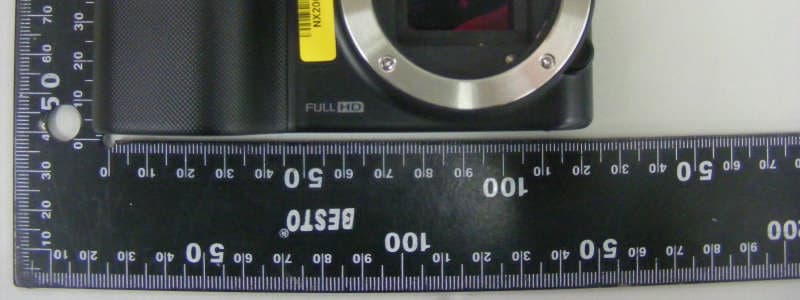
Click to zoom
Application Details
- Equipment Class
- DTS - Digital Transmission System
- Date of Grant
- Apr 12, 2013
- Application Purpose
- Original Equipment
- Date of Application
- Apr 12, 2013
- Equipment Note
- Digital Camera
- Frequency Range
- 2412.00000000 - 2462.00000000
- Company
- Samsung Electronics Co Ltd
- Country
- United States
Documents & Files
Document Text
Text extracted from the exhibit documents filed with the FCC. Open a document above to read the original.
Users Manual
ENG This user manual includes detailed usage instructions for your camera. Please read this manual thoroughly. USER MANUAL 1 Copyright information • Camera specifications or contents of this manual may be changed without prior notice due to upgrade of camera functions. • You are not allowed to reuse or distribute any part of this manual without prior permission. • We recommend using your camera within the country where you purchase it. • Use this camera responsibly and adhere to all laws and regulations concerning its use. PlanetFirst represents Samsung Electronics' commitment to sustainable development and social responsibility through eco-driven business and management activities. • Microsoft Windows and the Windows logo are registered trademarks of the Microsoft Corporation. • Mac and Apple App Store are registered trademarks of the Apple Corporation. • Google Play Store is a registered trademark of Google, Inc. • Adobe, the Adobe logo, Photoshop and Lightroom are either registered trademarks or trademarks of Adobe Systems Incorporated in the United States and/or other countries. • microSD™, microSDHC™, and microSDXC™ are registered trademarks of the SD Association. • HDMI, the HDMI logo, and the term “High Definition Multimedia Interface” are trademarks or registered trademarks of HDMI Licensing LLC. • Wi-Fi®, the Wi-Fi CERTIFIED logo, and the Wi-Fi logo are registered trademarks of the Wi-Fi Alliance. • Trademarks and trade names used in this manual are the property of their respective owners. 2 Health and safety information Prevent damage to subjects’ eyesight. Do not use the flash in close proximity (closer than 1 m/3 ft) to people or animals. If you use the flash too close to your subject’s eyes, this can cause temporary or permanent eyesight damage. Keep your camera away from small children and pets. Keep your camera and all accessories out of the reach of small children and animals. Small parts may cause choking or serious injury if swallowed. Moving parts and accessories may present physical dangers as well. Do not expose the camera to direct sunlight or high temperatures for an extended period of time. Prolonged exposure to sunlight or extreme temperatures can cause permanent damage to your camera’s internal components. Avoid covering the camera or charger with blankets or clothes. The camera may overheat, which may distort the camera or cause a fire. Do not handle the power supply cord or go near the charger during a thunderstorm. This may result in electric shock. Always comply with the following precautions and usage tips to avoid dangerous situations and ensure peak performance of your camera. Warning—situations that could cause injury to yourself or others Do not disassemble or attempt to repair your camera. This may result in electric shock or damage to the camera. Do not use your camera near flammable or explosive gases and liquids. This may cause a fire or explosion. Do not insert flammable materials into the camera or store these materials near the camera. This may cause a fire or electric shock. Do not handle your camera with wet hands. This may result in electric shock. 3 Health and safety information If liquid or foreign objects enter your camera, immediately disconnect all power sources, such as the battery or charger, and then contact a Samsung service center. Comply with any regulations that restrict the use of a camera in a certain area. • Avoid interference with other electronic devices. • Turn off the camera when in an aircraft. Your camera can cause interference with aircraft equipment. Follow all airline regulations and turn off your camera when directed by airline personnel. • Turn off the camera near medical equipment. Your camera can interfere with medical equipment in hospitals or health care facilities. Follow all regulations, posted warnings, and directions from medical personnel. Avoid interference with pacemakers. Maintain the distance between this camera and all pacemakers to avoid potential interference, as recommended by the manufacturer and research groups. If you have any reason to suspect that your camera is interfering with a pacemaker or other medical device, turn off the camera immediately and contact the manufacturer of the pacemaker or medical device for guidance. Caution—situations that could cause damage to your camera or other equipment Remove the batteries from your camera when storing it for an extended period of time. Installed batteries may leak or corrode over time and cause serious damage to your camera. Use only authentic, manufacturer-recommended, Lithium-ion replacement batteries. Do not damage or heat the battery. Inauthentic, damaged, or heated batteries may cause a fire or personal injury. Use only Samsung-approved batteries, chargers, cables and accessories. • Using unauthorized batteries, chargers, cables or accessories can cause batteries to explode, damage your camera, or cause injury. • Samsung is not responsible for damage or injuries caused by unapproved batteries, chargers, cables or accessories. Use the battery only for its intended purpose. Misusing the battery may cause a fire or electric shock. 4 Health and safety information Do not touch the flash while it fires. The flash is very hot when fired and may burn your skin. When you use the AC charger, turn off the camera before you disconnect the power to the AC charger. Failing to do so may result in fire or electric shock. Disconnect the charger from the wall socket when not in use. Failing to do so may result in fire or electric shock. Do not use a damaged power supply cord, plug, or loose outlet when you charge batteries. This may cause a fire or electric shock. Do not allow the AC charger to come in contact with the +/- terminals on the battery. This may cause a fire or electric shock. Do not drop or subject the camera to strong impacts. Doing so may damage the screen or external or internal components. Exercise caution when you connect cables and install bat…
Text truncated - open the document above for the full version.
Users Manual
My Camera > Shooting modes 59 Using Z The Z allows you to zoom in on a subject with less degradation of photo quality than the Digital zoom. However, the photo resolution may change compared to when you zoom in by rotating the zoom ring. 1 Rotate the mode dial to P, A, S, M, or i. 2 Press [i-Function] on the lens to select Z. • You can also press [i-Function], and then press [C/F] or drag the screen to select Z. 3 Adjust the focus ring to select a zoom ratio. • You can also scroll the jog dial or drag the screen to select an option. • Photo resolution varies according to the zoom ratio if you use the Z. 3:216:91:1 x1.2 4560X3040 (13.9M)4560X2568 (11.7M)3040X3040 (9.2M) x1.4 3888X2592 (10.1M)3888X2184 (8.5M)2592X2592 (6.7M) x1.7 3264X2176 (7.1M)3264X1840 (6.0M)2176X2176 (4.7M) x2 2736X1824 (5.0M)2736X1536 (4.2M)1824X1824 (3.3M) These figures are based on the maximum resolution at each image ratio. 4 Half-press [Shutter] to focus, and then press [Shutter] to capture the photo. • Z is not available when you capture burst shots. • Z is not available when you capture photos in the RAW file format. • Z is deactivated when you record videos by pressing the video recording button. • This function is not available when you set 3D Auto Mode in 3D mode. My Camera > Shooting modes 60 s Smart mode In Smart mode, you can capture photos with options that are preset for a specific scene. 1 Rotate the mode dial to s. 2 Select a scene. • To select a shooting mode when the mode dial is set to s, press [f] or touch , and then select a desired mode. Smart : Beauty Face Set OptionDescription Beauty Face Capture a portrait with options to hide facial imperfections. Best Face Capture multiple photos and replace faces to create the best possible image. Landscape Capture still-life scenes and landscapes. Macro Capture small or close-up subjects. Action Freeze Capture subjects moving at high speed. OptionDescription Rich Tones Capture a photo with vibrant colors. Panorama Capture a wide panoramic scene in a single photo. Waterfall Capture scenes with waterfalls. Silhouette Capture subjects as dark shapes against a light background. Sunset Capture scenes at sunset, with natural-looking reds and yellows. Night Capture multiple photos in low light conditions without a flash. The camera combines them to create a single image that is brighter and has less blurring. Fireworks Capture scenes with fireworks. Light Trace Capture scenes with the light trailing in low-light conditions. Creative Shot Capture photos with effects applied automatically. 3 Half-press [Shutter] to focus, and then press [Shutter] to capture. My Camera > Shooting modes 61 Using the Best Face mode In Best Face mode, you can capture multiple photos and replace faces to create the best possible image. Use this mode to select the best image for each individual when capturing group photos. 1 Rotate the mode dial to s, and then select Best Face. 2 Align your subject in the frame, and then half-press [Shutter] to focus. 3 Press [Shutter] to capture the photo. • The camera captures 5 photos consecutively. • The first photo is set as the background image. • The camera automatically detects faces after shooting. 4 Touch a face to replace. 5 Touch the best image from the 5 faces that were captured. • Repeat steps 4 and 5 to replace the rest faces of the photo. • The icon will appear on the image that the camera recommends. 6 Touch to save the photo. • Use a tripod to prevent your camera from shaking. • The resolution is set to 5.9M or smaller. My Camera > Shooting modes 62 Capturing panoramic photos Capture a 2D or 3D panoramic photo. Captured 3D panoramic photos can be viewed only on a 3D TV or 3D monitor. 1 Rotate the mode dial to s, and then select Panorama. 2 Press [m] → 1 → Panorama → Live Panorama or 3D. 3 Press [m] to return to Shooting mode. 4 Press and hold [Shutter] to start shooting. 5 With [Shutter] pressed, slowly move the camera in the direction you selected. • In 3D Panorama mode, you can capture a scene only in horizontal directions. • An arrow toward the direction of motion is displayed, and the entire shooting image is displayed in the preview box. • When the scenes are aligned, the camera captures the next photo automatically. 6 When you are finished, release [Shutter]. • The camera will automatically save the shots into one photo. • If you release [Shutter] while shooting, the panoramic shooting stops and photos that have been captured are saved. My Camera > Shooting modes 63 • The resolution varies depending on the panoramic photo you captured. • In Panorama mode, some shooting options are not available. • The camera may stop shooting due to the shooting composition or the subject's movement. • In Panorama mode, your camera may not capture the entire last scene if you stop moving the camera to improve the photo quality. To capture the entire scene, move your camera slightly beyond the point where you want the scene to end. • In 3D Panorama mode, your camera may not capture the very beginning or end of a scene due to the nature of the 3D effect. To capture the entire scene, move slightly beyond the beginning and end points you want to capture. • Photos captured with the 3D function are saved in JPEG (2D) and MPO (3D) formats. On your camera's display, you can view only JPEG files. • To view 3D files, connect your camera to a 3D TV or 3D monitor with an optional HDMI cable. While viewing, wear proper 3D glasses. • Capturing photos in 3D Panorama mode may result in a less pronounced 3D effect than those captured with a 3D lens. To increase the 3D effect, attach the optional 3D lens and use 3D mode. (p. 65) • For best results when capturing panoramic photos, avoid the following: -moving the camera too quickly or too slowly -moving the camera too little to capture the next image -moving the camera at irregular speeds -shaking the camera -shooting in dark places -capturing moving subjects nearby -shooting conditions where the brightness or color…
Text truncated - open the document above for the full version.
Users Manual
119 Wireless network Connecting to a WLAN and configuring network settings Learn to connect via an access point (AP) when you are in a range of a WLAN. You can also configure network settings. Connecting to a WLAN 1 Rotate the mode dial to B. 2 Select , , , or . 3 Press [m], and then select Wi-Fi Setting. • In some modes, follow the on-screen instructions until the Wi-Fi Setting screen appears. • The camera automatically searches for available AP devices. 4 Select an AP. Back Refresh Samsung1 Samsung2 Samsung3 Samsung4 • Select Refresh to refresh connectable APs. • Select Add wireless network to add an AP manually. Your AP name must be in English to add the AP manually. Icon/OptionDescription Ad hoc AP Secured AP WPS AP Signal strength Press [F] or touch to open network setting options. • When you select a secured AP, a pop-up window appears. Enter the required passwords to connect to the WLAN. For information about entering text, refer to "Entering text". (p. 126) • When a login page appears, refer to "Using the login browser". (p. 124) • When you select an unsecured AP, the camera will connect to the WLAN. • If you select a WPS profile supported AP, select → WPS PIN connection, and then enter a PIN on the AP device. You can also connect to a WPS profile supported AP by selecting → WPS button connection on the camera, and then pushing the WPS button on the AP device. • The same AP may be listed twice, with different frequencies, because your camera supports the dual band function. 120 Wireless network > Connecting to a WLAN and configuring network settings Setting network options 1 In the Wi-Fi Setting screen, move to an AP, and then press [F] or touch . 2 Select each option, and then enter the required information. OptionDescription Network Password Enter the network password. IP Setting Set the IP address automatically or manually. Manually setting the IP address 1 In the Wi-Fi Setting screen, move to an AP, and then press [F] or touch . 2 Select IP Setting → Manual. 3 Select each option, and then enter the required information. OptionDescription IP Enter the static IP address. Subnet Mask Enter the subnet mask. Gateway Enter the gateway. DNS Server Enter the DNS address. 121 Wireless network > Connecting to a WLAN and configuring network settings Using the login browser You can enter your login information via the login browser when connecting to some APs, sharing sites, or cloud servers. IconDescription Close the login browser. Move to the previous page. Move to the next page. Stop loading the page. Reload the page. • You may not be able to select some items depending on the page you connected to. This does not indicate a malfunction. • The login browser may not close automatically after you log into some pages. If this occurs, close the login browser by touching , and then proceed with the desired operation. • It may take longer to load the login page due to the page size or network speed. If this occurs, wait until the login information input window appears. 122 Wireless network > Connecting to a WLAN and configuring network settings Network connection tips • You must insert a memory card to use the Wi-Fi features. • The quality of the network connection will be determined by the AP. • The further the distance between your camera and the AP, the longer it will take to connect to the network. • If a nearby device is using the same radio frequency signal as your camera, it may interrupt your connection. • If your AP name is not in English, the camera may not be able to locate the device or the name may appear incorrectly. • For network settings or a password, contact your network administrator or network service provider. • If a WLAN requires authentication from the service provider, you may not be able to connect to it. To connect the WLAN, contact your network service provider. • Depending on the encryption type, the number of digits in the password may differ. • A WLAN connection may not be possible in all surroundings. • The camera may display a WLAN enabled printer on the AP List. You cannot connect to a network via a printer. • You cannot connect your camera to a network and a TV simultaneously. • Connecting to a network may incur additional charges. Costs will vary based on the conditions of your contract. • If you cannot connect to a WLAN, try another AP from the available AP list. • A login page may appear when you select free WLANs provided by some network service providers. Enter your ID and password to connect to the WLAN. For information about registering or the service, contact the network service providers. • Be cautious when you enter personal information for an AP connection. Do not enter any payment or credit card information on your camera. The manufacturer is not liable for any problem caused by entering such information. • Available network connections may differ by country. • The WLAN feature of your camera must comply with radio transmission laws in your region. To ensure compliance, use the WLAN feature only in the country where you purchased the camera. • The process for adjusting network settings may differ, depending on network conditions. • Do not access a network that you are not authorized to use. • Before you connect to a network, ensure your battery is fully charged. • You cannot upload or send files captured in some modes. • Files that you transfer to another device may not be supported by the device. In this case, use a computer to play back the files. 123 Wireless network > Connecting to a WLAN and configuring network settings Entering text Learn how to enter text. The icons in the table let you move the cursor, change the case, etc. Touch a key to enter it. IconDescription Move the cursor. Stop entering text and return to the previous page. Change case. Switch between Symbol/Number mode and the normal mode. Change the input language. Enter a space. Save the displayed text. Delete the last letter. • You can use only the English alphabets in some mo…
Text truncated - open the document above for the full version.
Users Manual
187 Appendix > Glossary Flash A speed light that helps to create adequate exposure in low-light conditions. Focal length The distance from the middle of the lens to its focal point(in millimeters). Longer focal lengths result in narrower angles of view and the subject is magnified. Shorter focal lengths result in wider angles of view. Histogram A graphical representation of the brightness of an image. The horizontal axis represents the brightness and the vertical axis represents the number of pixels. High points at the left (too dark) and right (too bright) on the histogram indicate a photo that is improperly exposed. H.264/MPEG-4 A high-compression video format established by international standard organizations ISO-IEC and ITU-T. This codec is capable of providing good video quality at low bit rates developed by the Joint Video Team (JVT). EV (Exposure Value) All the combinations of the camera’s shutter speed and lens aperture that result in the same exposure. EV Compensation This feature allows you to quickly adjust the exposure value measured by the camera, in limited increments, to improve the exposure of your photos. Exif (Exchangeable Image File Format) A specification to define an image file format for digital cameras created by the Japan Electronic Industries Development Association (JEIDA). Exposure The amount of light allowed to reach the camera’s sensor. Exposure is controlled by a combination of the shutter speed, the aperture value, and ISO sensitivity. 188 Appendix > Glossary Metering The metering refers to the way in which the camera measures the quantity of light to set the exposure. MF (Manual Focus) A system that manually focuses the camera lens on the subject. You can use the focus ring to focus on a subject. MJPEG (Motion JPEG) A video format which is compressed as a JPEG image. MPO (Multi Picture Object) An image file format that contains multiple images in a file. An MPO file provides a 3D effect on MPO-compatible displays, such as 3D TVs or 3D monitors. Image sensor The physical part of a digital camera that contains a photosite for each pixel in the image. Each photosite records the brightness of the light that strikes it during an exposure. Common sensor types are CCD (Charge- coupled Device) and CMOS (Complementary Metal Oxide Semiconductor). IP (Internet protocol) address An IP address is a unique number that is assigned to every device that is connected to the internet. ISO sensitivity The sensitivity of the camera to light, based on the equivalent film speed used in a film camera. At higher ISO sensitivity settings, the camera uses a higher shutter speed, which can reduce blur caused by camera shake and low light. However, images with high sensitivity are more susceptible to noise. JPEG (Joint Photographic Experts Group) A lossy method of compression for digital images. JPEG images are compressed to reduce their overall file size with minimal deterioration of the image resolution. 189 Appendix > Glossary Quality An expression of the rate of compression used in a digital image. Higher quality images have a lower rate of compression, which usually results in a larger file size. RAW (CCD raw data) The original, unprocessed data, collected directly from the camera’s image sensor. White Balance, contrast, saturation, sharpness, and other data can be manipulated with editing software before the image is compressed into a standard file format. Resolution The number of pixels present in a digital image. High resolution images contain more pixels and typically show more detail than low resolution images. Noise Misinterpreted pixels in a digital image that may appear as misplaced or random, bright pixels. Noise usually occurs when photos are shot with a high sensitivity or when a sensitivity is automatically set in a dark place. NTSC (National Television System Committee) A video color encoding standard used most commonly in Japan, North America, the Philippines, South America, South Korea, and Taiwan. Optical zoom This is a general zoom which can enlarge images with a lens and does not deteriorate quality of images. PAL (Phase Alternate Line) A video color encoding standard used in numerous countries throughout Africa, Asia, Europe, and the Middle East. 190 Appendix > Glossary Shutter speed Shutter speed refers to the amount of time it takes to open and close the shutter, and it is an important factor in the brightness of a photo, as it controls the amount of light which passes through the aperture before it reaches the image sensor. A fast shutter speed allows less time to let light in and the photo becomes darker and more easily freezes subjects in motion. sRGB (Standard RGB) International standard of color space established by the IEC (International Electrotechnical Commission). This is defined from color space for PC monitors and is also used as the standard color space for Exif. Vignetting A reduction of an image’s brightness or saturation at the periphery (outer edges) compared to the center of the image. Vignetting can draw interest to subjects positioned in the center of an image. White Balance (Color balance) An adjustment of the intensities of colors (typically the primary colors red, green, and blue), in an image. The goal of adjusting the White Balance, or color balance, is to correctly render the colors in an image. Wi-Fi Wi-Fi is a technology that allows electronic devices to exchange data wirelessly over a network. WPS (Wi-Fi Protected Setup) WPS is a technology that secures wireless home networks. 191 Appendix Optional accessories Lens SAMSUNG 18-55 mm F3.5-5.6 OIS III SAMSUNG 20-50 mm F3.5-5.6 ED II SAMSUNG 16 mm F2.4SAMSUNG 20 mm F2.8 SAMSUNG 30 mm F2SAMSUNG 50-200 mm F4-5.6 ED OIS II SAMSUNG 60 mm F2.8 Macro ED OIS SSA SAMSUNG 18-200 mm F3.5-6.3 ED OIS Lens SAMSUNG 85 mm F1.4 ED SSASAMSUNG 12-24 mm F4-5.6 ED SAMSUNG 45 mm F1.8SAMSUNG 45 mm F1.8 [T6] 2D/3D External flash SEF42ASEF220A GPS GPS10 192 Appendix > Optional accessories Shutter release (mi…
Text truncated - open the document above for the full version.
Cover Letter(s)
Date: April 02, 2013 Federal Communications Commission 7435 Oakland Mills Road Columbia MD 21046 c.c. Compliance Certification Services Certification Division 47173 Benicia Street Fremont, CA 94538, USA To whom it may concern: I, the undersigned, hereby authorize Lab Manager Charles. Kim (or Feel. Jeong) and of SGS Korea Co., Ltd and hereafter referred to as SGS Korea, to act on our behalf in all manners relating to application for equipment authorization, including signing of all documents relating to these matters. Any and all acts carried out by Lab Manager Charles. Kim (or Feel. Jeong) of SGS Korea Co., Ltd on our behalf shall have the same effect as acts of our own. I, the undersigned, hereby certify that we are not subject to a denial of federal benefits, that includes FCC benefits, pursuant to Section 5301 of the Anti-Drug Abuse Act of 1988, 21 U.S.C. 853(a). In authorizing SGS Korea as our agent, we still recognize that we are responsible to: a) comply with the relevant provisions of the certification program; b) make all necessary arrangements for the conduct of the evaluation, including provision for examining documentation and access to all areas, records (including internal audit reports) and personnel for the purposes of evaluation (e.g. testing, inspection, assessment, surveillance, reassessment) and resolution of complaints; c) make claims regarding certification only in respect of the scope for which certification has been granted; d) do not use our product certification in such a manner as to bring the Certification Division into disrepute and not make any statement regarding our product certification which the Certification Division may consider misleading or unauthorized; e) upon suspension or cancellation of certification, discontinue use of all advertising matter that contains any reference thereto and return any certification documents as required by the Certification Division; f) use certification only to indicate the products are certified as being in conformity with specified standards; g) endeavor to ensure that no certificate or report nor any part thereof is used in a misleading manner; h) ensure that any reference to our product certification in communication media such as documents, brochures or advertising, complies with the requirements of the Certification Division; i) keep a record of all complaints made known to the us relating to the product’s compliance with requirements of the relevant standard and to make these records available to the Certification Division when requested; j) take appropriate action with respect to such complaints and any deficiencies found in products or services that affect compliance with the requirements for certification; k) document the actions taken. This authorization is valid until further written notice from the applicant. Sincerely Yours, Sang Kyung (Peter) Ra / General Manager Samsung Electronics Co., Ltd.
Cover Letter(s)
Date: April 2, 2013 Federal Communications Commission Authorization and Evaluation Division 7435 Oakland Mills Road, Columbia, MD 21046 RE: Request of Confidentiality for FCC ID: A3LNX2000 To Whom It May Concern: Pursuant to Sections 0.457 and 0.459 of the Commission’s Rules (CFR 47), and Section 552 (b) (4) of the Freedom of Information Act, Samsung Electronics Co., Ltd. hereby requests confidentiality and treatment of certain information accompanying this application. The materials contain trade secrets and proprietary information not customarily released to the public. The public disclosure of these matters might be harmful to the Applicant and provide unjustified benefits to its competitors. We are also hereby request Short-Term Confidentiality for 180 days after the grant as outlined in Public Notice DA 04-1705. This provision will give Samsung Electronics Co., Ltd temporary confidentiality of commercially sensitive information prior to product release. The requested Permanent and Temporary Confidential exhibits are listed as follows: CONFIDENTIAL LIST 1 Block Diagram 2 Operational Descriptions Permanent 3 Schematics 4 External Photos 5 Internal Photos 6 Test-Setup Photos Short-Term 7 User’s Manual The Applicant understands that pursuant to Rule 0.457, disclosure of this application and all accompanying documentations, where applicable, will not be made public before the date of the Grant for this application. Sincerely Yours, Sang Kyung (Peter) Ra / General Manager Samsung Electronics Co., Ltd.
External Photos
External photos of EUT Top view of EUT Bottom view of EUT Front view of EUT Rear view of EUT Side view of EUT
ID Label/Location Info
FCC/IC Label 1. (1) FCC Label Drawing (2) FCC Label Location 2. (1) IC Label Drawing (Basic Model: NX2000) (2) IC Label Location
Internal Photos
Internal photos of EUT Internal view of EUT Top view of Main PCB Bottom view of Main PCB Top view of Lens Bottom view of Lens Top view of Sub-PCB 1 Bottom view of Sub-PCB 1 Top view of Sub-PCB 2 Bottom view of Sub-PCB 2 Wlan Antenna Wifi Antenna
RF Exposure Info
Report File No. : F690501/RF-SAR002069-A2 Date of Issue : 2013-04-18 Page : 1 / 51 SGS Korea Co., Ltd. # 18-34, Sanbon-dong, Gunpo-si, Gyeonggi-do , 453-040 KOREA t+82 31 428 5700 f+82 31 427 2370 www.kr.sgs.com/ee Member of SGS Group(Société Générale de Surveillance) SAR TEST REPORT Equipment Under Test : Digital Camera Model No. : NX2000 Applicant : Samsung Electronics Co., Ltd. Address of Applicant : 129, Samsung-ro, Yeongtong-gu Suwon-si, Gyeonggi-do, 443-742 Korea, Republic of FCC ID : A3LNX2000 IC ID 649E-NX2000 Device Category : Portable Device Exposure Category : General Population/Uncontrolled Exposure Date of Receipt : 2013-03-11 Date of Test(s) : 2013-03-15 Date of Issue : 2013-04-18 Standards: FCC OET Bulletin 65 supplement C RSS-102 (Issue 4) IEEE 1528, 2003 ANSI/IEEE C95.1, C95.3 In the configuration tested, the EUT complied with the standards specified above. Remarks: Tested by : Jongwon Ma 2013-04-18 Approved by : Nicky You 2013-04-18 This report details the results of the testing carried out on one sample, the results contained in thi…
Text truncated - open the document above for the full version.
Contact Information
Applicant
Jenni Chun(General Manager)
Test Firm
SGS KOREA CO., Ltd.Jackie Jeon
Technical Specifications
| # | Rule Parts | Frequency Range | Power Output |
|---|---|---|---|
| 1 | 15C | 2.41 GHz - 2.46 GHz | 190.00 mW |
Other Applications from Samsung Electronics Co Ltd
A3LSMS741B
Aug 05, 2026Portable Handset
Equipment Class
6VL - 15E 6 GHZ Very Low Power DeviceA3LSMX940
Jul 31, 2026BT,BLE Tablet DTS,UNII a,b,g,n,ac,ax,be and digitizer
Equipment Class
DTS - Digital Transmission SystemA3LSMS741U
Jul 30, 2026Portable Handset
Equipment Class
6CD - 15E 6 GHz Low Power Dual ClientA3LSMX840
Jul 27, 2026BT,BLE Tablet DTS,UNII a,b,g,n,ac,ax and Digitizer
Equipment Class
DSS - Part 15 Spread Spectrum TransmitterA3LSMX848U
Jul 27, 2026WCDMA, LTE, 5G NR Tablet BT,BLE, DTS,UNII a b g n ac ax and Digitizer
Equipment Class
JBP - Part 15 Class B Computing Device Peripheral