A3LSGHE715Single-Band PCS GSM Phone (Models - SGH-E710/E715)
Samsung Electronics Co Ltd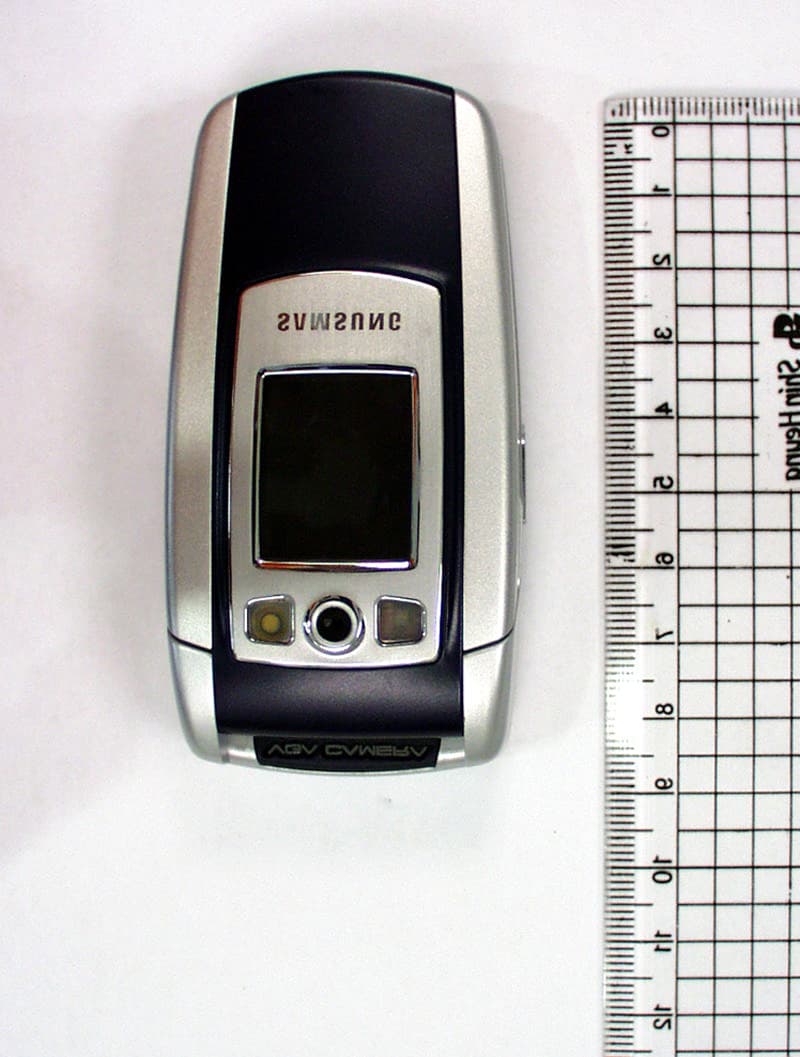
Click to zoom
Application Details
- Equipment Class
- PCE - PCS Licensed Transmitter held to ear
- Date of Grant
- Oct 01, 2003
- Application Purpose
- Original Equipment
- Date of Application
- Oct 01, 2003
- Equipment Note
- Single-Band PCS GSM Phone (Models - SGH-E710/E715)
- Frequency Range
- 1850.20000000 - 1909.80000000
- Company
- Samsung Electronics Co Ltd
- Country
- United States
Documents & Files
Document Text
Text extracted from the exhibit documents filed with the FCC. Open a document above to read the original.
Users Manual
TRI BAND GPRS TELEPHONE SGH-E715 * Some of the contents of this manual may differ from your phone, depending upon the software installed or your service provider. Printed in Korea Code No.: GH68-xxxxxA English. 08/2003. Rev. 1.0 World Wide Web http://www.samsungmobile.com 3 Contents Important Safety Precautions................................ 7 Unpacking.............................................................. 9 Your Phone.......................................................... 10 Phone Layout.......................................................... 10 Display................................................................... 13 Service Light........................................................... 16 Camera.................................................................. 16 Getting Started.................................................... 17 Installing the SIM Card............................................. 17 Charging the Battery................................................ 19 Switching the Phone On or Off................................... 21 Call Functions ...................................................... 22 Making a Call .......................................................... 22 Adjusting the Volume............................................... 24 Answering a Call...................................................... 25 Viewing Missed Calls ................................................ 26 Quickly Switching to Silent Mode................................ 28 Selecting Functions and Options.......................... 29 Phonebook........................................................... 31 Storing a Number with a Name.................................. 31 Using Phonebook Entry Options ................................. 34 Searching for a Number in Phonebook ........................ 35 Editing a Caller Group .............................................. 37 Speed-dialling ......................................................... 38 Deleting All of the Phonebook Entries ......................... 40 Checking the Memory Status..................................... 41 Entering Text....................................................... 42 Changing the Text Input Mode................................... 43 Using the T9 Mode................................................... 44 Using the Upper/lower-case Character Modes .............. 46 Using the Symbol Mode............................................ 47 Using the Number Mode ........................................... 47 Contents 4 Options During a Call........................................... 48 Putting a Call on Hold............................................... 48 Using the Menu Functions ......................................... 49 Switching the Microphone Off (Mute).......................... 50 Muting/Sending Key Tones........................................ 51 Sending DTMF Tones................................................ 51 Searching for a Number in Phonebook ........................ 52 Answering a Second Call........................................... 53 Making a Multi-party Call .......................................... 53 Using the Menus .................................................. 56 Accessing a Menu Function by Scrolling ...................... 56 Accessing a Menu Function by Using Its Shortcut ......... 57 List of Menu Functions.............................................. 57 Text Message....................................................... 63 Inbox (Menu 1.1)............................................................. 63 Outbox (Menu 1.2) .......................................................... 65 Write New (Menu 1.3) ..................................................... 66 Templates (Menu 1.4) ..................................................... 68 Settings (Menu 1.5)......................................................... 69 Delete All (Menu 1.6)....................................................... 71 Memory Status (Menu 1.7).............................................. 71 Voice Mail (Menu 1.8)...................................................... 72 Broadcast (Menu 1.9) ...................................................... 73 Location Service (Menu 1.10) .......................................... 74 Picture Messages................................................. 77 Inbox (Menu 2.1)............................................................. 77 Outbox (Menu 2.2) .......................................................... 80 Draft (Menu 2.3).............................................................. 81 Write New (Menu 2.4) ..................................................... 81 Templates (Menu 2.5) ..................................................... 84 Delete All (Menu 2.6)....................................................... 85 Memory Status (Menu 2.7).............................................. 85 Setup (Menu 2.8) ............................................................ 86 MMS Profile (Menu 2.9) ................................................... 87 Call Records......................................................... 88 Missed Calls (Menu 3.1)................................................... 88 Incomming Calls (Menu 3.2)............................................ 89 Outgoing Calls (Menu 3.3)............................................... 89 Delete All (Menu 3.4)....................................................... 90 Call Time (Menu 3.5) ....................................................... 90 Call Cost (Menu 3.6)........................................................ 91 Contents 5 Camera................................................................ 92 Take and Send (Menu 4.1) .............................................. 92 My Photo (Menu 4.2) ....................................................... 95 Sound Settings .................................................... 97 Ring Tone (Menu 5.1)...................................................... 9…
Text truncated - open the document above for the full version.
Users Manual
Health and Safety Information 148 Health and Safety Information 149 Exposure to Radio-Frequency Energy (SAR Information) This phone meets European Union (EU) requirements concerning exposure to radio waves. Your mobile phone is a radio transmitter and receiver. It is designed and manufactured so as not to exceed the limits for exposure to radio-frequency (RF) energy, as recommended by the EU Council. These limits are part of comprehensive guidelines and establish permitted levels of RF energy for the general population. The guidelines were developed by independent scientific organisations through the periodic and thorough evaluation of scientific studies. The limits include a substantial safety margin designed to ensure the safety of all persons, regardless of age and health. The exposure standard for mobile phones employs a unit of measurement known as SAR (Specific Absorption Rate). The SAR limit recommended by the EU Council is 2.0W/kg. * * The SAR limit for mobile phones used by the public is 2.0 watts/kilogram (W/kg) averaged over ten grams of body tissue. The limit incorporates a substantial margin of safety to give additional protection for the public and to account for any variations in measurements. The SAR values may vary depending on national reporting requirements and the network band.
Cover Letter(s)
September 8, 2003 Federal Communications Commission Authorization and Evaluation Div. Equipment Authorization Branch 7435 Oakland Mills Road Columbia, MD 21046 In re: Samsung Electronics Co., Ltd. FCC ID.: A3LSGHE715 Request for Confidentiality To Whom It May Concern: In accordance with 0.459 of CFR 47, Samsung Electronics Co., Ltd. requests confidentiality for the Block Diagram, Schematics, Parts list, Tune-up Procedure, Operational and Circuit Description of the attached test report. These documents contain detailed system and equipment descriptions and related information about the product, which Samsung Electronics Co., Ltd. considers to be proprietary, confidential, and a custom design and otherwise, would not release to the general public. Since this design is a basis from which future technological products will evolve, Samsung feels that this information would be of benefit to its competitors, and that the disclosure of the information in these documents would give our competitors an unfair advantage in the market. Sincerely, Wallace Oh Engineering Manager Samsun Samsung Electronics America
External Photos
© 2003 SAMSUNG ELECTRONICS Co., Ltd. SAMSUNG FCC ID: A3LSGHE715 Single-Band PCS Only Phone © 2003 SAMSUNG ELECTRONICS Co., Ltd. SAMSUNG FCC ID: A3LSGHE715 Single-Band PCS Only Phone © 2003 SAMSUNG ELECTRONICS Co., Ltd. SAMSUNG FCC ID: A3LSGHE715 Single-Band PCS Only Phone © 2003 SAMSUNG ELECTRONICS Co., Ltd. SAMSUNG FCC ID: A3LSGHE715 Single-Band PCS Only Phone © 2003 SAMSUNG ELECTRONICS Co., Ltd. SAMSUNG FCC ID: A3LSGHE715 Single-Band PCS Only Phone
ID Label/Location Info
© 2003 SAMSUNG ELECTRONICS Co., Ltd. SAMSUNG FCC ID: A3LSGHE715 Single-Band PCS Only Phone
Internal Photos
© 2003 SAMSUNG ELECTRONICS Co., Ltd. SAMSUNG FCC ID: A3LSGHE715 Single-Band PCS Only Phone © 2003 SAMSUNG ELECTRONICS Co., Ltd. SAMSUNG FCC ID: A3LSGHE715 Single-Band PCS Only Phone
RF Exposure Info
2 of 25 Contents 1. General Information.............................................................................................3 2. Description of Device...........................................................................................3 3. Description of Test Equipment..............................................................................4 3.1 SAR Measurement Setup.........................................................................................4 3.2 DASY3 E-Field Probe.............................................................................................5 3.3 SAM Phantom.....................................................................................................6 3.4 Brain & Muscle Simulating Mixture Characterization....................................................7 3.5 Device Holder for transmitters.................................................................................8 3.6 Validation Dipole...................................................................................................8 3.7 Equipment Calibration.............................................................................................9 4. SAR Measurement Procedure.............................................................................10 5. Description of test position..............................................................................11 5.1 SAM Phantom Shape............................................................................................11 5.2 Cheek/Touch Position............................................................................................11 5.3 Ear/Tilt 15 Position..............................................................................................13 5.4 Body/Holster/Belt Clip Configuration..................................................................... ..14 6. Measurement Uncertainty..................................................................................16 7. System Verification.........................................................................................17 7.1 Tissue Verification..............................................................................................17 7.2 Test System Validation...........................................................................................17 8. SAR Measurement Results.................................................................................18 8.1 Measurement Results(PCS GSM Right Head SAR-Touch)........................................19 8.2 Measurement Results(PCS GSM Right Head SAR-Tilt)............................................20 8.3 Measurement Results(PCS GSM Left Head SAR-Touch)..........................................21 8.4 Measurement Results(PCS GSM Left Head SAR-Tilt)...............................................22 8.5 Measurement Results(PCS GSM Body SAR w/ Holster) ........................................23 9. Conclusion.......................................................................................................24 10. Reference......................................................................................................25 3 of 25 1. GENERAL INFORMATION Test Sample : Single-Band PCS Only Phone Model Number : SGH-E715 Serial Number : Identical prototype (S/N : #FA-0 21-D) Manufacturer : SAMSUNG ELECTRONICS Co., Ltd. Contact : JW Jung, Assistant Manager Phone : +82- 54-479-7235 Fax : +82- 54-479-7915 Te st Standard : §2.1093; FCC/OET Bulletin 65, Supplement C(July 2001) FCC Classification : Licensed Portable Transmitter Held to Ear (PCE) Test Dates : August 19,2003 Tested for : FCC/TCB Certification 2. DESCRIPTION OF DEVICE Tx Freq. Range : 1850.00 – 1910.00 MHz (PCS GSM) Rx Freq. Range : 1930.00 – 1990.00 MHz (PCS GSM) Max. RF Output Power : 1.837W EIRP PCS (32.64dBm) Antenna Manufacturer : Panasonic Model No. : EWPADA004 Antenna Dimensions : [Intenna] 4 of 25 3. DESCRIPTION OF TEST EQUIPMENT 3.1 SAR Measurement Setup Robotic System Measurements are performed using the DASY3 automated dosimetric assessment system. Which is made by Schmid & Partner Engineering AG (SPEAG) in Zurich, Switzerland and consists of high precision robotics system (Stäubli), robot controller, Pentium computer, near-field probe, probe alignment sensor, and the SAM twin phantom containing the brain equivalent material. The robot is a six-axis industrial robot performing precise movements to position the probe to the location (points) of maximum electromagnetic field (EMF) (see Fig. 3.1). Figure 3.1 SAR Measurement System Setup System Hardware A cell controller system contains the power supply, robot controller, teach pendant (Joystick), and a remote control is used to drive the robot motors. The PC consists of the Samsung Pentium 550MHz computer with Windows 2000 system and SAR Measurement Software DASY3, A/D interface card, LCD monitor, mouse and keyboard. The Stäubli Robot is connected to the cell controller to allow software manipulation of the robot. A data acquisition electronic (DAE) circuit that performs the signal amplification, signal multiplexing, AD-conversion, offset measurements, mechanical surface detection, collision detection, etc. is connected to the Electro-optical coupler (EOC). The EOC performs the conversion from the optical into digital electric signal of the DAE and transfers data to the PC plug-in card. 5 of 25 System Electronics The DAE3 consists of a highly sensitive electrometer-grade preamplifier with auto-zeroing, a channel and gain-switching multiplexer, a fast 16-bit AD-converter and a command decoder and control logic unit. Transmission to the PC-card is accomplished through an optical downlink for data and status information and an optical uplink for commands and clock lines. The mechanical probe mounting device includes two different sensor systems for frontal and sidewise probe contacts. They are also used for mechanical surface detection and probe collision detection. The robot uses its …
Text truncated - open the document above for the full version.
RF Exposure Info
SAMSUNG FCC ID: A3LSGHE715 -- 1900MHz. PCS GSM Head SAR SAM Phantom; Right Cheek(CRP) Section; Probe:ET3DV6 - SN1735; ConvF(5.50,5.50,5.50) Head 1900 MHz: σ = 1.41 mho/m ε r = 40.2 ρ = 1.00 g/cm 3 ; Antenna: Internal; Crest Factor 8.0 SAR (1g): 0.559 mW/g SAMSUNG Single-Band PCS Only Phone Model: SGH-E715 GSM 1900 Mode, Ch.810 [1909.8MHz]; Standard Battery, Ambient Temp. (°C) - 21.5 Conducted Power=30dBm; Right Head Phantom, Cheek/Touch Position; Meas. Tissue Temp. (°C) - 20.7 Test Date--08/19/2003 [FCC/OET Bulletin 65-Supplement C, July 2001] SAR Tot [mW/g] 4.72E-2 1.42E-1 2.36E-1 3.30E-1 4.25E-1 SAMSUNG FCC ID: A3LSGHE715 -- 1900MHz. PCS GSM Head SAR SAM Phantom; Right Hand Section; Probe:ET3DV6 - SN1735; ConvF(5.50,5.50,5.50) Head 1900 MHz: σ = 1.41 mho/m ε r = 40.2 ρ = 1.00 g/cm 3 ; Antenna: Internal; Crest Factor 8.0 SAR (1g): 0.281 mW/g SAMSUNG Single-Band PCS Only Phone Model: SGH-E715 GSM 1900 Mode, Ch.810 [1909.8MHz]; Standard Battery, Ambient Temp. (°C) - 21.5 Conducted Power=30dBm; Right Head Phantom, Ear/Tilt 15 deg Position; Meas. Tissue Temp. (°C) - 20.7 Test Date--08/19/2003 [FCC/OET Bulletin 65-Supplement C, July 2001] SAR Tot [mW/g] 2.18E-2 6.54E-2 1.09E-1 1.53E-1 1.96E-1 SAMSUNG FCC ID: A3LSGHE715 -- 1900MHz. PCS GSM Head SAR SAM Phantom; Left Cheek(CRP) Section; Probe:ET3DV6 - SN1735; ConvF(5.50,5.50,5.50) Head 1900 MHz: σ = 1.41 mho/m ε r = 40.2 ρ = 1.00 g/cm 3 ; Antenna: Internal; Crest Factor 8.0 SAR (1g): 0.555 mW/g SAMSUNG Single-Band PCS Only Phone Model: SGH-E715 GSM 1900 Mode, Ch.810 [1909.8MHz]; Standard Battery, Ambient Temp. (°C) - 21.5 Conducted Power=30dBm; Left Head Phantom, Cheek/Touch Position; Meas. Tissue Temp. (°C) - 20.7 Test Date--08/19/2003 [FCC/OET Bulletin 65-Supplement C, July 2001] SAR Tot [mW/g] 6.09E-2 1.83E-1 3.04E-1 4.26E-1 5.48E-1 SAMSUNG FCC ID: A3LSGHE715 -- 1900MHz. PCS GSM Head SAR SAM Phantom; Left Hand Section; Probe:ET3DV6 - SN1735; ConvF(5.50,5.50,5.50) Head 1900 MHz: σ = 1.41 mho/m ε r = 40.2 ρ = 1.00 g/cm 3 ; Antenna: Internal; Crest Factor 8.0 SAR (1g): 0.282 mW/g, SAMSUNG Single-Band PCS Only Phone Model: SGH-E715 GSM 1900 Mode, Ch.512 [1850.2MHz]; Standard Battery, Ambient Temp. (°C) - 21.5 Conducted Power=30dBm; Left Head Phantom, Ear/Tilt 15 deg Position; Meas. Tissue Temp. (°C) - 20.7 Test Date--08/19/2003 [FCC/OET Bulletin 65-Supplement C, July 2001] SAR Tot [mW/g] 2.24E-2 6.72E-2 1.12E-1 1.57E-1 2.02E-1 SAMSUNG FCC ID: A3LSGHE715 -- 1900MHz. PCS GSM Body SAR SAM Phantom; Flat Section; Probe:ET3DV6 - SN1735; ConvF(5.00,5.00,5.00) Body 1900 MHz: σ = 1.53 mho/m ε r = 51.2 ρ = 1.00 g/cm 3 ; Antenna: Internal; Crest Factor 8.0 SAR (1g): 0.0985 mW/g SAMSUNG Single-Band PCS Only Phone Model: SGH-E715 GSM 1900 Mode, Ch.512 [1850.2MHz]; Standard Battery, Ambient Temp. (°C) - 21.5 Conducted Power=30dBm; with holster, Tissue Temp. (°C) - 20.7 Test Date--08/19/2003 [FCC/OET Bulletin 65-Supplement C, July 2001] SAR Tot [mW/g] 1.04E-2 3.12E-2 5.20E-2 7.28E-2 9.36E-2
RF Exposure Info
© 2003 SAMSUNG ELECTRONICS Co., Ltd. SAMSUNG FCC ID: A3LSGHE715 Single-Band PCS Only Phone © 2003 SAMSUNG ELECTRONICS Co., Ltd. SAMSUNG FCC ID: A3LSGHE715 Single-Band PCS Only Phone © 2003 SAMSUNG ELECTRONICS Co., Ltd. SAMSUNG FCC ID: A3LSGHE715 Single-Band PCS Only Phone © 2003 SAMSUNG ELECTRONICS Co., Ltd. SAMSUNG FCC ID: A3LSGHE715 Single-Band PCS Only Phone © 2003 SAMSUNG ELECTRONICS Co., Ltd. SAMSUNG FCC ID: A3LSGHE715 Single-Band PCS Only Phone © 2003 SAMSUNG ELECTRONICS Co., Ltd. SAMSUNG FCC ID: A3LSGHE715 Single-Band PCS Only Phone © 2003 SAMSUNG ELECTRONICS Co., Ltd. SAMSUNG FCC ID: A3LSGHE715 Single-Band PCS Only Phone © 2003 SAMSUNG ELECTRONICS Co., Ltd. SAMSUNG FCC ID: A3LSGHE715 Single-Band PCS Only Phone © 2003 SAMSUNG ELECTRONICS Co., Ltd. SAMSUNG FCC ID: A3LSGHE715 Single-Band PCS Only Phone © 2003 SAMSUNG ELECTRONICS Co., Ltd. SAMSUNG FCC ID: A3LSGHE715 Single-Band PCS Only Phone © 2003 SAMSUNG ELECTRONICS Co., Ltd. SAMSUNG FCC ID: A3LSGHE715 Single-Band PCS Only Phone
RF Exposure Info
1900MHz Brain Dipole Validation SAM Phantom; Flat Section; Probe:ET3DV6 - SN1735; ConvF(5.50,5.50,5.50) 1900 MHz Brain: σ = 1.41 mho/m ε r = 40.2 ρ = 1.00 g/cm 3 ; Crest Factor 1.0 SAR (1g): 8.97 mW/g 1900MHz Brain Dipole Validation (D1900V2 S/N: 548) Frequency: 1900 MHz; Antenna Input Power: 250 [mW]; Ambient Temp. (°C) - 21.5; Tissue Temp. (°C) - 20.7 Brain Tissue Simulating Liquid [08/19/2003] SAR Tot [mW/g] 9.65E-1 2.89E+0 4.82E+0 6.75E+0 8.68E+0
Test Report
Radiated Spurious & Harmonic Conversion Table amp Radiated Spurious & Harmonic Configuration for Calibration
Test Setup Photos
© 2003 SAMSUNG ELECTRONICS Co., Ltd. SAMSUNG FCC ID: A3LSGHE715 Single-Band PCS Only Phone © 2003 SAMSUNG ELECTRONICS Co., Ltd. SAMSUNG FCC ID: A3LSGHE715 Single-Band PCS Only Phone © 2003 SAMSUNG ELECTRONICS Co., Ltd. SAMSUNG FCC ID: A3LSGHE715 Single-Band PCS Only Phone © 2003 SAMSUNG ELECTRONICS Co., Ltd. SAMSUNG FCC ID: A3LSGHE715 Single-Band PCS Only Phone © 2003 SAMSUNG ELECTRONICS Co., Ltd. SAMSUNG FCC ID: A3LSGHE715 Single-Band PCS Only Phone © 2003 SAMSUNG ELECTRONICS Co., Ltd. SAMSUNG FCC ID: A3LSGHE715 Single-Band PCS Only Phone
Contact Information
Applicant
Jenni Chun(General Manager)
Technical Contact
PCTEST Engineering Lab., Inc.Randy Ortanez
[email protected]410-290-6652
6660-B Dobbin Road · Columbia, Maryland · United States
Test Firm
SAMSUNG ELECTRONICS CO., LTD.No Cheon Park
Technical Specifications
| # | Rule Parts | Frequency Range | Power Output | Emission | Tolerance |
|---|---|---|---|---|---|
| 1 | 24E | 1.85 GHz - 1.91 GHz | 1.837 W | 250KGXW | 2.5000000000 ppm |
Other Applications from Samsung Electronics Co Ltd
A3LSMS741B
Aug 05, 2026Portable Handset
Equipment Class
6VL - 15E 6 GHZ Very Low Power DeviceA3LSMX940
Jul 31, 2026BT,BLE Tablet DTS,UNII a,b,g,n,ac,ax,be and digitizer
Equipment Class
DTS - Digital Transmission SystemA3LSMS741U
Jul 30, 2026Portable Handset
Equipment Class
6CD - 15E 6 GHz Low Power Dual ClientA3LSMX840
Jul 27, 2026BT,BLE Tablet DTS,UNII a,b,g,n,ac,ax and Digitizer
Equipment Class
DSS - Part 15 Spread Spectrum TransmitterA3LSMX848U
Jul 27, 2026WCDMA, LTE, 5G NR Tablet BT,BLE, DTS,UNII a b g n ac ax and Digitizer
Equipment Class
JBP - Part 15 Class B Computing Device Peripheral