A3LSMG7508WGSM/WCDMA/LTE Phone + Bluetooth, DTS/UNII a/b/g/n, ANT+ & NFC
Samsung Electronics Co Ltd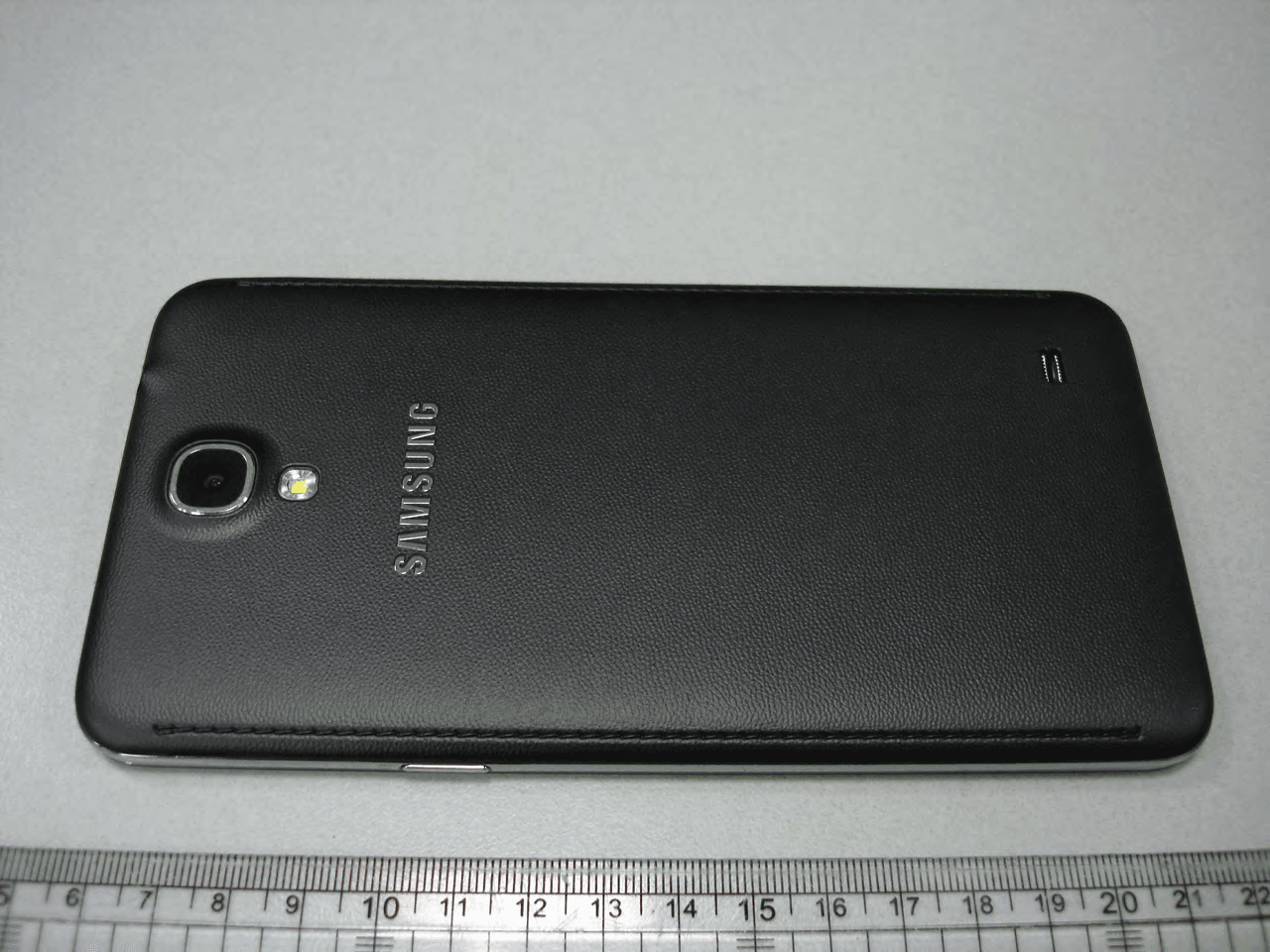
Click to zoom
Application Details
- Equipment Class
- DTS - Digital Transmission System
- Date of Grant
- Oct 30, 2014
- Application Purpose
- Original Equipment
- Date of Application
- Oct 29, 2014
- Equipment Note
- GSM/WCDMA/LTE Phone + Bluetooth, DTS/UNII a/b/g/n, ANT+ & NFC
- Frequency Range
- 5745.00000000 - 5825.00000000
- Company
- Samsung Electronics Co Ltd
- Country
- United States
Documents & Files
Document Text
Text extracted from the exhibit documents filed with the FCC. Open a document above to read the original.
Users Manual
User manual SM-G7508W This device is capable of operating in Wi-Fi mode in the 2.4 and 5 GHz bands. The FCC requires that devices operating within 5.15-5.25 GHz may only be used indoors, not outside, in order to avoid interference with MobileSatellite Services (MSS). Therefore, do not use this device outside as a Wi-Fi hotspot or in Wi-Fi Direct mode outside when using the 5.15- 5.25 GHz frequencies. using this manual This user manual has been specially designed to guide you through the functions and features of your mobile phone. To get started quickly, refer to “introducing your mobile phone, Instructional icons Before you start, familiarise yourself with the icons you will see in this manual: Warning—situations that could cause injury to yourself or others Caution—situations that could cause damage to your phone or other equipment Note—notes, usage tips, or additional information Refer to—pages with related information; for example: p. 12 (represents “see page 12”) Õ Followed by—the order of options or menus you must select to perform a step; for example: In Menu mode, select Messages Õ Create new message (represents Messages, followed by Create new message) [ ] Square brackets—phone keys; for example: [ ](represents the Power/ Menu exit key) < > Angled brackets—softkeys that control different functions at each screen; for example: <OK> (represents the OK softkey) Copyright information Rights to all technologies and products that comprise this device are the property of their respective owners: Bluetooth ® is a registered trademark of the Bluetooth SIG, Inc. worldwide Java™ is a trademark of Sun Microsystems, Inc. Windows Media Player ® is a registered trademark of Microsoft Corporation. contents safety and usage information Safety warnings Safety precautions Important usage information introducing your mobile phone Unpack .. Phone layout Keys Display Icons assembling and preparing your mobile phone Install the SIM card and battery Charge the battery using basic functions Turn your phone on and off Access menus Customise your phone Use basic call functions Send and view messages Add and find contacts troubleshooting safety and usage information Comply with the following precautions to avoid dangerous or illegal situations and ensure peak performance of your mobile phone. Safety warnings Keep your phone away from small children and pets Keep your phone and all accessories out of the reach of small children or animals. Small parts may cause choking or serious injury if swallowed. Protect your hearing Excessive exposure to sound at high volumes can cause hearing damage. Always turn the volume down before plugging the earphones into an audio source and use only the minimum volume setting necessary to hear your conversation or music. Install mobile phones and equipment with caution Ensure that any mobile phones or related equipment installed in your vehicle are securely mounted. Avoid placing your phone and accessories near or in an air bag deployment area. Improperly installed wireless equipment can cause serious injury when air bags inflate rapidly. Handle and dispose of batteries and chargers with care Use only Samsung-approved batteries and chargers specifically designed for your phone. Incompatible batteries and chargers can cause serious injuries or damage to your phone. Never dispose of batteries or phones in a fire. Follow all local regulations when disposing used batteries or phones. Never place batteries or phones on or in heating devices, such as microwave ovens, stoves, or radiators. Batteries may explode when overheated. Never crush or puncture the battery. Avoid exposing the battery to high external pressure, which can lead to an internal short circuit and overheating. Avoid interference with pacemakers Maintain a minimum of 15 cm (6 inches) between mobile phones and pacemakers to avoid potential interference, as recommended by manufacturers and the independent research group, Wireless Technology Research. If you have any reason to suspect that your phone is interfering with a pacemaker or other medical device, turn off the phone immediately and contact the manufacturer of the pacemaker or medical device for guidance. Turn off the phone in potentially explosive environments Do not use your phone at refuelling points (service stations) or near fuels or chemicals. Turn off your phone whenever directed by warning signs or instructions. Your phone could cause explosions or fire in and around fuel or chemical storage and transfer areas or blasting areas. Do not store or carry flammable liquids, gases, or explosive materials in the same compartment as the phone, its parts, or accessories. Reduce the risk of repetitive motion injuries When sending text messages or playing games on your phone, hold the phone with a relaxed grip, press the keys lightly, use special features that reduce the number of keys you have to press (such as templates and predictive text), and take frequent breaks. Safety precautions Drive safely at all times Avoid using your phone while driving and obey all regulations that restrict the use of mobile phones while driving. Use hands-free accessories to increase your safety when possible. Follow all safety warnings and regulations Comply with any regulations that restrict the use of a mobile phone in a certain area. Use only Samsung-approved accessories Using incompatible accessories may damage your phone or cause injury. Turn off the phone near medical equipment Your phone can interfere with medical equipment in hospitals or health care facilities. Follow all regulations, posted warnings, and directions from medical personnel. Turn off the phone or disable the wireless functions when in an aircraft Your phone can cause interference with aircraft equipment. Follow all airline regulations and turn off your phone or switch to a mode that disables the wireless functions when directed by airline personnel. Protect batteries and chargers from damage Avoi…
Text truncated - open the document above for the full version.
Cover Letter(s)
Date: July 23, 2014 UL Verification Services Inc. 47173 Benicia Street Fremont, CA 94538, USA To whom it may concern: I, the undersigned, hereby authorize UL Verification Services Inc. to act on our behalf in all manners relating to application for equipment authorization, including signing of all documents relating to these matters. Any and all acts carried out by UL Verification Services Inc. on our behalf shall have the same effect as acts of our own. I, the undersigned, hereby certify that we are not subject to a denial of federal benefits, that includes FCC benefits, pursuant to Section 5301 of the Anti-Drug Abuse Act of 1988, 21 U.S.C. 853(a). In authorizing UL Verification Services Inc. as our representative, we still recognize that we are responsible to: comply with the relevant provisions of the certification program; a) make all necessary arrangements for the conduct of the evaluation, including provision for examining documentation and access to all areas, records (including internal audit reports) and personnel for the purposes of evaluation (e.g. testing, inspection, assessment, surveillance, reassessment) and resolution of complaints; b) make claims regarding certification only in respect of the scope for which certification has been granted; c) do not use our product certification in such a manner as to bring the Certification Division into disrepute and not make any statement regarding our product certification which the Certification Division may consider misleading or unauthorized; d) upon suspension or cancellation of certification, discontinue use of all advertising matter that contains any reference thereto and return any certification documents as required by the Certification Division; e) use certification only to indicate the products are certified as being in conformity with specified standards; f) endeavor to ensure that no certificate or report nor any part thereof is used in a misleading manner; g) ensure that any reference to our product certification in communication media such as documents, brochures or advertising, complies with the requirements of the Certification Division; h) keep a record of all complaints made known to the us relating to the product’s compliance with requirements of the relevant standard and to make these records available to the when requested; i) take appropriate action with respect to such complaints and any deficiencies found in products or services that affect compliance with the requirements for certification; j) document the actions taken. This authorization is valid until further written notice from the applicant. Sincerely Yours, CHANHO, YOUN General Manager Samsung Electronics CO. LTD TEL: +1-973-808-6362 E-mail: [email protected]
Cover Letter(s)
October 22, 2014 Federal Communications Commission 7435 Oakland Mills Road Columbia MD 21046 Subject: Request for Confidentiality FCC ID: A3LSMG7508 W To Whom It May Concern: Pursuant to the provisions of Sections 0.457 and 0.459 of the Commission’s rules (47 CFR §§ 0.457, 0.459), we are requesting the Commission to withhold the following attachments as confidential document from public disclosure indefinitely. Schematics Block Diagram Operational Description Antenna Specification Parts List Tune-Up Procedure Above mentioned document contains detailed system and equipment description are considered as proprietary information in operation of the equipment. The public disclosure of above documents might be harmful to our company and would give competitor an unfair advantage in the market. In additional to above mentioned documents, pursuant to Public Notice DA 04-1705 of the Commission’s policy, in order to comply with the marketing regulations in 47 CFR §2.803 and the importation rules in 47 CFR §2.1204, while ensuring that business sensitive information remains confidential until the actual marketing of newly authorized devices. We are requesting the commission to grant short-term confidentiality request on the following attachments until 180 days External Photos Internal Photos Test Setup Photos User Manual It is our understanding that all measurement test reports, FCC ID label format and correspondence during certification review process cannot be granted as confidential documents and such information will be available for public review once the grant of equipment authorization is issued. Best Regards CHANHO, YOUN General Manager Samsung Electronics CO. LTD TEL: +1-973-808-6362 E-mail: [email protected]
Cover Letter(s)
SAMSUNG ELECTRONICS CO., LTD 129, Samsung-ro,Yeongtong-gu Suwon-si,Gyeonggi-do, 443-742 Korea October 22, 2014 Fede ral Communications Commission 7435 Oakland Mills Road Columbia, MD 21046 SUBJECT : Label Statement FCC ID : A3LSMG7508 W Gen tlemen: We hereby provide the label statement letter for the above-mentioned device by a new label statement policy of KDB 784748 D01. The label statement is as follows: The FCC ID label is located in the battery compartment. While the battery cover is install ed when the unit is shipped from the factory, the battery is never installed prior to sale, s o the user must remove the cover in order to install the battery and operate the device. A t this time the FCC ID is readily visible to the user. The label is permanently attached by acrylic glue and not easily removed from the device. This statement could not be included in the label. So we inform you of it through this letter. Should you have any questions or comments concerning the above, please contact the undersigned. Sincerely Yours, CHANHO, YOUN General Manager Samsung Electronics CO. LTD TEL: +1-973-808-6362 E-mail: [email protected]
Cover Letter(s)
October 22, 2014 Federal Communications Commission 7435 Oakland Mills Road Columbia MD 21046 Subject: Attestation Letter to respond to TCB Questions FCC ID: A3LSMG7508 W TCB QUESTIONS: The following from KDB 848637 for client devices operating in the 5GHz bands were not included: a. A Cover Letter Attachment stating that the client software and associated drivers will not initia te any transmission on DFS frequencies without initiation by a master. This includes restrictio n on transmissions for beacons and support for ad‐hoc peer‐to‐peer modes. b. A channel/frequency plan for the device showing the channels that have active scanning or passive scanning. c. A description that discusses how the software and / or hardware is implemented to ensure th at proper operations modes cannot be modified by an end user or an installer. d. An attestation that the device complies with the requirements for software configuration contr ol as discussed in KDB # 594280. RESPONSE FROM THE APPLICANT: This is to attest that the device complies with the requirements of KDB 848637 for client device operating in the 5GHz NII\LELAN band, including the software configuration controls as described in KDB# 594280. The end user has no access to features/controls that would allow them to operate the 802.11 transceiver on channels or in modes other than those described below. There are no user-selectable country code or regulatory domain settings that would permit the user to configure the device to operate at power levels or on channels not described in this application. The device operates in passive or active scanning modes for each channel as described in the following section. The system does not support ad-hoc mode (including WiFi Direct modes) except where identified. Mode Channel Frequency (MHz) Scanning method (Passive/Active) Ad-Hoc support or AP mode 802.11bgn 1-11 2412-2462 Active Yes (AP support as wireless hot spot when configured with WWAN module) 802.11bgn 12, 13 2467-2472 Passive Channels not supported on North American SKUs 802.11an 36-48 5180-5240 Active Only Wi-Fi Direct and P2P 52-64 5260-5320 Passive Not supported 100-140 5500-5700 Passive Not supported 149-165 5745-5825 Active Only Wi-Fi Direct and P2P Best Regards CHANHO, YOUN General Manager Samsung Electronics CO. LTD TEL: +1-973-808-6362 E-mail: [email protected]
Cover Letter(s)
The SM-G7508W supports the following frequency ranges and is only client device in 5GHz bands. The following table lists the actual channel/frequency plan for the 2.4GHz and 5GHz operation in USA. This device only supports Active scanning on non-DFS frequencies. WLAN: 2412-2462 MHz. 5745 – 5825MHz UNII: 5180 – 5240MHz, 5260 – 5320MHz, 5500 – 5700MHz - 2.4 GHZ 20MHz BW Channel Freq.(MHz) Scanning Channel Freq.(MHz) Scanning 1 2412 Active 7 2442 Active 2 2417 Active 8 2447 Active 3 2422 Active 9 2452 Active 4 2427 Active 10 2457 Active 5 2432 Active 11 2462 Active 6 2437 Active - 5 GHZ 20MHz BW Channel Freq. (MHz) Scanning Channel Freq. (MHz) Scanning Channel Freq. (MHz) Scanning 36 5180 Active 64 5320 Passive 136 5680 Passive 40 5200 Active 100 5500 Passive 140 5700 Passive 44 5220 Active 104 5520 Passive 149 5745 Active 48 5240 Active 108 5540 Passive 153 5765 Active 52 5260 Passive 112 5560 Passive 157 5785 Active 56 5280 Passive 116 5580 Passive 161 5805 Active 60 5300 Passive 132 5660 Passive 165 5825 Active - 5 GHZ 40MHz BW Channel Freq. (MHz) Scanning Channel Freq. (MHz) Scanning 38 5190 Active 110 5550 Passive 46 5230 Active 134 5670 Passive 54 5270 Passive 151 5755 Active 62 5310 Passive 159 5795 Active 102 5510 Passive Ad-hoc or peer-to-peer modes are not supported operating in the UNII DFS bands(Band 2 and 3). This NII transmitter is a client-only device without radar detection capability in the DFS bands. The client software and associated drivers can not initiate any transmission on DFS frequencies, which includes transmissions for beacon, ad-hoc, and peer-to- peer modes. Operation as an access point on non-DFS legacy frequencies is also not supported. The software is locked by the module manufacturer such that there is no access and the settings can not be changed by the integrator of the module or the end user of the device. When Hotspot Mode is activated by the end-user, all 5GHz WIFI bands are disabled. This device is under the control of a local master that is acting as an access point and is connected to AC Power in 5.15~5.25GHz 1 for indoor operation. In 5GHz band, WLAN chipset works only for necessary data transmission. When data transmission is not needed, this device actually shutdown Tx path. So, This device automatically discontinues its transmission in case of either absence of information to transmit or operational failure. Basic Operation of the WLAN Radio Software queues data packets to the WLAN radio MAC/PHY. The radio detects a packet is available to transmit and listens to the medium per the IEEE 802.11 media access protocol. When the medium is free as described in the IEEE 802.11 media access protocol, the radio controller turns on the transmitter and data and control signals are sent. After completion of transmission of the data packet(s) the controller turns off the transmitter. The radio circuitry is implemented so that the default state of the radio is off, and only the correct enabling signals and data from the higher layers, will allow the radio to begin data transmission. Transmit Logic and Safeguards of the WLAN Radio In normal operation, the transmission of data packets is expected to stop within 4ms. A watchdog circuit is implemented in the hardware which monitors transmission by the radio. This watchdog circuit will detect all other types of failure states and will reset the radio to a non-active state if the radio is erroneously transmitting beyond the longest allowable packet size. In addition, software logic is implemented to monitor the packet/data queue. If the queue does not progress within a time limit, due to an upper layer failure state, software will initiate recovery by resetting the radio. WI-FI Direct Description If Mobile Hotspot sessions were active, it is necessary forced to close due to the need for the dedicated WI-FI connection in WI-FI Direct mode. WI-FI Direct Channel - All Channels in the 2.4 GHz band spectrum. - Limited to Channels 149-161 in the 5 GHz band spectrum. - Limited to Channels 36~48 in the 5 GHz band spectrum. (But, these channels are used for Wi-Fi Direct channel only if the AP is already connected to these channels) The main transmitter of the antenna on the device is not restricted from simultaneously transmitting with WI-FI while WI-FI Direct is enabled. Wi-Fi Direct is not expected to be used simultaneously with another licensed transmitter held-to-ear, body-worn, or in the user’s pocket. We expect Wi-Fi Direct to be used while in the person’s hand (typical) or connected to the wall outlet (for more prolonged usage) Wi-Fi Direct Certified devices can support either an infrastructure connection or a peer to peer connection. The devices connect by forming Groups that function like Infrastructure BSS (Basic Service Set). Keep in mind that Wi-Fi Direct devices don't have full Wi-Fi functionality like you would find in Access Points. Consider a Peer to Peer Group that is made up of a legacy Wi-Fi device and a couple of Wi-Fi Direct devices. One of the Wi-Fi Direct devices has to serve as the Group owner. As part of the specification, there a multiple mandatory mechanisms that must be filled by devices in the group. 1. Group Formation is the mechanism to determine which Wi-Fi Direct device is the leader of the group. 2. Device Discovery is the mechanism to locate Wi-Fi Direct devices and exchange pertinent information about each device in the group. 3. Client Discovery is the mechanism that enables a Wi-Fi Direct device to determine all the devices in the group.
ID Label/Location Info
Label and Location Model: SM-G7508W FCC ID: A3LSMG7508W Label: Location: Top Back of device Bottom Phone: Label is placed inside of the battery compartment. Label While the battery cover is installed when the unit is shipped from the factory, the battery is never installed prior to sale, so the user must remove the cover in order to install the battery and operate the device. At this time the FCC ID is readily visible to the user. The label is permanently attached by acrylic glue and not easily removed from the device.”
RF Exposure Info
NVLAP LAB CODE 200065-0 SAR EVALUATION REPORT FCC 47 CFR § 2.1093 IEEE Std 1528-2013 For GSM/WCDMA/LTE Phablet + Bluetooth, DTS/UNII a/b/g/n, ANT+ & NFC Model: SM-G7508W FCC ID: A3LSMG7508W Report Number: 14I18943-S1B Issue Date: 10/30/2014 Prepared for SAMSUNG ELECTRONICS CO., LTD. 416, MAETAN 3-DONG, YEONGTONG-GU SUWON-CITY, GYEONGGI-DO 443-742, South Korea Prepared by UL VERIFICATION SERVICES INC. 47173 BENICIA STREET FREMONT, CA 94538, U.S.A. TEL: (510) 771-1000 FAX: (510) 661-0888 Report No.: 14I18943-S1B Issue Date: 10/30/2014 Page 2 of 51 UL Verification Services Inc. Doc. No.: 1.0 This report shall not be reproduced without the written approval of UL Verification Services Inc. REVISION HISTORY Rev. Issue Date Revisions Revised By -- 10/07/2014 Initial Issue -- A 10/29/2014 Updated Hotspot mode and Wi-Fi Direct Information Section 7 – Justified body-worn test separation distance Coltyce Sanders B 10/30/2014 Corrected body worn separation distance. Dave Weaver Report No.: 14I18943-S1B Issue Date: 10/30/2014 Page 3 of 51 UL Verification Services Inc. Doc. No.: 1.0 This report shall not be reproduced without the written approval of UL Verification Services Inc. Table of Contents 1. Attestation of Test Results ......................................................................................................... 5 2. Test Specification, Methods and Procedures ............................................................................ 6 3. Facilities and Accreditation ........................................................................................................ 6 4. SAR Measurement System & Test Equipment .......................................................................... 7 4.1. SAR Measurement System ........................................................................................................ 7 4.2. SAR Scan Procedure ................................................................................................................. 8 4.3. Test Equipment ........................................................................................................................ 10 5. Measurement Uncertainty ......................................................................................................... 11 6. Device Under Test (DUT) Information ...................................................................................... 12 6.1. DUT Description ...................................................................................................................... 12 6.2. Wireless Technologies ............................................................................................................. 12 6.3. Nominal and Maximum Output Power ...................................................................................... 13 6.4. Simultaneous Transmission Condition ..................................................................................... 14 6.5. General LTE SAR Test and Reporting Considerations ............................................................. 14 6.6. LTE (TDD) Considerations ....................................................................................................... 15 7. RF Exposure Conditions (Test Configurations) ...................................................................... 16 8. Conducted Output Power Measurements ................................................................................ 17 8.1. GSM850 and GSM1900 ........................................................................................................... 17 8.2. W-CDMA Band V and II ........................................................................................................... 19 8.3. LTE Band 41 ............................................................................................................................ 25 8.4. Wi-Fi (2.4 GHz Band) ............................................................................................................... 33 8.5. Wi-Fi (5 GHz Bands) ................................................................................................................ 34 8.6. Bluetooth ................................................................................................................................. 35 9. Dielectric Property Measurements ........................................................................................... 36 9.1. Tissue Dielectric Parameters ................................................................................................... 36 9.2. Dielectric Property Measurements Results .............................................................................. 37 10. System Check ............................................................................................................................ 39 10.1. System Performance Check Measurement Conditions ......................................................... 39 10.2. Reference Target SAR Values ............................................................................................. 40 10.3. System Check Results ......................................................................................................... 41 11. Measured and Reported (Scaled) SAR Results ....................................................................... 42 11.1. GSM850 ............................................................................................................................... 43 11.2. GSM1900 ............................................................................................................................. 43 Report No.: 14I18943-S1B Issue Date: 10/30/2014 Page 4 of 51 UL Verification Services Inc. Doc. No.: 1.0 This report shall not be reproduced without the written approval of UL Verification Services Inc. 11.3. W-CDMA Band V ................................................................................................................. 43 11.4. W-CDMA Band II ........…
Text truncated - open the document above for the full version.
RF Exposure Info
Plot No. 1 Test Laboratory: UL Verification Services Inc., SAR Lab 1 Date/Time: 9/30/2014 2:20:18 PM 20140930_SystemPerformanceCheck-D2450V2 SN 706 Frequency: 2450 MHz; Duty Cycle: 1:1; Room Ambient Temperature: 24.0C; Liquid Temperature: 23.0C Medium parameters used: f = 2450 MHz; σ = 1.87 S/m; ε r = 38.483; ρ = 1000 kg/m 3 DASY5 Configuration: - Area Scan Setting: Find Secondary Maximum Within: 2.0 dB and with a peak SAR value greater than 0.0012W/kg - Electronics: DAE3 Sn427; Calibrated: 1/21/2014 - Probe: EX3DV4 - SN3902; ConvF(7.29, 7.29, 7.29); Calibrated: 5/19/2014; - Sensor-Surface: 2.5mm (Mechanical Surface Detection) - Phantom: SAM; Type: QD000P40CD; Serial: TP 1751 Head/Pin=100 mW/Area Scan (71x71x1): Interpolated grid: dx=1.200 mm, dy=1.200 mm Reference Value = 63.104 V/m; Power Drift = 0.08 dB Fast SAR: SAR(1 g) = 5.7 W/kg; SAR(10 g) = 2.47 W/kg Maximum value of SAR (interpolated) = 8.37 W/kg Head/Pin=100 mW/Zoom Scan (7x7x7)/Cube 0: Measurement grid: dx=5mm, dy=5mm, dz=5mm Reference Value = 63.104 V/m; Power Drift = 0.08 dB Peak SAR (extrapolated) = 12.2 W/kg SAR(1 g) = 5.6 W/kg; SAR(10 g) = 2.53 W/kg Maximum value of SAR (measured) = 8.10 W/kg 0 dB = 8.10 W/kg = 9.08 dBW/kg Plot No. 2 Test Laboratory: UL Verification Services Inc., SAR Lab 1 Date/Time: 9/30/2014 2:39:58 PM 20140930_SystemPerformanceCheck-D2450V2 SN 706 Frequency: 2450 MHz; Duty Cycle: 1:1 Head/Pin=100 mW/Z Scan (1x1x21): Measurement grid: dx=20mm, dy=20mm, dz=5mm Maximum value of SAR (measured) = 7.27 W/kg Plot No. 3 Test Laboratory: UL Verification Services Inc., SAR Lab 4 Date/Time: 9/30/2014 1:27:28 PM 20140930 SystemPerformanceCheck-D2600V2 SN 1036 Frequency: 2600 MHz; Duty Cycle: 1:1; Room Ambient Temperature: 24.0C; Liquid Temperature: 23.0C Medium parameters used: f = 2600 MHz; σ = 2.241 S/m; ε r = 50.786; ρ = 1000 kg/m 3 DASY5 Configuration: - Area Scan Setting: Find Secondary Maximum Within: 2.0 dB and with a peak SAR value greater than 0.0012W/kg - Electronics: DAE4 Sn1377; Calibrated: 8/27/2014 - Probe: EX3DV4 - SN3929; ConvF(6.64, 6.64, 6.64); Calibrated: 5/9/2014; - Sensor-Surface: 2.5mm (Mechanical Surface Detection) - Phantom: ELI-B V5.0; Type: QDOVA001BB; Serial: S/n:1216 Body/Pin=100 mW/Area Scan (71x71x1): Interpolated grid: dx=1.200 mm, dy=1.200 mm Reference Value = 63.12 V/m; Power Drift = 0.00 dB Fast SAR: SAR(1 g) = 6.34 W/kg; SAR(10 g) = 2.76 W/kg Maximum value of SAR (interpolated) = 9.27 W/kg Body/Pin=100 mW/Zoom Scan (7x7x7)/Cube 0: Measurement grid: dx=5mm, dy=5mm, dz=5mm Reference Value = 63.12 V/m; Power Drift = 0.00 dB Peak SAR (extrapolated) = 13.4 W/kg SAR(1 g) = 6.08 W/kg; SAR(10 g) = 2.67 W/kg Maximum value of SAR (measured) = 8.87 W/kg 0 dB = 8.87 W/kg = 9.48 dBW/kg Plot No. 4 Test Laboratory: UL Verification Services Inc., SAR Lab 4 Date/Time: 9/30/2014 1:46:29 PM 20140930 SystemPerformanceCheck-D2600V2 SN 1036 Frequency: 2600 MHz; Duty Cycle: 1:1 Body/Pin=100 mW/Z Scan (1x1x21): Measurement grid: dx=20mm, dy=20mm, dz=5mm Maximum value of SAR (measured) = 8.91 W/kg Plot No. 5 Test Laboratory: UL Verification Services Inc., SAR Lab 5 Date/Time: 9/30/2014 10:55:05 AM 20140930_SystemPerformanceCheck-D835V2 SN 4d117 Frequency: 835 MHz; Duty Cycle: 1:1; Room Ambient Temperature: 24.0C; Liquid Temperature: 23.0C Medium parameters used: f = 835 MHz; σ = 1.017 S/m; ε r = 53.025; ρ = 1000 kg/m 3 DASY5 Configuration: - Area Scan Setting: Find Secondary Maximum Within: 2.0 dB and with a peak SAR value greater than 0.0012W/kg - Electronics: DAE4 Sn1439; Calibrated: 5/14/2014 - Probe: EX3DV4 - SN3991; ConvF(9.7, 9.7, 9.7); Calibrated: 5/16/2014; - Sensor-Surface: 2.5mm (Mechanical Surface Detection) - Phantom: ELI v5.0 (B); Type: QDOVA002AA; Serial: TP:1257 Body/Pin=100 mW/Area Scan (7x7x1): Measurement grid: dx=15mm, dy=15mm Maximum value of SAR (measured) = 1.21 W/kg Body/Pin=100 mW/Zoom Scan (7x7x7)/Cube 0: Measurement grid: dx=5mm, dy=5mm, dz=5mm Reference Val…
Text truncated - open the document above for the full version.
Contact Information
Applicant
Jenni Chun(General Manager)
Test Firm
UL Verification Services Inc. (formerly UL CCS)Jay Kogoma
Technical Specifications
| # | Rule Parts | Frequency Range | Power Output |
|---|---|---|---|
| 3 | 15C | 5.75 GHz - 5.83 GHz | 22.30 mW |
Other Applications from Samsung Electronics Co Ltd
A3LSMS741B
Aug 05, 2026Portable Handset
Equipment Class
6VL - 15E 6 GHZ Very Low Power DeviceA3LSMX940
Jul 31, 2026BT,BLE Tablet DTS,UNII a,b,g,n,ac,ax,be and digitizer
Equipment Class
DTS - Digital Transmission SystemA3LSMS741U
Jul 30, 2026Portable Handset
Equipment Class
6CD - 15E 6 GHz Low Power Dual ClientA3LSMX840
Jul 27, 2026BT,BLE Tablet DTS,UNII a,b,g,n,ac,ax and Digitizer
Equipment Class
DSS - Part 15 Spread Spectrum TransmitterA3LSMX848U
Jul 27, 2026WCDMA, LTE, 5G NR Tablet BT,BLE, DTS,UNII a b g n ac ax and Digitizer
Equipment Class
JBP - Part 15 Class B Computing Device Peripheral