A3LSMG770UGSM/CDMA/WCDMA/LTE Phone + BT/BLE, DTS/UNII a/b/g/n/ac,ANT+ and NFC
Samsung Electronics Co Ltd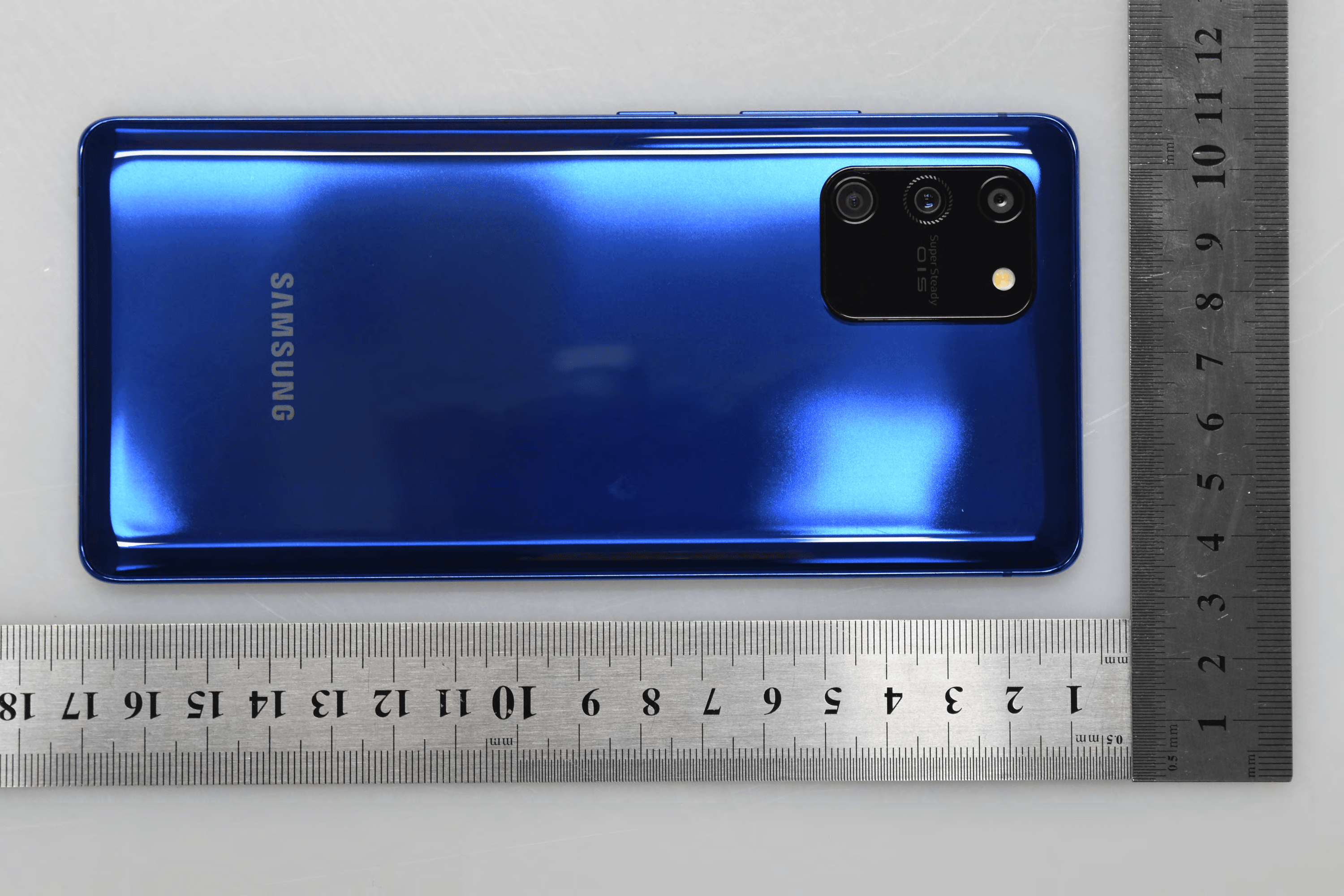
Click to zoom
Application Details
- Equipment Class
- DSS - Part 15 Spread Spectrum Transmitter
- Date of Grant
- Mar 17, 2020
- Application Purpose
- Original Equipment
- Date of Application
- Mar 10, 2020
- Equipment Note
- GSM/CDMA/WCDMA/LTE Phone + BT/BLE, DTS/UNII a/b/g/n/ac,ANT+ and NFC
- Frequency Range
- 2402.00000000 - 2480.00000000
- Company
- Samsung Electronics Co Ltd
- Country
- United States
Documents & Files
Document Text
Text extracted from the exhibit documents filed with the FCC. Open a document above to read the original.
Users Manual
www.samsung.com USER MANUAL SM-G770U 1 English. 02/2020. Rev.1.0 2 Table of Contents Basics 4 Read me first 6 Devic e overheating situations and solutions 9 Device layout and functions 13 Battery 16 SIM or USIM card (nano-SIM card) 19 Memor y card (microSD card) 21 Turning the device on and off 23 Initial setup 24 Samsung ac count 25 Tr ansferring data from your previous device (Smart Switch) 27 Understanding the screen 39 Notification panel 41 Screen capture and screen record 42 Entering text Apps and features 45 Installing or uninstalling apps 47 Finder 47 Bixb y 51 BIXBY VISION 54 Bixby Home 56 Bixby Routines 59 Reminder 63 P hone 68 Contacts 72 M essages 74 Internet 76 Camera 94 G allery 99 AR FUN 106 AR Doodle 107 Always On Display 109 Edge scr een 113 Multi windo w 116 Samsung P ay 119 Samsung Health 122 Galax y Wearable 122 Samsung Members 122 Samsung Notes 123 C alendar 125 Voic e Recorder 126 My F iles 127 Clock 128 C alculator 129 Game Launcher 130 Game B ooster 132 Samsung K ids 133 SmartThings 137 Sharing c ontent 138 Samsung D eX 143 Samsung Global Goals 143 Google apps Table of Contents 3 180 Google 180 Advanced features 182 Link t o Windows 182 Motions and gestures 183 Dual Messenger 184 Digital w ellbeing & parental controls 186 Device care 186 Optimising your devic e 187 Ba ttery 188 Storage 188 Memory 188 S ecurity 189 Apps 189 Gener al management 190 A ccessibility 191 Sof tware update 191 User manual 192 About phone Appendix 193 Troubleshooting 198 Remo ving the battery Settings 145 Introduction 145 Connections 146 W i-Fi 148 Bluetooth 149 NFC and payment 151 Data sa ver 151 Mobile data only apps 152 SIM card manager (dual SIM models) 152 Mobile Hotspot and Tethering 153 Mor e connection settings 156 Sounds and vibr ation 156 Dolb y Atmos (surround sound) 157 Separate app sound 157 Notifica tions 158 Displa y 159 Blue light filt er 159 Dark mode 160 Changing the screen mode or adjusting the display colour 161 Screensaver 161 W allpaper 161 T hemes 162 Lock screen 163 Smart L ock 163 Biometrics and secur ity 164 Face recognition 167 Finger print recognition 170 Samsung P ass 173 Secur e Folder 177 P rivacy 177 L ocation 178 Ac counts and backup 178 Samsung Cloud 4 Basics Read me first Please read this manual before using the device to ensure safe and proper use. • Descriptions are based on the device’s default settings. • Some content may differ from your device depending on the region, service provider, model specifications, or device’s software. • Content (high quality content) that requires high CPU and RAM usage will affect the overall performance of the device. Apps related to the content may not work properly depending on the device’s specifications and the environment that it is used in. • Samsung is not liable for performance issues caused by apps supplied by providers other than Samsung. • Samsung is not liable for performance issues or incompatibilities caused by edited registry settings or modified operating system software. Attempting to customise the operating system may cause the device or apps to work improperly. • Software, sound sources, wallpapers, images, and other media provided with this device are licensed for limited use. Extracting and using these materials for commercial or other purposes is an infringement of copyright laws. Users are entirely responsible for illegal use of media. • You may incur additional charges for data services, such as messaging, uploading and downloading, auto-syncing, or using location services depending on your data plan. For large data transfers, it is recommended to use the Wi-Fi feature. • Default apps that come with the device are subject to updates and may no longer be supported without prior notice. If you have questions about an app provided with the device, contact a Samsung Service Centre. For user-installed apps, contact service providers. • Modifying the device’s operating system or installing softwares from unofficial sources may result in device malfunctions and data corruption or loss. These actions are violations of your Samsung licence agreement and will void your warranty. Basics 5 • Depending on the region or service provider, a screen protector is attached for protection during production and distribution. Damage to the attached screen protector is not covered by the warranty. • You can see the touchscreen clearly even in strong outdoor sunlight by automatically adjusting the contrast range based on the surrounding environment. Due to the nature of the product, displaying fixed graphics for extended periods may result in afterimages (screen burn-in) or ghosting. – It is recommended not to use fixed graphics on part or all of the touchscreen for extended periods and turn off the touchscreen when not using the device. – You can set the touchscreen to turn off automatically when you are not using it. Launch the Settings app, tap Display → Screen timeout, and then select the length of time you want the device to wait before turning off the touchscreen. – To set the touchscreen to automatically adjust its brightness based on the surrounding environment, launch the Settings app, tap Display, and then tap the Adaptive brightness switch to activate it. • Depending on the region or model, some devices are required to receive approval from the Federal Communications Commission (FCC). If your device is approved by the FCC, you can view the FCC ID of the device. To view the FCC ID, launch the Settings app and tap About phone → Status. If your device does not have an FCC ID, it means that the device has not been authorised for sale in the U.S. or its territories and may only be brought to the U.S. for the owner’s personal use. • Depending on the region, you can view the regulatory information on the device. To view the information, launch the Settings app and tap About phone → Regulatory information . Instructional icons Warning: situations that could cause injury to yourself or others Caution: situations that c…
Text truncated - open the document above for the full version.
Cover Letter(s)
Date: November 28, 2019 UL Korea, Ltd. Suwon Laboratory 218 Maeyeong-ro, Yeongtong-gu, Suwon-si, Gyeonggi-do, 16675, Korea To whom it may concern: I, the undersigned, hereby authorize UL Korea, Ltd. Suwon Laboratory, to act on our behalf in all manners relating to application for equipment authorization, including signing of all documents relating to these matters. Any and all acts carried out by UL Korea, Ltd. Suwon Laboratory on our behalf shall have the same effect as acts of our own. In authorizing UL Korea as our agent, we still recognize that we are responsible to: a) comply with the relevant provisions of the certification program; b) make all necessary arrangements for the conduct of the evaluation, including provision for examining documentation and access to all areas, records (including internal audit reports) and personnel for the purposes of evaluation (e.g. testing, inspection, assessment, surveillance, reassessment) and resolution of complaints; c) make claims regarding certification only in respect of the scope for which certification has been granted; d) do not use our product certification in such a manner as to bring the Certification Division into disrepute and not make any statement regarding our product certification which the Certification Division may consider misleading or unauthorized; e) upon suspension or cancellation of certification, discontinue use of all advertising matter that contains any reference thereto and return any certification documents as required by the Certification Division; f) use certification only to indicate the products are certified as being in conformity with specified standards; g) endeavor to ensure that no certificate or report nor any part thereof is used in a misleading manner; h) ensure that any reference to our product certification in communication media such as documents, brochures or advertising, complies with the requirements of the Certification Division; i) keep a record of all complaints made known to the us relating to the product’s compliance with requirements of the relevant standard and to make these records available to the when requested; j) take appropriate action with respect to such complaints and any deficiencies found in products or services that affect compliance with the requirements for certification; k) document the actions taken. l) the undersigned, hereby certify that we are not subject to a denial of federal benefits, that includes FCC benefits, pursuant to Section 5301 of the Anti-Drug Abuse Act of 1988, 21 U.S.C. 853(a). This authorization is valid until further written notice from the applicant. Sincerely Yours, Ms. Jenni Chun General Manager Regu latory & Environmental Affairs Samsung Electronics CO. LTD TEL: +1-973-808-6375 E-mail: [email protected]
Cover Letter(s)
February 26, 2020 Federal Comm unications Commission 7435 Oakland Mills Road Columbia MD 21046 Subject: FCC ID: Request for Confidentiality A3LSMG770U To Whom It May Concern: Pursuant to the provisions of Sections 0.457 and 0.459 of the Commission’s rules (47 CFR §§ 0. 457, 0.459), we are requesting the Commission to withhold the following attachments as confidential document from public disclosure indefinitely. Schematics Block Diagram Operational Description Antenna Specification Parts List Tune-Up Procedure Above mentioned document contains detailed system and equipment description are considered as proprietary information in operation of the equipment. The public disclosure of above documents might be harmful to our company and would give competitor an unfair adv antage in the market. In additional to above mentioned documents, pursuant to Public Notice DA 04-1705 of the Commission’s policy, in order to comply with the marketing regulations in 47 CFR §2.803 and the importation rules in 47 CFR §2.1204, while ensuring that business sensitive information remains confidential until the actual marketing of newly authorized devices. We are requesting the commission to grant short-term confidentiality request on the following attachments until 180 days External Photos Internal Photos Test Setup Photos User Manual It is our understanding that all measurement test reports, FCC ID label format and correspondence during certification review process cannot be granted as confidential documents and such information will be available for public review once the grant of equipment authorization is issued. Best Regards Ms . J enni Chun General Manager Regulatory & Environmental Affairs Samsung Electronics CO. LTD TEL: +1-973-808-6375 E-mail: [email protected]
ID Label/Location Info
A.Information to be displayed 1. The information that will be displayed on the e-label and information that will remain in the user manual is shown below: Information On E-label In Manual FCC ID number Yes Yes DoC logo Not Applicable Not Applicable 15.19 statement (“This device complies with part 15 of the FCC Rules. Operation is s ubject to the following two conditions: (1) This d evice may not cause harmful interference, and (2) this d evice must accept any interference received, including interference that may cause undesired operation.”) - Yes Class A / B Digital Device user manual statements1 - Yes DoC declaration1 Not Applicable Not Applicable Caution to the user that changes or modifications not expressly approved by the party responsib le for compliance could void the user's authority to operate the equipment1 - Yes Describe any other FCC regulatory - Yes Describe any other FCC regulatory information included in e-label 1 None Not Applicable If the e-label includes information typically included in the manual then the e-label shall clearly differentiate between information required to be on the device’s surface and information required to be in the manual – refer to 784748 D02 e labe lling v01 section II D 3(b) Images of the e-label screen are provided below: B.Access to the required information on the e-label 1.Users are able to access the information in no more t han three steps i n a device’s menu. The actual steps are: From the home screen: a) Click on Setti ngs Apps b) About phone c) Stat us No special access codes or permissions are required to go through the above steps beyond entering a user defined password to protect against unauthorized access to the device. 2. The information is stored on the device, no special a ccessories or supplemental plug-ins (e.g., a SIM/USIM card) are req uir ed to access the information. 3.Users are provided specific instructions on how to access the information. The information is provided in User manual.
RF Exposure Info
Plot No. 1 Test Laboratory: UL Korea, Ltd. Suwon Laboratory Date: 2020-02-10 GSM 850 Frequency: 848.8 MHz; Duty Cycle: 1:1.99986; Room Ambient Temperature: 23.0C; Liquid Temperature: 22.0C Medium parameters used (interpolated): f = 848.8 MHz; σ = 0.925 S/m; ε r = 41.588; ρ = 1000 kg/m 3 DASY5 Configuration: - Area Scan Setting: Find Secondary Maximum Within: 2.0 dB and with a peak SAR value greater than 0.0012W/kg - Electronics: DAE4 Sn1468; Calibrated: 2019-09-20 - Probe: EX3DV4 - SN7314; ConvF(9.64, 9.64, 9.64) @ 848.8 MHz; Calibrated: 2019-08-29 - Sensor-Surface: 2.5mm (Mechanical Surface Detection) - Phantom: Twin-SAM V5.0 (Right); Type: QD 000 P40 CD; Serial: 1855 RHS/Touch GPRS 4slot ch.251/Area Scan (8x14x1): Measurement grid: dx=15mm, dy=15mm Maximum value of SAR (measured) = 0.133 W/kg RHS/Touch GPRS 4slot ch.251/Zoom Scan (5x5x7)/Cube 0: Measurement grid: dx=8mm, dy=8mm, dz=5mm Reference Value = 12.33 V/m; Power Drift = 0.04 dB Peak SAR (extrapolated) = 0.150 W/kg SAR(1 g) = 0.122 W/kg; SAR(10 g) = 0.095 W/kg Maximum value of SAR (measured) = 0.135 W/kg 0 dB = 0.135 W/kg = -8.70 dBW/kg Plot No. 2 Test Laboratory: UL Korea, Ltd. Suwon Laboratory Date: 2020-02-07 GSM 850 Frequency: 848.8 MHz; Duty Cycle: 1:1.99986; Room Ambient Temperature: 23.0C; Liquid Temperature: 22.0C Medium parameters used (interpolated): f = 848.8 MHz; σ = 0.932 S/m; ε r = 40.69; ρ = 1000 kg/m 3 DASY5 Configuration: - Area Scan Setting: Find Secondary Maximum Within: 2.0 dB and with a peak SAR value greater than 0.0012W/kg - Electronics: DAE4 Sn1494; Calibrated: 2019-07-18 - Probe: EX3DV4 - SN7376; ConvF(10.3, 10.3, 10.3) @ 848.8 MHz; Calibrated: 2019-09-27 - Sensor-Surface: 2.5mm (Mechanical Surface Detection) - Phantom: Twin-SAM V5.0 (20deg probe tilt); Type: QD 000 P40 CD; Serial: 1877 Rear/GPRS 4slots ch.251/Area Scan (8x15x1): Measurement grid: dx=15mm, dy=15mm Maximum value of SAR (measured) = 0.292 W/kg Rear/GPRS 4slots ch.251/Zoom Scan (5x5x7)/Cube 0: Measurement grid: dx=8mm, dy=8mm, dz=5mm Reference Value = 17.75 V/m; Power Drift = 0.00 dB Peak SAR (extrapolated) = 0.393 W/kg SAR(1 g) = 0.237 W/kg; SAR(10 g) = 0.142 W/kg Maximum value of SAR (measured) = 0.301 W/kg 0 dB = 0.301 W/kg = -5.21 dBW/kg Plot No. 3 Test Laboratory: UL Korea, Ltd. Suwon Laboratory Date: 2020-03-12 GSM 850 Frequency: 836.6 MHz; Duty Cycle: 1:4.00037; Room Ambient Temperature: 23.0C; Liquid Temperature: 22.0C Medium parameters used (interpolated): f = 836.6 MHz; σ = 0.91 S/m; ε r = 41.014; ρ = 1000 kg/m 3 DASY5 Configuration: - Area Scan Setting: Find Secondary Maximum Within: 2.0 dB and with a peak SAR value greater than 0.0012W/kg - Electronics: DAE4 Sn1494; Calibrated: 2019-07-18 - Probe: EX3DV4 - SN7376; ConvF(10.3, 10.3, 10.3) @ 836.6 MHz; Calibrated: 2019-09-27 - Sensor-Surface: 2.5mm (Mechanical Surface Detection) - Phantom: Twin-SAM V5.0 (20deg probe tilt); Type: QD 000 P40 CD; Serial: 1877 Rear/GPRS 2slots ch.190/Area Scan (8x15x1): Measurement grid: dx=15mm, dy=15mm Maximum value of SAR (measured) = 0.564 W/kg Rear/GPRS 2slots ch.190/Zoom Scan (5x5x7)/Cube 0: Measurement grid: dx=8mm, dy=8mm, dz=5mm Reference Value = 24.98 V/m; Power Drift = -0.01 dB Peak SAR (extrapolated) = 0.806 W/kg SAR(1 g) = 0.450 W/kg; SAR(10 g) = 0.260 W/kg Maximum value of SAR (measured) = 0.592 W/kg 0 dB = 0.592 W/kg = -2.28 dBW/kg Plot No. 4 Test Laboratory: UL Korea, Ltd. Suwon Laboratory Date: 2020-02-14 GSM 1900 Frequency: 1909.8 MHz; Duty Cycle: 1:2.60016; Room Ambient Temperature: 23.0C; Liquid Temperature: 22.0C Medium parameters used: f = 1910 MHz; σ = 1.459 S/m; ε r = 39.635; ρ = 1000 kg/m 3 DASY5 Configuration: - Area Scan Setting: Find Secondary Maximum Within: 2.0 dB and with a peak SAR value greater than 0.0012W/kg - Electronics: DAE4 Sn1494; Calibrated: 2019-07-18 - Probe: EX3DV4 - SN7376; ConvF(8.63, 8.63, 8.63) @ 1909.8 MHz; Calibrated: 2019-09-27 - Sensor-Surface: 2.5mm (Mechanical Surface Detection) - Phantom: Twin-SAM V5.0 (20deg probe tilt); Type: QD 000 P40 CD; Serial: 1877 LHS/Touch GPRS 3slot ch.810/Area Scan (8x14x1): Measurement grid: dx=15mm, dy=15mm Maximum value of SAR (measured) = 0.0324 W/kg LHS/Touch GPRS 3slot ch.810/Zoom Scan (5x5x7)/Cube 0: Measurement grid: dx=8mm, dy=8mm, dz=5mm Reference Value = 4.811 V/m; Power Drift = 0.18 dB Peak SAR (extrapolated) = 0.111 W/kg SAR(1 g) = 0.027 W/kg; SAR(10 g) = 0.015 W/kg Maximum value of SAR (measured) = 0.0337 W/kg 0 dB = 0.0337 W/kg = -14.72 dBW/kg Plot No. 5 Test Laboratory: UL Korea, Ltd. Suwon Laboratory Date: 2020-02-14 GSM 1900 Frequency: 1909.8 MHz; Duty Cycle: 1:2.60016; Room Ambient Temperature: 23.0C; Liquid Temperature: 22.0C Medium parameters used: f = 1910 MHz; σ = 1.459 S/m; ε r = 39.635; ρ = 1000 kg/m 3 DASY5 Configuration: - Area Scan Setting: Find Secondary Maximum Within: 2.0 dB and with a peak SAR value greater than 0.0012W/kg - Electronics: DAE4 Sn1494; Calibrated: 2019-07-18 - Probe: EX3DV4 - SN7376; ConvF(8.63, 8.63, 8.63) @ 1909.8 MHz; Calibrated: 2019-09-27 - Sensor-Surface: 2.5mm (Mechanical Surface Detection) - Phantom: Twin-SAM V5.0 (20deg probe tilt); Type: QD 000 P40 CD; Serial: 1877 Front/GPRS 3slots ch.810/Area Scan (8x14x1): Measurement grid: dx=15mm, dy=15mm Maximum value of SAR (measured) = 0.169 W/kg Front/GPRS 3slots ch.810//Zoom Scan (6x6x7)/Cube 0: Measurement grid: dx=8mm, dy=8mm, dz=5mm Reference Value = 8.506 V/m; Power Drift = 0.08 dB Peak SAR (extrapolated) = 0.373 W/kg SAR(1 g) = 0.220 W/kg; SAR(10 g) = 0.117 W/kg Maximum value of SAR (measured) = 0.276 W/kg 0 dB = 0.276 W/kg = -5.59 dBW/kg Plot No. 6 Test Laboratory: UL Korea, Ltd. Suwon Laboratory Date: 2020-03-12 GSM 1900 Frequency: 1850.2 MHz; Duty Cycle: 1:1.99986; Room Ambient Temperature: 23.0C; Liquid Temperature: 22.0C Medium parameters used (interpolated): f = 1850.2 MHz; σ = 1.409 S/m; ε r = 39.594; ρ = 1000 kg/m 3 DASY5 Configuration: - Area Scan Setting: Find Secondary Maximum Within: 2.0 dB and with a peak SAR value greater than 0.0012W/kg - …
Text truncated - open the document above for the full version.
RF Exposure Info
Plot No. 1 Test Laboratory: UL Korea, Ltd. Suwon Laboratory Date: 2020-01-20 20200120_SystemPerformanceCheck-D835V2 SN 4d174 Frequency: 835 MHz; Duty Cycle: 1:1; Room Ambient Temperature: 23.0C; Liquid Temperature: 22.0C Medium parameters used: f = 835 MHz; σ = 0.907 S/m; ε r = 42.334; ρ = 1000 kg/m 3 DASY5 Configuration: - Area Scan Setting: Find Secondary Maximum Within: 2.0 dB and with a peak SAR value greater than 0.0012W/kg - Averaged Fast SAR: Polynomial fit - Electronics: DAE4 Sn1494; Calibrated: 2019-07-18 - Probe: EX3DV4 - SN7376; ConvF(10.3, 10.3, 10.3) @ 835 MHz; Calibrated: 2019-09-27 - Sensor-Surface: 2.5mm (Mechanical Surface Detection) - Phantom: Twin-SAM V5.0 (20deg probe tilt); Type: QD 000 P40 CD; Serial: 1877 Head/Pin=100 mW/Area Scan (7x13x1): Measurement grid: dx=15mm, dy=15mm Maximum value of SAR (measured) = 1.19 W/kg Head/Pin=100 mW/Zoom Scan (5x5x7)/Cube 0: Measurement grid: dx=8mm, dy=8mm, dz=5mm Reference Value = 36.80 V/m; Power Drift = 0.01 dB Peak SAR (extrapolated) = 1.45 W/kg SAR(1 g) = 0.981 W/kg; SAR(10 g) = 0.646 W/kg Maximum value of SAR (measured) = 1.19 W/kg 0 dB = 1.19 W/kg = 0.76 dBW/kg Plot No. 2 Test Laboratory: UL Korea, Ltd. Suwon Laboratory Date: 2020-01-20 20200120_SystemPerformanceCheck-D835V2 SN 4d174 Frequency: 835 MHz; Duty Cycle: 1:1 Head/Pin=100 mW/Z Scan (1x1x21): Measurement grid: dx=20mm, dy=20mm, dz=5mm Maximum value of SAR (measured) = 1.24 W/kg Plot No. 3 Test Laboratory: UL Korea, Ltd. Suwon Laboratory Date: 2020-02-14 20200214_SystemPerformanceCheck-D2300V2 SN 1090 Frequency: 2300 MHz; Duty Cycle: 1:1; Room Ambient Temperature: 23.0C; Liquid Temperature: 22.0C Medium parameters used: f = 2300 MHz; σ = 1.669 S/m; ε r = 39.575; ρ = 1000 kg/m 3 DASY5 Configuration: - Area Scan Setting: Find Secondary Maximum Within: 2.0 dB and with a peak SAR value greater than 0.0012W/kg - Averaged Fast SAR: Polynomial fit - Electronics: DAE4 Sn1494; Calibrated: 2019-07-18 - Probe: EX3DV4 - SN7376; ConvF(7.96, 7.96, 7.96) @ 2300 MHz; Calibrated: 2019-09-27 - Sensor-Surface: 2.5mm (Mechanical Surface Detection) - Phantom: Twin-SAM V5.0 (20deg probe tilt); Type: QD 000 P40 CD; Serial: 1877 Head/Pin=100 mW/Area Scan (9x9x1): Measurement grid: dx=10mm, dy=10mm Maximum value of SAR (measured) = 6.21 W/kg Head/Pin=100 mW/Zoom Scan (7x7x7)/Cube 0: Measurement grid: dx=5mm, dy=5mm, dz=5mm Reference Value = 62.94 V/m; Power Drift = 0.01 dB Peak SAR (extrapolated) = 9.28 W/kg SAR(1 g) = 4.62 W/kg; SAR(10 g) = 2.21 W/kg Maximum value of SAR (measured) = 6.48 W/kg 0 dB = 6.48 W/kg = 8.12 dBW/kg Plot No. 4 Test Laboratory: UL Korea, Ltd. Suwon Laboratory Date: 2020-02-14 20200214_SystemPerformanceCheck-D2300V2 SN 1090 Frequency: 2300 MHz; Duty Cycle: 1:1 Head/Pin=100 mW/Z Scan (1x1x21): Measurement grid: dx=20mm, dy=20mm, dz=5mm Maximum value of SAR (measured) = 6.48 W/kg Plot No. 5 Test Laboratory: UL Korea, Ltd. Suwon Laboratory Date: 2020-03-11 20200311_SystemPerformanceCheck-D1750V2 SN 1125 Frequency: 1750 MHz; Duty Cycle: 1:1; Room Ambient Temperature: 23.0C; Liquid Temperature: 22.0C Medium parameters used: f = 1750 MHz; σ = 1.332 S/m; ε r = 39.224; ρ = 1000 kg/m 3 DASY5 Configuration: - Area Scan Setting: Find Secondary Maximum Within: 2.0 dB and with a peak SAR value greater than 0.0012W/kg - Electronics: DAE4 Sn1494; Calibrated: 2019-07-18 - Probe: EX3DV4 - SN7376; ConvF(8.72, 8.72, 8.72) @ 1750 MHz; Calibrated: 2019-09-27 - Sensor-Surface: 2.5mm (Mechanical Surface Detection) - Phantom: Twin-SAM V5.0 (20deg probe tilt); Type: QD 000 P40 CD; Serial: 1877 Head/Pin=100 mW/Area Scan (7x7x1): Measurement grid: dx=15mm, dy=15mm Maximum value of SAR (measured) = 4.58 W/kg Head/Pin=100 mW/Zoom Scan (5x5x7)/Cube 0: Measurement grid: dx=8mm, dy=8mm, dz=5mm Reference Value = 59.30 V/m; Power Drift = -0.05 dB Peak SAR (extrapolated) = 6.15 W/kg SAR(1 g) = 3.42 W/kg; SAR(10 g) = 1.83 W/kg Maximum value of SAR (measured) = 4.56 W/kg 0 dB = 4.56 W/kg = 6.59 dBW/kg Plot No. 6 Test Laboratory: UL Korea, Ltd. Suwon Laboratory Date: 2020-03-11 20200311_SystemPerformanceCheck-D1750V2 SN 1125 Frequency: 1750 MHz; Duty Cycle: 1:1 Head/Pin=100 mW/Z Scan (1x1x21): Measurement grid: dx=20mm, dy=20mm, dz=5mm Maximum value of SAR (measured) = 4.56 W/kg Plot No. 7 Test Laboratory: UL Korea, Ltd. Suwon Laboratory Date: 2020-03-12 20200312_SystemPerformanceCheck-D2300V2 SN 1090 Frequency: 2300 MHz; Duty Cycle: 1:1; Room Ambient Temperature: 23.0C; Liquid Temperature: 22.0C Medium parameters used: f = 2300 MHz; σ = 1.684 S/m; ε r = 38.877; ρ = 1000 kg/m 3 DASY5 Configuration: - Area Scan Setting: Find Secondary Maximum Within: 2.0 dB and with a peak SAR value greater than 0.0012W/kg - Electronics: DAE4 Sn1494; Calibrated: 2019-07-18 - Probe: EX3DV4 - SN7376; ConvF(7.96, 7.96, 7.96) @ 2300 MHz; Calibrated: 2019-09-27 - Sensor-Surface: 2.5mm (Mechanical Surface Detection) - Phantom: Twin-SAM V5.0 (20deg probe tilt); Type: QD 000 P40 CD; Serial: 1877 Head/Pin=100 mW/Area Scan (9x9x1): Measurement grid: dx=10mm, dy=10mm Maximum value of SAR (measured) = 6.00 W/kg Head/Pin=100 mW/Zoom Scan (7x7x7)/Cube 0: Measurement grid: dx=5mm, dy=5mm, dz=5mm Reference Value = 61.97 V/m; Power Drift = -0.02 dB Peak SAR (extrapolated) = 9.07 W/kg SAR(1 g) = 4.52 W/kg; SAR(10 g) = 2.17 W/kg Maximum value of SAR (measured) = 6.35 W/kg 0 dB = 6.35 W/kg = 8.03 dBW/kg Plot No. 8 Test Laboratory: UL Korea, Ltd. Suwon Laboratory Date: 2020-03-12 20200312_SystemPerformanceCheck-D2300V2 SN 1090 Frequency: 2300 MHz; Duty Cycle: 1:1 Head/Pin=100 mW/Z Scan (1x1x21): Measurement grid: dx=20mm, dy=20mm, dz=5mm Maximum value of SAR (measured) = 6.37 W/kg Plot No. 9 Test Laboratory: UL Korea, Ltd. Suwon Laboratory Date: 2020-02-05 20200205_SystemPerformanceCheck-D750V3 SN 1122 Frequency: 750 MHz; Duty Cycle: 1:1; Room Ambient Temperature: 23.0C; Liquid Temperature: 22.0C Medium parameters used: f = 750 MHz; σ = 0.887 S/m; ε r = 41.349; ρ = 1000 kg/m 3 DASY5 Configuration: - Area Scan Setting: Find Secondar…
Text truncated - open the document above for the full version.
RF Exposure Info
Head Tissue Simulating Liquids Head Tissue Parameters according to IEEE Std 1528-2013 / IEC 62209 / FCC KDB 865664 D01 Narrow- Band Solutions (±5% tolerance) Product HSL300V2 HSL450V2 HSL750V2 HSL900V2 HSL1450V2 HSL1750V2 HSL1800V2 HSL1900V2 HSL1950V2 HSL2450V2 Test Frequency (MHz) 300 450 750 835, 900 1450, 1500, 1640 1750 1800, 1900 1900 1950, 2000 2450, 2600 Main Ingredients Water, Sugar Water, Sugar Water, Sugar Water, Sugar Water, DGBE Water, DGBE Water, DGBE Water, DGBE Water, DGBE Water, DGBE Broad- Band Solutions (±5% tolerance) Product HBBL30-250V3 HBBL1350-1850V3 HBBL1550-1950V3 HBBL1900-3800V3 HBBL3500-5800V5 Test Frequency (MHz) 30-250 1400-1800 1750-1900 1950-3000 3500-5800 Main Ingredients Water, Tween Water, Tween Water, Tween Water, Tween Water, Oil Body Tissue Simulating Liquids Body Tissue (Muscle) Parameters according to FCC KDB 865664 D01 Narrow- Band Solutions (±5% tolerance) Product MSL300V2 MSL450V2 MSL750V2 MSL900V2 MSL1450V2 MSL1750V2 MSL1800V2 MSL1900V2 MSL1950V2 MSL2450V2 Test Frequency (MHz) 300 400, 450 750 835, 900 1450, 1500, 1640 1750 1800, 1900 1900 1950, 2100 2450, 2600 Main Ingredients Water, Sugar Water, Sugar Water, Sugar Water, Sugar Water, DGBE Water, DGBE Water, DGBE Water, DGBE Water, DGBE Water, DGBE Broad- Band Solutions (±5% tolerance) Product MBBL130-250V3 MBBL1350-1850V3 MBBL1550-1950V3 MBBL1900-3800V3 MBBL3500-5800V5 Test Frequency (MHz) 130-250 1350-1800 1550-1850 1950-3800 3500-5800 Main Ingredients Water, Tween Water, Tween Water, Tween Water, Tween Water, Oil
RF Exposure Info
Justification for Extended SAR Dipole Calibrations Instead of the typical annual calibration recommended by measurement standards, longer calibration intervals of up to three years may be considered when it is demonstrated that the SAR target, impedance and return loss of a dipole have remain stable according to the following requirements KDB 865664 D01v01r04 requirements a ) return loss : < - 20 dB, within 20% of previous measurement b ) impedance : within 5 Ω from previous measurement Dipole Antenna Head/Body Date of Measurement Return Loss (dB) Δ % Impedance (Ω) Δ Ω D750V3-SN : 1122 Head 2018-02-19 -25.99 0.19 55.24 1.91 2020-01-06 -26.04 53.33 c ) Measured SAR : within 10% of that reported in the calibration data Dipole Antenna Head/Body Date of Measurement Measured SAR (W/kg) Δ % D750V3-SN : 1122 Head 2018-02-19 8.22 -2.68 2020-01-06 8.00 Justification for Extended SAR Dipole Calibrations Instead of the typical annual calibration recommended by measurement standards, longer calibration intervals of up to three years may be considered when it is demonstrated that the SAR target, impedance and return loss of a dipole have remain stable according to the following requirements KDB 865664 D01v01r04 requirements a ) return loss : < - 20 dB, within 20% of previous measurement b ) impedance : within 5 Ω from previous measurement Dipole Antenna Head/Body Date of Measurement Return Loss (dB) Δ % Impedance (Ω) Δ Ω D835V2-SN : 4d194 Head 2018-07-24 -28.94 -6.39 50.42 -4.15 2020-02-18 -27.09 46.27 c ) Measured SAR : within 10% of that reported in the calibration data Dipole Antenna Head/Body Date of Measurement Measured SAR (W/kg) Δ % D835V2-SN : 4d194 Head 2018-07-24 9.36 2.35 2020-02-20 9.58
RF Exposure Info
Justification for Extended SAR Dipole Calibrations Instead of the typical annual calibration recommended by measurement standards, longer calibration intervals of up to three years may be considered when it is demonstrated that the SAR target, impedance and return loss of a dipole have remain stable according to the following requirements KDB 865664 D01v01r04 requirements a ) return loss : < - 20 dB, within 20% of previous measurement b ) impedance : within 5 Ω from previous measurement Dipole Antenna Head/Body Date of Measurement Return Loss (dB) Δ % Impedance (Ω) Δ Ω D1750V2-SN : 1125 Body 2018-02-16 -28.03 -0.89 46.36 -3.87 2020-01-06 -27.78 50.23 c ) extrapolated peak SAR : within 10% of that reported in the calibration data Dipole Antenna Head/Body Date of Measurement extrapolated peak SAR (W/kg) Δ % D1750V2-SN : 1125 Head 2018-02-16 36.50 -6.30 2020-01-06 34.20
RF Exposure Info
Justification for Extended SAR Dipole Calibrations Instead of the typical annual calibration recommended by measurement standards, longer calibration intervals of up to three years may be considered when it is demonstrated that the SAR target, impedance and return loss of a dipole have remain stable according to the following requirements KDB 865664 D01v01r04 requirements a ) return loss : < - 20 dB, within 20% of previous measurement b ) impedance : within 5 Ω from previous measurement Dipole Antenna Head/Body Date of Measurement Return Loss (dB) Δ % Impedance (Ω) Δ Ω D1900V2-SN : 5d190 Body 2018-10-23 -22.45 -4.23 52.09 1.99 2020-01-06 -21.50 50.10 c ) extrapolated peak SAR : within 10% of that reported in the calibration data Dipole Antenna Head/Body Date of Measurement extrapolated peak SAR (W/kg) Δ % D1900V2-SN : 5d190 Body 2018-10-23 39.10 -0.26 2020-01-06 39.00 Justification for Extended SAR Dipole Calibrations Instead of the typical annual calibration recommended by measurement standards, longer calibration intervals of up to three years may be considered when it is demonstrated that the SAR target, impedance and return loss of a dipole have remain stable according to the following requirements KDB 865664 D01v01r04 requirements a ) return loss : < - 20 dB, within 20% of previous measurement b …
Text truncated - open the document above for the full version.
Contact Information
Applicant
Jenni Chun(General Manager)
Test Firm
UL Korea, Ltd.Junwhan Lee
Technical Specifications
| # | Rule Parts | Frequency Range | Power Output |
|---|---|---|---|
| 1 | 15C | 2.40 GHz - 2.48 GHz | 9.00 mW |
Other Applications from Samsung Electronics Co Ltd
A3LSMU600
Sep 15, 2026Bluetooth Headset
Equipment Class
DTS - Digital Transmission SystemA3LSMA185G
Sep 08, 2026Portable Handset
Equipment Class
CXX - Communications Rcvr for use w/ licensed Tx and CBsA3LSMS741B
Aug 05, 2026Portable Handset
Equipment Class
6VL - 15E 6 GHZ Very Low Power DeviceA3LSMX940
Jul 31, 2026BT,BLE Tablet DTS,UNII a,b,g,n,ac,ax,be and digitizer
Equipment Class
DTS - Digital Transmission SystemA3LSMS741U
Jul 30, 2026Portable Handset
Equipment Class
6CD - 15E 6 GHz Low Power Dual Client