A3LSPHA600Tri-Mode Dual-Band Analog/ PCS Phone (AMPS/CDMA)
Samsung Electronics Co Ltd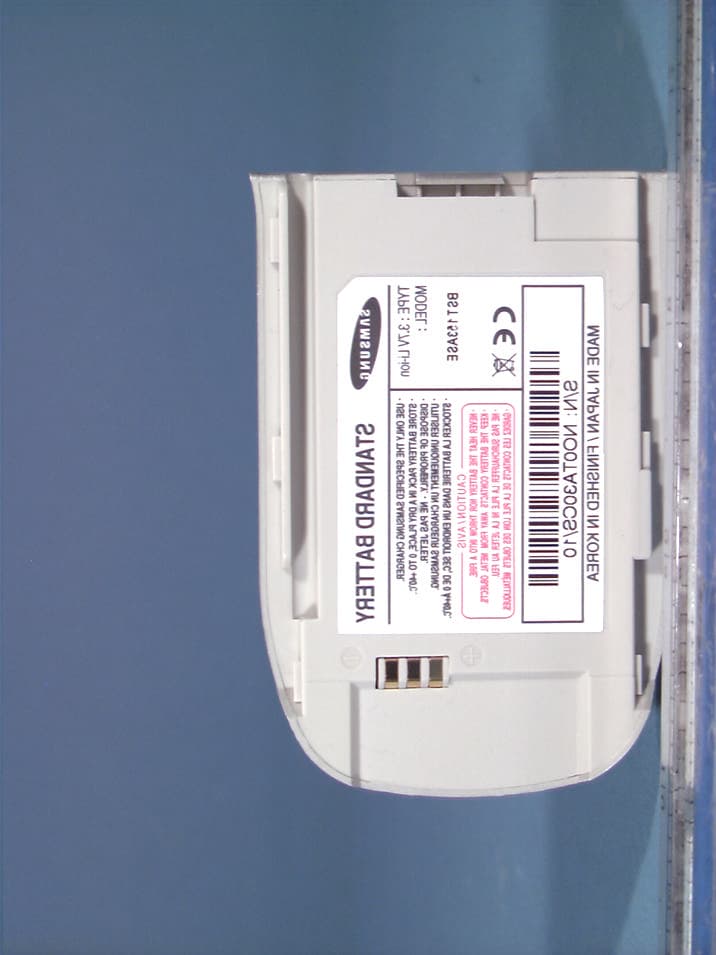
Click to zoom
Application Details
- Equipment Class
- PCE - PCS Licensed Transmitter held to ear
- Date of Grant
- Dec 03, 2002
- Application Purpose
- Original Equipment
- Date of Application
- Dec 03, 2002
- Equipment Note
- Tri-Mode Dual-Band Analog/ PCS Phone (AMPS/CDMA)
- Frequency Range
- 1851.25000000 - 1908.75000000
- Company
- Samsung Electronics Co Ltd
- Country
- United States
Documents & Files
Document Text
Text extracted from the exhibit documents filed with the FCC. Open a document above to read the original.
Users Manual
Sprint PCS® The clear alternative to cellular.SM SPH-A600 Copyright © 2002 Sprint Spectrum L.P. All rights reserved. No reproduction in whole or in part without prior written approval. Sprint, Sprint PCS, Sprint PCS Phone, Sprint PCS Wireless Web, Sprint PCS Wireless Web Mail, Sprint PCS Wireless Web Short Mail and the diamond logo are trademarks of Sprint Communications Company L.P. All other trademarks are property of their respective owners. Welcome to Sprint PCS Sprint PCS built the largest all-digital, all-PCS nationwide network from the ground up for clearer calls, reaching more than 230 million people. We built our network to give you what we believe you really want from a wireless phone: clear sound, private conversations and time-saving features. And Sprint Personal Communications Services® can do something even more far-reaching – simplify your life. Our advanced technology is designed to grow with your communications needs so that one day you’ll be able to rely entirely on your Sprint PCS PhoneTM to stay connected. This guide will introduce you to our technology and your new Sprint PCS Phone through simple, easy-to-follow instructions. Since you’re probably anxious to start using your phone, we encourage you to immediately flip to Section One – Getting Started With Sprint PCS Service. This section provides all the information you need to quickly activate your phone, set up your voicemail and much more. It also contains information on how to contact Sprint PCS should you have questions about service, want to purchase additional products or services, or just check your account balance. Thank you for choosing Sprint PCS. Table of Contents Getting Started With Sprint PCS Service . . . . . . . . . . . . . . . . . . . . . . . . .6 Turning Your Phone ON and OFF . . . . . . . . . . . . . . . . . . . . . . . . . . . . . . 6 Getting Started With Sprint PCS Service . . . . . . . . . . . . . . . . . . . . . . . . . 6 Setting Up Your Voicemail . . . . . . . . . . . . . . . . . . . . . . . . . . . . . . . . . . . . 7 Getting Help . . . . . . . . . . . . . . . . . . . . . . . . . . . . . . . . . . . . . . . . . . . . . . . . . 7 Understanding This User Guide . . . . . . . . . . . . . . . . . . . . . . . . . . . . . . . . 9 Getting to Know Your Sprint PCS Phone . . . . . . . . . . . . . . . . . . . . . . . .10 Highlights and Features . . . . . . . . . . . . . . . . . . . . . . . . . . . . . . . . . . . . . . . 10 Closed View of Your Phone . . . . . . . . . . . . . . . . . . . . . . . . . . . . . . . . . . . . 11 Front View of Your Phone . . . . . . . . . . . . . . . . . . . . . . . . . . . . . . . . . . . . . 11 Command Keys . . . . . . . . . . . . . . . . . . . . . . . . . . . . . . . . . . . . . . . . . . . . . . 11 Display Screen Icons . . . . . . . . . . . . . . . . . . . . . . . . . . . . . . . . . . . . . . . . . . 12 Using and Charging the Battery . . . . . . . . . . . . . . . . . . . . . . . . . . . . . . . . 12 Understanding Roaming . . . . . . . . . . . . . . . . . . . . . . . . . . . . . . . . . . . . . . .14 Understanding How Roaming Works . . . . . . . . . . . . . . . . . . . . . . . . . . . 14 Setting Your Phone’s Roam Mode . . . . . . . . . . . . . . . . . . . . . . . . . . . . . . 15 Setting an Alert When Roam Charges Apply (Call Guard) . . . . . . . . . 15 Setting Ringer for Roaming Calls . . . . . . . . . . . . . . . . . . . . . . . . . . . . . . . 16 Making and Answering Calls . . . . . . . . . . . . . . . . . . . . . . . . . . . . . . . . . .17 Making Calls . . . . . . . . . . . . . . . . . . . . . . . . . . . . . . . . . . . . . . . . . . . . . . . . 17 Answering Calls . . . . . . . . . . . . . . . . . . . . . . . . . . . . . . . . . . . . . . . . . . . . . 18 Silencing the Ringer . . . . . . . . . . . . . . . . . . . . . . . . . . . . . . . . . . . . . . . . . . 18 Adjusting Volume . . . . . . . . . . . . . . . . . . . . . . . . . . . . . . . . . . . . . . . . . . . . 18 Call Menu Options . . . . . . . . . . . . . . . . . . . . . . . . . . . . . . . . . . . . . . . . . . . 19 Missed Call Notification . . . . . . . . . . . . . . . . . . . . . . . . . . . . . . . . . . . . . . . 20 Incoming Call Notification . . . . . . . . . . . . . . . . . . . . . . . . . . . . . . . . . . . . . 20 Calling Emergency Numbers . . . . . . . . . . . . . . . . . . . . . . . . . . . . . . . . . . 20 Using Sprint PCS Voice Command . . . . . . . . . . . . . . . . . . . . . . . . . . . . . 21 Using Caller ID . . . . . . . . . . . . . . . . . . . . . . . . . . . . . . . . . . . . . . . . . . . . . . 22 Responding to Call Waiting . . . . . . . . . . . . . . . . . . . . . . . . . . . . . . . . . . . . 22 Three-Way Calling . . . . . . . . . . . . . . . . . . . . . . . . . . . . . . . . . . . . . . . . . . . 22 Forwarding Your Calls . . . . . . . . . . . . . . . . . . . . . . . . . . . . . . . . . . . . . . . . 22 Navigating Through Menus and Entering Text . . . . . . . . . . . . . . . . . . .24 Menu Navigation . . . . . . . . . . . . . . . . . . . . . . . . . . . . . . . . . . . . . . . . . . . . . 24 Working Within the Menu Structure . . . . . . . . . . . . . . . . . . . . . . . . . . . . 24 Viewing the Menus . . . . . . . . . . . . . . . . . . . . . . . . . . . . . . . . . . . . . . . . . . . 24 Entering Characters . . . . . . . . . . . . . . . . . . . . . . . . . . . . . . . . . . . . . . . . . . . 27 Managing Call History . . . . . . . . . . . . . . . . . . . . . . . . . . . . . . . . . . . . . . . .29 Viewing Call History (Incoming, Outgoing and Missed) . . . . . . . . . . . 29 Call History Options . . . . . . . . . . . . . . . . . . . . . . . . . . . . . . . . . . . . . . . . . . 29 Erasing Call History . . . . . . . . . . . . . . . . . . . . . . . . . . . . . . . . . . . . . . . . . . 30 Using Your Internal Phone Book . . . . . . . . . . . . . . . . . . . . . . . . . . . . . . .31 Adding a New Entry to Internal Phone Book . . . . . . . . . . . . . . . . . . . . . 31 Finding Internal Phone Book…
Text truncated - open the document above for the full version.
Users Manual
. Keep the metal contacts on top of the battery clean. . Don’ t attempt to disassemble or short-circuit the battery. . The battery may need recharging if it has not been used for a long period of time. . It’ s best to replace the battery when it no longer provides acceptable performance. It can be recharged hundreds of times before it needs replacing. . Don’ t store the battery in high temperature areas for long periods of time. It’ s best to follow these storage rules: . Less than one month: 4º F to 140º F (-20º C to 60º C) . More than one month: 4º F to 113º F (-20º C to 45º C) Disposal of Lithium Ion (LiIon) Batteries For safe disposal options of your LiIon batteries, contact your nearest Sprint PCS-authorized service center. Special note: Be sure to dispose of your battery properly. In some areas, the disposal of batteries in household or business trash may be prohibited. Note: For safety, do not handle a damaged or leaking LiIon battery. Acknowledging Special Precautions and the FCC Notice FCC Notice The phone may cause TV or radio interference if used in close proximity to receiving equipment. The FCC can require you to stop using the phone if such interference cannot be eliminated. Vehicles using liquefied petroleum gas (such as propane or butane) must comply with the National Fire Protection Standard (NFPA-58). For a copy of this standard, contact the National Fire Protection Association, One Batterymarch Park, Quincy, MA 02269, Attn: Publication Sales Division. Cautions Any changes or modifications to your phone not expressly approved in this document could void your warranty for this equipment and void your authority to operate this equipment. Only use approved batteries, antennas and chargers. The use of any unauthorized accessories may be dangerous and voids the phone warranty if said accessories cause damage or a defect to the phone. Although your phone is quite sturdy, it is a complex piece of equipment and can be broken. Avoid dropping, hitting, bending or sitting on it. Body-Worn Operation This device was tested for typical body-worn operations with the back of the phone kept 2.0 cm. from the body. To maintain with FCC RF exposure compliance requirements, use only belt-clips, holsters or similar accessories that maintain a 2.0 cm. separation distance between the user's body and the back of the phone, including the antenna, whether extended or retracted. The use of third-party belts-clips and other non-tested accessories may not comply with the FCC RF exposure requirements, and should be avoided. For more information about RF exposure, please visit the FCC website at www.fcc.gov. SpecificAbsorption Rate (SAR) for Wireless Phones The SAR is a value that corresponds to the relative amount of RF energy absorbed in the head of a user of a wireless handset. The SAR value of a phone is the result of an extensive testing, measuring and calculation process. It does not represent how much RF the phone emits. All phone models are tested at their highest value in
Users Manual
. Keep the metal contacts on top of the battery clean. . Don’ t attempt to disassemble or short-circuit the battery. . The battery may need recharging if it has not been used for a long period of time. . It’ s best to replace the battery when it no longer provides acceptable performance. It can be recharged hundreds of times before it needs replacing. . Don’ t store the battery in high temperature areas for long periods of time. It’ s best to follow these storage rules: . Less than one month: 4º F to 140º F (-20º C to 60º C) . More than one month: 4º F to 113º F (-20º C to 45º C) Disposal of Lithium Ion (LiIon) Batteries For safe disposal options of your LiIon batteries, contact your nearest Sprint PCS-authorized service center. Special note: Be sure to dispose of your battery properly. In some areas, the disposal of batteries in household or business trash may be prohibited. Note: For safety, do not handle a damaged or leaking LiIon battery. Acknowledging Special Precautions and the FCC Notice FCC Notice The phone may cause TV or radio interference if used in close proximity to receiving equipment. The FCC can require you to stop using the phone if such interference cannot be eliminated. Vehicles using liquefied petroleum gas (such as propane or butane) must comply with the National Fire Protection Standard (NFPA-58). For a copy of this standard, contact the National Fire Protection Association, One Batterymarch Park, Quincy, MA 02269, Attn: Publication Sales Division. Cautions Any changes or modifications to your phone not expressly approved in this document could void your warranty for this equipment and void your authority to operate this equipment. Only use approved batteries, antennas and chargers. The use of any unauthorized accessories may be dangerous and voids the phone warranty if said accessories cause damage or a defect to the phone. Although your phone is quite sturdy, it is a complex piece of equipment and can be broken. Avoid dropping, hitting, bending or sitting on it. Body-Worn Operation This device was tested for typical body-worn operations with the back of the phone kept 2.0 cm. from the body. To maintain FCC RF exposure compliance requirements, use only belt-clips, holsters or similar accessories that contain no metallic components in its assembly and maintain at least 2.0 cm. separation distance between the user's body and the back of the phone, including the antenna, whether extended or retracted. The use of accessories that do not satisfy these requirements may not comply with FCC RF exposure requirements, and should be avoided. For more information about RF exposure, please visit the FCC SpecificAbsorption Rate (SAR) for Wireless Phones The SAR is a value that corresponds to the relative amount of RF energy absorbed in the head of a user of a wireless handset. The SAR value of a phone is the result of an extensive testing, measuring and calculation process. It does not represent how much RF the phone emits. All phone models are tested at their highest value in
Attestation Statements
November 4, 2002 Federal Communications Commission Authorization and Evaluation Div. Equipment Authorization Branch 7435 Oakland Mills Road Columbia, MD 21046 To whom it may concern: We, the undersigned, hereby authorize PCTEST Engineering Laboratory Inc., to act as agent on behalf of all matters relating to applications for equipment authorization, including the signing of all documents relating to these matters. Any and all acts carried out by PCTEST Engineering Laboratory, Inc. on our behalf shall have the same effect as acts of our own. We also hereby certify that no party to this application is subject to a denial of benefits, including FCC benefits, pursuant to Section 5301 of the Anti-Drug Abuse Act of 1988,21 U.S.C.862. Sincerely, Wallace Oh Engineering Manager Samsun Electronics America November 4, 2002 Federal Communications Commission Equipment Approval Services 7435 Oakland Mills Road Columbia, MD 21046 SUBJECT: FCC E911 REQUIREMENTS PER §22.921 Gentlemen: Samsung Electronics Co., Ltd. hereby certifies that the analog cellular telephone (FCC ID: A3LSPHA600), using the Automatic A/B Roaming — Intelligent Retry method, meets the E911 requirements specified in Section 22.921 of the FCC Rules. This procedure recognizes when a “9-1-1” call is made and, at such time, will override any programming in the mobile unit that determines the handling of a non-911 call and permit the call to be handled by other analog carriers. Should you have any questions or comments concerning the above, please contact the undersigned. AFFIDAVIT FOR ESN PROTECTION OF CELLULAR MOBILE TELEPHONES We hereby certify that the Portable Cellular Telephone (FCC ID: A3LSPHA600) is so designed that it complies with all the requirements for ESN protection specified in Sec.22.919 of the FCC Rules. a) The transmitter in service has a unique ESN. b) The ESN host component is permanently attached to a main circuit board of the mobile transmitter and the integrity of the unit operating software cannot be altered. The ESN is plated from fraudulent contact and tampering. The ESN is encoded using multiplication by a polynomial and the ESN data programmed in the memory with other information. c) The ESN is factory set and cannot be altered, transferred, removed or otherwise able to be manipulated. Cellular mobile equipment is specifically designed such that any attempt to remove, tamper with, or change the ESN chip, its logic system, or firmware originally programmed by the manufacturer will render the mobile transmitter inoperative. November 4, 2002 Federal Communications Commission Equipment Approval Services 7435 Oakland Mills Road Columbia, MD 21046 SUBJECT:Samsung Electronics Co., Ltd. FCC ID: A3LSPHA600 Users Manual RF Exposure Warning Statement Gentlemen: Samsung Electronics Co., Ltd., hereby confirms that the attached RF exposure warning page will be readily visible to the user, and will be placed at a prominent location in the front section of the users manual. If you have any further questions regarding this matter, please do not hesitate to contact me or PCTEST Lab at (410) 290-6652.
Attestation Statements
November 4, 2002 Federal Communications Commission Authorization and Evaluation Div. Equipment Authorization Branch 7435 Oakland Mills Road Columbia, MD 21046 In re: Samsung Electronics Co., Ltd. FCC ID.: A3LSPHA600 Request for Confidentiality To Whom It May Concern: In accordance with 0.459 of CFR 47, Samsung Electronics Co., Ltd. requests confidentiality for the Block Diagram, Schematics, Parts list, Tune-up Procedure, Operational and Circuit Description of the attached test report. These documents contain detailed system and equipment descriptions and related information about the product, which Samsung Electronics Co., Ltd. considers to be proprietary, confidential, and a custom design and otherwise, would not release to the general public. Since this design is a basis from which future technological products will evolve, Samsung feels that this information would be of benefit to its competitors, and that the disclosure of the information in these documents would give our competitors an unfair advantage in the market.
Cover Letter(s)
November 4, 2002 Federal Communications Commission Equipment Approval Services 7435 Oakland Mills Road Columbia, MD 21046 SUBJECT: SAMSUNG Electronics Co., Ltd. FCC ID: A3LSPHA600 Part 24/22 Certification Gentlemen: Submitted herewith, on behalf of SAMSUNG Electronics Co., Ltd., is an application for Part 24/22 Certification of the following Tri-Mode Dual-Band Analog/PCS Phone. Attached is the applicant’s Letter of Authorization, Confidentiality Request, ESN Affidavit, E911 compliance statement, measurement report test data and plots, RF Exposure measurement report and data, FCC ID label and location, test setup photographs, internal and external photographs, block diagram (confidential), circuit diagrams & description (confidential), operational description (confidential), parts list & tune-up procedure (confidential), and the user's manual. Should you have any questions or comments concerning the above, please contact the undersigned. cc: SAMSUNG Electronics Co., Ltd.
Cover Letter(s)
January 7, 2003 Federal Communications Commission Equipment Approval Services 7435 Oakland Mills Road Columbia, MD 21046 Attn: Mr. Martin Perrine SUBJECT: Samsung Electronics Co., Ltd. FCC ID: A3LSPHA600 731 Confirmation No.: TC796298 Correspondence Reference No.: 6387 Request for Tech. Info.: 1/2/03 Dear Martin: Transmitted herewith, on behalf of Samsung Electronics Co., Ltd. is an amendment provided in response to the request for technical information dated January 2, 2003. 1. Please find attached the updated User’s Manual body-worn statement. 2. Please find clarification of maximum power for CDMA mode in the Tune up Procedure. (+25.5 dBm Cellular mode/ +25.0 dBm PCS mode) We trust this information is sufficient to resolve FCC questions in this application. If you have any further questions, please do not hesitate to contact us. cc: Samsung Electronics Co., Ltd.
Cover Letter(s)
June 11, 2003 Federal Communications Commission Equipment Approval Services 7435 Oakland Mills Road Columbia, MD 21046 Attn: Mr. Martin Perrine SUBJECT: Samsung Electronics Co., Ltd. FCC ID: A3LSPHA600 731 Confirmation No.: TC796298 Correspondence Reference No.: 8312 Request for Tech. Info.: 5/22/03 Dear Martin: Transmitted herewith, on behalf of Samsung Electronics Co., Ltd. is an amendment provided in response to the request for technical information dated May 22, 2003. 1. Please find attached the revised User’s Manual body-worn statement. We trust this information is sufficient to resolve FCC questions in this application. If you have any further questions, please do not hesitate to contact us. cc: Samsung Electronics Co., Ltd.
External Photos
© 2002 PCTEST Lab SAMSUNG FCC ID: A3LSPHA600 Tri-Mode Dual-Band Phone (AMPS/CDMA) © 2002 PCTEST Lab SAMSUNG FCC ID: A3LSPHA600 Tri-Mode Dual-Band Phone (AMPS/CDMA) © 2002 PCTEST Lab SAMSUNG FCC ID: A3LSPHA600 Tri-Mode Dual-Band Phone (AMPS/CDMA) © 2002 PCTEST Lab SAMSUNG FCC ID: A3LSPHA600 Tri-Mode Dual-Band Phone (AMPS/CDMA) © 2002 PCTEST Lab SAMSUNG FCC ID: A3LSPHA600 Tri-Mode Dual-Band Phone (AMPS/CDMA) © 2002 PCTEST Lab SAMSUNG FCC ID: A3LSPHA600 Tri-Mode Dual-Band Phone (AMPS/CDMA)
ID Label/Location Info
© 2002PCTEST Lab FCC ID SAMPLE LABEL & LOCATION LABELLING REQUIREMENTS PER §§ 2.925 The Label shown shall be permanently affixed at a conspicuous location on the device and be readily visible to the user at the time of purchase. (SEE NEXT PAGE) SAMSUNG ELECTRONICS CO., LTD. MODEL NO: SPH-A600 FCC ID: A3LSPHA600 MADE IN KOREA SAMSUNG ELECTRONICS CO., LTD
Internal Photos
© 2002 PCTEST Lab SAMSUNG FCC ID: A3LSPHA600 Tri-Mode Dual-Band Phone (AMPS/CDMA) © 2002 PCTEST Lab SAMSUNG FCC ID: A3LSPHA600 Tri-Mode Dual-Band Phone (AMPS/CDMA) © 2002 PCTEST Lab SAMSUNG FCC ID: A3LSPHA600 Tri-Mode Dual-Band Phone (AMPS/CDMA) © 2002 PCTEST Lab SAMSUNG FCC ID: A3LSPHA600 Tri-Mode Dual-Band Phone (AMPS/CDMA) © 2002 PCTEST Lab SAMSUNG FCC ID: A3LSPHA600 Tri-Mode Dual-Band Phone (AMPS/CDMA) © 2002 PCTEST Lab SAMSUNG FCC ID: A3LSPHA600 Tri-Mode Dual-Band Phone (AMPS/CDMA) © 2002 PCTEST Lab SAMSUNG FCC ID: A3LSPHA600 Tri-Mode Dual-Band Phone (AMPS/CDMA) © 2002 PCTEST Lab SAMSUNG FCC ID: A3LSPHA600 Tri-Mode Dual-Band Phone (AMPS/CDMA) © 2002 PCTEST Lab SAMSUNG FCC ID: A3LSPHA600 Tri-Mode Dual-Band Phone (AMPS/CDMA)
Parts List/Tune Up Info
General 1) PCSCDMA(1900MHz) A. Transmitter WaveformQuality : 0.944 or more Open Loop Power Control Range . -25dBm: -60.5dBm -41.5dBm . -65dBm: -20.5dBm +1.5dBm . -104dBm: +15.0dBm +30dBm MinimumTx Power Control : below-50dBm Closed Loop Power Control Range : 24dB Maximum R F O utpu t Pow er : +25 dBm Occupied Bandwidth : 1.23MHz Conducted Spurious Emission @1.25 MHz: -42dBc/30kHz B. Receiver Rx Sensitivity and Dynamic Range :-104dBm, FER=0.5%or less -25dBm, FER=0.5%or less Conducted Spurious Emission . 1930 1990MHz : < -81dBm . 1850 1910MHz : < -61dBm . All Other Frequencies : <-47dBm Single Tone Desensitization : lower than 1 % Rx Power =-101dBm Tone Power =-30dBm Tone Offset fromCarrier = 1.25 MHz Intermodulation Spurious Response Attenuation : lower than1 % Rx Power =-101dBm Tone Power 1 =-43dBm Tone Power 2 =-43dBm Tone 1 Offset fromCarrier = 1.25 MHz Tone 2 Offset fromCarrier = 2.05 MHz 2) CDMA(800MHz) A. Transmitter WaveformQuality : 0.944 or more Open Loop Power Control Range . -25dBm: -57.5dBm -38.5dBm . -65dBm: -17.5dBm +1.5dBm . -104dBm: +18.0dBm +30dBm MinimumTx Power Control : below-50dBm Closed Loop Power Control Range : 24dB Maximum R F O utpu t Pow er : +25.5 dBm Occupied Bandwidth : 1.23MHz Conducted Spurious Emission @0.9 MHz: -42dBc/30kHz @1.25 MHz: -54dBc/30kHz B. Receiver Rx Sensitivity and Dynamic Range :-104dBm, FER=0.5%or less -25dBm, FER=0.5%or less Conducted Spurious Emission . 1930 1990MHz : < -81dBm . 1850 1910MHz : < -61dBm . All Other Frequencies : <-47dBm Single Tone Desensitization : lower than 1 % Rx Power =-101dBm Tone Power =-30dBm Tone Offset fromCarrier = 0.9 MHz Intermodulation Spurious Response Attenuation : lower than1 % Rx Power =-101dBm Tone Power 1 =-43dBm Tone Power 2 =-43dBm Tone 1 Offset fromCarrier = 0.9 MHz Tone 2 Offset fromCarrier = 1.7 MHz 3) AMPS A. Transmitter RF Output Power : +25.073 dBm Carrier ON/OFF Conditions "ON" Condition: within 3dBof specification output(in 2 ms) "OFF" Condition : below-60dBm(in 2ms) Compressor Compression Rate : 2 : 1 Attack Time: 3 ms Recovery Time: 13.5 ms Reference Input: input power level for producing a nominal 2.9kHz : peak frequency deviation of transmitted carrier Preamphasis: 6dB/OCT within 0.3 3 kHz MaximumFrequency Deviation Modulation Deviation Limiting : 12 kHz Supervisory Audio Tone: 2 kHz( 10%) Signaling Tone: 8 kHz( 10%) Wideband Data: 8 kHz( 10%) Post Deviation Limiter Filter 3.0 5.9 kHz: above 40 LOG(F/3000)dB 5.9 6.1 kHz: above 35dB 6.1 15 kHz: above 40 LOG(F/3000)dB Over15 kHz: above 28 dB SpectrumNoise Suppression For all modulation fo +20 kHz fo + 45 kHz: above 26dB For modulation by voice and SAT fo + 45 kHz: above 63dB+10LOG(PY)dB For modulation by WBD(without SAT) and ST(with SAT) fo +45 kHz fo + 60 kHz: above 45 dB fo +60 kHz fo + 90 kHz: above 65 dB fo +90 kHz 2 fo: above 63 dB+ 10 LOG(PY) dB (where fo = carrier frequency, PY=mean output power in watts) Harmonic and conducted Spurious Emissions : below43 + 10 LOG(PY) dB B.Receiver De-emphasis:-6dB/OCTwithin0.3 3kHz Expandor ExpandorRate:1:2 Attacktime:within3ms RecoveryTime:within13.5ms Referenceinput:outputpowerleveltoa1000Hztonefromacarrierwithin 2.9kHz peakfrequencydeviation Sensitivity:12dBSINAD/-116dBm IntermodulationSpuriousResponseAttenuation:above65dB RSSIRange:above60dB ProtectionAgainstSpuriousResponseInterference:above60dB InBandConductedSpuriousEmission TransmitBand:below-60dBm ReceiveBand:below-80dBm OutofBandConductedSpuriousEmissions:below-47dBm RadiatedSpuriousEmission FrequencyRange:MaximumAllowableEIRP 25 70MHz:-45dBm 70 130MHz:-41dBm 130 174MHz:-41 -32dBm 174 260MHz:-32dBm 260 470MHz:-32 -26dBm 470 1GMHz:-21dBm 4)GPS LocationAccuracy For67%ofcalls:lessthan50meter For95%ofcalls:lessthan150meter NAMprogramcanbechangedasfollowingtable: Notes: -IntheNAMprogrammode,eachitemshowyouthecurrentlystoreddata.youcanmodifythedata byenteringanewdata. -Youcanmovetonextwindowbypressing"OK"key. -Whenyoupressawrongnumber,press"CLR"keytodeletethelastnumberorpressandhold "CLR"keytodeleteallnumber GeneralSetup LCDDisplayKeyinFuntion #,#EntertheNAMMode Enter ?????? 222222Enterrandom6-digitcode(msL) SVCMenu 1:Phone# 2:General 3:NAM 1Choose'Phone#' PhoneNumber 1234567890 OK -Phonenumbersetup -Tochangephonenumber,enterphone# -Storeit MSID 1234567890 OK -MobileIDsetup -Tochangephonenumber,enterphone# -Storeit SVCMenu 1:Phone# 2:General 3:NAM 2Choose'General' ESN B0000000 OKElectronicSerialNumberofthephoneisdisplayed CAIREVISION 6 OKCommonAirInterfaceversionisdisplayed Origination 13k OK SCM 01101010 OK StationClassMarkdisplaysthepowerclass, transmission,slottedclass,dualmode. LockCode 0016 4-digitCode,OK -Lockcode,currentstatusisdisplayed -TochangeLockCode,enteranewcode -Storeit SlotMode YES *or#,OK -Slotmode.'Yes'indicatestheslotmode. -Changestatus -Storeit SlotIndex 2 0~7,OK -Slotmodeindex.Thehighnumbermeanslonger sleepingtime -TochangeSlotIndex,enternewone -Storeit FORWARDRC 3 OK NAMModeSetup LCDDisplayKeyinFuntion SVCMenu 1:Phone# 2:General 3:NAM 3Choose'NAM' HOMESID 4120 number OK SIDwritteninthelist,currentstatusisdisplayed. -Enternewonetochangecode -Storeit HOMENID 4120 number OK NIDwritteninthelist,currentstatusisdisplayed. -Enternewonetochangecode -Storeit MCC 310 number OK ImsIMobileCountryCode,currentcodeisdisplayed. -Enternewonetochangecode -Storeit MNC 00 number OK ImsIMobileNetworkCode,currentcodeisdisplayed. -Enternewonetochangecode -Storeit ACCOLC 6 classnumber OK CDMAAccessOverloadClass,currentstatusisdisplayed -Enternewonetochangecode -Storeit NAMCDMA HomeSysReg Yes *or# OK CDMAHomesystemID,currentstatusisdisplayed -Enternewonetochangecode -Storeit NAMCDMA FSIDReg Yes *or# OK CDMAforeignSID,currentstatusisdisplayed. -Enternewonetochangecode -Storeit CDMA FNIDReg Yes *or# OK CDMAforeignNID,currentstatusisdisplayed. -Enternewonetochangecode -Storeit 1.DefinitionofTestCommands -Pressfollowingkeytoenterthetestmode;"4,7,*,8,6,9,#,1,2,3,5" 2.CommandsinTestMode 1)SystemModeSelection A.Press"001":"001"issuspendcommand B.Press"022…
Text truncated - open the document above for the full version.
RF Exposure Info
PCTEST ENGINEERING LABORATORY, INC. 6660 — B Dobbin Road • Columbia, MD 21045 • USA Telephone 410.290.6652 / Fax 410.290.6654 http://www.pctestlab.com (email: [email protected]) CERTIFICATE OF COMPLIANCE (SAR EVALUATION) PCTEST SAR TEST REPORT FCC CERTIFICATION Reviewed by: Quality Manager SAR Filename: SAR.221104567.A3L Test Dates: Nov. 4-6, 2002 Phone Type: Tri-Mode Dual-Band FCC ID: A3LSPHA600 Page 1 of 35 © 2002 PCTEST Engineering Laboratory, Inc. APPLICANT NAME & ADDRESS: DATE & LOCATION OF TESTING: SAMSUNG ELECTRONICS CO., LTD. Dates of Tests: November 4-6, 2002 416 Maetan-3 Dong, Paldal-Ku Test Report S/N: 22/24.221104567.A3L Suwon City Kyungki-Do 441-742, KOREA Test Site: PCTEST Lab, Columbia MD Attn: Wallace Oh, Engineering Manager Samsung Electronics America (QA Lab) FCC ID: A3LSPHA600 APPLICANT: SAMSUNG ELECTRONICS EUT Type: Tri-Mode Dual-Band Analog/PCS Phone (AMPS/CDMA) Tx Frequency: 824.04 — 848.97 MHz (AMPS) / 824.70 — 848.31 MHz (CDMA) 1851.25 — 1908.75 MHz (PCS CDMA) Rx Frequency: 869.04 — 893.97 MHz (AMPS) / 869.70 — 893.31 MHz (CDMA) 1931.25 — 1988.75 MHz (PCS CDMA) Max. RF Output Power: 0.322 W ERP AMPS (25.073 dBm) / 26.0 dBm Conducted 0.281 W ERP CDMA (24.483 dBm) / 25.5 dBm Conducted 0.355 W EIRP PCS CDMA (25.501 dBm) / 25.0 dBm Conducted Max. SAR Measurement: 1.42W/kg AMPS Head SAR; 0.90W/kg AMPS Body SAR; 1.19W/kg CDMA Head SAR; 0.84W/kg CDMA Body SAR; 1.18W/kg PCS CDMA Head SAR; 1.16W/kg PCS CDMA Body SAR Trade Name/Model(s): SPH-A600 FCC Classification: Licensed Portable Transmitter Held to Ear (PCE) FCC Rule Part(s): §2.1093; FCC/OET Bulletin 65 Supplement C [July 2001] Application Type: Certification Test Device Serial No.: Identical prototype This wireless portable device has been shown to be capable of compliance for localized specific absorption rate (SAR) for uncontrolled environment/general population exposure limits specified in ANSI/IEEE Std. C95.1-1992 and had been tested in accordance with the measurement procedures specified in FCC/OET Bulletin 65 Supplement C (2001) and IEEE Std. 1528-200X (Draft 6.4, July 2001). I attest to the accuracy of data. All measurements reported herein were performed by me or were made under my supervision and are correct to the best of my knowledge and belief. I assume full responsibility for the completeness of these measurements and vouch for the qualifications of all persons taking them. PCTEST certifies that no party to this application has been denied the FCC benefits pursuant to Section 5301 of the Anti-Drug Abuse Act of 1988, 21 U.S.C. 862. 220605284.JVP PCTEST SAR TEST REPORT FCC CERTIFICATION Reviewed by: Quality Manager SAR Filename: SAR.221104567.A3L Test Dates: Nov. 4-6, 2002 Phone Type: Tri-Mode Dual-Band FCC ID: A3LSPHA600 Page 2 of 35 © 2002 PCTEST Engineering Laboratory, Inc. TABLE OF CONTENTS 1. INTRODUCTION ................................................................................................... 3 SAR DEFINITION.................................................................................................... 3 2. SAR MEASUREMENT SETUP .................................................................................. 4 Robotic System ....................................................................................................... 4 System Hardware .................................................................................................... 4 System Electronics................................................................................................... 4 3. DASY3 E-FIELD PROBE SYSTEM........................................…
Text truncated - open the document above for the full version.
Contact Information
Applicant
Jenni Chun(General Manager)
Technical Contact
PCTEST Engineering Lab. Inc.Randy Ortanez
[email protected]410-290-6652
6660-B Dobbin Road · Columbia, Maryland · United States
Test Firm
PCTEST Engineering Laboratory, Inc.Randy Ortanez
Technical Specifications
| # | Rule Parts | Frequency Range | Power Output | Emission | Tolerance |
|---|---|---|---|---|---|
| 4 | 24E | 1.85 GHz - 1.91 GHz | 355.00 mW | 1M25F9W | 2.5 ppm |
Other Applications from Samsung Electronics Co Ltd
A3LSMU600
Sep 15, 2026Bluetooth Headset
Equipment Class
DTS - Digital Transmission SystemA3LSMA185G
Sep 08, 2026Portable Handset
Equipment Class
CXX - Communications Rcvr for use w/ licensed Tx and CBsA3LSMS741B
Aug 05, 2026Portable Handset
Equipment Class
6VL - 15E 6 GHZ Very Low Power DeviceA3LSMX940
Jul 31, 2026BT,BLE Tablet DTS,UNII a,b,g,n,ac,ax,be and digitizer
Equipment Class
DTS - Digital Transmission SystemA3LSMS741U
Jul 30, 2026Portable Handset
Equipment Class
6CD - 15E 6 GHz Low Power Dual Client