A3LSPHA640Tri-Mode Dual-Band Analog/ PCS Phone (AMPS/CDMA)
Samsung Electronics Co Ltd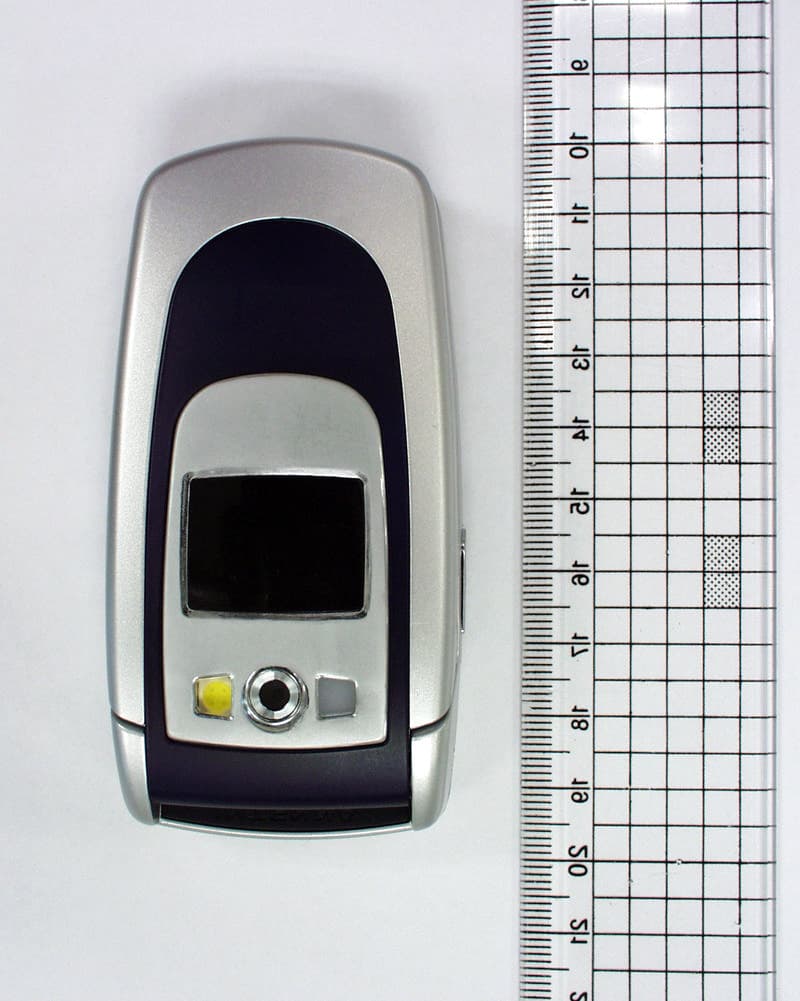
Click to zoom
Application Details
- Equipment Class
- PCE - PCS Licensed Transmitter held to ear
- Date of Grant
- Jun 03, 2003
- Application Purpose
- Original Equipment
- Date of Application
- Jun 03, 2003
- Equipment Note
- Tri-Mode Dual-Band Analog/ PCS Phone (AMPS/CDMA)
- Frequency Range
- 1851.25000000 - 1908.75000000
- Company
- Samsung Electronics Co Ltd
- Country
- United States
Documents & Files
Document Text
Text extracted from the exhibit documents filed with the FCC. Open a document above to read the original.
Users Manual
DIGITAL CELLULAR TELEPHONE SPH-A640 User’s Manual Printed in Korea Code No. : GH68-00000A English. 2003/04. Rev.1.0 World Wide Web http://www.samsungmobile.com ELECTRONICS Please read this manual before operating your phone, and keep it for future reference . Important Safety Precautions Read these guidelines before using your wireless phone. Failure to comply with them may be dangerous or illegal. Road Safety at All Times Do not use a hand-held phone while driving; park the vehicle first. Switching Off When Refueling Do not use the phone at a refueling point (service station) or near fuels or chemicals. Switching Off in Aircraft Wireless phones can cause interference. Using them in aircraft is both illegal and dangerous. Switching Off in Hospitals Switch off your phone near medical equipment. Follow any regulations or rules in force. Interference All wireless phones may be subject to interference, which could affect their performance. Special Regulations Meet any special regulations in force in any area and always switch off your phone whenever it is forbidden to use it, or when it may cause interference or danger (in a hospital for example). 1 YOUR PHONE Key Descriptions ................................................................................... 5 Display ................................................................................................ 6 Built-in Antenna..................................................................................... 6 GETTING STARTED Charging a Battery .................................................................................9 Switching the Phone On/Off ................................................................ 11 CALL FUNCTIONS Making a Call ......................................................................................12 Answering a Call .................................................................................. 17 In-Call Options .................................................................................... 18 Using Caller ID .................................................................................... 19 Viewing Missed Calls ........................................................................... 20 Three-Way Calling ............................................................................... 21 Call Waiting ........................................................................................ 22 Call Forwarding ....................................................................................22 Adjusting the Volume ........................................................................... 23 ENTERING TEXT Changing Text Input Mode ................................................................... 24 T9 Mode .............................................................................................. 25 Alpha Mode ..........................................................................................26 Symbol Mode ...................................................................................... 28 Number Mode ..................................................................................... 28 Table of Contents Sensible Use Use only in the normal position (held to the ear). Avoid unnecessary contact with the antenna when the phone is switched on. Emergency Call Ensure the phone is switched on and in service. Key in the emergency number for your present location, then press TALK. If certain feature are in use, deactivate those features before you can make an emergency call. Give all the necessary information as accurately as possible. Do not cut off the call until given permission to do so. Water Resistance Your phone is not water-resistance. Keep it dry. Accessories and Batteries Use only Samsung-approved accessories and batteries. Qualified Service Only qualified service personnel may install or repair your phone. For more detailed safety information, see “Health and Safety Information” on page 71. 23 USING THE MENUS Accessing a Menu Functions by Scrolling .............................................. 29 Accessing a Menu Functions by Using its Shortcut.................................. 30 Your Phone’s Main Menu .................................................................... 31 CALL HISTORY Missed Calls(MENU 1-1) ............................................................... 33 Outgoing Calls (MENU 1-2) ........................................................... 34 Incoming Calls (MENU 1-3) ........................................................... 35 Erase History (MENU 1-4).............................................................. 36 PHONE BOOK Find (MENU 2-1)........................................................................... 37 Add New Entry (MENU 2-2)........................................................ 39 Group Setting (MENU 2-3)............................................................ 41 My Phone # (MENU 2-4)................................................................ 41 Services (MENU 2-5)...................................................................... 42 MESSAGING Shortmail (MENU 3-1)..................................................................... 43 E-mail (MENU 3-2)......................................................................... 43 Notifications (MENU 3-3)................................................................ 43 WEB................................................................................................... 44 DOWNLOADS Games(MENU 5-1)...................................................................... 45 Ringers (MENU 5-2)..................................................................... 45 Screen Savers (MENU 5-3)............................................................ 45 Applications (MENU 5-4)............................................................... 45 PICTURES Camera(MENU 6-1)..................................................................... 46 Picture Review (MENU 6-2).........…
Text truncated - open the document above for the full version.
Attestation Statements
May 22, 2003 Federal Communications Commission Authorization and Evaluation Div. Equipment Authorization Branch 7435 Oakland Mills Road Columbia, MD 21046 To whom it may concern: We, the undersigned, hereby authorize PCTEST Engineering Laboratory Inc., to act as agent on behalf of all matters relating to applications for equipment authorization, including the signing of all documents relating to these matters. Any and all acts carried out by PCTEST Engineering Laboratory, Inc. on our behalf shall have the same effect as acts of our own. We also hereby certify that no party to this application is subject to a denial of benefits, including FCC benefits, pursuant to Section 5301 of the Anti-Drug Abuse Act of 1988,21 U.S.C.862. Sincerely, Wallace Oh Engineering Manager Samsun Electronics America May 22, 2003 Federal Communications Commission Equipment Approval Services 7435 Oakland Mills Road Columbia, MD 21046 SUBJECT: FCC E911 REQUIREMENTS PER §22.921 Gentlemen: Samsung Electronics Co., Ltd. hereby certifies that the analog cellular telephone (FCC ID: A3LSCHA640), using the Automatic A/B Roaming — Intelligent Retry method, meets the E911 requirements specified in Section 22.921 of the FCC Rules. This procedure recognizes when a “9-1-1” call is made and, at such time, will override any programming in the mobile unit that determines the handling of a non-911 call and permit the call to be handled by other analog carriers. Should you have any questions or comments concerning the above, please contact the undersigned. AFFIDAVIT FOR ESN PROTECTION OF CELLULAR MOBILE TELEPHONES We hereby certify that the Portable Cellular Telephone (FCC ID: A3LSPHA640 ) is so designed that it complies with all the requirements for ESN protection specified in Sec.22.919 of the FCC Rules. a) The transmitter in service has a unique ESN. b) The ESN host component is permanently attached to a main circuit board of the mobile transmitter and the integrity of the unit operating software cannot be altered. The ESN is plated from fraudulent contact and tampering. The ESN is encoded using multiplication by a polynomial and the ESN data programmed in the memory with other information. c) The ESN is factory set and cannot be altered, transferred, removed or otherwise able to be manipulated. Cellular mobile equipment is specifically designed such that any attempt to remove, tamper with, or change the ESN chip, its logic system, or firmware originally programmed by the manufacturer will render the mobile transmitter inoperative. May 22, 2003 Federal Communications Commission Equipment Approval Services 7435 Oakland Mills Road Columbia, MD 21046 SUBJECT:Samsung Electronics Co., Ltd. FCC ID: A3LSPHA640 Users Manual RF Exposure Warning Statement Gentlemen: Samsung Electronics Co., Ltd., hereby confirms that the attached RF exposure warning page will be readily visible to the user, and will be placed at a prominent location in the users manual. If you have any further questions regarding this matter, please do not hesitate to contact me or PCTEST Lab at (410) 290-6652. Sincerely, Wallace Oh Engineering Manager Samsun Electronics America
Cover Letter(s)
May 22, 2003 Federal Communications Commission Authorization and Evaluation Div. Equipment Authorization Branch 7435 Oakland Mills Road Columbia, MD 21046 In re: Samsung Electronics Co., Ltd. FCC ID.: A3LSPHA640 Request for Confidentiality To Whom It May Concern: In accordance with 0.459 of CFR 47, Samsung Electronics Co., Ltd. requests confidentiality for the Block Diagram, Schematics, Parts list, Tune-up Procedure, Operational and Circuit Description of the attached test report. These documents contain detailed system and equipment descriptions and related information about the product, which Samsung Electronics Co., Ltd. considers to be proprietary, confidential, and a custom design and otherwise, would not release to the general public. Since this design is a basis from which future technological products will evolve, Samsung feels that this information would be of benefit to its competitors, and that the disclosure of the information in these documents would give our competitors an unfair advantage in the market. Sincerely, Wallace Oh Engineering Manager Samsun Samsung Electronics America
External Photos
© 2003 SAMSUNG ELECTRONICS Co., Ltd. SAMSUNG FCC ID: A3LSPHA640 Tri-Mode Dual-Band Analog / PCS Phone (AMPS/CDMA) © 2003 SAMSUNG ELECTRONICS Co., Ltd. SAMSUNG FCC ID: A3LSPHA640 Tri-Mode Dual-Band Analog / PCS Phone (AMPS/CDMA) © 2003 SAMSUNG ELECTRONICS Co., Ltd. SAMSUNG FCC ID: A3LSPHA640 Tri-Mode Dual-Band Analog / PCS Phone (AMPS/CDMA) © 2003 SAMSUNG ELECTRONICS Co., Ltd. SAMSUNG FCC ID: A3LSPHA640 Tri-Mode Dual-Band Analog / PCS Phone (AMPS/CDMA) © 2003 SAMSUNG ELECTRONICS Co., Ltd. SAMSUNG FCC ID: A3LSPHA640 Tri-Mode Dual-Band Analog / PCS Phone (AMPS/CDMA)
ID Label/Location Info
© 2003 SAMSUNG ELECTRONICS Co., Ltd. SMASUNG FCC ID: A3LSPHA640 Tri-Mode Dual-Band Analog / PCS Phone (AMPS/CDMA)
Internal Photos
© 2003 SAMSUNG ELECTRONICS Co., Ltd. SAMSUNG FCC ID: A3LSPHA640 Tri-Mode Dual-Band Analog / PCS Phone (AMPS/CDMA) © 2003 SAMSUNG ELECTRONICS Co., Ltd. SAMSUNG FCC ID: A3LSPHA640 Tri-Mode Dual-Band Analog / PCS Phone (AMPS/CDMA)
RF Exposure Info
© 2003 SAMSUNG ELECTRONICS Co., Ltd. SAMSUNG FCC ID: A3LSPHA640 Tri-Mode Dual-Band Analog / PCS Phone (AMPS/CDMA) © 2003 SAMSUNG ELECTRONICS Co., Ltd. SMASUNG FCC ID: A3LSPHA640 Tri-Mode Dual-Band Analog / PCS Phone (AMPS/CDMA) © 2003 SAMSUNG ELECTRONICS Co., Ltd. SAMSUNG FCC ID: A3LSPHA640 Tri-Mode Dual-Band Analog / PCS Phone (AMPS/CDMA) © 2003 SAMSUNG ELECTRONICS Co., Ltd. SAMSUNG FCC ID: A3LSPHA640 Tri-Mode Dual-Band Analog / PCS Phone (AMPS/CDMA) © 2003 SAMSUNG ELECTRONICS Co., Ltd. SAMSUNG FCC ID: A3LSPHA640 Tri-Mode Dual-Band Analog / PCS Phone (AMPS/CDMA) © 2003 SAMSUNG ELECTRONICS Co., Ltd. SAMSUNG FCC ID: A3LSPHA640 Tri-Mode Dual-Band Analog / PCS Phone (AMPS/CDMA) © 2003 SAMSUNG ELECTRONICS Co., Ltd. SAMSUNG FCC ID: A3LSPHA640 Tri-Mode Dual-Band Analog / PCS Phone (AMPS/CDMA) © 2003 SAMSUNG ELECTRONICS Co., Ltd. SAMSUNG FCC ID: A3LSPHA640 Tri-Mode Dual-Band Analog / PCS Phone (AMPS/CDMA) © 2003 SAMSUNG ELECTRONICS Co., Ltd. SAMSUNG FCC ID: A3LSPHA640 Tri-Mode Dual-Band Analog / PCS Phone (AMPS/CDMA) © 2003 SAMSUNG ELECTRONICS Co., Ltd. SAMSUNG FCC ID: A3LSPHA640 Tri-Mode Dual-Band Analog / PCS Phone (AMPS/CDMA) © 2003 SAMSUNG ELECTRONICS Co., Ltd. SAMSUNG FCC ID: A3LSPHA640 Tri-Mode Dual-Band Analog / PCS Phone (AMPS/CDMA) © 2003 SAMSUNG ELECTRONICS Co., Ltd. SAMSUNG FCC ID: A3LSPHA640 Tri-Mode Dual-Band Analog / PCS Phone (AMPS/CDMA)
RF Exposure Info
2 of 36 Contents 1. General Information.............................................................................................3 2. Description of Device...........................................................................................3 3. Description of Test Equipment..............................................................................4 3.1 SAR Measurement Setup.........................................................................................4 3.2 DASY3 E-Field Probe.............................................................................................5 3.3 SAM Phantom.....................................................................................................6 3.4 Brain & Muscle Simulating Mixture Characterization....................................................7 3.5 Device Holder for transmitters.................................................................................8 3.6 Validation Dipole...................................................................................................8 3.7 Equipment Calibration.............................................................................................9 4. SAR Measurement Procedure.............................................................................10 5. Description of test position..............................................................................11 5.1 SAM Phantom Shape............................................................................................11 5.2 Cheek/Touch Position............................................................................................11 5.3 Ear/Tilt 15 Position..............................................................................................13 5.4 Body/Leather Configuration.....................................................................................14 6. Measurement Uncertainty..................................................................................16 7. System Verification.........................................................................................17 7.1 Tissue Verification..............................................................................................17 7.2 Test System Validation...........................................................................................17 8. SAR Measurement Results.................................................................................18 8.1 Measurement Results(AMPS Right Head SAR-Touch)...............................................19 8.2 Measurement Results(AMPS Right Head SAR-Tilt)...................................................20 8.3 Measurement Results(AMPS Left Head SAR-Touch)...................................................21 8.4 Measurement Results(AMPS Left Head SAR-Tilt).......................................................22 8.5 Measurement Results(CELLULAR CDMA Right Head SAR-Touch)..............................23 8.6 Measurement Results(CELLULAR CDMA Right Head SAR-Tilt)..................................24 8.7 Measurement Results(CELLULAR CDMA Left Head SAR-Touch)................................25 8.8 Measurement Results(CELLULAR CDMA Left Head SAR-Tilt)....................................26 8.9 Measurement Results(PCS CDMA Right Head SAR-Touch).......................................27 8.10 Measurement Results(PCS CDMA Right Head SAR-Tilt)...........................................28 8.11 Measurement Results(PCS CDMA Left Head SAR-Touch).........................................29 8.12 Measurement Results(PCS CDMA Left Head SAR-Tilt).............................................30 8.13 Measurement Results(AMPS Body SAR w/o Holster)................................................31 8.14 Measurement Results(CELLULAR CDMA Body SAR w/o Holster)................................32 8.15 Measurement Results(PCS CDMA Body SAR w/o Holster)..........................................33 9. Conclusion.......................................................................................................34 10. Reference.......................................................................................................35 3 of 35 1. GENERAL INFORMATION Test Sample : Tri-Mode Dual-Band Analog / PCS Phone (AMPS/CDMA) Model Number : SPH-A640 Serial Number : Identical prototype (S/N : # FA-009-F ) Manufacturer : SAMSUNG ELECTRONICS Co., Ltd. Contact : SK. Park, Engineer Phone : +82-31-279-6299 Fax : +82-31-279-6323 Test Standard : §2.1093; FCC/OET Bulletin 65, Supplement C(July 2001) FCC Classification : Licensed Portable Transmitter Held to Ear (PCE) Test Dates : April 23,2003 ~ April 25,2003 Tested for : FCC/TCB Certification 2. DESCRIPTION OF DEVICE Tx Freq. Range : 824.04 – 848.97 MHz (AMPS) / 824.70 – 848.31 MHz (CDMA) 1851.25 – 1908.75 MHz (PCS CDMA) Rx Freq. Range : 869.04 – 893.97 MHz (AMPS) / 869.70 – 893.31 MHz (CDMA) 1931.25 – 1988.75 MHz (PCS CDMA) Max. RF Output Power : 0.406W ERP AMPS (26.083dBm) 0.357W ERP CDMA (25.523dBm) 0.323W EIRP PCS (25.081dBm) Antenna Manufacturer : Filtronic LK Model No.: SPH-A640 Antenna Dimensions : Intenna 4 of 35 3. DESCRIPTION OF TEST EQUIPMENT 3.1 SAR Measurement Setup Robotic System Measurements are performed using the DASY3 automated dosimetric assessment system. Which is made by Schmid & Partner Engineering AG (SPEAG) in Zurich, Switzerland and consists of high precision robotics system (Stäubli), robot controller, Pentium computer, near-field probe, probe alignment sensor, and the SAM twin phantom containing the brain equivalent material. The robot is a six-axis industrial robot performing precise movements to position the probe to the location (points) of maximum electromagnetic field (EMF) (see Fig. 3.1). Figure 3.1 SAR Measurement System Setup System Hardware A cell controller system contains the power supply, robot controller, teach pendant (Joystick), and a remote control is used to drive the robot motors. The PC consists of the Samsung Pentium 550MHz computer with Wi…
Text truncated - open the document above for the full version.
RF Exposure Info
APPENDIX A SAR Definition Specific Absorption Rate (SAR) is defined as the time derivative (rate) of the incremental energy (dU) absorbed by (dissipated in ) an incremental mass (dm) contained in a volume element (dV) of a given density (p). It is also defined as the rate of RF energy absorption pet unit mass at a point in an absorbing body (see Fig. A.1) ? ? ? ? ? ? ? ? ? ? ? ? ? ? ? ? pdv dU dt d dm dU dt d SAR Figure A.1 SAR Mathematical Equation SAR is expressed in units of Watts per Kilogram (W/kg). SAR = E 2 / p Where : = conductivity of the tissue-simulant material (S/m) p = mass density of the tissue-simulant material (kg/m 3 ) E = Total RMS electric field strength (V/m) Note: The primary factors that control rate or energy absorption were found to be the wavelength of the incident field in relations to the dimensions and geometry of the irradiated organism, the orientation of the organism in relation to the polarity of field vectors, the presence of reflecting surfaces, and whether conductive contact is made by the organism with a ground plane. APPENDIX B Probe Calibration Process Dosimetric Assessment Procedure Each probe is calibrated according to a dosimetric assessment procedure described in K. Pokovic, T.Schmid, N. Kuster, Robust setup for precise calibration of E-field probes in tissue simulating liquids at mobile communications frequencies, ICECOM97, Oct. 1997, pp. 120-124 with an accuracy better than +/-10%. The spherical isotropy was evaluated with the procedure described in K. Pokovic, T.Schmid, N. Kuster, E- field Probe with improved isotropy in brain simulating liquids, Proceedings of the ELMAR, Zadar, June 23-25, 1996, pp. 172-175 and found to be better than +/-0.25dB. The sensitivity parameters (NormX, NormY, NormZ), the diode compression parameter (DCP) and the conversion factor (ConvF) of the probe is tested. Free Space Assessment The free space E-field from amplified probe outputs is determined in a test chamber. This is performed in a TEM cell for frequencies bellow 1 GHz (see Fig. B.1), and in a waveguide above 1 GHz for free space. For the free space calibration, the probe is placed in the volumetric center of the cavity and at the proper orientation with the field. The probe is then rotated 360 degrees. Temperature Assessment E-field temperature correlation calibration is performed in a flat phantom flat phantom filled with the appropriate simulated brain tissue. The measured free space E-field in the medium correlates to temperature rise in a dielectric medium. For temperature correlation calibration a RF transparent thermistor-based temperature probe is used in conjunction with the E-field probe (see Fig. B.2). SAR = C t T ? ? SAR = p E?? 2 where: where: t = exposure time (30 seconds) = simulated tissue conductivity C = heat capacity of tissue (brain or muscle). p = Tissue density (1.25 g/cm 3 for brain tissue) T = temperature increase due to RF exposure. SAR is proportional to T/ t, the initial rate of tissue heating, before thermal diffusion takes place. Now it’s possible to quantify the electric field in the simulated tissue by equating the thermally derived SAR to the E-field; Figure B.1. E-Field and Temperature Figure B.2. E-Field and temperature measurements at 900MHz measurements at 1.9GHz APPENDIX C ANSI/IEEE C95.1 – 1992 RF EXPOSURE LIMITS Uncontrolled Environment UNCONTROLLED ENVIRONMENTS are defined as locations where there is the exposure of individuals who have no knowledge or control of their exposure. The general population/uncontrolled exposure limits are applicable to situations in which the general public may be exposed or in which persons who are exposed as a consequence of their employment may not be made fully aware of the potential for exposure or cannot exercise control over their exposure. Members of the general public would come under this category when exposure is not employment-related; for example, in the case of a wireless transmitter that exposes persons in its vicinity. Controlled Environment CONTROLLED ENVIRONMENTS are defined as locations where there is the exposure that may be incurred by persons who are aware of the potential for exposure,(i.e. as a result of employment or occupation). In general, occupational/controlled exposure limits are applicable to situations in which persons are exposed as a consequence of their employment, who have been made fully aware of the potential for exposure and can exercise control over their exposure. This exposure category is also applicable when the exposure is of a transient nature due to incidental passage through a location where the exposure levels may be higher than the general population/uncontrolled limits, but the exposed person is fully aware of the potential for exposure and can exercise control over his or her exposure by leaving the area or by some other appropriate means. Table C.1 Safety Limits for Partial Body Exposure UNCONTROLLED ENVIRONMENT General Population (W/kg) or (mW/g) CONTROLLED ENVIRONMENT General Population (W/kg) or (mW/g) SPATIAL PEAK SAR 1 Brain 1.60 8.00 SPATIAL PEAK SAR 2 Whole Body 0.08 0.40 SPATIAL PEAK SAR 3 Hands,Feet,Ankles, Wrists 4.00 20.00 The Spatial Peak value of the SAR averaged over any 1 gram of tissue (defined as tissue volume in the shape of a cube) and over the appropriate averaging time. The Spatial Average value of the SAR averaged over the whole body. The Spatial Peak value of the SAR averaged over any 10 grams of tissue (defined as a tissue volume in the shape of a cube) and over the appropriate averaging time. APPENDIX D Test Sample Photographs APPENDIX E Test Setup Photographs APPENDIX F The Validation Measurements APPENDIX G Plots of The SAR Measurements SAMSUNG FCC ID: A3LSPHA640 -- 835MHz. AMPS Head SAR SAM Phantom; Right Cheek(CRP) Section; Probe:ET3DV6 - SN1551; ConvF(6.80,6.80,6.80) Head 835 MHz: σ = 0.87 mho/m ε r = 39.8 ρ = 1.00 g/cm 3 ; Antenna: Fixed; Crest Factor 1.0 SAR (1g): 1.28 mW/g SAMSUNG Tri Mode/Dual-Band Phone (…
Text truncated - open the document above for the full version.
Test Report
PCTEST PT. 22/24 REPORT FCC MEASUREMENT REPORT Reviewed By: Quality Manager Test Report S/N: 22/24.230505202.A3L Test Dates: May 8-9, 2003 EUT Type: Tri-Mode Dual-Band Phone FCC ID: A3LSPHA640 Page 1 of 31 © 2003 PCTEST ENGINEERING LABORATORY, INC. PCTEST Engineering Laboratory, Inc. 6660-B Dobbin Road • Columbia, MD 21045 • U.S.A. TEL (410) 290-6652 • FAX (410) 290-6654 http://www.pctestlab.com CERTIFICATE OF COMPLIANCE FCC Part 24 & 22 Certification SAMSUNG ELECTRONICS CO., LTD. Dates of Tests: May 8-9, 2003 416 Maetan-3 Dong, Paldal-Ku Test Report S/N: 22/24.230505202.A3L Suwon City Kyungki-Do 441-742, KOREA Test Site: PCTEST Lab, Columbia MD Attn: Wallace Oh, Engineering Manager Samsung Electronics America (QA Lab) FCC ID A3LSPHA640 APPLICANT SAMSUNG ELECTRONICS CO., LTD. Classification: Licensed Portable Transmitter Held to Ear (PCE) FCC Rule Part(s): §24(E), §22(H), §22.901(d); §2 EUT Type: Tri-Mode Dual-Band Analog/PCS Phone (AMPS/CDMA) Model: SPH-A640 Tx Frequency Range: 824.04MHz – 848.97MHz (AMPS) / 824.70 – 848.31MHz (CDMA) 1851.25MHz – 1908.75MHz (PCS CDMA) Rx Frequency Range: 869.04MHz – 893.97MHz (AMPS) / 869.70 – 893.31MHz (CDMA) 1931.25MHz – 1988.75MHz (PCS CDMA) Max. RF Output Power: 0.406 W ERP AMPS (26.083 dBm) / 0.357 W ERP CDMA (25.523 dBm) 0.323 W EIRP PCS CDMA (25.081 dBm) Max. SAR Measurement: 1.28W/kg AMPS Head SAR; 0.33W/kg AMPS Body SAR; 1.16W/kg CDMA Head SAR; 0.31W/kg CDMA Body SAR; 0.99W/kg PCS CDMA Head SAR; 0.74W/kg PCS CDMA Body SAR Emission Designator(s): 40K0F8W / 40K0F1D (AMPS), 1M25F9W (CDMA) Test Device Serial No. Identical Prototype [S/N: # FA-009-F] This equipment has been shown to be capable of compliance with the applicable technical standards as indicated in the measurement report and was tested in accordance with the measurement procedures specified in §2.947. I attest to the accuracy of data. All measurements reported herein were performed by me or were made under my supervision and are correct to the best of my knowledge and belief. I assume full responsibility for the completeness of these measurements and vouch for the qualifications of all persons taking them. Grant conditions: Power output listed is ERP for Part 22 and EIRP for Part 24. SAR compliance for body- worn operating configuration is based on a separation distance of 1.5 cm between the back of the unit and the body of the user. End-users must be informed of the body-worn operating requirements for satisfying RF exposure compliance. Belt clips or holsters may not contain metallic components. PCTEST certifies that no party to this application has been denied the FCC benefits pursuant to Section 5301 of the Anti-Drug Abuse Act of 1988, 21 U.S.C. 862. 230505202.A3L PCTEST PT. 22/24 REPORT FCC MEASUREMENT REPORT Reviewed By: Quality Manager Test Report S/N: 22/24.230505202.A3L Test Dates: May 8-9, 2003 EUT Type: Tri-Mode Dual-Band Phone FCC ID: A3LSPHA640 Page 2 of 29 © 2003 PCTEST ENGINEERING LABORATORY, INC. TABLE OF CONTENTS ATTACHMENT A: COVER LETTER(S) ATTACHMENT B: ATTESTATION STATEMENT(S) ATTACHMENT C: TEST REPORT 1.1 SCOPE 3 2.1 INTRODUCTION 4 3.1 INSERTS 5 4.1 DESCRIPTION OF TESTS 6-9 5.1 EFFECTIVE RADIATED POWER OUTPUT 10-11 6.1 EQUIVALENT ISOTROPIC RADIATED POWER 12 7.1 RADIATED MEASUREMENTS 13-21 8.1 FREQUENCY STABILITY 22-25 9.1 PLOTS OF EMISSIONS 26 10.1 LIST OF TEST EQUIPMENT 27 11.1 SAMPLE CALCULATIONS 28 12.1 CONCLUSION 29 ATTACHMENT D: TEST PLOTS ATTACHMENT E: FCC ID LABEL / LOCATION ATTACHMENT F: TEST SETUP PHOTOGRAPHS ATTACHMENT G: EXTERNAL PHOTOGRAPHS ATTACHMENT H: INTERNAL PHOTOGRAPHS ATTACHMENT I: BLOCK DIAGRAM(S) ATTACHMENT J: SCHEMATIC DIAGRAM(S) ATTACHMENT K: OPERATIONAL / CIRCUIT DESCRIPTION ATTACHMENT L: PARTS LIST/TUNE UP PROCEDURE ATTACHMENT M: USER’S MANUAL ATTACHMENT N: SAR MEASUREMENT DATA ATTACHMENT O: SAR TEST DATA ATTACHMENT P: SAR TEST SETUP PHOTOGRAPHS ATTACHMENT P: SAR TEST SETUP PHOTOGRAPHS ATTACHMENT Q: DIPOLE VALIDATION ATTACHMENT R: PROBE CALIBRATION PCTEST PT. 22/24 REPORT FCC MEASUREMENT REPORT Reviewed By: Quality Manager Test Report S/N: 22/24.230505202.A3L Test Dates: May 8-9, 2003 EUT Type: Tri-Mode Dual-Band Phone FCC ID: A3LSPHA640 Page 3 of 29 © 2003 PCTEST ENGINEERING LABORATORY, INC. MEASUREMENT REPORT 1.1 Scope Measurement and determination of electromagnetic emissions (EME) of radio frequency devices including intentional and/or unintentional radiators for compliance with the technical rules and regulations of the Federal Communications Commission. §2.1033 General Information Applicant Name: SAMSUNG ELECTRONICS CO., LTD. Address: 416 Maetan-3 Dong, Paldal-Ku Suwon City Kyungki-Do 441-742, KOREA Attention: Wallace Oh, Engineering Manager Samsung Electronics America (QA Lab) • FCC ID: A3LSPHA640 • Quantity: Quantity production is planned • Emission Designators: 40K0F8W / 40K0F1D (AMPS), 1M25F9W (CDMA) • Tx Freq. Range: 824.04 – 848.97 MHz (AMPS) 824.70 – 848.31 MHz (CDMA) 1851.25 – 1908.75 MHz (PCS CDMA) • Rx Freq. Range: 869.04 – 893.97 MHz (AMPS) 869.70 – 893.31 MHz (CDMA) 1931.25 – 1988.75 MHz (PCS CDMA) • Max. Power Rating: 0.406 W ERP AMPS (26.083 dBm) / 0.357 W ERP CDMA (25.523 dBm) 0.323 W EIRP PCS CDMA (25.081 dBm) • FCC Classification(s): Licensed Portable Tx Held to Ear (PCE) • Equipment (EUT) Type: Tri-Mode Dual-Band Analog/PCS Phone • Modulation(s): AMPS / CDMA • Frequency Tolerance: ± 0.00025% (2.5 ppm) • FCC Rule Part(s): § 24(E), §22(H), §22.901(d) • Dates of Tests: May 8-9, 2003 • Place…
Text truncated - open the document above for the full version.
Contact Information
Applicant
Jenni Chun(General Manager)
Technical Contact
PCTEST Engineering Lab., Inc.Randy Ortanez
[email protected]410-290-6652
6660-B Dobbin Road · Columbia, Maryland · United States
Non-Technical Contact
PCTEST Engineering Lab., Inc.Randy Ortanez
[email protected]410-290-6652
Test Firm
PCTEST Engineering Laboratory, Inc.Randy Ortanez
Technical Specifications
| # | Rule Parts | Frequency Range | Power Output | Emission | Tolerance |
|---|---|---|---|---|---|
| 4 | 24E | 1.85 GHz - 1.91 GHz | 323.00 mW | 1M25F9W | 2.5 ppm |
Other Applications from Samsung Electronics Co Ltd
A3LSMU600
Sep 15, 2026Bluetooth Headset
Equipment Class
DTS - Digital Transmission SystemA3LSMA185G
Sep 08, 2026Portable Handset
Equipment Class
CXX - Communications Rcvr for use w/ licensed Tx and CBsA3LSMS741B
Aug 05, 2026Portable Handset
Equipment Class
6VL - 15E 6 GHZ Very Low Power DeviceA3LSMX940
Jul 31, 2026BT,BLE Tablet DTS,UNII a,b,g,n,ac,ax,be and digitizer
Equipment Class
DTS - Digital Transmission SystemA3LSMS741U
Jul 30, 2026Portable Handset
Equipment Class
6CD - 15E 6 GHz Low Power Dual Client