A3LSPHN290Tri-Mode Dual-Band Analog/ PCS Phone (AMPS/CDMA)
Samsung Electronics Co Ltd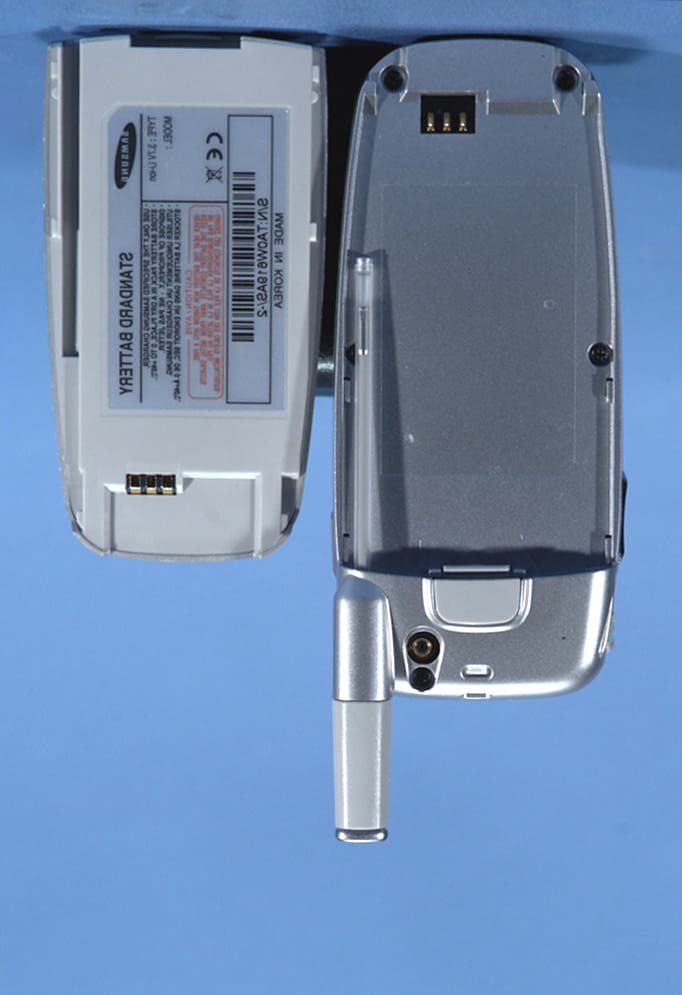
Click to zoom
Application Details
- Equipment Class
- PCE - PCS Licensed Transmitter held to ear
- Date of Grant
- Aug 07, 2003
- Application Purpose
- Original Equipment
- Date of Application
- Aug 07, 2003
- Equipment Note
- Tri-Mode Dual-Band Analog/ PCS Phone (AMPS/CDMA)
- Frequency Range
- 1851.25000000 - 1908.75000000
- Company
- Samsung Electronics Co Ltd
- Country
- United States
Documents & Files
Document Text
Text extracted from the exhibit documents filed with the FCC. Open a document above to read the original.
Users Manual
Sprint PCS® The clear alternative to cellular.SM SPH-N290 Copyright © 2003 Sprint Spectrum L.P. All rights reserved. No reproduction in whole or in part without prior written approval. Sprint, Sprint PCS, Sprint PCS Phone, Sprint PCS Wireless Web, Sprint PCS Wireless Web Mail, Sprint PCS Wireless Web Short Mail and the diamond logo are trademarks of Sprint Communications Company L.P. All other trademarks are property of their respective owners. Welcome to Sprint PCS Sprint PCS built the largest all-digital, all-PCS nationwide network from the ground up for clearer calls, reaching more than 230 million people. We built our network to give you what we believe you really want from a wireless phone: clear sound, private conversations and time-saving features. And Sprint Personal Communications Services® can do something even more far-reaching – simplify your life. Our advanced technology is designed to grow with your communications needs so that one day you’ll be able to rely entirely on your Sprint PCS Phone TM to stay connected. This guide will introduce you to our technology and your new Sprint PCS Phone through simple, easy-to-follow instructions. Since you’re probably anxious to start using your phone, we encourage you to immediately flip to Section One – Getting Started With Sprint PCS Service. This section provides all the information you need to quickly activate your phone, set up your voicemail and much more. It also contains information on how to contact Sprint PCS should you have questions about service, want to purchase additional products or services, or just check your account balance. Thank you for choosing Sprint PCS. Table of Contents Getting Started With Sprint PCS Service . . . . . . . . . . . . . . . . . . . . . . . . .6 Turning Your Phone ON and OFF . . . . . . . . . . . . . . . . . . . . . . . . . . . . . . 6 Getting Started With Sprint PCS Service . . . . . . . . . . . . . . . . . . . . . . . . . 7 Setting Up Your Voicemail . . . . . . . . . . . . . . . . . . . . . . . . . . . . . . . . . . . . 7 Getting Help . . . . . . . . . . . . . . . . . . . . . . . . . . . . . . . . . . . . . . . . . . . . . . . . . 7 Understanding This User Guide . . . . . . . . . . . . . . . . . . . . . . . . . . . . . . . . 9 Getting to Know Your Sprint PCS Phone . . . . . . . . . . . . . . . . . . . . . . . .10 Highlights and Features . . . . . . . . . . . . . . . . . . . . . . . . . . . . . . . . . . . . . . . 10 Closed View of Your Phone . . . . . . . . . . . . . . . . . . . . . . . . . . . . . . . . . . . . 11 Front View of Your Phone . . . . . . . . . . . . . . . . . . . . . . . . . . . . . . . . . . . . . 11 Command Keys . . . . . . . . . . . . . . . . . . . . . . . . . . . . . . . . . . . . . . . . . . . . . . 11 Display Screen Icons . . . . . . . . . . . . . . . . . . . . . . . . . . . . . . . . . . . . . . . . . . 12 Using and Charging the Battery . . . . . . . . . . . . . . . . . . . . . . . . . . . . . . . . 12 Understanding Roaming . . . . . . . . . . . . . . . . . . . . . . . . . . . . . . . . . . . . . . .14 Understanding How Roaming Works . . . . . . . . . . . . . . . . . . . . . . . . . . . 14 Setting Your Phone’s Roam Mode . . . . . . . . . . . . . . . . . . . . . . . . . . . . . . 15 Setting an Alert When Roam Charges Apply (Call Guard) . . . . . . . . . 15 Setting Ringer for Roaming Calls . . . . . . . . . . . . . . . . . . . . . . . . . . . . . . . 16 Making and Answering Calls . . . . . . . . . . . . . . . . . . . . . . . . . . . . . . . . . .17 Making Calls . . . . . . . . . . . . . . . . . . . . . . . . . . . . . . . . . . . . . . . . . . . . . . . . 17 Answering Calls . . . . . . . . . . . . . . . . . . . . . . . . . . . . . . . . . . . . . . . . . . . . . 18 Silencing the Ringer . . . . . . . . . . . . . . . . . . . . . . . . . . . . . . . . . . . . . . . . . . 18 Adjusting Volume . . . . . . . . . . . . . . . . . . . . . . . . . . . . . . . . . . . . . . . . . . . . 18 Call Menu Options . . . . . . . . . . . . . . . . . . . . . . . . . . . . . . . . . . . . . . . . . . . 19 Missed Call Notification . . . . . . . . . . . . . . . . . . . . . . . . . . . . . . . . . . . . . . . 20 Incoming Call Notification . . . . . . . . . . . . . . . . . . . . . . . . . . . . . . . . . . . . . 20 Calling Emergency Numbers . . . . . . . . . . . . . . . . . . . . . . . . . . . . . . . . . . 20 Using Sprint PCS Voice Command . . . . . . . . . . . . . . . . . . . . . . . . . . . . . 20 Using Caller ID . . . . . . . . . . . . . . . . . . . . . . . . . . . . . . . . . . . . . . . . . . . . . . 22 Responding to Call Waiting . . . . . . . . . . . . . . . . . . . . . . . . . . . . . . . . . . . . 22 Three-Way Calling . . . . . . . . . . . . . . . . . . . . . . . . . . . . . . . . . . . . . . . . . . . 22 Forwarding Your Calls . . . . . . . . . . . . . . . . . . . . . . . . . . . . . . . . . . . . . . . . 22 Navigating Through Menus and Entering Text . . . . . . . . . . . . . . . . . . .24 Menu Navigation . . . . . . . . . . . . . . . . . . . . . . . . . . . . . . . . . . . . . . . . . . . . . 24 Working Within the Menu Structure . . . . . . . . . . . . . . . . . . . . . . . . . . . . 24 Viewing the Menus . . . . . . . . . . . . . . . . . . . . . . . . . . . . . . . . . . . . . . . . . . . 25 Entering Characters . . . . . . . . . . . . . . . . . . . . . . . . . . . . . . . . . . . . . . . . . . . 27 Managing Call History . . . . . . . . . . . . . . . . . . . . . . . . . . . . . . . . . . . . . . . .29 Viewing Call History (Incoming, Outgoing and Missed) . . . . . . . . . . . 29 Call History Options . . . . . . . . . . . . . . . . . . . . . . . . . . . . . . . . . . . . . . . . . . 29 Erasing Call History . . . . . . . . . . . . . . . . . . . . . . . . . . . . . . . . . . . . . . . . . . 30 Using Your Internal Phone Book . . . . . . . . . . . . . . . . . . . . . . . . . . . . . . .31 Adding a New Entry to Internal Phone Book . . . . . . . . . . . . . . . . . . . . . 31 Finding Internal Phone Boo…
Text truncated - open the document above for the full version.
Attestation Statements
August 1, 2003 Federal Communications Commission Authorization and Evaluation Div. Equipment Authorization Branch 7435 Oakland Mills Road Columbia, MD 21046 To whom it may concern: We, the undersigned, hereby authorize PCTEST Engineering Laboratory Inc., to act as agent on behalf of all matters relating to applications for equipment authorization, including the signing of all documents relating to these matters. Any and all acts carried out by PCTEST Engineering Laboratory, Inc. on our behalf shall have the same effect as acts of our own. We also hereby certify that no party to this application is subject to a denial of benefits, including FCC benefits, pursuant to Section 5301 of the Anti-Drug Abuse Act of 1988,21 U.S.C.862. Sincerely, Wallace Oh Engineering Manager Samsun Electronics America August 1, 2003 Federal Communications Commission Equipment Approval Services 7435 Oakland Mills Road Columbia, MD 21046 SUBJECT: FCC E911 REQUIREMENTS PER §22.921 Gentlemen: Samsung Electronics Co., Ltd. hereby certifies that the analog cellular telephone (FCC ID: A3LSPHN290), using the Automatic A/B Roaming — Intelligent Retry method, meets the E911 requirements specified in Section 22.921 of the FCC Rules. This procedure recognizes when a “9-1-1” call is made and, at such time, will override any programming in the mobile unit that determines the handling of a non-911 call and permit the call to be handled by other analog carriers. Should you have any questions or comments concerning the above, please contact the undersigned.
Attestation Statements
August 1, 2003 Federal Communications Commission Authorization and Evaluation Div. Equipment Authorization Branch 7435 Oakland Mills Road Columbia, MD 21046 In re: Samsung Electronics Co., Ltd. FCC ID.: A3LSPHN290 Request for Confidentiality To Whom It May Concern: In accordance with 0.459 of CFR 47, Samsung Electronics Co., Ltd. requests confidentiality for the Block Diagram, Schematics, Parts list, Tune-up Procedure, Operational and Circuit Description of the attached test report. These documents contain detailed system and equipment descriptions and related information about the product, which Samsung Electronics Co., Ltd. considers to be proprietary, confidential, and a custom design and otherwise, would not release to the general public. Since this design is a basis from which future technological products will evolve, Samsung feels that this information would be of benefit to its competitors, and that the disclosure of the information in these documents would give our competitors an unfair advantage in the market. Sincerely, Wallace Oh Engineering Manager Samsun Samsung Electronics America
Cover Letter(s)
August 1, 2003 Federal Communications Commission Equipment Approval Services 7435 Oakland Mills Road Columbia, MD 21046 SUBJECT: SAMSUNG Electronics Co., Ltd. FCC ID: A3LSPHN290 Part 22/24 Certification Gentlemen: Submitted herewith, on behalf of SAMSUNG Electronics Co., Ltd., is an application for Part 22/24 Certification of the Tri-ModeDual-Band CDMA Phone. Attached is the applicant’s Letter of Authorization, Confidentiality Request, measurement report test data and plots, RF Exposure measurement report and data, FCC ID label and location, test setup photographs, internal and external photographs, block diagram (confidential), circuit diagrams & description (confidential), operational description (confidential), parts list & tune-up procedure (confidential), and the user's manual. Should you have any questions or comments concerning the above, please contact the undersigned. cc: SAMSUNG Electronics Co., Ltd.
External Photos
SAMSUNG FCC ID: A3LSPHN290 EUT Photographs © 2003 PCTEST Lab. Tri-Mode Dual-Band Analog/PCS Phone Model: SPH-N290 SAMSUNG FCC ID: A3LSPHN290 EUT Photographs © 2003 PCTEST Lab. Tri-Mode Dual-Band Analog/PCS Phone Model: SPH-N290 SAMSUNG FCC ID: A3LSPHN290 EUT Photographs © 2003 PCTEST Lab. Tri-Mode Dual-Band Analog/PCS Phone Model: SPH-N290 SAMSUNG FCC ID: A3LSPHN290 EUT Photographs © 2003 PCTEST Lab. Tri-Mode Dual-Band Analog/PCS Phone Model: SPH-N290 SAMSUNG FCC ID: A3LSPHN290 EUT Photographs © 2003 PCTEST Lab. Tri-Mode Dual-Band Analog/PCS Phone Model: SPH-N290 SAMSUNG FCC ID: A3LSPHN290 EUT Photographs © 2003 PCTEST Lab. Tri-Mode Dual-Band Analog/PCS Phone Model: SPH-N290 SAMSUNG FCC ID: A3LSPHN290 EUT Photographs © 2003 PCTEST Lab. Tri-Mode Dual-Band Analog/PCS Phone Model: SPH-N290
ID Label/Location Info
© 2003 PCTEST Lab FCC ID SAMPLE LABEL & LOCATION LABELLING REQUIREMENTS The Label shown shall be permanently affixed at a conspicuous location on the device and be readily visible to the user at the time of purchase. (SEE NEXT PAGE) SAMSUNG ELECTRONICS CO., LTD. MODEL NO: SPH-N290 FCC ID: A3LSPHN290 MADE IN KOREA SAMSUNG ELECTRONICS CO., LTD
Internal Photos
SAMSUNG FCC ID: A3LSPHN290 EUT Photographs © 2003 PCTEST Lab. Tri-Mode Dual-Band Analog/PCS Phone Model: SPH-N290 SAMSUNG FCC ID: A3LSPHN290 EUT Photographs © 2003 PCTEST Lab. Tri-Mode Dual-Band Analog/PCS Phone Model: SPH-N290 SAMSUNG FCC ID: A3LSPHN290 EUT Photographs © 2003 PCTEST Lab. Tri-Mode Dual-Band Analog/PCS Phone Model: SPH-N290 SAMSUNG FCC ID: A3LSPHN290 EUT Photographs © 2003 PCTEST Lab. Tri-Mode Dual-Band Analog/PCS Phone Model: SPH-N290 SAMSUNG FCC ID: A3LSPHN290 EUT Photographs © 2003 PCTEST Lab. Tri-Mode Dual-Band Analog/PCS Phone Model: SPH-N290 SAMSUNG FCC ID: A3LSPHN290 EUT Photographs © 2003 PCTEST Lab. Tri-Mode Dual-Band Analog/PCS Phone Model: SPH-N290 SAMSUNG FCC ID: A3LSPHN290 EUT Photographs © 2003 PCTEST Lab. Tri-Mode Dual-Band Analog/PCS Phone Model: SPH-N290
RF Exposure Info
SAMSUNG FCC ID: A3LSPHN290 EUT Photographs © 2003 PCTEST Lab. Tri-Mode Dual-Band Analog/PCS Phone Model: SPH-N290 SAMSUNG FCC ID: A3LSPHN290 EUT Photographs © 2003 PCTEST Lab. Tri-Mode Dual-Band Analog/PCS Phone Model: SPH-N290 SAMSUNG FCC ID: A3LSPHN290 EUT Photographs © 2003 PCTEST Lab. Tri-Mode Dual-Band Analog/PCS Phone Model: SPH-N290 SAMSUNG FCC ID: A3LSPHN290 EUT Photographs © 2003 PCTEST Lab. Tri-Mode Dual-Band Analog/PCS Phone Model: SPH-N290 SAMSUNG FCC ID: A3LSPHN290 EUT Photographs © 2003 PCTEST Lab. Tri-Mode Dual-Band Analog/PCS Phone Model: SPH-N290 SAMSUNG FCC ID: A3LSPHN290 EUT Photographs © 2003 PCTEST Lab. Tri-Mode Dual-Band Analog/PCS Phone Model: SPH-N290 SAMSUNG FCC ID: A3LSPHN290 EUT Photographs © 2003 PCTEST Lab. Tri-Mode Dual-Band Analog/PCS Phone Model: SPH-N290 SAMSUNG FCC ID: A3LSPHN290 EUT Photographs © 2003 PCTEST Lab. Tri-Mode Dual-Band Analog/PCS Phone Model: SPH-N290 SAMSUNG FCC ID: A3LSPHN290 EUT Photographs © 2003 PCTEST Lab. Tri-Mode Dual-Band Analog/PCS Phone Model: SPH-N290 SAMSUNG FCC ID: A3LSPHN290 EUT Photographs © 2003 PCTEST Lab. Tri-Mode Dual-Band Analog/PCS Phone Model: SPH-N290 SAMSUNG FCC ID: A3LSPHN290 EUT Photographs © 2003 PCTEST Lab. Tri-Mode Dual-Band Analog/PCS Phone Model: SPH-N290 SAMSUNG FCC ID: A3LSPHN290 EUT Photographs © 2003 PCTEST Lab. Tri-Mode Dual-Band Analog/PCS Phone Model: SPH-N290 SAMSUNG FCC ID: A3LSPHN290 EUT Photographs © 2003 PCTEST Lab. Tri-Mode Dual-Band Analog/PCS Phone Model: SPH-N290
RF Exposure Info
PCTEST ENGINEERING LABORATORY, INC. 6660 – B Dobbin Road • Columbia, MD 21045 • USA Telephone 410.290.6652 / Fax 410.290.6654 http://www.pctestlab.com (email: [email protected]) CERTIFICATE OF COMPLIANCE (SAR EVALUATION) PCTEST SAR TEST REPORT FCC MEASUREMENT REPORT Reviewed by: Quality Manager SAR Filename: SAR.230714337.A3L Test Dates: July 14-17, 2003 EUT Type: Tri-Mode Dual-Band Phone FCC ID: A3LSPHN290 Page 1 of 36 © 2003 PCTEST Engineering Laboratory, Inc. APPLICANT NAME & ADDRESS: DATE & LOCATION OF TESTING: SAMSUNG ELECTRONICS CO., LTD. Dates of Tests: July 14-17, 2003 416 Maetan-3 Dong, Paldal-Ku Test Report S/N: SAR.230714337.A3L Suwon City Kyungki-Do 441-742, KOREA Test Site: PCTEST Lab, Columbia, MD USA FCC ID: A3LSPHN290 APPLICANT NAME: SAMSUNG ELECTRONICS CO., LTD. EUT Type: Tri-Mode Dual-Band Analog/PCS CDMA Phone Tx Frequency: 824.04 – 848.97 MHz (AMPS) / 824.70 – 848.31 MHz (CDMA) 1851.25 – 1908.75 MHz (PCS CDMA) Rx Frequency: 869.04 – 893.97 MHz (AMPS) / 869.70 – 893.31 MHz (CDMA) 1931.25 – 1988.75 MHz (PCS CDMA) Max. RF Output Power: 0.482 W ERP AMPS (26.829 dBm) / 25.5 dBm Conducted 0.480 W ERP CDMA (26.813 dBm) / 25.5 dBm Conducted 0.416 W EIRP PCS CDMA (26.181dBm) / 24.5 dBm Conducted Max. SAR Measurement: 1.44 W/kg AMPS Head SAR; 0.97 W/kg AMPS Body SAR; 1.42 W/kg CDMA Head SAR; 0.80 W/kg CDMA Body SAR; 1.14 W/kg PCS CDMA Head SAR; 1.29 W/kg PCS CDMA Body SAR Trade Name/Model(s): SPH-N290 FCC Rule Part(s): §2.1093; FCC/OET Bulletin 65 Supplement C [July 2001] Application Type: Certification Test Device Serial No.: Identical Prototype [S/N: F1BEFF59] This wireless portable device has been shown to be capable of compliance for localized specific absorption rate (SAR) for uncontrolled environment/general population exposure limits specified in ANSI/IEEE Std. C95.1-1992 and had been tested in accordance with the measurement procedures specified in FCC/OET Bulletin 65 Supplement C (2001) and IEEE Std. 1528-200X (Draft 6.5, January 15, 2002). I attest to the accuracy of data. All measurements reported herein were performed by me or were made under my supervision and are correct to the best of my knowledge and belief. I assume full responsibility for the completeness of these measurements and vouch for the qualifications of all persons taking them. Grant conditions: Power output listed is ERP for Part 22 and EIRP for Part 24. SAR compliance for body- worn operating configuration is based on a separation distance of 1.5 cm between the back of the unit and the body of the user. End-users must be informed of the body-worn operating requirements for satisfying RF exposure compliance. Belt clips or holsters may not contain metallic components. PCTEST certifies that no party to this application has been denied the FCC benefits pursuant to Section 5301 of the Anti-Drug Abuse Act of 1988, 21 U.S.C. 862. SAR. 230714337.A3L PCTEST SAR TEST REPORT FCC MEASUREMENT REPORT Reviewed by: Quality Manager SAR Filename: SAR.230714337.A3L Test Dates: July 14-17, 2003 EUT Type: Tri-Mode Dual-Band Phone FCC ID: A3LSPHN290 Page 2 of 36 © 2003 PCTEST Engineering Laboratory, Inc. TABLE OF CONTENTS 1. INTRODUCTION / SAR DEFINITION.................................................................................3 2. SAR MEASUREMENT SETUP..............................................................................................4 3. ALIDX-500 E-FIELD PROBE SYSTEM..................................................................................5 4. PROBE CALIBRATION PROCESS.......................................................................................6 5. PHANTOM & EQUIVALENT TISSUES.................................................................................7 6. TEST SYSTEM SPECIFICATIONS.........................................................................................8 7. DOSIMETRIC ASSESSMENT & PHANTOM SPECS................................................................9 8. DEFINITION OF REFERENCE POINTS..............................................................................10 9. TEST CONFIGURATION POSITION.................................................................................11 10. ANSI/IEEE C95.1 - 1992 RF EXPOSURE LIMITS.................................................................12 11. MEASUREMENT UNCERTAINTIES...................................................................................13 12. SAR TEST DATA SUMMARY............................................................................................14 13. SAR TEST EQUIPMENT...................................................................................................15 14. CONCLUSION...............................................................................................................16 15. REFERENCES..................................................................................................................17 EXHIBIT A. SYSTEM VERIFICATION.......................................................................................18 EXHIBIT A. SAR DATA SUMMARY...................................................................................19-36 PCTEST SAR TEST REPORT FCC MEASUREMENT REPORT Reviewed by: Quality Manager SAR Filename: SAR.230714337.A3L Test Dates: July 14-17, 2003 EUT Type: Tri-Mode Dual-Band Phone FCC ID: A3LSPHN290 Page 3 of 36 © 2003 PCTEST Engineering Laboratory, Inc. 1. INTRODUCTION / SAR DEFINITION The FCC has adopted the guidelines for evaluating the environmental effects of radiofrequency radiation in ET Docket 93-62 on Aug. 6, 1996 to protect the public and workers from the potential hazards of RF emissions due to FCC-regulated portable devices.[1] The safety limits used for the environmental evaluation measurements are based on the criteria published by the American National Standards Institute (ANSI) for localized specific absorption rate (SAR) in IEEE/ANSI C95.1-1992 Standard for Safety Levels with Respect to Human Exposure to Radio Frequency Elect…
Text truncated - open the document above for the full version.
RF Exposure Info
Calibration Laboratory 6660-B Dobbin Road Columbia, Maryland 21045 USA © 2003 PCTEST Calibration Summary Model: E-010 S/N: PCT003 Boundary Effect < 2%, 2.6 mm from probe tip to phantom Diode Compression Point: 76 mV Environmental Conditons: Temperature: 23.34 o C Relative Humidity: 34% Barometer: 100.1 kPa --------------------- This probe was calibrated under the IEEE Std 1309-1966, IEEE Standard for Calibration of Electromagnetic Field Sensors and Probes, Exluding Antennas, from 9 kHz to 40 GHz. OFFSET ANGLE (cm) (deg) 0.24 54.73 Tissue Type Frequency (MHz) Dielectric Constant r ε Conductivity (S/m) σ Conversion Factor zyx γγγ,, Brain 835 40.00 0.91 7.20 Brain 1880 40.20 1.41 4.05 Brain 2440 39.34 1.77 8.80 Brain 5300 37.10 4.84 3.20 Brain 5800 36.00 5.28 2.30 Muscle 835 55.70 0.98 7.70 Muscle 1900 53.90 1.48 4.40 Muscle 2440 52.30 1.99 9.90 Muscle 5300 48.80 5.43 3.45 Muscle 5800 48.50 6.05 2.50 Isotropy Frequency (MHz) % dB 835 3.49 0.15 1880 5.35 0.23 2440 4.02 0.17 5300 4.85 0.21 5800 4.93 0.21 Calibration Laboratory 6660-B Dobbin Road Columbia, Maryland 21045 USA © 2003 PCTEST 835 MHz Calibration (PCT003) 0 0.2 0.4 0.6 0.8 1 0 10 20 30 40 50 60 70 80 90 100 110 120 130 140 150 160 170 180 190 200 210 220 230 240 250 260 270 280 290 300 310 320 330 340 350 Ch1 Ch2 Ch3 Sum 1880 MHz Calibration (PCT003) 0 0.25 0.5 0.75 1 0 10 20 30 40 50 60 70 80 90 100 110 120 130 140 150 160 170 180 190 200 210 220 230 240 250 260 270 280 290 300 310 320 330 340 350 Ch1 Ch2 Ch3 Sum Calibration Laboratory 6660-B Dobbin Road Columbia, Maryland 21045 USA © 2003 PCTEST 2440 MHz Calibration (PCT003) 0 0.25 0.5 0.75 1 0 10 20 30 40 50 60 70 80 90 100 110 120 130 140 150 160 170 180 190 200 210 220 230 240 250 260 270 280 290 300 310 320 330 340 350 Ch1 Ch2 Ch3 Sum 5300 MHz Calibration (PCT003) 0 0.25 0.5 0.75 1 0 10 20 30 40 50 60 70 80 90 100 110 120 130 140 150 160 170 180 190 200 210 220 230 240 250 260 270 280 290 300 310 320 330 340 350 Ch1 Ch2 Ch3 Sum Calibration Laboratory 6660-B Dobbin Road Columbia, Maryland 21045 USA © 2003 PCTEST 5800 MHz Calibration (PCT003) 0 0.25 0.5 0.75 1 0 10 20 30 40 50 60 70 80 90 100 110 120 130 140 150 160 170 180 190 200 210 220 230 240 250 260 270 280 290 300 310 320 330 340 350 Ch1 Ch2 Ch3 Sum 0 30 60 90 120 150 180 210 240 270 300 330 0 60 120 180 240 300 360 -1 -0.5 0 0.5 1 dB Polarization Rotation (theta) Probe Rotation (phi) Verification of Isotropy for PCT003 Calibration Laboratory 6660-B Dobbin Road Columbia, Maryland 21045 USA © 2003 PCTEST Linearity Calibration Plot for PCT003 0 100 200 300 400 500 600 700 800 900 1000 00.511.522.5 Power (Watts) Power Density (mW/cm^2) Uncompensated Compensated Probe Physical Characteristics Serial Number: PCT003 Sensor Offset: 2.4 mm Sensor Length: 2.5 mm Tip Enclosure: Glass Tip Diameter: 7 mm Tip Length: 40 mm Total Length: 290 mm Calibration Laboratory 6660-B Dobbin Road Columbia, Maryland 21045 USA © 2003 PCTEST Test Equipment The test equipment used during the probe calibration are listed as follows: EQUIPMENT SPECIFICATIONS Type Calibration Date Asset Number/ Serial Number CRS Robot F3 February 2002 RAF0134133 CRS C500C Motion Controller February 2002 RCB0003303 CRS Teach Pendant (Joystick) February 2002 STP0132231 DELL Computer, Pentium 4 1.6 GHz, Windows 2000 TM February 2002 4PJZ111 E-Field Probe E-010 January 2003 PCT003 Flat SAM Phantom (P-SAM-FLAT) February 2002 94X-097 IDX Robot End Effector (EE-103-C) February 2002 07111223 IDX Probe Amplifier February 2002 07111113 Validation Dipole D-835S October 2002 PCT441 Validation Dipole D-1900S October 2002 PCT541 Validation Dipole D-2450S October 2002 PCT641 Validation Dipole D-5000S November 2002 PCT741 HP-778D Dual-Directional Coupler (0.1 ~ 2.0 GHz) November 2002 PCT664 MicroCircuits Directional Coupler (4.0 ~ 8.0 GHz) November 2002 PE2204-6 Amplifier Research 5S1G4 Power Amp January 2003 PCT540 IFI T184-10 Power Amplifier (4.0 ~ 18.0 GHz) December 2002 5957 Agilent E8241A (250kHz ~ 20GHz) Signal Generator November 2002 US42110432 HP-8648D (9kHz ~ 4 GHz) Signal Generator January 2003 PCT526 HP-8753E (30kHz ~ 6GHz) Network Analyzer January 2003 PCT552 HP85070B Dielectric Probe Kit January 2003 PCT501 IFI CC110EXX TEM Cell (DC to 2000 MHz) January 2003 PCT498 EMCO 3115 Horn Antenna (2.0 ~ 18.0 GHz) August 2002 PCT496 Guidline 5150 Precision Dual-Thermometer November 2002 66145 Calibration Laboratory 6660-B Dobbin Road Columbia, Maryland 21045 USA © 2003 PCTEST Calibration Laboratory 6660-B Dobbin Road Columbia, Maryland 21045 USA © 2003 PCTEST Calibration Laboratory 6660-B Dobbin Road Columbia, Maryland 21045 USA © 2003 PCTEST
Test Report
PCTEST PT. 22/24 REPORT FCC MEASUREMENT REPORT Reviewed By: Quality Manager Test Report S/N: 22/24.220714336.A3L Test Dates: July 14-17, 2003 EUT Type: Tri-Mode Dual-Band Phone FCC ID: A3LSPHN290 Page 1 of 30 © 2003 PCTEST ENGINEERING LABORATORY, INC. PCTEST Engineering Laboratory, Inc. 6660-B Dobbin Road • Columbia, MD 21045 • U.S.A. TEL (410) 290-6652 • FAX (410) 290-6654 http://www.pctestlab.com CERTIFICATE OF COMPLIANCE FCC Part 24 & 22 Certification SAMSUNG ELECTRONICS CO., LTD. Dates of Tests: July 14-17, 2003 416 Maetan-3 Dong, Paldal-Ku Test Report S/N: 22/24.230714336.A3L Suwon City Kyungki-Do 441-742, KOREA Test Site: PCTEST Lab, Columbia MD FCC ID A3LSPHN290 APPLICANT SAMSUNG ELECTRONICS CO., LTD. Classification: Licensed Portable Transmitter Held to Ear (PCE) FCC Rule Part(s): §24(E), §22(H), §22.901(d); §2 EUT Type: Tri-Mode Dual-Band Analog/PCS Phone (AMPS/CDMA) Model: SPH-N290 Tx Frequency Range: 824.04MHz — 848.97MHz (AMPS) / 824.70 — 848.31MHz (CDMA) 1851.25MHz — 1908.75MHz (PCS CDMA) Rx Frequency Range: 869.04MHz — 893.97MHz (AMPS) / 869.70 — 893.31MHz (CDMA) 1931.25MHz — 1988.75MHz (PCS CDMA) Max. RF Output Power: 0.482 W ERP AMPS (26.829 dBm) / 0.480 W ERP CDMA (26.813 dBm) 0.416 W EIRP PCS CDMA (26.181dBm) Max. SAR Measurement: 1.44 W/kg AMPS Head SAR; 0.97 W/kg AMPS Body SAR; 1.42 W/kg CDMA Head SAR; 0.80 W/kg CDMA Body SAR; 1.14 W/kg PCS CDMA Head SAR; 1.29 W/kg PCS CDMA Body SAR Emission Designator(s): 40K0F8W / 40K0F1D (AMPS), 1M25F9W (CDMA) Test Device Serial No. Identical Prototype [S/N: F1BEFF59 ) This equipment has been shown to be capable of compliance with the applicable technical standards as indicated in the measurement report and was tested in accordance with the measurement procedures specified in §2.947. I attest to the accuracy of data. All measurements reported herein were performed by me or were made under my supervision and are correct to the best of my knowledge and belief. I assume full responsibility for the completeness of these measurements and vouch for the qualifications of all persons taking them. Grant conditions: Power output listed is ERP for Part 22 and EIRP for Part 24. SAR compliance for body- worn operating configuration is based on a separation distance of 1.5 cm between the back of the unit and the body of the user. End-users must be informed of the body-worn operating requirements for satisfying RF exposure compliance. Belt clips or holsters may not contain metallic components. PCTEST certifies that no party to this application has been denied the FCC benefits pursuant to Section 5301 of the Anti-Drug Abuse Act of 1988, 21 U.S.C. 862. 230714336.A3L PCTEST PT. 22/24 REPORT FCC MEASUREMENT REPORT Reviewed By: Quality Manager Test Report S/N: 22/24.220714336.A3L Test Dates: July 14-17, 2003 EUT Type: Tri-Mode Dual-Band Phone FCC ID: A3LSPHN290 Page 2 of 30 © 2003 PCTEST ENGINEERING LABORATORY, INC. TABLE OF CONTENTS ATTACHMENT A: COVER LETTER(S) ATTACHMENT B: ATTESTATION STATEMENT(S) ATTACHMENT C: TEST REPORT 1.1 SCOPE 3 2.1 INTRODUCTION 4 3.1 INSERTS 5 4.1 DESCRIPTION OF TESTS 6-10 5.1 EFFECTIVE RADIATED POWER OUTPUT 11-12 6.1 EQUIVALENT ISOTROPIC RADIATED POWER 13 7.1 RADIATED MEASUREMENTS 14-22 8.1 FREQUENCY STABILITY 23-26 9.1 PLOTS OF EMISSIONS 27 10.1 LIST OF TEST EQUIPMENT 28 11.1 SAMPLE CALCULATIONS 29 12.1 CONCLUSION 30 ATTACHMENT D: TEST PLOTS ATTACHMENT E: FCC ID LABEL / LOCATION ATTACHMENT F: TEST SETUP PHOTOGRAPHS ATTACHMENT G: EXTERNAL PHOTOGRAPHS ATTACHMENT H: INTERNAL PHOTOGRAPHS ATTACHMENT I: BLOCK DIAGRAM(S) ATTACHMENT J: SCHEMATIC DIAGRAM(S) ATTACHMENT K: OPERATIONAL / CIRCUIT DESCRIPTION ATTACHMENT L: PARTS LIST/TUNE UP PROCEDURE ATTACHMENT M: USER’S MANUAL ATTACHMENT N: SAR MEASUREMENT DATA ATTACHMENT O: SAR TEST DATA ATTACHMENT P: SAR TEST SETUP PHOTOGRAPHS ATTACHMENT Q: DIPOLE VALIDATION ATTACHMENT R: PROBE CALIBRATION PCTEST PT. 22/24 REPORT FCC MEASUREMENT REPORT Reviewed By: Quality Manager Test Report S/N: 22/24.220714336.A3L Test Dates: July 14-17, 2003 EUT Type: Tri-Mode Dual-Band Phone FCC ID: A3LSPHN290 Page 3 of 30 © 2003 PCTEST ENGINEERING LABORATORY, INC. MEASUREMENT REPORT 1.1 Scope Measurement and determination of electromagnetic emissions (EME) of radio frequency devices including intentional and/or unintentional radiators for compliance with the technical rules and regulations of the Federal Communications Commission. §2.1033 General Information Applicant Name: SAMSUNG ELECTRONICS CO., LTD. Address: 416 Maetan-3 Dong, Paldal-Ku Suwon City Kyungki-Do 441-742, KOREA Attention: Wallace Oh, Engineering Manager Samsung Electronics America (QA Lab) • FCC ID: A3LSPHN290 • Quantity: Quantity production is planned • Emission Designators: 40K0F8W / 40K0F1D (AMPS), 1M25F9W (CDMA) • Tx Freq. Range: 824.04 — 848.97 MHz (AMPS) 824.70 — 848.31 MHz (CDMA) 1851.25 — 1908.75 MHz (PCS CDMA) • Rx Freq. Range: 869.04 — 893.97 MHz (AMPS) 869.70 — 893.31 MHz (CDMA) 1931.25 — 1988.75 MHz (PCS CDMA) • Max. Power Rating: 0.482 W ERP AMPS (26.829 dBm) / 0.480 W ERP CDMA (26.813 dBm) 0.416 W EIRP PCS CDMA (26.181dBm) • FCC Classification(s): Licensed Portable Tx Held to Ear (PCE) • Equipment (EUT) Type: Tri-Mode Dual-Band Analog/PCS Phone • Modulation(s): AMPS / CDMA • Frequency Tolerance: ± 0.00025% (2.5 ppm) • FCC Rule Part(s): § 24(E), §22(H), §22.901(d) • Dates of Tests: July 14-17, 2003 • Place of Tests: PCTEST Lab, Columbia, MD U.S.A. • Test Report S/N: 22/24.220714336.A3L PCTEST PT. 22/24 REPORT FCC MEASUREMENT REPORT Reviewed By: Quality Manager Test Report S/N: 22/24.220714336.A3L Test Dates: July 14-17, 2003 EUT Type: Tri-Mode Dual-Band Phone FCC ID: A3LSPHN290 Page 4 of 30 © 2003 PCTEST ENGINEERING LABORATORY, INC. 2.1 INTRODUCTION These measurement tests were conducted at PCTEST Engineering Laboratory, Inc. facility in New Concept Business Park, Guilford Industrial Park, Columbia, Maryland. The site address is 6660-B Dobbin Road, Columbia, MD 21045. The test site is one of the highest points in the Columbia …
Text truncated - open the document above for the full version.
Test Report
© 2003 PCTEST Lab SAMSUNG FCC ID: A3LSPHN290 © 2003 PCTEST Lab SAMSUNG FCC ID: A3LSPHN290 © 2003 PCTEST Lab SAMSUNG FCC ID: A3LSPHN290 © 2003 PCTEST Lab SAMSUNG FCC ID: A3LSPHN290 © 2003 PCTEST Lab SAMSUNG FCC ID: A3LSPHN290 © 2003 PCTEST Lab SAMSUNG FCC ID: A3LSPHN290 © 2003 PCTEST Lab SAMSUNG FCC ID: A3LSPHN290 © 2003 PCTEST Lab SAMSUNG FCC ID: A3LSPHN290 © 2003 PCTES…
Text truncated - open the document above for the full version.
Contact Information
Applicant
Jenni Chun(General Manager)
Technical Contact
PCTEST Engineering Lab., Inc.Randy Ortanez
[email protected]410-290-6652
6660-B Dobbin Road · Columbia, Maryland · United States
Test Firm
PCTEST Engineering Laboratory, Inc.Randy Ortanez
Technical Specifications
| # | Rule Parts | Frequency Range | Power Output | Emission | Tolerance |
|---|---|---|---|---|---|
| 4 | 24E | 1.85 GHz - 1.91 GHz | 416.00 mW | 1M25F9W | 2.5 ppm |
Other Applications from Samsung Electronics Co Ltd
A3LSMS741B
Aug 05, 2026Portable Handset
Equipment Class
6VL - 15E 6 GHZ Very Low Power DeviceA3LSMX940
Jul 31, 2026BT,BLE Tablet DTS,UNII a,b,g,n,ac,ax,be and digitizer
Equipment Class
DTS - Digital Transmission SystemA3LSMS741U
Jul 30, 2026Portable Handset
Equipment Class
6CD - 15E 6 GHz Low Power Dual ClientA3LSMX840
Jul 27, 2026BT,BLE Tablet DTS,UNII a,b,g,n,ac,ax and Digitizer
Equipment Class
DSS - Part 15 Spread Spectrum TransmitterA3LSMX848U
Jul 27, 2026WCDMA, LTE, 5G NR Tablet BT,BLE, DTS,UNII a b g n ac ax and Digitizer
Equipment Class
JBP - Part 15 Class B Computing Device Peripheral