AK8SVD112A1WLPersonal Computer
Sony Group Corporation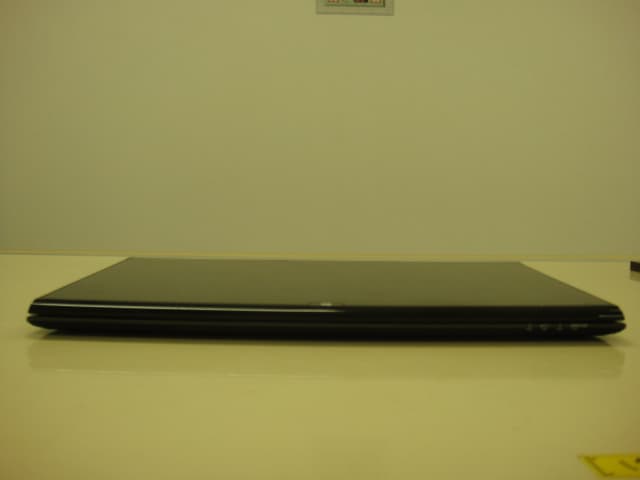
Click to zoom
Application Details
- Equipment Class
- DTS - Digital Transmission System
- Date of Grant
- Sep 05, 2012
- Application Purpose
- Original Equipment
- Date of Application
- Sep 05, 2012
- Equipment Note
- Personal Computer
- Frequency Range
- 2402.00000000 - 2480.00000000
- Company
- Sony Group Corporation
- Country
- Japan
Documents & Files
Document Text
Text extracted from the exhibit documents filed with the FCC. Open a document above to read the original.
Users Manual
VAIO User Guide VAIO Duo 11 SVD1121 SeriesBack | Back to Top Troubleshooting How to Use Windows 8: The Basics Parts Description Setup Network / Internet Connections Settings Backup / Recovery Security Other Operations Notifications Read This First Congratulations on your purchase of this VAIO(R) computer. About your VAIO computer’s configuration To find out about the configuration of your VAIO computer, visit the Sony online support website. [Details] Some features, options, and supplied items may not be available on your VAIO computer. Features Available features vary depending on the model or options you selected. Not all features described in this manual are available depending on your model. Illustrations Illustrations, photos, or screenshots in this manual may look slightly different depending on the model or options you selected. Apps The preinstalled apps may vary depending on the model or options you selected. The apps described in this manual may not be preinstalled on your VAIO computer. Supplied manuals The following manuals are supplied with your VAIO computer. On-screen documentation User Guide - Introduction Version [Details] A preinstalled manual with limited information of your VAIO computer, focused on support and Internet connection. The User Guide - Introduction Version is replaced with a complete version of the User Guide (this manual), after update. User Guide (this manual) General information and operation instructions about your VAIO computer including support and troubleshooting information Printed documentation Quick Start Guide An overview of how to set up and get started with your VAIO computer Recovery, Backup and Troubleshooting Guide Information on how to recover and back up your VAIO computer, as well as troubleshooting information Safety Regulations Read carefully before activating the wireless functions such as the wireless LAN and BLUETOOTH technology. Other references Windows Help and Support [Details] A comprehensive resource for practical advice, tutorials, and demonstrations to help you learn to use your VAIO computer. App help files App help files may be included with the preinstalled apps on your VAIO computer. You may be able to access the help files from the help menu. Notice Copyright 2012 Sony Corporation. All rights reserved. This manual and the software described herein, in whole or in part, may not be reproduced, translated, or reduced to any machine-readable form without prior written approval. Sony Corporation provides no warranty with regard to this manual, the software, or other information contained herein and hereby expressly disclaims any implied warranties or merchantability or fitness for any particular purpose with regard to this manual, the software, or such other information. In no event shall Sony Corporation be liable for any incidental, consequential, or special damages, whether based on tort, contract, or otherwise, arising out of or in connection with this manual, the software, or other information contained herein or the use thereof. In the manual, the (TM) or (R) marks are not specified. Sony Corporation reserves the right to make any modification to this manual or the information contained herein at any time without notice. The software described herein is governed by the terms of a separate user license agreement. Sony Corporation is not liable and will not compensate for any lost recordings made to your VAIO computer, external recording media, or recording devices or any relevant losses, including when recordings are not made due to reasons including the computer failure, or when the contents of a recording are lost or damaged as a result of the computer failure or repair undertaken to the computer. Sony Corporation will not restore, recover, or replicate the recorded contents made to the computer, external recording media, or recording devices under any circumstances. Features and specifications are subject to change without notice. Related Topic About Online Support Website © 2012 Sony Corporation VAIO User Guide VAIO Duo 11 SVD1121 SeriesBack | Back to Top Troubleshooting How to Use Windows 8: The Basics Parts Description Setup Network / Internet Connections Settings Backup / Recovery Security Other Operations Notifications Welcome Congratulations on the purchase of this VAIO computer. This User Guide - Introduction Version provides you with limited information about your VAIO computer. To update this file to the complete version of the User Guide, see Updating the User Guide to the Latest Version [Details] for more information. Your VAIO computer does not support touch screen operations depending on the model you purchased. In such a case, use a mouse for computer operations. Read this first Updating the User Guide to the Latest Version Connecting to the Internet Updating Your VAIO Computer Solving Problems on Your VAIO Computer Using VAIO Care Finding Support Information Windows 8 : How to Start About the Start Screen and Menu Opening the Charms Searching/Starting Apps, Files, or Settings Checking Currently Running Apps Switching Apps Opening the App Menus Closing Apps Downloading Apps from Windows Store Opening Windows Help and Support Activating Sleep Mode or Shutting Down/Restarting Your VAIO Computer Read This First Updating the User Guide to the Latest Version By updating this User Guide - Introduction Version through the Internet, you can get the complete version of the User Guide with detailed information on your VAIO computer. Once the User Guide is updated to the complete version, you can access it anytime even if you are offline. With the complete version of the User Guide, you can view information about: Parts description Feature and operating instructions Precautions Troubleshooting information Windows 8 basic operations Below is an example of a screenshot in English. * Design and content of the screen are subject to change. To get the complete version of the User Guide 1. Connect your VAIO computer to …
Text truncated - open the document above for the full version.
Users Manual
123Q_Safety_6430_US 4-445-545-11 (1) 4-445-545-11(1) 123Q_Safety_6430_US 4-445-545-11 (1) 123Q_Safety_6430_US 4-445-545-11 (1) 3 For customers in USA and Canada Pour les utilisateurs aux Etats-Unis et au Canada Owner’s Record The model number and serial number are located on the bottom, the back panel, or inside the back panel or the battery compartment of your VAIO® computer. Record the model and serial numbers in the space provided here, and keep in a secure location. Refer to the model and serial numbers when you call your Sony Service Center. Model Number: Serial Number: Notice © 2012 Sony Electronics Inc. Reproduction in whole or in part without written permission is prohibited. All rights reserved. This manual and the software described herein, in whole or in part, may not be reproduced, translated, or reduced to any machine-readable form without prior written approval. SONY ELECTRONICS INC. PROVIDES NO WARRANTY WITH REGARD TO THIS MANUAL, THE SOFTWARE, OR OTHER INFORMATION CONTAINED HEREIN AND HEREBY EXPRESSLY DISCLAIMS ANY IMPLIED WARRANTIES OF MERCHANTABILITY OR FITNESS FOR ANY PARTICULAR PURPOSE WITH REGARD TO THIS MANUAL, THE SOFTWARE, OR SUCH OTHER INFORMATION. IN NO EVENT SHALL SONY ELECTRONICS INC. BE LIABLE FOR ANY INCIDENTAL, CONSEQUENTIAL, OR SPECIAL DAMAGES, WHETHER BASED ON TORT, CONTRACT, OR OTHERWISE, ARISING OUT OF OR IN CONNECTION WITH THIS MANUAL, THE SOFTWARE, OR OTHER INFORMATION CONTAINED HEREIN OR THE USE THEREOF. SONY CANNOT WARRANT THAT THE FUNCTIONS DESCRIBED IN THIS GUIDE WILL BE UNINTERRUPTED OR ERROR-FREE. SONY ALSO ASSUMES NO RESPONSIBILITY, AND SHALL NOT BE LIABLE FOR ANY DAMAGES TO, OR VIRUSES THAT MAY INFECT, YOUR COMPUTER EQUIPMENT, OR OTHER PROPERTY ON ACCOUNT OF YOUR ACCESS TO, USE OF, OR BROWSING IN ANY DESCRIBED WEB SITE, OR YOUR DOWNLOADING OF ANY MATERIALS, DATA, TEXT, IMAGES, VIDEO, OR AUDIO FROM ANY DESCRIBED WEB SITE. WEB SITE INFORMATION IS OBTAINED FROM VARIOUS SOURCES AND MAY BE INACCURATE. COPIES OF COPYRIGHTED INFORMATION MAY ONLY BE MADE FOR LEGALLY PERMISSIBLE PURPOSES. Sony Electronics Inc. reserves the right to make any modification to this manual or the information contained herein at any time without notice. The software described herein is governed by the terms of a separate user license agreement. This product contains software owned by Sony and licensed by third parties. Use of such software is subject to the terms and conditions of license agreements enclosed with this product. Some of the software may not be transported or used outside the United States. Software specifications are subject to change without notice and may not necessarily be identical to current retail versions. Certain product(s) included with this computer may include features such as copy protection and content management technology. USE OF THE SOFTWARE PRODUCT(S) REQUIRES AGREEMENT TO APPLICABLE END USER AGREEMENTS AND FULL COMPLIANCE WITH APPLICABLE PRODUCT ACTIVATION PROCEDURES. Product activation procedures and privacy policies will be detailed during initial launch of the software product(s), or upon certain reinstallations of the software product(s), or reconfigurations of the computer, and may be completed by Internet or telephone (toll charges may apply). Updates and additions to software may require an additional charge. Subscriptions to online service providers may require a fee and credit card information. Financial services may require prior arrangements with participating financial institutions. 123Q_Safety_6430_US 4-445-545-11 (1) 4 Important information for Canadian customers: Your new VAIO® computer includes certain software versions or upgrades, and Internet services or offers that are available to U.S. customers only. Sony, VAIO, and the VAIO logo are trademarks or registered trademarks of Sony Corporation. All other trademarks are trademarks or registered trademarks of their respective owners. The Wireless LAN functionality, which is incorporated into selected models only, has passed Wi-Fi certification and complies with the interoperability specifications established by WFA (Wi-Fi Alliance). Reverse engineering or disassembly is prohibited. End User / Product Activation Requirements Certain software product(s) included with this computer may include features such as copy protection and content management technology. Use of the software product(s) requires agreement to applicable end user agreements and full compliance with applicable product activation procedures. Product activation procedures and privacy policies will be detailed during initial launch of the software product(s), or upon certain reinstallations of the software product(s) or reconfiguration of the computer, and may be completed by Internet or telephone (toll charges may apply). 123Q_Safety_6430_US 4-445-545-11 (1) 5 Safety Information and Caution For questions regarding your product or for the Sony Service Center nearest you, visit the Sony online support web site at http://esupport.sony.com/US/VAIO for customers in USA or at http://www.sony.ca/support/ for customers in Canada. To prevent fire or shock hazard, do not expose your computer to rain or moisture. To avoid electrical shock, do not open the cabinet. Refer servicing to qualified personnel only. Turning off your computer with the (power) button does not disconnect the computer completely from mains voltage. To disconnect it completely, unplug the AC adapter or the power cable from mains. The socket-outlet shall be installed near the equipment and shall be easily accessible. Do not use your computer directly on your lap. The temperature of the base of the unit will rise during normal operation and over time could result in discomfort or burns. Do not place the AC adapter in contact with your skin. Remove the AC adapter away from your body if it becomes warm and causes discomfort. Do not block the air exhaust or intake vents while the computer is in operation. Blocking the air vents leads to restric…
Text truncated - open the document above for the full version.
Cover Letter(s)
Sony Corporation Nagano Business Center 5432 Toyoshina, Azumino-shi, Nagano, 399-8282 JAPAN Letter Of Agency Date: August 20, 2012 UL Japan, Inc. 4383-326 Asama-cho, Ise-shi, Mie 516-0021 Japan FCC ID: AK8SVD112A1WL To Whom It May Concern: Please be advised Sony Corporation authorizes Yoshinobu Asai of Application Section, WiSE Japan, UL Verification Service, UL Japan, Inc. to act on our behalf, until otherwise notified, for applications submitted for Federal Communication Commission Radio equipment applications submitted to UL Japan, Inc. We certify that we are not subject to denial of federal benefits, that includes FCC benefits, pursuant to Section 5301 of the Anti-Drug Abuse ACT of 1988, U.S.C. 862. Further, no party, as defined in 47 CFR 1.2002(b), to the application is subject to denial of federal benefits, that includes FCC benefits. The application for the subject equipment has not been submitted to another TCB for certification. Thank you for your attention to this matter. Sincerely, Ryui Tatsumi Senior manager Product Safeety Sec. Quality Assureance Dept. CS Quality Div. VAIO & Mobile business Group Sony Corporation
Cover Letter(s)
Sony Corporation Nagano Business Center 5432 Toyoshina, Azumino-shi, Nagano, 399-8282 JAPAN Request for Confidentiality Date: August 20, 2012 UL Japan, Inc. 4383-326 Asama-cho, Ise-shi, Mie 516-0021 Japan RE: Certification Application FCC ID: AK8SVD112A1WL Please be advised that the following information is to be held confidential on behalf of Sony Corporation, referring to the FCC rules 0.457 and 0.459: Schematics Diagram Block Diagram Theory of Operation The application contains technical information which Sony Corporation deems to be trade secrets and proprietary. If made public, the information might be used to the disadvantage of the applicant in the market place. Thank you for your attention to this matter. Sincerely, Ryui Tatsumi Senior manager Product Safeety Sec. Quality Assureance Dept. CS Quality Div. VAIO & Mobile business Group Sony Corporation
Cover Letter(s)
Sony Corporation Nagano Business Center 5432 Toyoshina, Azumino-shi, Nagano, 399-8282 JAPAN Request for Short-Term Confidentiality August 20, 2012 UL Japan, Inc. 4383-326 Asama-cho, Ise-shi, Mie 516-0021 Japan RE : Certification Application FCC ID : AK8SVD112A1WL Please be advised that the following information is to be held in confidence for 180 days from the date of the Grant of Equipment Authorization and behalf of, Sony Corporation, referring to the FCC rules 0.457 and 0.459: External Photos Internal Photos Test Setup Photos User Manual The application contains technical information, which Sony Corporation deems to be trade secrets and proprietary. If made public, the information might be used to the disadvantage of the applicant in the market place. Thank you for your attention to this matter. Sincerely, ____________________________________ Ryui Tatsumi Senior manager Product Safeety Sec. Quality Assureance Dept. CS Quality Div. VAIO & Mobile business Group Sony Corporation
External Photos
External Photo FRONT Slate Style BACK Slate Style External Photo LEFT Slate Style RIGHT Slate Style External Photo TOP Slate Style REVERSE Slate Style External Photo FRONT BACK VIEW External Photo LEFT VIEW RIGHT External Photo TOP
ID Label/Location Info
Marking Position
Internal Photos
Internal Photo (Antenna location) Internal Photo (RF Part location)
Internal Photos
Internal Photo RF Part front with sheild RF Part front without sheild Internal Photo RF Part rear
RF Exposure Info
Test report No. : 32KE0041-HO-02-F-R1 Page : 52 of 163 FCC ID : AK8SVD112A1WL Issued date : August 28, 2012 Revised date : September 5, 2012 UL Japan, Inc. Head Office EMC Lab. 4383-326 Asama-cho, Ise-shi, Mie-ken 516-0021 JAPAN Telephone: +81 596 24 8116 Facsimile: +81 596 24 8124 APPENDIX 1 : SAR Measurement data 1. Evaluation procedure The evaluation was performed with the following procedure: Step 1: Measurement of the E-field at a fixed location above the ear point or central position of flat phantom was used as a reference value for assessing the power drop. Step 2: The SAR distribution at the exposed side of head or body position was measured at a distance of each device from the inner surface of the shell. The area covered the entire dimension of the antenna of EUT and the horizontal grid spacing was 15 mm x 15 mm for below 3GHz. (or 10mm x 10mm for above 3GHz.). Based on these data, the area of the maximum absorption was determined by spline interpolation. Step 3: Around this point found in the Step 2 (area scan), a volume of 30mm x 30mm x 30mm or more was assessed by measuring 7 x 7 x 7 points at least for below 3GHz and a volume of 28 mm x 28mm x 22.5mm or more was assessed by measuring 8 x 8 x 6 (ratio step method (*1)) points at least for 5GHz band. And for any secondary peaks found in the Step2 which are within 2dB of maximum peak and not with this Step3 (Zoom scan) is repeated. On the basis of this data set, the spatial peak SAR value was evaluated under the following procedure: (1). The data at the surface were extrapolated, since the center of the dipoles is 1mm(EX3DV4) away from the tip of the probe and the distance between the surface and the lowest measuring point is 1.3 mm. The extrapolation was based on a least square algorithm [4]. A polynomial of the fourth order was calculated through the points in z-axes. This polynomial was then used to evaluate the points between the surface and the probe tip. (2). The maximum interpolated value was searched with a straightforward algorithm. Around this maximum the SAR values averaged over the spatial volumes (1 g or 10 g) were computed by the 3D-Spline interpolation algorithm. The 3D- Spline is composed of three one-dimensional splines with the “Not a knot"-condition (in x, y and z-directions) [4], [5]. The volume was integrated with the trapezoidal-algorithm. One thousand points (10 x 10 x 10) were interpolated to calculate the average. (3). All neighboring volumes were evaluated until no neighboring volume with a higher average value was found. Step 4: Re-measurement of the E-field at the same location as in Step 1. *1. Ratio step method parameters used; The first measurement point: 2mm from the phantom surface, the initial grid separation: 2mm, subsequent graded grid ratio: 1.5 These parameters comply with the requirement of the KDB 865664. In the section of SAR Scan Procedures-Zoom Scan, in KDB 865664 (October 2006 revised, publication date: April 16, 2007): SAR Measurement Requirements for 3-6GHz, the graded grids requirement is as follows; “When graded grids are used (z), the first measurement point should be within 3mm of the phantom surface for measurements below 4.5GHz and within 2mm at or above 4.5GHz. The initial grid separation, closest to the phantom, should be 2.0mm. A subsequent graded ration of 1.5 is recommended and less than 2.0 is required. “ Test report No. : 32KE0041-HO-02-F-R1 Page : 53 of 163 FCC ID : AK8SVD112A1WL Issued date : August 28, 2012 Revised date : September 5, 2012 UL Japan, Inc. Head Office EMC Lab. 4383-326 Asama-cho, Ise-shi, Mie-ken 516-0021 JAPAN Telephone: +81 596 24 8116 Facsimile: +81 596 24 8124 2. Measurement data i) WLAN 2.4GHz Ant.1 Laptop Bottom WLAN 11n 20MHz BW MCS0 2437MHz Communication System: WLAN 11a/b/g/n ; Communication System Band: WLAN 11b/g/n; Frequency: 2437 MHz;Duty Cycle: 1:1 Medium parameters used (interpolated): f = 2437 MHz; σ = 1.949 mho/m; ε r = 50.337; ρ = 1000 kg/m 3 Phantom section: Flat Section Measurement Standard: DASY5 (IEEE/IEC/ANSI C63.19-2007) DASY5 Configuration Probe: EX3DV4 - SN3825; ConvF(7.23, 7.23, 7.23); Calibrated: 2011/12/16 Sensor-Surface: 2mm (Mechanical Surface Detection) Electronics: DAE4 Sn509; Calibrated: 2012/07/13 Phantom: ELI 4.0; Type: QDOVA001BA; Measurement SW: DASY52, Version 52.8 (0); Area Scan (81x131x1): Measurement grid: dx=15mm, dy=15mm Maximum value of SAR (interpolated) = 0.00593 mW/g Zoom Scan (7x7x7)/Cube 0: Measurement grid: dx=5mm, dy=5mm, dz=5mm Reference Value = 0.443 V/m; Power Drift = 0.15 dB Peak SAR (extrapolated) = 0.0190 SAR(1 g) = 0.00292 mW/g; SAR(10 g) = 0.000717 mW/g Maximum value of SAR (measured) = 0.011 mW/g Date: 2012/08/19 Ambient Temp. : 24.0 degree.C. Liquid Temp.; 23.5 degree.C. Test report No. : 32KE0041-HO-02-F-R1 Page : 54 of 163 FCC ID : AK8SVD112A1WL Issued date : August 28, 2012 Revised date : September 5, 2012 UL Japan, Inc. Head Office EMC Lab. 4383-326 Asama-cho, Ise-shi, Mie-ken 516-0021 JAPAN Telephone: +81 596 24 8116 Facsimile: +81 596 24 8124 Ant.1 Tablet Rear WLAN 11n 20MHz BW MCS0 2437MHz Communication System: WLAN 11a/b/g/n ; Communication System Band: WLAN 11b/g/n; Frequency: 2437 MHz;Duty Cycle: 1:1 Medium parameters used (interpolated): f = 2437 MHz; σ = 1.949 mho/m; ε r = 50.337; ρ = 1000 kg/m 3 Phantom section: Flat Section Measurement Standard: DASY5 (IEEE/IEC/ANSI C63.19-2007) DASY5 Configuration Probe: EX3DV4 - SN3825; ConvF(7.23, 7.23, 7.23); Calibrated: 2011/12/16 Sensor-Surface: 2mm (Mechanical Surface Detection) Electronics: DAE4 Sn509; Calibrated: 2012/07/13 Phantom: ELI 4.0; Type: QDOVA001BA; Measurement SW: DASY52, Version 52.8 (0); Area Scan (81x131x1): Measurement grid: dx=15mm, dy=15mm Maximum value of SAR (interpolated) = 0.060 mW/g Zoom Scan (7x7x7)/Cube 0: Measurement grid: dx=5mm, dy=5mm, dz=5mm Reference Value = 0.914 V/m; Power Drift = -0.11 dB Peak SAR (extrapolated) = 0.1060 SAR(1 g) = 0.042 mW/g; SAR(10 g) = 0.017 mW/g Maximum value of SAR (measured) = 0.…
Text truncated - open the document above for the full version.
RF Exposure Info
Test report No. : 32KE0041-HO-02-F-R1 Page : 107 of 163 FCC ID : AK8SVD112A1WL Issued date : August 28, 2012 Revised date : September 5, 2012 UL Japan, Inc. Head Office EMC Lab. 4383-326 Asama-cho, Ise-shi, Mie-ken 516-0021 JAPAN Telephone: +81 596 24 8116 Facsimile: +81 596 24 8124 APPENDIX 2 : System Validation 1. System validation result Body 2450 Simulated Tissue Liquid Parameter confirmation Date Ambient Temp. [deg.c] Relative Humidity [%] Liquid type Liquid Temp. [deg.c] Measured Frequency [MHz] Parameters Target Value*1 Measured Deviation [%] Limit [%] εr 52.750.3-4.6+/-5 σ [mho/m] 1.951.960.5+/-5 εr 52.750.4-4.4+/-5 σ [mho/m] 1.951.960.5+/-5 εr: Relative Permittivity / σ : Coductivity 20-Aug24.554 MSL 2450 24.02450 50245019-Aug24.0 MSL 2450 24.5 Date Ambient Temp. [deg.c] Relative Humidity [%] Liquid type Liquid Temp. [deg.c] Measured Frequency [MHz] Parameters Target Value*2 Measured Deviation [%] Limit*3 [%] εr 52.550.3-4.2+/-6 σ [mho/m] 1.951.960.5+/-6 εr 52.550.4-4.0+/-6 σ [mho/m] 1.951.960.5+/-6 εr: Relative Permittivity / σ : Coductivity *3 The limit is for deviation provided by manufacture. 54 MSL 2450 24.02450 *2 The target value is the calibrated dipole Body TSL parameters. (D2450V2 SN:713, Measured Body TSL parameters) 502450 DIELECTRIC PARAMETERS MEASUREMENT RESULTS 19-Aug24.0 MSL 2450 24.5 20-Aug24.5 System validation result (for calibration by manufacture) Forward Power 250mWConversion 1WDeviationLimit MeasuredCalculatio n[%][%] 19-Aug2450.0014.1056.4052.008.5+/-10 20-Aug2450.0013.9055.6052.006.9+/-10 *1 The taget value is the parameter defined in 1g SAR (normalizes to 1W) in manufacturer calibrated dipole (D2450V2 SN:713) SYSTEM VALIDATION Date SAR 1g [W/kg] Target 1W *1 Frequency [MHz] Test report No. : 32KE0041-HO-02-F-R1 Page : 108 of 163 FCC ID : AK8SVD112A1WL Issued date : August 28, 2012 Revised date : September 5, 2012 UL Japan, Inc. Head Office EMC Lab. 4383-326 Asama-cho, Ise-shi, Mie-ken 516-0021 JAPAN Telephone: +81 596 24 8116 Facsimile: +81 596 24 8124 Body 2450MHz System Validation DATA / Dipole2.4GHz / Forward Conducted Power : 250mW Communication System: CW; Communication System Band: D2450 (2450.0 MHz); Frequency: 2450 MHz;Duty Cycle: 1:1 Medium parameters used: f = 2450 MHz; σ = 1.962 mho/m; ε r = 50.263; ρ = 1000 kg/m 3 Phantom section: Flat Section Measurement Standard: DASY5 (IEEE/IEC/ANSI C63.19-2007) DASY5 Configuration Probe: EX3DV4 - SN3825; ConvF(7.23, 7.23, 7.23); Calibrated: 2011/12/16 Sensor-Surface: 2mm (Mechanical Surface Detection) Electronics: DAE4 Sn509; Calibrated: 2012/07/13 Phantom: ELI 4.0; Type: QDOVA001BA; Measurement SW: DASY52, Version 52.8 (0); Area Scan (81x81x1): Measurement grid: dx=15mm, dy=15mm Maximum value of SAR (interpolated) = 21.725 mW/g Zoom Scan (7x7x7)/Cube 0: Measurement grid: dx=5mm, dy=5mm, dz=5mm Reference Value = 90.576 V/m; Power Drift = -0.10 dB Peak SAR (extrapolated) = 29.5880 SAR(1 g) = 14.1 mW/g; SAR(10 g) = 6.5 mW/g Maximum value of SAR (measured) = 21.704 mW/g Date: 2012/08/19 Ambient Temp. : 24.0 degree.C. Liquid Temp.; 23.5 degree.C. Test report No. : 32KE0041-HO-02-F-R1 Page : 109 of 163 FCC ID : AK8SVD112A1WL Issued date : August 28, 2012 Revised date : September 5, 2012 UL Japan, Inc. Head Office EMC Lab. 4383-326 Asama-cho, Ise-shi, Mie-ken 516-0021 JAPAN Telephone: +81 596 24 8116 Facsimile: +81 596 24 8124 Body 2450MHz System Validation DATA / Dipole2.4GHz / Forward Conducted Power : 250mW Communication System: CW; Communication System Band: D2450 (2450.0 MHz); Frequency: 2450 MHz;Duty Cycle: 1:1 Medium parameters used: f = 2450 MHz; σ = 1.961 mho/m; ε r = 50.394; ρ = 1000 kg/m 3 Phantom section: Flat Section Measurement Standard: DASY5 (IEEE/IEC/ANSI C63.19-2007) DASY5 Configuration Probe: EX3DV4 - SN3825; ConvF(7.23, 7.23, 7.23); Calibrated: 2011/12/16 Sensor-Surface: 2mm (Mechanical Surface Detection) Electronics: DAE4 Sn509; Calibrated: 2012/07/13 Phantom: ELI 4.0; Type: QDOVA001BA; Measurement SW: DASY52, Version 52.8 (0); Area Scan (81x81x1): Measurement grid: dx=15mm, dy=15mm Maximum value of SAR (interpolated) = 22.118 mW/g Zoom Scan (7x7x7)/Cube 0: Measurement grid: dx=5mm, dy=5mm, dz=5mm Reference Value = 89.656 V/m; Power Drift = -0.09 dB Peak SAR (extrapolated) = 29.2450 SAR(1 g) = 13.9 mW/g; SAR(10 g) = 6.42 mW/g Maximum value of SAR (measured) = 21.281 mW/g Date: 2012/08/20 Ambient Temp. : 24.0 degree.C. Liquid Temp.; 23.5 degree.C. Test report No. : 32KE0041-HO-02-F-R1 Page : 110 of 163 FCC ID : AK8SVD112A1WL Issued date : August 28, 2012 Revised date : September 5, 2012 UL Japan, Inc. Head Office EMC Lab. 4383-326 Asama-cho, Ise-shi, Mie-ken 516-0021 JAPAN Telephone: +81 596 24 8116 Facsimile: +81 596 24 8124 2. System validation result Body 5GHz Simulated Tissue Liquid Parameter confirmation Date Ambient Temp. [deg.c] Relative Humidity [%] Liquid type Liquid Temp. [deg.c] Measured Frequency [MHz] Parameters Target Value*1 Measured Deviation [%] Limit [%] εr 49.046.9-4.3+/-5 σ [mho/m] 5.305.473.3+/-5 εr 48.646.6-4.1+/-5 σ [mho/m] 5.655.762.0+/-5 εr 48.245.8-5.0+/-5 σ [mho/m] 6.006.294.9+/-5 εr 48.245.9-4.9+/-5 σ [mho/m] 6.006.304.9+/-5 εr: Relative Permittivity / σ : Coductivity *1 The Target value is a parameter defined in FCC OET 65 . Date Ambient Temp. [deg.c] Relative Humidity [%] Liquid type Liquid Temp. [deg.c] Measured Frequency [MHz] Parameters Target Value*2 Measured Deviation [%] Limit*3 [%] εr 48.846.9-3.9+/-6 σ [mho/m] 5.455.470.4+/-6 εr 48.346.6-3.5+/-6 σ [mho/m] 5.865.76-1.7+/-6 εr 47.745.8-4.0+/-6 σ [mho/m] 6.276.290.4+/-6 εr 47.745.9-3.9+/-6 σ [mho/m] 6.276.300.4+/-6 εr: Relative Permittivity / σ : Coductivity *3 The limit is for deviation provided by manufacture. 19-Aug24.550 MSL 3-6GHz 24.05800 19-Aug24.550 MSL 3-6GHz 24.05800 *2 The target value is the calibrated dipole Body TSL parameters. (D5GHzV2 SN:1021, Measured Body TSL parameters) 535200 DIELECTRIC PARAMETERS MEASUREMENT RESULTS 8-Aug24.0 MSL 3-6GHz 24.5 525800 DIELECTRIC PARAMETERS MEASUREMENT RES…
Text truncated - open the document above for the full version.
RF Exposure Info
Test report No. : 32KE0041-HO-02-F-R1 Page : 140 of 163 FCC ID : AK8SVD112A1WL Issued date : August 28, 2012 Revised date : September 5, 2012 UL Japan, Inc. Head Office EMC Lab. 4383-326 Asama-cho, Ise-shi, Mie-ken 516-0021 JAPAN Telephone: +81 596 24 8116 Facsimile: +81 596 24 8124 APPENDIX 3 : System specifications 1. Configuration and peripherals The DASY5 system for performing compliance tests consist of the following items: a) A standard high precision 6-axis robot (Stäubli RX family) with controller and software. An arm extension for accommodating the data acquisition electronics (DAE). b) An isotropic field probe optimized and calibrated for the targeted measurement. c) A data acquisition electronic (DAE), which performs the signal amplification, signal multiplexing, AD-conversion, offset measurements, mechanical surface detection, collision detection, etc. The unit is battery powered with standard or rechargeable batteries. The signal is optically transmitted to the EOC. d) The Electro-optical converter (EOC) performs the conversion between optical and electrical of the signals for the digital communication to the DAE and for the analog signal from the optical surface detection. The EOC is connected to the measurement server. e) The function of the measurement server is to perform the time critical tasks such as signal filtering, control of the robot operation and fast movement interrupts. f) The Light Beam used is for probe alignment. This improves the (absolute) accuracy of the probe positioning. g) A computer running WinXP and the DASY5 software. h) Remote control with teaches pendant and additional circuitry for robot safety such as warning lamps, etc. i) The phantom, the device holder and other accessories according to the targeted measurement. Test report No. : 32KE0041-HO-02-F-R1 Page : 141 of 163 FCC ID : AK8SVD112A1WL Issued date : August 28, 2012 Revised date : September 5, 2012 UL Japan, Inc. Head Office EMC Lab. 4383-326 Asama-cho, Ise-shi, Mie-ken 516-0021 JAPAN Telephone: +81 596 24 8116 Facsimile: +81 596 24 8124 2. Specifications a)Robot TX60L Number of Axes : 6 Nominal Load : 2 kg Maximum Load : 5kg Reach : 920mm Repeatability : +/-0.03mm Control Unit : CS8c Programming Language : VAL3 Weight : 52.2kg Manuafacture : Stäubli Robotics b)E-Field Probe Model : EX3DV4 Serial No. : 3825 Construction : Symmetrical design with triangular core Built-in shielding against static charges PEEK enclosure material (resistant to organic solvents, e.g., glycol ether) Frequency : 10 MHz to > 6 GHz Linearity: ± 0.2 dB (30 MHz to 6 G…
Text truncated - open the document above for the full version.
Contact Information
Applicant
Kazuyuki Hori(Chief EMC/RF Compliance Specialist)
Technical Contact
UL Japan, Inc.Takahiro Hatakeda
[email protected]81-596-24-8116
4383-326 Asama-cho, Ise-shi · Mie-ken · Japan
Test Firm
UL Japan, Inc. Head office EMC Lab.Tetsuya Hashimoto
Technical Specifications
| # | Rule Parts | Frequency Range | Power Output |
|---|---|---|---|
| 3 | 15C | 2.40 GHz - 2.48 GHz | 5.00 mW |
Other Applications from Sony Group Corporation
AK8WW81782
Aug 21, 2026Radio Equipment
Equipment Class
DSS - Part 15 Spread Spectrum TransmitterAK8CFIZCP2
Aug 03, 2026Wireless Controller
Equipment Class
DSS - Part 15 Spread Spectrum TransmitterAK8OEV321MUH
Apr 14, 2026LCD Monitor
Equipment Class
JAD - Part 15 Class A Digital DeviceAK8OEV431MUH
Apr 14, 2026LCD Monitor
Equipment Class
JAD - Part 15 Class A Digital DeviceAK8OEV271MUH
Apr 14, 2026LCD Monitor
Equipment Class
JAD - Part 15 Class A Digital Device