BCE-END070WDECT Dongle
GN Audio USA Inc.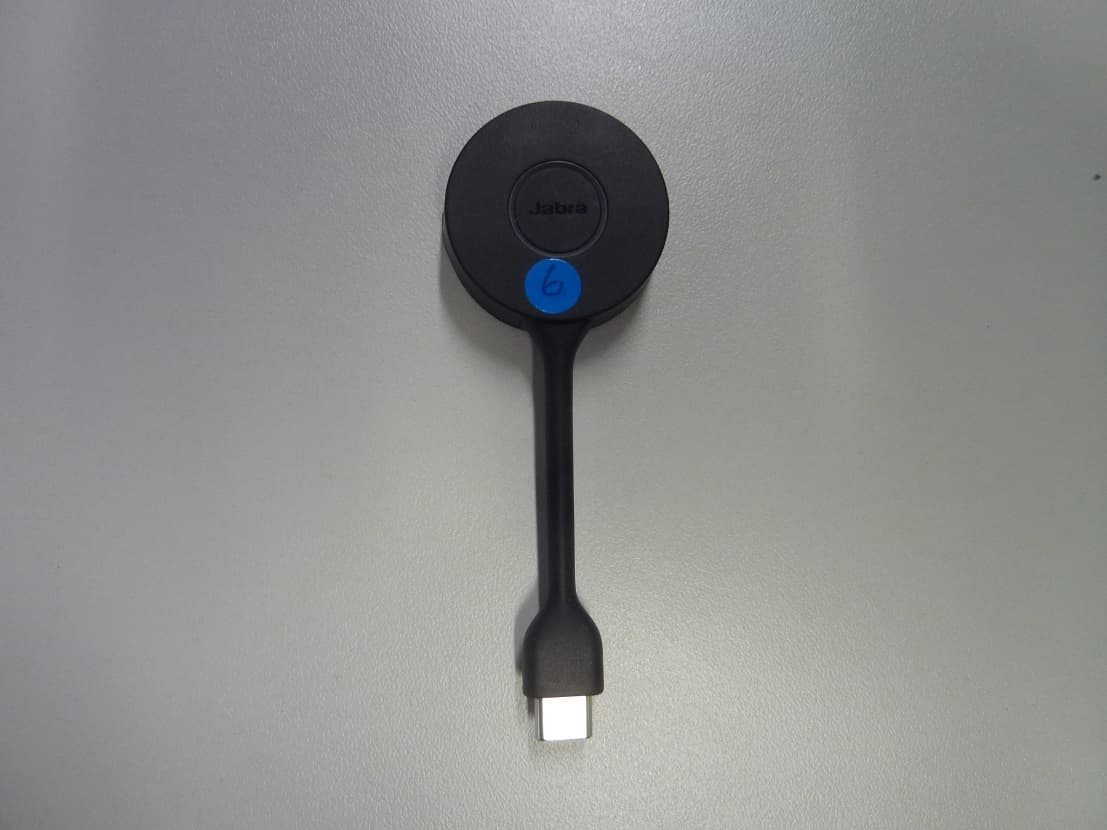
Click to zoom
Application Details
- Equipment Class
- PUB - Part 15 Unlicensed PCS Base Station
- Date of Grant
- Feb 17, 2022
- Application Purpose
- Original Equipment
- Date of Application
- Feb 17, 2022
- Equipment Note
- DECT Dongle
- Frequency Range
- 1921.53600000 - 1928.44800000
- Company
- GN Audio USA Inc.
- Country
- United States
Documents & Files
Document Text
Text extracted from the exhibit documents filed with the FCC. Open a document above to read the original.
Users Manual
WARNING Please read carefully through these Safety Guidelines prior to using this product. GENERAL SAFETY INFORMATION! • If you have a pacemaker or other electrical medical devices, consult your physician before using this product. • Always keep the product out of reach from children! The packaging material contains small parts that may cause choking if ingested. • Never try to dismantle the product or accessories yourself, and do not replace components (unless applicable) or push objects into the product. Only authorized dealers or service centres may open the products. • If the product comes with a cord, avoid putting unnecessary tension or strain on the cord, including rolling the cord around the body of the product, as this could damage the product. • Please be cautious to keep all products, cords, and other accessories in a safe operating environment and avoid exposing your product to rain, moisture, or other liquids (if not designed for this use). • If the product has ear tips, the ear tip should rest against, but not enter the ear canal. • If the product overheats, has been dropped and damaged, has damaged cord or plug, or has been dropped in a liquid, then discontinue its use and contact GN. • Observe all signs and instructions that require an electrical device or RF radio product to be switched off in designated areas such as hospitals or aircrafts. • Use of a headset will impair your ability to hear other sounds. Use caution when you are engaging in activities that requires your full attention e.g. traffic. • If product is charged with a USB cable, use only a suitable USB cable which is in good condition, and charge/power the product according to the instructions. • For maintenance, Unplug the product or charger before cleaning. Clean the product by wiping with a dry or slightly damp cloth. The cord and charger may only be dry-dusted. • Dispose of the product according to local standards and regulations (see www.blueparrott.com/weee, or www.jabra.com/weee). For further instructions and guidelines on usage, refer to www.jabra.com/warning, or www.blueparrott.com/warning. AUDIO PRODUCT WARNING! PERMANENT HEARING LOSS MAY RESULT FROM LONG-TERM EXPOSURE TO SOUNDS AT HIGH VOLUMES. USE AS LOW A VOLUME AS POSSIBLE. This product might be capable of delivering sounds at loud volumes and high-pitched tones. BATTERY WARNING! Please observe the following if the product contains a battery. • “Caution” - The battery used in this product may present a risk of fire or chemical burn if mistreated. Batteries may explode if damaged. • Dispose of replaceable batteries according to local regulations. Please recycle when possible. Do not dispose as household waste or in a fire as they may explode. • For information on batteries please go to www.jabra.com/batteries, or www.blueparrott.com/batteries. CHARGER CARE! Please observe the following if, the product is provided with a charger. • Do not attempt to charge/power your product with anything other than the charger provided. The use of any other types may damage or destroy the product and could be dangerous. Use of other chargers may invalidate any approval or warranty. For availability of approved enhancements, please check with your dealer. • “Caution” – Ensure that the charger is easily accessible and please be cautious when connecting/disconnecting the charger to/from the power outlet. When you disconnect the power cord, pull the plug, not the cord. • Important: Please refer to the user manual for a description of the charging status indicator lights. Some products cannot be used while charging. DECLARATIONS/NOTICES Hereby, GN declares that this product is in compliance with the essential requirements and other relevant provisions of Directive 2014/53/EU (Radio Equipment directive), and the UK relevant statutory requirements. For further information please consult GN Audio A/S or refer to the Declarations of Conformity section at www.blueparrott.com , or www.jabra.com. UK contact info: GN Audio UK Ltd, The Curve, Axis Business Park, 10 Hurricane Way, Langley, Berkshire, SL3 8AG. Radio equipment's operating Frequency Band(s) / Maximum Output Power: [Please read per relevance based on device/module and technologies used] Bluetooth Headset/Base/Ear bud/Speaker phone/ Audio-Video devices: 2400 - 2483.5 MHz / 100 mW. DECT Headset/Base units: 1880-1900 MHz (Europe)/ 250 mW, 1920-1930 MHz (US and Canada) / 100 mW. The Bluetooth® word mark and logos are owned by the Bluetooth SIG, Inc. and any use of such marks by GN is under license. Other trademarks and trade names are those of their respective owners. “Wireless DECT standards vary depending on local legislation. Make sure that your product corresponds to the standard used in your country by ensuring that the product is purchased through a local source of distribution.” North America: FCC (wireless equipment): This device complies with part 15 of the FCC rules. Operation is subject to the following two conditions: (1) This device may not cause harmful interference, and (2) this device must accept any interference received, including interference that may cause undesired operation. Users are not permitted to make changes or modify the device in any way. Changes or modifications not expressly approved by GN will void the user’s authority to operate the equipment. This device and its antenna must not be co-located or operating in conjunction with any other antenna or transmitter. Non body-worn devices must be placed at least 8” (20cm) away from the body. ISED (wireless equipment): This device contains license-exempt transmitter(s)/receiver(s) that comply with Innovation, Science and Economic Development Canada’s license-exempt RSS standard(s). Operation is subject to the following two conditions: (1) This device may not cause interference and (2) This device must accept any interference, including interference that may cause undesired operation of the device. This device complies with RSS247 or/and RSS213…
Text truncated - open the document above for the full version.
Cover Letter(s)
Document Version 1.1 2020-10-30 LONG-TERM CONFIDENTIALITY REQUEST for Certification Service in the USA Federal Communication Commission Equipment Authorization Division, Application Processing Branch 7435 Oakland Mills Road Columbia, MD 21048 TO WHOM IT M AY CONCERN Pursuant to Paragraphs §0.457 and 0.459 of the Commission’s Rules (47 C.F.R.) and Section §552(b)(4) of the Freedom of Information Act, we request Long-Term Confidentiality for the following product: For the product stated above, we request Long-Term Confidentiality for exhibits which contain Block Diagram, Operational Description, Parts List/Tune Up Info, Schematics, SDR Software/Security Info. The above exhibits contain ou r trade secrets and proprietary information that could be of benefit to o ur competitors. This information will not be publicly available. If you have any questions, please feel free to contact us at the address shown below. Sincerely, Company Name: Phone: Company Address: Fax: E-mail: Contact Name: Signature: Signature Date: Check your GC here. Click Grantee Search. FCC I D: Grantee Code Equipment Product Code
Cover Letter(s)
Document Version 1.1 2020-10-30 SHORT-TERM CONFIDENTIALITY REQUEST for Certification Service in the USA Federal Communication Commission Equipment Authorization Division, Application Processing Branch 7435 Oakland Mills Road Columbia, MD 21048 TO WHOM IT MAY CONCERN Pursuant to Paragraphs §0.457 and 0.459 of the Commission’s Rules (47 C.F.R.) and Section §552(b)(4) of the Freedom of Information Act, we request Short-Term Confidentiality for the following product: For the product stated above, we request Short-Term Confidentiality for exhibits which contain External Photos, Internal Photos, Test Setup Photos, User Manual. We request Short-Term Confidentiality on the basis of ensuring that business sensitive information remains confidential until the actual marketing of our new device which is planned for: We are aware that the Short-Term Confidentiality must be released when the product is marketed. If you have any questions, please feel free to contact us at the address shown below. Sincerely, Company Name: Phone: Company Address: Fax: E-mail: Contact Name: Signature: Signature Date: Check your GC here. Click Grantee Search. FCC ID: Grantee Code Equipment Product Code
External Photos
Test report no.: 1-3410/21-01-05 2021-01-1 7 Page 3 of 4 Annex B: External Photographs of the EUT Photo 1: Photo 2:
ID Label/Location Info
Spec., TA & SN Label, Maple_NA_type A 80-05473 ECAI EnhuaPrerelease Nov.7.21 2:1 A4 D 2 : 1 view This drawing is for view only, use layout le for print. Label Speci cation: Direction on roll; labels outside MaterialPETFilmAn�-scratched AdhesivePermanent, to fit placement on metal partThickness0.15 mm SizeAs drawingFillet Background color100% Black Graphic color Supply form RoHS compliant UL compliant On roll for Zebra printer. Labels on outer side of roll, no cu�ng line between labels. Yes NA 20.5 + 0.3 mm Model: END070W I C : 2 3 8 6 C - E N D 0 7 0 W J a b r a L i n k 4 0 0 a F C C I D : B C E - E N D 0 7 0 W M a d e i n C h i n a Spec., TA & SN Label, Maple_NA_type C 80-05521 ECAI EnhuaPrerelease Nov.25.21 2:1 A4 A 2 : 1 view This drawing is for view only, use layout le for print. Label Speci cation: Direction on roll; labels outside MaterialPETFilmAn�-scratched AdhesivePermanent, to fit placement on metal partThickness0.15 mm SizeAs drawingFillet Background color100% Black Graphic color Supply form RoHS compliant UL compliant On roll for Zebra printer. Labels on outer side of roll, no cu�ng line between labels. Yes NA 20.5 + 0.3 mm Model: END070W I C : 2 3 8 6 C - E N D 0 7 0 W J a b r a L i n k 4 0 0 c F C C I D : B C E - E N D 0 7 0 W M a d e i n C h i n a
Internal Photos
Test report no.: 1-3410/21-01-05 2021-01-1 7 Page 4 of 4 Annex C: Internal Photographs of the EUT Photo 1: Photo 2:
RF Exposure Info
SAR Test exclusion documentation according to FCC KDB 447498, RSS-102 Report identification number: 1-3410/21-01-10 Exclusion (FCC_ISED) contains the module with the following certification numbers FCC ID BCE-END070W ISED number 2386C-END070W HVIN (Hardware Version Identification Number) END070W PMN (Product Marketing Name) Link400c, Link400a FVIN (Firmware Version Identification Number) FW 0.4.2 HMN (Host Marketing Name) -/- This test report is electronically signed and valid without handwritten signature. For verification of the electronic signatures, the public keys can be requested at the testing laboratory. Document authorised: p.o. Alexander Hnatovskiy Marco Scigliano Lab Manager Testing Manager Radio Communications & EMC Radio Communications & EMC Test report no.: 1-3410/21-01-10 © CTC advanced GmbH Page 2 of 2 EUT technologies: Technologies: Max. cond. power: (AVG) Max. EIRP: (AVG) UPCS 1925 Meas.: 4.7 dBm Declared: max 5.0 dBm Meas.: 8.1 dBm Declared: max 8.2 dBm Note: Test results taken from CTC advanced test report 1-3410/21-01-05 (Peak Power conducted: 16.3 dBm, Peak Power EIRP: 19.7 dBm, Duty cycle: 6.94%) SAR test exclusion according to KDB447498 (General RF Exposure Guidance v06) Equation from Chapter 4.3.1: Standalone SAR test exclusion considerations page 11 and ff. (1) Standalone SAR test exclusion for 100 MHz to 6 GHz at test separation distances ≤ 50mm ( Threshold 1-g;10-g ) × d seperation / f 0.5 where Threshold 1-g;10-g is 3 for 1-g; 7.5 for 10-g d seperation is the min. test separation distance; 5mm is used if the distance is less f is the RF channel transmit frequency The table below gives the calculated maximal power that could be used for source based time averaged conducted or radiated power, adjusted for tune up tolerance. If this is at or below the calculated value the DUT is exempted from SAR evaluation. frequency d separation Powerlimit [MHz][mm][mW][dBm][mW] 1925.00 5 310.815.003.16yes Threshold 1-g Exclusion P max-declared SAR test exclusion according to RSS-102 Issue 5 Section 2.5.1/Table 1 The table below gives the calculated maximal power that could be used for source based time averaged conducted or radiated power, adjusted for tune up tolerance. If this is at or below the calculated value the DUT is exempted from SAR evaluation. frequency d separation Powerlimit [MHz][mm][mW][dBm][mW] 1925.00 5 1 g 7.008.206.61yes tissue volume P max-declared Exclusion The limits above are defined for body worn application and therefore cover all use cases.
Test Report
2022-01-20 Page 1 of 72 TEST REPORT Test Report No.: 1-3410/21-01-05 Testing Laboratory Applicant CTC advanced GmbH Untertürkheimer Straße 6 – 10 66117 Saarbrücken/Germany Phone: + 49 681 5 98 - 0 Fax: + 49 681 5 98 - 9075 Internet: http://www.ctcadvanced.com e-mail: [email protected] Accredited Test Laboratory: The testing laboratory (FCC part 15 D) is accredited according to DIN EN ISO/IEC 17025 (2018) by the Deutsche Akkreditierungsstelle GmbH (DAkkS) The accreditation is valid for the scope of testing procedures as stated in the accreditation certificate with the registration number: D-PL-12076-01-04 / -05 GN Audio A/S Lautrupbjerg 7 DK-2750 Ballerup Denmark Contact: Torben Birger Pedersen e-mail: [email protected] Phone: +45 45 75 82 66 Manufacturer GN Audio A/S Lautrupbjerg 7 DK-2750 Ballerup Denmark Test Standard/s FCC Part 15, subpart D: 2016 Isochronous UPCS Device 1920 – 1930 MHz Industry Canada RSS-213, Issue 3: 2015 2 GHz Licence-exempt Personal Communication Service Devices (LE-PCS) Test Item Kind of product: DECT Dongle Product name: Link 400a, Link 400c HVIN: PMN: FVIN: HMN: FCC ID: END070W Link 400a, Link 400c 0.4.2 N/A BCE-END070W IC: 2386C-END-070W S/N serial number: Radiated: 038DF65668 Conducted: 038DF55C38 HW hardware status: Alpha 2 SW software status: 0.4.2 Frequency [MHz]: 1920 -1930 Type of Modulation: GFSK, π/2-DBSK, π/4-DQPSK, π/8-D8PSK Number of channels: 5 RF Channels, 5x12 = 60 TDMA Duplex Channels Antenna: Pifa Power Supply: External USB, 5V DC Temperature Range: -20°C to 50°C Test Report authorised: Test performed: 2022-01-20 Luckenbill, Andreas 2022-01-20 Wolf, Joachim Head of Department RC Head of Department EPNS Test report no.: 1-3410/21-01-05 2022-01-20 Page 2 of 72 1 Table of contents 1 Table of contents ......................................................................................................................................... 2 2 General information .................................................................................................................................... 4 2.1 Notes and disclaimer ....................................................................................................................... 4 2.2 Application details ........................................................................................................................... 4 3 Test standard/s: ........................................................................................................................................... 4 4 Test Environment ........................................................................................................................................ 5 5 Reporting statements of conformity – decision rule ............................................................................... 5 6 Measurement uncertainty ........................................................................................................................... 6 7 Summary of Measurement Results ........................................................................................................... 7 8 Test Set-up ................................................................................................................................................... 8 8.1 Frequency Measurements ............................................................................................................... 8 8.2 Timing Measurements ..................................................................................................................... 8 8.3 Conducted Emission Test ............................................................................................................... 8 8.4 Radiated Emission Test ................................................................................................................... 9 8.5 Power Line Conducted Emissions Test ....................................................................................... 11 8.6 Monitoring Tests............................................................................................................................. 12 8.7 Radiated Output Power Test ......................................................................................................... 12 9 Detailed Test Results ................................................................................................................................ 13 9.1 Power Line Conducted Emissions ............................................................................................... 13 9.2 Digital Modulation Techniques ..................................................................................................... 16 9.3 Labeling Requirements .................................................................................................................. 16 9.4 Antenna Requirements .................................................................................................................. 17 9.5 Channel Frequencies ..................................................................................................................... 17 9.6 Automatic Discontinuation of Transmission ............................................................................... 18 9.7 Peak Power Output ........................................................................................................................ 19 9.8 Emission Bandwidth B ........................................................................................................... 25 9.9 Power Spectral Density ................................................................................................................. 30 9.10 In-Band Unwanted Emissions, Conducted .............................................................................. 35 9.11 Out-of-Band Emissions, Conducted ......................................................................................... 40 9.12 Carrier Frequency Stability ..................…
Text truncated - open the document above for the full version.
Test Setup Photos
2021-01-1 7 Page 1 of 4 Annex A: Photographs of the Test Set- up Photo 1: Radiated Emission Photo 2: Radiated Emission Test report no.: 1-3410/21-01-05 2021-01-1 7 Page 2 of 4 Photo 3: Conducted Emission Test report no.: 1-3410/21-01-05 2021-01-1 7 Page 3 of 4 Annex B: External Photographs of the EUT Photo 1: Photo 2: Test report no.: 1-3410/21-01-05 2021-01-1 7 Page 4 of 4 Annex C: Internal Photographs of the EUT Photo 1: Photo 2:
Contact Information
Applicant
Steen Kaiser(Manager, Product Certifications)
Test Firm
cetecom advanced GmbHGerald Schmidt
Technical Specifications
| # | Rule Parts | Frequency Range | Power Output | Tolerance |
|---|---|---|---|---|
| 1 | 15D | 1.92 GHz - 1.93 GHz | 43.00 mW | 3.6000000000 ppm |
Other Applications from GN Audio USA Inc.
BCE-OTE995
Aug 19, 2026Bluetooth Headset
Equipment Class
DSS - Part 15 Spread Spectrum TransmitterBCE-HSC240W
Aug 07, 2026Bluetooth Headset
Equipment Class
DSS - Part 15 Spread Spectrum TransmitterBCE-HSC260W
Aug 04, 2026Bluetooth Headset
Equipment Class
DTS - Digital Transmission SystemBCE-OTE800
Mar 24, 2026OTE985 Bluetooth Headset
Equipment Class
DTS - Digital Transmission SystemBCE-OTE810
Mar 19, 2026OTE985 Bluetooth Headset
Equipment Class
DSS - Part 15 Spread Spectrum Transmitter