BKMAP006GPS Sports Monitor
Seiko Epson Corporation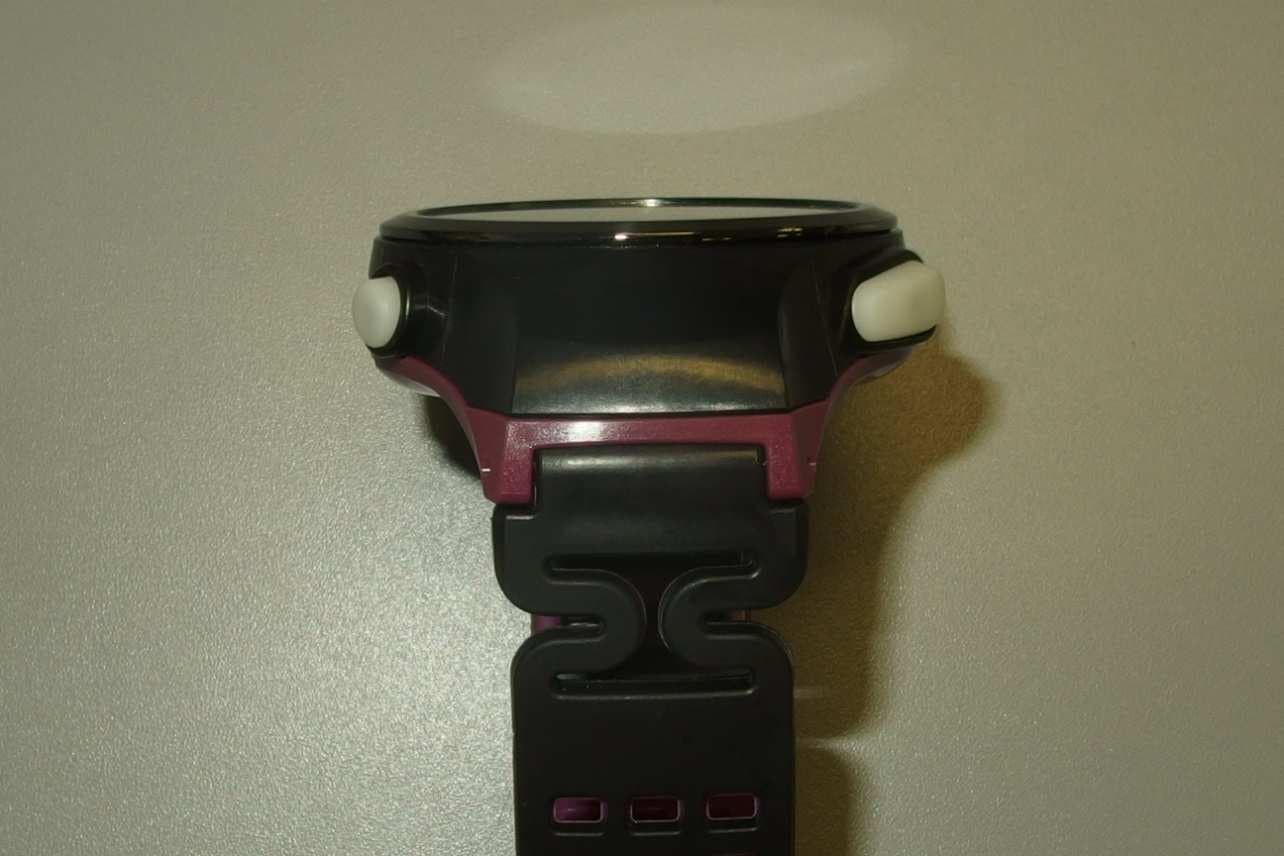
Click to zoom
Application Details
- Equipment Class
- DTS - Digital Transmission System
- Date of Grant
- Aug 07, 2014
- Application Purpose
- Original Equipment
- Date of Application
- Aug 06, 2014
- Equipment Note
- GPS Sports Monitor
- Frequency Range
- 2402.00000000 - 2480.00000000
- Company
- Seiko Epson Corporation
- Country
- Japan
Documents & Files
Document Text
Text extracted from the exhibit documents filed with the FCC. Open a document above to read the original.
Users Manual
Introduction Thank you very much for purchasing this GPS Sports Monitor "RUNSENSE". To use the device correctly, make sure you read the User Manual along with the supplied Quick Start Guide. Keep the supplied Quick Start Guide handy to help you resolve any problems. By using a built-in GPS sensor and stride sensor, this device can measure running distance, pace, elapsed time, altitude, and calories burnt. You can also upload recorded data to a dedicated Web site allowing you to look back over previous workouts. You can plan more effectively for a more enjoyable running experience. Descriptions in the User Manual c Important Indicates things you must or must not do. Ignoring these instructions or mishandling this device could cause malfunction or operational problems to the device. Note Indicates additional explanations and related information. Menu Name Indicates menu items displayed on the screen of the device. A/B/C/D Indicates the device buttons. U Indicates related pages. Click the link in blue text to display the related page. Trademarks EPSON and EXCEED YOUR VISION are registered trademarks of the Seiko Epson Corporation. Microsoft and Windows are registered trademarks of the Microsoft Corporation in the United States of America and other countries. The Bluetooth ® word mark and logos are the registered trademarks owned by Bluetooth SIG, Inc. and any use of such marks by the Seiko Epson Corporation is under license. Other product names are the trademarks or registered trademarks of their respective companies. Caution: ❏Unapproved copying of part or all of this guide is strictly forbidden. ❏The content of this guide is subject to change without prior notice. ❏Although every effort has been made to ensure the accuracy of this guide, contact us if you have any questions or notice any errors in descriptions in the content of this guide. ❏Despite the preceding clause, we cannot accept any responsibility for mishandling due to errors in this guide. ❏We cannot accept any responsibility for malfunctions and so on that occur due to ignoring the content of this guide, the device being handled inappropriately, repairs or modifications performed by a third party that is not our company or appointed by our company. User Manual Introduction 2 Features Heart rate measurement is only possible with the built-in sensor. This allows you to easily perform heart rate training for running or jogging. Chronograph function Allows you to measure running data such as distance and time. You can measure split and lap times, as well as using the GPS signal to measure distance and pace. U “Measuring Time, Distance, and Speed (Chronograph Function)” on page 38 Split Time: Elapsed time from the start Lap time: Time taken for each lap You can use the history screen to check recorded measurement data. U “Checking Measurement Data” on page 63 Interval function Allows you to perform interval training. Interval training: Training method in which you repeat sets of light and hard exercise to increase your athletic ability. An exercise menu is created using combinations of hard (sprint) and light (recovery) exercise. An alarm sounds when it is time to change between sprinting and recoverying. U “Setting a Time and Distance for Hard and Light Workouts(Interval Function)” on page 43 Goal function (timed race) Allows you to set a time as your goal and measure the time taken until that goal is reached. You can exercise while checking the elapsed time. You can also calculate the estimated distance until the goal is reached. U “Measure until the time or distance set in advance is reached (Goal function)” on page 51 You can use the history screen to check recorded measurement data. U “Checking Measurement Data” on page 63 User Manual Introduction 3 Goal function (distance race) Allows you to set a distance as your goal and measure the time taken until that goal is reached. You can exercise while checking the distance. You can also calculate the estimated time until the goal is reached. U “Measure until the time or distance set in advance is reached (Goal function)” on page 51 You can use the history screen to check recorded measurement data. U “Checking Measurement Data” on page 63 Measure set. Allows you to change the measurement settings. ❏Automatically records laps when a time or distance set in advance has been reached (AT Lap function) U “Recording Laps Automatically (AT Lap Function)” on page 56 ❏Automatically stops measuring when you stop running, and resumes when you continue running (AT Pause function) U “Automatically Start/Stop Measuring (AT Pause Function)” on page 58 ❏Sets and measures the target time for one kilometer (Target Pace function) U “Setting a Pace and Measuring (Target Pace Function)” on page 60 ❏Measuring Heart Rate (HR function) U “Measuring Heart Rate” on page 67 ❏You can change the items and layout of the measurement screen display (Screen settings function) U “Screen” on page 104 ❏Tap to display a set function (Tap function) U “Tap” on page 20 User Manual Introduction 4 Settings Allows you to change the settings for the device. ❏Communicates with external devices (Communication function) U “Comm. Settings” on page 101 ❏Inverts the screen's display (Invert function) U “Sys. Settings” on page 102 ❏Adjusts the screen's contrast (Adjust contrast function) U “Sys. Settings” on page 102 ❏Turns on the light automatically when the screen changes (Auto Light function) U “Sys. Settings” on page 102 ❏Sets an alarm (Alarm function) U “Sys. Settings” on page 102 ❏Turns off operation tones (Operation Tones function) U “Sys. Settings” on page 102 ❏Resets configuration information in the device's memory (Initialize function) U “Sys. Settings” on page 102 Other features ❏Supports the Quasi-Zenith Satellite System (QZSS). U “Supports the Quasi-Zenith Satellite System” on page 33 ❏You can measure pitch and stride using the built-in stride sensor. U “Educating Your Stride Sensor” on page 34 ❏You can skip GPS position…
Text truncated - open the document above for the full version.
External Photos
Front Rear Right Left Top Bottom
ID Label/Location Info
The labeling(top) The labeling(bottom)
Internal Photos
Front Rear Antenna
Internal Photos
State within the case
RF Exposure Info
UL Japan, Inc. Shonan EMC Lab. 1-22-3 Megumigaoka, Hiratsuka-shi, Kanagawa-ken, 259-1220 JAPAN Telephone: +81 463 50 6400 Facsimile: +81 463 50 6401 July 18, 2014 UL Japan, Inc. 1-22-3 Megumigaoka, Hiratsuka-shi, Kanagawa-ken, 259-1220 JAPAN FCC ID: BKMAP006 To whom it ma y concern, We, UL Japan, Inc., hereb y declare that GPS Sports Monitor, model : SF-810 (FCC ID: BKMAP006) of SEIKO EPSON CORPORATION is exempt from RF exposure SAR evaluation as its outp u power meets the exclusion limits stated in FCC Part 2 §2.1093. KDB 447498D01 (v05r02) has the following exclusion for portable devices: The 1g and 10g SAR test exclusion thresholds for 100 MHz to 6 GHz at test separation distances < 50 mm are determined by: [(measured maximum equivalent isotropic radiated power(mW))/(Minimum separation distance(mm))]•[ √ f (GHz)] < 3.0 for 1g SAR and <7.5 for 10g extremity SAR where • f(GHz) is the RF channel transmit frequency in GHz • Power and distance are rounded to the nearest mW and mm before calculation • The result is rounded to one decimal place for comparison The test exclusions are a pplicable only when the minimum test separation distance is < 50 mm and for transmission frequencies between 100 MHz and 6 GHz. When the minimum test separation distance is < 5 mm, a distance of 5 mm is applied to determine SAR test exclusion. This device f = 2.48 GHz, distance = 5mm (minimum separation distance: 5 mm was used in the calculation) and the measured maximum equivalent isotropic radiated power was 1 mW So for this device: 1 mW [measured maximum equivalent isotropic radiated power] / 5 mm [minimum separation distance] * ( √ 2.48) = 0.3 * caliculation: measured maximum equivalent isotropic radiated power = 10 ^ ( ( maximum peak output power [dBm] + antenna gain [dBi] ) / 10) = 10 ^ ( ( -2.48 [dBm] + 1.5 [dBi] ) / 10) *This is less than 3.0, so no SAR is required. Thank you for your attention to this matter. Toyokazu Imamura Leader Consumer Technology Division UL Japan, Inc.
Test Report
Test report No. : 10353836S-B Page : 1 of 25 Issued date : July 18, 2014 Revised date : July 30, 2014 FCC ID : BKMAP006 UL Japan, Inc. Shonan EMC Lab. 1-22-3 Megumigaoka, Hiratsuka-shi, Kanagawa-ken, 259-1220 JAPAN Telephone : +81 463 50 6400 Facsimile : +81 463 50 6401 RADIO TEST REPORT Test Report No.: 10353836S-B Applicant : SEIKO EPSON CORPORATION Type of Equipment : GPS Sports Monitor Model No. : SF-810 FCC ID : BKMAP006 Test regulation : FCC Part15 Subpart C: 2014 Test result : Complied 1. This test report shall not be reproduced in full or partial, without the written approval of UL Japan, Inc. 2. The results in this report apply only to the sample tested. 3. This sample tested is in compliance with the limits of the above regulation. 4. The test results in this test report are traceable to the national or international standards. 5. This test report must not be used by the customer to claim product certification, approval, or endorsement by any agency of the Federal Government. 6. The opinions and the interpretations to the result of the description in this report are outside scopes where UL Japan has been accredited. Date of test: June 24 to 27, 2014 Representative test engineer: Tatsuya Arai Engineer Consumer Technology Division Approved by : ______________________________ Toyokazu Imamura Leader Consumer Technology Division RTL02610 The testing in which "Non-accreditation" is displayed is outside the accreditation scopes in UL Japan. There is no testing item of "Non-accreditation". 13-EM-F0429 Test report No. : 10353836S-B Page : 2 of 25 Issued date : July 18, 2014 Revised date : July 30, 2014 FCC ID : BKMAP006 UL Japan, Inc. Shonan EMC Lab. 1-22-3 Megumigaoka, Hiratsuka-shi, Kanagawa-ken, 259-1220 JAPAN Telephone : +81 463 50 6400 Facsimile : +81 463 50 6401 REVISION HISTORY Original Test Report No.: 10353836S-B Revision Test report No. Date Page revised Contents - (Original) 10353836S-B July 18, 2014 - - 1 10353836S-B July 28, 2014 4 5 Correction of Antenna name Addition of remark about compliance with FCC Part 15 Subpart B. 2 10353836S-B July 30, 2014 4 Correction of erroneous description about FCC 15.31 (e) complying. Test report No. : 10353836S-B Page : 3 of 25 Issued date : July 18, 2014 FCC ID : BKMAP006 UL Japan, Inc. Shonan EMC Lab. 1-22-3 Megumigaoka, Hiratsuka-shi, Kanagawa-ken, 259-1220 JAPAN Telephone : +81 463 50 6400 Facsimile : +81 463 50 6401 Contents Page SECTION 1: Customer information ........................................................................................ 4 SECTION 2: Equipment under test (E.U.T.) .......................................................................... 4 SECTION 3: Test specification, procedures & results ........................................................... 5 SECTION 4: Operation of E.U.T. during testing .................................................................... 7 SECTION 5: Radiated emission ............................................................................................... 8 SECTION 6: Out of band emissions (Antenna port conducted) ......................................... 10 SECTION 7: 6dB bandwidth & Occupied bandwidth (99%) .............................................. 10 SECTION 8: Maximum peak conducted output power ....................................................... 10 SECTION 9: Maximum power spectral density ................................................................... 10 Contents of APPENDIXES ....................................................................................................... 11 APPENDIX 1: Data of Radio tests .......................................................................................... 12 APPENDIX 2: Test instruments ............................................................................................. 24 APPENDIX 3: Photographs of test setup ............................................................................... 25 Test report No. : 10353836S-B Page : 4 of 25 Issued date : July 18, 2014 Revised date : July 30, 2014 FCC ID : BKMAP006 UL Japan, Inc. Shonan EMC Lab. 1-22-3 Megumigaoka, Hiratsuka-shi, Kanagawa-ken, 259-1220 JAPAN Telephone : +81 463 50 6400 Facsimile : +81 463 50 6401 SECTION 1: Customer information Company Name : SEIKO EPSON CORPORATION Address : 281 Fujimi, Fujimi-machi, Suwa-gun, Nagano-ken 399-0293 Japan Telephone Number : +81-266-61-0618 Facsimile Number : +81-266-61-2045 Contact Person : Junichi Kiryu SECTION 2: Equipment under test (E.U.T.) 2.1 Identification of E.U.T. Type of Equipment : GPS Sports Monitor Model Number : SF-810 Serial Number : Refer to Section 4.2 Rating : DC3.7V Country of Mass-production : Japan Condition of EUT : Production prototype (Not for Sale: This sample is equivalent to mass-produced items.) Receipt Date of Sample : June 20, 2014 Modification of EUT : The test lab did not make the modification to the EUT supplied from the customer to have it pass the tests. 2.2 Product description Model: SF-810 (referred to as the EUT in this report) is a GPS Sports Monitor. Clock frequency(ies) in the system : 26MHz, 32MHz, 32.768kHz, 48MHz, 32kHz, 16MHz <Radio part> Equipment type : Transceiver Frequency of operation : 2402-2480MHz Bandwidth / Channel spacing : 1MHz / 2MHz Type of modulation : GFSK Antenna type / Antenna connector type : Chip Antenna / None Antenna gain : 1.5dBi ITU code : F1D Operation temperature range : -5 to +50 deg.C FCC 15.31 (e) The EUT is a battery-operated device and test was performed with the full-charged battery. Therefore, the EUT complies with the requirement. FCC 15.203 It is impossible for end users to replace the antenna, because the antenna is mounted inside of the EUT. Therefore, the equipment complies with the antenna requirement. Test report No. : 10353836S-B Page : 5 of 25 Issued date : July 18, 2014 Revised date : July 28, 2014 FCC ID : BKMAP006 UL Japan, Inc. Shonan EMC Lab. 1-22-3 Megumigaoka, Hiratsuka-shi, Kanagawa-ken, 259-1220 JAPAN Telephone : …
Text truncated - open the document above for the full version.
Test Setup Photos
UL Japan, Inc. Shonan EMC Lab. 1-22-3 Megumigaoka, Hiratsuka-shi, Kanagawa-ken, 259-1220 JAPAN Telephone : +81 463 50 6400 Facsimile : +81 463 50 6401 APPENDIX 3: Photographs of test setup Radiated emission (front) (rear, below 1GHz) (rear, above 1GHz) Test Report No. : 10353836S-B 24 of 25 UL Japan, Inc. Shonan EMC Lab. 1-22-3 Megumigaoka, Hiratsuka-shi, Kanagawa-ken, 259-1220 JAPAN Telephone : +81 463 50 6400 Facsimile : +81 463 50 6401 Pre-check of the worst position X-axis Y-axis Z-axis Test Report No. : 10353836S-B 25 of 25
Contact Information
Applicant
Yoshinobu Murakami(CS/Quality Assurance Department)
Technical Contact
UL Japan, Inc.Toyokazu Imamura
[email protected]81-463-50-6400
1-22-3 Megumigaoka, Hiratsuka-shi · Kanagawa-ken · Japan
Test Firm
UL Japan, Inc. Shonan EMC EMC Lab.Tetsuya Hashimoto
Technical Specifications
| # | Rule Parts | Frequency Range | Power Output |
|---|---|---|---|
| 1 | 15C | 2.40 GHz - 2.48 GHz | 600.00 µW |
Other Applications from Seiko Epson Corporation
BKMAE-N37663U02
Jul 17, 2024WLAN BT Module
Equipment Class
NII - Unlicensed National Information Infrastructure TX
BKMAE-DTP9757
Mar 04, 2023Streaming Media Player
Equipment Class
DSS - Part 15 Spread Spectrum Transmitter
BKMAE-WH55B
Jul 18, 2022REMOTE CONTROLLER
Equipment Class
DTS - Digital Transmission System
BKMAE-WH5674B
Jul 17, 2022REMOTE CONTROLLER
Equipment Class
DTS - Digital Transmission System
BKMFBM381A
Jul 10, 2022Printer
Equipment Class
NII - Unlicensed National Information Infrastructure TX