BOUSCD5011.9GHz DECT Baby Monitor - Baby Unit
Philips Consumer Lifestyle
Click to zoom
Application Details
- Equipment Class
- PUB - Part 15 Unlicensed PCS Base Station
- Date of Grant
- May 28, 2014
- Application Purpose
- Original Equipment
- Date of Application
- May 27, 2014
- Equipment Note
- 1.9GHz DECT Baby Monitor - Baby Unit
- Frequency Range
- 1921.53600000 - 1928.44800000
- Company
- Philips Consumer Lifestyle
- Country
- Hong Kong
Documents & Files
Document Text
Text extracted from the exhibit documents filed with the FCC. Open a document above to read the original.
Users Manual
PORTUGUÊS DO BRASIL Introdução Acesse www.philips.com/welcome para registrar seu produto e consultar o manual do usuário. INSTRUÇÕES IMPORTANTES DE SEGURANÇA Algumas das seguintes informações podem não se aplicar particularmente ao seu produto; entretanto, ao utilizar a babá eletrônica, algumas precauções básicas de segurança devem sempre ser seguidas para reduzir o risco de fogo, choque elétrico e lesão às pessoas, incluindo: 1 Leia estas instruções e guarde-as. 2 Considerar e seguir todos os avisos. 3 Não utilizar este aparelho próximo à água. Limpe apenas com um pano seco. 4 Não obstruir nenhuma entrada de ar. Realizar a instalação de acordo com as instruções do fabricante. 5 A instalação não deve ser realizada perto de fontes de calor, como radiadores, grades de passagem de ar quente, fogões ou outros aparelhos (incluindo amplificadores) que geram calor. 6 Proteger o cabo de energia para que não seja pisado nem comprimido, principalmente na parte dos plugues e das tomadas elétricas e na parte em que os plugues e as tomadas saem do aparelho. 7 Usar apenas os acessórios especificados pelo fabricante. 8 Desconectar o aparelho durante trovões ou quando o aparelho não for utilizado por um longo período de tempo. 9 Solicitar qualquer manutenção a pessoas qualificadas. A manutenção é necessária quando o aparelho é danificado de alguma maneira, tal como danos ao cabo de energia ou ao plugue, líquido derramado ou queda de objetos no aparelho, exposição do aparelho a chuva ou umidade, funcionamento anormal ou queda do aparelho. Verifique o cabo de energia periodicamente para evitar danos potenciais, tais como desgaste ou cortes no cabo. Para informações sobre manutenção, consulte o capítulo “Garantia e suporte”. 10 O aparelho deve ser usado apenas conforme descrito neste manual. 11 Desligar o produto da tomada elétrica antes de limpá-lo. Não utilizar produtos de limpeza líquidos ou em aerossol. 12 Os produtos não devem ser utilizados durante banhos na banheira, no chuveiro ou na piscina. A imersão do produto em água pode causar choque elétrico. 13 Todas as marcações necessárias estão localizadas no compartimento da bateria da unidade dos pais e no interior do painel traseiro da unidade do bebê. - AVISO - RISCO DE ESTRANGULAMENTO: as crianças podem se ESTRANGULAR com os cabos. Mantenha o cabo fora do alcance das crianças (mais de 1 metro). Não retire esta etiqueta (fig. 1). GUARDE ESTAS INSTRUÇÕES CUIDADO! Cuidado: Evite risco de explosão, choque elétrico, curto-circuito ou vazamento -O aparelho não deve ser exposto a respingos, e nenhum objeto contendo líquidos, como vasos, deve ser colocado sobre ele. -Utilize apenas o adaptador recomendado pela Philips (modelo S003PU0600050). -Para evitar choque elétrico, não abra a estrutura da unidade do bebê ou dos pais, exceto o compartimento da bateria da unidade dos pais. -Assegure-se de que as suas mãos estejam secas ao inserir ou substituir as pilhas ou ao manusear os cabos de energia ou os plugues elétricos. -Para a unidade dos pais, utilize apenas pilhas do tipo especificado neste manual do usuário. Há risco de explosão se as pilhas forem substituídas incorretamente. -A unidade dos pais não possui função de carregamento. -Para evitar explosão ou vazamento da pilha, que pode danificar a babá eletrônica e causar queimaduras ou irritação na pele e nos olhos: -não recarregue pilhas não recarregáveis, -insira as pilhas na direção correta (+/-) -retire as pilhas caso você fique sem usar o produto por mais de 30 dias -mantenha as pilhas longe de calor excessivo, como luz solar, fogo etc. -não deixe pilhas descarregadas na unidade dos pais. -Para evitar que as pilhas esquentem ou liberem materiais tóxicos, hidrogênio ou oxigênio, não: -carregue-as em excesso, -provoque curto-circuito, -inverta a carga ou -danifique as pilhas -Para manipular pilhas danificadas ou com vazamento, use luvas de proteção para proteger a pele. Limpeza e manutenção -Não use spray ou produtos líquidos de limpeza. -Desconecte a unidade dos pais e a unidade do bebê antes de limpá-las. -Limpe a unidade dos pais, a unidade do bebê e os adaptadores com um pano seco. Precauções de armazenamento -Retire as pilhas da unidade dos pais se você não estiver utilizando a unidade há mais de um mês. -Guarde a unidade dos pais, o respectivo adaptador e a unidade do bebê em local fresco e seco. Compra de acessórios Para comprar acessórios ou peças avulsas, acesse www.shop.philips.com/service ou dirija-se até um revendedor Philips. Você também pode entrar em contato com a Central de Atendimento ao Cliente Philips em seu país (veja o folheto de garantia mundial para obter os detalhes de contato). Garantia e suporte Caso você precise de informações ou suporte, visite o site www.philips.com/support ou leia o folheto de garantia mundial à parte. Reciclagem -Este símbolo significa que você não deve descartar o aparelho junto a resíduos domésticos comuns. Descarte-o em um ponto de coleta de aparelhos elétricos. O descarte correto ajuda a preservar o ambiente (fig. 10). -Este cesto de lixo marcado com um xis significa que o aparelho contém pilhas descartáveis que não podem ser descartadas junto a resíduos domésticos comuns. Descarte as pilhas em um ponto de coleta oficial. O descarte correto de pilhas ajuda a preservar o ambiente (fig. 11). ESPAÑOL (MEXICO) Introducción Vaya a www.philips.com/welcome para registrar su producto y leer el manual de usuario detallado. INSTRUCCIONES IMPORTANTES DE SEGURIDAD Es posible que parte de la información que se indica a continuación no se aplique a su producto específico. No obstante, cuando se utiliza un monitor para bebés es preciso observar las siguientes precauciones de seguridad básicas para reducir riesgos de incendio, descargas eléctricas y accidentes: 1 Lea estas instrucciones y consérvelas. 2 Preste atención y siga todas las advertencias. 3 No utilice este aparato cerca del agua. Utilice únicamente un paño seco para la limpieza. 4 No obstruya ningún orificio d…
Text truncated - open the document above for the full version.
Cover Letter(s)
_ _ Date: 2014-04-24 Appendix B1 Letter of Agency for FCC Certification To whom it may concern, Letter of Agency We the undersigned do hereby authorize Intertek Testing Services (Mr. Ken Sit/ Mr. Melvin Nip) to act on our behalf in front of the Federal Communications Commission with respect to all matters relating to certification of equipment under Part 15 and/or Part 95 of the FCC Rules until further notice. I further certify that no party (as defined in §1.2002(b) of CFR 47, 2004) to this application, including myself, is subject to a denial of federal benefits, that includes FCC benefits, pursuant to Section 5301 of the Anti-Drug Abuse Act of 1988, 21 U.S.C., 862. Agency Agreement Expiration Date: ___23 June, 2014_____ Regards, Sincerely, Benson Lai Manager, Safety & Compliance Tel: 852 3468-3267 Philips Consumer Lifestyle B.V. Innovation Site Eindhoven, 5656 AE, Eindhoven, The Netherlands, www.philips.com
Cover Letter(s)
_ _ Date: 2014-04-24 To whom it may concern, Request for Permanent Confidentiality Under FCC Part 15 Certification - BU FCC ID: BOUSCD501 Request is hereby submitted by Philips Consumer Lifestyle to withhold permanently from public review certain portions of the application for equipment certification for the referenced FCC identifiers. This request for confidentiality is made pursuant to 47 CFR § 0.457(d) and 0.459 of the FCC Rules. In particular, the following sections of the application are to be kept permanently confidential and Philips Consumer Lifestyle reserves the right to discern which parties can obtain access to these information: • Schematics • Detailed Block diagrams • Detailed Operational/Functional Description The rationale for request for confidentiality is as followings: This information represents intellectual property of Philips Consumer Lifestyle and it is subject to competition. We have invested considerable time and materials in research and development to produce the referenced product. Disclosure of the permanently confidential portions of this application to competitors would not only give them significant competitive advantages in developing similar products, but would also disclose successful implementation of unpublished, leading edge technology developed by us. If you have questions or need further information, please contact the undersigned. Regards, Benson Lai Manager, Safety & Compliance Tel: 852 3468-3267 Philips Consumer Lifestyle B.V. Innovation Site Eindhoven, 5656 AE, Eindhoven, The Netherlands, www.philips.com
External Photos
INTERTEK TESTING SERVICES External Photos FCC ID: BOUSCD501 IC: 135M-SCD501external photos - 1 of 1 Job Number HK14011092 Job Number HK14011092
ID Label/Location Info
I.T .E. 4009895
ID Label/Location Info
_ _ Date: 2014-04-24 To whom it may concern, Label Location Justification-BU FCC ID: BOUSCD501 Request is hereby submitted by Philips Consumer Lifestyle to request an alternative method of positively identifying the equipment, pursuant to 47 CFR § 2.925(f) of the FCC Rules. The FCC identifier for baby unit will be placed in the battery compartment and the following requirements are confirmed to meet: a) The FCC identifier will visible at the time of purchase, by either of the following approaches: • Marketing the device without the battery installed, or • Providing instruction (stated on the box, user manual, or additional documentation) directing the user as to where to find the FCC label. b) The user accessible area will not require any special tools for access and the FCC label will not be placed on a removable part. The user manual has already included the FCC statements, pursuant to 47 CFR § 15.19(a)(3), 15.21 and 15.105(b). If you have questions or need further information, please contact the undersigned. Sincerely, Benson Lai Manager, Safety & Compliance Tel: 852 3468-3267 Philips Consumer Lifestyle B.V. Innovation Site Eindhoven, 5656 AE, Eindhoven, The Netherlands, www.philips.com
Internal Photos
INTERTEK TESTING SERVICES Internal photos FCC ID: BOUSCD501 IC: 135M-SCD501 internal photos - 1 of 4 Baby Unit assem bly Baby Unit Main PCB comp side INTERTEK TESTING SERVICES Internal photos FCC ID: BOUSCD501 IC: 135M-SCD501 internal photos - 2 of 4 Baby Unit Ma in PCB solder side Baby Unit - Antenna INTERTEK TESTING SERVICES Internal photos FCC ID: BOUSCD501 IC: 135M-SCD501 internal photos - 3 of 4 Baby Unit key PCB front side (1) Baby Unit key PCB front side (2) INTERTEK TESTING SERVICES Internal photos FCC ID: BOUSCD501 IC: 135M-SCD501 internal photos - 4 of 4 Baby Unit key PCB rear side Baby Unit Oscillator PCB comp side
RF Exposure Info
Report No.: 14011094HKG-002 Page 1 of 74 - The test report only allows to be revised within the retention period unless further standard or the requirement was noticed. - This report is for the exclusive use of Intertek's Client and is provided pursuant to the agreement between Intertek and its Client. Intertek's responsibility and liability are limited to the terms and conditions of the agreement. Intertek assumes no liability to any party, other than to the Client in accordance with the agreement, for any loss, expense or damage occasioned by the use of this report. Only the Client is authorized to permit copying or distribution of this report and then only in its entirety. Any use of the Intertek name or one of its marks for the sale or advertisement of the tested material, product or service must first be approved in writing by Intertek. The observations and test results in this report are relevant only to the sample tested. This report by itself does not imply that the material, product, or service is or has ever been under an Intertek certification program. Intertek Testing Services Hong Kong Ltd. 2/F., Garment Centre, 576 Castle Peak Road, Kowloon, Hong Kong. Tel: (852) 2173 8888 Fax: (852) 2785 5487 Website: www.hk.intertek-etlsemko.com Specific Absorption Rate (SAR) Evaluation Report For Baby Monitor – Baby Unit Model Number: SCD501 Brand Name: Philips FCC ID: BOUSCD501 Test Report: 14011094HKG-002 Date of Report: 28 March, 2014 Prepared for Philips Consumer Lifestyle 5/F, Philips Electronics Building, 5 Science Park East Avenue, Shatin, New Territories, Hong Kong Prepared and Checked by: Approved by: Chan Chun Foo, Bike Senior Lead Engineer Date: 28 March, 2014 Nip Ming Fung, Melvin Assistant Manager Date: 28 March, 2014 Report No.: 14011094HKG-002 Page 2 of 74 Intertek Testing Services Hong Kong Ltd. 2/F., Garment Centre, 576 Castle Peak Road, Kowloon, Hong Kong. Tel: (852) 2173 8888 Fax: (852) 2785 5487 Website: www.hk.intertek-etlsemko.com Table of Contents 1 Test Result Summary.................................................................................................. 3 2 General Information..................................................................................................... 4 3 Measurement System Description and Procedure ...................................................... 6 4 Tissue Verificaiton ..................................................................................................... 14 5 SAR Measurement System Verification .................................................................... 15 6 SAR Evaluation ......................................................................................................... 17 7 Test Insturments........................................................................................................ 22 8 Measurement Uncertainty ........................................................................................ 23 9 E-Field Probe and Dipole Antenna Calibration ......................................................... 23 10 References ............................................................................................................... 23 APPENDIX A – System Verification Data...................................................................... 24 APPENDIX B – SAR Evaluation Data ........................................................................... 25 APPENDIX C – E-Field Probe and Dipole Antenna Calibration .................................... 27 APPENDIX D – SAR Tissue Specification .................................................................... 73 APPENDIX E – SAR System Validation........................................................................ 74 Report No.: 14011094HKG-002 Page 3 of 74 Intertek Testing Services Hong Kong Ltd. 2/F., Garment Centre, 576 Castle Peak Road, Kowloon, Hong Kong. Tel: (852) 2173 8888 Fax: (852) 2785 5487 Website: www.hk.intertek-etlsemko.com 1. Test Result Summary The maximum spatial peak SAR value for the sample device averaged over 1g was found to be: Highest Reported SAR Band Operating Mode TX Frequency (MHz) 1g Body 1.9GHz Voice Transmission 1921.536 – 1928.448 0.055 W/kg This wireless portable device has been shown to be capable of compliance for localized specific absorption rate (SAR) for uncontrolled environment / general population exposure limits specified in ANSI/IEEE C95.1. Applicant : Philips Consumer Lifestyle Applicant Address : 5/F, Philips Electronics Building, 5 Science Park East Avenue, Shatin, New Territories, Hong Kong Model : SCD501 Brand Name : Philips EUT Description : Baby Monitor – Baby Unit Exposure Category : General Population/Uncontrolled Exposure Test Device : Production Unit Date of Sample Received : 28 January, 2014 Date of Test : 19 February. 2014 to 20 February, 2014 Date of Report : 28 March, 2014 Place of Testing : Intertek Testing Services Hong Kong 5/F, Garment Centre, 576 Castle Peak Road, Kowloon, Hong Kong Temperature: +20 to 25°C Environmental Conidtions : Humidity 30 to 70% Test Specification : ANSI/IEEE C95.1: 1992 IEEE Std 1528: 2003 IEEE Std 1528a: 2005 FCC KDB Publication 447498 D01 v05r02 FCC KDB Publication 865664 D01 v01r03 FCC KDB Publication 865664 D02 v01r01 Report No.: 14011094HKG-002 Page 4 of 74 Intertek Testing Services Hong Kong Ltd. 2/F., Garment Centre, 576 Castle Peak Road, Kowloon, Hong Kong. Tel: (852) 2173 8888 Fax: (852) 2785 5487 Website: www.hk.intertek-etlsemko.com 2. General Information 2.1. Description of Equipment under test (EUT) Nominal and Maximum Output Power Specifications The EUT operates using the following maximum and nominal output power specifications. SAR values were scaled to the maximum allowed power to determine compliance per KDB Publication 447498. Output Power Band Operating Mode TX Frequency (MHz) Nominal (dBm) Maximum (dBm) 1.9 GHz Voice Transmission 1921.536 – 1928.448 19 dBm 20 dBm EUT Description : Baby Monitor – Baby Unit Model : SCD501 Brand…
Text truncated - open the document above for the full version.
RF Exposure Info
INTERTEK TESTING SERVICES FCC ID: BOUSCD501 Page of 1 1 Front surface with 0mm separation Back surface with 0mm separation
RF Exposure Info
INTERTEK TESTING SERVICES FCC ID: BOUSCD501 Page 1 of 1 EUT Photo Figure 1 – Baby Unit front view Figure 2 – Baby Unit back view
Test Report
Issuing Laboratory: Intertek Testing Services Hong Kong Limited Hong Kong Accreditation Service (HKAS) has accredited this laboratory under the Hong Kong Laboratory Accreditation Scheme (HOKLAS) for specific laboratory activities as listed in the HOKLAS directory of accredited laboratories. The results shown in this report were determined by this laboratory in accordance with its terms of accreditation. Job Number: 14011092HKG-001 Page 1 of 61 FCC ID: BOUSCD501 IC: 135M-SCD501 Intertek Testing Services Hong Kong Ltd. 2/F., Garment Centre, 576 Castle Peak Road, Kowloon, Hong Kong. Tel: (852) 2173 8888 Fax: (852) 2785 5487 Website: www.hk.intertek-etlsemko.com GENERAL INFORMATION Applicant Name: Philips Consumer Lifestyle Applicant Address: 5/F, Philips Electronics Building, 5 Science Park East Avenue, Shatin, New Territories, Hong Kong FCC Specification Standard: FCC Part 15, October 1, 2012 Edition FCC ID: BOUSCD501 FCC Model(s): SCD501 IC Specification Standard: RSS-213 Issue 2, December 2005 RSS-Gen Issue 3, December 2010 IC: 135M-SCD501 IC Model(s): SCD501 Type of EUT: Unlicensed Personal Communications Service Devices Description of EUT: 1.9GHz Digital Modulation Baby Monitor - Baby Unit Serial Number: N/A Sample Receipt Date: January 28, 2014 Date of Test: February 08-28, 2014 Report Date: May 09, 2014 Environmental Conditions: Temperature: +10 to 40°C Humidity: 10 to 90% Issuing Laboratory: Intertek Testing Services Hong Kong Limited Hong Kong Accreditation Service (HKAS) has accredited this laboratory under the Hong Kong Laboratory Accreditation Scheme (HOKLAS) for specific laboratory activities as listed in the HOKLAS directory of accredited laboratories. The results shown in this report were determined by this laboratory in accordance with its terms of accreditation. Job Number: 14011092HKG-001 Page 2 of 61 FCC ID: BOUSCD501 IC: 135M-SCD501 Intertek Testing Services Hong Kong Ltd. 2/F., Garment Centre, 576 Castle Peak Road, Kowloon, Hong Kong. Tel: (852) 2173 8888 Fax: (852) 2785 5487 Website: www.hk.intertek-etlsemko.com Table of Contents 1.0 Test Results Summary & Statement of Compliance.............................................. 5 1.1 Summary of Test Results ....................................................................................... 5 1.2 Statement of Compliance ....................................................................................... 7 2.0 General Description................................................................................................. 9 2.1 Product Description ................................................................................................. 9 2.2 Technical Description .............................................................................................. 9 2.3 Test Methodology.................................................................................................... 9 2.4 Test Facility............................................................................................................. 9 3.0 System Test Configuration.................................................................................... 11 3.1 Justification ........................................................................................................... 11 3.2 Conducted Emission Test Configuration ................................................................ 12 3.3 Conducted Monitoring and Operational Test Configuration .................................... 12 3.4 EUT Exercising Software....................................................................................... 12 3.5 Details of EUT and Description of Accessories...................................................... 13 3.6 Measurement Uncertainty ..................................................................................... 13 4.0 Measurement Results............................................................................................ 15 4.1 Antenna Requirement........................................................................................... 15 4.2 Digital Modulation Techniques............................................................................... 15 4.3 Emission Bandwidth.............................................................................................. 16 4.4 Directional Gain of the Antenna ............................................................................. 19 4.5 Peak Transmit Power ............................................................................................ 20 4.6 Power Spectral Density ......................................................................................... 23 4.7 Automatic Discontinuation of Transmission............................................................ 26 4.8 Unwanted Emission Inside the Sub-Band .............................................................. 27 4.9 Emissions Outside the Sub-Band .......................................................................... 31 4.9.1 Radiated Emissions Configuration Photographs ................................................. 32 4.9.2 Radiated Emissions Data ................................................................................... 32 4.9.3 Field Strength Calculation................................................................................... 36 4.9.4 Average Factor Calculation and Transmitter ON Time Measurements ................ 37 4.10 AC Power Line Conducted Emissions ................................................................. 38 4.10.1 AC Power Line Conducted Emissions Configuration Photographs .................... 38 4.10.2 AC Power Line Conducted Emissions Data ...................................................... 38 4.11 Frame Repetition Stability .................................................................................. 41 4.12 Frame Period and Jitter ...................................................................................... 42 4.13 Carrier Frequency Stabili…
Text truncated - open the document above for the full version.
Test Report
Parent PHITIPS L Circumstances 2 Switch-off compa nion device 3 On hook by companion device 4 Remove power from companion device 5 Switch-off device 6 On hook device A B c NA Remove power from device Connection is terminated and, transmission ceases. Connection is terminated but device transmits control or signaling information. Connection is terminated but companion device transmits control or signaling information. Not applicable represents the device does not contain a hook switch or a power off switch. 5. For FCC, Upper Monitoring Threshold of baby unit declared by manufacturer is - 60.9dBm Dalei 2014-04-24 Page: 7 lf you have questions or need further information, please contact the undersigned. Reaction of Baby unit Benson Lai Manager, Safety B Tel: 852 3468- NA B A NA A
Test Setup Photos
INTERTEK TESTING SERVICES The Worst Case Configuration Photographs - Mode: Transmission FCC ID: BOUSCD501 IC: 135M-SCD501 config photos (radiated emission) - 1 of 1 Radiated Emission Front View Rear View INTERTEK TESTING SERVICES The Worst Case Configuration Photographs – Mode: Nightlight On and Talk FCC ID: BOUSCD501 IC: 135M-SCD501 config photos (conducted emission) - 1 of 2 Conducted Emission Front View Right Side View INTERTEK TESTING SERVICES The Worst Case Configuration Photographs – Mode: Nightlight On and Talk FCC ID: BOUSCD501 IC: 135M-SCD501 config photos (conducted emission) - 2 of 2 Conducted Emission Left Side View
Contact Information
Applicant
Tee Wee Jaw(Director, Project Management)
Technical Contact
Intertek Testing Services Hong Kong Ltd.Melvin Nip
[email protected]852-2173-8888
Flat D, 5/F., Garment Centre · Kowloon · Hong Kong
Non-Technical Contact
Intertek Testing Services Hong Kong Ltd.Melvin Nip
[email protected]852-2173-8888
Test Firm
Intertek Testing Services Hong Kong Ltd.Billy Chow
Technical Specifications
| # | Rule Parts | Frequency Range | Power Output |
|---|---|---|---|
| 1 | 15D | 1.92 GHz - 1.93 GHz | 88.00 mW |
Other Applications from Philips Consumer Lifestyle
BOUDL8775
May 21, 2015BLE Activity Monitor with OHR
Equipment Class
DTS - Digital Transmission System
BOUDL8770
Sep 17, 2014Activity Monitor with OHR
Equipment Class
JBP - Part 15 Class B Computing Device Peripheral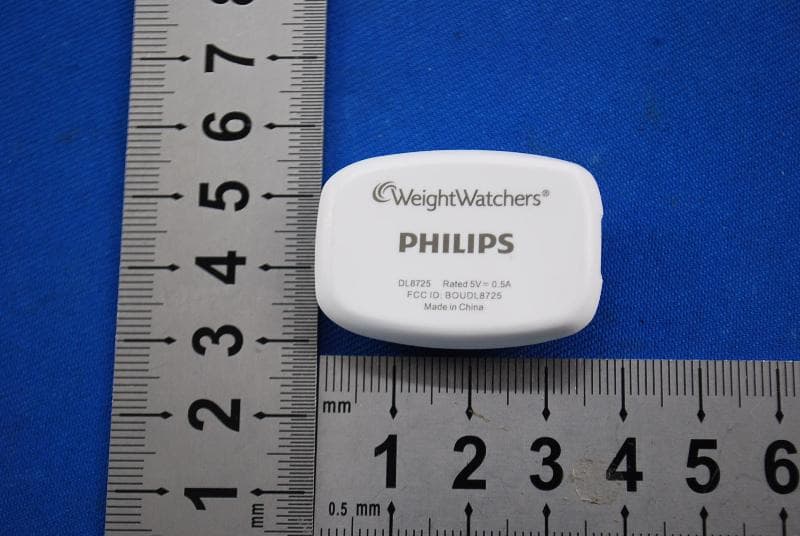
BOUDL8725
Jul 10, 2014Personal Activity Monitor with Bluetooth Function
Equipment Class
JBP - Part 15 Class B Computing Device Peripheral
BOUSCD501H
May 28, 20141.9GHz DECT Baby Monitor - Parent Unit
Equipment Class
PUT - Part 15 Unlicensed PCS portable Tx worn on body
BOU-HTB3525BVF7
Dec 11, 2013Soundstage Home Theater
Equipment Class
DSS - Part 15 Spread Spectrum Transmitter