C3K1428Wireless Mouse
Microsoft Corporation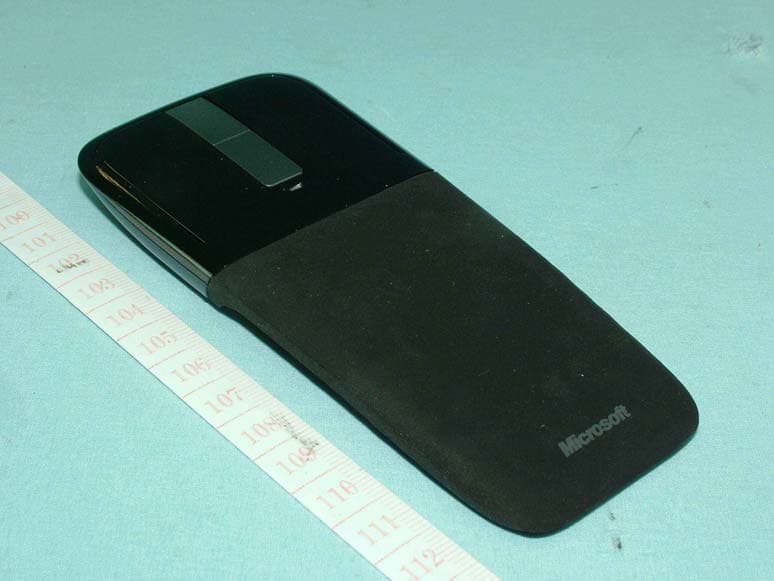
Click to zoom
Application Details
- Equipment Class
- DXX - Part 15 Low Power Communication Device Transmitter
- Date of Grant
- Aug 31, 2010
- Application Purpose
- Original Equipment
- Date of Application
- Aug 04, 2010
- Equipment Note
- Wireless Mouse
- Frequency Range
- 2403.00000000 - 2480.00000000
- Company
- Microsoft Corporation
- Country
- United States
Documents & Files
Document Text
Text extracted from the exhibit documents filed with the FCC. Open a document above to read the original.
Users Manual
1 Contents Microsoft Product Guide . . . . . . . . . . . . . . . . . . . . . . . . .1 Guía del producto de Microsoft . . . . . . . . . . . . . . . . . .10 International Technical Support Numbers (Partial List Only) . . . . . . . . . . . . . . . . . . . . . . . . . . . . . .18 Microsoft Product Guide Read this guide for important safety and health information and the terms of the Limited Warranty that apply to the Microsoft ® device that you have purchased. Warning Failure to properly set up, use, and care for this product can increase the risk of serious injury or death, or damage to the device or devices. Read this guide and keep all printed guides for future reference. For replacement guides, go to www.microsoft.com/hardware or refer to the Microsoft Help and Support section for contact information. This document includes important information about many Microsoft products. Refer to sections that apply to the features of your device: Important Safety Information Battery-Powered Devices Wireless Devices Game Controllers, Keyboards, and Mouse Devices All Devices Laser and LED Specifications Regulatory Information Radio Frequency Technical Specifications Radio and TV Interference Regulations Disposal of Waste Batteries and Electrical and Electronic Equipment Patent Information Customer Support Options Limited Warranty This symbol identifies safety and health messages in this Product Guide and other product manuals . Important Safety Information Battery-Powered Devices These precautions apply to all products that use rechargeable or disposable batteries. Improper use of batteries may result in battery fluid leakage, overheating, or explosion. Released battery fluid is corrosive and may be toxic. It can cause skin and eye burns, and is harmful if swallowed. X168273602mnl.indb 15/27/2010 12:42:22 PM 2 To reduce the risk of injury: ● Keep batteries out of reach of children. ● Do not heat, open, puncture, mutilate, or dispose of batteries in fire. ● Do not mix new and old batteries or batteries of different types (for example, carbon-zinc and alkaline batteries). ● Do not allow metal objects to touch the battery terminals on the device; they can become hot and cause burns. ● Remove the batteries if they are worn out or before storing your device for an extended period of time. ● Always remove old, weak, or worn-out batteries promptly and recycle or dispose of them in accordance with Local and National Disposal Regulations. ● If a battery leaks, remove all batteries, taking care to keep the leaked fluid from touching your skin or clothes. If fluid from the battery comes into contact with skin or clothes, flush skin with water immediately. Before inserting new batteries, thoroughly clean the battery compartment with a damp paper towel, or follow the battery manufacturer’s recommendations for cleanup. Disposable (non-rechargeable) batteries only: ● Caution Risk of explosion if battery is replaced by an incorrect type. Use and replace only with correct size and type (alkaline, zinc-carbon, or zinc-chloride) of batteries. Rechargeable batteries only: ● Caution Risk of explosion if battery is replaced by an incorrect type. Use and replace only with the same type and rating as the batteries provided. Wireless Devices Before boarding any aircraft or packing a wireless device in luggage that will be checked, remove the batteries from the wireless device or turn the wireless device off (if it has an on/off switch). Wireless devices can transmit radio frequency (RF) energy, much like a cellular telephone, whenever batteries are installed and the wireless device is turned on (if it has an on/off switch). Game Controllers, Keyboards, and Mouse Devices Health Warning Use of game controllers, keyboards, mice, or other electronic input devices may be linked to serious injuries or disorders. When using a computer, as with many activities, you may experience occasional discomfort in your hands, arms, shoulders, neck, or other parts of your body. However, if you experience symptoms such as persistent or recurring discomfort, pain, throbbing, aching, tingling, numbness, burning sensation, or stiffness, DO NOT IGNORE THESE WARNING SIGNS . PROMPTLY SEE A QUALIFIED HEALTH PROFESSIONAL, even if symptoms occur when you are not working at your computer. Symptoms like these can be associated with painful and sometimes permanently disabling injuries or disorders of the nerves, muscles, tendons, or other parts of the body. These musculoskeletal disorders (MSDs) include carpal tunnel syndrome, tendonitis, tenosynovitis, and other conditions. While researchers are not yet able to answer many questions about MSDs, there is general agreement that many factors may be linked to their occurrence, including: overall health, stress and how one copes with it, medical and physical conditions, and how a person positions and uses his or her body during work and other activities (including use of a keyboard or mouse). The amount of time a person performs an activity may also be a factor. X168273602mnl.indb 25/27/2010 12:42:22 PM 3 Some guidelines that may help you work more comfortably with your computer and possibly reduce your risk of experiencing an MSD can be found in the “Healthy Computing Guide” installed with this device’s software, or in the “Healthy Gaming Guide” available at www.xbox.com. If this device did not come with software, you can access the “Healthy Computing Guide” at www.microsoft.com/hardware or (in the United States only) by calling (800) 360-7561 to request a CD at no charge. If you have questions about how your own lifestyle, activities, or medical, or physical condition may be related to MSDs, see a qualified health professional. All Devices Do Not Attempt Repairs Do not attempt to take apart, open, service, or modify the hardware device or power supply. Doing so could present the risk of electric shock or other hazard. Any evidence of any attempt to open and/or modify the device, including any peeling, punctu…
Text truncated - open the document above for the full version.
External Photos
Page 1 CONSTRUCTION PHOTOS OF EUT
ID Label/Location Info
Microsoft Corporation Model 1428 Label Outline Drawing Microsoft Corporation FCC ID: C3K1428 IC: 3048A-1428 Model 1428
ID Label/Location Info
Microsoft Corporation Model 1428 Label Location Drawing Microsoft Corporation FCC ID: C3K1428 IC: 3048A-1428 Model 1428
Internal Photos
Page 2 Page 3 Page 4 Page 5
Test Report
Report No.: RF990701C01 1 Report Format Version 3.0.1 FCC TEST REPORT REPORT NO. :RF990701C01 MODEL NO. :1428 FCC ID:C3K1428 RECEIVED :Jul. 01, 2010 TESTED :Jul. 01, 2010 ISSUED :Jul. 21, 2010 APPLICANT : Microsoft Corporation ADDRESS : One Microsoft Way, Redmond WA 98052-6399, U.S.A ISSUED BY : Bureau Veritas Consumer Products Services (H.K.) Ltd., Taoyuan Branch LAB ADDRESS : No. 47, 14th Ling, Chia Pau Tsuen, Lin Kou Hsiang, Taipei Hsien 244, Taiwan, R.O.C. TEST LOCATION : No. 19, Hwa Ya 2nd Rd, Wen Hwa Tsuen, Kwei Shan Hsiang, Taoyuan Hsien 333, Taiwan, R.O.C. This test report consists of 35 pages in total. It may be duplicated completely for legal use with the approval of the applicant. It should not be reproduced except in full, without the written approval of our laboratory. The client should not use it to claim product, certification, approval or endorsement by TAF or any government agency. The test results in the report only apply to the tested sample. The test results in this report are traceable to the national or international standards. Report No.: RF990701C01 2 Report Format Version 3.0.1 Table of Contents 1. CERTIFICATION ..................................................................................................... 3 2. SUMMARY OF TEST RESULTS ............................................................................. 4 2.1 MEASUREMENT UNCERTAINTY .......................................................................... 4 3. GENERAL INFORMATION...................................................................................... 5 3.1 GENERAL DESCRIPTION OF EUT........................................................................ 5 3.2 DESCRIPTION OF TEST MODES.......................................................................... 6 3.2.1 CONFIGURATION OF SYSTEM UNDER TEST ..................................................... 6 3.2.2 TEST MODE APPLICABILITY AND TESTED CHANNEL DETAIL .......................... 7 3.3 GENERAL DESCRIPTION OF APPLIED STANDARDS ......................................... 9 3.4 DESCRIPTION OF SUPPORT UNITS .................................................................... 9 4. TEST TYPES AND RESULTS ............................................................................... 10 4.1 RADIATED EMISSION MEASUREMENT ............................................................. 10 4.1.1 LIMITS OF RADIATED EMISSION MEASUREMENT........................................... 10 4.1.2 TEST INSTRUMENTS .......................................................................................... 11 4.1.3 TEST PROCEDURES ........................................................................................... 12 4.1.4 DEVIATION FROM TEST STANDARD ................................................................. 12 4.1.5 TEST SETUP ........................................................................................................ 13 4.1.6 EUT OPERATING CONDITIONS .......................................................................... 13 4.1.7 TEST RESULTS .................................................................................................... 14 4.2 BAND EDGES MEASUREMENT .......................................................................... 30 4.2.1 LIMITS OF BAND EDGES MEASUREMENT ....................................................... 30 4.2.2 TEST INSTRUMENTS .......................................................................................... 30 4.2.3 TEST PROCEDURE ............................................................................................. 30 4.2.4 DEVIATION FROM TEST STANDARD ................................................................. 30 4.2.5 EUT OPERATING CONDITION ............................................................................ 30 4.2.6 TEST RESULTS .................................................................................................... 30 5. PHOTOGRAPHS OF THE TEST CONFIGURATION............................................ 33 6. INFORMATION ON THE TESTING LABORATORIES .......................................... 34 7. APPENDIX A - MODIFICATIONS RECORDERS FOR ENGINEERING CHANGES TO THE EUT BY THE LAB................................................................................... 35 Report No.: RF990701C01 3 Report Format Version 3.0.1 1. CERTIFICATION PRODUCT: Wireless Mouse MODEL: 1428 BRAND: Microsoft APPLICANT: Microsoft Corporation TESTED: Jul. 01, 2010 TEST SAMPLE: ENGINEERING SAMPLE STANDARDS: FCC Part 15, Subpart C (Section 15.249) ANSI C63.4-2003 The above equipment (model: 1428) have been tested by Bureau Veritas Consumer Products Services (H.K.) Ltd., Taoyuan Branch, and found compliance with the requirement of the above standards. The test record, data evaluation & Equipment Under Test (EUT) configurations represented herein are true and accurate accounts of the measurements of the sample’s EMC characteristics under the conditions specified in this report. PREPARED BY : , DATE:Jul. 21, 2010 Ivy Lin / Specialist TECHNICAL ACCEPTANCE : , DATE:Jul. 21, 2010 Responsible for RF Long Chen / Senior Engineer APPROVED BY : , DATE:Jul. 21, 2010 Gary Chang / Assistant Manager Report No.: RF990701C01 4 Report Format Version 3.0.1 2. SUMMARY OF TEST RESULTS The EUT has been tested according to the following specifications: APPLIED STANDARD: FCC Part 15, Subpart C (Section 15.249) STANDARD PARAGRAPH TEST TYPE RESULTREMARK 15.209 15.249 15.249 (d) Radiated Emission Test Band Edge Measurement Limit: 50dB less than the peak value of fundamental frequency or meet radiated emission limit in section 15.209 PASS Meet the requirement of limit. Minimum passing margin is -10.2dB at 2398.00 MHz. 2.1 MEASUREMENT UNCERTAINTY Where relevant, the following measurement uncertainty levels have been estimated for tests performed on the EUT as specified in CISPR 16-4-2: MEASUREMENT FREQUENCY UNCERTAINTY 30MHz ~ 200MHz 3.34 dB 200MHz ~1000MHz 3.35 dB 1GHz ~ 18GHz 2.26 dB Radiated emis…
Text truncated - open the document above for the full version.
Test Setup Photos
1 PHOTOGRAPHS OF THE TEST CONFIGURATION RADIATED EMISSION TEST
Contact Information
Applicant
Hasnain Syed(SR. DIR EMC/SI&RF COMPLIANCE)
Technical Contact
Bureau Veritas CPS (H.K.) Ltd. Taoyuan BranchGary Chang
[email protected]886-3-3183232
No. 19, Hwa Ya 2nd Rd., Kwei Shan Hsiang · Taoyuan Hsien · Taiwan
Non-Technical Contact
Bureau Veritas CPS (H.K.) Ltd. Taoyuan BranchWendy Liao
[email protected]886-3-3183232
Test Firm
Bureau Veritas CPS (H.K.) Ltd. Taoyuan BranchRichard Chen
Technical Specifications
| # | Rule Parts | Frequency Range | Power Output |
|---|---|---|---|
| 1 | 15C | 2.40 GHz - 2.48 GHz | - |
Other Applications from Microsoft Corporation
C3K2147
Aug 28, 2026Wireless input device
Equipment Class
DTS - Digital Transmission SystemC3K2148
Aug 12, 2026Portable Computing Device
Equipment Class
DXX - Part 15 Low Power Communication Device TransmitterC3K2149
Aug 12, 2026Portable Computing Device
Equipment Class
DXX - Part 15 Low Power Communication Device TransmitterC3K2152
Aug 11, 2026Wireless Accessory
Equipment Class
DTS - Digital Transmission SystemC3K2150
Aug 06, 2026Portable Computing Device
Equipment Class
DXX - Part 15 Low Power Communication Device Transmitter