C3K17101710
Microsoft Corporation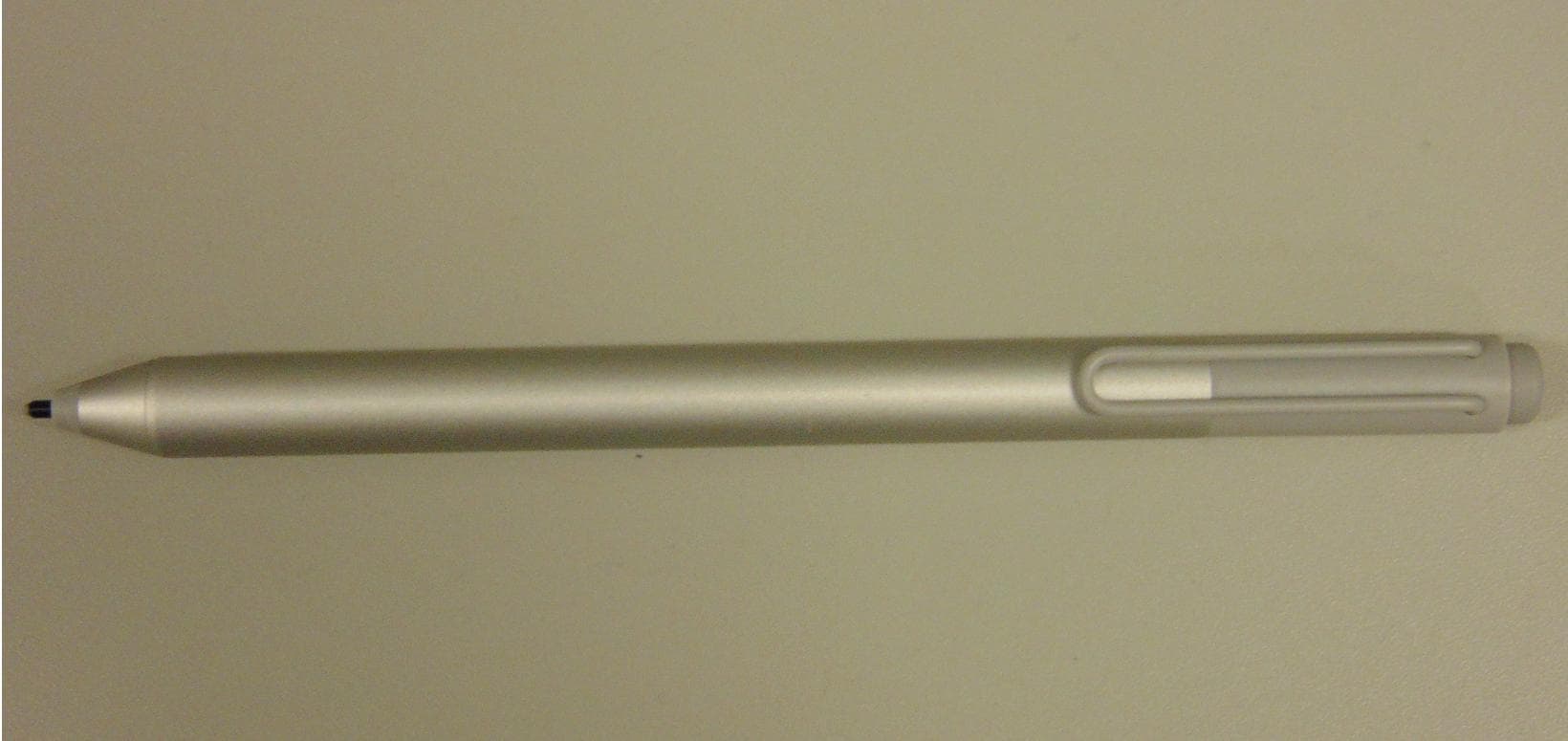
Click to zoom
Application Details
- Equipment Class
- DTS - Digital Transmission System
- Date of Grant
- Oct 05, 2015
- Application Purpose
- Original Equipment
- Date of Application
- Sep 30, 2015
- Equipment Note
- 1710
- Frequency Range
- 2402.00000000 - 2480.00000000
- Company
- Microsoft Corporation
- Country
- United States
Documents & Files
Document Text
Text extracted from the exhibit documents filed with the FCC. Open a document above to read the original.
Users Manual
CLEANING & USAGE INSTRUCTIONS Always handle your device with care to maintain its appearance. To clean, wipe the outer surface with a soft, lint-free cloth. Guide. Read this guide for important safety and health information for the product that you have purchased. WARNING: Read Safety & Health Info Read this guide for important safety and health information and the terms of the Limited Warranty that apply to the Microsoft ® device that you have purchased. Keep all printed guides for future reference. Failure to follow instructions and properly set up, use, and care for this product can increase the risk of serious injury or death, or damage to the device or devices. For an online version of this guide go to: www.surface.com/support Warning: Do Not Attempt Repairs Do not attempt to take apart, open, service, or modify the product, accessories, or power supply. Doing so could present the risk of electric shock or other hazard. Any evidence of any attempt to open and/or modify this device, including any peeling, puncturing, or removal of any of the labels, will void the Limited Warranty. Warning: Small Children This device and its accessories are not toys. Do not allow small children to play with them because they could hurt themselves or others, damage the device, or use services that increase your mobile device bill. Keep the device and all its parts and accessories out of the reach of small children. Caution: Cable and Cord Safety Arrange all cables and cords so that people and pets are not likely to trip over or accidentally pull on them as they move around or walk through the area. Do not allow children to play with cables and cords. Warning: Battery Safety The keyboard adapter contains a built-in NiMH battery, improper use of which may result in explosion. Do not extended period of time, which could cause melting or battery damage. The battery in this device is not user replaceable and should only be replaced by Microsoft or a Microsoft Authorized Service Provider. See www.surface.com/support for additional details. Warning: Use Near Water Do not attempt to dry device with a hair dryer or a microwave oven. Warning: Airbag Avoidance For vehicles equipped with airbags, do not place the device or other objects on or near the airbags. If an airbag deploys, objects placed on or near the airbag could cause serious personal injury or even death. Warning: Choking Hazard This device may contain small parts which may be a choking hazard to children under 3. Keep small parts away from children. Warning: Coin Cell Safety Notice KEEP OUT OF REACH OF CHILDREN. DO NOT INGEST BATTERY, CHEMICAL BURN HAZARD. The Surface Pro 3 pen contains coin/button cell batteries. If a coin/button cell battery is swallowed, it can cause severe internal burns and perforation of soft tissue in just 2 hours and can lead to serious injury or death. Keep new and used batteries away from children. If the battery compartment does not close securely, stop using the product and keep it away from children. If you think batteries might have been swallowed or placed inside any part of the body, seek immediate medical attention. Coin batteries must be removed immediately if swallowed. See www.surface.com/supp ort for information about how to remove and replace coin cell. Warning: Follow Instructions to Avoid Interference Problems Turn off your mobile device in any location where posted notices instruct you to do so. In an aircraft, turn off your device whenever instructed to do so by airline staff, or prior to packing a wireless device in luggage. This device Warning: Potentially Explosive Atmospheres Areas with potentially explosive atmospheres are often, but not always, posted and can include fueling areas, such as below decks on boats, fuel or chemical transfer or storage facilities, or areas where the air contains chemicals or particles, such as grain dust, or metal powders. When you are in such an area, turn off your mobile device, and do not remove or install battery chargers, AC adapters, or any other accessory. In such areas, sparks can occur and Caution: Parts of this device are magnetic. It may attract metallic materials. To reduce the potential risk of sparks, verify the electrical connection area is free of compass readings, disrupting the proper operation of pacemakers, or corrupting magnetically stored data, do not place credit cards or other magnetic storage media or magnetically sensit ive devices near this device. Caution: Personal Medical Devices Radio-frequency emissions from electronic equipment can negatively affect the operation of other electronic equipment, causing them to malfunction. Although the device is designed, tested, and manufactured to comply with regulations governing radio frequency emission in countries such as the United States, Canada, the European Union, and Japan, the wireless transmitters and electrical cir cuits in the device may cause interference in other electronic equipment. Therefore, please take the following precautions: Pacemakers The Health Industry Manufacturers Association recommends that a minimum separation of 15 cm (6 inches) be maintained between a wireless device and a pacemaker to avoid potential interference with the pacemaker. Persons with pacemakers • Should always keep the device more than 15 cm (6 inches) from the pacemaker when the wireless device is turned on. • Should not carry in the breast pocket. • If you have any reason to suspect that interference is taking place, turn the device off immediately. Other Medical Devices If you use any other personal medical device, consult the medical device manufacturer or your physician to determine if it is appropriate for you to use other electronic devices near your medical device. Caution: Do not Swing or Carry the Host Device by this Accessory The accessory and host device are held together only by magnetics and can detach, leading to potential product damage or injury to nearby people or objects. Caution: Heat Related …
Text truncated - open the document above for the full version.
Cover Letter(s)
Microsoft Corporation is an equal opportunity employer. September 21, 2015 Federal Communications Commission Authorization and Evaluation Division 7435 Oakland Mills Road Columbia, Maryland 21046 Subject: Cover Letter for FCC application for Certification of FCC ID: C3K1710 TO WHOM IT MAY CONCERN: This Model 1710 is a wireless input accessory device. This is to seek an original certification on Model 1710, as compliant with FCC CFR47 Rule parts 15.207, 15.209, 15.247 and 2.1093. Sincerely, Sahithi Kandula Compliance Engineer Microsoft Corporation
Cover Letter(s)
Microsoft Corporation is an equal opportunity employer. September 17, 2015 Federal Communications Commission Authorization and Evaluation Division 7435 Oakland Mills Road Columbia, Maryland 21046 Agency authorization letter for Microsoft employees To whom it may concern, We, the undersigned, Microsoft® Corporation hereby authorize the following, to act on our behalf, as our agent, in all matters relating to all processes required according to FCC Part 15C for Microsoft® Corporation products (Grantee Code:C3K): Michael Boucher Pam Galvan Albert Huang Bill Huang Joy Alegria Hasnain Syed Tim Calland Kitty Tam Sahithi Kandula Jennifer Liu Anindita Mitra Chaitrali Limaye David Johnson If you have any questions regarding the authorization, please don’t hesitate to contact me. Sincerely, Stephen M. Stegner Compliance Engineer Microsoft Corporation
Cover Letter(s)
Microsoft Corporation is an equal opportunity employer September 9, 2015 Federal Communications Commission Authorization and Evaluation Division 7435 Oakland Mills Road Columbia, Maryland 21046 Subject: Short-term confidentiality request regarding application for Certification of FCC ID: C3K1710 TO WHOM IT MAY CONCERN Pursuant to CFR 47, Sections 0.457 and 0.459, we request short-term confidential treatment for the following information until March 31, 2016 in order to ensure sensitive business information remains confidential until the actual marketing of the device: • External Photos • Test Setup Photos • User’s Manual • Internal Photos Sincerely, Sahithi Kandula Compliance Engineer, Microsoft Corporation.
Cover Letter(s)
Microsoft Corporation is an equal opportunity employer September 9, 2015 Federal Communications Commission Authorization and Evaluation Division 7435 Oakland Mills Road Columbia, Maryland 21046 Subject: Confidentiality request regarding application for certification of FCC ID: C3K1710 TO WHOM IT MAY CONCERN Pursuant to Sections 0.457 and 0.459 of the Commission’s Rules, the Applicant hereby requests confidential treatment of information accompanying this Application as outlined below: Block Diagram Schematics Operational Description The above materials contain trade secrets and proprietary information not customarily released to the public. The public disclosure of these matters might be harmful to the Applicant and provide unjustified benefits to its competitors. The Applicant understands that pursuant to Rule 0.457, disclosure of this Application and all accompanying documentation will not be made before the date of the Grant for this application. Sincerely, Sahithi Kandula Compliance Engineer, Microsoft Corporation.
External Photos
Microsoft Corporation is an equal opportunity employer. Model 1710 – External Photos
ID Label/Location Info
Microsoft Corporation is an equal opportunity employer. Model 1710 – Label The label shown below is located on the tab inside the cap of the unit Label location
Internal Photos
Microsoft Corporation is an equal opportunity employer. Model 1710 – Internal Photos Microsoft Corporation is an equal opportunity employer. Microsoft Corporation is an equal opportunity employer. Tip (top) Microsoft Corporation is an equal opportunity employer. Tip (bottom) Tail (top) Tail (bottom) Antenna
RF Exposure Info
Report V2.0 RF Exposure Evaluation Report For MODEL NO. 1710 FCC ID: C3K1710 IC ID: 3048A-1710 Test Report No. R-TR188-FCCIC-MPE-1 Issue Date: 09/08/2015 FCC CFR47 Part 2.1093 Industry Canada RSS-102: Issue 5 Prepared by Microsoft EMC Laboratory 17760 NE 67th Ct, Redmond WA, 98052, U.S.A. 425-421-9799 [email protected] TESTING CERT #3472.01 Report#: R-TR188-FCCIC-MPE-1 Issued: 09/08/2015 Page 2 of 8 Microsoft EMC Laboratory 1 Record of Revisions Revision Date Section Page(s)Summaryof Changes Author/Revised By: 1.0 09/08/2015 All All First Version Daniel Salinas Report#: R-TR188-FCCIC-MPE-1 Issued: 09/08/2015 Page 3 of 8 Microsoft EMC Laboratory Table of Contents 1 Record of Revisions ............................................................................................................... 2 2 Product Description ............................................................................................................... 5 3 Deviations from Standards .................................................................................................... 5 4 Facilities and Accreditations .................................................................................................. 5 4.1 Test Facility .................................................................................................................... 5 4.2 Accreditations ................................................................................................................. 5 4.3 Test Configurations ........................................................................................................ 5 5 Peak Conducted Output Power Measurements .................................................................... 6 5.1 Test Method .................................................................................................................... 6 5.2 Test Equipment List ........................................................................................................ 6 5.3 Test Results .................................................................................................................... 6 6 SAR Test Exclusion ............................................................................................................... 7 6.1 SAR Test Exclusion Criteria ........................................................................................... 7 6.2 SAR Test Exclusion Evaluation ...................................................................................... 7 Report#: R-TR188-FCCIC-MPE-1 Issued: 09/08/2015 Page 4 of 8 Microsoft EMC Laboratory Test Report Attestation Microsoft Corporation Model: 1710 FCC ID: C3K 1710 IC ID: 3048A-1710 Applicable Standards Specification Test Result FCC CFR47 Part 2.1093 Industry Canada RSS-102 Issue 5 Complies Microsoft EMC Laboratory attests that the product model identified in this report has been tested to and meets the requirements identified in the above standards. The test results in this report solely pertains to the specific sample tested, under the conditions and operating modes as provided by the customer. This report shall not be used to claim product certification, approval, or endorsement by A2LA or any agency of any Government. Reproduction, duplication or publication of extracts from this test report requires prior written approval of Microsoft EMC Laboratory. Written By: Daniel Salinas Reviewed/ Issued By: Sajay Jose Radio Test Lead EMC/RF Compliance Lab Manager Report#: R-TR188-FCCIC-MPE-1 Issued: 09/08/2015 Page 5 of 8 Microsoft EMC Laboratory 2 Product Description Company Name: Microsoft Corporation Address: One Microsoft Way City, State, Zip: Redmond, WA 98052-6399 Customer Contact: Sahithi Kandula Functional Description of the EUT: Wireless input accessory device Model: 1710 FCC ID: C3K1710 IC ID: 3048A-1710 Radio Description: BTLE (2402- 2480 MHz) Modulation: GFSK Max Antenna Gain: -2.41 dBi EUT Classification: DTS device Equipment Design State: EV2/Production Equipment Condition: Good RF Exposure Conditions: Extremity Exposure, Body Exposure 3 Deviations from Standards None. 4 Facilities and Accreditations 4.1 Test Facility All test facilities used to collect the test data are located at Microsoft EMC Laboratory, 17760 NE 67 th Ct, Redmond WA, 98052, USA 4.2 Accreditations The lab is established and follows procedures as outlined in IEC/ISO 17025 and A2LA accreditation requirements. A2LA Accredited Testing Certificate Number: 3472.01 IC Registration Number: 3048A-1, 3048A-2, 3048A-3, 3048A-4 4.3 Test Configurations Test Software Details: The EUT was preprogrammed to transmit continuously in GFSK mode. Channel numbers 0, 19 and 39 are used as the Low/Mid/High channels of test. Report#: R-TR188-FCCIC-MPE-1 Issued: 09/08/2015 Page 6 of 8 Microsoft EMC Laboratory 5 Peak Conducted Output Power Measurements 5.1 Test Method Antenna port conducted measurements were performed on a bench-top setup consisting of a spectrum analyzer, power meter (as necessary), splitters/combiners (as necessary), attenuators, and pre-characterized RF cables. The correction factors between the EUT and the Spectrum Analyzer is added internally in the Analyzer settings. The plots displayed accounts for these correction factors. Spectrum Analyzer Settings: Peak Measurements: RBW= 1 MHz VBW= 3 MHz Trace Mode: Peak Detector (Max Hold) Span= 3 MHz Sweep time= Auto Peak e.i.r.p. was calculated based on the following formula: ..ݎ.݅.݁ ሺ ݉ܤ݀ ሻ ሻ݅ܤ݀ሺ ݊݅ܽܩ ܽ݊݊݁ݐ݊ܣሻ݉ܤ݀ሺ ݎ݁ݓܲ ݐݑݐݑܱ ݀݁ݐܿݑ݀݊ܥൌ Fig.1. Test setup for antenna port conducted measurements 5.2 Test Equipment List Manufacturer Description Model # Asset # Calibration Due Agilent Spectrum Analyzer N9030A RF-011 2/29/2016 5.3 Test Results Frequency (MHz) Mode Peak Power (dBm) Peak Power (mW) Maximum Antenna Gain (dBi) e.i.r.p. (dBm) e.i.r.p. (mW) 2402 GFSK -0.82 0.83 -2.41 -3.23 0.48 2440 GFSK -1.26 0.75 -2.41 -3.67 0.43 2480 GFSK -1.94 0.64 -2.41 -4.35 0.37 Report#: R-TR188-FCCIC-MPE-1 Issued: 09/08/2015 Pa…
Text truncated - open the document above for the full version.
Test Report
Rev 2.0 RADIO TEST REPORT For MODEL NO. 1710 FCC ID: C3K1710 IC ID: 3048A-1710 Test Report No. R-TR188-FCCIC-BTLE-1 Issue Date: 09/08/2015 FCC CFR47 Part 15 Subpart C Industry Canada RSS-247 Issue 1 Prepared by Microsoft EMC Laboratory 17760 NE 67th Ct, Redmond WA, 98052, U.S.A. 425-421-9799 [email protected] TESTING CERT #3472.01 Report#: R‐TR188‐FCCIC‐BTLE‐1 Issued: September 08, 2015 Page 2 of 40 Microsoft EMC Laboratory 1 Record of Revisions Revision Date Section Page(s)Summaryof Changes Author/Revised By: 1.0 09/08/2015 All All First Version Daniel Salinas Report#: R‐TR188‐FCCIC‐BTLE‐1 Issued: September 08, 2015 Page 3 of 40 Microsoft EMC Laboratory Table of Contents 1 Record of Revisions ............................................................................................................................... 2 2 Deviations from Standards ................................................................................................................... 6 3 Facilities and Accreditations ................................................................................................................. 6 3.1 Test Facility ................................................................................................................................... 6 3.2 Accreditations ............................................................................................................................... 6 3.3 Test Equipment ............................................................................................................................. 6 4 Measurement Uncertainty .................................................................................................................... 6 5 Product Description .............................................................................................................................. 7 5.1 Test Configurations ....................................................................................................................... 7 5.2 Environmental Conditions ............................................................................................................ 7 5.3 Antenna Requirements ................................................................................................................. 7 5.4 Equipment Modifications .............................................................................................................. 8 5.5 Dates of Testing ............................................................................................................................ 8 6 Test Results Summary ........................................................................................................................... 9 7 Test Equipment List ............................................................................................................................. 10 8 Test Site Description ........................................................................................................................... 11 8.1 Radiated Emissions Test Site ....................................................................................................... 11 8.2 Antenna port conducted measurements .................................................................................... 11 8.3 Test Setup Diagrams ................................................................................................................... 11 9 Test Results‐ Conducted ..................................................................................................................... 14 9.1 6‐dB Bandwidth ........................................................................................................................... 14 Test Requirement:............................................................................................................... 14 Test Method: ....................................................................................................................... 14 Limits: .................................................................................................................................. 14 Test Results: ........................................................................................................................ 14 Test Data: ............................................................................................................................ 15 9.2 Output Power .............................................................................................................................. 17 Test Requirement:............................................................................................................... 17 Test Method: ....................................................................................................................... 17 Limits: .................................................................................................................................. 17 Test Results: ........................................................................................................................ 17 Report#: R‐TR188‐FCCIC‐BTLE‐1 Issued: September 08, 2015 Page 4 of 40 Microsoft EMC Laboratory Test Data: ............................................................................................................................ 18 9.3 Peak Power Density .................................................................................................................... 20 Test Requirement:............................................................................................................... 20 Test Method: ....................................................................................................................... 20 Limits: .................................................................................................................................. 20 Test Results: ........................................................................…
Text truncated - open the document above for the full version.
Test Setup Photos
Test Setup Photographs For MODEL NO. 1710 FCC ID: C3K 1710 IC ID: 3048A-1710 Report# R-TR188-TS-1 Issue Date: September 08, 2015 FCC CFR47 Part 15 Subpart C IC RSS-247 Issue 1 Prepared by Microsoft EMC Laboratory 17760 NE 67th Ct, Redmond WA, 98052, U.S.A. 425-421-9799 [email protected] TESTING CERT #3472.01 Test Report#: R‐TR188‐TS‐1 Issued: September 08, 2015 Page 2 of 6 Microsoft EMC Laboratory 1 Record of Revisions Revision Date Section Page(s)Summaryof Changes Author/Revised By: 1.0 09/08/2015 All All First Version Andy Shen Test Report#: R‐TR188‐TS‐1 Issued: September 08, 2015 Page 3 of 6 Microsoft EMC Laboratory Fig.1 EUT-Flat Position Fig.2 EUT- Standing Position Test Report#: R‐TR188‐TS‐1 Issued: September 08, 2015 Page 4 of 6 Microsoft EMC Laboratory Fig.3 Radiated Spurious Emissions Test Setup (30MHz – 1GHz) Fig.4 Radiated Spurious Emissions Test Setup (1-18 GHz) Test Report#: R‐TR188‐TS‐1 Issued: September 08, 2015 Page 5 of 6 Microsoft EMC Laboratory Fig.5 Radiated Spurious Emissions (18-26.5GHz) Figure 6 Conducted Measurement Test Setup Test Report#: R‐TR188‐TS‐1 Issued: September 08, 2015 Page 6 of 6 Microsoft EMC Laboratory End of Report
Contact Information
Applicant
Hasnain Syed(SR. DIR EMC/SI&RF COMPLIANCE)
Test Firm
Microsoft EMC LaboratoryJames Wooten
[email protected]4257068002
Technical Specifications
| # | Rule Parts | Frequency Range | Power Output |
|---|---|---|---|
| 1 | 15C | 2.40 GHz - 2.48 GHz | 800.00 µW |
Other Applications from Microsoft Corporation
C3K2147
Aug 28, 2026Wireless input device
Equipment Class
DTS - Digital Transmission SystemC3K2148
Aug 12, 2026Portable Computing Device
Equipment Class
DXX - Part 15 Low Power Communication Device TransmitterC3K2149
Aug 12, 2026Portable Computing Device
Equipment Class
DXX - Part 15 Low Power Communication Device TransmitterC3K2152
Aug 11, 2026Wireless Accessory
Equipment Class
DTS - Digital Transmission SystemC3K2150
Aug 06, 2026Portable Computing Device
Equipment Class
DXX - Part 15 Low Power Communication Device Transmitter