C3K1930Phablet Device
Microsoft Corporation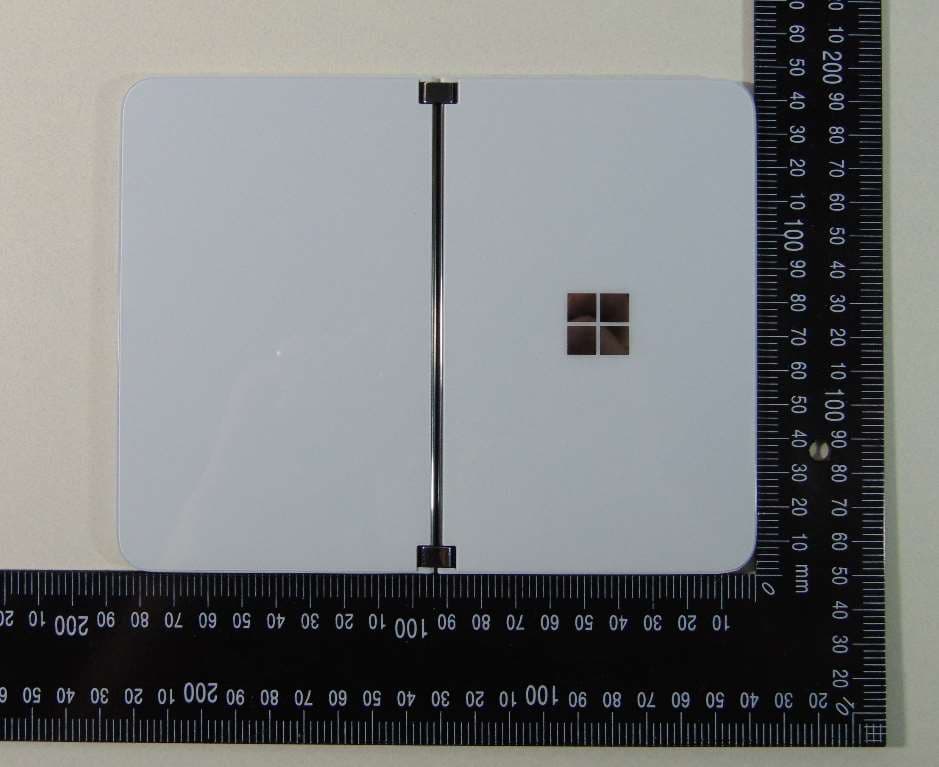
Click to zoom
Application Details
- Equipment Class
- DTS - Digital Transmission System
- Date of Grant
- Jul 21, 2020
- Application Purpose
- Original Equipment
- Date of Application
- Jun 11, 2020
- Equipment Note
- Phablet Device
- Frequency Range
- 2412.00000000 - 2472.00000000
- Company
- Microsoft Corporation
- Country
- United States
Documents & Files
Document Text
Text extracted from the exhibit documents filed with the FCC. Open a document above to read the original.
Users Manual
MICROSOFT DEVICES LIGHT GRAY GMS-147 MICROSOFT DEVICES DARK GRAY GMS-149 CMYK Surface Template,QSG, SUZUKA, 3-language_BKT.indd 106.04.20 18:57 Speaker English Surface Template,QSG, SUZUKA, 3-language_BKT.indd 206.04.20 18:57 Volume Flash Power Fingerprint reader SIM card slot MicrophoneUSB-C EarpieceCamera Surface Template,QSG, SUZUKA, 3-language_BKT.indd 306.04.20 18:57 Surface Template,QSG, SUZUKA, 3-language_BKT.indd 406.04.20 18:57 Let’s get started First, press the Power button. Your Surface Duo will walk you through setup. Learn more For tips, open the Tips app on your Surface Duo. Surface Template,QSG, SUZUKA, 3-language_BKT.indd 506.04.20 18:57 Speaker English Surface Template,QSG, SUZUKA, 3-language_BKT.indd 606.04.20 18:57 Volume Flash Power Fingerprint reader SIM card slot MicrophoneUSB-C EarpieceCamera Surface Template,QSG, SUZUKA, 3-language_BKT.indd 706.04.20 18:57 Surface Template,QSG, SUZUKA, 3-language_BKT.indd 806.04.20 18:57 Let’s get started First, press the Power button. Your Surface Duo will walk you through setup. Learn more For tips, open the Tips app on your Surface Duo. Surface Template,QSG, SUZUKA, 3-language_BKT.indd 906.04.20 18:57 Speaker English Surface Template,QSG, SUZUKA, 3-language_BKT.indd 1006.04.20 18:57 Volume Flash Power Fingerprint reader SIM card slot MicrophoneUSB-C EarpieceCamera Surface Template,QSG, SUZUKA, 3-language_BKT.indd 1106.04.20 18:57 Surface Template,QSG, SUZUKA, 3-language_BKT.indd 1206.04.20 18:57 Let’s get started First, press the Power button. Your Surface Duo will walk you through setup. Learn more For tips, open the Tips app on your Surface Duo. Surface Template,QSG, SUZUKA, 3-language_BKT.indd 1306.04.20 18:57 Surface Template,QSG, SUZUKA, 3-language_BKT.indd 1406.04.20 18:57 Surface Template,QSG, SUZUKA, 3-language_BKT.indd 1506.04.20 18:57 support.microsoft.com ©2020 Microsoft MXXXXXXX-001 Surface Template,QSG, SUZUKA, 3-language_BKT.indd 1606.04.20 18:57
Users Manual
Safety and regulatory guide • Limited warranty & 2 agreement Guide de sécurité et réglementaire • Garantie 14 limitée et accord Guía de seguridad y reglamentación • Garantía 28 limitada y acuerdo 1-172507.indd 121/4/20 7:56 am 2 LIMITED HARDWARE WARRANTY & AGREEMENT (WITH BINDING ARBITRATION AND CLASS ACTION WAIVER IN THE U.S.) By purchasing or using your Microsoft Product, you agree to the Manufacturer’s Limited Hardware Warranty & Agreement at support.microsoft.com/warranty. Please read the summary on page 12. If you do not agree to it, do not set up or use your Microsoft Product and return the Microsoft Product to Microsoft or your retailer for a refund. If you live in (or are a business with your principal place of business in) the United States, please read the binding arbitration clause and class action waiver at aka.ms/hw‑warr‑arbitration and the summary on page 12. It binds you and Microsoft and affects how disputes concerning your Microsoft Product, its price, advertising, marketing, communications, your purchase transaction, billing, or the Manufacturers Limited Hardware Warranty & Agreement are resolved. CLEANING & USAGE INSTRUCTIONS Always handle your device with care to maintain its appearance. To clean, wipe the outer surface with a soft, lint-free cloth. This symbol identifies safety and health messages in this guide WARNING: Read safety and health information Microsoft products are developed to be safe and effective. Please read this guide for important safety and health information about your device and for the terms of the Limited Warranty that applies to your device. The guide is intended to help you be more comfortable and productive while using this device. Failure to follow the instructions for proper set up, use, and care for your device can increase the risk of serious personal injury, death, or property damage. You can find additional support at support.microsoft.com. WARNING: Choking hazard This device may contain small parts that may be a choking hazard to children under 3 years. Keep small parts away from children. WARNING: Keep out of the reach of small children Your device and its accessories are not toys. Do not allow small children to play with them because children could hurt themselves or others or damage your device. Keep your device and all its parts and accessories out of the reach of small children. K 1-172507.indd 221/4/20 7:56 am 3 WARNING: High‑risk use Your device is not designed or intended for use in any application or situation where failure of any kind of the device could lead to death, serious bodily injury, or severe environmental damage (“high-risk use”). If you elect to use your device for a high-risk use, you do so at your own risk. WARNING: Parts of this device are magnetic Parts of your device are magnetic and may attract metallic items. To reduce the potential risk of sparks and resulting damage to your device, other objects, and/or possible personal injury, verify the electrical connection areas are free of metallic objects before interconnecting devices or charging connectors. Do not place magnetically sensitive devices, credit cards, other magnetic storage media near your device to reduce the potential for magnetic interference between your device and other devices, possible disruption of medical device operation, or corruption of magnetically stored data. WARNING: Personal medical devices Radio-frequency emissions and magnetic fields from electronic equipment can negatively affect the operation of other electronic equipment, causing them to malfunction. Although your device is designed, tested, and manufactured to comply with regulations governing radio frequency emission in countries such as the United States, Canada, the European Union, and Japan, the wireless transmitters and electrical circuits in the device may cause unintentional interference in other electronic equipment. Persons with pacemakers should always take the following precautions: • The American Heart Association recommends that a minimum separation of 15 cm (6 inches) be maintained between a wireless device and a pacemaker to avoid potential interference with the pacemaker. • If you use your mobile device with a case or holder select one without metallic parts. • Do not carry your device in a chest pocket. • If you have any reason to suspect that interference is occurring immediately turn off your device. If you use a medical device other than a pacemaker, consult the device manufacturer or your physician for information and instructions about the use of other electronic devices near your medical device. WARNING: Wireless devices aboard aircraft Before boarding any aircraft or packing a wireless device in luggage that will be checked, remove the batteries from the wireless device (if removable) or turn the wireless device off (if it has an on/off switch). Listen for the in-flight announcement that tells you if you are allowed to use your device during a flight. In-flight wireless use is at the discretion of the airline. 1-172507.indd 321/4/20 7:56 am 4 WARNING: Radiofrequency interference Although your device has been tested for safety and compatibility, it contains a radio that could affect other electronic equipment or medical devices (such as pacemakers) under certain circumstances, causing them to malfunction and result in possible injury or death. • Turn off your device in any location where instructed to do so. • Follow all crew instructions while on an aircraft. Turn off your device and/or turn on airplane mode as instructed by the crew, including for any wireless devices packed in your luggage. Consult airline staff or the crew about using your device in flight. • Follow all the facility rules and posted instructions in areas where cellular or wireless network use is prohibited. WARNING: Potentially explosive atmospheres Do not store or carry flammable liquids, gases, or explosive materials in the same compartment as your device, its parts, and/or access…
Text truncated - open the document above for the full version.
Cover Letter(s)
Microsoft Corporation is an equal opportunity employer. Subject: Authorized signatories February 26, 2019 Federal Communications Commission Authorization and Evaluation Division 7435 Oakland Mills Road Columbia, Maryland 21046 AGENCY AUTHORIZATION LETTER FOR MICROSOFT EMPLOYEES To whom it may concern, I, the undersigned hereby authorize the following, to act on my behalf, as the agent(s), in all matters relating to all processes for FCC equipment authorization for Microsoft® Corporation (Grantee Code: C3K). Hasnain Syed Anindita Mitra David Johnson Michael Boucher Kyle Chen Chaitrali Limaye Wei Sun Zachary Gray Daniel Salinas Vishwas Varadanahalli Narayan Albert Huang Mengni Yin Choon Sian Ooi Nisha Nandakumar If you have any questions regarding the authorization, please don’t hesitate to contact me. Sincerely, Hasnain Syed Sr. Director, EMC/SI & RF Compliance Microsoft Corporation Email: [email protected]
Cover Letter(s)
Microsoft Corporation is an equal opportunity employer. 5/26/2020 Federal Communications Commission Equipment Authorization branch 7435 Oakland Mills Road Columbia, MD 21046 To whom it may concern: I, the undersigned, hereby authorize UL Verification Services Inc. to act on our behalf in all manners relating to application for equipment authorization, including signing of all documents relating to these matters. Any and all acts carried out by UL Verification Services Inc. on our behalf shall have the same effect as acts of our own. I, the undersigned, hereby certify that we are not subject to a denial of federal benefits, that includes FCC benefits, pursuant to Section 5301 of the Anti-Drug Abuse Act of 1988, 21 U.S.C. 853(a). In authorizing UL Verification Services, Inc. as our representative, we still recognize that we are responsible to: a) Comply with the relevant provisions of the certification program; b) Make all necessary arrangements to conduct the evaluation, including provision for examining documentation and access to all areas, records (including internal audit reports) and personnel for the purposes of evaluation (e.g. testing, inspection, assessment, surveillance, reassessment) and resolution of complaints; c) Make claims regarding certification only in respect of the scope for which certification has been granted; d) Not use our product certification in such a manner as to bring the Certification Division into disrepute and not make any statement regarding our product certification which the Certification Division may consider misleading or unauthorized; Microsoft Corporation is an equal opportunity employer. e) Upon suspension or cancellation of certification, discontinue use of all advertising matter that contains any reference thereto and return any certification documents as required by the Certification Division; f) Use certification only to indicate that products are certified as being in conformity with specified standards; g) Endeavor to ensure that no certificate nor report nor any part thereof is used in a misleading manner; h) Ensure that any reference to our product certification in communication media such as documents, brochures or advertising, complies with the requirements of the Certification Division; i) Keep a record of all complaints made known to us relating to the product’s compliance with requirements of the relevant standard and to make these records available to the Certification Division when requested; j) Take appropriate action with respect to such complaints and any deficiencies found in products or services that affect compliance with the requirements for certification; k) Document the actions taken. This authorization is valid until further written notice from the applicant. Sincerely, Michael Boucher Compliance Engineer, Microsoft Corporation.
Cover Letter(s)
Microsoft Corporation is an equal opportunity employer. 5/26/2020 Federal Communications Commission 7435 Oakland Mills Road Columbia MD 21046 Subject: Request for Confidentiality for FCC ID: C3K1930 To Whom It May Concern: Pursuant to the provisions of Sections 0.457 and 0.459 of the Commission’s rules (47 CFR § 0.457, § 0.459), we are requesting the Commission to withhold the following attachments as confidential document from public disclosure indefinitely. Block Diagram Schematics Operational Description Tune Up Procedure The above mentioned documents contain detailed system and equipment descriptions that are considered as proprietary information in the operation of the equipment. Public disclosure of the above documents might be harmful to our company and would give competitors an unfair advantage in the market. In additional to above mentioned documents, pursuant to Public Notice DA 04- 1705 of the Commission’s policy, in order to comply with the marketing regulations in 47 CFR §2.803 and the importation rules in 47 CFR §2.1204, while ensuring that business sensitive information remains confidential until the actual marketing of Microsoft Corporation is an equal opportunity employer. newly authorized devices, we are requesting the commission to grant short-term confidentiality on the following attachments until 10/29/2020 • External Photos • Test Setup Photos • User’s Manual • Internal Photos It is our understanding that all measurement test reports, FCC ID label format and correspondence during certification review process cannot be granted as confidential documents and the information will be available for public review once the grant of equipment authorization is issued. Sincerely, Michael Boucher Compliance Engineer, Microsoft Corporation.
External Photos
Model 1930 External Photographs Page 1 of 9 Model 1930 External Photographs Display Side (Flat Posture) Model 1930 External Photographs Page 2 of 9 Back (Flat Posture) Model 1930 External Photographs Page 3 of 9 Left Side – Back (Closed Posture) Model 1930 External Photographs Page 4 of 9 Top Edge Bottom Edge Model 1930 External Photographs Page 5 of 9 Right Display (Flip Posture) Model 1930 External Photographs Page 6 of 9 Back Model 1930 External Photographs Page 7 of 9 Bottom Edge Model 1930 External Photographs Page 8 of 9 Top Edge Model 1930 External Photographs Page 9 of 9 Top Edge (Flip Posture) Left Edge (Flat Posture)
ID Label/Location Info
Model 1930 e-label on-screen content This regulatory label can be accessed in the device settings. Settings -> About -> regulatory labels.
Internal Photos
Model 1930 Internal Photographs Page 1 of 9 Model 1930 Internal Photographs Display Side (Flat Posture) Model 1930 Internal Photographs Page 2 of 9 Displays Removed Model 1930 Internal Photographs Page 3 of 9 Model 1930 Internal Photographs Page 4 of 9 Model 1930 Internal Photographs Page 5 of 9 Main Board removed Model 1930 Internal Photographs Page 6 of 9 Antenna Locations Model 1930 Internal Photographs Page 7 of 9 Motherboard – Component Side Model 1930 Internal Photographs Page 8 of 9 Motherboard – Back Side Model 1930 Internal Photographs Page 9 of 9
RF Exposure Info
Plot No. 1 Test Laboratory: UL LLC SAR 1A Date/Time: 4/3/2020 8:13:32 PM 2020-04-03 SystemPerformanceCheck-D5GHzV2 SN 1213 Frequency: 5250 MHz; Duty Cycle: 1:1; Room Ambient Temperature: 24.0C; Liquid Temperature: 23.0C Medium parameters used: f = 5250 MHz; σ = 4.61 S/m; ε r = 35.219; ρ = 1000 kg/m 3 DASY5 Configuration: - Area Scan Setting: Find Secondary Maximum Within: 2.0 dB and with a peak SAR value greater than 0.0012W/kg - Electronics: DAE4 Sn1380; Calibrated: 8/27/2019 - Probe: EX3DV4 - SN7335; ConvF(5.36, 5.36, 5.36) @ 5250 MHz; Calibrated: 2/21/2020 - Sensor-Surface: 1.4mm (Mechanical Surface Detection) - Phantom: ELI B v5.0; Type: QD OVA 002 AA; Serial: 1196 Head/5.2 GHz, Pin=100mW/Area Scan (7x7x1): Measurement grid: dx=10mm, dy=10mm Maximum value of SAR (measured) = 19.2 W/kg Head/5.2 GHz, Pin=100mW/Zoom Scan (8x8x7)/Cube 0: Measurement grid: dx=4mm, dy=4mm, dz=1.4mm Reference Value = 57.28 V/m; Power Drift = -0.07 dB Peak SAR (extrapolated) = 30.4 W/kg SAR(1 g) = 7.69 W/kg; SAR(10 g) = 2.21 W/kg Maximum value of SAR (measured) = 18.0 W/kg 0 dB = 18.0 W/kg = 12.55 dBW/kg Plot No. 2 Test Laboratory: UL LLC SAR 1A Date/Time: 4/3/2020 8:36:24 PM 2020-04-03 SystemPerformanceCheck-D5GHzV2 SN 1213 Frequency: 5250 MHz; Duty Cycle: 1:1 Head/5.2 GHz, Pin=100mW/Z Scan (1x1x21): Measurement grid: dx=20mm, dy=20mm, dz=5mm Maximum value of SAR (measured) = 13.6 W/kg Plot No. 3 Test Laboratory: UL LLC SAR 1A Date/Time: 4/3/2020 7:43:43 PM 2020-04-03 SystemPerformanceCheck-D5GHzV2 SN 1213 Frequency: 5600 MHz; Duty Cycle: 1:1; Room Ambient Temperature: 24.0C; Liquid Temperature: 23.0C Medium parameters used: f = 5600 MHz; σ = 4.973 S/m; ε r = 34.868; ρ = 1000 kg/m 3 DASY5 Configuration: - Area Scan Setting: Find Secondary Maximum Within: 2.0 dB and with a peak SAR value greater than 0.0012W/kg - Electronics: DAE4 Sn1380; Calibrated: 8/27/2019 - Probe: EX3DV4 - SN7335; ConvF(4.9, 4.9, 4.9) @ 5600 MHz; Calibrated: 2/21/2020 - Sensor-Surface: 1.4mm (Mechanical Surface Detection) - Phantom: ELI B v5.0; Type: QD OVA 002 AA; Serial: 1196 Head/5.6 GHz, Pin=100mW/Area Scan (7x7x1): Measurement grid: dx=10mm, dy=10mm Maximum value of SAR (measured) = 20.9 W/kg Head/5.6 GHz, Pin=100mW/Zoom Scan (8x8x7)/Cube 0: Measurement grid: dx=4mm, dy=4mm, dz=1.4mm Reference Value = 56.29 V/m; Power Drift = -0.05 dB Peak SAR (extrapolated) = 35.0 W/kg SAR(1 g) = 8.11 W/kg; SAR(10 g) = 2.31 W/kg Maximum value of SAR (measured) = 19.5 W/kg 0 dB = 19.5 W/kg = 12.90 dBW/kg Plot No. 4 Test Laboratory: UL LLC SAR 1A Date/Time: 4/3/2020 8:06:43 PM 2020-04-03 SystemPerformanceCheck-D5GHzV2 SN 1213 Frequency: 5600 MHz; Duty Cycle: 1:1 Head/5.6 GHz, Pin=100mW/Z Scan (1x1x21): Measurement grid: dx=20mm, dy=20mm, dz=5mm Maximum value of SAR (measured) = 14.3 W/kg Plot No. 5 Test Laboratory: UL LLC SAR 1A Date/Time: 4/3/2020 8:57:53 PM 2020-04-03 SystemPerformanceCheck-D5GHzV2 SN 1213 Frequency: 5750 MHz; Duty Cycle: 1:1; Room Ambient Temperature: 24.0C; Liquid Temperature: 23.0C Medium parameters used: f = 5750 MHz; σ = 5.191 S/m; ε r = 34.576; ρ = 1000 kg/m 3 DASY5 Configuration: - Area Scan Setting: Find Secondary Maximum Within: 2.0 dB and with a peak SAR value greater than 0.0012W/kg - Electronics: DAE4 Sn1380; Calibrated: 8/27/2019 - Probe: EX3DV4 - SN7335; ConvF(5.08, 5.08, 5.08) @ 5750 MHz; Calibrated: 2/21/2020 - Sensor-Surface: 1.4mm (Mechanical Surface Detection) - Phantom: ELI B v5.0; Type: QD OVA 002 AA; Serial: 1196 Head/5.8 GHz, Pin=100mW/Area Scan (7x7x1): Measurement grid: dx=10mm, dy=10mm Maximum value of SAR (measured) = 19.5 W/kg Head/5.8 GHz, Pin=100mW/Zoom Scan (8x8x7)/Cube 0: Measurement grid: dx=4mm, dy=4mm, dz=1.4mm Reference Value = 53.19 V/m; Power Drift = -0.05 dB Peak SAR (extrapolated) = 33.6 W/kg SAR(1 g) = 7.48 W/kg; SAR(10 g) = 2.13 W/kg Maximum value of SAR (measured) = 18.3 W/kg 0 dB = 18.3 W/kg = 12.62 dBW/kg Plot No. 6 Test Laboratory: UL LLC SAR 1A Date/Time: 4/3/2020 9:20:35 PM 2020-04-03 SystemPerformanceCheck-D5GHzV2 SN 1213 Frequency: 5750 MHz; Duty Cycle: 1:1 Head/5.8 GHz, Pin=100mW/Z Scan (1x1x21): Measurement grid: dx=20mm, dy=20mm, dz=5mm Maximum value of SAR (measured) = 13.3 W/kg Plot No. 7 Test Laboratory: UL LLC SAR 1A Date/Time: 4/14/2020 10:17:58 PM 2020-04-14 SystemPerformanceCheck-D2450V2 SN 963 Frequency: 2450 MHz; Duty Cycle: 1:1; Room Ambient Temperature: 24.0C; Liquid Temperature: 23.0C Medium parameters used: f = 2450 MHz; σ = 1.784 S/m; ε r = 40.357; ρ = 1000 kg/m 3 DASY5 Configuration: - Area Scan Setting: Find Secondary Maximum Within: 2.0 dB and with a peak SAR value greater than 0.0012W/kg - Electronics: DAE4 Sn1380; Calibrated: 8/27/2019 - Probe: EX3DV4 - SN7335; ConvF(7.75, 7.75, 7.75); Calibrated: 2/21/2020; - Sensor-Surface: 2.5mm (Mechanical Surface Detection) - Phantom: ELI A v5.0; Type: QD OVA 002 AA; Serial: 1194 Head/Pin=100 mW/Area Scan (8x8x1): Measurement grid: dx=12mm, dy=12mm Maximum value of SAR (measured) = 5.90 W/kg Head/Pin=100 mW/Zoom Scan (7x7x7)/Cube 0: Measurement grid: dx=5mm, dy=5mm, dz=5mm Reference Value = 63.405 V/m; Power Drift = -0.16 dB Peak SAR (extrapolated) = 10.4 W/kg SAR(1 g) = 5.08 W/kg; SAR(10 g) = 2.38 W/kg Maximum value of SAR (measured) = 7.19 W/kg 0 dB = 7.19 W/kg = 8.57 dBW/kg Plot No. 8 Test Laboratory: UL LLC SAR 1A Date/Time: 4/14/2020 10:39:53 PM 2020-04-14 SystemPerformanceCheck-D2450V2 SN 963 Frequency: 2450 MHz; Duty Cycle: 1:1 Head/Pin=100 mW/Z Scan (1x1x21): Measurement grid: dx=20mm, dy=20mm, dz=5mm Maximum value of SAR (measured) = 6.93 W/kg Plot No. 9 Test Laboratory: UL LLC SAR 1A Date/Time: 4/22/2020 9:04:07 PM 2020-04-22 SystemPerformanceCheck-D2600V2 SN 1104 Frequency: 2600 MHz; Duty Cycle: 1:1; Room Ambient Temperature: 24.0C; Liquid Temperature: 23.0C Medium parameters used: f = 2600 MHz; σ = 1.933 S/m; ε r = 40.075; ρ = 1000 kg/m 3 DASY5 Configuration: - Area Scan Setting: Find Secondary Maximum Within: 2.0 dB and with a peak SAR value greater than 0.0012W/kg - Electronics: DAE4 Sn1380; Calibr…
Text truncated - open the document above for the full version.
RF Exposure Info
Plot No. 1 Test Laboratory: UL LLC SAR 1A Date/Time: 5/19/2020 8:49:33 AM GSM850 360 Degree Power State B Frequency: 836.6 MHz; Duty Cycle: 1:4.00037; Room Ambient Temperature: 24.0C; Liquid Temperature: 23.0C Medium parameters used (interpolated): f = 836.6 MHz; σ = 0.892 S/m; ε r = 41.817; ρ = 1000 kg/m 3 DASY5 Configuration: - Area Scan Setting: Find Secondary Maximum Within: 2.0 dB and with a peak SAR value greater than 0.0012W/kg - Electronics: DAE4 Sn1380; Calibrated: 8/27/2019 - Probe: EX3DV4 - SN7335; ConvF(9.51, 9.51, 9.51); Calibrated: 2/21/2020; - Sensor-Surface: 1.4mm (Mechanical Surface Detection) - Phantom: SAM v5.0 ; Type: QD000P40CD; Serial: 1742 RHS/Touch_GPRS 2 slots_ch 190 PWR ST B 360 Deg/Area Scan (10x14x1): Measurement grid: dx=15mm, dy=15mm Info: Interpolated medium parameters used for SAR evaluation. Maximum value of SAR (measured) = 0.150 W/kg RHS/Touch_GPRS 2 slots_ch 190 PWR ST B 360 Deg/Zoom Scan (5x5x7)/Cube 0: Measurement grid: dx=8mm, dy=8mm, dz=5mm Reference Value = 12.189 V/m; Power Drift = 0.06 dB Peak SAR (extrapolated) = 0.153 W/kg SAR(1 g) = 0.129 W/kg; SAR(10 g) = 0.102 W/kg Info: Interpolated medium parameters used for SAR evaluation. Maximum value of SAR (measured) = 0.144 W/kg 0 dB = 0.144 W/kg = -8.42 dBW/kg Plot No. 2 Test Laboratory: UL LLC SAR 2A Date/Time: 5/26/2020 12:13:02 PM GSM850 360 Degree Power State B- Frequency: 836.6 MHz; Duty Cycle: 1:4.00037; Room Ambient Temperature: 24.0C; Liquid Temperature: 23.0C Medium parameters used (interpolated): f = 836.6 MHz; σ = 0.946 S/m; ε r = 40.772; ρ = 1000 kg/m 3 DASY5 Configuration: - Area Scan Setting: Find Secondary Maximum Within: 2.0 dB and with a peak SAR value greater than 0.0012W/kg - Electronics: DAE4 Sn1434; Calibrated: 11/15/2019 - Probe: EX3DV4 - SN3990; ConvF(9.67, 9.67, 9.67) @ 836.6 MHz; Calibrated: 8/28/2019 - Sensor-Surface: 1.4mm (Mechanical Surface Detection) - Phantom: ELI v4.0; Type: QDOVA001BB; Serial: TP:xxxx Rear/GPRS 2 slots_ch 190 PWR ST B-/Area Scan (10x13x1): Measurement grid: dx=15mm, dy=15mm Info: Interpolated medium parameters used for SAR evaluation. Maximum value of SAR (measured) = 0.606 W/kg Rear/GPRS 2 slots_ch 190 PWR ST B-/Zoom Scan (6x6x7)/Cube 0: Measurement grid: dx=8mm, dy=8mm, dz=5mm Reference Value = 23.59 V/m; Power Drift = 0.04 dB Peak SAR (extrapolated) = 0.753 W/kg SAR(1 g) = 0.420 W/kg; SAR(10 g) = 0.244 W/kg Info: Interpolated medium parameters used for SAR evaluation. Maximum value of SAR (measured) = 0.599 W/kg 0 dB = 0.599 W/kg = -2.23 dBW/kg Plot No. 3 Test Laboratory: UL LLC SAR 2A Date/Time: 5/26/2020 2:24:29 PM GSM850 360 Degree Power State B- Frequency: 836.6 MHz; Duty Cycle: 1:4.00037; Room Ambient Temperature: 24.0C; Liquid Temperature: 23.0C Medium parameters used (interpolated): f = 836.6 MHz; σ = 0.946 S/m; ε r = 40.772; ρ = 1000 kg/m 3 DASY5 Configuration: - Area Scan Setting: Find Secondary Maximum Within: 2.0 dB and with a peak SAR value greater than 0.0012W/kg - Electronics: DAE4 Sn1434; Calibrated: 11/15/2019 - Probe: EX3DV4 - SN3990; ConvF(9.67, 9.67, 9.67) @ 836.6 MHz; Calibrated: 8/28/2019 - Sensor-Surface: 1.4mm (Mechanical Surface Detection) - Phantom: ELI v4.0; Type: QDOVA001BB; Serial: TP:xxxx Edge 3/GPRS 2 slots_ch 190 PWR ST B-/Area Scan (8x10x1): Measurement grid: dx=15mm, dy=15mm Info: Interpolated medium parameters used for SAR evaluation. Maximum value of SAR (measured) = 0.769 W/kg Edge 3/GPRS 2 slots_ch 190 PWR ST B-/Zoom Scan (5x6x7)/Cube 0: Measurement grid: dx=8mm, dy=8mm, dz=5mm Reference Value = 25.88 V/m; Power Drift = -0.16 dB Peak SAR (extrapolated) = 1.08 W/kg SAR(1 g) = 0.528 W/kg; SAR(10 g) = 0.270 W/kg Info: Interpolated medium parameters used for SAR evaluation. Maximum value of SAR (measured) = 0.849 W/kg 0 dB = 0.849 W/kg = -0.71 dBW/kg Plot No. 4 Test Laboratory: UL LLC SAR 1A Date/Time: 4/17/2020 10:55:11 PM GSM1900 180 Degree Power State B Frequency: 1880 MHz; Duty Cycle: 1:4.00037; Room Ambient Temperature: 24.0C; Liquid Temperature: 23.0C Medium parameters used: f = 1880 MHz; σ = 1.405 S/m; ε r = 38.694; ρ = 1000 kg/m 3 DASY5 Configuration: - Area Scan Setting: Find Secondary Maximum Within: 2.0 dB and with a peak SAR value greater than 0.0012W/kg - Electronics: DAE4 Sn1380; Calibrated: 8/27/2019 - Probe: EX3DV4 - SN7335; ConvF(8.46, 8.46, 8.46); Calibrated: 2/21/2020; - Sensor-Surface: 1.4mm (Mechanical Surface Detection) - Phantom: SAM v5.0 ; Type: QD000P40CD; Serial: 1742 RHS/Touch_GPRS 2 slots_ch 661 PWR ST B 180 Deg/Area Scan (10x14x1): Measurement grid: dx=15mm, dy=15mm Maximum value of SAR (measured) = 0.860 W/kg RHS/Touch_GPRS 2 slots_ch 661 PWR ST B 180 Deg/Zoom Scan (5x5x7)/Cube 0: Measurement grid: dx=8mm, dy=8mm, dz=5mm Reference Value = 23.190 V/m; Power Drift = -0.06 dB Peak SAR (extrapolated) = 1.04 W/kg SAR(1 g) = 0.685 W/kg; SAR(10 g) = 0.437 W/kg Maximum value of SAR (measured) = 0.905 W/kg 0 dB = 0.905 W/kg = -0.43 dBW/kg Plot No. 5 Test Laboratory: UL LLC SAR 1A Date/Time: 4/29/2020 1:42:21 PM GSM1900 180 Degree Power State E, F Frequency: 1880 MHz; Duty Cycle: 1:8.00018; Room Ambient Temperature: 24.0C; Liquid Temperature: 23.0C Medium parameters used: f = 1880 MHz; σ = 1.433 S/m; ε r = 38.264; ρ = 1000 kg/m 3 DASY5 Configuration: - Area Scan Setting: Find Secondary Maximum Within: 2.0 dB and with a peak SAR value greater than 0.0012W/kg - Electronics: DAE4 Sn1380; Calibrated: 8/27/2019 - Probe: EX3DV4 - SN7335; ConvF(8.46, 8.46, 8.46); Calibrated: 2/21/2020; - Sensor-Surface: 1.4mm (Mechanical Surface Detection) - Phantom: ELI B v5.0; Type: QD OVA 002 AA; Serial: 1196 Rear/GPRS 1 slot_ch 661 PWR ST E/F/Area Scan (17x13x1): Measurement grid: dx=15mm, dy=15mm Maximum value of SAR (measured) = 0.725 W/kg Rear/GPRS 1 slot_ch 661 PWR ST E/F/Zoom Scan (5x5x7)/Cube 0: Measurement grid: dx=8mm, dy=8mm, dz=5mm Reference Value = 20.595 V/m; Power Drift = -0.17 dB Peak SAR (extrapolated) = 1.20 W/kg SAR(1 g) = 0.494 W/kg; SAR(10 g) = 0.213 W/kg Maximum value of SAR (measured…
Text truncated - open the document above for the full version.
RF Exposure Info
Head Tissue Simulating Liquids Head Tissue Parameters according to IEEE Std 1528-2013 / IEC 62209 / FCC KDB 865664 D01 Narrow- Band Solutions (±5% tolerance) Product HSL300V2 HSL450V2 HSL750V2 HSL900V2 HSL1450V2 HSL1750V2 HSL1800V2 HSL1900V2 HSL1950V2 HSL2450V2 Test Frequency (MHz) 300 450 750 835, 900 1450, 1500, 1640 1750 1800, 1900 1900 1950, 2000 2450, 2600 Main Ingredients Water, Sugar Water, Sugar Water, Sugar Water, Sugar Water, DGBE Water, DGBE Water, DGBE Water, DGBE Water, DGBE Water, DGBE Broad- Band Solutions (±5% tolerance) Product HBBL30-250V3 HBBL1350-1850V3 HBBL1550-1950V3 HBBL1900-3800V3 HBBL3500-5800V5 Test Frequency (MHz) 30-250 1400-1800 1750-1900 1950-3000 3500-5800 Main Ingredients Water, Tween Water, Tween Water, Tween Water, Tween Water, Oil Body Tissue Simulating Liquids Body Tissue (Muscle) Parameters according to FCC KDB 865664 D01 Narrow- Band Solutions (±5% tolerance) Product MSL300V2 MSL450V2 MSL750V2 MSL900V2 MSL1450V2 MSL1750V2 MSL1800V2 MSL1900V2 MSL1950V2 MSL2450V2 Test Frequency (MHz) 300 400, 450 750 835, 900 1450, 1500, 1640 1750 1800, 1900 1900 1950, 2100 2450, 2600 Main Ingredients Water, Sugar Water, Sugar Water, Sugar Water, Sugar Water, DGBE Water, DGBE Water, DGBE Water, DGBE Water, DGBE Water, DGBE Broad- Band Solutions (±5% tolerance) Product MBBL130-250V3 MBBL1350-1850V3 MBBL1550-1950V3 MBBL1900-3800V3 MBBL3500-5800V5 Test Frequency (MHz) 130-250 1350-1800 1550-1850 1950-3800 3500-5800 Main Ingredients Water, Tween Water, Tween Water, Tween Water, Tween Water, Oil
RF Exposure Info
CERTIFICATE OF CALIBRATION ISSUED BY UL VS LTD DATE OF ISSUE: 31/Mar/2020 CERTIFICATE NUMBER : 13287622JD01A 5248 UL VS LTD UNIT 1-3 HORIZON KINGSLAND PARK, WADE ROAD BASINGSTOKE, HAMPSHIRE RG24 8AH, UK TEL: +44 (0) 1256 312000 FAX: +44 (0) 1256 312001 Email: [email protected] Page 1 of 10 APPROVED SIGNATORY .................................... Naseer Mirza Customer : UL LLC 12 Laboratory Dr. RTP, NC 27709 USA Equipment Details: Description: Dipole Validation Kit Date of Receipt: 24/Mar/2020 Manufacturer: SPEAG Type/Model Number: D2300V2 Serial Number: 1050 Calibration Date: 27/Mar/2020 Calibrated By: Harmohan Sahota Laboratory Engineer Signature: All Calibration have been conducted in the closed laboratory facility: Lab Temperature (22±3) 0 C and humidity < 70% This certificate is issued in accordance with the laboratory accreditation requirements of the United Kingdom Accreditation Service. It provides traceability of measurement to the SI system of units and/or to units of measurement realised at the National Physical Laboratory or other recognised national metrology institutes. This certificate may not be reproduced other than in full, except with the prior written approval of the issuing laboratory. Use of the UKAS mark demonstrates that compliance with the requirements of BS/EN/ISO/IEC 17025 has been independently assessed. CERTIFICATE OF CALIBRATION ISSUED BY UL VS LTD UKAS Accredited Calibration Laboratory No. 5248 CERTIFICATE NUMBER : 13287622JD01A Page 2 of 10 The calibration methods and procedures used were as detailed in: 1. IEC 62209-1:2016: Procedure to determine the specif…
Text truncated - open the document above for the full version.
Contact Information
Applicant
Hasnain Syed(SR. DIR EMC/SI&RF COMPLIANCE)
Technical Contact
UL Verification Services Inc.Grace Rincand
[email protected]510-319-4000
47173 Benicia Street · Fremont · United States
Test Firm
UL Verification Services Inc. (formerly UL CCS)Jay Kogoma
Technical Specifications
| # | Rule Parts | Frequency Range | Power Output |
|---|---|---|---|
| 2 | 15C | 2.41 GHz - 2.47 GHz | 387.00 mW |
Other Applications from Microsoft Corporation
C3K2147
Aug 28, 2026Wireless input device
Equipment Class
DTS - Digital Transmission SystemC3K2148
Aug 12, 2026Portable Computing Device
Equipment Class
DXX - Part 15 Low Power Communication Device TransmitterC3K2149
Aug 12, 2026Portable Computing Device
Equipment Class
DXX - Part 15 Low Power Communication Device TransmitterC3K2152
Aug 11, 2026Wireless Accessory
Equipment Class
DTS - Digital Transmission SystemC3K2150
Aug 06, 2026Portable Computing Device
Equipment Class
DXX - Part 15 Low Power Communication Device Transmitter