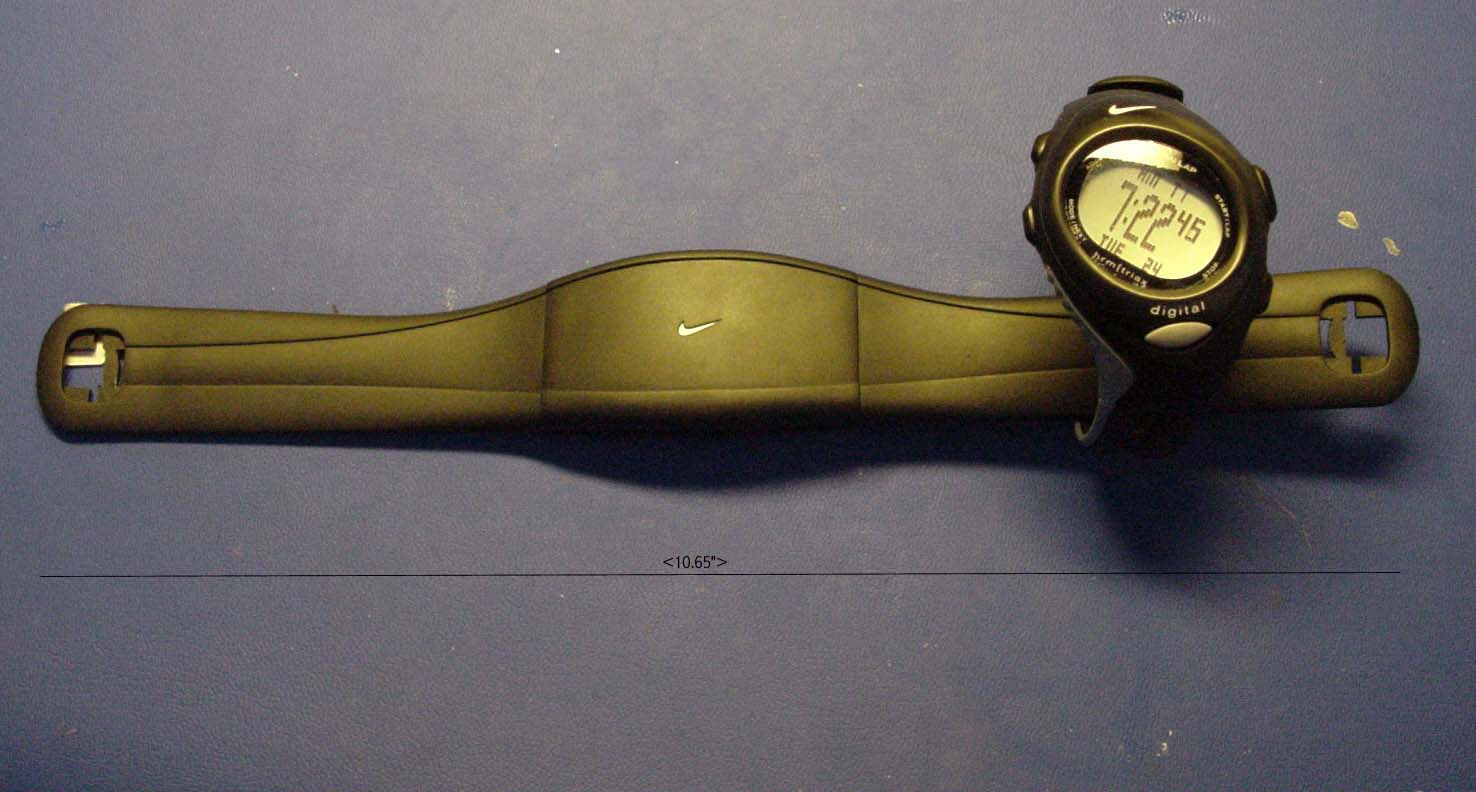
CSJDCB01Nike HRM100 Digital Chest Belt
National Electronics & Watch Co Ltd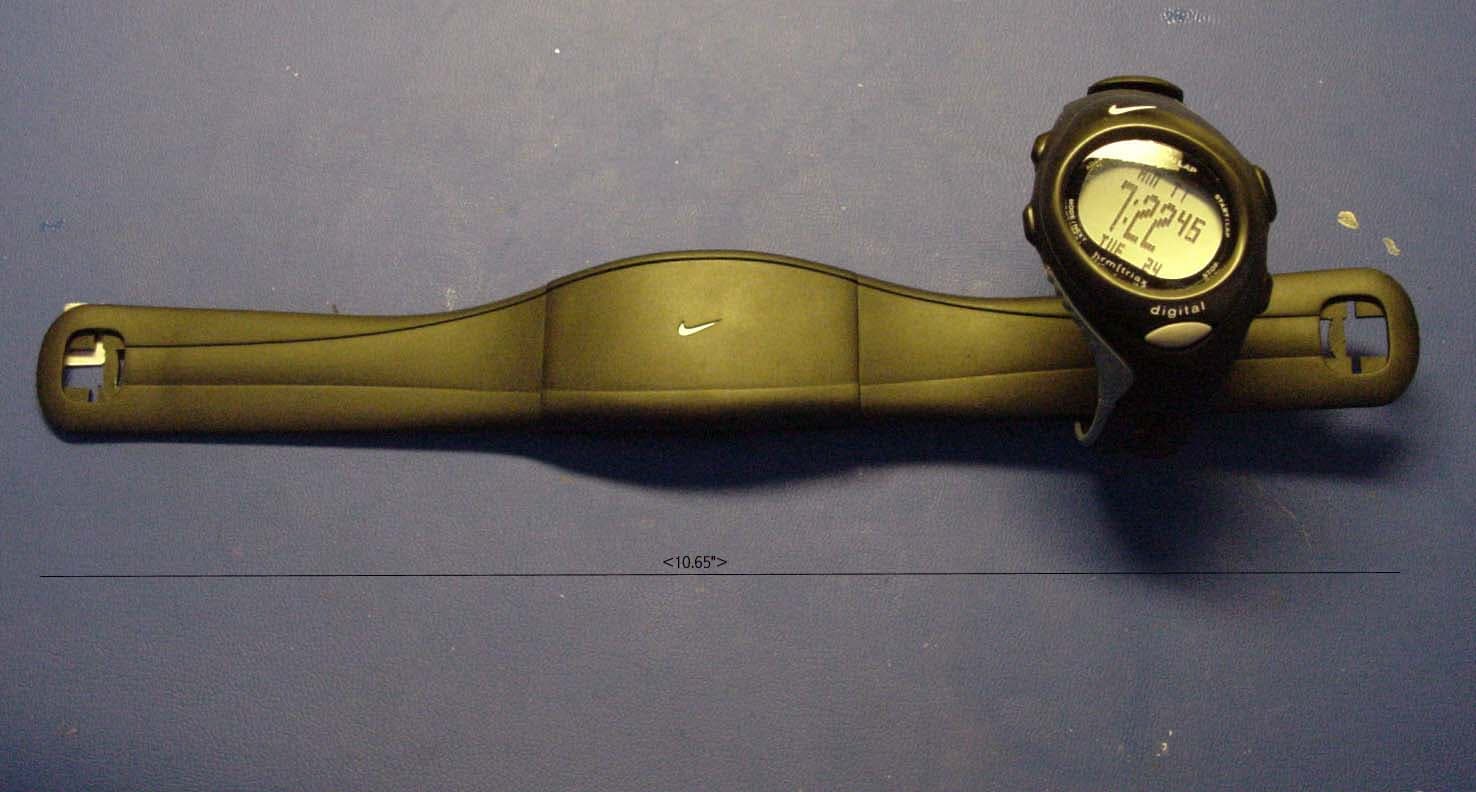
Click to zoom
Application Details
- Equipment Class
- DXX - Part 15 Low Power Communication Device Transmitter
- Date of Grant
- Sep 16, 2001
- Application Purpose
- Original Equipment
- Date of Application
- Sep 16, 2001
- Equipment Note
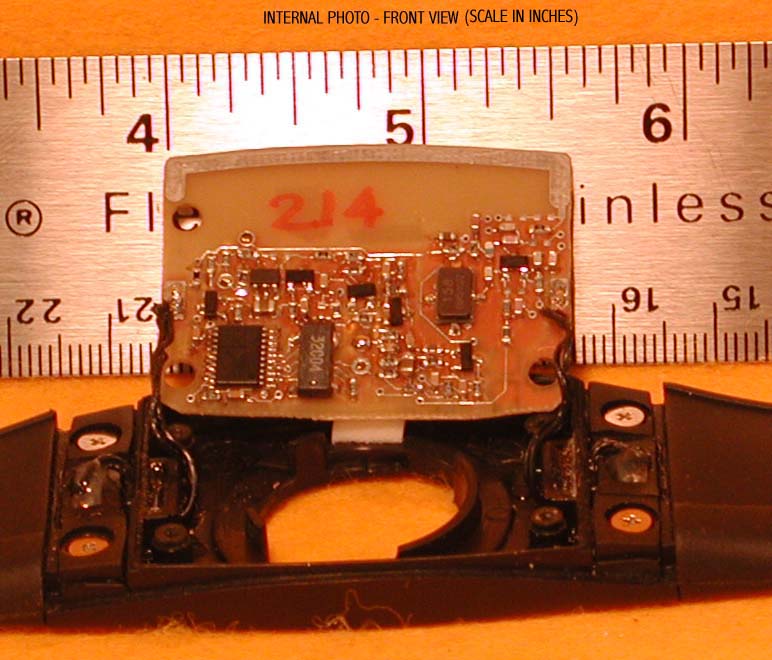
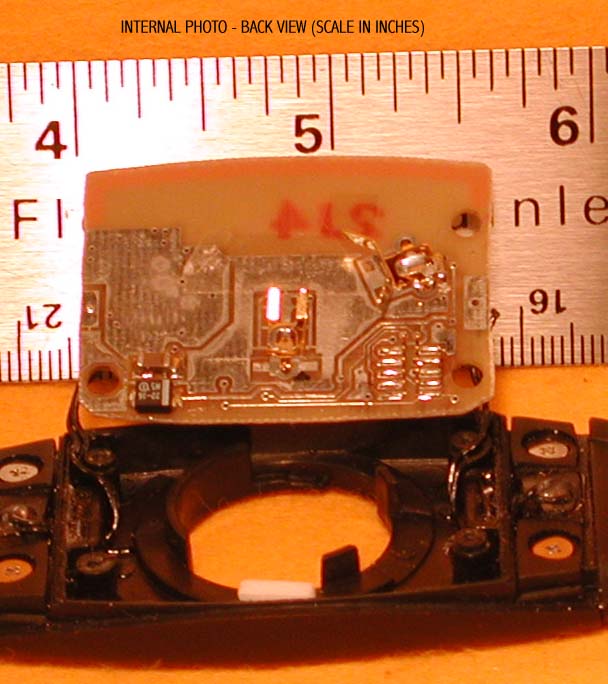
- Nike HRM100 Digital Chest Belt
- Frequency Range
- 916.49000000 - 916.51000000
- Country
- Hong Kong
Documents & Files
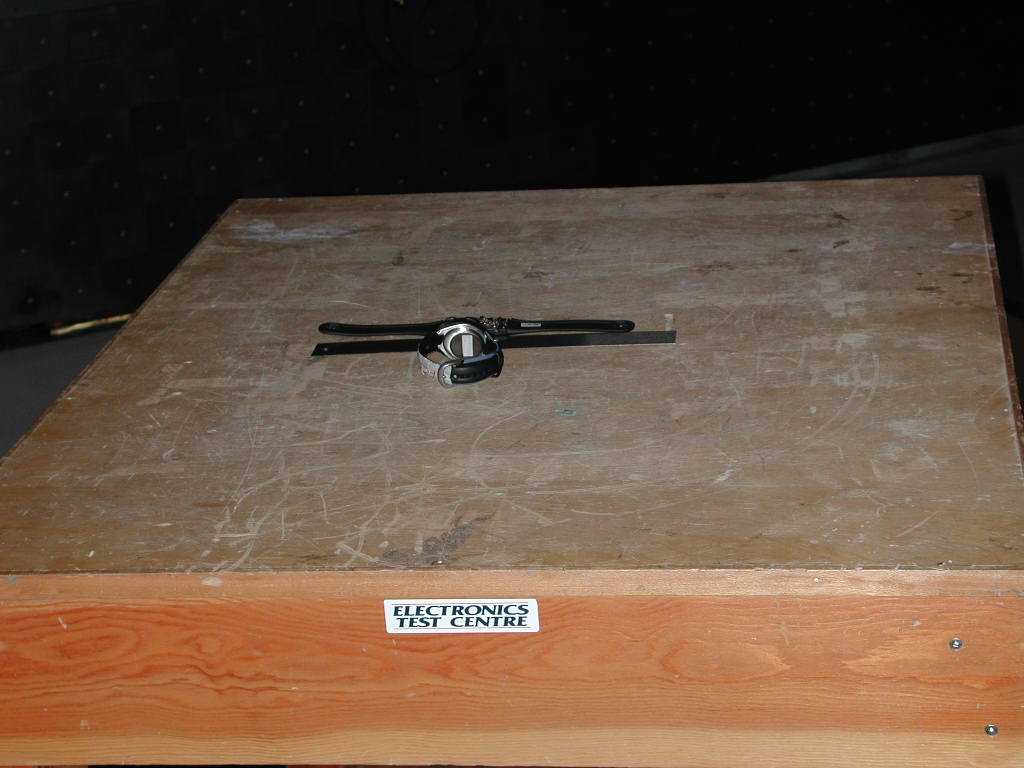
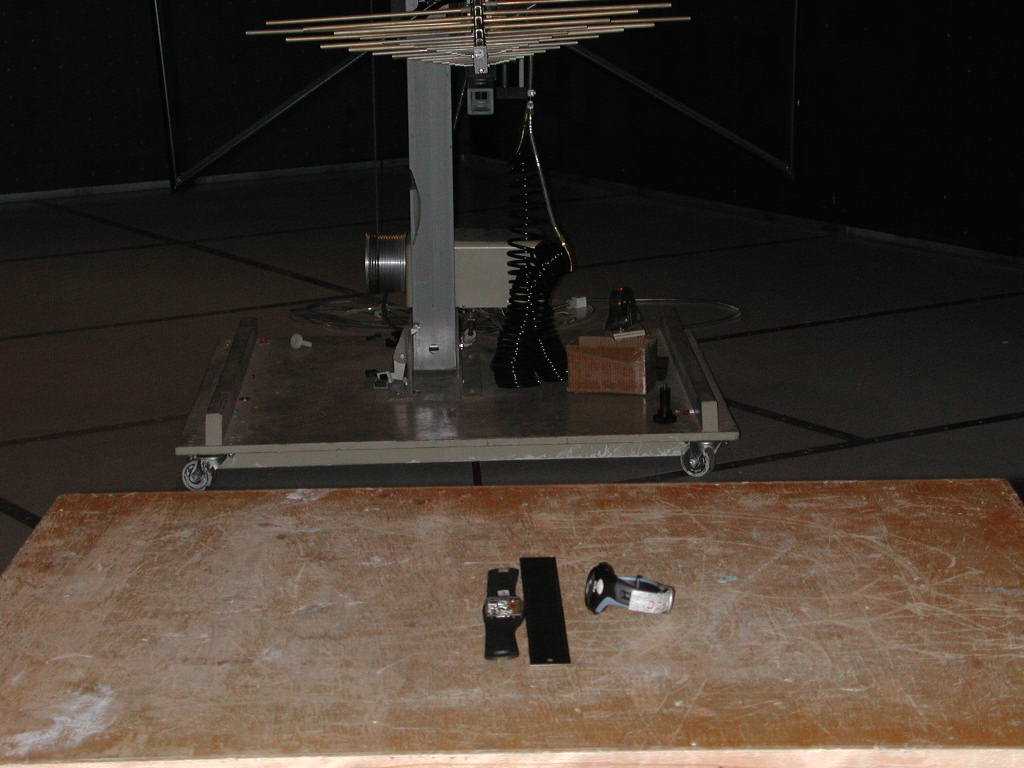
Document Text
Text extracted from the exhibit documents filed with the FCC. Open a document above to read the original.
Users Manual
1 HRM TRIAX 100 INSTRUCTIONS P.1 MODE D’EMPLOI P.21 HRM Triax 100 DigitalThis device complies with part 15 of the FCC Rules. Operation is subject to the followingtwo conditions: (1) This device may not cause harmful interference, and (2) this devicemust accept any interference that may cause undesired operation.Tested to comply with FCC Standards. For home or office use.FCC Warning: Changes or modifications not expressly approved by Nike could voidyour authority to operate this device under FCC regulations. © 2001 Nike, Inc. All rights reserved. HRM100.English.US 7/17/01 10:05 AM Page 1 2 3 CONTENTS Information is power . HRM Triax 100 is engineered to provide quick, one-touch access to a varietyof critical information during training and in competition. Used properly this heart rate monitor will help you train more effectively bydelivering accurate and timely heart rate readings. Whether your goal is toincrease your race performance using advanced training methods, improveyour fitness or just lose weight, you will find this to be a valuable tool. This manual combines step-by-step operational instructions to help youidentify the programmable features and functions of each specific mode. Itis not the goal of this manual to provide all of the information necessary toembark upon a training regimen. There are numerous books on the subject,good information on the Internet, and professional trainers affiliated withmost health clubs. Remember, this heart rate monitor is just one part of anintelligent exercise plan. Before beginning any exercise regimen you should consult your physicianor health professional. There are numerous factors to consider whendetermining your heart rate limits and exercise intensity level. Some ofthese factors include your age, the frequency with which you exercise andyour overall physical fitness. Throughout this manual look for the symbol to identify especiallyuseful and important information. GETTING STARTED 4 THE CHEST TRANSMITTER 6 OPERATING INSTRUCTIONS MODES 7 MAKING ADJUSTMENTS TO MODE SETTINGS 8 TIME 9 PULSE 9 GRAPH 12 CHRONOGRAPH 13 DATA 15 TIMER 16 ALARM 17 NIKE ELECTROLITE 18 TROUBLESHOOTING 18 SPECIFICATIONS 19 WARRANTY 19 REPAIR CENTERS 40 s HRM100.English.US 7/17/01 10:05 AM Page 2 5 4 We’ve tried to make this watch as easy as possible to use. Great care hasbeen taken to make the button functions consistent and clear. Even if youdon’t read the whole manual, you should be able to work your watch if youunderstand, in general, how the buttons work.BUTTON FUNCTIONS, LEFT SIDEADJUST/RESETThink of ADJUST/RESET as the button to use when you want to adjust, setor reset something. For example, if you want to adjust the time, or resetthe chronograph. This button is a little different than the other buttonsbecause you usually have to press and hold it for a few seconds. This is soyou don’t accidentally reset or adjust something. MODE/NEXTThe MODE/NEXT button will normally move you to the next mode. Whenyou are making adjustments or setting something, the MODE/NEXT buttonwill move you to the next adjustable element. GETTING STARTED BUTTON FUNCTIONS, RIGHT SIDE The buttons on the right hand side of the watch have more functions than thebuttons on the left side. For that reason we’ve included all the details for quickreference. START/LAP You can think of the START/LAP button as the “go”, “plus,” or “move forward”button. It also functions as an on/off switch in some modes. • In TIME mode, press to turn the chime on and off. • In CHRON mode, press to start the chronograph and mark lap completion.• In TIMER mode, press to start the countdown timer.• In PULSE mode, press to view time of day.• In GRAPH mode, press to move forward through the list of data points. • In DATA mode, press to move through the list of data points for each run.• In ALARM mode, press to turn the alarm on and off. • When making adjustments, press to advance the blinking element. STOPThe STOP button is the opposite of the START/LAP button. Think of it as the“stop,” “minus,” or “go backwards” button. This button will also allow you toalternate selections in some modes. • In TIME mode, press and hold to select time zone 1 or 2.• In CHRON mode, press to stop the chronograph and save run data to memory.• In TIMER mode, press to stop the countdown timer.• In PULSE mode, press to select zone 1 or 2.• In GRAPH mode, press to move backwards through the list of data points. • In ALARM mode, press to select alarm 1 or 2.• In DATA mode, press to select run number. • When making adjustments, press to reverse the blinking element. ELECTROLITE BUTTONThe ELECTROLITE button is used to turn on the light. If you press and hold the ELECTROLITE button, you can make the light come onat the press of any button. It’s great for night use. We call it auto-Electrolite. S T A R T / L A P T E S E R / T S U J D A T X E N / E D O M S T O P STOP START/LAP MODE/NEXT ADJUST/RESET ELECTROLITE HRM100.English.US 7/17/01 10:05 AM Page 4 6 7 The chest transmitter enables your watch to provide information about yourheart rate. You can always use your watch without the transmitter as amulti-function sport timepiece. The chest transmitter will function automatically as long as it is being worncorrectly and is within several feet of the watch. The grooved part of the chest transmitter houses sensors that timeelectrical pulses in your heart to determine heart rate. This information isthen transmitted to your watch. HRM Triax 100 will work best if both sensors on the grooved part of the chest strap are wet. A few drops of water or saliva should be sufficient tocover the sensors. POSITIONING THE CHESTTRANSMITTER 1: Attach the adjustable strap to the transmitter. 2: Wet the grooved electrodes with saliva or water. 3: Adjust the chest strap to fit comfortably and securely. It shouldbe tight enough that it won’t slipwhen you exercise. 4: Position the chest transmitter below the breast so that it sits onyour rib cage. Note: The chest strap is most e…
Text truncated - open the document above for the full version.
Cover Letter(s)
mailing address: suite 243, bay 1 – 206 5 th avenue west, cochrane, alberta T4C 1X3 p 403.932.9292 f 403.932.6521 w www.dynastream.com AGENCY AGREEMENT To whom it may concern: I appoint The Electronics Test Centre to act as the authorized agent in preparation of this radio application for registration of the Nike HRM 100 Digital Chest Belt under Part 15 of the FCC rules. This radio application is on the behalf Dynastream located in Cochrane, Alberta, Canada. Date: July 9, 2001 By: Victor Beda Printed: July 9, 2001
Cover Letter(s)
27 East Lake HillP.O. Box 3485 Airdrie, AlbertaAirdrie, Alberta T4B 2B7 T4B 2B7Phone: (403) 912-0037 Fax: (403) 912-0083 17 September, 2001 Federal Communications Commission 445 – 12 th Street S.W. Washington, DC 20554 USA Subject: Certification Application for the Dynastream Innovations model: Nike HRM100 Digital Chest Belt in accordance with FCC Part 15 subpart C of the rules. FCC ID: CSJDSB01 Our File No.: d05e2371 To Whom It May Concern: Please find the enclosed copy of Report D05E2371 providing you with the required information on a submission by Victor Beda of Dynastream Innovations, to be approved for Certification in accordance with FCC Part 15 subpart C of the rules. This submission is made by the Electronics Test Centre, acting as an agent on behalf of Dynastream Innovations located in Calgary, Alberta, CANADA. The formal application form and all the necessary exhibits are included. The letter allowing Dynastream Innovations to use grantee code CSJ is attached. A letter of confidentiality is also attached. The Part 2 warnings are located in the user manual on page one. If you have any questions regarding this submission, please do not hesitate to contact me. Sincerely, Warren Bauman Test Technologist Electronics Test Centre [email protected]
ID Label/Location Info
275 mm FCC & Regulatory Markings NIKE HRM 100 Digital Chest Belt 07 July 2001 CHINA Mold Insert
RF Exposure Info
Exhibit 11 - RF Exposure Info This exhibit is not applicable to this product. The output power is well below the limit. 916Mhz carrier signal.
Test Report
This report shall not be reproduced, except in full, without prior written approval of MPB Technologies Inc. Test Report Prepared By: Electronics Test Centre 27 East Lake Hill Airdrie, Alberta Canada T2B 2B7 [email protected] phone: (403) 912-0037 fax: (403) 912-0083 MPBT Report No.: d05e2371Rev: 2Date: 13 August, 2001 Report for Emissions Testing of: Nike HRM100 Digital Chest Belt In accordance with: FCC Part 15, Subpart C (2000) Test Personnel:Quang Tan Nguyen Prepared for:Dynastream Suit 243, Bay #1 206-5 th Avenue West Cochrane, Alberta T4C 1X3 _________________________ Client Acceptance Authorized Signatory _________________________ David Raynes Laboratory Supervisor Electronics Test Centre (Airdrie) Authorized Signatory Test Sample: Nike HRM100 Digital Chest Belt FCC Part 15, Subpart C (2000)Report No.:d05e2371 rev. 0 Page 2 of 26 This report shall not be reproduced, except in full, without prior written approval of MPB Technologies Inc. TABLE OF CONTENTS 1.0INTRODUCTION 1.1SCOPE 1.2APPLICANT 1.3APPLICABILITY 1.4TEST SAMPLE DESCRIPTION 1.5GENERAL TEST CONDITIONS AND ASSUMPTIONS 1.6SCOPE OF TESTING 1.6.1 VARIATIONS IN TEST METHODS 1.6.2 MARGINAL EMISSIONS MEASUREMENTS 1.6.3 TEST SAMPLE MODIFICATIONS 2.0ABBREVIATIONS 3.0MEASUREMENT UNCERTAINTY 4.0TEST CONCLUSION 4.1 CONDUCTED EMISSIONS AT AC LINES 4.2 RADIATED EMISSIONS 4.2.1OPERATION IN THE BAND 902 TO 928 MHZ EXCLUDING SPREAD SPECTRUM SYSTEMS 4.2.2RESTRICTED BANDS OF OPERATION 5.0TEST FACILITY 5.1 LOCATION 5.2 GROUNDING PLAN 5.3POWER 5.4 EMISSIONS PROFILE 5.5 TEST CONFIGURATION 5.5.1TABLETOP EQUIPMENT 5.5.2RACK MOUNT 6.0TEST EQUIPMENT 6.1 RADIATED EMISSIONS 6.2 CONDUCTED EMISSIONS 6.3 CALIBRATION APPENDIX A:Test Sample Description:Nike HRM100 Digital Chest Belt Test Sample: Nike HRM100 Digital Chest Belt FCC Part 15, Subpart C (2000)Report No.:d05e2371 rev. 0 Page 3 of 26 This report shall not be reproduced, except in full, without prior written approval of MPB Technologies Inc. 1.0 INTRODUCTION 1.1SCOPE The purpose of this report is to present the findings and results of compliance testing performed in accordance with CFR Title 47 FCC Part 15, Subpart C, Intentional Radiators. 1.2APPLICANT This test report has been prepared for Dynastream, located in Cochrane, Alberta, Canada. 1.3APPLICABILITY All test procedures, limits, and results defined in this document apply to the Dynastream DHRM unit, referred to herein as the Equipment Under Test (EUT). The results contained in this report relate only to the item tested. This report does not imply product endorsement by NVLAP or the Canadian or US governments. 1.4TEST SAMPLE DESCRIPTION The test sample provided for testing was a Nike HRM100 Digital Chest Belt: Product Type:Sports / Recreation Model Number:N/A Serial Number:203 Cables:Power cable from the batteries to the DHRM Power Requirements:3 VDC Peripheral Equipment: External DC power (two AA batteries) source were connected to the DHRM Brief Functional Description: Targetted to athletes who want to be able to measure their heart rate while being active. Transmits a 50-bit digital signal every second to a watch worn on the athlete’s wrist. More detailed information is provided by Dynastream in Appendix A. Test Sample: Nike HRM100 Digital Chest Belt FCC Part 15, Subpart C (2000)Report No.:d05e2371 rev. 0 Page 4 of 26 This report shall not be reproduced, except in full, without prior written approval of MPB Technologies Inc. 1.5GENERAL TEST CONDITIONS AND ASSUMPTIONS The EUT was set up and exercised using the configurations, modes of operation and arrangements defined in this report only. All inputs and outputs to and from other equipment associated with the EUT were adequately simulated. All testing, unless otherwise noted, was performed under the following environmental conditions: Temperature:17 to 23 °C Humidity:30 to 50 % Test Sample: Nike HRM100 Digital Chest Belt FCC Part 15, Subpart C (2000)Report No.:d05e2371 rev. 0 Page 5 of 26 This report shall not be reproduced, except in full, without prior written approval of MPB Technologies Inc. 1.6SCOPE OF TESTING Testing was performed in accordance with FCC Part 15 Subpart C (2000), and ANSI C63.4 (1992). 1.6.1VARIATIONS IN TEST METHODS There were no variations from the test procedures outlined above. 1.6.2MARGINAL EMISSIONS MEASUREMENTS As noted in Section 4, some emissions were measured to be within -6 dB of the specified limit: 1.6.3TEST SAMPLE MODIFICATIONS There were no equipment modifications during test performance. 2.0 ABBREVIATIONS APAverage Peak CE-Conducted Emissions E -Field - Electric Field H-Field - Magnetic Field N/T-Not Tested N/A-Not Applicable PK-Peak QP-Quasi Peak RE-Radiated Emissions 3.0 MEASUREMENT UNCERTAINTY For Radiated E-Field Emissions and Conducted Emissions, the uncertainties in the measurements were calculated using the methods outlined in the NAMAS document, NIS81: May 1984. Frequency= ± 1 kHz Amplitude (RE)= ± 4.01 dB Amplitude (CE)= ± 3.25 dB Test Sample: Nike HRM100 Digital Chest Belt FCC Part 15, Subpart C (2000)Report No.:d05e2371 rev. 0 Page 6 of 26 This report shall not be reproduced, except in full, without prior written approval of MPB Technologies Inc. 4.0 TEST CONCLUSION The EUT was subjected to the following tests. Compliance status is indicated as PASS, Marginal Pass, or FAIL. The following table summarizes the test results in terms of the specification and class or level applied, the unique test sample identification, the EUT modification state, and configuration as applicable. TEST CASE TEST TYPESPECIFICATIONTEST SAMPLE MOD. STATE CONFIGURATIONRESULT §4.1Conducted Emissions FCC Part 15.207Nike HRM100 Digital Chest Belt nilSimulated Installation N/A §4.2Radiated Emissions FCC Parts 15.249, 15.209 and 15.205 Nike HRM100 Digital Chest Belt nilSimulated Installation PASS STATEMENT OF COMPLIANCE The client equipment referred to in this report was found to comply with the requirements as stated above. Test Sample: Nike HRM100 Digital Chest…
Text truncated - open the document above for the full version.
Contact Information
Applicant
H P Chan
Technical Contact
Electronics Test CentreWarren Bauman
[email protected](403) 912 0037
27 East Lake Hill · Airdrie, Alberta · Canada
Test Firm
Electronics Test CentreV Mediboina
Technical Specifications
| # | Rule Parts | Frequency Range | Power Output |
|---|---|---|---|
| 1 | 15C | 916.49 MHz - 916.51 MHz | - |