DD4QLXD1G50Licensed Non-Broadcast Transmitter Worn on Body
Shure Incorporated
Click to zoom
Application Details
- Equipment Class
- TNT - Licensed Non-Broadcast Transmitter Worn on Body
- Date of Grant
- Apr 14, 2014
- Application Purpose
- Original Equipment
- Date of Application
- Apr 14, 2014
- Equipment Note
- Licensed Non-Broadcast Transmitter Worn on Body
- Frequency Range
- 470.00000000 - 534.00000000
- Company
- Shure Incorporated
- Country
- United States
Documents & Files
Document Text
Text extracted from the exhibit documents filed with the FCC. Open a document above to read the original.
Users Manual
QLX-D Wireless System Shure Incorporated Confidential © 2013 Shure Incorporated 27A22351 (Rev. Preliminary) Printed in U.S.A. Please Note: The following document layout is preliminary to identify, organize, and prioritize content. All copy including titles, descriptions, photos, specifications, and artwork are not final at this time. User Guide This device is a prototype for testing purpose only. It is not intended to be placed on the market nor be sold. It shall be returned to the Shure Incorporated headquarters located in Niles, Illinois USA after testing. 3 Do Not Duplicate or Redistribute IMPORTANT SAFETY INSTRUCTIONS 1. READ these instructions. 2. KEEP these instructions. 3. HEED all warnings. 4. FOLLOW all instructions. 5. DO NOT use this apparatus near water. 6. CLEAN ONLY with dry cloth. 7. DO NOT block any ventilation openings. Allow sufficient distances for adequate ventila- tion and install in accordance with the manufacturer’s instructions. 8. DO NOT install near any heat sources such as open flames, radiators, heat registers, stoves, or other apparatus (including amplifiers) that produce heat. Do not place any open flame sources on the product. 9. DO NOT defeat the safety purpose of the polarized or groundingtype plug. A polarized plug has two blades with one wider than the other. A grounding type plug has two blades and a third grounding prong. The wider blade or the third prong are provided for your safety. If the provided plug does not fit into your outlet, consult an electrician for replace- ment of the obsolete outlet. 10. PROTECT the power cord from being walked on or pinched, particularly at plugs, conve- nience receptacles, and the point where they exit from the apparatus. 11. ONLY USE attachments/accessories specified by the manufacturer. 12. USE only with a cart, stand, tripod, bracket, or table specified by the manu- facturer, or sold with the apparatus. When a cart is used, use caution when moving the cart/apparatus combination to avoid injury from tip-over. 13. UNPLUG this apparatus during lightning storms or when unused for long periods of time. 14. REFER all servicing to qualified service personnel. Servicing is required when the ap- paratus has been damaged in any way, such as power supply cord or plug is damaged, liquid has been spilled or objects have fallen into the apparatus, the apparatus has been exposed to rain or moisture, does not operate normally, or has been dropped. 15. DO NOT expose the apparatus to dripping and splashing. DO NOT put objects filled with liquids, such as vases, on the apparatus. 16. The MAINS plug or an appliance coupler shall remain readily operable. 17. The airborne noise of the Apparatus does not exceed 70dB (A). 18. Apparatus with CLASS I construction shall be connected to a MAINS socket outlet with a protective earthing connection. 19. To reduce the risk of fire or electric shock, do not expose this apparatus to rain or moisture. 20. Do not attempt to modify this product. Doing so could result in personal injury and/or product failure. 21. Operate this product within its specified operating temperature range. This symbol indicates that dangerous voltage constituting a risk of electric shock is present within this unit. This symbol indicates that there are important operating and mainte- nance instructions in the literature accompanying this unit. WARNING: This product contains a chemical known to the State of California to cause cancer and birth defects or other reproductive harm. WARNING • Battery packs may explode or release toxic materials. Risk of fire or burns. Do not open, crush, modify, disassemble, heat above 140°F (60°C), or incinerate. • Follow instructions from manufacturer • Only use Shure charger to recharge Shure rechargeable batteries • WARNING: Danger of explosion if battery incorrectly replaced. Replace only with same or equivalent type. • Never put batteries in mouth. If swallowed, contact your physician or local poison control center • Do not short circuit; may cause burns or catch fire • Do not charge or use battery packs other than Shure rechargeable batteries • Dispose of battery packs properly. Check with local vendor for proper disposal of used battery packs. • Batteries (battery pack or batteries installed) shall not be exposed to excessive heat such as sunshine, fire or the like Note: Use only with the included power supply or a Shure-approved equivalent. LICENSING INFORMATION Licensing: A ministerial license to operate this equipment may be required in certain areas. Consult your national authority for possible requirements. Changes or modifications not expressly approved by Shure Incorporated could void your authority to operate the equipment. Licensing of Shure wireless microphone equipment is the user’s responsibility, and licensability depends on the user’s classification and application, and on the selected frequency. Shure strongly urges the user to contact the appropriate telecommunications authority concerning proper licensing, and before choosing and ordering frequencies. This Class B digital apparatus complies with Canadian ICES-003. Cet appareil numérique de la classe B est conforme à la norme NMB-003 du Canada. Information to the user This equipment has been tested and found to comply with the limits for a Class B digital device, pursuant to Part 15 of the FCC Rules. These limits are designed to provide reasonable protection against harmful interference in a residential installation. This equipment generates uses and can radiate radio frequency energy and, if not installed and used in accordance with the instructions, may cause harmful interference to radio communications. However, there is no guarantee that interference will not occur in a particular installation. If this equipment does cause harmful interference to radio or television reception, which can be determined by turning the equipment off and on, the user is encouraged to try to correct the interference by one or more of the f…
Text truncated - open the document above for the full version.
Cover Letter(s)
March 13, 2014 Elite Electronic Engineering, Inc. 1516 Centre Circle Downers Grove, Illinois 60515-1082 SUBJECT: REQUEST FOR NON-DISCLOSURE FOR FCC ID: DD4QLXD1G50 To Whom It May Concern: Pursuant to 47 CFR Section 0.459, Shure Incorporated hereby requests non-disclosure and confidential treatment of the following materials submitted in support of FCC certification application for FCC ID # DD4QLXD1G50: a. Schematic Diagrams b. Operational Description c. Block Diagram d. Parts List e. Tune Up Procedure Above materials contain trade secrets, proprietary and technical information which would customarily be guarded from competitors under 47 CFR section 0.457(d)(2). Disclosure or publication of any portion of this company confidential material to other parties could cause substantial competitive harm and provide unjustified benefits for competitors. Shure Incorporated understands that pursuant to 47 CFR section 0.457(d)(1)(ii) disclosure of the applicant and all accompanying documentation will not be made before the date of the grant. Sincerely yours, Craig Kozokar EMC Project Engineer, Global Compliance Shure Incorporated
RF Exposure Info
March 20, 2014 Dan Crowder Elite Electronic Engineering Inc. 1516 Centre Circle Downers Grove, Illinois 60515-1082 Subject: QLXD1 and QLXD2 SAR Exclusion Dear Mr. Crowder This letter is to confirm that the Shure QLXD1 and QLXD2 wireless microphone transmitters meet the standalone SAR test exclusion considerations as described in Paragraph 4.3.1 of FCC KDB 447498, based on the specified calculation: [max. power of channel, mW] / [min. test separation distance, mm] x ඥ ݂ ሺீு௭ሻ ≤ 3 For QLXD1 and QLXD2, [10 mW] / [5 mm] x √ 0.696 = 1.7 ≤ 3 Where max. power = 10 mW min test separation distance = 5 mm max. frequency = 696 MHz Sincerely, Craig Kozokar EMC Project Engineer, Global Compliance Shure Incorporated
Test Report
April 8, 2014 Daniel E. Crowder Elite Electronic Engineering Inc. 1516 Centre Circle Downers Grove, IL 60515-1082 Dear Mr. Crowder: The Shure Electromagnetic Compatibility Laboratory (SEL) performed a series of tests on the QLXD1 and QLXD2 transmitters to determine compliance with the requirements of Federal Communications Commission (FCC) Part 74H and Industry Canada (IC) RSS-123. The results of those tests are published in two reports, SEL-015A1 and SEL-015A2. Upon review, it was discovered that occupied-bandwidth (OBW) emission masks shown on some figures in Appendix C of both documents are incorrect. In those figures showing the signal trace for 1mW output power, the portion of the mask removed from the carrier frequency by more than 250% is incorrectly plotted, giving a limit approximately 10dB more severe than that specified by the relationships given in FCC Part 74.861 and IC RSS-123, section 5. SEL has determined that this was brought about by a limitation in the test instrument. A review of the OBW data in the affected figures confirms that the compliance of QLXD1 and QLXD2 is not in question, and in fact both enjoy greater compliance margin than shown. Steps are being taken to correct the mask overlay for future tests. Thank you for your assistance. Sincerely, Craig Kozokar EMC Project Engineer, Global Compliance Shure Incorporated
Test Report
Engineering Test Report No. SEL-015X1 SEL-F-11 Main Body Test Form Page 1 of 102 Form Revision: 1 O:\Quality\Product Conformance-Lab Services\Global Compliance\Shure EMC Lab\ Controlled Documents\Forms and Templates\SEL-F-11 Main Body Test Form.docx SHURE ELECTROMAGNETIC COMPATIBILITY LABORATORY TEST REPORT TEST REPORT TITLE: Electromagnetic Compatibility Tests of the Shure QLXD1 Transmitter TEST ITEM DESCRIPTION: QLXD1 is a digital wireless transmitter intended for use in mid-tier presentation, installed, and performance markets. QLXD1 operates in the UHF TV band (470 to 696 MHz) with individual models for specific regional bands. Regionally dependent 1mW and 10mW output power modes are available. Both transmitters are capable of operating with AA alkaline batteries or Shure SB900 rechargeable battery packs. For: Shure Incorporated 5800 West Touhy Avenue Niles, IL 60714 Project ID Number: SEL-015 Date Tested: October 14, 2013 – March 17, 2014 Test Personnel: Lovell Cueto, Tom Braxton Test Specification: FCC Part 74, Subpart H – Low Power Auxiliary Stations IC RSS-Gen – General Requirements and Information for the Certification of Radio Apparatus IC RSS-123 – Spectrum Management and Telecommunications Radio Standards Specification: Licensed Low-Power Radio Apparatus Engineering Test Report No. SEL-015X1 SEL-F-11 Main Body Test Form Page 2 of 102 Form Revision: 1 O:\Quality\Product Conformance-Lab Services\Global Compliance\Shure EMC Lab\ Controlled Documents\Forms and Templates\SEL-F-11 Main Body Test Form.docx TABLE OF CONTENTS PARAGRAPH DESCRIPTION OF CONTENTS PAGE NO. 0. Report Revision History ...................................................................................................................................... 4 1. Introduction ......................................................................................................................................................... 5 1.1. Scope of Tests ............................................................................................................................................ 5 1.2. Purpose ..................................................................................................................................................... 5 1.3. Deviation, Additions and Exclusions .......................................................................................................... 5 1.4. EMC Laboratory Identification ................................................................................................................... 5 1.5. Summary of Tests Performed .................................................................................................................... 5 2. Applicable Documents ......................................................................................................................................... 6 3. EUT Setup and Operation .................................................................................................................................... 6 3.1. General Description ................................................................................................................................... 6 3.2. Test Samples ............................................................................................................................................. 7 3.3. Test Setup .................................................................................................................................................. 7 3.3.1. Power Input ....................................................................................................................................... 7 3.3.2. Signal Input/Output Leads ................................................................................................................. 7 3.3.3. Test Frequency Range.....................................................................................................................................7 3.3.4. Grounding Considerations ................................................................................................................. 7 3.4. Operational Mode ..................................................................................................................................... 8 3.4.1. Frequency and power output.........................................................................................................................8 4. Test Instrumentation ........................................................................................................................................... 8 5. Test Procedures ................................................................................................................................................... 8 6. Other Test Conditions .......................................................................................................................................... 8 6.1. Test Personnel ........................................................................................................................................... 8 6.2. Disposition of the EUT ............................................................................................................................... 8 7. Results of Tests .................................................................................................................................................... 9 8. Conclusions .......................................................................................................................................................... 9 9. Certification ......................................................................................................................................................... 9 10. Equipment List .............................................................................................................................................. .....10 11. Appendix A - Conducted RF Power…
Text truncated - open the document above for the full version.
Contact Information
Applicant
Craig Kozokar(EMC Project Engineer)
Technical Contact
Technical Specifications
| # | Rule Parts | Frequency Range | Power Output | Emission | Tolerance |
|---|---|---|---|---|---|
| 1 | 74 | 470 MHz - 534 MHz | 10.00 mW | 165KD1E | 3500.0000000000 Hz |
Other Applications from Shure Incorporated
DD4IMXBP
Dec 24, 2025UC Wall
Equipment Class
NII - Unlicensed National Information Infrastructure TXDD4SLXD3EG57
Jul 25, 2025Plug-on Wireless Transmitter
Equipment Class
DTS - Digital Transmission System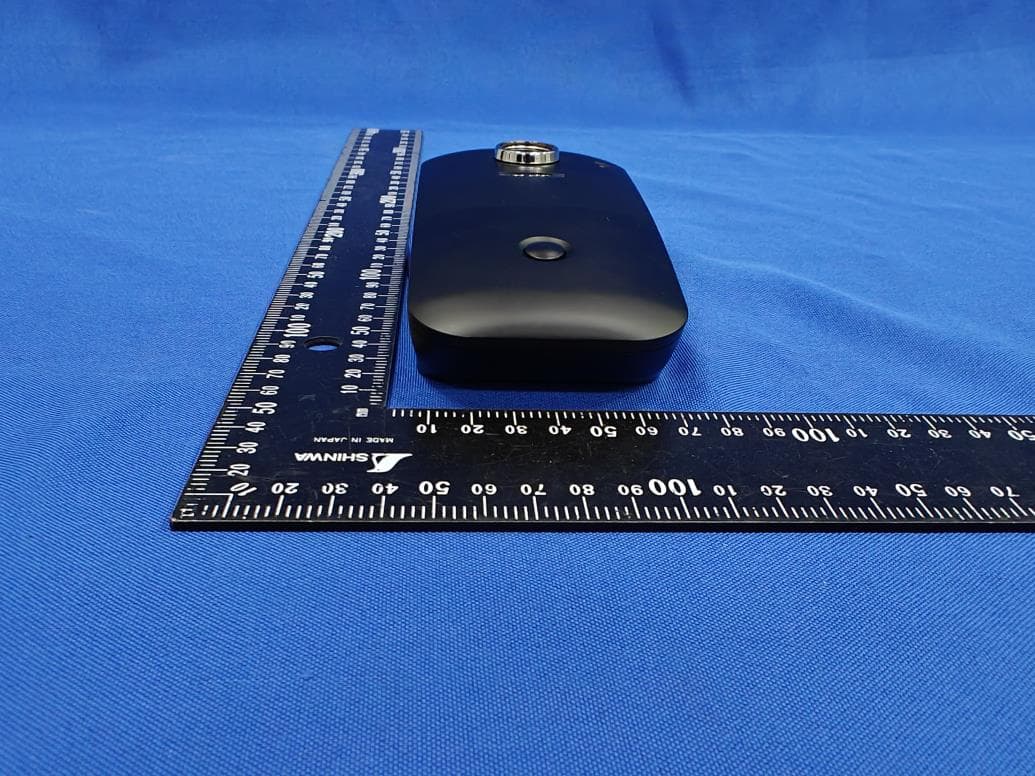
DD4ULXD8G50
Sep 18, 2024Wireless Gooseneck Transmitter
Equipment Class
DWM - Part 15 Wireless Microphone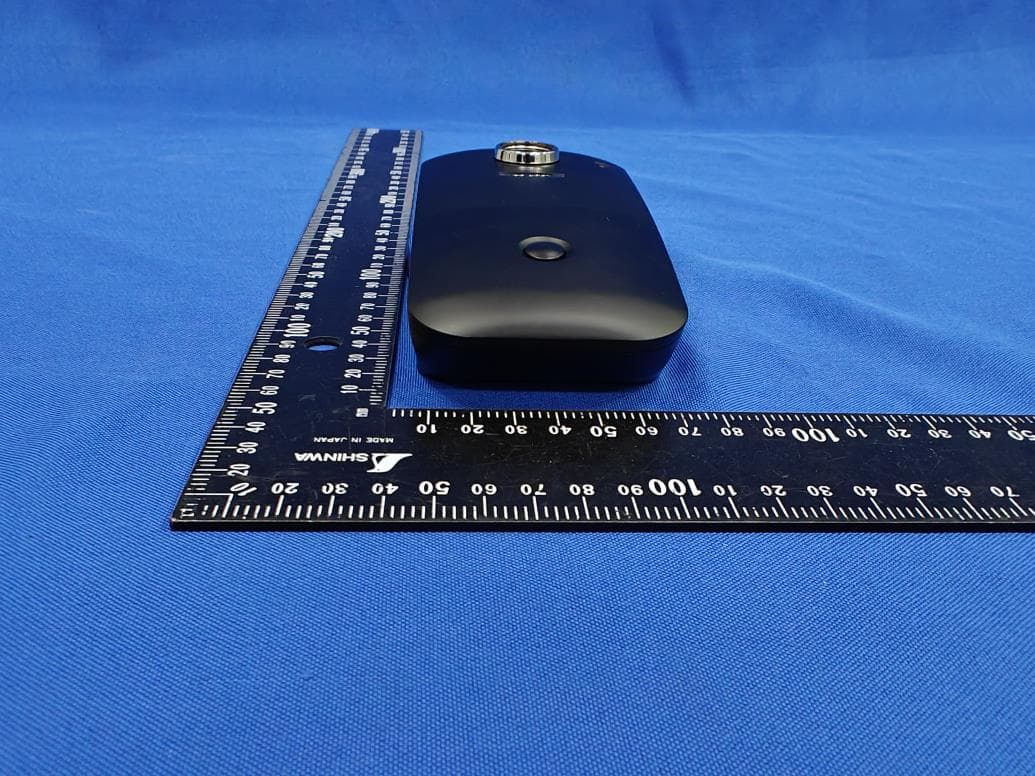
DD4ULXD8H50
Sep 18, 2024Wireless Gooseneck Transmitter
Equipment Class
DWM - Part 15 Wireless Microphone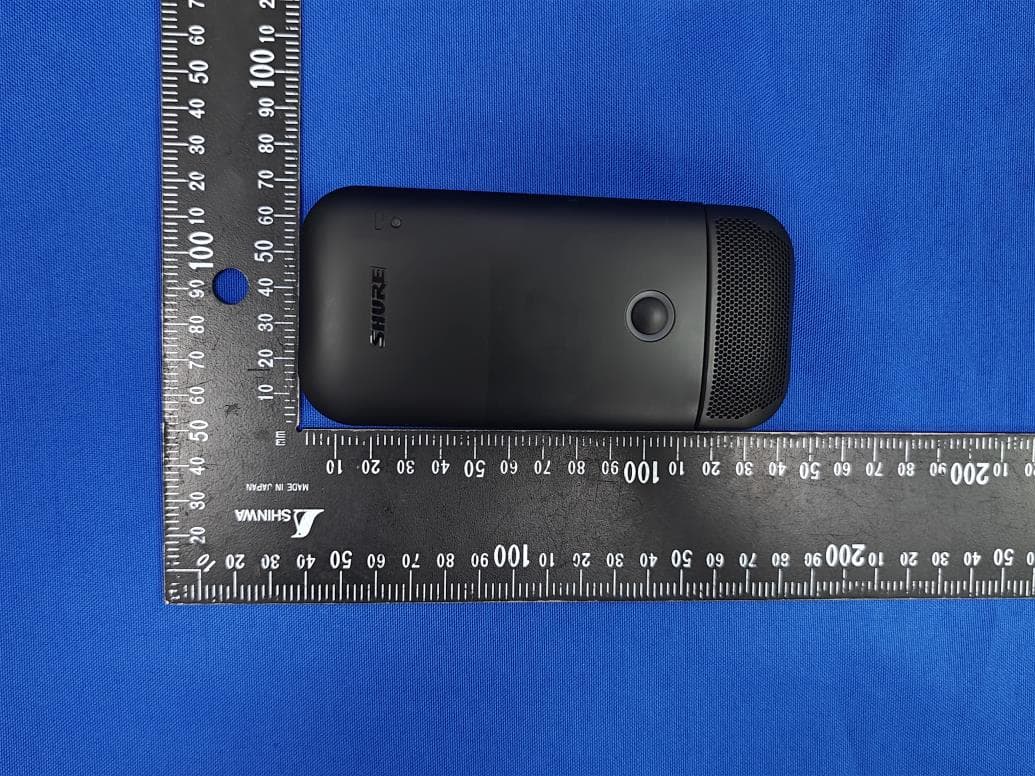
DD4ULXD6G50
Sep 08, 2024Wireless Boundary Transmitter
Equipment Class
TLD - Licensed LPAS Device