IHDT56EL1Dual-Band CDMA Transceiver
Motorola Mobility LLC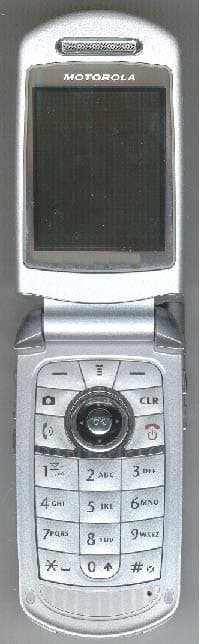
Click to zoom
Application Details
- Equipment Class
- PCE - PCS Licensed Transmitter held to ear
- Date of Grant
- Jan 13, 2005
- Application Purpose
- Original Equipment
- Date of Application
- Jan 13, 2005
- Equipment Note
- Dual-Band CDMA Transceiver
- Frequency Range
- 1851.25000000 - 1908.75000000
- Company
- Motorola Mobility LLC
- Country
- United States
Documents & Files
Document Text
Text extracted from the exhibit documents filed with the FCC. Open a document above to read the original.
Users Manual
APPLICANT: MOTOROLA, INC. FCC ID: IHDT56EL1 EXHIBIT 8 INSTRUCTION MANUAL A preliminary draft copy of the Users Manual follows: E815 CDMA 1 Welcome Welcome to the world of Motorola digital wireless communications! We are pleased that you have chosen the Motorola E815 CDMA wireless phone. 032407o Camera Key CLR Key Volume Keys Adjust earpiece & ringer volume. Speakerphone Key Voice Recognition Key Press once to activate speaker- independent voice recognition. Press & hold to record voice records, contacts, & shortcut names. 5-Way Navigation Key Scroll through menus & lists, set feature values. Press K key in center to select highlighted item. Accessory Port Send Key Make & answer calls, view recently dialed calls list. Left Soft Key Perform functions identified by left display prompt. Right Soft Key Perform functions identified by right display prompt. Power/End Key Turn phone on/off, end phone calls, exit menus. 2 Check It Out! FeatureDescription Take PhotoPress the camera key to activate the camera, point lens at subject, press CAPTURE key to take a photo. Send PhotoSend the photo to a phone number: STORE > Send in Message 032408o Camera Lens Take photos & videoclips to send to others & use on your phone. Camera Key External Display Camera Light Projected when taking photos that require extra light. Headset Jack Memory Card Slot 3 Set Photo as Picture Caller ID After you capture a photo, assign it to a Contacts entry to enable picture caller ID: STORE > Apply as Contacts Entry Send Multimedia Message Send a multimedia message with pictures, animations, sounds, and videos: M > Messaging > Create Message > New PIX Message Send Text Message Send a text message: M > Messaging > Create Message > New TXT Message Read Multimedia Message Read a new multimedia message or letter that you have received Press READ key. Play Video ClipPlay a video clip: M > Media Gallery > Videos > video clip > PLAY Wireless Connection Set up a Bluetooth® wireless connection to a headset accessory, car kit, or external device: M > Settings > Connection > Bluetooth Link > Handsfree > [Look For Devices] Note: If the Bluetooth power is turned off in your phone., you will be prompted to turn it on. FeatureDescription 032380o 032380o 032380o 4 Motorola, Inc. Consumer Advocacy Office 1307 East Algonquin Road Schaumburg, IL 60196 www.motorola.com 1-800-331-6456 (United States) 1-888-390-6456 (TTY/TDD United States for hearing impaired) 1-800-461-4575 (Canada) MOTOROLA and the Stylized M Logo are registered in the US Patent & Trademark Office. The Bluetooth trademarks are owned by their proprietor and used by Motorola, Inc. under license. All other product or service names are the property of their respective owners. © Motorola, Inc., 2004. The information contained in Motorola’s user’s guides is believed to be correct at the time of printing. Motorola reserves the right to change or modify any information or specifications without notice. The contents of Motorola’s user’s guides are provided “as is.” Except as required by applicable law, no warranties of any kind, either express or implied, including, but not limited to, the implied warranties of merchantability and fitness for a particular purpose, are made in relation to the accuracy, reliability, or contents of this guide. Manual Number: 6809491A79-O 5 Contents Check It Out! . . . . . . . . . . . . . . . . . . . . . . . . . . . . . . . . . . . . 2 Getting Started . . . . . . . . . . . . . . . . . . . . . . . . . . . . . . . . . . 8 About This Guide . . . . . . . . . . . . . . . . . . . . . . . . . . . . . . . 8 Installing and Removing the Memory Card. . . . . . . . . . . . 9 Battery Tips . . . . . . . . . . . . . . . . . . . . . . . . . . . . . . . . . . 11 Installing the Battery . . . . . . . . . . . . . . . . . . . . . . . . . . . . 12 Charging the Battery. . . . . . . . . . . . . . . . . . . . . . . . . . . . 12 Turning Your Phone On. . . . . . . . . . . . . . . . . . . . . . . . . . 14 Adjusting Volume . . . . . . . . . . . . . . . . . . . . . . . . . . . . . . 14 Making a Call . . . . . . . . . . . . . . . . . . . . . . . . . . . . . . . . . 15 Answering a Call . . . . . . . . . . . . . . . . . . . . . . . . . . . . . . . 15 Changing the Call Alert. . . . . . . . . . . . . . . . . . . . . . . . . . 15 Viewing Your Phone Number . . . . . . . . . . . . . . . . . . . . . 16 Highlight Features . . . . . . . . . . . . . . . . . . . . . . . . . . . . . . 17 Taking and Sending a Photo. . . . . . . . . . . . . . . . . . . . . . 17 Recording and Playing Video Clips . . . . . . . . . . . . . . . . 20 Sending a Multimedia Message . . . . . . . . . . . . . . . . . . . 24 Receiving a Multimedia Message . . . . . . . . . . . . . . . . . . 26 Using a Bluetooth Wireless Connection . . . . . . . . . . . . . 27 TTY Operation . . . . . . . . . . . . . . . . . . . . . . . . . . . . . . . . 28 Learning to Use Your Phone . . . . . . . . . . . . . . . . . . . . . . 31 Using the Display . . . . . . . . . . . . . . . . . . . . . . . . . . . . . . 31 Using the 5-Way Navigation Key. . . . . . . . . . . . . . . . . . . 33 Using Menus. . . . . . . . . . . . . . . . . . . . . . . . . . . . . . . . . . 34 Entering Text . . . . . . . . . . . . . . . . . . . . . . . . . . . . . . . . . . 36 Using the External Display . . . . . . . . . . . . . . . . . . . . . . . 45 Using a Removable Memory Card . . . . . . . . . . . . . . . . . 46 Using the Handsfree Speaker. . . . . . . . . . . . . . . . . . . . . 48 6 Changing a Code, PIN, or Password. . . . . . . . . . . . . . . 49 Locking and Unlocking Your Keypad . . . . . . . . . . . . . . . 49 Locking and Unlocking Your Phone. . . . . . . . . . . . . . . . 50 If You Forget a Code or Password. . . . . . . . . . . . . . . . . 51 Setting Up Your Phone . . . . . . . . . . . . . . . . . . . . . . . . . . 53 Storing Your Name and Phone Number . . . . . . . . . . . . 53 Setting an Alert Style . . . . . . . . . . . . . . . . . . . . . . . . . . 53 Setting Answer Opt…
Text truncated - open the document above for the full version.
Users Manual
IMPORTANT SAFETY AND LEGAL INFORMATION> 2 Software Copyright Notice The Motorola products described in this manual may include copyrighted Motorola and third party software stored in semiconductor memories or other media. Laws in the United States and other countries preserve for Motorola and third party software providers certain exclusive rights for copyrighted software, such as the exclusive rights to distribute or reproduce the copyrighted software. Accordingly, any copyrighted software contained in the Motorola products may not be modified, reverse-engineered, distributed, or reproduced in any manner to the extent allowed by law. Furthermore, the purchase of the Motorola products shall not be deemed to grant either directly or by implication, estoppel, or otherwise, any license under the copyrights, patents, or patent applications of Motorola or any third party software provider, except for the normal, non-exclusive, royalty-free license to use that arises by operation of law in the sale of a product. Part Number: 6809476A21-O 3 Contents Safety and General Information . . . . . . . . . . . . . . . . . . . . 4 FDA Consumer Information on Wireless Phones. . . . . 10 Product Registration . . . . . . . . . . . . . . . . . . . . . . . . . . . . 20 RF Energy Interference . . . . . . . . . . . . . . . . . . . . . . . . . . 20 Export Law Assurances. . . . . . . . . . . . . . . . . . . . . . . . . . 20 Wireless: The New Recyclable . . . . . . . . . . . . . . . . . . . . 21 Wireless Phone Safety Tips . . . . . . . . . . . . . . . . . . . . . . 23 4 Safety and General Information IMPORTANT INFORMATION ON SAFE AND EFFICIENT OPERATION. READ THIS INFORMATION BEFORE USING YOUR PHONE. The information provided in this document supersedes the general safety information in user’s guides published prior to December 1, 2002. Exposure To Radio Frequency (RF) Energy Your phone contains a transmitter and a receiver. When it is ON, it receives and transmits RF energy. When you communicate with your phone, the system handling your call controls the power level at which your phone transmits. Your Motorola phone is designed to comply with local regulatory requirements in your country concerning exposure of human beings to RF energy. Operational Precautions To assure optimal phone performance and make sure human exposure to RF energy is within the guidelines set forth in the relevant standards, always adhere to the following procedures. External Antenna Care Use only the supplied or Motorola-approved replacement antenna. Unauthorized antennas, modifications, or attachments could damage the phone. Do NOT hold the external antenna when the phone is IN USE. Holding the external antenna affects call quality and may cause the phone to operate at a higher power level than needed. In addition, use of unauthorized antennas may result in non-compliance with the local regulatory requirements in your country. 5 Phone Operation When placing or receiving a phone call, hold your phone as you would a wireline telephone. Body-Worn Operation To maintain compliance with RF energy exposure guidelines, if you wear a phone on your body when transmitting, always place the phone in a Motorola-supplied or approved clip, holder, holster, case, or body harness for this phone, if available. Use of accessories not approved by Motorola may exceed RF energy exposure guidelines. If you do not use one of the body-worn accessories approved or supplied by Motorola, and are not using the phone held in the normal use position, ensure the phone and its antenna are at least 1 inch (2.5 centimeters) from your body when transmitting. Data Operation When using any data feature of the phone, with or without an accessory cable, position the phone and its antenna at least 1 inch (2.5 centimeters) from your body. Approved Accessories Use of accessories not approved by Motorola, including but not limited to batteries and antennas, may cause your phone to exceed RF energy exposure guidelines. For a list of approved Motorola accessories, visit our website at www.Motorola.com. RF Energy Interference/Compatibility Note: Nearly every electronic device is susceptible to RF energy interference from external sources if inadequately shielded, designed, or otherwise configured for RF energy compatibility. In some circumstances your phone may cause interference. 6 Facilities Turn off your phone in any facility where posted notices instruct you to do so. These facilities may include hospitals or health care facilities that may be using equipment that is sensitive to external RF energy. Aircraft When instructed to do so, turn off your phone when on board an aircraft. Any use of a phone must be in accordance with applicable regulations per airline crew instructions. Medical Devices Pacemakers Pacemaker manufacturers recommend that a minimum separation of 6 inches (15 centimeters) be maintained between a handheld wireless phone and a pacemaker. Persons with pacemakers should: •ALWAYS keep the phone more than 6 inches (15 centimeters) from your pacemaker when the phone is turned ON. •NOT carry the phone in the breast pocket. •Use the ear opposite the pacemaker to minimize the potential for interference. •Turn OFF the phone immediately if you have any reason to suspect that interference is taking place. Hearing Aids Some digital wireless phones may interfere with some hearing aids. In the event of such interference, you may want to consult your hearing aid manufacturer to discuss alternatives. Other Medical Devices If you use any other personal medical device, consult the manufacturer of your device to determine if it is adequately shielded from RF energy. Your physician may be able to assist you in obtaining this information. 7 Use While Driving Check the laws and regulations on the use of phones in the area where you drive. Always obey them. When using your phone while driving, please: •Give full attention to driving and to the road. •Use handsfree operation, if availabl…
Text truncated - open the document above for the full version.
Users Manual
92 Specific Absorption Rate Data This model wireless phone meets the government’s requirements for exposure to radio waves. Your wireless phone is a radio transmitter and receiver. It is designed and manufactured not to exceed limits for exposure to radio frequency (RF) energy set by the Federal Communications Commission (FCC) of the U.S. Government and by the Canadian regulatory authorities. These limits are part of comprehensive guidelines and establish permitted levels of RF energy for the general population. The guidelines are based on standards that were developed by independent scientific organizations through periodic and thorough evaluation of scientific studies. The standards include a substantial safety margin designed to assure the safety of all persons, regardless of age or health. The exposure standard for wireless mobile phones employs a unit of measurement known as the Specific Absorption Rate, or SAR. The SAR limit set by the FCC and by the Canadian regulatory authorities is 1.6 W/ kg. 1 Tests for SAR are conducted using standard operating positions accepted by the FCC and by Industry Canada with the phone transmitting at its highest certified power level in all tested frequency bands. Although the SAR is determined at the highest certified power level, the actual SAR level of the phone while operating can be well below the maximum value. This is because the phone is designed to operate at multiple power levels so as to use only the power required to reach the network. In general, the closer you are to a wireless base station, the lower the power output. Before a phone model is available for sale to the public in the U.S. and Canada, it must be tested and certified to the FCC and Industry Canada that it does not exceed the limit established by each government for safe exposure. The tests are performed in positions and locations (e.g., at the ear and worn on the body) reported to the FCC and available for review by Industry Canada. The highest SAR value for this model phone when tested for use at the ear is 1.24 W/kg, and when worn on the body, as 93 described in this user guide, is 1.31 W/kg. (Body-worn measurements differ among phone models, depending upon available accessories and regulatory requirements). 2 While there may be differences between the SAR levels of various phones and at various positions, they all meet the governmental requirements for safe exposure. Please note that improvements to this product model could cause differences in the SAR value for later products; in all cases, products are designed to be within the guidelines. Additional information on Specific Absorption Rates (SAR) can be found on the Cellular Telecommunications & Internet Association (CTIA) Web site: http://www.phonefacts.net or the Canadian Wireless Telecommunications Association (CWTA) Web site: http://www.cwta.ca 1. In the United States and Canada, the SAR limit for mobile phones used by the public is 1.6 watts/kg (W/kg) averaged over one gram of tissue. The standard incorporates a substantial margin of safety to give additional protection for the public and to account for any variations in measurements. 2. The SAR information includes the Motorola testing protocol, assessment procedure, and measurement uncertainty range for this product.
Attestation Statements
APPLICANT: MOTOROLA, INC. FCC ID: IHDT56EL1 Exhibit 2A SPECIFICATION COMPLIANCE STATEMENT Engineer-in-Charge Equipment Authorization Branch Federal Communications Commission We hereby certify that this transmit and receive equipment (FCC ID IHDT56EL1) is capable of compliance with the TIA/EIA-98-D Mobile Station-Base Station Compatibility Standards for Single-Mode Spread Spectrum Systems. Glenn Schultz Engineering Manager Motorola PCS 600 N US Hghway 45 Libertyville, IL 60048 Phone – 8475235867 Email – [email protected] APPLICANT: MOTOROLA, INC. FCC ID: IHDT56EL1 Exhibit 2B STATEMENT OF CERTIFICATION The technical data supplied with this application, having been taken under my supervision is hereby duly certified. Glenn Schultz Engineering Manager Motorola PCS 600 N US Hghway 45 Libertyville, IL 60048 Phone – 8475235867 Email – [email protected] APPLICANT: MOTOROLA, INC. FCC ID: IHDT56EL1 Exhibit 2C 911 Call Processing Method Compliance Statement Method Used Pursuant to 47 CFR Sec. 22.921, this Motorola CDMA phone at the time of commercial distribution will use a call completion method for 911 calls that is approved or endorsed by the FCC. At this time Motorola intends that this phone will incorporate either the Automatic A/B Intelligent Retry method or the Automatic A/B-Intelligent Retry, Version 2 method for providing 911 emergency calling support.
Cover Letter(s)
APPLICANT: MOTOROLA FCC ID: IHDT56EL1 December 7, 2004 CONFIDENTIALITY REQUEST CONTAINED WITHIN Federal Communications Commission Authorization and Evaluation Division 7435 Oakland Mills Road Columbia, Maryland 21046 Re: Application for Cellular/PCS Transceiver Certification Gentlemen: Application: Motorola, Inc., Personal Communications Sector, 600 N. U.S. Highway 45, Libertyville, Illinois 60048-1286 herein submits: Application for Equipment Authorization for Certification of a Cellular Transceiver, FCC ID: IHDT56EL1. Confidentiality: Pursuant to Section 0.459 of the Commission's rules (CFR 47), Motorola requests confidentiality for portions of the material contained in this application and that the identified material be withheld from public inspection following the grant of this authorization. This material contains Motorola's trade secrets and confidential information that Motorola does not customarily release to the public and which is otherwise not generally available to the public. Confidentiality is requested for the following exhibits: • Exhibit 4 Block Diagrams • Exhibit 5 Schematics • Exhibit 10 Parts List • Exhibit 12 Operational Description Description: This equipment has the capability to operate in the Digital CDMA standard in both the 800 MHz and the 1900 MHz PCS bands. The unit also contains a 2.4 GHz Bluetooth transmitter (Part 15.247). Contact Information: Please contact me by telephone at (847) 523-6167, or by e-mail ( [email protected]), if there are questions or additional information needed concerning this filing. Regards, Andrew J. Bachler FCC Liaison Personal Communications Sector 600 N. U.S. Highway 45 Libertyville, IL 60048-5343 Exhibit 13
Cover Letter(s)
Date: January 12, 2005 Subject: Request for additional information regarding FCC ID: IHDT56EL1 (Portable Cellular/PCS CDMA transceiver with embedded Bluetooth Transmitter) Reference: Application Received: 12/14/2004 Correspondence Reference Number: 241222A.IHD Confirmation Number: TC4416 & TC4417 Date of Original Email: 12/22/2004 Prepared by: Andrew Bachler, Principal Staff Engineer Motorola Personal Communications Sector Libertyville, Illinois Questions and responses follow: Parts 22/24 application: 1. Please confirm that the following is a typo: page 8 of the EMC report lists the BAP function as being used to measure EIRP, instead of the MAP function normally used for CDMA. Response: Confirmed; the report was in error. The radiated power was measured using a Gigatronics 8542C power meter in “Mod Avg” mode. 2. Conducted bandedge measurements for the cellular band were made with a RBW=10 kHz. The FCC Rules require that a RBW of at least 1% of the emission bandwidth be used. Please remeasure, using a RBW equal to or greater than 1% of the emission bandwidth (1.27 MHz) and submit new plots (both upper and lower bandedge). Response: Please refer the plots in the supplemental test report, submitted January 12, 2005. 3. Apparent typo: p.6 of the SAR report, the validation data taken on November 11 for 900 MHz- the average of the 2 values on the SAR data page is 11.2, not 11.3. Please confirm. Response: Please refer to the supplemental SAR report submitted on January 12, 2005. 4. Apparent typo: p.10 of the SAR report, the channel 777 right head touch measured level should be 1.22, per the data plot page. This, in turn, affects the extrapolated level. Please address. Response: Please refer to the supplemental SAR report submitted on January 12, 2005. 1 5. Please correct the User’s Manual’s maximum head SAR listing to 1.24, and body SAR to 1.31. Response: Please refer to the updated “pages from EP-EX08” for the SAR values, submitted on January 12, 2005. 6. Please add the required body-worn SAR warning statement to the User’s Manual. Response: The body-worn SAR warning statement is located on page 5 of Exhibit 8A, submitted on January 12, 2005. 7. FYI: in the future, please be sure to specify the detector function used to make spurious radiated and conducted emission measurements. Part 15C application: 8. Several spurious radiated emission peak field strength levels exceed the average limit (low channel emission at 12006 MHz, both x and y orientation, and the mid channel emission at 12204 MHz y orientation). Please submit average field strength data for these emissions, in order to demonstrate compliance with Sections 15.205 and 15.209. Response: Please refer the plots in the supplemental Bluetooth test report, submitted January 12, 2005 9. While the spurious conducted emission plot for the hi channel is labeled as 20-26.5 GHz, the actual plot is for 10-20 GHz (repeating the previous plot). Please provide the plot for 20-26.5 GHz. Response: Please refer the plots in the supplemental Bluetooth test report, submitted January 12, 2005 10. Please describe the Bluetooth antenna. What is its gain? Response: The Bluetooth module uses a separate antenna internal to the housing of the phone. The maximum antenna gain is approximately 3 dBi. It is heat staked to the internal structure in the lower portion of the phone. (The Bluetooth antenna is located below the battery compartment and next to the speaker.) 11. Please include the statements required by Sections 15.19(a)(3) and 15.21 in the User’s Manual. Response: • Section 15.19(a)(3) is located on page 20 of User’s Manual Exhibit 8A, submitted on January 12, 2005. • Section 15.21 compliance statement is to be located on the “Copyright” page in the user’s manual (page 5 of the preliminary version). The text follows: Caution: Changes or modifications made in the radio phone, not expressly approved by Motorola, will void the user's authority to operate the equipment. 2
External Photos
APPLICANT: MOTOROLA, INC. FCC ID: IHDT56EL1 EXHIBIT 3A Rear View with Battery Cover Removed Showing ID Label Front View Rear View APPLICANT: MOTOROLA, INC. FCC ID: IHDT56EL1 EXHIBIT 3B Front View Flip Opened Rear View Flip Opened
ID Label/Location Info
APPLICANT: MOTOROLA INC. FCC ID: IHDT56EL1 FCC IDENTIFICATION (NAMEPLATE) INFORMATION FCC ID: IHDT56EL1 The FCC label shown is representative of the label that will appear on the radio when in production. It will be placed on the outside of the equipment as shown in Exhibit 3. Other information may also be included on this label. EXHIBIT 1
Internal Photos
APPLICANT: MOTOROLA, INC. FCC ID: IHDT56EL1 EXHIBIT 9 1 of 3 Main Board Main Board Without Shields APPLICANT: MOTOROLA, INC. FCC ID: IHDT56EL1 EXHIBIT 9 2 of 3 Main Board Rear View Display and camera Board APPLICANT: MOTOROLA, INC. FCC ID: IHDT56EL1 EXHIBIT 9 Housing Inter nal Views 3 of 3
RF Exposure Info
APPLICANT: MOTOROLA, INC. FCC ID: IHDT56EL1 E E x x h h i i b b i i t t 1 1 1 1 P P a a g g e e 1 1 Exhibit 11: SAR Test Report IHDT56EL1 Date of test: Date of Report: 11/10/2004 – 11/22/2004 12/20/2004 Laboratory: Motorola Personal Communications Sector Product Safety & Compliance Laboratory 600 N. US Highway 45 Room: MW113 Libertyville, Illinois 60048 Test Responsible: Albert Patapack Senior Staff Engineer Accreditation: This laboratory is accredited to ISO/IEC 17025-1999 to perform the following tests: Tests : Procedures: Electromagnetic Specific Absorption Rate ANSI/IEEE C95.1-1992, 1999 (SAR) IEEE C95.3-1991 IEEE P1528 (DRAFT) FCC OET Bulletin 65 (including Supplements A, B, C) Australian Communications Authority Radio Communications (Electromagnetic Radiation – Human Exposure) Standard 1999 CENELEC EN 50361 (2001) Simulated Tissue Preparation APP-0247 RF Power Measurement DOI-0876, 0900, 0902, 0904, 0915 On the following products or types of products: Wireless Communications Devices (Examples): Two Way Radios; Portable Phones (including Cellular, Licensed Non-Broadcast and PCS); Low Frequency Readers; and Pagers A2LA certificate #1651-01 Statement of Compliance: Motorola declares under its sole responsibility that portable cellular telephone FCC ID IHDT56EL1 to which this declaration relates, is in conformity with the appropriate General Population/Uncontrolled RF exposure standards, recommendations and guidelines (FCC 47 CFR §2.1093). It also declares that the product was tested in accordance with the appropriate measurement standards, guidelines and recommended practices. Any deviations from these standards, guidelines and recommended practices are noted below: (none) ©Motorola, Inc. 2004 This test report shall not be reproduced except in full, without written approval of the laboratory. The results and statements contained herein relate only to the items tested. The names of individuals involved may be mentioned only in connection with the statements or results from this report. Motorola encourages all feedback, both positive and negative, on this test report. APPLICANT: MOTOROLA, INC. FCC ID: IHDT56EL1 E E x x h h i i b b i i t t 1 1 1 1 P P a a g g e e 2 2 Table of Contents 1. INTRODUCTION...................................................................................................................................... 3 2. DESCRIPTION OF THE DEVICE UNDER TEST.................................................................................... 3 2.1 Antenna description ..............................................................................................................................................3 2.2 Device description..................................................................................................................................................3 3. TEST EQUIPMENT USED........................................................................................................................ 4 3.1 Dosimetric System .................................................................................................................................................4 3.2 Additional Equipment...........................................................................................................................................4 4. ELECTRICAL PARAMETERS OF THE TISSUE SIMULATING LIQUID............................................. 5 5. SYSTEM ACCURACY VERIFICATION.................................................................................................. 5 6. TEST RESULTS........................................................................................................................................ 6 6.1 Head Adjacent Test Results..................................................................................................................................7 6.2 Body Worn Test Results .....................................................................................................................................10 APPENDIX 1: SAR DISTRIBUTION COMPARISON FOR SYSTEM ACCURACY VERIFICATION.... 13 APPENDIX 2: SAR DISTRIBUTION PLOTS FOR PHANTOM HEAD ADJACENT USE....................... 14 APPENDIX 3: SAR DISTRIBUTION PLOTS FOR BODY WORN CONFIGURATION........................... 15 APPENDIX 4: PROBE CALIBRATION CERTIFICATE.......................................................................... 16 APPENDIX 5: DIPOLE CHARACTERIZATION CERTIFICATE............................................................ 17 APPENDIX 6: MEASUREMENT UNCERTAINTY BUDGET................................................................... 18 APPENDIX 7: PHOTOGRAPHS OF DEVICE UNDER TEST ................................................................... 21 APPLICANT: MOTOROLA, INC. FCC ID: IHDT56EL1 E E x x h h i i b b i i t t 1 1 1 1 P P a a g g e e 3 3 1 Introduction The Motorola Personal Communications Sector Product Safety Laboratory has performed measurements of the maximum potential exposure to the user of portable cellular phone (FCC ID IHDT56EL1). The Specific Absorption Rate (SAR) of this product was measured. The portable cellular phone was tested in accordance with FCC OET Bulletin 65 Supplement C 01-01. 2 Description of the Device Under Test 2.1 Antenna description Type External Location Upper Right Length 110 mm Dimensions Width 8 mm Configuration Extendable Whip 2.2 Device description FCC ID Number IHDT56CL1 Serial number 68586566 Mode(s) of Operation 800 CDMA 1900 CDMA BlueTooth Modulation Mode(s) CDMA CDMA BlueTooth Maximum Output Power Setting 25.00dBm 25.00dBm 4.00dBm Duty Cycle 1:1 1:1 1:1 Transmitting Frequency Rang(s) 824-849MHz 1851-1909MHz 2400 - 2483.5MHz Production Unit or Identical Prototype (47 CFR §2..908) Identical Prototype Device Category Portable RF Exposure Limits General Population / Uncontrolled APPLICANT: MOTOROLA, INC. FCC ID: IHDT56EL1 E E x x h h i i b b i i t t 1 1 1 1 P P a a g g e e 4 4 3 Test Equipment Used 3.1 Dosimetric System The …
Text truncated - open the document above for the full version.
RF Exposure Info
APPLICANT: MOTOROLA, INC. FCC ID: IHDT56EL1 Exhibit 11 Page 1 of 3 December 23, 2004 Supplement to SAR Test Report for Motorola portable cellular phone (FCC ID IHDT56EL1) Prepared by: Albert Patapack Motorola Personal Communications Sector Product Safety Laboratory Libertyville, Illinois APPLICANT: MOTOROLA, INC. FCC ID: IHDT56EL1 Exhibit 11 Page 2 of 3 Summary of FCC request for additional information There was a request for additional information regarding Motorola’s SAR Test Report for Motorola portable cellular phone (FCC ID IHDT56EL1). The requested information is addressed below in the same numbering sequence received. 3. Apparent typo: p.6 of the SAR report, the validation data taken on November 11 for 900 MHz- the average of the 2 values on the SAR data page…
Text truncated - open the document above for the full version.
Contact Information
Applicant
Jeff Narducci(Director Product Compliance)
Test Firm
Motorola Inc.Albert Patapack
Technical Specifications
| # | Rule Parts | Frequency Range | Power Output | Emission | Tolerance |
|---|---|---|---|---|---|
| 2 | 24E | 1.85 GHz - 1.91 GHz | 583.00 mW | 1M27F9W | 150 Hz |
Other Applications from Motorola Mobility LLC
IHDT56AW9
May 12, 2026Smart Watch
Equipment Class
NII - Unlicensed National Information Infrastructure TXIHDT56AW5
Apr 08, 2026Mobile Cellular Phone
Equipment Class
DTS - Digital Transmission SystemIHDT56AW6
Mar 18, 2026Smart Watch
Equipment Class
JBP - Part 15 Class B Computing Device PeripheralIHDT56AX4
Mar 17, 2026Mobile Cellular Phone
Equipment Class
PCE - PCS Licensed Transmitter held to earIHDT56AW3
Mar 03, 2026Mobile Cellular Phone
Equipment Class
6XD - 15E 6 GHz Low Power Indoor Client