IHDT56GM2Portable Cellular/PCS GSM Transceiver w/ Bluetooth
Motorola Mobility LLC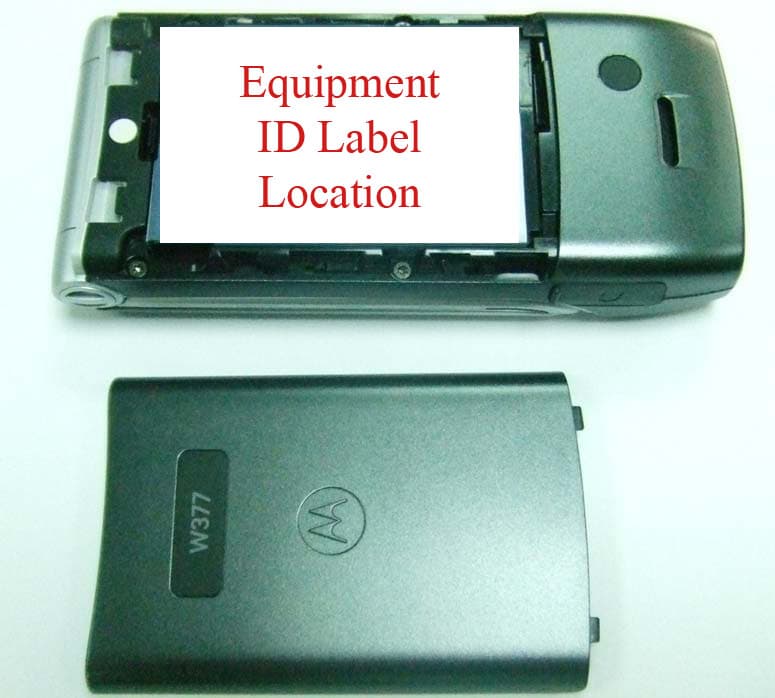
Click to zoom
Application Details
- Equipment Class
- JBP - Part 15 Class B Computing Device Peripheral
- Date of Grant
- Jan 16, 2008
- Application Purpose
- Original Equipment
- Date of Application
- Jan 16, 2008
- Equipment Note
- Portable Cellular/PCS GSM Transceiver w/ Bluetooth
- Company
- Motorola Mobility LLC
- Country
- United States
Documents & Files
Document Text
Text extracted from the exhibit documents filed with the FCC. Open a document above to read the original.
Users Manual
User’s Guide MOTO W376g/W377g CMY CMMYCY CMY K v522078.eps 1/10/2008 2:10:47 PM 1 HELLOMOTOThanks for purchasing the Motorola W376g/W377g wireless phone! It’s an affordable phone with a sleek design that is sure to get attentions. • My Phone, My Way — It’s your phone—make it that way. Customize your home screen with personal pictures, change wallpapers, and use your favorite song as your ringtone. • Multimedia and Text Messaging — Send pictures, sounds, or just text to keep in touch with your family, friends, and colleagues. •Office Tools — When you’re away from your home or desk, use handy tools like Calendar, Calculator, Stopwatch, and others. •Fun — When you have a little time to spare, play a game or use your FM Radio. • Browse the Web — Use Web Access to do a little surfing on the go. 2Here’s a quick anatomy lesson. Mess ag e Ind ica tor B a ttery Ind ica tor C a ll Ind ica tor C a mer a Navigate m enus. R ig ht Soft Key Turn on & off,hang up, exitm enus. Left Soft Key Mess ag eKey Open m enus. We b Browser Key Volume Keys Charge your phone’s battery. Make & answer calls. Listen to m usic. END PWR SEND 3 SEND END PWR SEND END PWR t e s n 43 21 z f ì & n s e É Q á h lw Home S c reen M ai n Menu Press & hold the power key Ë until the display lights up to turn on your phone.Press the center key s to open the M ai n Menu . Press thenavigation key S up/down/left/right to scroll to a m enu feature. Press thecenter key s to select it. Service Provider10/15/08 5:05 pm BROWSER CAMERA Contacts SELECT EXIT G 4 Motorola, Inc.Consumer Advocacy Office1307 East Algonquin RoadSchaumburg, IL 60196www.hellomoto.com1-800-331-6456 (United States)1-888-390-6456 (TTY/TDD United States for hearing impaired)1-800-461-4575 (Canada)Certain mobile phone features are dependent on the capabilities and settings of your service provider’s network. Additionally, certain features may not be activated by your service provider, and/or the provider’s network settings may limit the feature’s functionality. Always contact your service provider about feature availability and functionality. All features, functionality, and other product specifications, as well as the information contained in this user’s guide are based upon the latest available information and are believed to be accurate at the time of printing. Motorola reserves the right to change or modify any information or specifications without notice or obligation.MOTOROLA and the Stylized M Logo are registered in the US Patent & Trademark Office. Windows is a registered trademark of Microsoft Corporation. Apple is a trademark of Apple Inc., registered in the U.S. and other countries.The Bluetooth trademarks are owned by their proprietor and used by Motorola, Inc. under license. © Motorola, Inc., 2008. Caution: Changes or modifications made in the radio phone, not expressly approved by Motorola, will void the user’s authority to operate the equipment. Software Copyright Notice The Motorola products described in this manual may include copyrighted Motorola and third-party software stored in semiconductor memories or other media. Laws in the United States and other countries preserve for Motorola and third-party software providers certain exclusive rights for copyrighted software, such as the exclusive rights to distribute or reproduce the copyrighted software. Accordingly, any copyrighted software contained in the Motorola products may not be modified, reverse-engineered, distributed, or reproduced in any manner to the extent allowed by law. Furthermore, the purchase of the Motorola products shall not be deemed to grant either directly or by implication, estoppel, or otherwise, any license under the copyrights, patents, or patent applications of Motorola or any third-party software provider, except for the normal, non-exclusive, royalty-free license to use that arises by operation of law in the sale of a product.Manual Number: 6809518A38-A contents 5 contentsmenu map . . . . . . . . . . . . . . . . 7Use and Care . . . . . . . . . . . . . . 9essentials . . . . . . . . . . . . . . . . 10 about this guide. . . . . . . . . . 10SIM card . . . . . . . . . . . . . . . 11battery . . . . . . . . . . . . . . . . . 11turn it on & off . . . . . . . . . . . 14make a call . . . . . . . . . . . . . 14answer a call . . . . . . . . . . . . 14adjust volume . . . . . . . . . . . 14store a phone number . . . . . 14call a stored phone number. 15see your phone number . . . 15 tips & tricks . . . . . . . . . . . . . . 16basics . . . . . . . . . . . . . . . . . . . 17 home screen . . . . . . . . . . . . 17text entry. . . . . . . . . . . . . . . 21 handsfree speaker . . . . . . . . 24codes & passwords . . . . . . . 25lock & unlock phone. . . . . . . 26check battery meter. . . . . . . 26 customize . . . . . . . . . . . . . . . . 27 ring styles & alerts. . . . . . . . 27answer options . . . . . . . . . . 28wallpaper . . . . . . . . . . . . . . . 28screen saver . . . . . . . . . . . . 28backlight. . . . . . . . . . . . . . . . 28 calls . . . . . . . . . . . . . . . . . . . . . 29 redial . . . . . . . . . . . . . . . . . . 29emergency calls. . . . . . . . . . 29recent calls . . . . . . . . . . . . . 29notepad . . . . . . . . . . . . . . . . 30speed dial . . . . . . . . . . . . . . 30 1-touch dial . . . . . . . . . . . . . 30forward calls . . . . . . . . . . . 31caller ID . . . . . . . . . . . . . . . 31call waiting . . . . . . . . . . . . . 32change active line. . . . . . . . 32 entertainment . . . . . . . . . . . . 33 camera . . . . . . . . . . . . . . . . 33FM radio. . . . . . . . . . . . . . . 34sounds . . . . . . . . . . . . . . . . 36pictures . . . . . . . . . . . . . . . 36 messages . . . . . . . . . . . . . . . 37 send message . . . . . . . . . . 37 receive message . . . . . . . . 37voicemail . . . . . . . . . . . . . . 38more messaging features . 38 6 contents connections . . . . . . . . . . . . . . 4 1 connections . . . . . . . . . . . . 41Bluetooth® wireless connections . . . . . . . …
Text truncated - open the document above for the full version.
Users Manual
Hearing Aid Compatibility with Mobile Phones Some Motorola phones are measured for compatibility with hea ring aids. If the box for your particular model has “Rated for Hearing Aids” printed on it, the following explanation applies. When some mobile phones are used near some hearing device s (hearing aids and cochlear implants), users may detect a buzzing, humming, or whining noise. Some hearing devices are more immune than others to this interference noise, and phones also vary in the amount of interference they generate. The wireless telephone industry has developed ratings for som e of their mobile phones, to assist hearing device users in finding phones that may be compatible with their hearing devices. Not all phones have been rated. Phones that are rated have the rating on their box or a label on the box. The ratings are not guarantees. Results will vary depe nding on the user’s hearing device and hearing loss. If your hearing device happens to be vulnerable to interference, you may not be able to use a rated phone Exhibit 8B 1 APPLICANT: MOTOROLA, INC.FCC ID: IHDT56GM2 successfully. Trying out the phone with your hearing device is the best way to evaluate it for your personal needs. M-Ratings: Phone s rated M3 or M4 meet FCC requirements and are likely to generate less interference to hearing devices than phones that are not labeled. M4 is the better/higher of the two ratings. T-Ratings: Phone s rated T3 or T4 meet FCC requirements and are likely to be more usable with a hearing device’s telecoil (“T Switch” or “Telephone Switch”) than unrated phones. T4 is the better/higher of the two ratings. (Note that not all hearing devices have telecoils in them.) Hearing devices may also be measured for immunity to this type of interfere nce. Your hearing device manufacturer or hearing health professional may help you find results for your hearing device. The more immune your hearing aid is, the less likely you are to experience interference noise from mobile phones. Exhibit 8B 2 APPLICANT: MOTOROLA, INC.FCC ID: IHDT56GM2
Attestation Statements
APPLICANT MOTOROLA, INC. FCC ID: IHDT56GM2 SPECIFICATION COMPLIANCE STATEMENT Transceiver type (IHDT56GM2) has been tested in accordance with the requirements contained in the appropriate Commission regulations. To the best of my knowledge, these tests were performed using measurement procedures consistent with industry or Commission standards and demonstrate that this equipment complies with the appropriate standards. Each unit manufactured imported or marketed, will conform to the sample tested within the variations that can be expected due to quantity production and testing on a statistical basis. I further certify that the necessary measurements were made at Motorola, 600 N. U.S. Highway 45, Libertyville, IL 60048. NAME: Diane Steel TITLE: Lead Electrical Engineer Motorola Mobile Devices Business DATE: July 11, 2007 1 of 3Exhibit 2 APPLICANT MOTOROLA INC. FCC ID: IHDT56GM2 STATEMENT OF CERTIFICATION I hereby certify that the above application was prepared under my direction and that to the best of my knowledge and belief, the facts set forth in this application and accompanying technical data are true and correct. The technical data supplied with this application was taken under my supervision and is hereby duly certified. I also certify that this transmit equipment (IHDT56GM2) is in compliance with all applicable parts of the FCC Rules. NAME: Diane Steel TITLE: Lead Electrical Engineer Motorola Mobile Devices Business DATE: July 11, 2007 2 of 3Exhibit 2 APPLICANT: MOTOROLA INC. FCC ID: IHDT56GM2 ATTESTATION STATEMENT This device contains an embedded Bluetooth device that Motorola confirms compliance with the following Part 15 regulations. 15.247(a)(1) • the hopping sequence must be pseudorandom • all Channels are used equally on average • the receiver input bandwidth is approximately equal to the transmit bandwidth • the receiver hops in sequence with the transmitted signal 15.247(g) the system is designed to comply with all of the regulations in Section 15.247 when the transmitter is presented with a continuous data (or information) 15.247(h) the system does not coordinate its channel selection/hopping sequence with other frequency hopping systems for the express purpose of avoiding the simultaneous occupancy of individual hopping frequencies by multiple transmitters NAME: Diane Steel TITLE: Lead Electrical Engineer Motorola Mobile Devices Business DATE: July 11, 2007 3 of 3Exhibit 2 APPLICANT: MOTOROLA INC. FCC ID: IHDT56GM2 ATTESTATION STATEMENT Motorola hereby declares that typical production units were evaluated for Hearing Aid Compatibility (HAC) compliance for FCC ID: IHDT56GM2. NAME: Diane Steel TITLE: Lead Electrical Engineer Mobile Device Business Motorola, Inc. Date: January 11, 2008 Exhibit 2D
Cover Letter(s)
APPLICANT: MOTOROLA, INC.FCC ID: IHDT56GM2 Exhibit 13 July 1 2, 2007 CONFIDENTIALITY REQUEST CONTAINED WITHIN Federal Communications Commission Authorization and Evaluation Division 7435 Oakland Mills Road Columbia, Maryland 21046 Re: Application for Cellular/PCS Transceiver Certification Gentlemen: Application: Motorola, Inc., Mobile Devices, 600 N. U.S. Highway 45, Libertyville, Illinois 60048 herein submits: Application for Equipment Authorization for Certification of a Cellular Transceiver, FCC ID: IHDT 56GM2. Motorola is also the manufacturer of this equipment. Confidentiality : Pursuant to Section 0.459 of the Commission's rules (CFR 47), Motorola requests confidentiality for portions of the material contained in this application and that the identified material be withheld from public inspection following the grant of this authorization. This material contains Motorola's trade secrets and confidential information that Motorola does not customarily release to the public and which is otherwise not generally available to the public. Confidentiality is requested for the following exhibits: • Exhibit 4 Block Diagrams • Exhibit 5 Schematics • Exhibit 10 Parts List • Exhibit 12 Operational Description Description: This equipment is a GSM portable transceiver, which operates in 850 and 1900 MHz PCS band. The unit also contains a 2.4 GHz Bluetooth transmitter (Part 15.247). The unit may be connected to a computer via a USB connection (Part 15, Class B; Computing Device Peripheral). Note: This device also contains functions that are not operational in U.S. territories. This filing is only applicable for US operations. Contact Information: Please contact me by telephone at (847) 523-6167, or by e-mail (A.Bac h [email protected]) , if there are questions or additional information needed concerning this filing. Regards, Andrew J. Bachler FCC Liaison Mobile Devices 600 N. U.S. Highway 45 Libertyville, IL 60048-5343
Cover Letter(s)
Date: January 15, 2008 Subject: Request for additional information regarding FCC ID: IHDT56GM2 Reference: Correspondence Reference Number: IHD7633 Confirmation Number: 707120633-35 Date of Original Email: December 26, 2007 Prepared by: Andrew Bachler, Principal Staff Engineer Motorola Mobile Device Business Libertyville, Illinois 60048 Questions and responses follow: 1. Please verify that the FCC ID label will be visible at the time of purchase. Response: Confirmed; the FCC ID label (as shown in the revised Exhibit 1) will be visible on the device at the time of purchase. 2. Please submit a revised User’s Manual containing the required RFx body-worn warning statement. Response: Please refer to the revised user’s manual (pages 62-63). 3. Please specify the exact location of the Bluetooth RF schematics in the Schematics Exhibit. Response: Refer to Page 4 of Exhibit 5, Schematics. 4. Please submit an Operational Description (technical description) of the RF portion of the Bluetooth transmitter. That which was included in the Operational Description Exhibit does not address RF. Response: See document “BCM2048.pdf”. 1 5. Please submit a statement verifying the Stage of Production of the units tested for HAC, as required by the FCC. Response: Please refer to attestation statement, Exhibit 2D 6. The Bluetooth conducted output power measurement was performed with a RBW = 1 MHz. Please remeasure the conducted output power with a RBW that is greater than the 20 dBc bandwidth of the emission and submit that data. Response: Please refer to the following replacement graph. Peak Output Power 7. Page 1 of the SAR report refers to the application as a Class II Permissive Change. Please revise. Response: Please refer to the updated SAR report. 8. Page 3 of the SAR report states that the maximum output power for GSM850 channel 128 is 32.05 dBm, but the level measured in the EMC report exceeds 2 that value. Please clarify. Response: The SAR report indicates the updated maximum power output level for channel 128. (The EMC report was not updated since the decrease in power is within the allowed measurement tolerance.) 9. Please verify that multi-slot GPRS operation is not available to the EUT. Response: Confirmed; multi-slot is not available. 10. Table 4 Dipole Targets for H-field appear to be incorrect. Please amend Response: There is a typo in Table 4. The H-Field results in Table 4 should be corrected to: Dipole F (MHz) Protocol Input Power (mW) H-Field Results (A/m) Target for Dipole (A/m) % Deviation SN 1103 835 CW 100 0.470 0.440 6.8% SN 1071 1880 CW 100 0.470 0.452 4.0% Please refer to the updated SAR report. 11. Please update Page 8 Exhibit 6B-1 with the updated procedure that incorporates the method shown in test photographs. Response: The DASY4 v4.7 measurement system specified in section 3.1 was utilized within the intended operations as set by the SPEAG™ setup. The default settings for the grid spacing of the scan were set to 5mm as shown in the Field plots included in Appendix 2 and 3. The 5cm x 5cm area measurement grid is centered on the acoustic output of the device. The Test Arch provided by SPEAG is used to position the DUT. After positioning is complete, the Test Arch is removed during the near field measurement. The pictures for both positioning and measurement are included in Appendix 5. 12. Please address effect of updated procedure on the uncertainty budget on Page 18, Exhibit 6B-1. Response: The removal of the Test Arch (during near field measurement stage) does not change the uncertainty budget, which is provided in Appendix 4. 3 Please indicate the stage of production samples tested in Exhibit 6B-1. Response: There are no known differences between the tested identical prototype units and the anticipated typical production units. 4
External Photos
1. Close front 2. Close back APPLICANT: MOTOROLA, INC.FCC ID: IHDT56GM2 1 of 3EXHIBIT 3 3. Open front and back APPLICANT: MOTOROLA, INC.FCC ID: IHDT56GM2 2 of 3EXHIBIT 3 4. Open side APPLICANT: MOTOROLA, INC.FCC ID: IHDT56GM2 3 of 3EXHIBIT 3
ID Label/Location Info
APPLICANT: MOTOROLA INC. FCC ID: IHDT56GM2 FCC IDENTIFICATION (NAMEPLATE) INFORMATION FCC ID: IHDT56GM2 The FCC label shown is representative of the label that will appear on the radio when in production. It will be placed on the equipment as shown in Exhibit 3, and is readily visible at the time of purchase. Other information may also be included on this label. EXHIBIT 1
Internal Photos
Internal APPLICANT: MOTOROLA, INC.FCC ID: IHDT56GM2 1 of 3EXHIBIT 9 Main Board with shielding Sub Board with shielding APPLICANT: MOTOROLA, INC.FCC ID: IHDT56GM2 2 of 3EXHIBIT 9 Main Board without shielding Sub Board without shielding APPLICANT: MOTOROLA, INC.FCC ID: IHDT56GM2 3 of 3EXHIBIT 9
Test Report
APPLICANT: MOTOROLA INC FCC ID: IHDT56GM2 Test Report Number: 20991-1 Supplement 1 of 10 EXHIBIT 6A3 MOBILE DEVICES BUSINESS PRODUCT SAFETY AND COMPLIANCE EMC LABORATORY EMC TEST REPORT Test Report Number – 20991-1 Supplement Report Date – September 26, 2007 The test results contained herein relate only to the model(s) identified. It is the manufacturer’s responsibility to assure that additional production units of this model are manufactured with identical electrical and mechanical characteristics. As the responsible EMC Engineer, I hereby declare that the equipment tested as specified in this report conforms to the requirements indicated. Signature: Name: Albert J. Patapack Title: EMC Engineer Date: September 26, 2007 This report must not be reproduced, except in full, without written approval from this laboratory. THIS REPORT MUST NOT BE USED TO CLAIM PRODUCT ENDORSEMENT BY A2LA OR ANY AGENCY OF THE U.S. GOVERNMENT. A2LA Certificate Number: 2518-02 APPLICANT: MOTOROLA INC FCC ID: IHDT56GM2 Test Report Number: 20991-1 Supplement 2 of 10 EXHIBIT 6A3 Table of Contents Description Page Test Report Details 3 Applicable Standards 3 Summary of Testing 4 General and Special Conditions 4 Equipment and Cable Configuration 5 Measurement Procedures and Data 6 APPLICANT: MOTOROLA INC FCC ID: IHDT56GM2 Test Report Number: 20991-1 Supplement 3 of 10 EXHIBIT 6A3 Test Report Details Tests Performed By: Motorola Mobile Devices business (MDb) Product Safety and Compliance Group 600 North US Hwy 45 Libertyville, IL 60048 PH (847) 523-6167 Fax (847) 523-4538 Motorola MDb FRN: 0004321311 FCC Registration Number: 316588 Industry Canada Number: IC3908-1 Tests Requested By: Motorola Inc. Mobile Devices business 600 North US Hwy 45 Libertyville, IL 60048 Product Type: Cellular Phone Signaling Capability: GSM 850, GSM 1900, Bluetooth FCC ID : IHDT56GM2 Serial Numbers: 356893010000725, 356893010010666, 356893010011391, 356893010010757, 356893010000733 Testing Complete Date: September 26, 2007 Applicable Standards All tests and measurements indicated in this document were performed in accordance with the Code of Federal Regulations Title 47 : X Part 15 Subpart B – Unintentional Radiators Applicable Standards: ANSI 63.4 2003 APPLICANT: MOTOROLA INC FCC ID: IHDT56GM2 Test Report Number: 20991-1 Supplement 4 of 10 EXHIBIT 6A3 Summary of Testing Test Test Name # Pass/Fail _________ 1 Field Strength of Spurious Emissions Pass from Unintentional Radiators 2 AC Line Conducted Emissions Pass Test Test Name Margin with respect # to the Limit_________ 1 Field Strength of Spurious Emissions see results from Unintentional Radiators 2 AC Line Conducted Emissions see results The margin with respect to the limit is the minimum margin for all modes and bands. General and Special Conditions The EUT was tested using a fully charged battery. All testing was done in an indoor controlled environment with an average temperature of 22º C and relative humidity of 50%. APPLICANT: MOTOROLA INC FCC ID: IHDT56GM2 Test Report Number: 20991-1 Supplement 5 of 10 EXHIBIT 6A3 Equipment List Manufacturer Equipment Type Model No. Serial Number Calibration Due Date Rohde Schwarz Receiver ESI26 838786/010 3/19/2008 Rohde Schwarz Receiver ESI40 100001 5/02/2008 A.H. Systems Inc. DRG Horn Antenna SAS 200/571 365 5/24/2008 ETS Log-Periodic Antenna 3148 1188 6/18/2008 ETS Biconical Antenna 3110B 3370 3/15/2008 Attenuator Weinschel AS-6 6675 1/31/2008 Attenuator Weinschel AS-6 6677 6/21/2008 ETS LISN 3810/2NM 62907 5/02/2008 ETS LISN 3810/2NM 62912 5/02/2008 Dell Laptop Computer M20 NA NA Iomega Zip Drive Z250S P9HM1992CK NA Olympus Camera D-600L 4020727 NA All equipment is on a one-year calibration cycle. The Dell M20 Laptop Computer, the Iomega Z250S Zip Drive and the Olympus D-600L Camera are labeled as DoC. APPLICANT: MOTOROLA INC FCC ID: IHDT56GM2 Test Report Number: 20991-1 Supplement 6 of 10 EXHIBIT 6A3 Measurement Procedures and Data FIELD STRENGTH OF EMISSIONS FROM UNINTENTIONAL RADIATORS Measurement Procedure The equipment under test is placed inside the semi-anechoic chamber on a wooden table on the turntable center. For each radiated emission, the antenna mast is raised and lowered from 1 to 4 meters and the turntable is rotated 360 degrees to obtain a maximum peak reading on the spectrum analyzer. The final radiated emissions are then measured using an EMI receiver employing a CISPR quasi-peak detector function below 1000 MHz and an average detector function above 1000 MHz. This is repeated for both horizontal and vertical polarizations of the receive antenna. The field strength of each radiated emission is calculated by correcting the EMI receiver level for cable loss, amplifier gain, and antenna correction factors. Field Strength (dBuV/m) = EMI Receiver Level (dBuV) + Cable Loss (dB) - Amplifier Gain (dB) + Antenna Correction Factor (1/m) Test Setup The EUT and the host equipment were setup according to the procedures in ANSI C63.4- 2003. The EUT was connected to a laptop computer using a USB data cable. The USB data cable is 1 m in length. The parallel and the serial ports of the computer were populated. The EUT was communicating with the laptop computer continuously. APPLICANT: MOTOROLA INC FCC ID: IHDT56GM2 Test Report Number: 20991-1 Supplement 7 of 10 EXHIBIT 6A3 Measurement Results Operating Mode – Rx Mode, Data Transfer Mode. Notes: Worst Case emissions reported. 30 MHz – 1000 MHz Frequency MHz Level dBμV/m Measured dBμV Transd dB Cables dB Limit dBμV/m Margin dB Height cm Angle deg Pol. 163.64 33.47 9.55 13.7 10.2 43.5 10 115 255 VERT 196.36 36.65 10.17 15.9 10.6 43.5 6.8 335 174 VERT 829.72 37.28 -0.8 22.5 15.6 46 8.7 115 189 HORI 865.48 37.93 -0.85 23.1 15.7 46 8.1 150 357 HORI 911.92 39.53 -0.61 24.2 15.9 46 6.5 150 199 HORI 959.28 39.56 -0.46 23.9 16.1 46 6.4 305 74 HORI Above 1 GHz Frequency MHz Level dBμV/m Measured dBμV Transd dB Gain dB Limit dBμV/m Margin dB Height cm Angle deg Pol. 1891.6 41.05 19.5 27.2 5.6 53.9 12.8 119…
Text truncated - open the document above for the full version.
Test Setup Photos
EMC TEST SETUP PHOTOS Antenna Substitution APPLICANT: MOTOROLA, INC.FCC ID: IHDT56GM2 EXHIBIT 7 Computer Peripheral AC Line Emissions APPLICANT: MOTOROLA, INC.FCC ID: IHDT56GM2 EXHIBIT 7 Tx Radiated APPLICANT: MOTOROLA, INC.FCC ID: IHDT56GM2 EXHIBIT 7 Computer Peripheral APPLICANT: MOTOROLA, INC.FCC ID: IHDT56GM2 EXHIBIT 7
Contact Information
Applicant
Jeff Narducci(Director Product Compliance)
Technical Contact
PCTEST Engineering Laboratory, Inc.Randy Ortanez
[email protected]410-290-6652
6660-B Dobbin Road · Columbia, Maryland · United States
Test Firm
Motorola Inc.Albert Patapack
Technical Specifications
| # | Rule Parts | Frequency Range | Power Output |
|---|---|---|---|
| 1 | 15B | - | - |
Other Applications from Motorola Mobility LLC
IHDT56AW9
May 12, 2026Smart Watch
Equipment Class
NII - Unlicensed National Information Infrastructure TXIHDT56AW5
Apr 08, 2026Mobile Cellular Phone
Equipment Class
DTS - Digital Transmission SystemIHDT56AW6
Mar 18, 2026Smart Watch
Equipment Class
JBP - Part 15 Class B Computing Device PeripheralIHDT56AX4
Mar 17, 2026Mobile Cellular Phone
Equipment Class
PCE - PCS Licensed Transmitter held to earIHDT56AW3
Mar 03, 2026Mobile Cellular Phone
Equipment Class
6XD - 15E 6 GHz Low Power Indoor Client