IHDT56ZV1Portable Cellular Transceiver
Motorola Mobility LLC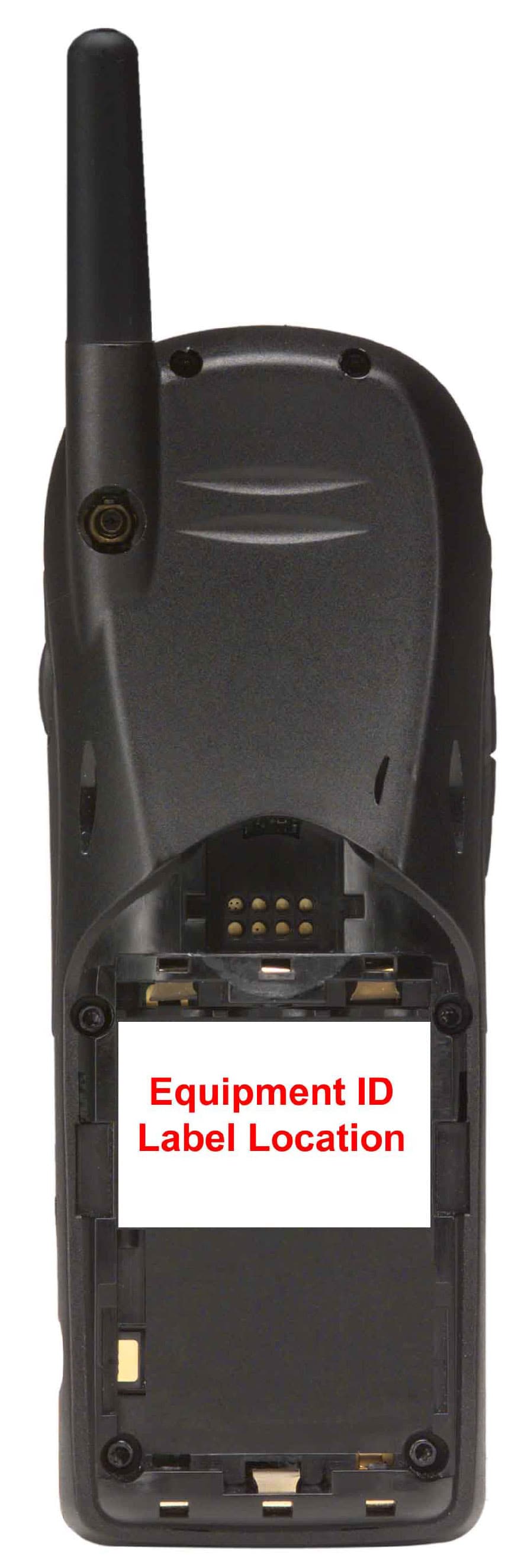
Click to zoom
Application Details
- Equipment Class
- TNE - Licensed Non-Broadcast Transmitter Held to Ear
- Date of Grant
- Mar 15, 2000
- Application Purpose
- Original Equipment
- Date of Application
- Nov 11, 1999
- Equipment Note
- Portable Cellular Transceiver
- Frequency Range
- 1851.25000000 - 1908.75000000
- Company
- Motorola Mobility LLC
- Country
- United States
Documents & Files
Document Text
Text extracted from the exhibit documents filed with the FCC. Open a document above to read the original.
Users Manual
APPLICANT: MOTOROLA, INC.FCC ID: IHDT56ZV1 EXHIBIT 8 INSTRUCTION MANUAL A preliminary draft copy of the Users Manual follows: Introduction 1 English Introduction Welcome Thank you for choosing your Motorola phone from a global leader in communications technology. All Motorola digital cellular phones are designed and manufactured to meet Motorola’s rigorous specifications and world-class quality standards. During development, our laboratory testing team took your cellular phone through rigorous durability tests including temperature, humidity, shock, dust, vibration, and drop tests—and the phone still worked! We are confident that the phone you purchased will meet your own exacting standards. Enjoy your Motorola phone. PHONE GRAPHIC TO BE SUPPLIEDOR ON INSIDE OF FRONT COVER intro.fm5 Page 1 Tuesday, October 19, 1999 9:14 PM Introduction 2 English Understanding this Manual Many of your phone options are accessed by a simple menu system. A full description of the menus and how to move around them is covered in the next section Menu Navigation . When the manual describes the use of each menu item, it will be assumed that you are familiar with the menu system. Key Presses Key presses are represented in this manual using symbols so that you may locate and use the required sequence quickly. A sequence of key presses may be shown as follows:ƒ ‚ 7 CThis means you should press ƒ followed by ‚ , 7 , and then C , in sequence, not simultaneously. Prompts and Messages Your phone responds to key presses by displaying either easy to understand prompts that guide you to the next action, or simple messages confirming that your action is complete. Prompts and messages are represented in this manual in LCD style, for example:Enter 1st Letter or Location __ Other Symbols You will find the following symbols used throughout this manual:A A Note contains additional information which is relevant to the feature/item. ! A Caution contains important additional information which is relevant to the efficient and/or safe usage of your phone. i This symbol indicates a short key sequence for the feature. intro.fm5 Page 2 Tuesday, October 19, 1999 9:14 PM Introduction 3 English Menu Navigation A large number of your phone's options are accessed by using menus which use a common approach for selection, change and cancellation.Please read this section carefully before attempting to access a menu option. When you understand the common approach to menu navigation and how the menus are shown on the page, you will be able to access and change options with ease. Menus and Sub-menus A menu is a simple list of options. Some of these options provide access to a further list of options called a sub-menu. When navigating through the menus you may find it is helpful to think in terms of menu levels - the ‘parent’ menu being on one level and its sub-menus being on a lower level. Navigating the Menus You can navigate through the menu system using the three keys located on the left side of the phone. Use the upper and lower volume keys to scroll to sub-menus and to control volume. Use the middle Smart Button to choose menus and functions.Follow these symbols as a guide for using the keys on the side of your phone: Press q to scroll up. Press a to select. Press Z to scroll down. You can also use your phone’s « and » keys to scroll through the menu system. Leaving the Menus Press º to exit the menu. Menu Options with Security Codes Some options are protected from misuse by requiring you to entry one of the security codes. To use these options, you must enter the requested code before proceeding. intro.fm5 Page 3 Tuesday, October 19, 1999 9:14 PM Introduction 4 English Total Customer Satisfaction At Motorola, Total Customer Satisfaction is a top priority. If you have a question, a suggestion or a concern about your Motorola Cellular Phone, Motorola wants to hear from you.Please contact the Motorola Cellular Response Center by fax on: +44 (0) 131 458 6732, or use one of the local phone numbers in the following countries:Austria 0660 7246Belgium 0800 72 370 Czech Republic 00420 2 21 85 21 01 Denmark 4348 8005Egypt 02 3411800Eire 01 402 6887Finland 0800 117 036 France 0 803 303 302 Germany 0180 35050Greece 00800 441 28150 Italy 02 696 333 16 Jordan 06 863750Kuwait 484 2000 Ext 1177 Lebanon 01 744156Luxembourg 0800 21 99 Netherlands 0800 022 27 43 Norway 22 55 10 04 Oman 790925Portugal 01 318 0051 Qatar 418999Saudi Arabia 01 2303294 South Africa 0800 11 48 49 Spain 902 100 077Sweden 08 445 1210 Switzerland 0800 553 109Turkey 0212 425 9090UK 0500 55 55 55United Arab Emirates 04 32 11 66 Hong Kong 852 25063888 People’s Republic of China 86 10 68466060Singapore 65 4855 333 Taiwan 886 2 87731746 United States of America 1 800 331 6456 Canada 1 800 461 4575 For e-mail questions contact:[email protected] Internet questions contact:http://www.mot.com intro.fm5 Page 4 Tuesday, October 19, 1999 9:14 PM Contents 5 English Contents Safety Important information for the efficient and safe operation of your phone ....................................................... .........................7 About Your Phone and Battery Introduces your phone, explains how to charge and maintain batteries........................................................... ........................13 Using Your Phone Explains how to place calls, how to redial, how to end a call, and how to use the phone memory ................................. ......19 Using the Menu Features Provides an explanation of the Menu Features and how to use them............................................................... ........................29 Using the Messaging Menu Provides an explanation of the Message Center and how to use it ................................................................ ...........................53 Using the MiniBrowser Provides an explanation of the MiniBrowser and how to use it................................................................... ......................…
Text truncated - open the document above for the full version.
Users Manual
APPLICANT: MOTOROLA, INC. FCC ID: IHDT5ZV1 EXHIBIT 8 INSTRUCTION MANUAL A preliminary draft copy of the Users Manual follows: Introduction 1 English Introduction Welcome Thank you for choosing your Motorola phone from a global leader in communications technology. All Motorola digital cellular phones are designed and manufactured to meet Motorola’s rigorous specifications and world-class quality standards. During development, our laboratory testing team took your cellular phone through rigorous durability tests including temperature, humidity, shock, dust, vibration, and drop tests-and the phone still worked! We are confident that the phone you purchased will meet your own exacting standards. Enjoy your Motorola phone. m3cd_us.bk : intro.fm5 Page 1 Wednesday, March 1, 2000 11:30 AM Introduction 2 English Understanding this Manual Many of your phone options are accessed by a simple menu system. A full description of the menus and how to move around them is covered in the next section Menu Navigation . When the manual describes the use of each menu item, it will be assumed that you are familiar with the menu system. Key Presses Key presses are represented in this manual using symbols so that you may locate and use the required sequence quickly. A sequence of key presses may be shown as follows:ƒ ‚ 7 DThis means you should press ƒ followed by ‚ , 7 , and then D , in sequence, not simultaneously. Prompts and Messages Your phone responds to key presses by displaying either easy to understand prompts that guide you to the next action, or simple messages confirming that your action is complete. Prompts and messages are represented in this manual in LCD style, for example:Enter 1st Letter or Location ___ Other Symbols You will find the following symbols used throughout this manual:A A Note contains additional information which is relevant to the feature/item. ! A Caution contains important additional information which is relevant to the efficient and/or safe usage of your phone. i This symbol indicates a short key sequence for the feature. m3cd_us.bk : intro.fm5 Page 2 Wednesday, March 1, 2000 11:30 AM Introduction 3 English Menu Navigation A large number of your phone's options are accessed by using menus which use a common approach for selection, change and cancellation.Please read this section carefully before attempting to access a menu option. When you understand the common approach to menu navigation and how the menus are shown on the page, you will be able to access and change options with ease. Menus and Sub-menus A menu is a simple list of options. Some of these options provide access to a further list of options called a sub-menu. When navigating through the menus you may find it is helpful to think in terms of menu levels - the ‘parent’ menu being on one level and its sub-menus being on a lower level. Entering the Menus Press ƒ then press ⁄ or the Smart Button ( A ) to enter the menu system. Navigating the Menus You can navigate through the menu system using the volume keys located on the left side of the phone and the Smart Button ( A ) located on the right side of the phone. Use the upper and lower volume keys to scroll to sub-menus. Use the Smart Button to choose menus and functions.Follow these symbols as a guide for using the keys on the side of your phone: Press q to scroll up. Press Z to scroll down. Press a to select. You can also use your phone’s « and » keys to scroll through the menu system. Leaving the Menus Press º to exit the menu. Menu Options with Security Codes Some options are protected from misuse by requiring you to enter one of the security codes. To use these options, you must enter the requested code before proceeding. m3cd_us.bk : intro.fm5 Page 3 Wednesday, March 1, 2000 11:30 AM Introduction 4 English Total Customer Satisfaction At Motorola, Total Customer Satisfaction is a top priority. If you have a question, a suggestion or a concern about your Motorola Cellular Phone, Motorola wants to hear from you.Please contact the Motorola Cellular Response Center by calling one of the local phone numbers in the following countries:Austria 0800 297246Belgium 0800 72 370 Czech Republic 00420 2 21 85 21 01 Denmark 4348 8005Egypt 02 3411800Eire 01 402 6887 Finland 0800 117 036 France 0 803 303 302 Germany 0180 35050Greece 00800 441 28150 Italy 02 696 333 16 Jordan 06 863750Kuwait 484 2000 Ext 1177 Lebanon 01 744156Luxembourg 0800 21 99 Netherlands 0800 022 27 43 Norway 22 55 10 04 Oman 790925Portugal 21 318 0051 Qatar 418999 Saudi Arabia 01 2303294 South Africa 0800 11 48 49 Spain 902 100 077Sweden 08 445 1210 Switzerland 0800 553 109 Turkey 0212 425 9090 UK 0500 55 55 55 United Arab Emirates 04 32 11 66 Hong Kong 852 25063888 People’s Republic of China 86 10 68466060Singapore 65 4855 333 Taiwan 886 2 87731746 United States of America 1 800 331 6456 Canada 1 800 461 4575 For e-mail questions contact:[email protected] Internet questions contact:http://www.motorola.com m3cd_us.bk : intro.fm5 Page 4 Wednesday, March 1, 2000 11:30 AM Contents 5 English Contents Safety Important information for the efficient and safe operation of your phone ....................................................... .........................7 About Your Phone and Battery Introduces your phone, explains how to charge and maintain batteries........................................................... ........................13 Using Your Phone Explains how to place calls, how to redial, how to end a call, and how to use the phone memory ................................. ......21 Using the Menu Features Provides an explanation of the Menu Features and how to use them............................................................... ........................31 Using the Messaging Menu Provides an explanation of the Messaging Menu and how to use it ................................................................ .........................57 Using the MiniBrowser Provides an explanation of the MiniBrowser…
Text truncated - open the document above for the full version.
Attestation Statements
APPLICANT : MOTOROLA, INC. FCC ID : IHDT56ZV1 October 27, 1999 SPECIFICATION COMPLIANCE STATEMENT Engin eer-in-Charge Equip ment Authorization Branch Federal Communications Commission We hereby certify that this trans mit and receive equipment (FCC ID : IHDT56ZV1) for dual mode, dual band mobile station cellular use is capable of co mpliance with TIA/EIA-95-B Mobile Station-Base Station Compatibility Standard for Dual-Mode Spr ead Spectrum Systems, December 1998. (Signed C. G. Kim) C. G. Kim Engin eeri ng Section Manager Cellular Subscriber Equip ment (Signed Jay Hong) Jay Hong Engin eeri ng Manager Cellular Subscriber Equip ment EXHIBIT 2A APPLICANT : MOTOROLA, INC. FCC ID : IHDT56ZV1 STATEMENT OF CERTIFIC ATION The technical data su pplied with this application, having been taken under my supervision is hereby duly certified. The foll owing is a statement of my qualifications: BSEE 1985 Inha University, Inchon, Korea 14 years RF Design Experience SIGATURE: (signed) C. G. Kim NAME: C. G. Kim DATE: October 27, 1999 POSITION: Engineering Section Manager I hereby certify that the above application was prepared under my direction and that to the best of my knowledge and belie f, the fac ts set forth in the applicati on and accompanying technical data are true and correct: SIGNATURE: (sign ed) Jay Hong NAME: Jay Hon g DATE: October 27, 1999 POSITION: Engin eering Manager EXHIBIT 2B APPLICANT : MOTOROLA, INC. FCC ID : IHDT56ZV1 RADIO FREQUENCY ENERGY EXPOSURE EVALUATION STATEMENT Motorola, Inc., Personal Communications Sector, hereby certifies that, when used as stated in the operating instructions supplied, this Cellular/PCS Portable Transceiver, FCC ID : IHDT56ZV1 complies with the FCC’s Radio frequency energy exposure limits for General Population/Uncontrolled environment, per FCC Rule 47CFR2. 1093. EXHIBIT 2C
Attestation Statements
APPLICANT : MOTOROLA, INC. FCC ID : IHDT56ZV1 October 27, 1999 SPECIFICATION COMPLIANCE STATEMENT Engin eer-in-Charge Equip ment Authorization Branch Federal Communications Commission We hereby certify that this trans mit and receive equipment (FCC ID : IHDT56ZV1) for dual mode, dual band mobile station cellular use is capable of co mpliance with TIA/EIA-95-B Mobile Station-Base Station Compatibility Standard for Dual-Mode Spr ead Spectrum Systems, December 1998. (Signed C. G. Kim) C. G. Kim Engin eeri ng Section Manager Cellular Subscriber Equip ment (Signed Jay Hong) Jay Hong Engin eeri ng Manager Cellular Subscriber Equip ment EXHIBIT 2A APPLICANT : MOTOROLA, INC. FCC ID : IHDT56ZV1 STATEMENT OF CERTIFIC ATION The technical data su pplied with this application, having been taken under my supervision is hereby duly certified. The foll owing is a statement of my qualifications: BSEE 1985 Inha University, Inchon, Korea 14 years RF Design Experience SIGATURE: (signed) C. G. Kim NAME: C. G. Kim DATE: October 27, 1999 POSITION: Engineering Section Manager I hereby certify that the above application was prepared under my direction and that to the best of my knowledge and belie f, the fac ts set forth in the applicati on and accompanying technical data are true and correct: SIGNATURE: (sign ed) Jay Hong NAME: Jay Hon g DATE: October 27, 1999 POSITION: Engin eering Manager EXHIBIT 2B APPLICANT : MOTOROLA, INC. FCC ID : IHDT56ZV1 RADIO FREQUENCY ENERGY EXPOSURE EVALUATION STATEMENT Motorola, Inc., Personal Communications Sector, hereby certifies that, when used as stated in the operating instructions supplied, this Cellular/PCS Portable Transceiver, FCC ID : IHDT56ZV1 complies with the FCC’s Radio frequency energy exposure limits for General Population/Uncontrolled environment, per FCC Rule 47CFR2. 1093. EXHIBIT 2C
Cover Letter(s)
APPLICANT: MOTOROLAFCC ID: IHDT56ZV1 November 12, 1999 CONFIDENTIALITY REQUEST CONTAINED WITHIN Federal Communications Commission Authorization and Evaluation Division 7435 Oakland Mills Road Columbia, Maryland 21046 Re: Application for Cellular/PCS Transceiver Certification Gentlemen: Application: Motorola, Inc., Personal Communications Sector, 600 N. U.S. Highway 45, Libertyville, Illinois 60048-1286 herein submits: Application for Equipment Authorization (FCC Form 731-October 1992 with integrated Fee Processing Form, Fee Codes EFT and EBC), application fee in the amount of $610, and Exhibits; for Certification of a Cellular Transceiver, FCC ID: IHDT56NA1. Motorola is also the manufacturer of this equipment. Confidentiality: Pursuant to Section 0.459 of the Commission's rules (CFR 47), Motorola requests confidentiality for portions of the material contained in this application and that the identified material be withheld from public inspection following the grant of this authorization. This material contains Motorola's trade secrets and confidential information that Motorola does not customarily release to the public and which is otherwise not generally available to the public. Confidentiality is requested for the following exhibits: • Exhibit 4 Block Diagrams • Exhibit 5 Schematics • Exhibit 12 Operational Description Description: This equipment has the capability to operate in the conventional Analog Cellular standard in the 800 MHz cellular band and the Digital CDMA standard in the PCS bands, as outlined in EIA/TIA IS-95-A "Mobile Station – Base Station Compatibility Standard for Dual-Mode Wideband Spread Spectrum Cellular System”. Technical details for this alternate cellular technology (permitted under the cellular service option provisions in Section 22.933 of the Commission's rules) related to Type Acceptance of this equipment, as noted in paragraphs 31 and 32 of the Report and Order in FCC GEN. Docket No. 87-390, are detailed in Exhibit 12. Contact Information: Please contact me by telephone at (847) 523-6167, by facsimile at (847) 523-2350, or by e-mail ([email protected]), if there are questions or additional information needed concerning this filing. Regards, Andrew J. Bachler FCC Liaison Cellular Subscriber Sector 600 N. U.S. Highway 45 Libertyville, IL 60048-5343
Cover Letter(s)
APPLICANT: MOTOROLAFCC ID: IHDT56ZV1 Exhibit 13 November 12, 1999 CONFIDENTIALITY REQUEST CONTAINED WITHIN Federal Communications Commission Authorization and Evaluation Division 7435 Oakland Mills Road Columbia, Maryland 21046 Re: Application for Cellular/PCS Transceiver Certification Gentlemen: Application: Motorola, Inc., Personal Communications Sector, 600 N. U.S. Highway 45, Libertyville, Illinois 60048-1286 herein submits: Application for Equipment Authorization (FCC Form 731-October 1992 with integrated Fee Processing Form, Fee Codes EFT and EBC), application fee in the amount of $610, and Exhibits; for Certification of a Cellular Transceiver, FCC ID: IHDT56ZV1. Motorola is also the manufacturer of this equipment. Confidentiality: Pursuant to Section 0.459 of the Commission's rules (CFR 47), Motorola requests confidentiality for portions of the material contained in this application and that the identified material be withheld from public inspection following the grant of this authorization. This material contains Motorola's trade secrets and confidential information that Motorola does not customarily release to the public and which is otherwise not generally available to the public. Confidentiality is requested for the following exhibits: • Exhibit 4 Block Diagrams • Exhibit 5 Schematics • Exhibit 12 Operational Description Description: This equipment has the capability to operate in the conventional Analog Cellular standard in the 800 MHz cellular band and the Digital CDMA standard in the PCS bands, as outlined in EIA/TIA IS-95-A "Mobile Station – Base Station Compatibility Standard for Dual-Mode Wideband Spread Spectrum Cellular System”. Technical details for this alternate cellular technology (permitted under the cellular service option provisions in Section 22.933 of the Commission's rules) related to Type Acceptance of this equipment, as noted in paragraphs 31 and 32 of the Report and Order in FCC GEN. Docket No. 87-390, are detailed in Exhibit 12. Contact Information: Please contact me by telephone at (847) 523-6167, by facsimile at (847) 523-2350, or by e-mail ([email protected]), if there are questions or additional information needed concerning this filing. Regards, Andrew J. Bachler FCC Liaison Cellular Subscriber Sector 600 N. U.S. Highway 45 Libertyville, IL 60048-5343
External Photos
APPLICANT: MOTOROLA, INC. FCC ID: IHDT56ZV1 EXHIBIT 3 Front View Back View (Battery Removed to Show Equipment ID)
ID Label/Location Info
APPLICANT : MOTOROLA, INC. FCC ID : IHDT56ZV1 FCC IDENTIFICATION (NAMEPLATE) INFORMATION The FCC label shown is representative of the label that will appear on the radio when in production. It will be placed on the radio telephone as shown in Exhibit 3. Other infor mation may also be included on this label. EXHIBIT 1 FCC ID : IHDT56ZV1
ID Label/Location Info
APPLICANT : MOTOROLA, INC. FCC ID : IHDT56ZV1 FCC IDENTIFICATION (NAMEPLATE) INFORMATION The FCC label shown is representative of the label that will appear on the radio when in production. It will be placed on the radio telephone as shown in Exhibit 3. Other infor mation may also be included on this label. EXHIBIT 1 FCC ID : IHDT56ZV1
Internal Photos
APPLICANT: MOTOROLA, INC. FCC ID: IHDT56ZV1 EXHIBIT 9 Front View (Shields Removed) Rear View (Shields Removed)
Parts List/Tune Up Info
APPLICANT: MOTOROLA, INC. FCC ID: IHDT56ZV1 TRANSCEIVER ADJUSTMENTS/TUNE-UP PROCEDURE EXHIBIT 10 There are no user accessible adjustments or tuning in this portable cellular transceiver. All necessary adjustments and tuning are performed during manufacture of the product. Any adjustments or tuning after service or repair are done as part of that process as special equipment is required to perform such adjustments.
RF Exposure Info
P P a a g g e e 1 1 November 12, 1999 SAR Test Report for Motorola portable cellular phone (FCC ID IHDT56ZV1). Prepared by: Paul Moller, Principal Staff Engineer Motorola Personal Communications Sector Product Safety Laboratory Libertyville, Illinois Contents 1) Introduction 2) Applicable Regulations 3) Description of Test Sample 4) Description of Motorola SAR Test Facility 5) Test Sample Conditions 6) Method of Measurement 7) Measurement Uncertainty 8) SAR Test Results 9) Body Worn Configuration 10) Battery Options 11) Summary Appendix A: Included data Appendix B: Included beltclip data Appendix C: Measurement Probe S/N 1103 Calibration Certificate Appendix D: Measurement Probe S/N 1393 Calibration Certificate Appendix E: Printout from the Dasy measurement system validation test P P a a g g e e 2 2 1. Introduction The Motorola Personal Communications Sector Product Safety Laboratory has performed measurements of the maximum potential exposure to the user of portable cellular phone FCC ID IHDT56ZV1. The Specific Absorption Rate (SAR) of this product was measured. This report details the test setup and equipment as well as the results of those tests. 2. Applicable Regulations Federal Communications Commission rule §2.1093(d)(2), the ANSI/IEEE C95.1 1992 and the NCRP Report Number 86 specify the maximum exposure limit of 1.6 W/kg as averaged over any 1 gram of tissue for portable devices being used within 20cm of the user in the uncontrolled environment. 3. Description of Test Sample A prototype unit serial number FCC777F0 was measured. This unit is identical in physical construction, maximum radiated power levels and antenna structure to units that will be in production. It transmits in the frequency range of 824 to 849 MHz using AMPS mode, and 1850 to 1910 MHz using CDMA mode. The unit was tested at its maximum transmitter power. The unit is equipped with a fixed antenna that serves as both a receive and transmit antenna. The antenna has a single operating position as shown in figure 1 and figure 2. Figure 1. Front of Phone Figure 2. Side of Phone Figure 3 shows the test unit as it is placed onto the Motorola phantom. For the purposes of the actual SAR tests the Motorola phantom head is tilted on its side by 90 degrees so that a vertically P P a a g g e e 3 3 oriented measurement probe can easily scan an area where the phone is in close contact with the phantom and the SAR will be the highest. Figure 3. Phone against side of Phantom Head. 4. SAR Test Facility The Motorola test facility utilized for the SAR testing of this product is the Personal Communications Sector Product Safety Laboratory, in Libertyville Illinois. The laboratory utilizes a Dosimetric Assessment System (Dasy™) SAR measurement system manufactured by Schmid & Partner Engineering AG (SPEAG™), of Zurich Switzerland. This system utilizes a computer controlled six axis robot to move a measurement probe to measure the SAR. A photo of the Dasy system with the Motorola phantom is shown in figure 4. Probe serial number 1103 was used for the 800 MHz measurements. It was calibrated at SPEAG™, and has a calibration date April 20, 1999. A copy of the calibration certificate is included as appendix C. Dipole Validation Kit type D900V2, serial number 036 was used to validate the system accuracy at 800MHz. The validation SAR value is 9.56 mW/g normalized to 1 Watt, and the Dasy system used for the test phone measured 9.44 mW/g normalized to 1 Watt. This is within the required accuracy, and thus the measured SAR values are considered correct. See appendix E for printout of the validation test from the Dasy measurement system. Probe serial number 1393 was used for the 1900MHz measurements. It P P a a g g e e 4 4 was calibrated at SPEAG™, and has a calibration date October 6, 1999. A copy of the calibration certificate is included as appendix D. Dipole Validation Kit type D1800V2, serial number 246 was used to validate the system accuracy at 1900MHz. The validation SAR value is 37.7 mW/g normalized to 1 Watt, and the Dasy system used for the test phone measured 38.0 mW/g normalized to 1 Watt. This is within the required accuracy, and thus the measured SAR values are considered correct. See appendix E for printout of the validation test from the Dasy measurement system. The measurement methodology is described in IEEE Transactions on Vehicular Technology, vol. 44, no. 3, August 1995, titled Electromagnetic Energy Exposure of Simulated users of Portable Cellular Telephones. The Dasy system is operated per the instructions in the Dasy Users Manual. The entire manual is available directly from SPEAG. Figure 4. Dasy System P P a a g g e e 5 5 5. Test Sample Conditions For the purposes of these tests the subject phone was positioned on the measurement phantom per the instructions in the Motorola users manual for the subject phone. The position used for the tests is the 3-point contact position. In this position the test sample contacts the phantom’s ear and cheek and is positioned with a repeatability of better than ±6%. Since the antenna is not located on the center of the phone, the SAR was measured with the phone on both the left and right side talk positions (See figure 3). Due to the construction of the phone, the base of the antenna is 26 mm away from the phantom for the left side head, which is the closest. The test sample is capable of operation in a test mode that allows control of the transmitter without the need to place actual phone calls. This guarantees that the unit does not change its transmitter power, and that the resultant SAR values will not be affected by external connections. For the purposes of this test the unit is commanded to test mode and manually set to the proper channel, transmitter power level and transmit mode of operation. The phone is then placed in the SAR measurement system with a fully charged battery. At the end of each test the Dasy system measures the drift of the SAR at a fixed point in the …
Text truncated - open the document above for the full version.
RF Exposure Info
March 15, 2000 Supplement to SAR Test Report for Motorola portable cellular phone (FCC ID IHDT56ZV1). Prepared by: Paul Moller, Principal Staff Engineer Motorola Personal Communications Sector Product Safety Laboratory Libertyville, Illinois Contents 1) Summary of FCC request for additional information 2) Location of Peak SAR with Respect to Phone in Body Worn Condition 3) Separation Distance between Back of Phone and Body Phantom 1. Summary of FCC request for additional information There was a request for additional information regarding Motorola’s SAR Test Report for Motorola portable cellular phone (FCC ID IHDT56ZV1) dated November 12, 1999. The requested information may be summarized as follows: a. Please identify the location of peak SAR with respect to the phone and belt-clip for PCS band body-worn configuration (PCS only), either by description or figures etc. b. Identify the separation distance provided by the belt-clip between the back of the phone and the body phantom, and the closest point between the antenna and the phantom. 2. Location of Peak SAR with Respect to Phone in Body Worn Condition The location of peak SAR when the phone is in the supplied belt-clip for PCS band is shown in figure 1. Figure 1. PCS Body-worn contour plot overlaid on the back of the phone 3. Separation Distance between Back of Phone and Body Phantom The separation distance provided by the belt-clip between the back of the phone and the body phantom, and the closest point between the antenna and the phantom is shown in figure 2. Figure 2. Separation Distances Provided by Belt-Clip
Test Report
APPLICANT: MOTOROLA, INC. FCC ID : IHDT56ZV1 SUBMITTED MEASURED DATA INDEX EXHIBIT MEASUREMENT 6A RF Power Output 6B Audio Response 6C Post Limiter Low Pass Filter Response – Graph 6D Signaling Channel Audio Roll-Off Filter Response – Graph 6E1 Modulation Limiting (Compandor In Wide Mode) – Graph 6E2 Modulation Limiting (Compandor Out Wide Mode) – Graph 6F1 Occupied Bandwidth, Audio – Photograph 6F2 Occupied Bandwidth, Audio and SAT – Graph 6F3 Occupied Bandwidth, Wideband Data – Graph 6F4 Occupied Bandwidth, Signaling Tone and SAT -Graph 6F5 Occupied Bandwidth, Digital Mode - graph 6G1 Conducted Spurious and Harmonic Emissions, Analog Mode - Graph 6G2 Conducted Spurious and Harmonic Emissions, Digital Mode - Graph 6H1 Radiated Spurious and Harmoni…
Text truncated - open the document above for the full version.
Contact Information
Applicant
Jeff Narducci(Director Product Compliance)
Technical Specifications
| # | Rule Parts | Frequency Range | Power Output | Emission | Tolerance |
|---|---|---|---|---|---|
| 3 | 24E | 1.85 GHz - 1.91 GHz | 130.00 mW | 1M25F9W | 150 Hz |
Other Applications from Motorola Mobility LLC
IHDT56AW9
May 12, 2026Smart Watch
Equipment Class
NII - Unlicensed National Information Infrastructure TXIHDT56AW5
Apr 08, 2026Mobile Cellular Phone
Equipment Class
DTS - Digital Transmission SystemIHDT56AW6
Mar 18, 2026Smart Watch
Equipment Class
JBP - Part 15 Class B Computing Device PeripheralIHDT56AX4
Mar 17, 2026Mobile Cellular Phone
Equipment Class
PCE - PCS Licensed Transmitter held to earIHDT56AW3
Mar 03, 2026Mobile Cellular Phone
Equipment Class
6XD - 15E 6 GHz Low Power Indoor Client