IHDT56ZZ2Portable Cellular Transceiver
Motorola Mobility LLC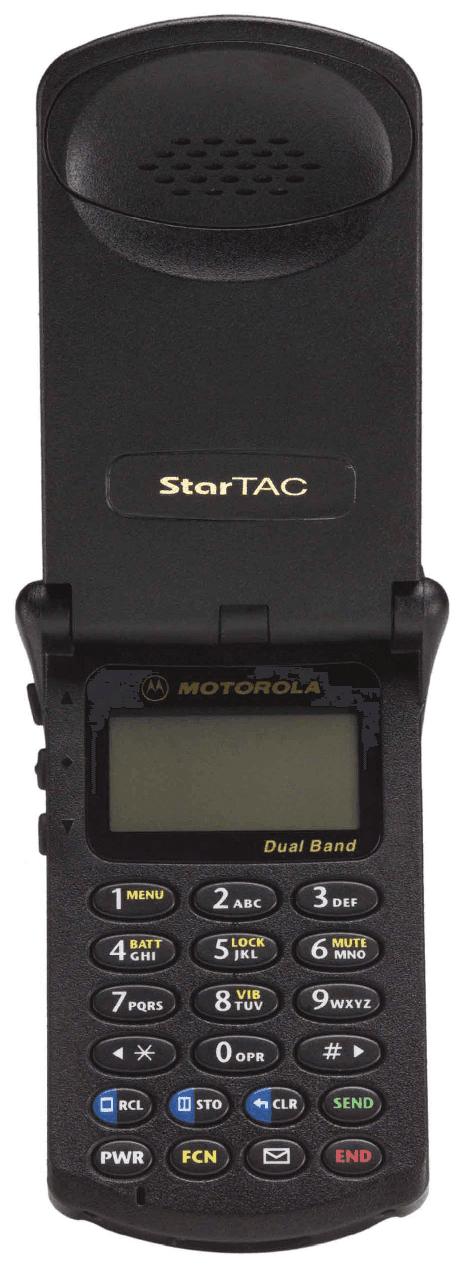
Click to zoom
Application Details
- Equipment Class
- TNE - Licensed Non-Broadcast Transmitter Held to Ear
- Date of Grant
- Jun 10, 2001
- Application Purpose
- Original Equipment
- Date of Application
- Feb 08, 2001
- Equipment Note
- Portable Cellular Transceiver
- Frequency Range
- 1851.25000000 - 1908.75000000
- Company
- Motorola Mobility LLC
- Country
- United States
Documents & Files
Document Text
Text extracted from the exhibit documents filed with the FCC. Open a document above to read the original.
Users Manual
APPLICANT: MOTOROLA, INC.FCC ID: IHDT56ZZ2 EXHIBIT 8 INSTRUCTION MANUAL A preliminary draft copy of the Users Manual follows: Note This version of the Users Manual does not yet contain the wording requested, in FCC Correspondence Reference Number: 17917. (The wording involves separation distance references in body worn configurations, and is influenced by the peak SAR location.) 1 Welcome Thank you for choosing the Motorola Timeport ™ phone from a global leader in communications technology. All Motorola phones are designed and manufactured to meet Motorola’s exacting specifications and world-class quality standards. During development, our laboratory testing team took the durable Motorola Timeport ™ phone design through its paces. They cooked it, steamed it, shook it, shocked it, dusted it, and dropped it—and the phone still worked! We are confident that the one you purchased can meet your own exacting standards. Thank you for choosing the Motorola Timeport phone, and we hope you enjoy your new wireless digital phone! Vulcan-B.Book Page 1 Friday, June 2, 2000 11:53 AM 2 Guide Overview Okay, you’ve got a brand new phone with a bunch of nifty features. Now what? Afraid you’ll press the wrong key? Or forget a feature or two? Don’t sweat it! We’ve designed this guide to take you step-by-step through each feature of your new Motorola Timeport ™ phone. We’ll show you what key to press and what happens when you press it. Follow along, chapter-by-chapter, and you’ll find it’s as easy as 1-2-3. Here’s an idea of what you’ll learn in each chapter: Getting Started First things first. Once the box is open, this section will show you where to begin. We will explain what came with your new phone and show you how to use the battery. Turn to page 10 to get started. The Basics What do all those buttons and lights mean? How do I make my first phone call? In this section, we’ll answer those questions and teach you everything necessary to start using your new phone. Begin learning “The Basics” on page 20. Using Memory Read “Using Memory,” beginning on page 34, and we will explain how to make the most of your new phone’s internal Phone Book. You’ll learn how to save time with dialing shortcuts and memory features that make it easy to place quick calls. Vulcan-B.Book Page 2 Friday, June 2, 2000 11:53 AM 3 Guide Overview Using Messaging * This Motorola Timeport ™ phone supports optional messaging services, like Caller ID, which allows you to see who is calling before you answer. It can even receive alphanumeric messages just like a pager and tell you when you have Voicemail. Turn to page 50 to begin “Using Messaging.” Using the Minibrowser and Data Features * With a service subscription, your phone can access up to the minute information with the Minibrowser! You can use the phone to retrieve on demand weather reports, sports scores, stock reports, and much more. See page 106. With the addition of the Motorola Data Connectivity Kit, you can hook your phone up to a compatible computer and send and receive faxes and data. See page 114. The Works When you are ready to learn the advanced features of your new phone, turn to page 58 for “The Works.” We will explain everything from navigating the menu system to electronically locking your phone. So relax! Let us show you what your Motorola Timeport phone can do! * Network and service dependent feature. Not available in all areas. Vulcan-B.Book Page 3 Friday, June 2, 2000 11:53 AM 4 Contents Introduction Guide Overview . . . . . . . . . . . . . . . . . . . . . . . . . . . . . . . 2 Safety Information . . . . . . . . . . . . . . . . . . . . . . . . . . . . 6 Getting Started Package Content Options . . . . . . . . . . . . . . . . . . . . . . 10 Introduction to Batteries . . . . . . . . . . . . . . . . . . . . . . 12 Installing Batteries . . . . . . . . . . . . . . . . . . . . . . . . . . . 13 Charging Batteries . . . . . . . . . . . . . . . . . . . . . . . . . . . 14 Phone Overview . . . . . . . . . . . . . . . . . . . . . . . . . . . . . 18 Using the Smart Button . . . . . . . . . . . . . . . . . . . . . . . 19 The Basics Turning Your Phone On . . . . . . . . . . . . . . . . . . . . . . . 20 Reading the Indicators . . . . . . . . . . . . . . . . . . . . . . . . 23 Placing and Ending Calls . . . . . . . . . . . . . . . . . . . . . 26 Redialing Numbers . . . . . . . . . . . . . . . . . . . . . . . . . . 27 Receiving Calls . . . . . . . . . . . . . . . . . . . . . . . . . . . . . . 28 Basic Tone Controls . . . . . . . . . . . . . . . . . . . . . . . . . . 30 Your Phone & Its Shortcuts . . . . . . . . . . . . . . . . . . . . 32 Using Memory Introduction . . . . . . . . . . . . . . . . . . . . . . . . . . . . . . . . 34 Making the Most of Memory . . . . . . . . . . . . . . . . . . . 35 Storing . . . . . . . . . . . . . . . . . . . . . . . . . . . . . . . . . . . . 36 Entering Names . . . . . . . . . . . . . . . . . . . . . . . . . . . . . 37 Recalling. . . . . . . . . . . . . . . . . . . . . . . . . . . . . . . . . . . 38 Editing Memory . . . . . . . . . . . . . . . . . . . . . . . . . . . . . 40 Pause Dialing . . . . . . . . . . . . . . . . . . . . . . . . . . . . . . . 46 Using Calling Cards . . . . . . . . . . . . . . . . . . . . . . . . . . 48 Vulcan-B.Book Page 4 Friday, June 2, 2000 11:53 AM 5 Contents Using Messaging Introduction . . . . . . . . . . . . . . . . . . . . . . . . . . . . . . . . .50 Receiving Messages . . . . . . . . . . . . . . . . . . . . . . . . . . .51 Viewing Your Caller IDs . . . . . . . . . . . . . . . . . . . . . . . .52 Checking Your Voicemail. . . . . . . . . . . . . . . . . . . . . . .54 Reading Your Messages . . . . . . . . . . . . . . . . . . . . . . . .56 The Works Introducing the Menu Features. . . . . . . . . . . . . . . . . .58 The Internal Phone Book . . . . . . . . . . . . . . . . . . . . . .60 Store and recall numbers Using Call Timers . . . . . . . . . . . . . . . . . . . . . . . . . . . .68 Monitor the length of your calls Setting …
Text truncated - open the document above for the full version.
Attestation Statements
APPLICANT: MOTOROLA, INC.FCC ID : IHDT56ZZ2 EXHIBIT 2A SPECIFICATION COMPLIANCE STATEMENT Engineer-in-Charge Equipment Authorization Branch Federal Communications Commission February 8, 2001 We hereby certify that this transmit and receive equipment (FCC ID: IHDT56ZZ2) for tri-mode, dual band mobile station cellular use is compliant with the TIA/EIA-95-B Mobile Station-Base Station Compatibility Standards for Dual-Mode Spread Spectrum Systems, December 1998. (Signed – Jerome A. Wieland) Jerome A. Wieland Engineering Section Manager Cellular Subscriber Equipment (Signed – John Larson) John Larson Engineering Manager Cellular Subscriber Equipment APPLICANT: MOTOROLA, INC.FCC ID : IHDT56ZZ2 EXHIBIT 2B STATEMENT OF CERTIFICATION The technical data supplied with this application, having been taken under my supervision is hereby duly certified. The following is a statement of my qualifications: BSEE 1969 Milwaukee School of Engineering MBA 1976 Illinois Institute of Technology Licensed Professional Engineer in the State of Illinois 13 Years Cellular Design Experience SIGNATURE: (signed) Jerome A. Wieland NAME: Jerome A. Wieland DATE: 2/8/01 POSITION: Engineering Section Manager I hereby certify that the above application was prepared under my direction and that to the best of my knowledge and belief, the facts set forth in the application and accompanying technical data are true and correct. SIGNATURE: (signed) John Larson NAME: John Larson DATE: 2/8/2001 POSITION: Engineering Manager
Cover Letter(s)
APPLICANT: MOTOROLAFCC ID: IHDT56ZZ2 Exhibit 13 February 9, 2001 CONFIDENTIALITY REQUEST CONTAINED WITHIN Federal Communications Commission Authorization and Evaluation Division 7435 Oakland Mills Road Columbia, Maryland 21046 Re: Application for Cellular/PCS Transceiver Certification Gentlemen: Application: Motorola, Inc., Personal Communications Sector, 600 N. U.S. Highway 45, Libertyville, Illinois 60048-1286 herein submits: Application for Equipment Authorization (FCC Form 731-October 1992 with integrated Fee Processing Form, Fee Codes EFT and EBC), application fee in the amount of $640, and Exhibits; for Certification of a Cellular Transceiver, FCC ID: IHDT56ZZ2. Motorola is also the manufacturer of this equipment. Confidentiality: Pursuant to Section 0.459 of the Commission's rules (CFR 47), Motorola requests confidentiality for portions of the material contained in this application and that the identified material be withheld from public inspection following the grant of this authorization. This material contains Motorola's trade secrets and confidential information that Motorola does not customarily release to the public and which is otherwise not generally available to the public. Confidentiality is requested for the following exhibits: • Exhibit 4 Block Diagrams • Exhibit 5 Schematics • Exhibit 12 Operational Description Description: This equipment has the capability to operate in the conventional Analog Cellular standard in the 800 MHz cellular band, and the Digital CDMA standard in both the 800 MHz and the PCS bands, as outlined in EIA/TIA IS-95-A "Mobile Station – Base Station Compatibility Standard for Dual-Mode Wideband Spread Spectrum Cellular System”. Technical details for this alternate cellular technology (permitted under the cellular service option provisions in Section 22.933 of the Commission's rules) related to Type Acceptance of this equipment, as noted in paragraphs 31 and 32 of the Report and Order in FCC GEN. Docket No. 87-390, are detailed in Exhibit 12. NOTE: This equipment is essentially identical to IHDT56ZZ1. The differences are: • use of an organic electro luminescence (OEL) color display • slightly different power output levels (see exhibit 6) • new SAR measurements and report (see exhibit 11) Contact Information: Please contact me by telephone at (847) 523-6167,or by e-mail ([email protected]), if there are questions or additional information needed concerning this filing. Regards, Andrew J. Bachler FCC Liaison Cellular Subscriber Sector 600 N. U.S. Highway 45 Libertyville, IL 60048-5343
External Photos
APPLICANT: MOTOROLA, INC. FCC ID: IHDT56ZZ2 EXHIBIT 3 Front View with Flip Open Flip Closed & Battery Removed to Show Equipment ID
ID Label/Location Info
APPLICANT: MOTOROLA, INC. FCC ID : IHDT56ZZ2 EXHIBIT 1 FCC IDENTIFICATION (NAMEPLATE) INFORMATION The FCC label shown is representative of the label that will appear on the radio when in production. It will be placed on the radio telephone as shown in Exhibit 3. Other information may also be included on this label. FCC ID: IHDT56ZZ2
Internal Photos
APPLICANT: MOTOROLA, INC. FCC ID: IHDT56ZZ2 EXHIBIT 9 Front View (Shields Removed) Rear View (Shields Removed)
Parts List/Tune Up Info
APPLICANT: MOTOROLA, INC. FCC ID : IHDT56ZZ2 EXHIBIT 10 Transceiver Adjustments/Tune-Up Procedure There are no user accessible adjustments or tuning in this portable cellular transceiver. All necessary adjustments and tuning are performed during manufacture of the product. Any adjustments or tuning after service or repair are done as part of that process as special equipment is required to perform such adjustments.
RF Exposure Info
APPLICANT: MOTOROLA, INC. FCC ID: IHDT56ZZ2 E E x x h h i i b b i i t t 1 1 1 1 P P a a g g e e 1 1 Exhibit 11: SAR Test Report: IHDT56ZZ2 Date of test: 12/19/2000-1/6/2001 Laboratory: Motorola Personal Communications Sector Product Safety Laboratory 2001 N. Division Room: AS228 Harvard, Illinois 60033 Test Responsible: Steven Hauswirth Staff Engineer Accreditation: ISO Guide 25 Accredited Lab, A2LA certificate #1651-01 Statement of Compliance: Motorola declares under its sole responsibility that portable cellular telephone FCC ID IHDT56ZZ2 to which this declaration relates, is in conformity with the appropriate RF exposure standards, recommendations and guidelines. It also declares that the product was tested in accordance with the appropriate measurement standards, guidelines and recommended practices. Any deviations from these standards, guidelines and recommended practices are noted below: ©Motorola This test report shall not be reproduced in full, without written approval of the laboratory. The results and statements contained herein relate only to the items tested. The names of individuals involved may be mentioned only in connection with the statements or results from this report. Motorola encourages all feedback, both positive and negative, on this test report. APPLICANT: MOTOROLA, INC. FCC ID: IHDT56ZZ2 E E x x h h i i b b i i t t 1 1 1 1 P P a a g g e e 2 2 Table of Contents 1) Introduction 3 2) Description of the Device Under Test 3 Antenna description 3 Device description 3 3) Test Results 3 4) Test Equipment 4 4.1 Dosimetric system 4 4.2 Additional equipment used 5 5) Electrical parameters of the tissue simulating liquid 5 6) System Accuracy Verification 5 Reference Notes Appendix 1: SAR distribution comparison for the system accuracy verification 6 Appendix 2: SAR distribution plots for Phantom Head Adjacent Use 7 Appendix 3: SAR distribution plots for Body Worn Configuration 10 Appendix 4: Photographs of the device under test 14 APPLICANT: MOTOROLA, INC. FCC ID: IHDT56ZZ2 E E x x h h i i b b i i t t 1 1 1 1 P P a a g g e e 3 3 1. Introduction The Motorola Personal Communications Sector Product Safety Laboratory has performed measurements of the maximum potential exposure to the user of portable cellular phone FCC ID IHDT56ZZ2. The Specific Absorption Rate (SAR) of this product was measured. The portable cellular phone was tested in accordance with the latest available test guidelines. The SAR values found for the portable cellular phone (FCC ID IHDT56ZZ2) are below the maximum recommended levels of 1.6 W/kg. Detailed procedures of the test are described in the Motorola Exhibit 11 Reference SAR Test Report. 2. Description of the Device Under Test Antenna description Type Extendable whip Location Right Side Configuration Helix with 800MHz output power cutback when antenna is retracted. Device description FCC ID Number IHDT56ZZ2 Serial numbers 77596CEB Mode(s) of Operation AMPS800 AMPS800 CDMA800 CDMA800 CDMA1900 Modulation Mode(s) AMPS AMPS CDMA CDMA CDMA Maximum Output Power Setting 27.3dBm (Ant Ext) 26.8dBm(Ant Ret) 25.0dBm (Ant Ext) 24.5dBm(Ant Ret) 24.3dBm Duty Cycle 1:01 1:01 1:01 1:01 1:01 Transmitting Frequency Rang(s) 824-849MHz 824-849MHz 824-849MHz 824-849MHz 1851- 1909MHz 3. Test Results The SAR results shown in tables 1 and 2 are maximum SAR values averaged over 1 gram of phantom tissue. Also shown are the measured conducted output powers and the temperature of the test facility during the test. The test sample was operated in a test mode that allows control of the transmitter without the need to place actual phone calls. For the purposes of this test the unit is commanded to test mode and manually set to the proper channel, transmitter power level and transmit mode of operation. The phone was then placed in the SAR measurement system with a fully charged battery. A full data set output of the test conditions with the highest SAR values from the Dasy measurement system is included as appendix 2 and 3. The test conditions included are indicated as bold numbers in the following table. All other test conditions measured lower SAR values than those included. There are two available body worn accessories available for this test sample. Both are plastic “belt-clips”. The body worn SAR was evaluated for only the plastic belt- clip that provided the least separation distance to the phantom. The other belt-clip provided greater separation distance and is made completely of plastic (there is no metal content). APPLICANT: MOTOROLA, INC. FCC ID: IHDT56ZZ2 E E x x h h i i b b i i t t 1 1 1 1 P P a a g g e e 4 4 SAR, 1g (W/kg) Left Head Right Head f (MHz) Description Conducted Output Power (dBm) Ant Ext Ant Ret Ant Ext Ant Ret Channel 991 27.20 Ant Ext/ 26.70 Ant Ret 0.56 0.84 0.39 0.53 Channel 384 27.30 Ant Ext/ 26.80 Ant Ret 0.40 0.53 0.25 0.29 Analog 800MHz Channel 799 27.32 Ant Ext/ 26.82 Ant Ret 0.38 0.55 0.24 0.37 Channel 1013 24.92 Ant Ext/ 24.42 Ant Ret 0.17 0.63 0.17 0.32 Channel 384 25.02 Ant Ext/ 24.52 Ant Ret 0.11 0.38 0.14 0.24 Digital 800MHz Channel 779 24.94 Ant Ext/ 24.44 Ant Ret 0.19 0.45 0.13 0.28 Channel 25 23.44 1.12 0.65 0.62 0.40 Channel 600 23.45 0.89 0.88 0.43 0.44 Digital 1900MHz Channel 1175 23.58 0.55 0.83 0.30 0.47 Table 1: SAR measurement results for the portable cellular telephone FCC ID IHDT56ZZ2 at highest possible output power. Measured against the head. SAR, 1g (W/kg) f Plastic Belt Clip (MHz) Description Conducted Output Power (dBm) Ant Ext Ant Ret Channel 991 27.20 Ant Ext/ 26.70 Ant Ret 0.33 0.53 Channel 384 27.30 Ant Ext/ 26.80 Ant Ret 0.20 0.35 Analog 800MHz Channel 799 27.32 Ant Ext/ 26.82 Ant Ret 0.21 0.38 Channel 1013 24.92 Ant Ext/ 24.42 Ant Ret 0.41 Channel 384 25.02 Ant Ext/ 24.52 Ant Ret Digital 800MHz Channel 779 24.94 Ant Ext/ 24.44 Ant Ret 0.13 Channel 25 23.44 0.22 0.42 Channel 600 23.45 0.12 0.41 Digital 1900MHz Channel 1175 23.58 0.10 0.27 Table 2: SAR measurement results for the portable cellular telephone FCC ID IHDT56ZZ2 …
Text truncated - open the document above for the full version.
RF Exposure Info
APPLICANT: MOTOROLA, INC. E E x x h h i i b b i i t t 1 1 1 1 R R e e f f e e r r e e n n c c e e T T e e s s t t P P r r o o c c e e d d u u r r e e Exhibit 11 Reference SAR Test Procedures Motorola Personal Communications Sector Product Safety Laboratory 2001 N. Division Room: AS228 Harvard, Illinois 60033 July 28, 2000 Federal Communications Commission Authorization & Evaluation Division 7435 Oakland Mills Rd Columbia MD 21046 Attention: Equipment Authorization Branch We hereby certify that the testing procedures contained within are used for determination of compliance for a Motorola portable cellular with respect to ANSI/IEEE C951-1992 Standard for Safety Levels with Respect to Human Exposure to Radio Frequency Electromagnetic Fields, 3kHz to 300GHz and the Federal Communications Commission rule §2.1093(d)(2). Prepared by: Steven Hauswirth APPLICANT: MOTOROLA, INC. E E x x h h i i b b i i t t 1 1 1 1 R R e e f f e e r r e e n n c c e e T T e e s s t t P P r r o o c c e e d d u u r r e e P P a a g g e e 2 2 Contents Page 1) Introduction 3 2) Description of the Test Measurement 3 3) System Accuracy Verification 4 4) Simulated Tissue Ingredients 4 5) Test Sample Conditions 5 6) Measurement of Output Power 6 7) Method of Measurement 6 8) Measurement Uncertainty 6 9) SAR in the Hand Measurements 6 10) Body Worn Configuration 8 11) Battery Options 8 Appendix A: SPEAG™ Application Note: Validation and System Check 9 Appendix B: SPEAG™ Application Note: Testing Tissue Simulating Liquids using HP85070 10 Appendix C: DASY ET3DV6 Probe Calibration Certificates 11 Appendix D: DASY Dipole Validation Kit Certificates 12 Appendix E: DASY Data Acquisition Electronics (DAE) Certificates 13 APPLICANT: MOTOROLA, INC. E E x x h h i i b b i i t t 1 1 1 1 R R e e f f e e r r e e n n c c e e T T e e s s t t P P r r o o c c e e d d u u r r e e P P a a g g e e 3 3 1. Introduction This document is intended to be kept on file by the Federal Communications Commission (FCC) so that ongoing applications that contain Exhibit 11 can refer to this document for procedural details. 2. Description of the Test Measurement The Motorola Personal Communications Sector Product Safety & Compliance Laboratories utilize a Dosimetric Assessment System (Dasy3™) professional SAR measurement system manufactured by Schmid & Partner Engineering AG (SPEAG™), of Zurich Switzerland. This system utilizes a computer controlled six axis robot to move a measurement probe to measure the SAR. This system utilizes the DASY3.1c version of software from SPEAG™. A photo of the Dasy3™ system with the Motorola phantom is shown in figure 1. The measurements are reference to the Federal Communications Commission rule §2.1093(d)(2), the ANSI/IEEE C95.1 1992 and the NCRP Report Number 86 that specify the maximum exposure limit of 1.6 W/kg as averaged over any 1 gram of tissue for portable devices being used within 20cm of the user in the uncontrolled environment. The measurement methodology is described in IEEE Transactions on Vehicular Technology, vol. 44, no. 3, August 1995, titled Electromagnetic Energy Exposure of Simulated users of Portable Cellular Telephones. The Dasy3™ system is operated per the instructions in the Dasy3™ Users Manual. The entire manual is available directly from SPEAG™ (http://www.speag.com). Figure 1. Dasy™ System APPLICANT: MOTOROLA, INC. E E x x h h i i b b i i t t 1 1 1 1 R R e e f f e e r r e e n n c c e e T T e e s s t t P P r r o o c c e e d d u u r r e e P P a a g g e e 4 4 3. System Accuracy Verification The measurement system will be validated as per the SPEAG™ Application Note: Validation and System Check (Appendix A). This validation uses the following equipment: Test Equipment Manufacturer Model Signal generator Hewlet Packard 8648C Amplifier Mini-Circuits ZHL-42W Dual Bidirectional Coupler Hewlet Packard 778D Power Meter Hewlet Packard E4419B Power Sensor Hewlet Packard 8481A Dipole SPEAG Frequency Dependent 4. Simulated Head Tissue Ingredients The following tables indicate the ingredients used for the simulated tissue mixtures that are used in the phantoms during the SAR measurements. Prior to conducting SAR measurements the simulated tissue is measured for its dielectric parameters as per the SPEAG™ Application Note: Testing Tissue Simulating Liquids using HP85070 (Appendix B). This procedure uses a Hewlet Packard Network Analyzer model number 8753C with a Hewlet Packard S-Parameter Test Set model number 85046A or a Hewlet Packard Network Analyzer model number 8753D and a HP85070 Dielectric Probe Kit. SIMULATED HEAD TISSUE INGREDIENTS (800MHz Band) HEAD MIXTURE INGREDIENT (percentage by weight) De-Ionized Water 43.75 Sugar 54.00 Salt 1.15 HEC 1.00 Bactericide 0.10 SIMULATED HEAD TISSUE INGREDIENTS (1900MHz Bands) INGREDIENT HEAD MIXTURE (percentage by weight) De-Ionized Water 54.90 Glycol 44.92 Salt 0.18 HEC 0.00 Bactericide 0.00 APPLICANT: MOTOROLA, INC. E E x x h h i i b b i i t t 1 1 1 1 R R e e f f e e r r e e n n c c e e T T e e s s t t P P r r o o c c e e d d u u r r e e P P a a g g e e 5 5 SIMULATED MUSCLE TISSUE INGREDIENTS (800MHz Band) INGREDIENT MUSCLE MIXTURE (percentage by weight) De-Ionized Water 53.5 Sugar 44.25 Salt 1.15 HEC 1.0 Bactericide 0.1 SIMULATED MUSCLE TISSUE INGREDIENTS (1900MHz Band) INGREDIENT MUSCLE MIXTURE (percentage by weight) De-Ionized Water 66.1 Glycol 34.4 Salt 0.5 HEC 0.0 Bactericide 0.0 5. Test Sample Conditions For the purposes of SAR measurement tests the test sample will be positioned on the measurement phantom as per the instructions in the users manual for the test sample. The position used for the tests is typically the 3-point contact position. In this position the test sample contacts the phantom’s ear and cheek and is positioned with a repeatability of better than ±6%. The SAR was measured with the phone on both the left hand and right hand talk positions. The Analog, TDMA, and GSM test samples are capable of operation in a test mode that allows control of the tr…
Text truncated - open the document above for the full version.
RF Exposure Info
APPLICANT: MOTOROLA, INC.FCC ID : IHDT56ZZ2 EXHIBIT 6A (Revised 5-8-01) RF POWER OUTPUT DATA The input supply to the transmitter was set at 3.6 Volts. The RF power output was measured with the indicated voltage and current applied into the final RF amplifying device(s). ANALOG MODE Measured RF output: 0.539W Measured DC voltage: 3.6V Measured DC current: 680mA Measured RF input: 9.77mW 800 MHz Digital CDMA In Digital Mode the values measured for RF Output, DC Current and RF Input Power are all average values which reflect a 100% transmit duty cycle in CDMA operation. Measured RF output: 0.318W Measured DC voltage: 3.6V Measured DC current: 650mA. Measured RF input: 1.28mW 1900 MHz Digital CDMA In Digital Mode the values measured for RF Output, DC Current and RF Input Power are all average values which reflect a 100% transmit duty cycle in CDMA operation. Measured RF output: 0.272W Measured DC voltage: 3.6V Measured DC current: 675mA. Measured RF input: 1.62mW EFFECTIVE RADIATED POWER Since the unit is intended for use with a provided antenna (and “non standard” RF connector), ERP is measured. The dipole antenna substitution method was used. The result indicated is the maximum ERP found over the channels and radio orientations tested. Maximum Effective Radiated Power: Analog Mode 25.5 dBm (0.355 W) Maximum Effective Radiated Power: 800 Digital CDMA Mode 23.8 dBm (0.240 W) Maximum Effective Isotropic Radiated Power: 1900 Digital CDMA Mode 24.9 dBm (0.310 W)
RF Exposure Info
May 30, 2001 Supplement to SAR Test Report for Motorola portable cellular phone (FCC ID IHDT56ZZ2). Prepared by: Steven Hauswirth, Staff Engineer Motorola Personal Communications Sector Product Safety Laboratory Libertyville, Illinois Contents 1. Corrected SAR Summary Table for PCS Conducted Output Power 2. Additional Head Adjacent SAR Testing with Clip-On Organizer Attached 3. Additional SAR Testing with the Slim Battery Attached 4. Graphical Display of Dipole Validation 5. SAR in the Hand Measurement Results 1. Corrected SAR Summary Table for PCS Conducted Output Power SAR, 1g (W/kg) Left Head Right Head f (MHz) Description Conducted Output Power (dBm) Ant Ext Ant Ret Ant Ext Ant Ret Channel 991 27.20 Ant Ext/ 26.70 Ant Ret 0.56 0.84 0.39 0.53 Channel 384 27.30 Ant Ext/ 26.80 Ant Ret 0.40 0.53 0.25 0.29 Analog 800MHz Channel 799 27.32 Ant Ext/ 26.82 Ant Ret 0.38 0.55 0.24 0.37 Channel 1013 24.92 Ant Ext/ 24.42 Ant Ret 0.17 0.63 0.17 0.32 Channel 384 25.02 Ant Ext/ 24.52 Ant Ret 0.11 0.38 0.14 0.24 Digital 800MHz Channel 779 24.94 Ant Ext/ 24.44 Ant Ret 0.19 0.45 0.13 0.28 Channel 25 24.27 1.12 0.65 0.62 0.40 Channel 600 24.34 0.89 0.88 0.43 0.44 Digital 1900MHz Channel 1175 24.24 0.55 0.83 0.30 0.47 Table 1: SAR measurement results for the portable cellular telephone FCC ID IHDT56ZZ2 at highest possible output power. Measured against the head. SAR, 1g (W/kg) f Plastic Belt Clip (MHz) Description Conducted Output Power (dBm) Ant Ext Ant Ret Channel 991 27.20 Ant Ext/ 26.70 Ant Ret 0.33 0.53 Channel 384 27.30 Ant Ext/ 26.80 Ant Ret 0.20 0.35 Analog 800MHz Channel 799 27.32 Ant Ext/ 26.82 Ant Ret 0.21 0.38 Channel 1013 24.92 Ant Ext/ 24.42 Ant Ret 0.41 Channel 384 25.02 Ant Ext/ 24.52 Ant Ret Digital 800MHz Channel 779 24.94 Ant Ext/ 24.44 Ant Ret 0.13 Channel 25 24.27 0.22 0.42 Channel 600 24.34 0.12 0.41 Digital 1900MHz Channel 1175 24.24 0.10 0.27 Table 2: SAR measurement results for the portable cellular telephone FCC ID IHDT56ZZ2 at highest possible output power. Measured against the body. 2. Additional Head Adjacent SAR Testing with Clip-On Organizer Attached The clip-on organizer can be positioned on the back of the phone during the normal usage of the phone against the Head. Table 3 shows the highest SAR values for this configuration. SAR, 1g (W/kg) f Left Head with the Clip-on Organizer (MHz) Description Conducted Output Power (dBm) Ant Ext Ant Ret Analog 800MHz Channel 991 27.20 Ant Ext/ 26.70 Ant Ret 0.44 0.64 Channel 25 24.27 0.96 Digital 1900MHz Channel 600 24.34 1.18 Table 3: Highest SAR measurement results for the portable cellular telephone FCC ID IHDT56ZZ2 at the highest possible out put power. Measured against the head with the Clip-on Organizer 3. Additional SAR Testing with the Slim Battery Attached Additional tests were performed to verify SAR for the slim battery. Table 4 shows SAR values for 800 and 1900 MHz band of the phone with the slim battery against the head and Table 5 shows SAR values against the body with the provided belt clip. SAR, 1g (W/kg) f Left Head with the thin battery (MHz) Description Conducted Output Power (dBm) Ant Ext Ant Ret Analog 800MHz Channel 991 27.20 Ant Ext/ 26.70 Ant Ret 0.645 0.97 Channel 25 24.27 0.847 Digital 1900MHz Channel 600 24.34 0.164 Table 4: Highest SAR measurement results for the portable cellular telephone FCC ID IHDT56ZZ2 at the highest possible out put power. Measured against the head with the thin battery SAR, 1g (W/kg) f Body worn tests with the thin battery with the belt clip (MHz) Description Conducted Output Power (dBm) Ant Ext Ant Ret Analog 800MHz Channel 991 27.20 Ant Ext/ 26.70 Ant Ret 0.36 0.575 Digital 1900MHz Channel 25 24.27 0.21 0.318 Table 5: Highest SAR measurement results for the portable cellular telephone FCC ID IHDT56ZZ2 at the highest possible out put power. Measured against the body with the provided belt clip with the thin battery. 4. Graphical Display of Dipole Validation The graphical display of the SAR distribution was not centered on the dipole because the dipole figure in the measurement software was not aligned. The SAR distribution is centered on the physical setup of the dipole. This is a graphical problem only and does not impact SAR measurement and validation. 5. SAR in the Hand Measurement Results For the subject phone, the maximum power deposited in the hand was found to be less than 40 mW for both the antenna retracted and extended. Federal Communications Commission rule §2.1093(d)(2), the ANSI/IEEE C95.1 1992 and the NCRP Report Number 86 specify the maximum exposure limit in the hand of 4 W/kg as averaged over any 10 grams of tissue for portable devices being used within 20cm of the user in the uncontrolled environment. More than 40mW of total power deposited in the hand would be required for the limit of 4 W/kg averaged over 10 grams to be exceeded. Since the total power deposited in the hand for the test phone is less than 23 mW, the standard is not exceeded.
Test Report
APPLICANT : MOTOROLA, INC. FCC ID : IHDT56ZZ2 EXHIBIT 6 SUBMITTED MEASURED DATA INDEX EXHIBIT MEASUREMENT 6A RF Power Output 6B Audio Response 6C Post Limiter Low Pass Filter Response - Graph 6D Signaling Channel Audio Roll-Off Filter Response - Graph 6E1 Modulation Limiting (Compander In Wide Mode) - Graph 6E2 Modulation Limiting (Compander Out Wide Mode) - Graph 6F1 Occupied Bandwidth, Audio - Photograph 6F2 Occupied Bandwidth, Audio and SAT - Graph 6F3 Occupied Bandwidth, Wideband Data - G…
Text truncated - open the document above for the full version.
Contact Information
Applicant
Jeff Narducci(Director Product Compliance)
Technical Specifications
| # | Rule Parts | Frequency Range | Power Output | Emission | Tolerance |
|---|---|---|---|---|---|
| 4 | 24E | 1.85 GHz - 1.91 GHz | 310.00 mW | 1M25F9W | 150 Hz |
Other Applications from Motorola Mobility LLC
IHDT56AW9
May 12, 2026Smart Watch
Equipment Class
NII - Unlicensed National Information Infrastructure TXIHDT56AW5
Apr 08, 2026Mobile Cellular Phone
Equipment Class
DTS - Digital Transmission SystemIHDT56AW6
Mar 18, 2026Smart Watch
Equipment Class
JBP - Part 15 Class B Computing Device PeripheralIHDT56AX4
Mar 17, 2026Mobile Cellular Phone
Equipment Class
PCE - PCS Licensed Transmitter held to earIHDT56AW3
Mar 03, 2026Mobile Cellular Phone
Equipment Class
6XD - 15E 6 GHz Low Power Indoor Client