IHDT6EK2Licensed Portable with Bluetooth
Motorola Mobility LLC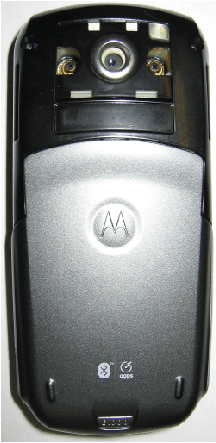
Click to zoom
Application Details
- Equipment Class
- DSS - Part 15 Spread Spectrum Transmitter
- Date of Grant
- Sep 26, 2004
- Application Purpose
- Original Equipment
- Date of Application
- Sep 26, 2004
- Equipment Note
- Licensed Portable with Bluetooth
- Frequency Range
- 2402.00000000 - 2480.00000000
- Company
- Motorola Mobility LLC
- Country
- United States
Documents & Files
Document Text
Text extracted from the exhibit documents filed with the FCC. Open a document above to read the original.
Users Manual
APPLICANT: MOTOROLA, INC. FCC ID: IHDT6EK2 EXHIBIT 8 INSTRUCTION MANUAL A preliminary draft copy of the Users Manual follows: 1 Welcome Welcome to the world of Motorola digital wireless communications! We are pleased that you have chosen the Motorola E1000 3G wireless phone. Left Soft Key Perform function in lower left display Volume Video Call Voice Call Make & answer calls Menu Key Browser Camera Clear Power & End Turn phone on/off, end calls, exit menu system Right Soft Key Perform function in lower right display 5-Way Navigation Scroll through & select menu items Accessory Connector 2 Motorola, Inc. Consumer Advocacy Office 1307 East Algonquin Road Schaumburg, IL 60196 www.motorola.com (United States) 1-800-331-6456 (United States) 1-888-390-6456 (TTY/TDD United States for hearing impaired) 1-800-461-4575 (Canada) MOTOROLA and the Stylized M Logo are registered in the US Patent & Trademark Office. The Bluetooth trademarks are owned by their proprietor and used by Motorola, Inc. under license. Java and all other Java-based marks are trademarks or registered trademarks of Sun Microsystems, Inc. in the U.S. and other countries. All other product or service names are the property of their respective owners. © Motorola, Inc., 2004. Software Copyright Notice The Motorola products described in this manual may include copyrighted Motorola and third-party software stored in semiconductor memories or other media. Laws in the United States and other countries preserve for Motorola and third-party software providers certain exclusive rights for copyrighted software, such as the exclusive rights to distribute or reproduce the copyrighted software. Accordingly, any copyrighted software contained in the Motorola products may not be modified, reverse- engineered, distributed, or reproduced in any manner to the extent allowed by law. Furthermore, the purchase of the Motorola products shall not be deemed to grant either directly or by implication, estoppel, or otherwise, any license under the copyrights, patents, or patent applications of Motorola or any third-party software provider, except for the normal, non- exclusive, royalty-free license to use that arises by operation of law in the sale of a product. Manual Number: 68XXXXXX53-O 3 Contents Safety and General Information . . . . . . . . . . . . . . . . . . . . 6 European Union Directives Conformance Statement. . 12 Getting Started. . . . . . . . . . . . . . . . . . . . . . . . . . . . . . . . . 13 About This Guide . . . . . . . . . . . . . . . . . . . . . . . . . . . . . . 13 Installing the UICC or SIM Card . . . . . . . . . . . . . . . . . . . 14 Battery Tips . . . . . . . . . . . . . . . . . . . . . . . . . . . . . . . . . . 15 Installing the Battery . . . . . . . . . . . . . . . . . . . . . . . . . . . . 16 Charging the Battery. . . . . . . . . . . . . . . . . . . . . . . . . . . . 17 Turning Your Phone On. . . . . . . . . . . . . . . . . . . . . . . . . . 18 Adjusting Volume . . . . . . . . . . . . . . . . . . . . . . . . . . . . . . 18 Making a Call . . . . . . . . . . . . . . . . . . . . . . . . . . . . . . . . . 19 Answering a Call . . . . . . . . . . . . . . . . . . . . . . . . . . . . . . . 19 Changing the Call Alert. . . . . . . . . . . . . . . . . . . . . . . . . . 20 Viewing Your Phone Number . . . . . . . . . . . . . . . . . . . . . 20 Highlight Features . . . . . . . . . . . . . . . . . . . . . . . . . . . . . . 21 Taking and Sending a Photo. . . . . . . . . . . . . . . . . . . . . . 21 Using Photos and Pictures . . . . . . . . . . . . . . . . . . . . . . . 23 Recording Video Clips . . . . . . . . . . . . . . . . . . . . . . . . . . 25 Using Video Clips . . . . . . . . . . . . . . . . . . . . . . . . . . . . . . 27 Making Video Calls . . . . . . . . . . . . . . . . . . . . . . . . . . . . . 29 Micro-Browser. . . . . . . . . . . . . . . . . . . . . . . . . . . . . . . . . 29 Connecting Your Phone to Another Device. . . . . . . . . . . 32 Learning to Use Your Phone. . . . . . . . . . . . . . . . . . . . . . 39 Using the Display . . . . . . . . . . . . . . . . . . . . . . . . . . . . . . 39 Using the 5-Way Navigation Key. . . . . . . . . . . . . . . . . . . 43 Using Menus. . . . . . . . . . . . . . . . . . . . . . . . . . . . . . . . . . 44 Entering Text . . . . . . . . . . . . . . . . . . . . . . . . . . . . . . . . . . 47 4 Using Special Keys . . . . . . . . . . . . . . . . . . . . . . . . . . . . 59 Using the Handsfree Speaker . . . . . . . . . . . . . . . . . . . . 60 Changing a Code, PIN, or Password. . . . . . . . . . . . . . . 60 Locking and Unlocking Your Phone. . . . . . . . . . . . . . . . 61 Locking and Unlocking the Keypad . . . . . . . . . . . . . . . . 62 If You Forget a Code, PIN, or Password . . . . . . . . . . . . 63 Setting Up Your Phone. . . . . . . . . . . . . . . . . . . . . . . . . . 64 Storing Your Name and Phone Number . . . . . . . . . . . . 64 Setting the Time and Date . . . . . . . . . . . . . . . . . . . . . . 64 Setting a Ring Style. . . . . . . . . . . . . . . . . . . . . . . . . . . . 64 Setting a Wallpaper Image . . . . . . . . . . . . . . . . . . . . . . 65 Setting a Screen Saver Image . . . . . . . . . . . . . . . . . . . 66 Setting Display Brightness . . . . . . . . . . . . . . . . . . . . . . 67 Setting Display Color. . . . . . . . . . . . . . . . . . . . . . . . . . . 67 Adjusting the Backlight . . . . . . . . . . . . . . . . . . . . . . . . . 67 Setting Display Timeout . . . . . . . . . . . . . . . . . . . . . . . . 68 Using AGPS Location Information. . . . . . . . . . . . . . . . . 68 Calling Features . . . . . . . . . . . . . . . . . . . . . . . . . . . . . . . 70 Changing the Active Line . . . . . . . . . . . . . . . . . . . . . . . 70 Redialing a Number . . . . . . . . . . . . . . . . . . . . . . . . . . . 70 Using Automatic Redial . . . . . . . . . . . . . . . . . . . . . . . . . 71 Using Caller ID . . . . . . . . . . . . . . . . . . . . . . . . . . . . . . . 71 Canceling an Incoming Call . . …
Text truncated - open the document above for the full version.
Attestation Statements
APPLICANT MOTOROLA INC. FCC ID: IHDT6EK2 SPECIFICATION COMPLIANCE STATEMENT Transceiver type FCC ID: IHDT6EK2 has been tested in accordance with the requirements contained in the appropriate Commission regulations. To the best of my knowledge, these tests were performed using measurement procedures consistent with industry or Commission standards and demonstrate that this equipment complies with the appropriate standards. Each unit manufactured imported or marketed, will conform to the sample tested within the variations that can be expected due to quantity production and testing on a statistical basis. I further certify that the necessary measurements were made at: Motorola Personal Communications Sector Product Safety and Compliance Group 600 North US Hwy 45 Libertyville, IL 60048 NAME: Paul Christian TITLE: Engineering Manager Personal Communications Sector Date: August 30, 2004 Exhibit 2A APPLICANT MOTOROLA INC. FCC ID: IHDT6EK2 STATEMENT OF CERTIFICATION I hereby certify that the above application was prepared under my direction and that to the best of my knowledge and belief, the facts set forth in this application and accompanying technical data are true and correct. The technical data supplied with this application was taken under my supervision and is hereby duly certified. I also certify that this transmit equipment (FCC ID: IHDT6EK2) is in compliance with all applicable parts of the FCC Rules. NAME: Dan Farley TITLE: Lead Engineer Personal Communications Sector Date: August 30, 2004 Exhibit 2B
Attestation Statements
Date: .September 27, 2004 Subject: Request for additional information regarding FCC ID: IHDT6EK2 (Portable PCS GSM transceiver with embedded Bluetooth) Reference: Application Received: 08/12/2004 Correspondence Reference Number: 240922A.IHD Confirmation Number: TC4284 & TC4285 Date of Original Email: 09/22/2004 Prepared by: Andrew Bachler, Principal Staff Engineer Motorola Personal Communications Sector Libertyville, Illinois Questions and responses follow: Bluetooth Application: 1. The measured 20 dB bandwidth exceeds the measured channel spacing. The current FCC Rules (15.247(a)(1)) do not permit this. Please address. (Please note that the newest version of Part 15, R&O FCC 04-165, permits the channel spacing to be greater than two thirds of the 20 dB bandwidth, provided that the output power is less than 125 mW, however, these changes do not become effective until October 7, 2004). Response: Please refer to the revised Bluetooth report (exhibit 6A) which replaces the originally submitted report. This new report addresses the 20 dB bandwidth issue. No other characteristics are updated. 2. Please provide a technical description of the Bluetooth device. Response: Bluetooth implementation is accomplished with the Broadcom Blutonium BCM2035 IC. This device is a standalone baseband processor with an integrated 2.4 GHz transceiver. It is completely compliant with the Bluetooth 1.1 specification and Part 15.247. The rx has the ability to hop in sync with the tx, and the rx BW is approximately equal to the tx BW. Frequency hopping is pseudorandom and average channel usage is equal. All part 15.247 requirements are met when the device is presented with a continuous data stream. The HCI interface will utilize an UART. There are two data signals (TXD and RXD) and two flow control signals (RTS and CTS). The BT module assumes a role as DTE and the POG IC acts as a DCE. Therefore when the BT module is connected to POG IC the RXD and TXD lines must be crossed, while CTS and RTS on POG connect directly to CTS and RTS on the BT module. RXD and TXD have been crossed on the BT module already; therefore, BLUE_TX (pin 5) of the BT module is connected to TXD2 and BLUE_RX (pin 33) of the BT module is connected to RXD2 on POG IC. The Bluetooth UART is a dedicated UART from POG IC. This bus is not shared with external peripherals. 1 Bluetooth System Block Although most signaling is done over the HCI, wake-up signaling is done with dedicated signals. POG IC uses a GPIO to wake up the BT module. The BT module uses a dedicated signal BLUE_HOST_WAKEB (Pin 9) connected to a POG IC interrupt to wake-up the host processor. The codec is connected onto a shared 4 wire bus with POG IC and PCAP referred to as the BB_SAP (Base Band Serial Audio Codec Port). The PCAP acts as the master and provides the clock and frame sync signals for the bus. The labeling on the Bluetooth module is in reference to the POG IC. Therefore, the ASAP_TX line is an input and ASAP_RX is the output from Bluetooth. Bluetooth is reset in a number of different ways. When software first initializes Bluetooth, it sends an HCI reset command over the UART interface to place the BCM2035 into a known state. If software fails to detect a response to the initial HCI reset command, it will power cycle the RF and Core voltages thus forcing a power on reset on the BCM2035. Bluetooth is reset in start-up using the RESETB signal; it is connected to RESET_N (pin 22) of the BT module. RESET_N is active low. The Broadcom chipset requires two different frequency references, a lower frequency low power reference (32.768 kHz), and a high frequency main reference (15.36 MHz, 26 MHz, etc.). The low power reference is a standard frequency available on the GSM phone whenever the phone is powered. As such, this reference is directly connected to CLK_32KHZ, the buffered port from the oscillator on PCAP. As this module will be primarily used on GSM platform, PLL components on the module were tuned for 26 MHz with the intent to share the crystal frequency oscillator of the phone, Neptune LTS XTAL OSC. 3. The User’s Manual does not contain the statement required by Section 15.21. Please verify that this statement will be included prior to marketing. Response: Yes, confirmed; a Section 15.21 compliance statement will be included in the final User’s manual. 2 Phone Application: 4. Please verify that the Bluetooth device was active during spurious radiated emission tests. Response: The affect of the secondary (Bluetooth) transmitter on radiated emission tests is verified. 5. An item on p.5 of the EMC report is listed as being past its cal due date. Please address. Response: The calibration due date for the HP83623B is corrected to: 6/20/2005. 6. Please verify that the following is a typo: p.5 of the SAR report- the Verification Test recommended limit should be 40.7, per the Dipole Characteristics Certificate. Response: Motorola confirms that the Recommended SAR Limit in the System Accuracy Verification should be 40.7 W/kg. Please see the updated table below. Dielectric Parameters f (MHz) Description SAR (W/kg), 1gram ε r σ (S/m) Ambient Temp (°C) Tissue Temp (°C) Measured, 07/29/2004 39.85 39.0 1.35 20.0 19.7 Measured, 07/30/2004 40.2 38.8 1.35 21.0 19.5 Measured, 09/09/2004 39.6 39.0 1.35 20.0 19.5 1800 Recommended Limits 40.7 40.0 ±5% 1.4 ±5% 18-25 18-25 3
Cover Letter(s)
APPLICANT: MOTOROLA FCC ID: IHDT6EK2 August 11, 2004 CONFIDENTIALITY REQUEST CONTAINED WITHIN Federal Communications Commission Authorization and Evaluation Division 7435 Oakland Mills Road Columbia, Maryland 21046 Re: Application for Cellular/PCS Transceiver Certification Gentlemen: Application: Motorola, Inc., Personal Communications Sector, 600 N. U.S. Highway 45, Libertyville, Illinois 60048-1286 herein submits: Application for Equipment Authorization for Certification of a PCS Transceiver, FCC ID: IHDT6EK2. Motorola is also the manufacturer of this equipment. Confidentiality: Pursuant to Section 0.459 of the Commission's rules (CFR 47), Motorola requests confidentiality for portions of the material contained in this application and that the identified material be withheld from public inspection following the grant of this authorization. This material contains Motorola's trade secrets and confidential information that Motorola does not customarily release to the public and which is otherwise not generally available to the public. Confidentiality is requested for the following exhibits: • Exhibit 4 Block Diagrams • Exhibit 5 Schematics • Exhibit 10 Parts List • Exhibit 12 Operational Description Description: This equipment is a GSM portable transceiver, which operates in 1900 MHz PCS band. The unit also contains a 2.4 GHz Bluetooth transmitter (Part 15.247). Note: This device contains 900 MHz & 1800 MHz GSM, and 2100 MHz WCDMA functions which are not operational in U.S. territories. Contact Information: Please contact me by telephone at (847) 523-6167, or by e-mail ( [email protected]), if there are questions or additional information needed concerning this filing. Regards, Andrew J. Bachler FCC Liaison Personal Communications Sector 600 N. U.S. Highway 45 Libertyville, IL 60048-5343 Exhibit 13
External Photos
APPLICANT: MOTOROLA, INC. FCC ID: IHDT6EK2 EXHIBIT 3 Rear View with Battery Cover Removed Showing ID Label Rear View Front View
ID Label/Location Info
APPLICANT: MOTOROLA INC. FCC ID: IHDT6EK2 FCC IDENTIFICATION (NAMEPLATE) INFORMATION FCC ID: IHDT6EK2 The FCC label shown is representative of the label that will appear on the radio when in production. It will be placed on the outside of the equipment as shown in Exhibit 3. Other information may also be included on this label. EXHIBIT 1
Internal Photos
APPLICANT: MOTOROLA, INC. FCC ID: IHDT6EK2 EXHIBIT 9 Main Board (shields on) Main Board (shields off) Front Housing Internal View Rear Housing Internal View
Test Report
APPLICANT: MOTOROLA INC FCC ID: IHDT6EK2 PERSONAL COMMUNICATIONS SECTOR PRODUCT SAFETY AND COMPLIANCE EMC LABORATORY EMC TEST REPORT - Addendum Test Report Number –14622 -1BT Report Date – September 9, 2004 Revised - September 24, 2004 The test results contained herein relate only to the model(s) identified. It is the manufacturer’s responsibility to assure that additional production units of this model are manufactured with identical electrical and mechanical characteristics. As the responsible EMC Engineer, I hereby declare that the equipment tested as specified in this report conforms to the requirements indicated . Signature: Name: Michael E. Hill Title: Senior Electrical Engineer Date: September 9, 2004 This report must not be reproduced, except in full, without written approval from this laboratory. THIS REPORT MUST NOT BE USED TO CLAIM PRODUCT ENDORSEMENT BY A2LA OR ANY AGENCY OF THE U.S. GOVERNMENT. A2LA Certificate Number: 1846-01 EXHIBIT 6A APPLICANT: MOTOROLA INC FCC ID: IHDT6EK2 Table of Contents Test Report Details.............................................................................................................3 Applicable Standards..........................................................................................................4 Summary of Testing............................................................................................................5 General and Special Conditions..........................................................................................5 Equipment and Cable Configurations.................................................................................6 Measuring Equipment and Calibration Information...........................................................6 Description of Bluetooth Transmitter.................................................................................7 Measurement Procedures and Data.....................................................................................8 CARRIER FREQUENCY SEPARATION....................................................................8 Measurement Procedure..............................................................................................8 Measurement Results..................................................................................................8 NUMBER OF HOPPING FREQUENCIES.................................................................10 Measurement Procedure............................................................................................10 Measurement Results................................................................................................10 TIME OF OCCUPANCY (DWELL TIME).................................................................12 Measurement Procedure............................................................................................12 Measurement Results................................................................................................12 20dB Bandwidth...........................................................................................................14 Measurement Procedure............................................................................................14 Measurement Results................................................................................................14 FIELD STRENGTH OF SPURIOUS EMISSIONS.....................................................16 Measurement Procedure............................................................................................16 Measurement Results................................................................................................16 Measurement Procedure............................................................................................37 Measurement Results................................................................................................37 BAND-EDGE COMPLIANCE OF RF CONDUCTED EMISSIONS........................38 Measurement Procedure............................................................................................38 Measurement Results................................................................................................38 SPURIOUS RF CONDUCTED EMISSIONS.............................................................41 Measurement Procedure............................................................................................41 Measurement Results................................................................................................41 Test Report Number: 14622-1 EXHIBIT 6A 2 APPLICANT: MOTOROLA INC FCC ID: IHDT6EK2 Test Report Details Tests Performed By: Motorola Personal Communications Sector Product Safety and Compliance Group 600 North US Hwy 45 Libertyville, IL 60048 PH (847) 523-6167 Fax (847) 523-4538 Motorola PCS FRN: 0004321311 FCC Registration Number: 316588 Industry Canada Number: IC3908 Radiated Emissions Performed By: Underwriters Laboratories International EMC Services 333 Pfingsten RD Northbrook, IL 60062 Contact: Lubomir Madjarov (Tel) 847/664-3957 (Fax) 847/313-3957 Tests Requested By: Motorola Inc. Personal Communications Sector 600 North US Hwy 45 Libertyville, IL 60048 Product Type: Cellular Phone Signaling Capability: GSM 1900, Bluetooth Model Number: E1000 Serial Numbers: 004400004260905, 004400004260939 Testing Complete Date: August 23, 2004 Test Report Number: 14622-1 EXHIBIT 6A 3 APPLICANT: MOTOROLA INC FCC ID: IHDT6EK2 Applicable Standards All tests and measurements indicated in this document were performed in accordance with the Code of Federal Regulations Title 47 Part 2, Sub-part J as well as the following parts: X Part 15 Subpart C – Intentional Radiators Part 22 Subpart H - Public Mobile Services Part 24 - Personal Communications Services Part 90 - Private Land Mobile Radio Service Applicable Standards: TIA EIA 137-A, TIA EIA 98-C, ANSI 63.4 2001, RSS-118 (AMPS), RSS-128 (TDMA), RSS-129 (CDMA), RSS-133 (PCS) DA 00-705, “Filing and M…
Text truncated - open the document above for the full version.
Test Setup Photos
APPLICANT: MOTOROLA INC FCC ID: IHDT6EK2 Appendix A – Radiated Emissions Test Setup Photos A.1 Radiated Emissions Measurement A.2 Substitution Measurement End of Test Report Test Report Number: 14622-1 EXHIBIT 6 21
Contact Information
Applicant
Jeff Narducci(Director Product Compliance)
Test Firm
Motorola Inc.Albert Patapack
Technical Specifications
| # | Rule Parts | Frequency Range | Power Output |
|---|---|---|---|
| 1 | 15C | 2.40 GHz - 2.48 GHz | 1.00 mW |
Other Applications from Motorola Mobility LLC
IHDT56AW9
May 12, 2026Smart Watch
Equipment Class
NII - Unlicensed National Information Infrastructure TXIHDT56AW5
Apr 08, 2026Mobile Cellular Phone
Equipment Class
DTS - Digital Transmission SystemIHDT56AW6
Mar 18, 2026Smart Watch
Equipment Class
JBP - Part 15 Class B Computing Device PeripheralIHDT56AX4
Mar 17, 2026Mobile Cellular Phone
Equipment Class
PCE - PCS Licensed Transmitter held to earIHDT56AW3
Mar 03, 2026Mobile Cellular Phone
Equipment Class
6XD - 15E 6 GHz Low Power Indoor Client